Inspiration
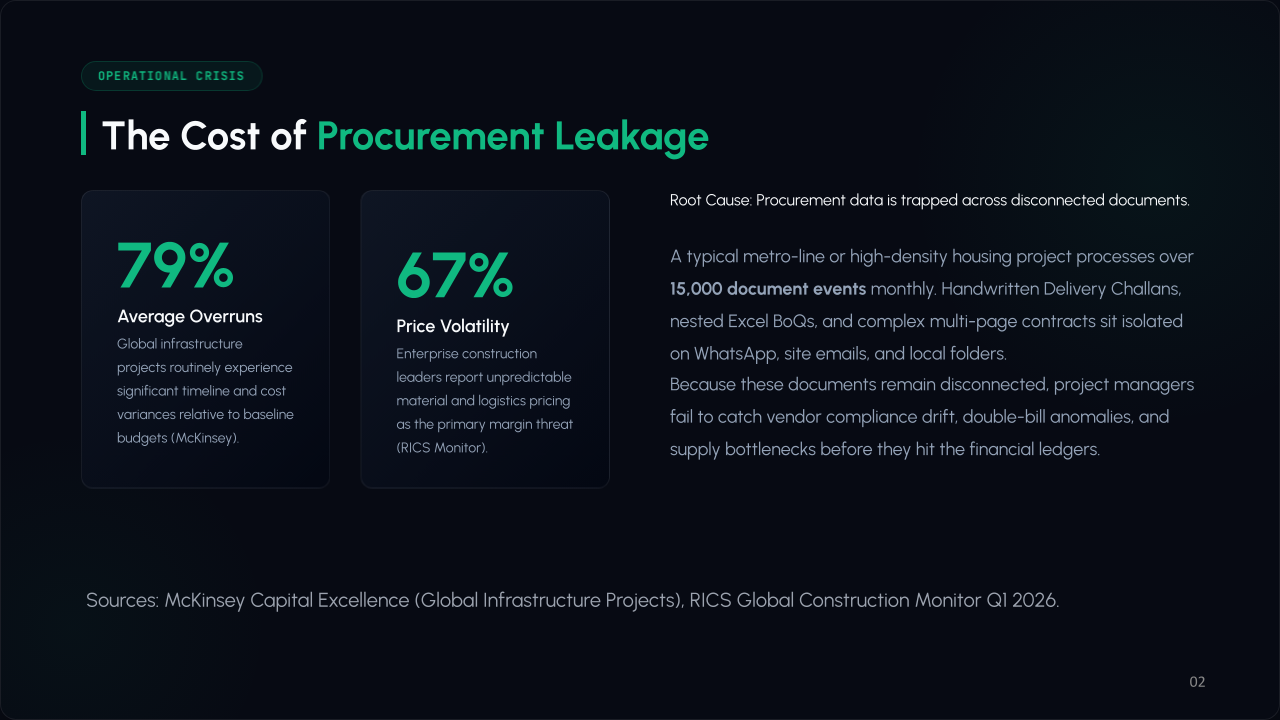
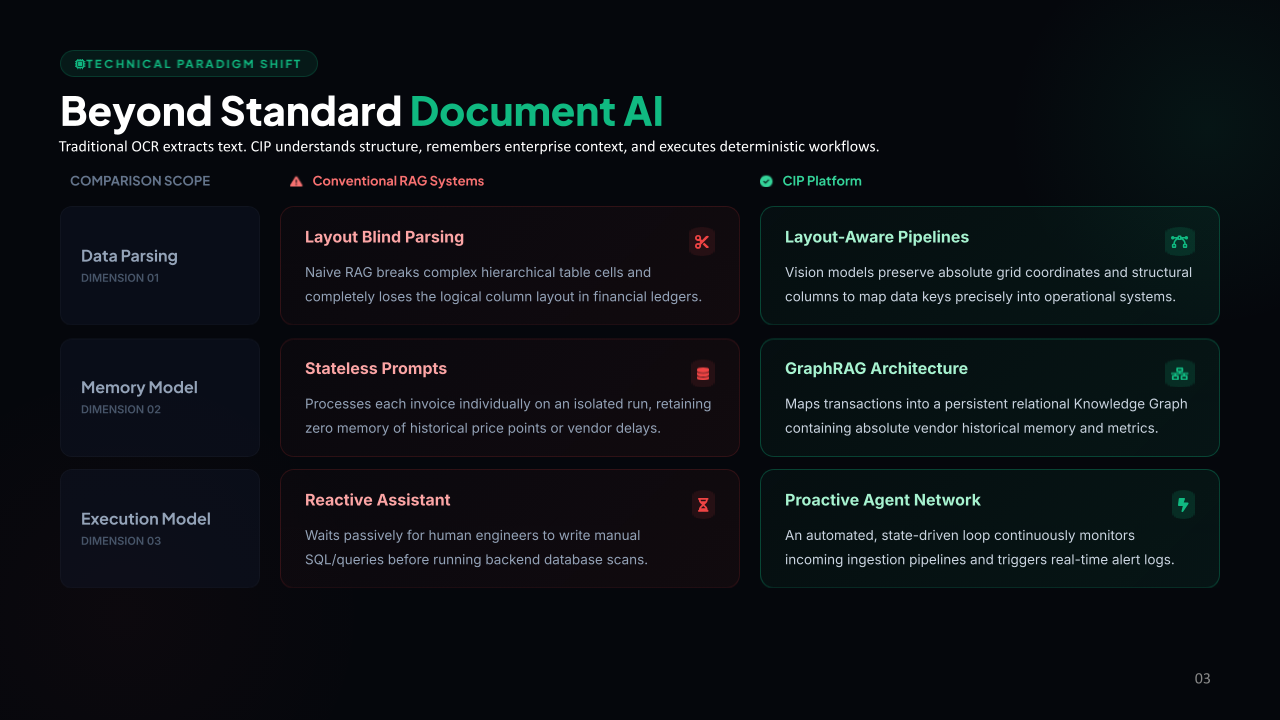
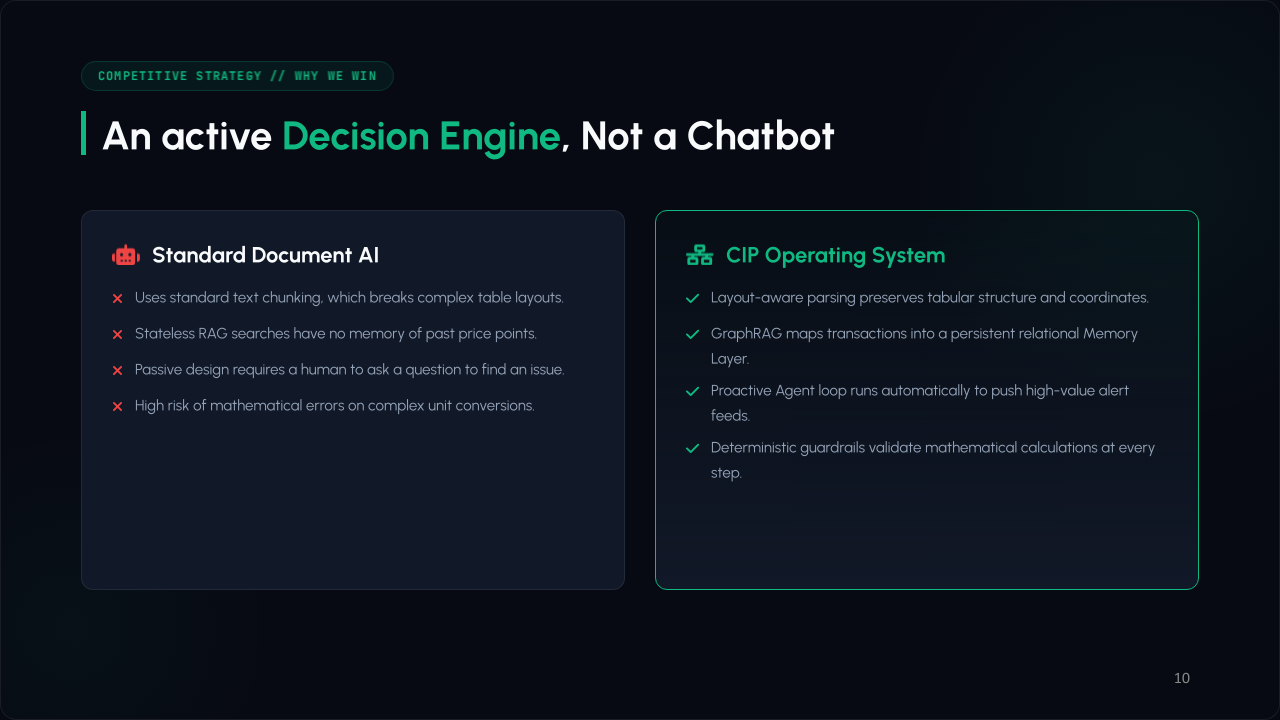
Construction projects generate thousands of procurement documents every month, including contracts, purchase orders, invoices, delivery challans, bills of quantities (BOQs), quotations, and emails. While organizations have adopted OCR and document AI tools, these systems primarily extract text without understanding relationships between documents or preserving historical context.
This often leads to billing errors, duplicate payments, contract violations, procurement leakages, delayed approvals, and fragmented decision-making.
We wanted to explore an approach that goes beyond document extraction by giving procurement teams an AI system capable of understanding context across the entire procurement lifecycle.
What it does
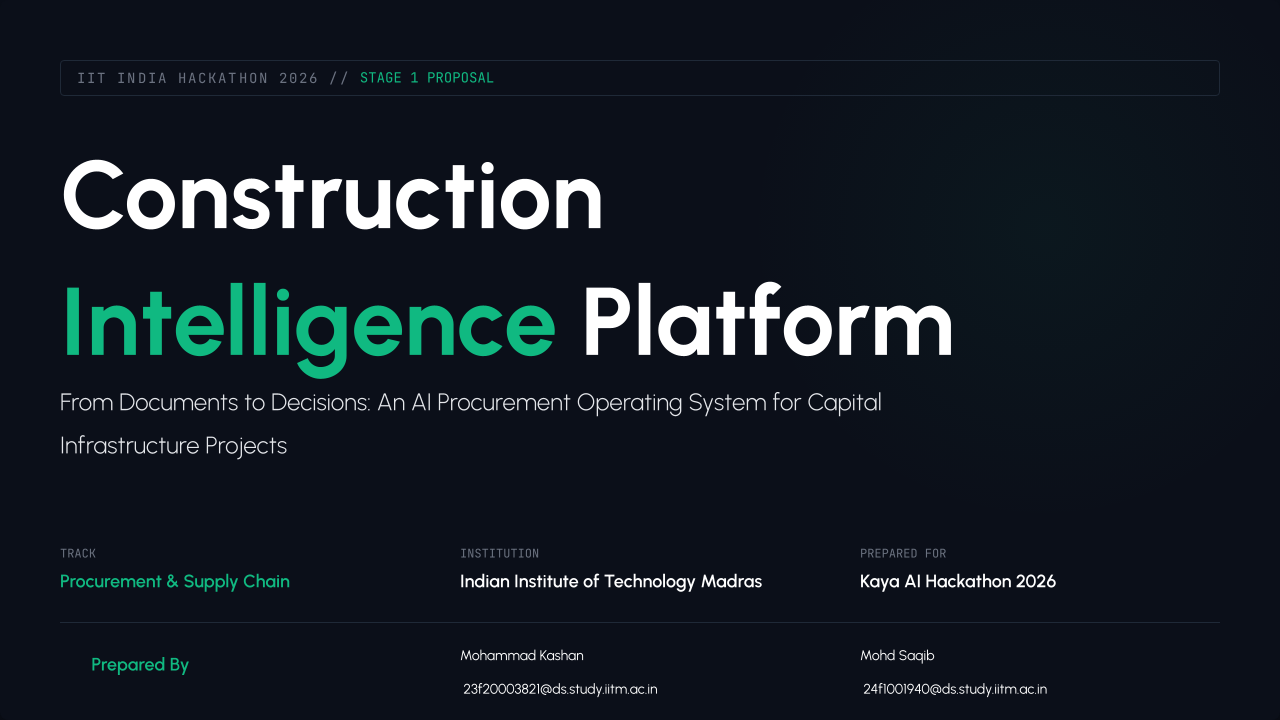
CIP OS (Construction Intelligence Platform) is an AI-powered operating system for construction procurement.
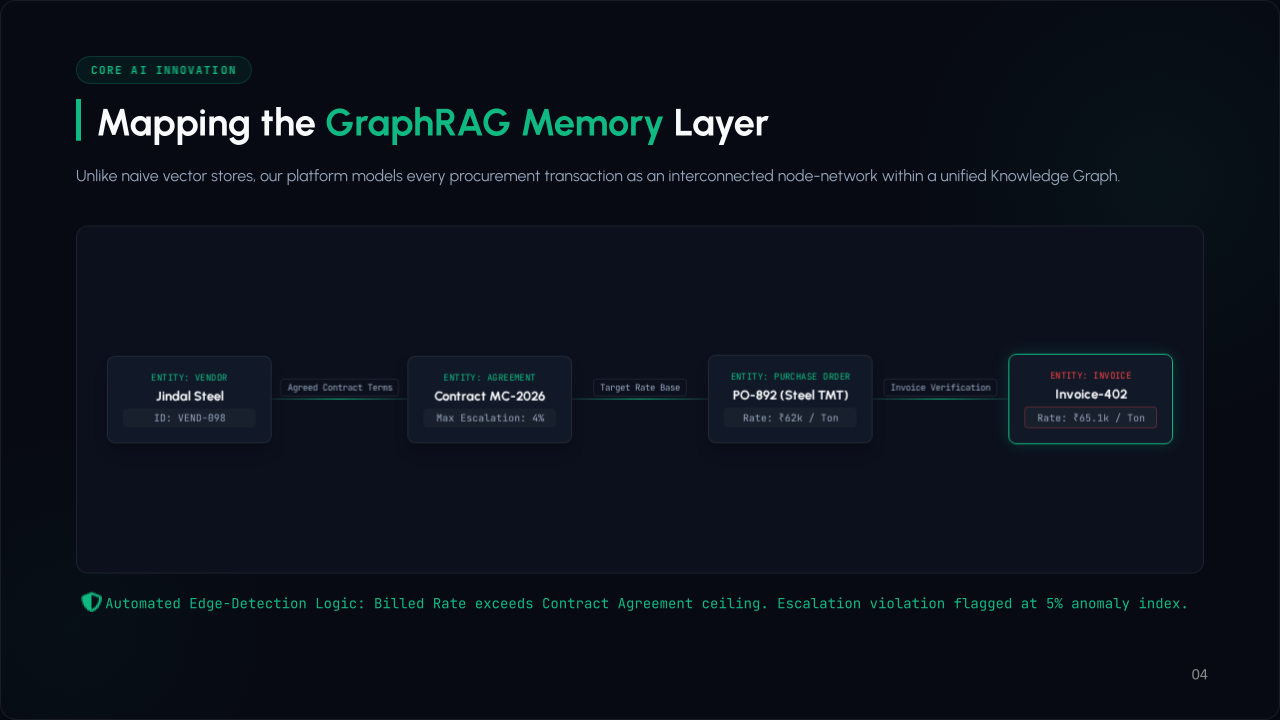
Instead of treating every document independently, the proposed platform builds a persistent GraphRAG knowledge graph connecting vendors, contracts, invoices, BOQs, delivery challans, pricing history, and project events.
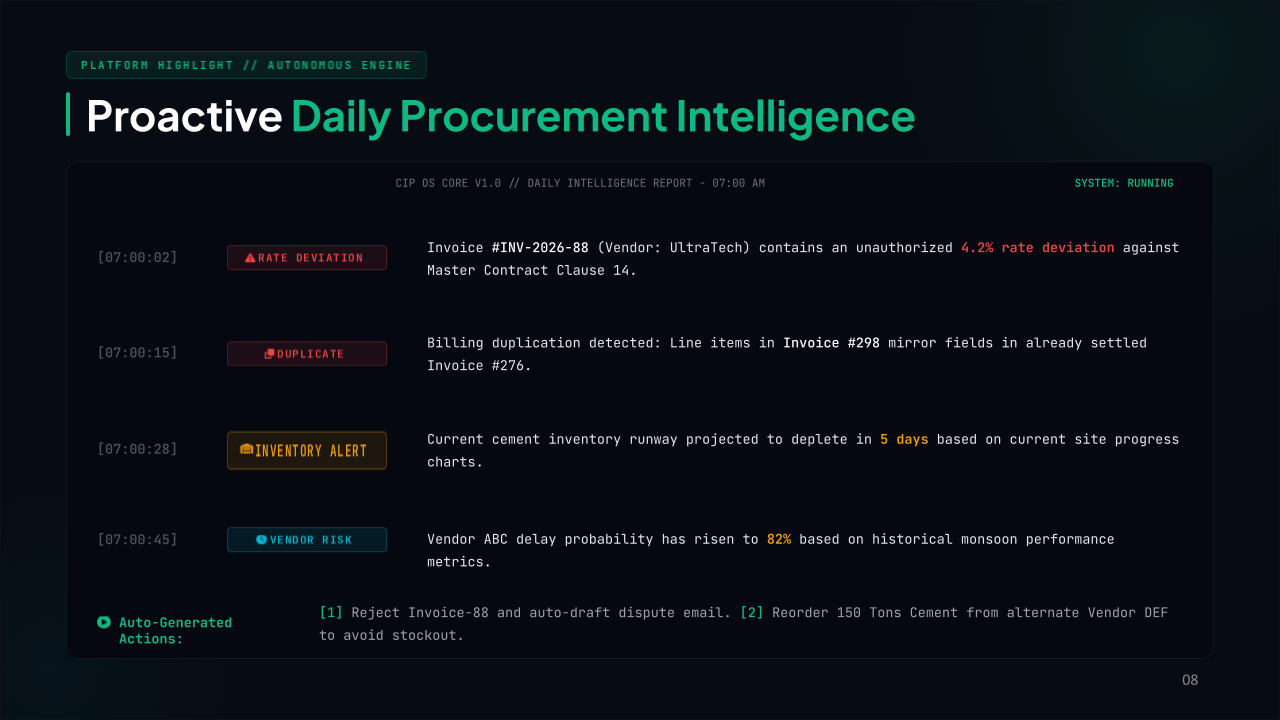
It helps validate procurement transactions, identify anomalies, preserve historical relationships, and generate proactive recommendations before financial losses occur.
How we built it
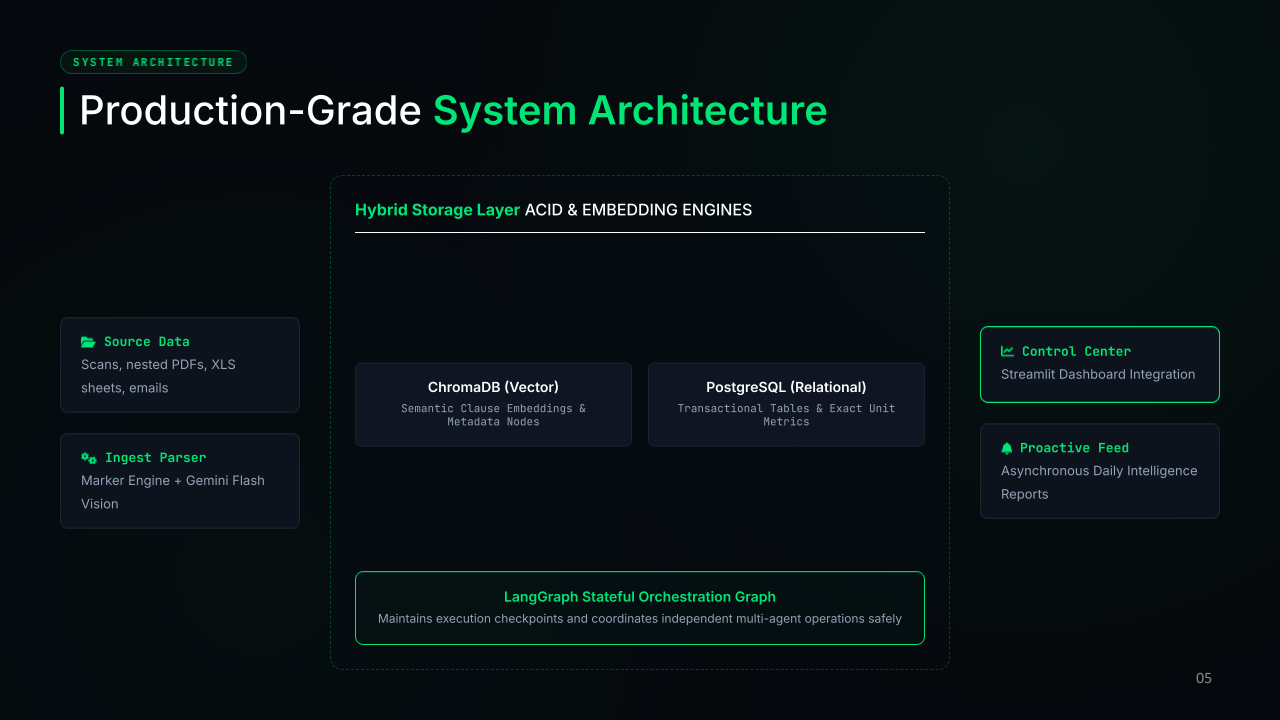
Our proposed architecture combines:
- Gemini Vision for layout-aware document understanding
- Marker for structured PDF extraction
- GraphRAG for persistent organizational memory
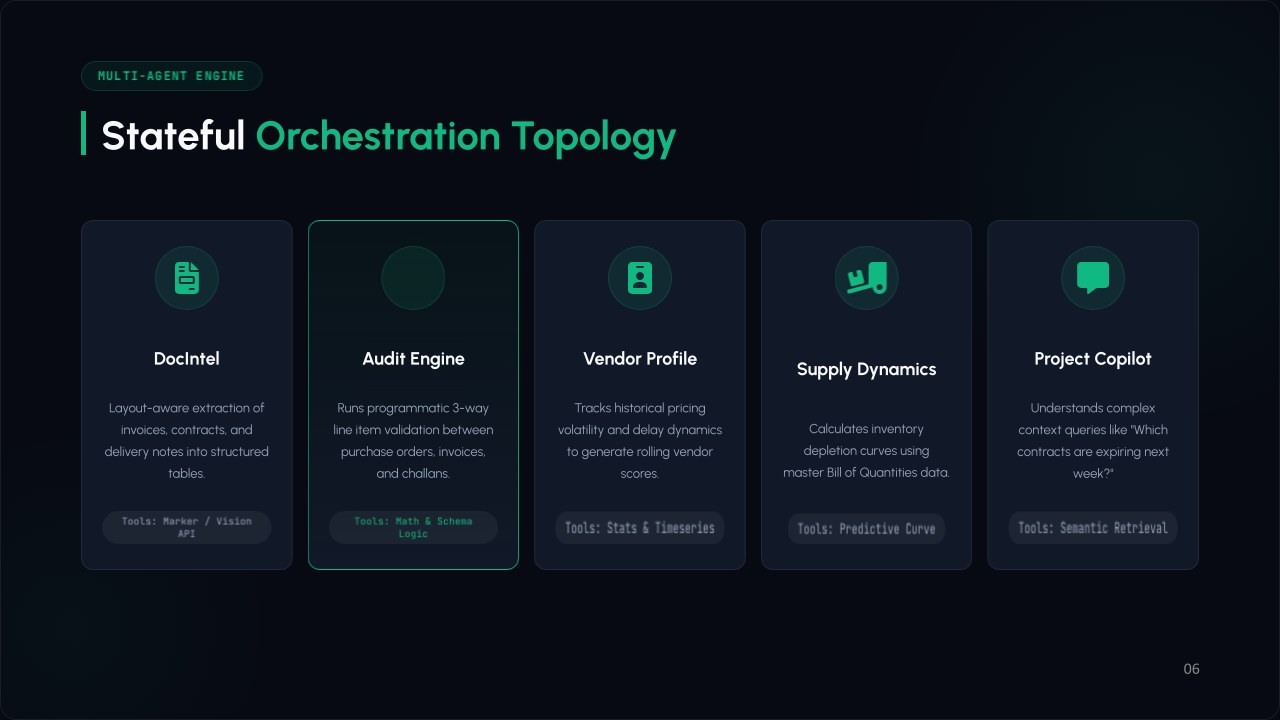
- LangGraph for multi-agent orchestration
- PostgreSQL for structured relational storage
- ChromaDB for semantic retrieval
- Streamlit for the user interface
- Python and FastAPI for backend services
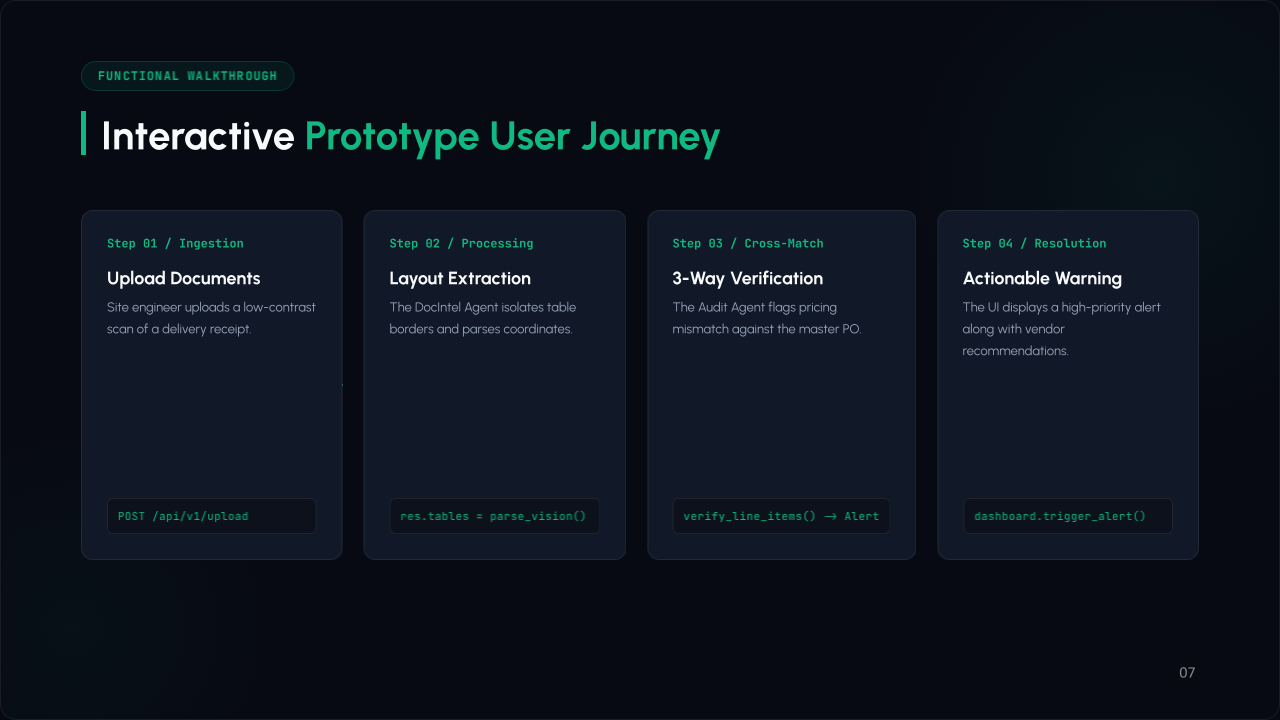
Specialized AI agents collaborate to perform document parsing, vendor verification, pricing validation, contract compliance, and procurement intelligence through coordinated workflows.
Challenges we ran into
Construction documents contain inconsistent layouts, scanned PDFs, handwritten delivery challans, nested tables, and complex cross-document dependencies.
Designing an architecture that preserves document structure while maintaining relationships across thousands of procurement records was one of the biggest technical challenges.
Accomplishments
We designed a procurement intelligence architecture that extends beyond traditional OCR and retrieval systems by combining organizational memory, graph-based reasoning, deterministic validation, and multi-agent orchestration into a unified platform.
What we learned
This project reinforced that enterprise AI is not only about large language models. Building reliable enterprise systems also requires structured knowledge, deterministic workflows, graph reasoning, and well-orchestrated AI agents working together.
What's next
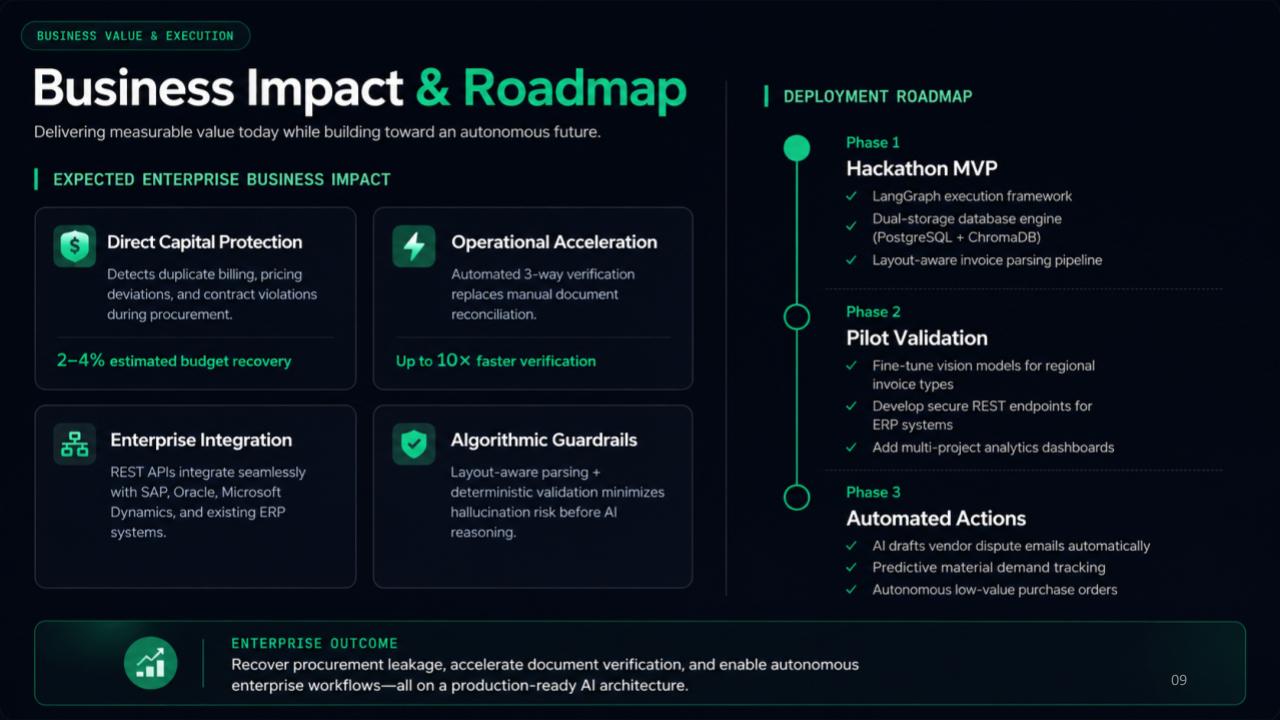
Our next goal is to develop a functional prototype and validate the proposed architecture. Future iterations will focus on ERP integration with platforms such as SAP, Oracle, and Microsoft Dynamics, live procurement monitoring, predictive material demand forecasting, autonomous vendor dispute generation, and enterprise-scale deployment.

Log in or sign up for Devpost to join the conversation.