-
-
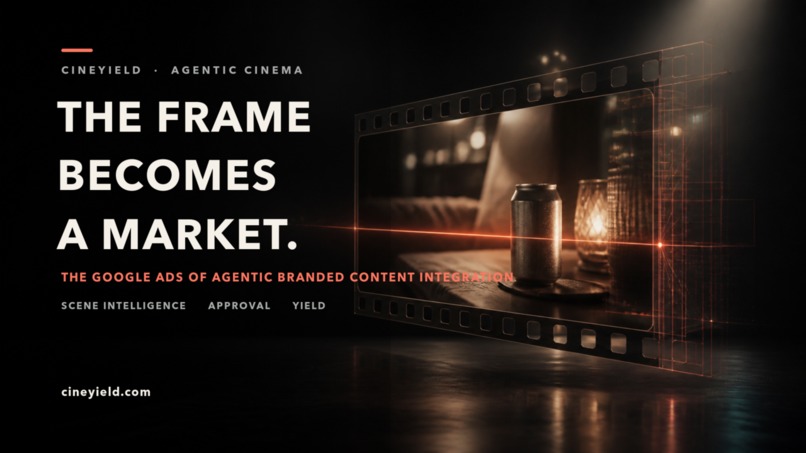
CINEYIELD: discover sponsor opportunities inside finished scenes. Pitch concept; filmmakers keep creative control.
-
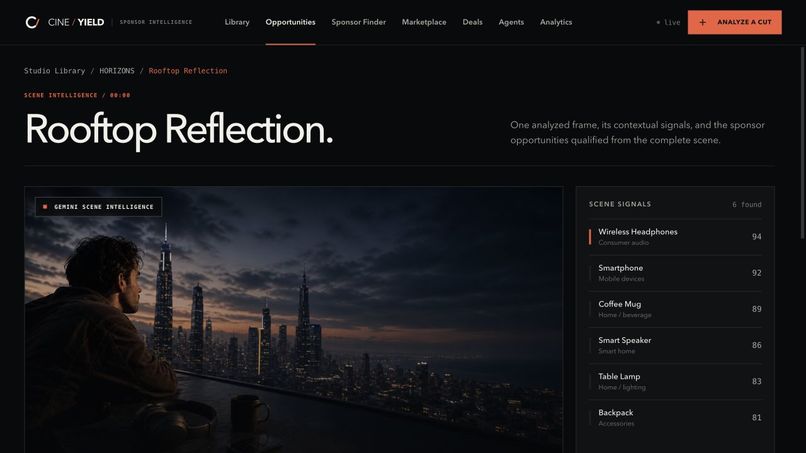
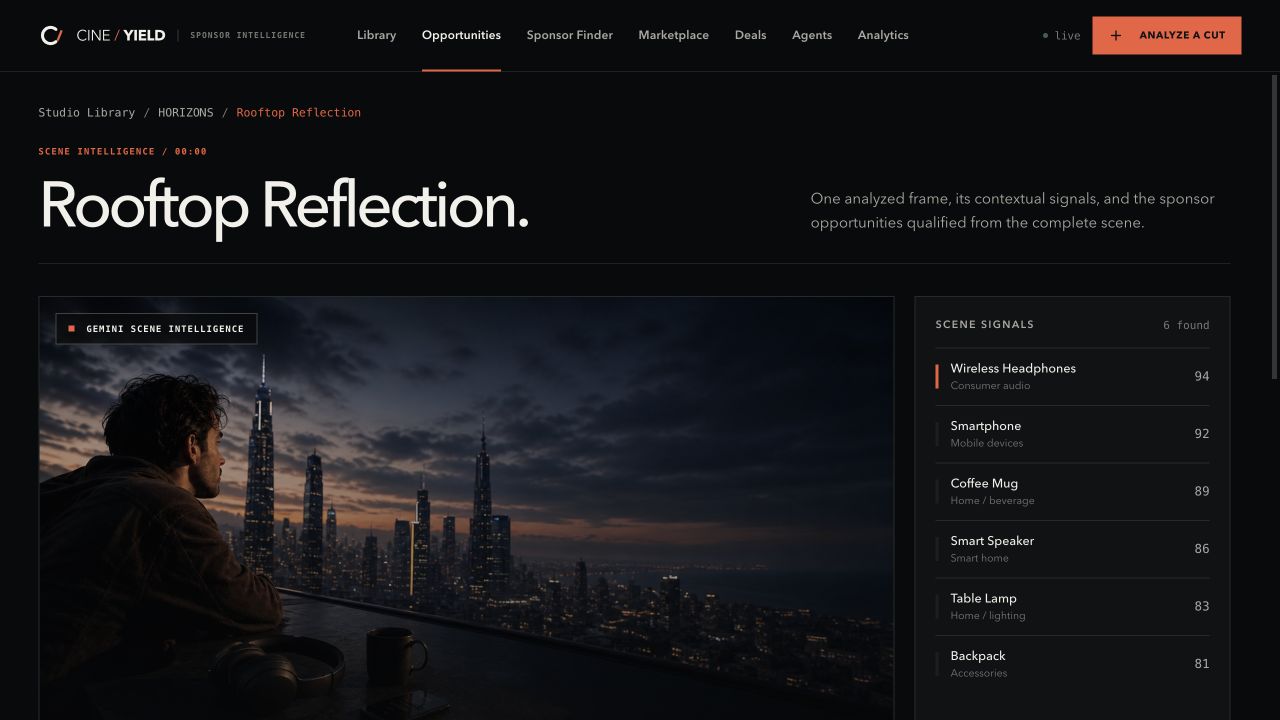
Live app: Gemini Scene Intelligence identifies objects and narrative context in the HORIZONS demonstration.
-
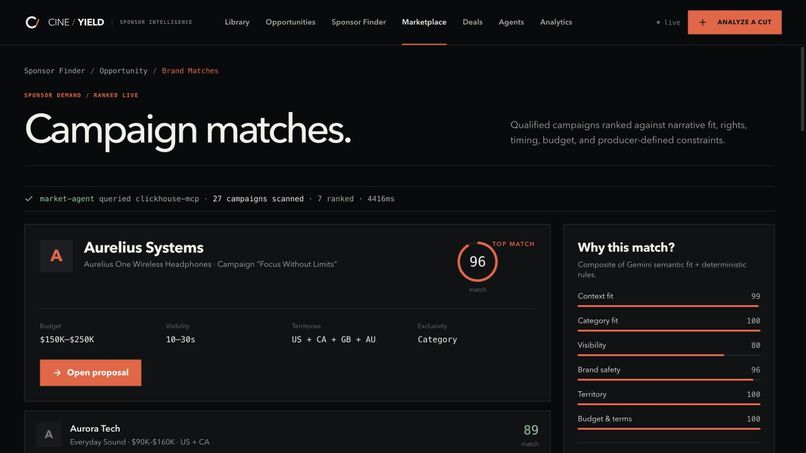
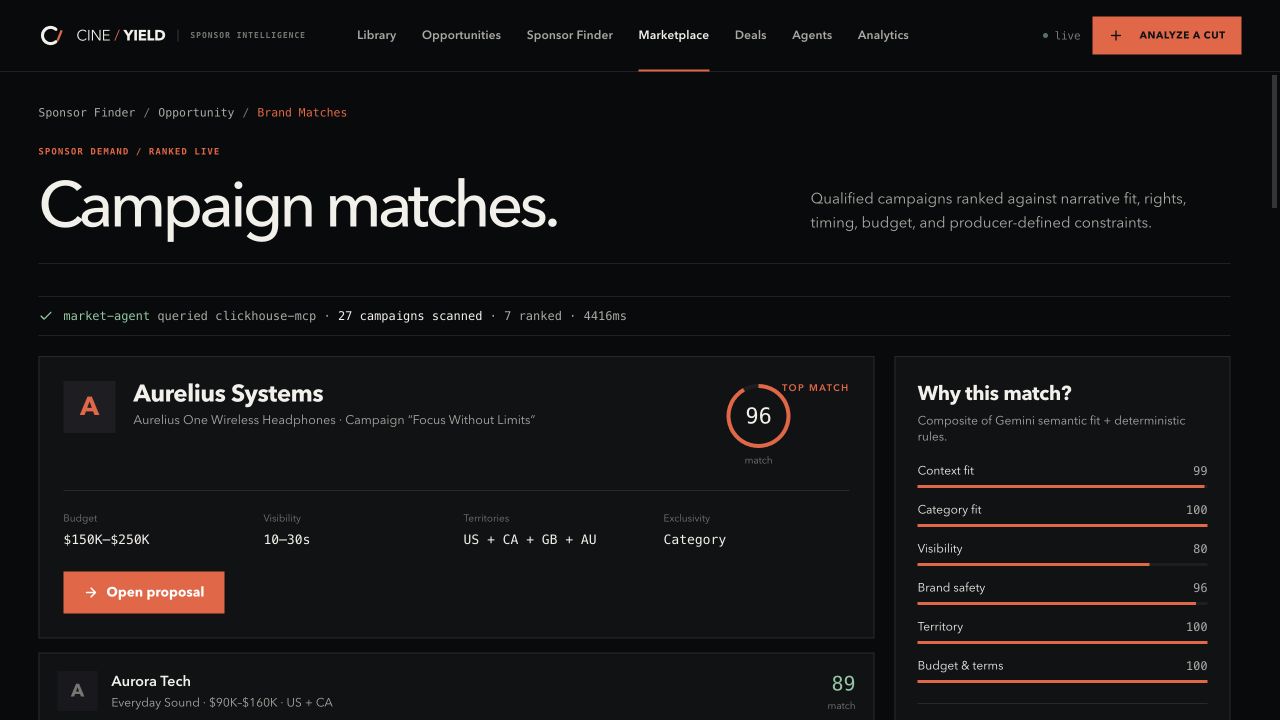
Live app: ClickHouse MCP ranks campaign matches. Fictional campaigns and illustrative budgets.
-
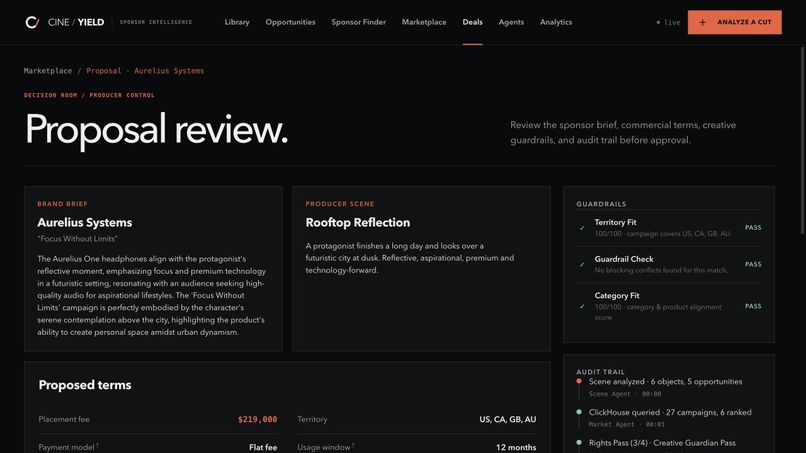
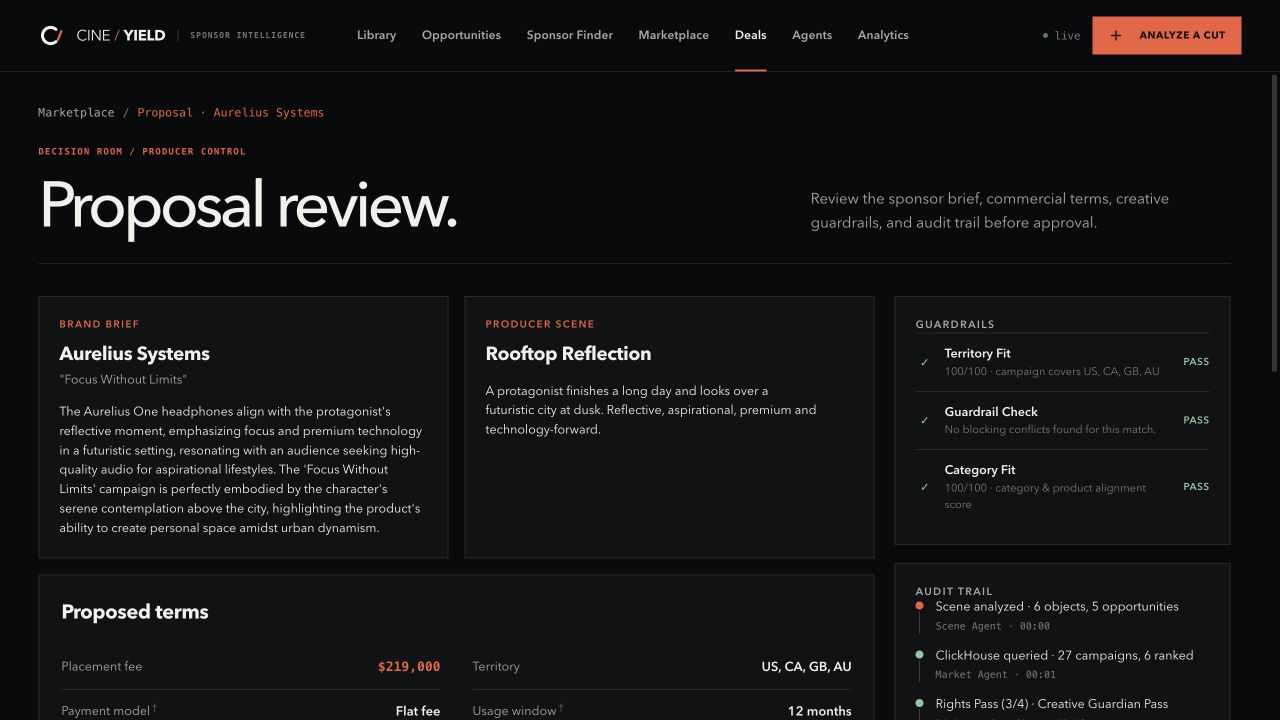
Live app: sponsor brief, scene, terms and guardrails in one producer review. Values shown are planning estimates.
-
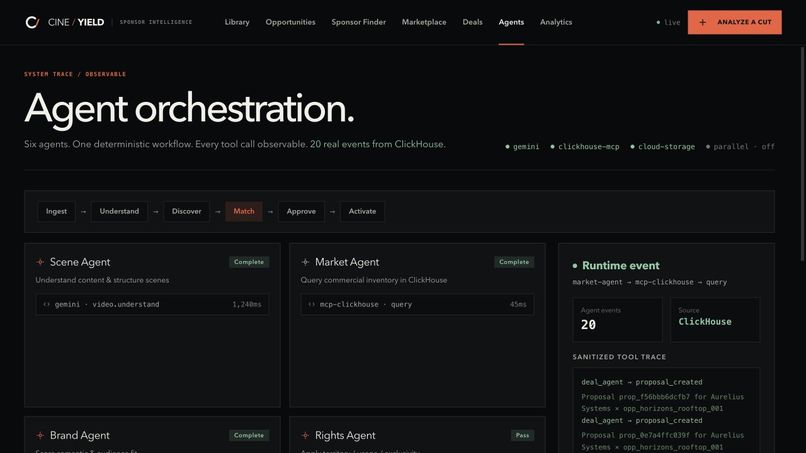
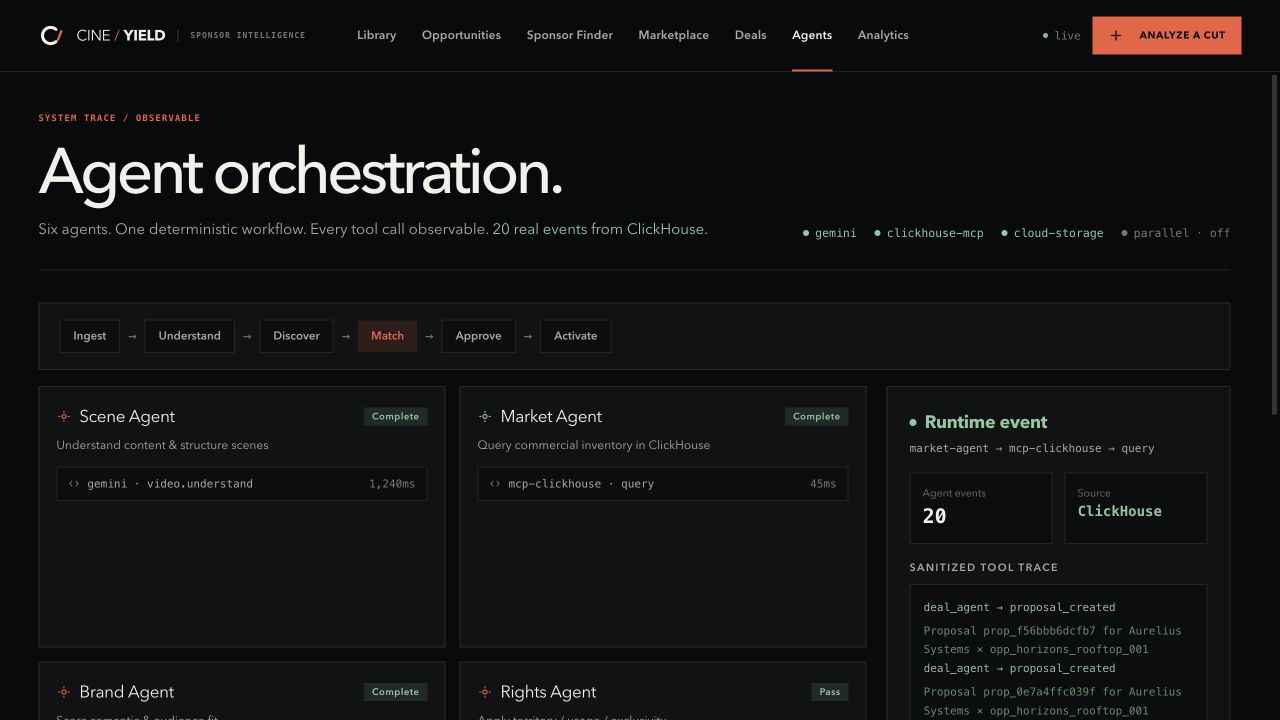
Live app: six agent roles, ClickHouse queries and recorded workflow events in an inspectable trace.
-
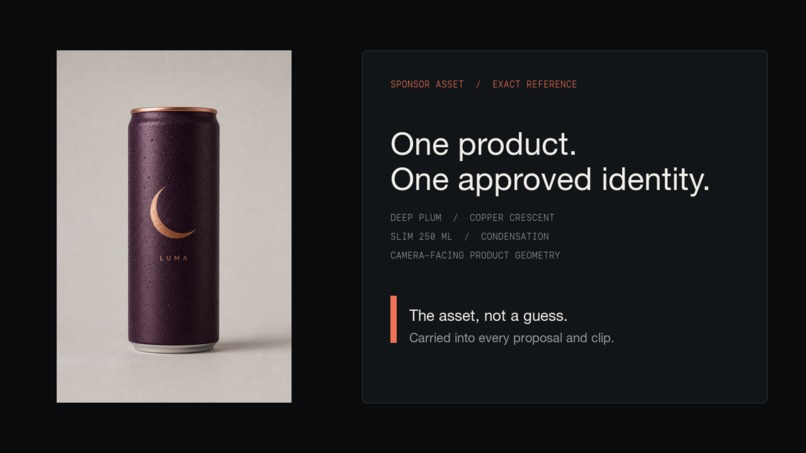
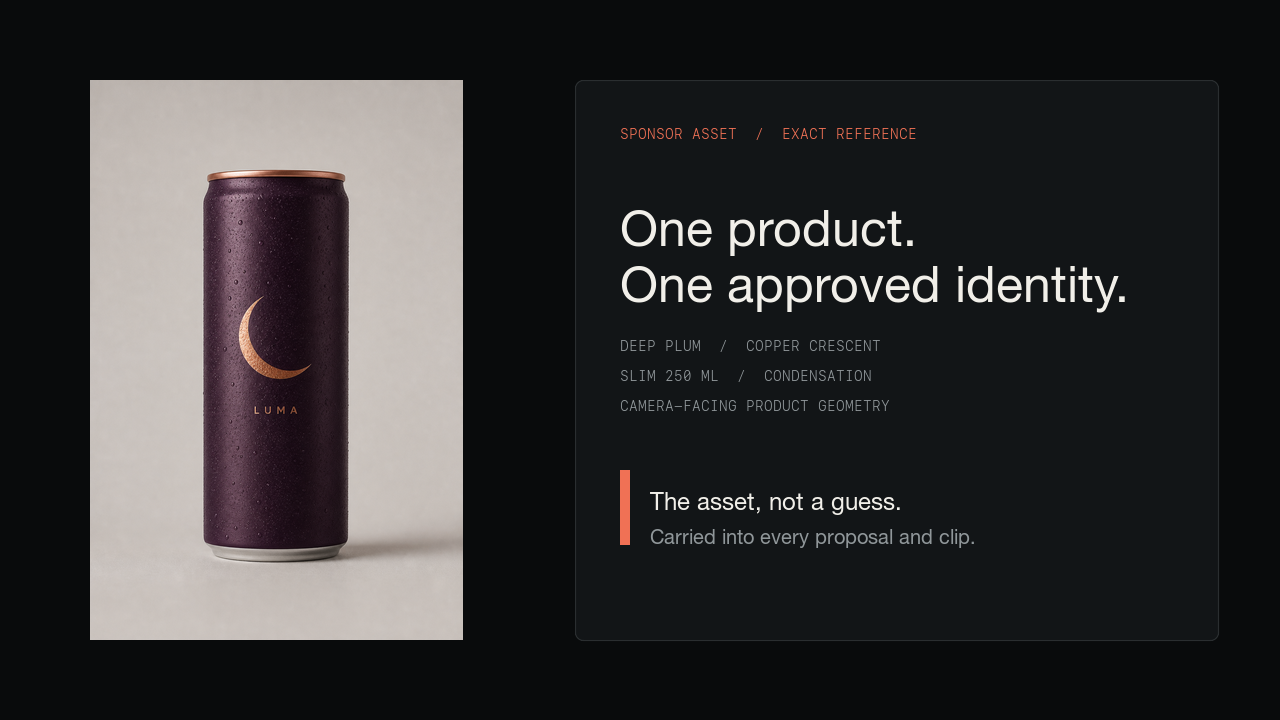
Illustrative product reference: one fictional LUMA asset defines the proposed placement.
-
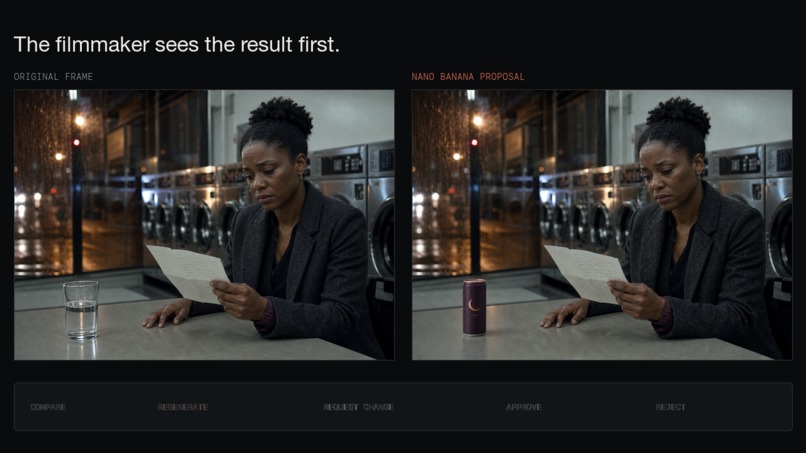
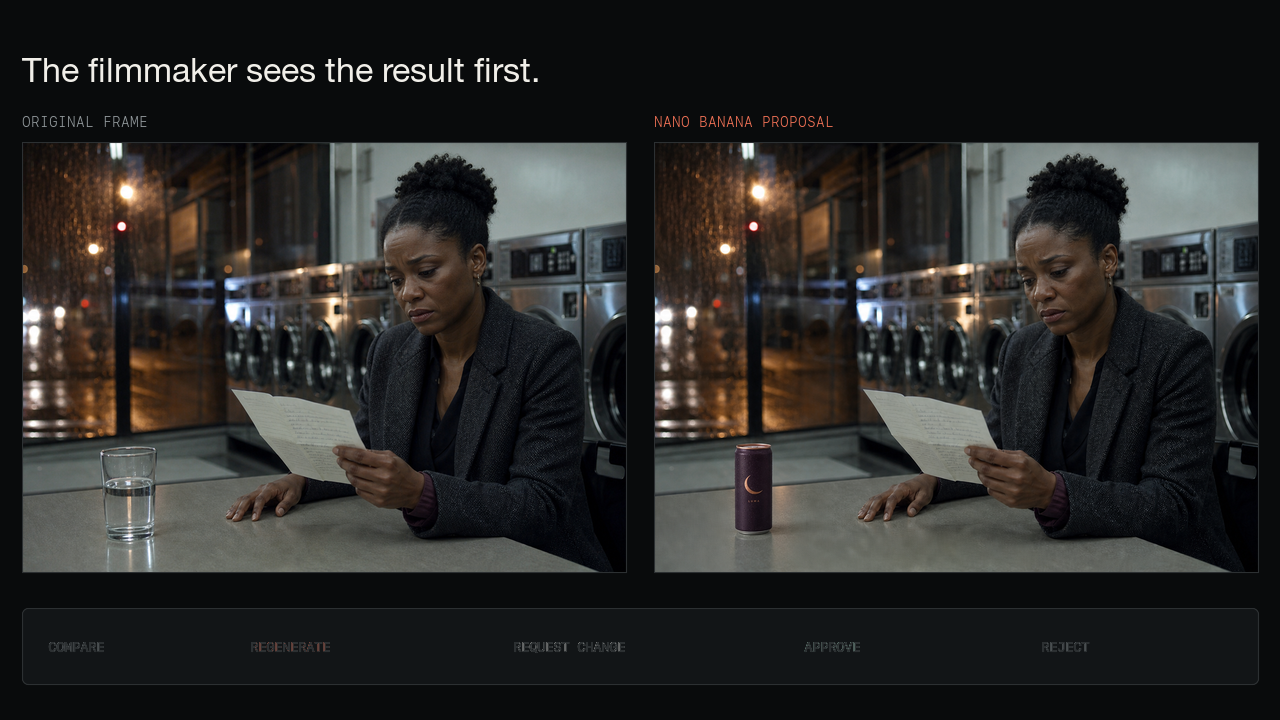
Illustrative approval study: compare the original frame with the proposed Nano Banana treatment.
-
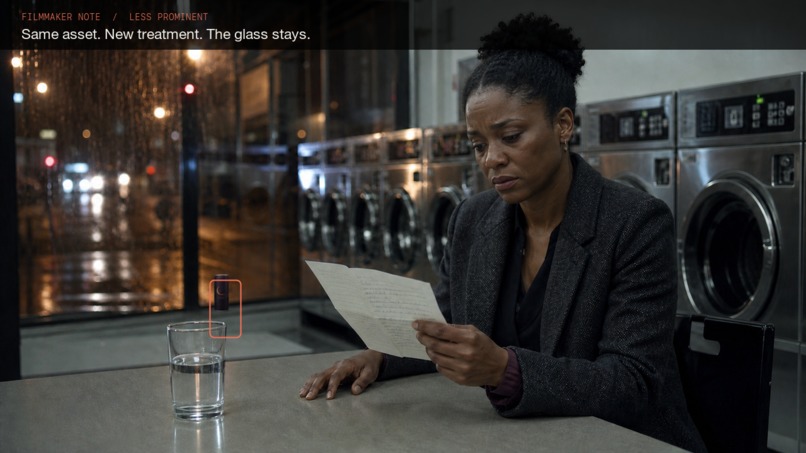
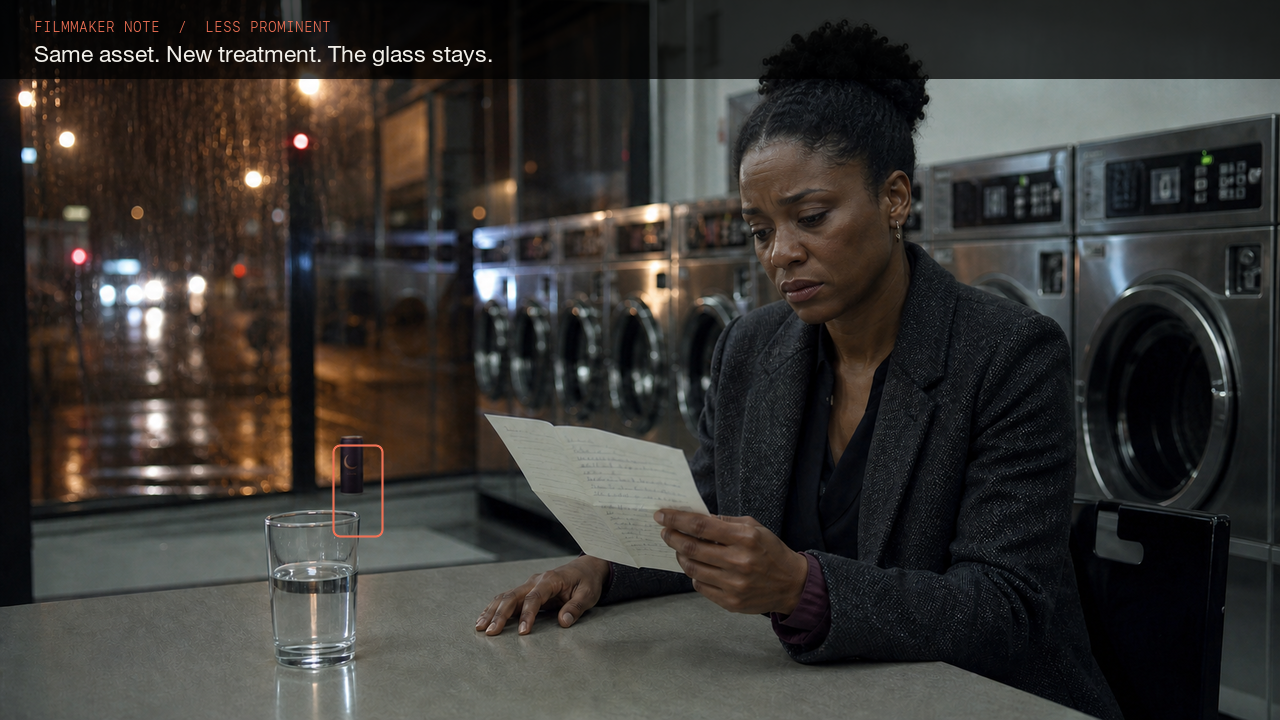
Illustrative revision: the filmmaker requests a quieter placement. The glass remains in the scene.
-
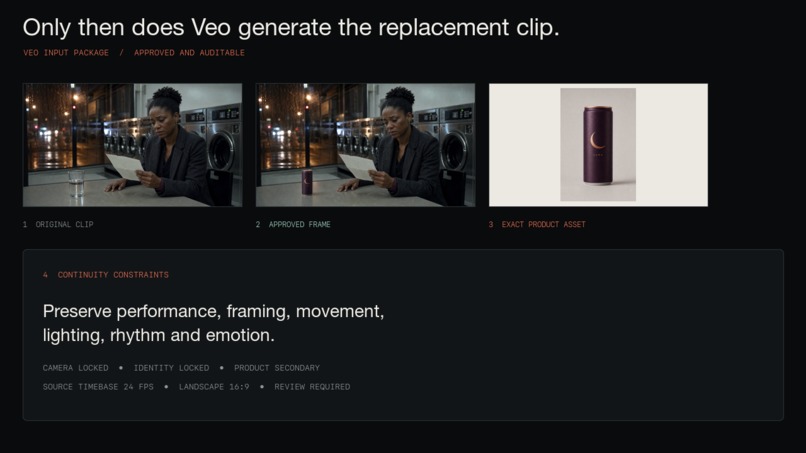
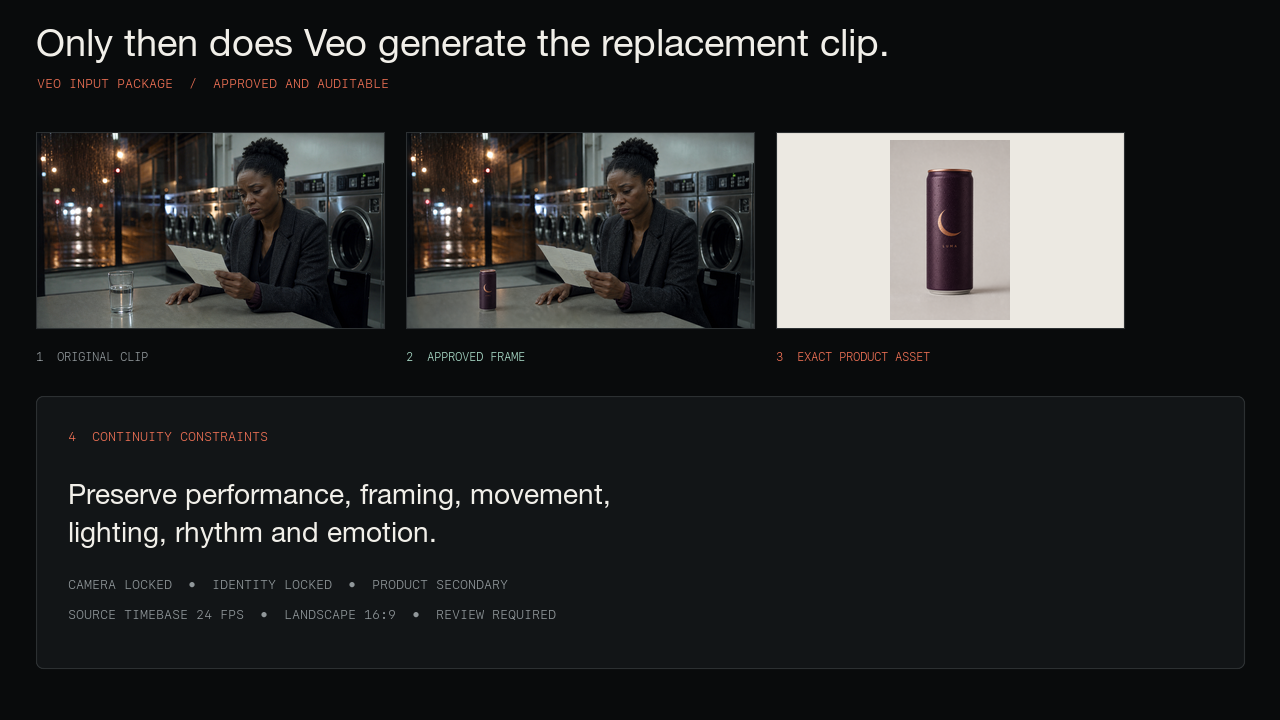
Illustrative Veo workflow: original clip, approved reference, exact asset and continuity constraints.
-
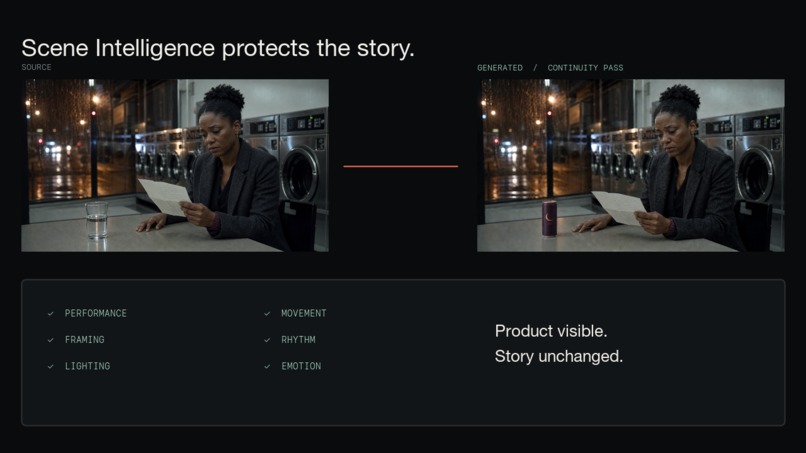
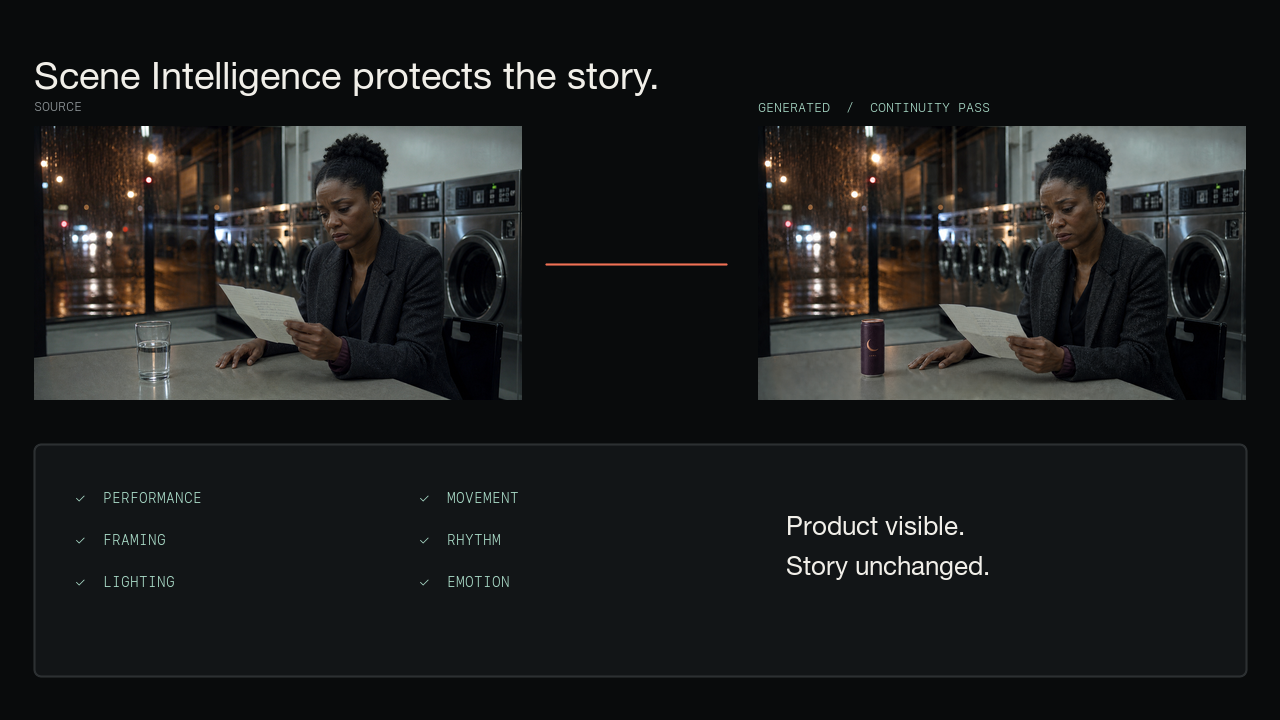
Illustrative continuity review: assess the treatment against performance, framing, lighting and emotion.
-
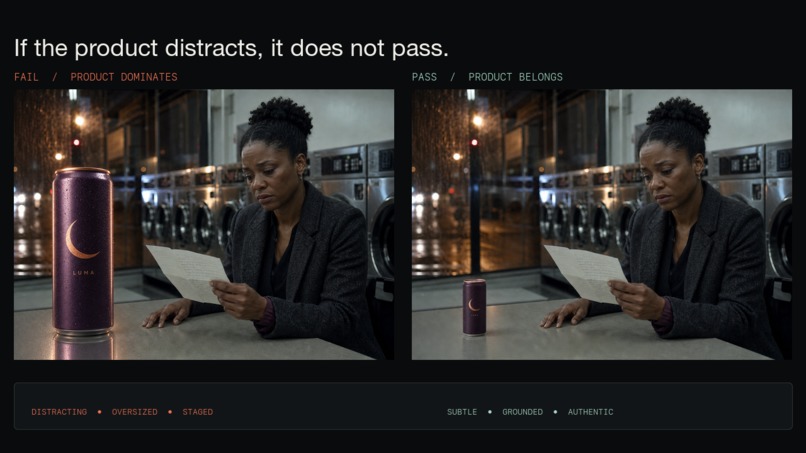
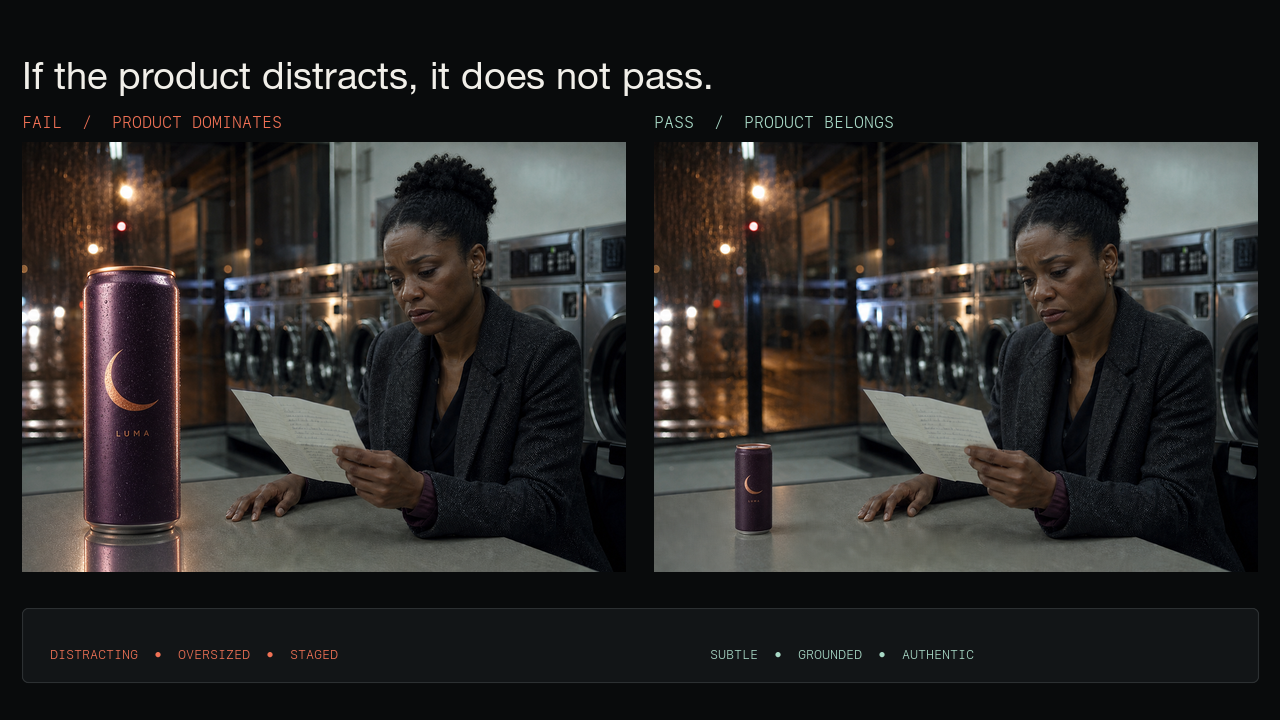
Illustrative creative guardrail: reject a distracting treatment and review a subtler alternative.
-
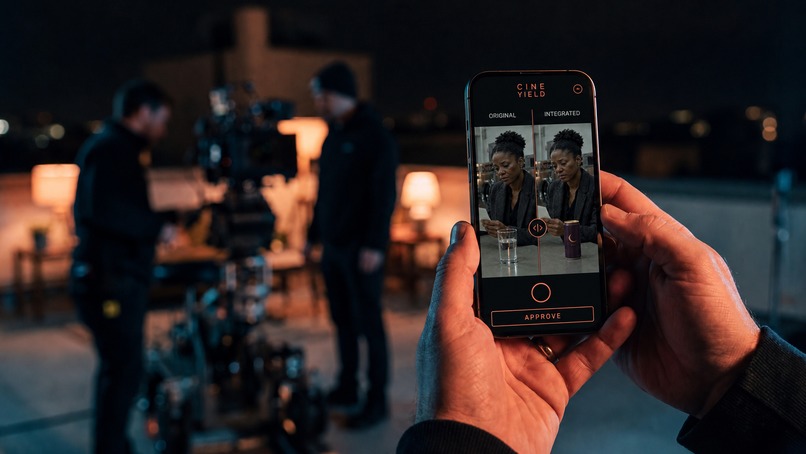
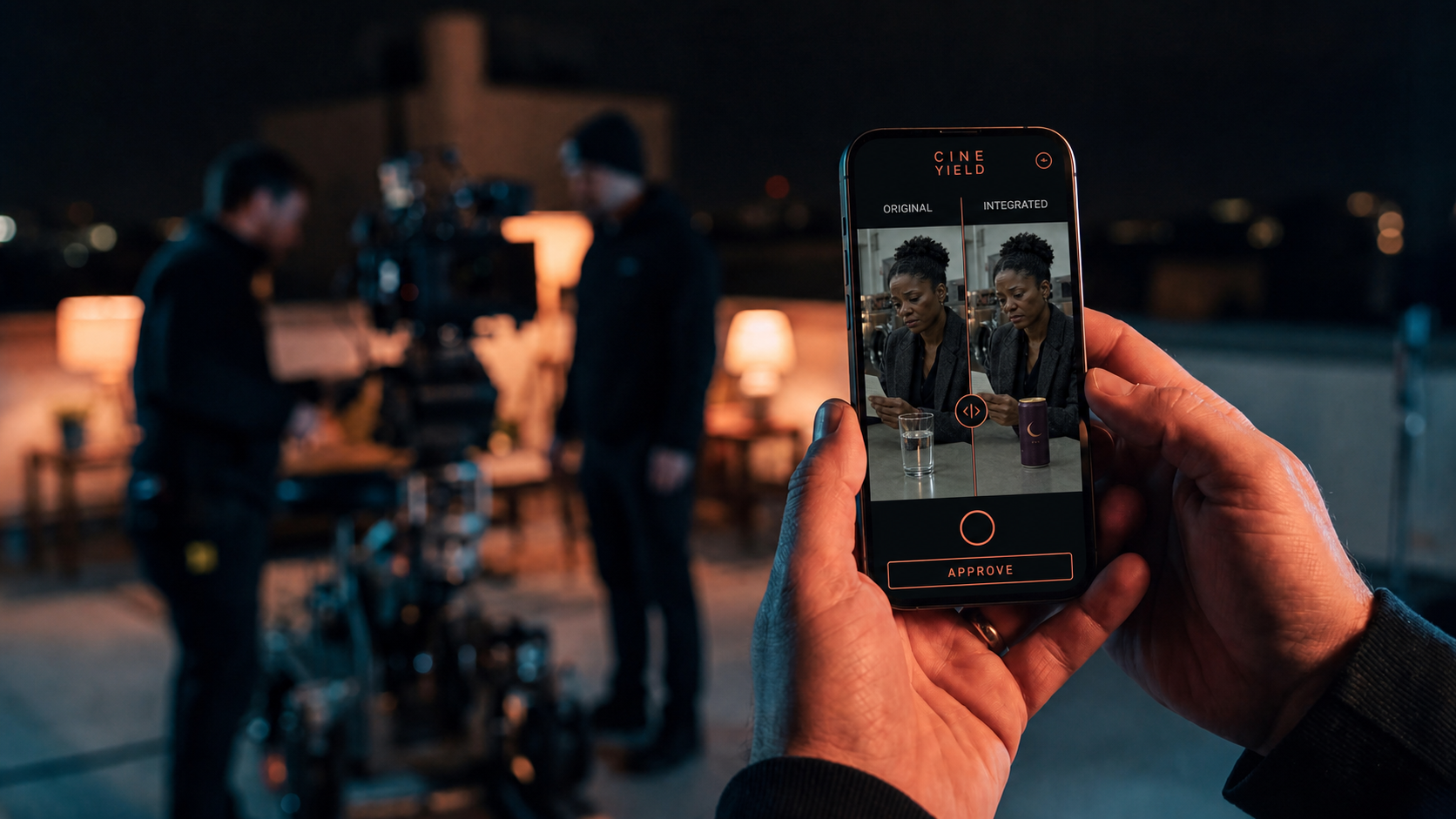
Mobile approval concept: compare the original and integrated scene before making the creative decision.
-
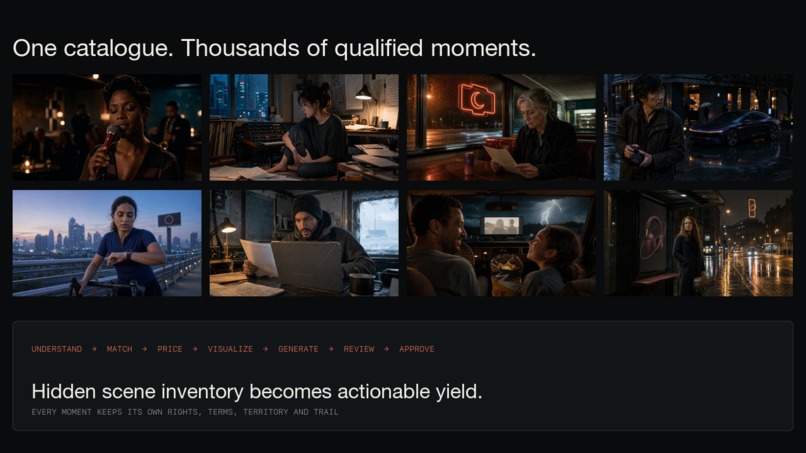
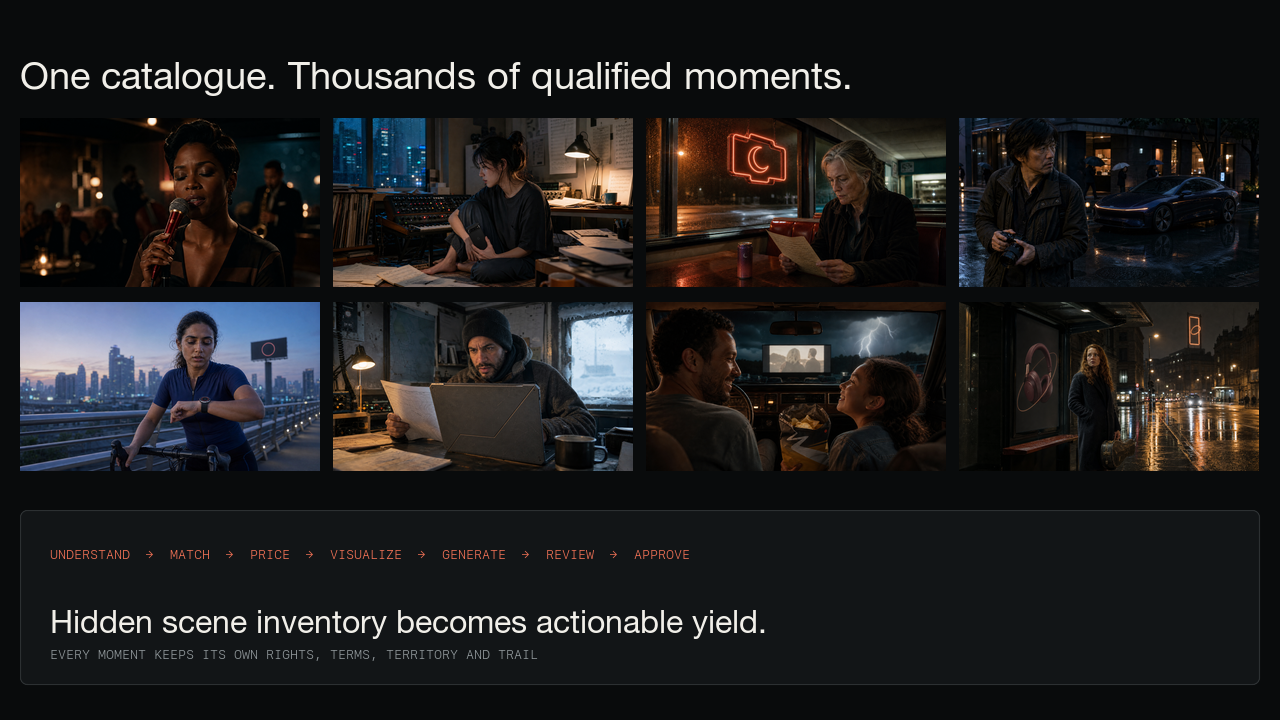
Catalog vision: explore placement opportunities across genres, objects and environments. Illustrative examples.
-
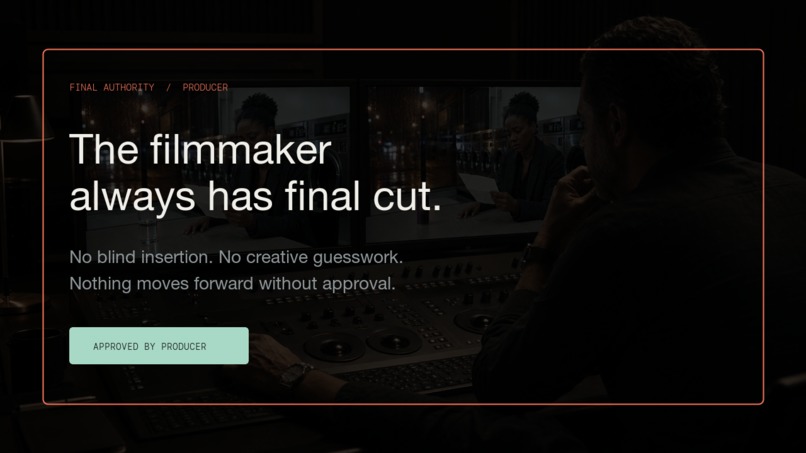
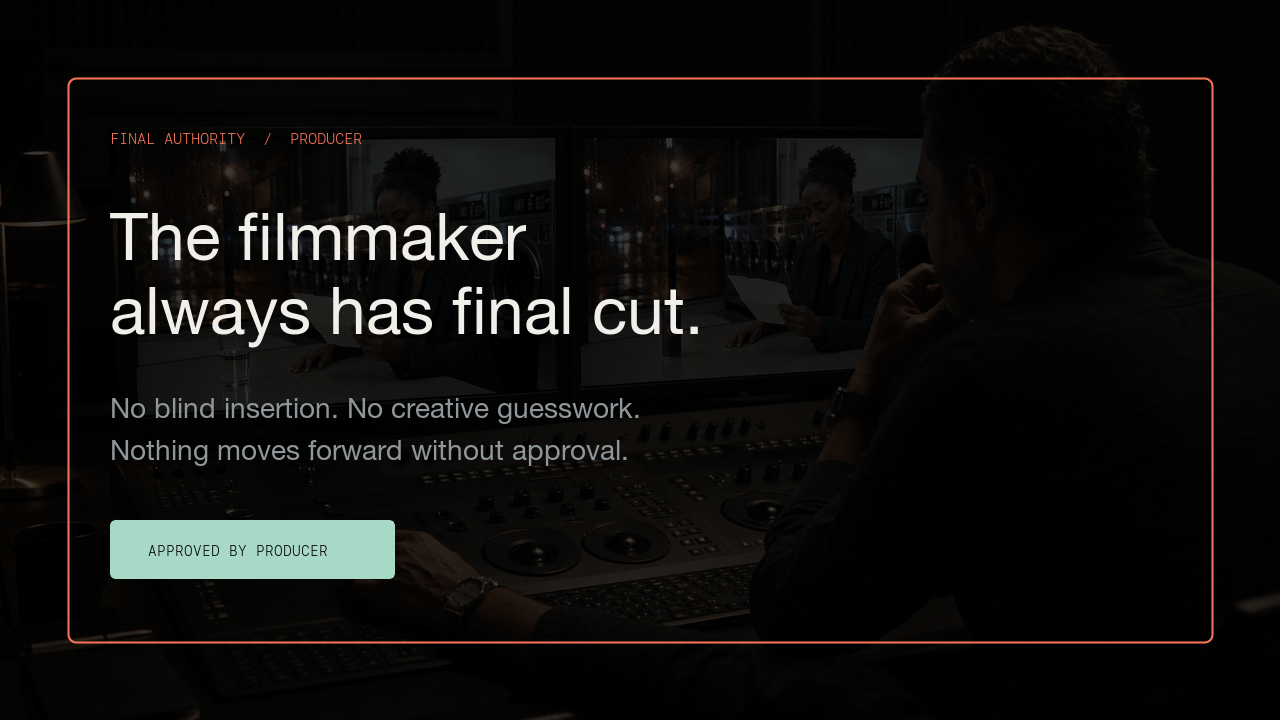
Creative authority: the filmmaker reviews the treatment and retains final approval. Illustrative workflow.
-
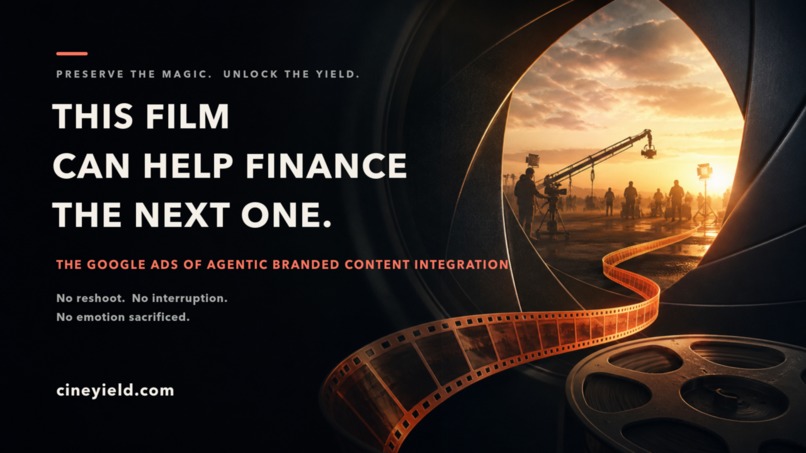
The ambition: let today’s final cut help fund tomorrow’s first frame. CINEYIELD pitch artwork.
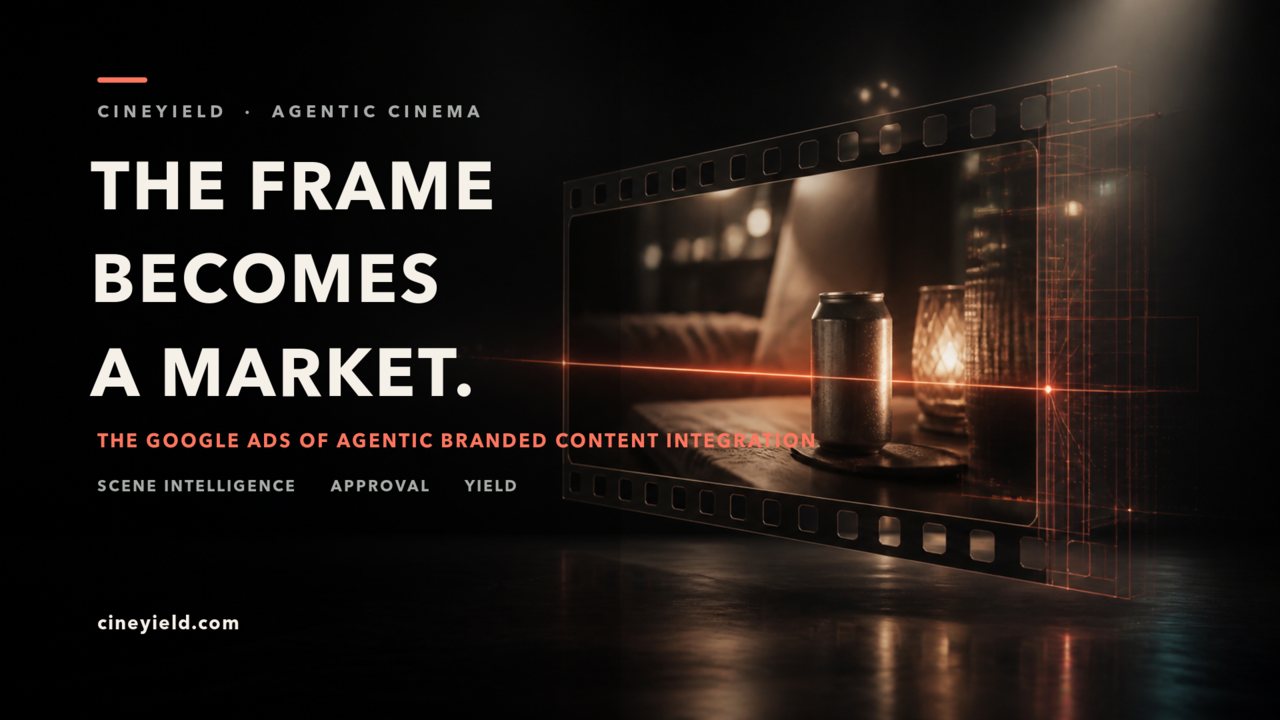
The final cut is only the beginning.
A finished film can still help fund the next one.
CINEYIELD finds sponsor opportunities inside film and television scenes, matches them with campaign demand, and helps producers review and create branded placements—with control over every approval.
Gemini understands the scene. ClickHouse finds the commercial fit. The filmmaker makes the call.
Inspiration: the value hiding in plain sight
A character puts on headphones. A phone rests beside a screenplay. A car crosses the city at dusk.
Each moment could be a natural home for a brand. But turning that possibility into a proposal requires someone to find the scene, identify the sponsor, check the constraints and convince the filmmaker the placement belongs.
For independent producers, that work competes with making the film itself.
CINEYIELD starts with a filmmaker's ambition: make the work already on screen help finance what comes next. Our vision is a searchable, accountable market for sponsorship inside stories, with creative authority built into the transaction.
What it does: from scene to sponsor
Step 1: Discover the opportunity
Gemini reads the footage for objects, mood and narrative context. Scene Intelligence surfaces placement candidates with timecodes, naturalness, brand safety, complexity and estimated value.
Step 2: Find the right sponsor
The Market Agent queries campaign inventory through the official ClickHouse MCP server. The workflow ranks candidates against the scene and commercial constraints, including category and territory.
Step 3: Put the decision in the producer's hands
One proposal brings together the scene, sponsor brief, estimated value and guardrails. The producer can approve, counter, request changes or reject.
Step 4: Make the placement visible
For uploaded source footage, commercial approval unlocks a Nano Banana reference frame. The producer reviews that image before Veo generates a replacement shot using the approved reference and source continuity context. The resulting clip has its own approval checkpoint.
Step 5: Keep the evidence
The agent trace exposes queries, proposal creation, generation and approval events. Decisions leave a record that can be inspected.
The demo: one scene, an entire workflow
In HORIZONS, a protagonist looks across a futuristic city at dusk. Wireless headphones emerge as the leading placement opportunity. The workflow connects that moment to Aurelius Systems, a fictional audio brand, and brings the proposed match into the producer's decision room.
The live application trace includes ClickHouse query events, persisted proposals, a completed Veo generation and recorded producer approval.
Try the demo: open the library and choose HORIZONS. Review its scene opportunities, open Marketplace to inspect sponsor matches, and visit Deals for the producer decision. Open Agents to inspect the recorded workflow events. The sample catalog lets you explore without uploading footage; creating a new branded replacement requires an uploaded source clip.
Open the working application · Explore CINEYIELD
How we built it: six agents, clear responsibilities
CINEYIELD runs on Google Cloud Run, with Google Cloud Storage supporting media assets.
- Scene Agent: Gemini interprets footage and structures scene context.
- Market Agent: ClickHouse MCP retrieves commercial inventory.
- Brand Agent: Gemini evaluates sponsor and audience fit.
- Rights Agent: deterministic rules evaluate territory, usage and exclusivity constraints.
- Creative Guardian: evaluates narrative fit and flags creative concerns.
- Deal Agent: assembles the proposal for producer review.
ClickHouse connects creative interpretation to commercial evidence. Campaign retrieval sits directly in the matching workflow, while recorded events make the agent's actions inspectable. Nano Banana and Veo extend that workflow into a visual treatment the filmmaker can judge.
The hard part: earning the filmmaker's approval
A product can be highly visible and still feel wrong in a scene. A generated replacement can look impressive and still disrupt a performance.
We separated commercial qualification, creative evaluation and human approval. Reference-image review and clip review give the producer concrete points to request revisions. This makes creative control part of how the product works.
Our central learning: automation earns trust when people can understand, challenge and stop its decisions.
What we're proud of—and where we go next
CINEYIELD connects discovery, matching, proposal review, generative placement and an observable agent trace in one producer workflow.
For filmmakers, the opportunity is additional production funding. For brands, it is a more relevant place in the story. For studios, it is a way to explore commercial potential across a finished catalog.
Next, we will expand verified sponsor briefs and catalog onboarding, deepen rights-document provenance, and evaluate continuity across more demanding shots. Producer pilots will measure match quality, review time and approved outcomes.
The ambition: let today's final cut help fund tomorrow's first frame.
About the demonstration
HORIZONS and Aurelius Systems illustrate the workflow; they do not represent a confirmed sponsorship. Displayed values are planning estimates, and illustrative deal terms are labeled. Rights checks support the producer's clearance process. Commercial outcomes remain to be validated through pilots.
Built With
- agent-orchestration
- ai-agents
- clickhouse
- cloud-computing
- computer-vision
- data-analytics
- explainable-ai
- flow
- gemini
- generative-ai
- google-cloud
- google-cloud-run
- human-in-the-loop
- image-generation
- mcp
- multi-agent-systems
- multimodal-ai
- nano-banana
- observability
- rules-engine
- sql
- veo
- video-generation
- video-understanding
- workflow-automation


Log in or sign up for Devpost to join the conversation.