-
-
Cineverse Brings AI Movie Generations to VR
-
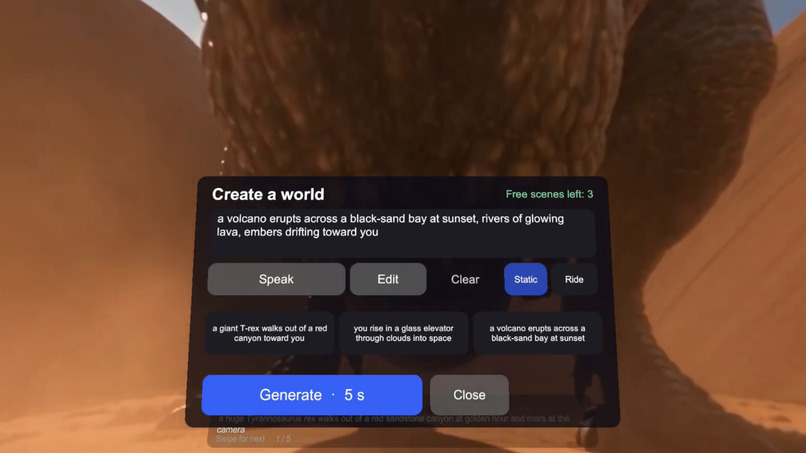
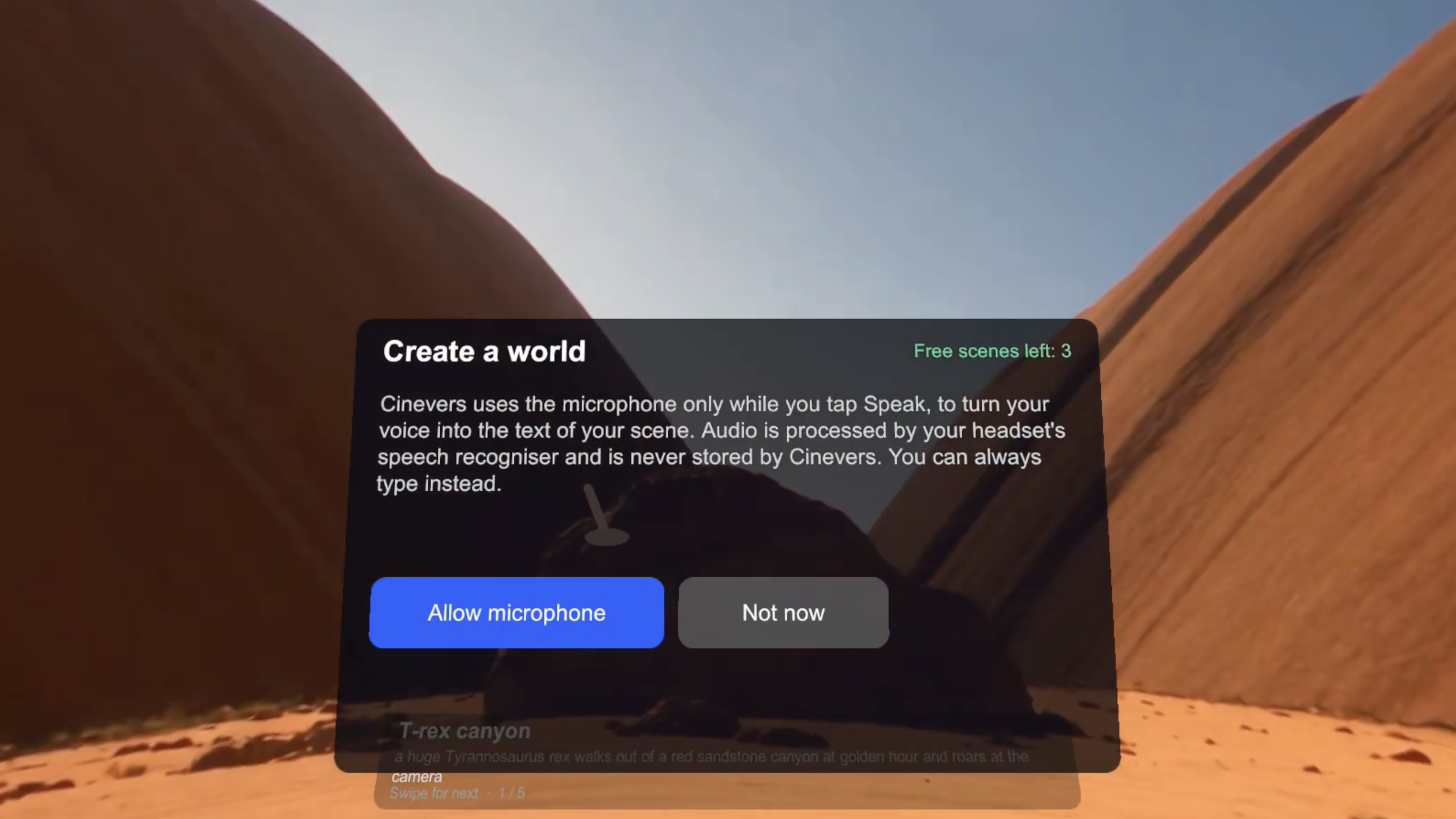
Create a new immersive world from a prompt while staying inside the experience.
-
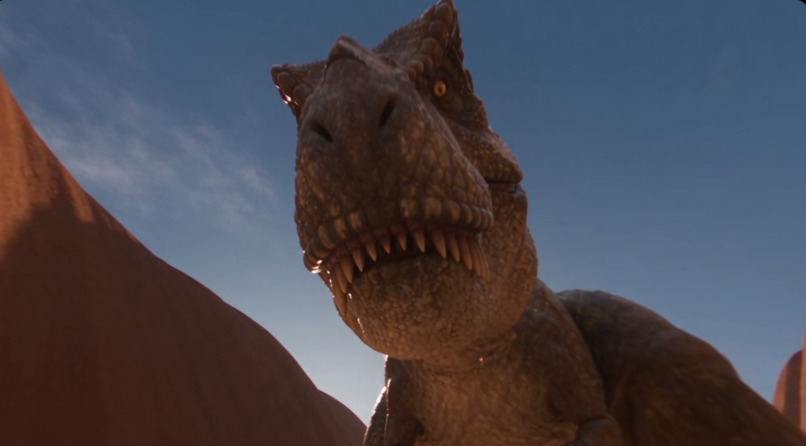
Explore a photorealistic prehistoric canyon with a full-scale T. rex all around you.
-
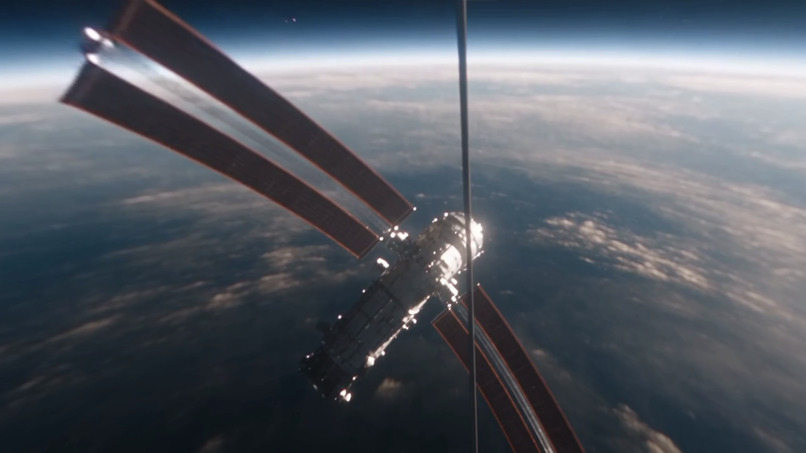
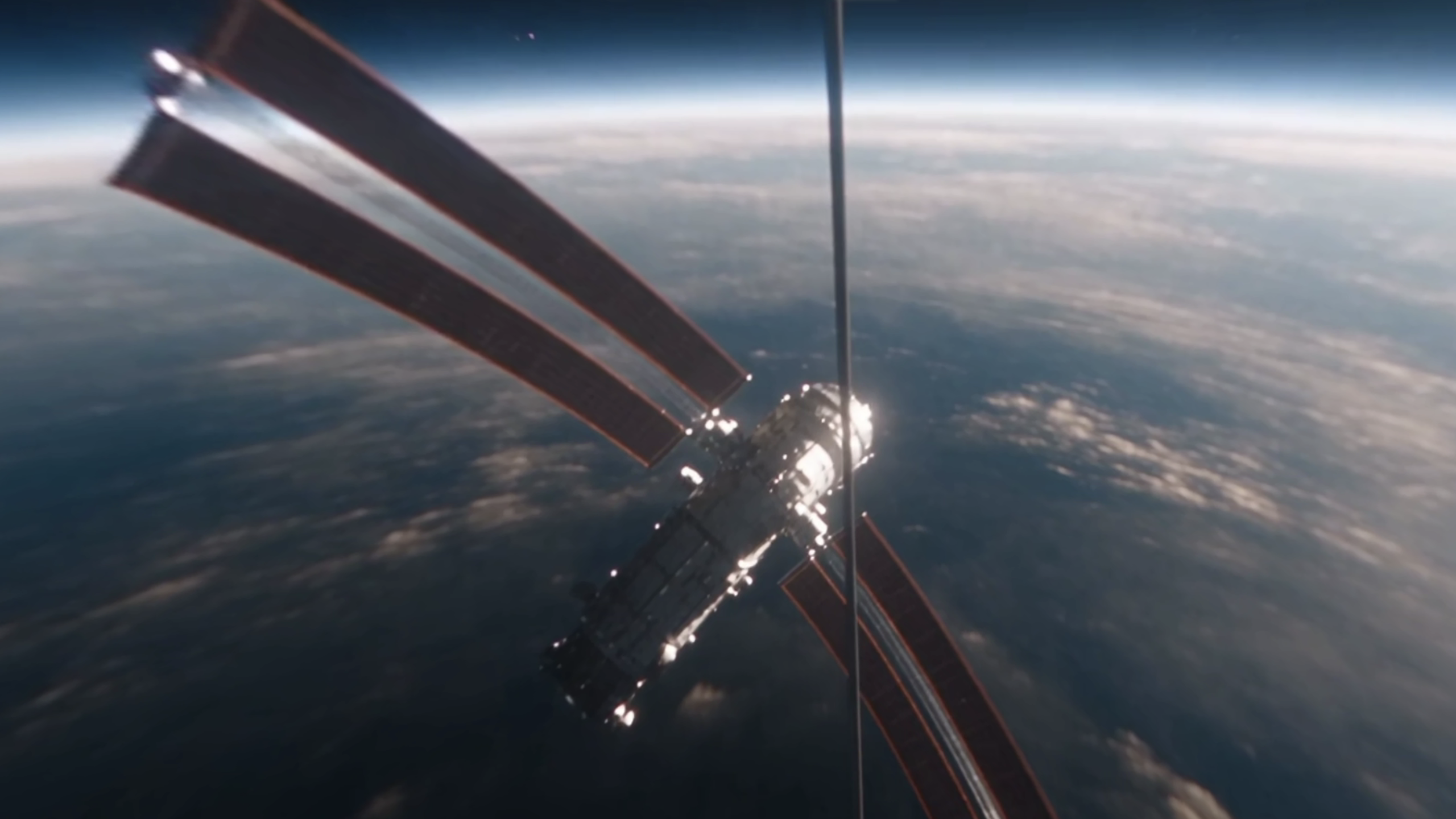
Ride above Earth in an AI-generated 180° space elevator experience built for Meta Quest.
-
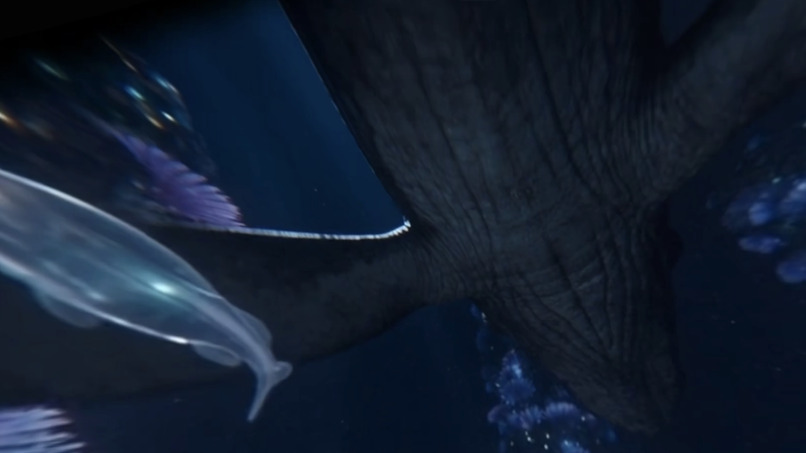
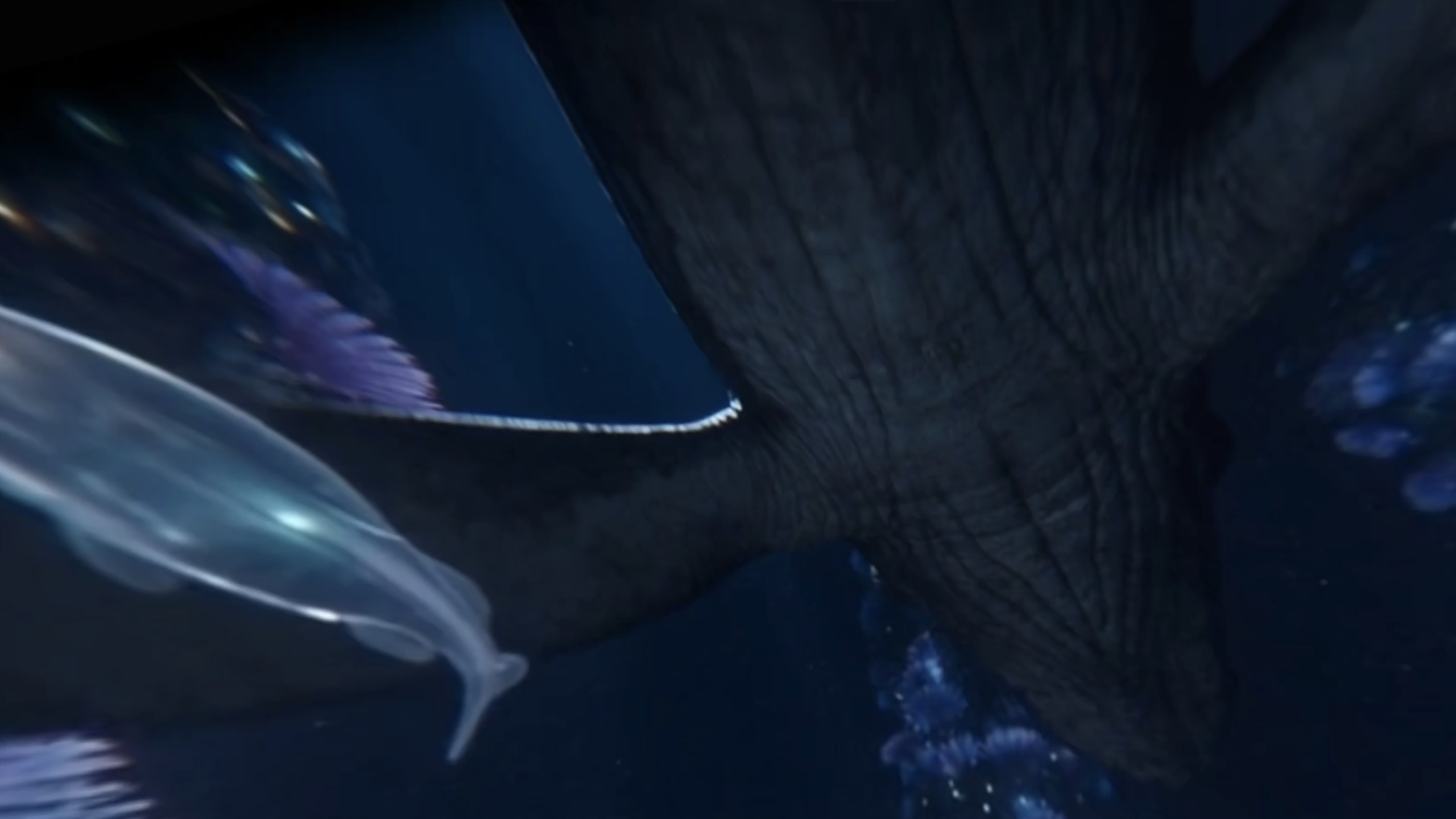
Enter an AI-generated underwater world and come face to face with a colossal ocean creature.
-
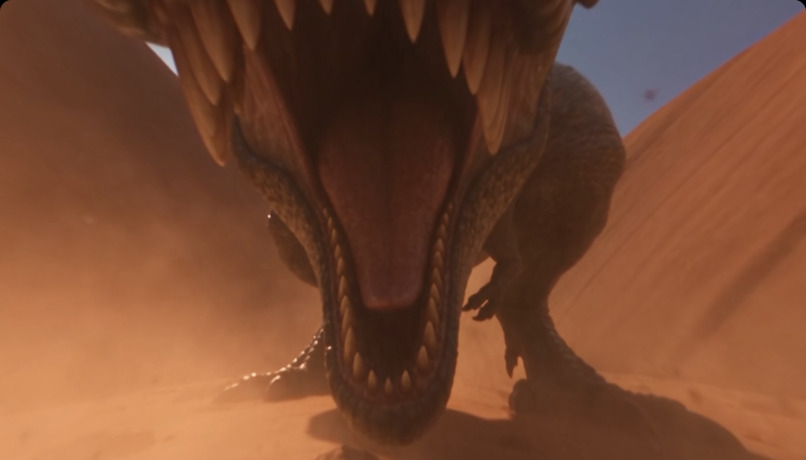
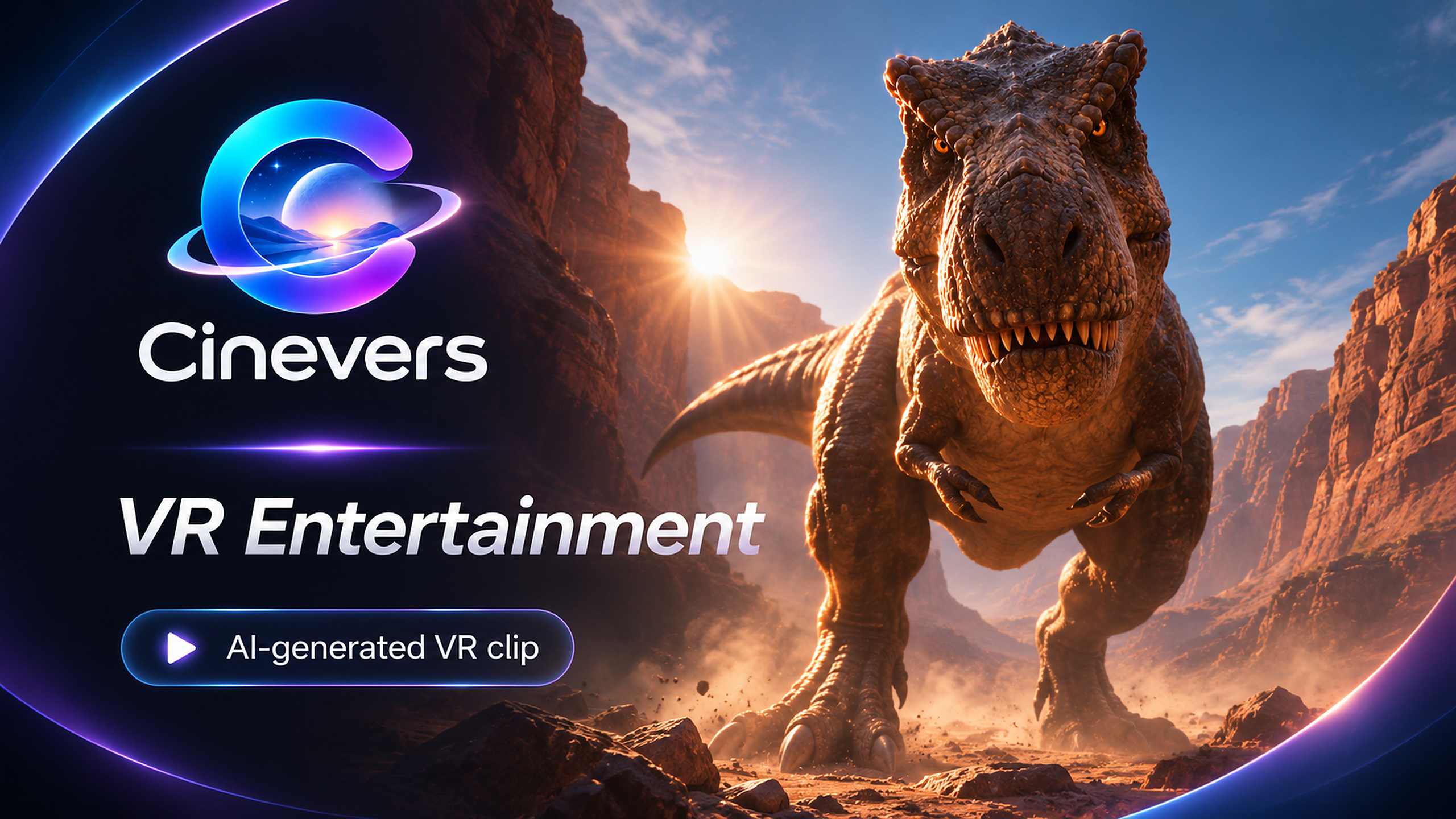
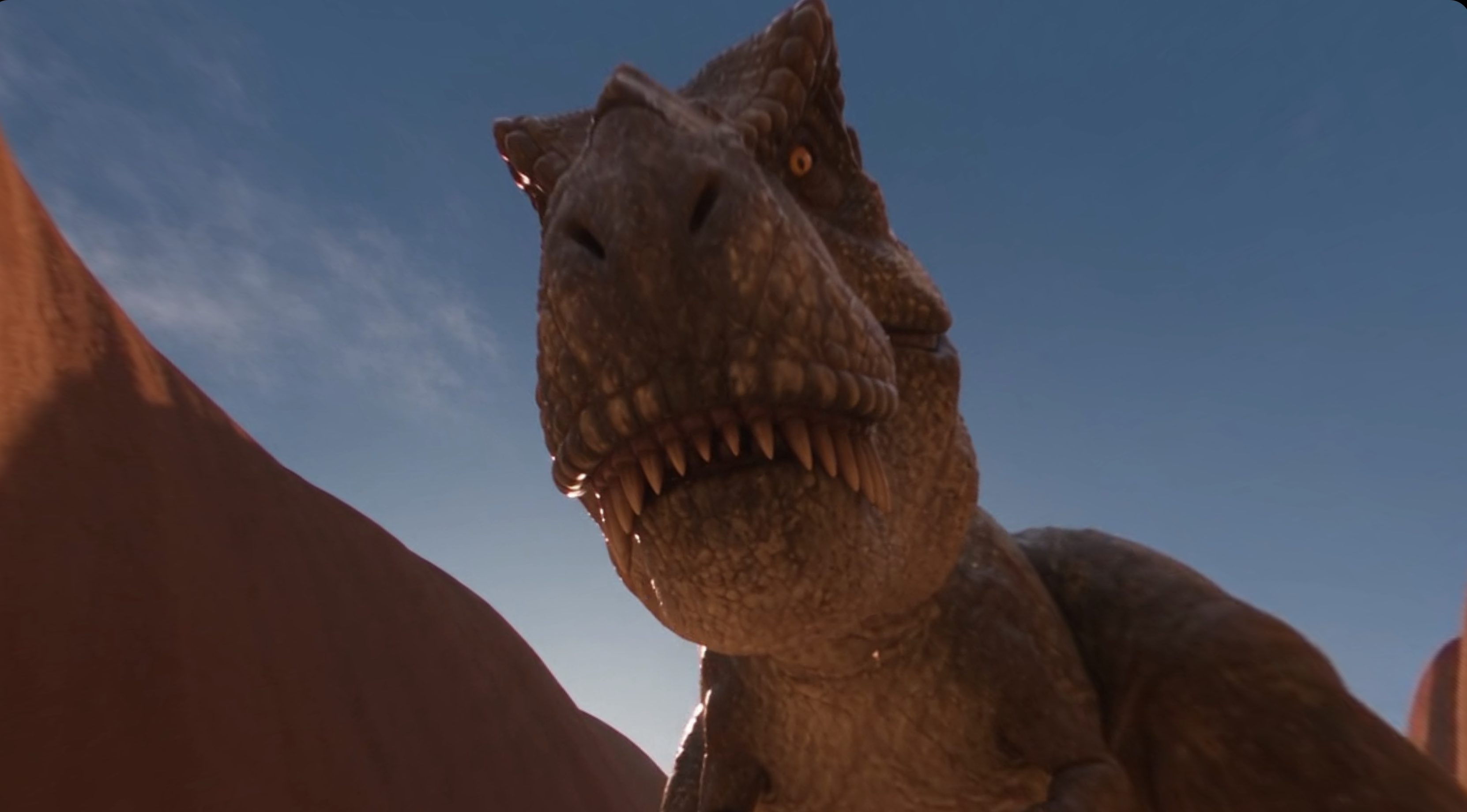
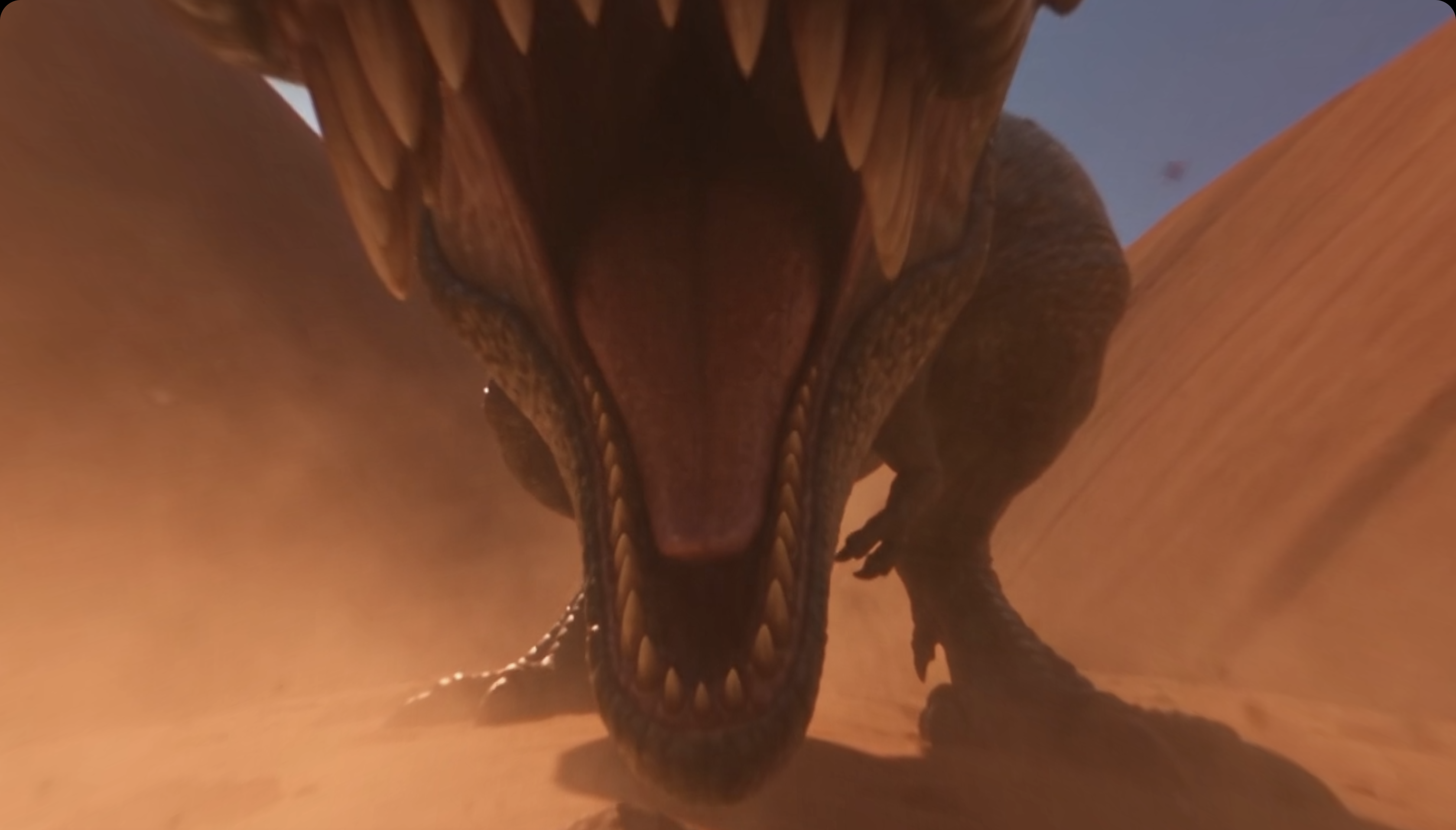
Stand inches from a roaring T. rex in a photorealistic AI-generated 180° immersive scene.
-
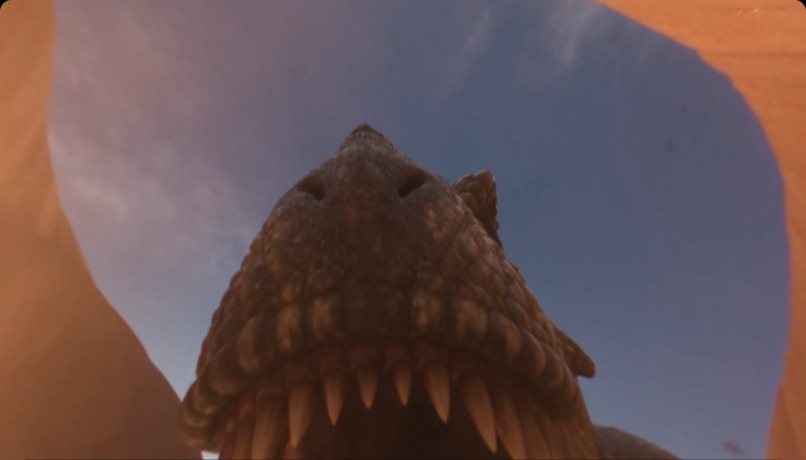
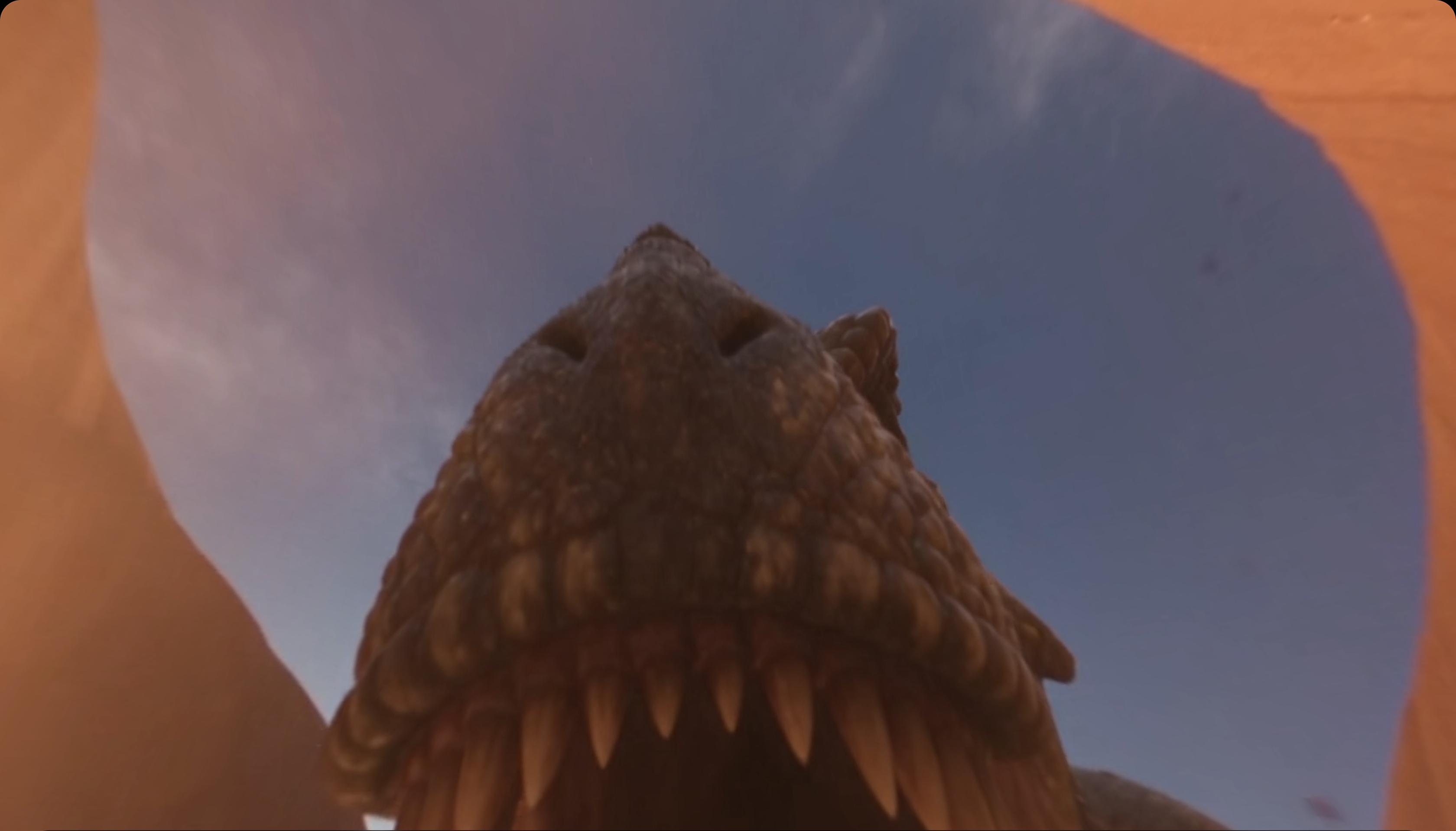
Look up as a T. rex in an AI-generated prehistoric canyon.
-
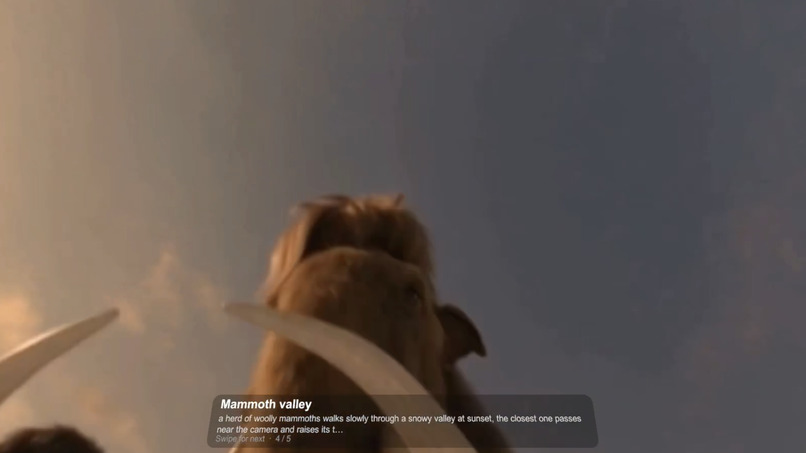
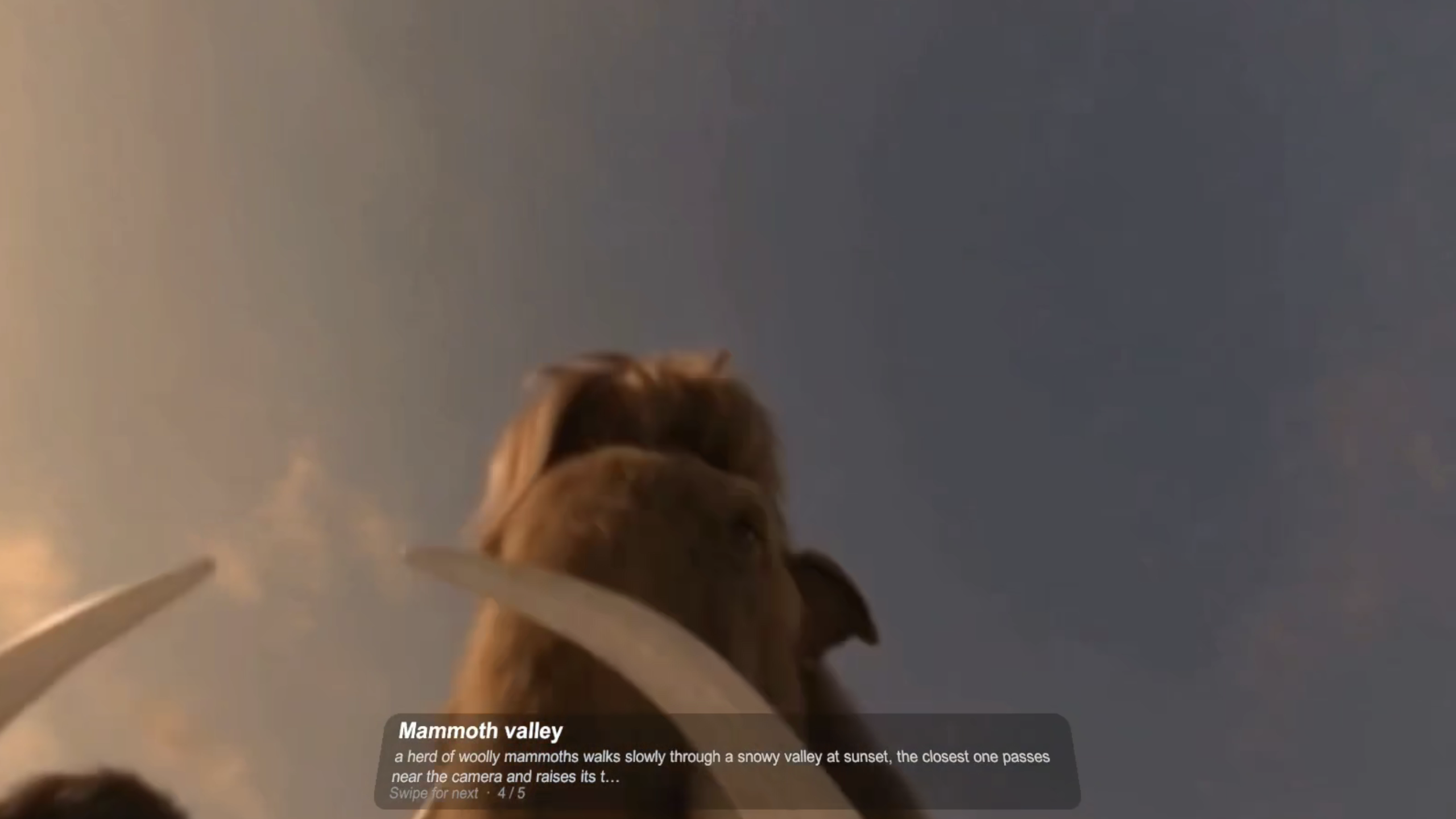
Experience a giant mammoth up close in an AI-generated 180° prehistoric valley.
-
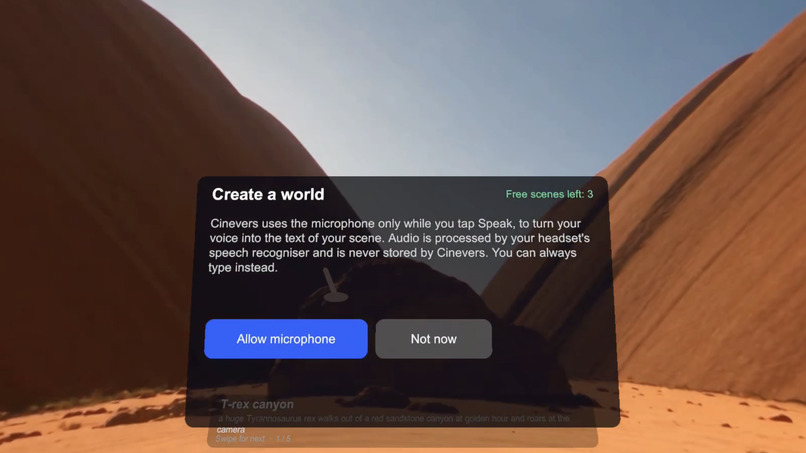
1. Use your voice to describe the world you want, then let Cinevers generate it for you.
-

Your limit is your imagination

Inspiration
AI video got incredible this year, but it's still a flat rectangle. VR headsets have amazing hardware and not enough to watch. So we asked: what if you could type one sentence and then stand inside it?
What it does
Cinevers opens inside a world: a T-rex walking up to you in a red canyon. Thumb-swipe or tap the arrows to move between worlds: a glass elevator rising into space, a leviathan in a deep-sea trench, a volcano over a black-sand bay.
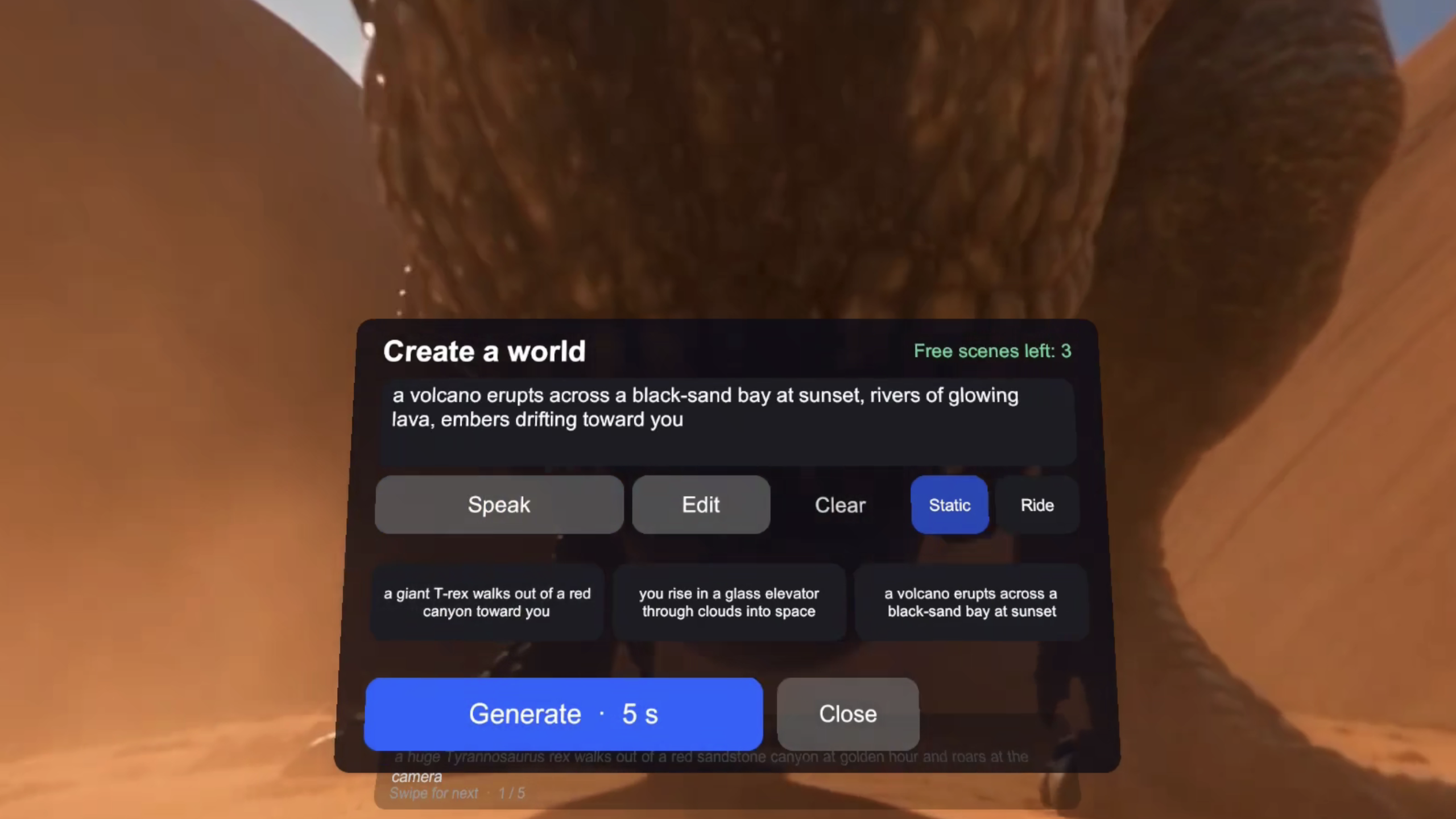
Tap Create, type any scene on the Quest keyboard, and press Generate. Keep exploring while it renders; a notification lets you jump straight into your new world.
- Hands only: point, pinch, swipe. No controller.
- 5 bundled worlds that work offline.
- New worlds stream from the cloud.
- Free generations for every headset during the competition.
How we built it
- Quest app: Unity with Meta's XR and Interaction SDKs: hand rays with live pinch feedback (the cursor turns blue when your pinch registers), thumb microgestures, and immersive 180° playback with spatial audio.
- Generation: a proprietary pipeline turns your prompt into an immersive scene, runs automatic quality checks for image quality and VR comfort, and packages it for the headset. Clips that fail are never shown, and your free generation is refunded.
- Cloud: a Next.js API on Vercel with a job queue, storage and a generation worker.
Challenges we ran into
- Making AI video comfortable in VR: some generated motion feels bad in a headset, so every clip goes through automatic comfort checks before anyone sees it.
- Hard scenes: very dark scenes (night skies, deep sea) tripped our quality checks, so we built a fallback that keeps the good ones.
- Keeping the wait fun: generation takes minutes, so the app keeps you exploring other worlds and notifies you when yours is ready.
- Hands-only everything: on the last night, a real-device test showed the hand rays pointing the wrong way. We traced it to a Meta SDK pointer-pose issue and shipped the fix, plus visible pinch feedback, before the deadline. Voice input is next: the Android speech recogniser isn't available on Quest, so we're moving to Meta's Voice SDK.
Accomplishments that we're proud of
- A full loop from one sentence to a world you stand inside, working on a real Quest, end to end.
- A tester's verdict on the final build: "much more user-friendly… users can easily understand the controls."
- Built solo, from scratch, in a few weeks.
What we learned
The magic isn't the resolution: it's scale and presence. People don't react to a flat clip the way they react to a dinosaur walking up to them.
What's next for Cinevers
- Voice input with Meta's Voice SDK.
- Real depth (lean and parallax).
- Scenes guided by your own photo.
- Full 360° worlds.
- Watching together with friends.
For judges
- Install from the Competition release channel and put the controllers down.
- Swipe through the worlds, then tap Create, type a scene (e.g. "you rise in a glass elevator through clouds into space") and press Generate.
- Keep swiping: you'll be notified in about 4–8 minutes. Original scenes work best; famous characters or franchises may be blocked by the content filter (your free scene is returned).
Created by Mr Berraf.
Built With
- ai-video
- c#
- ffmpeg
- generative-ai
- hand-tracking
- meta-interaction-sdk
- meta-xr-sdk
- next.js
- python
- quest-3
- typescript
- unity
- vercel
- webxr
