-
-
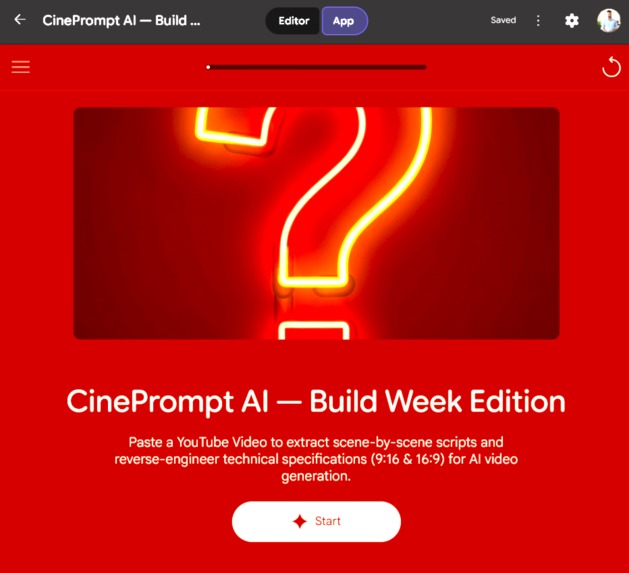
CinePrompt AI – Video Analysis & AI Prompt Generator Interface
Inspiration
CinePrompt AI was inspired by a simple problem: creators, editors, educators, and AI video makers often watch a video and manually break it down scene by scene before they can reuse the idea, study the structure, or create new production prompts. I wanted to make that process faster, cleaner, and more useful with AI.
What it does
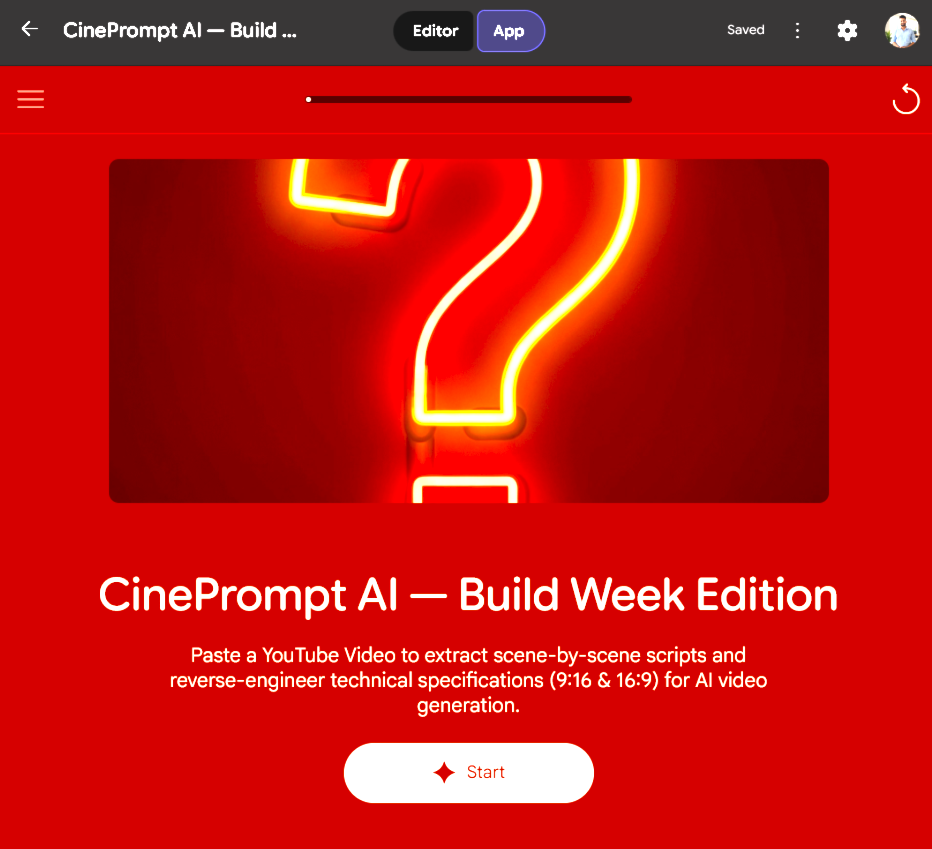
CinePrompt AI takes an uploaded video and analyzes it into a detailed scene-by-scene report. It extracts the transcript, identifies what is happening in each scene, and explains the technical production details such as visuals, camera style, lighting, motion, sound, and scene structure. It also helps convert that analysis into production-ready prompts for AI video generation in formats like 9:16 vertical and 16:9 landscape.
How we built it
The main app was built in Google Opal as an AI workflow. The workflow starts by accepting an uploaded video, then extracts the video transcript, analyzes the content scene by scene, and generates a detailed technical production report.
During OpenAI Build Week, I used Codex with GPT-5.6 to improve the project for submission. Codex helped me create a polished companion GitHub project with a clean README, setup instructions, sample data, export logic, validation tests, and a production-pack interface for turning scene analysis into reusable AI video prompts. Codex also helped with debugging, documentation, repo preparation, and submission readiness.
Challenges we ran into
One challenge was making the output useful for both normal users and technical creators. A simple transcript is not enough, so the project needed to include deeper details like camera movement, lighting, scene timing, motion, and sound. Another challenge was preparing the project properly for judging, including a public working app link, a public GitHub repository, documentation, sample data, and clear instructions.
Accomplishments that we're proud of
I am proud that CinePrompt AI turns a normal video into a structured creative and technical breakdown. The project can help users understand how a video is made, study scene structure, and quickly generate prompts for new AI video creation. I am also proud that the final submission includes both the working Opal app and a GitHub companion project that makes the idea easier for judges and developers to test.
What we learned
I learned how useful agentic coding can be when building and polishing a real project under a deadline. Codex helped speed up decisions around project structure, documentation, testing, and submission quality. I also learned that a strong AI workflow is not just about generating text; it is about turning messy input into a clear, repeatable, and useful output.
What's next for CinePrompt AI
Next, I want to improve CinePrompt AI with better video understanding, richer visual analysis, export options for editors and AI video tools, and support for more video sources. I also want to add team workflows so creators can save reports, compare videos, and build reusable prompt libraries for future projects.
Built With
- ai
- ai-video
- codex
- creator-tools
- google-opal
- gpt-5-6
- openai
- productivity
- prompt-engineering
- scene-analysis
- technical-breakdown
- transcript
- video-analysis
- video-production

Log in or sign up for Devpost to join the conversation.