-
-
CinePilot Overview
-
Echoes of Nsukka Scenario
-
Inspiration
Film production involves a lot of moving parts. A small problem can quickly affect the schedule, budget, crew, cast, or location. When something goes wrong, the team needs to understand what has changed and decide what to do next.
That was the problem I wanted to explore with CinePilot AI. I wanted to build something that could help a production team make sense of a problem using the information they already have, rather than treating each production issue as a completely separate event.
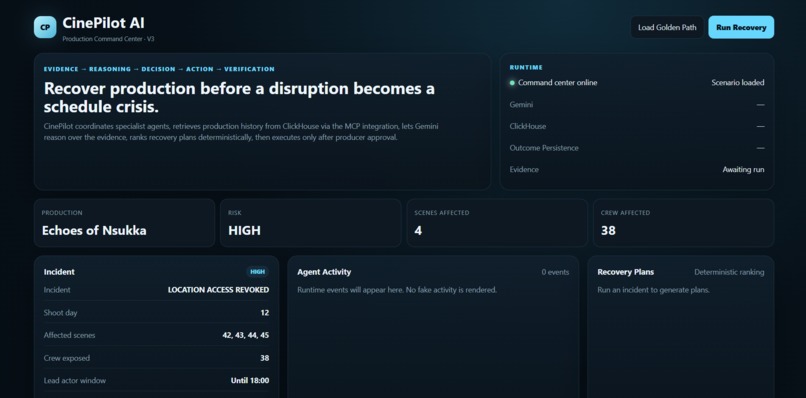
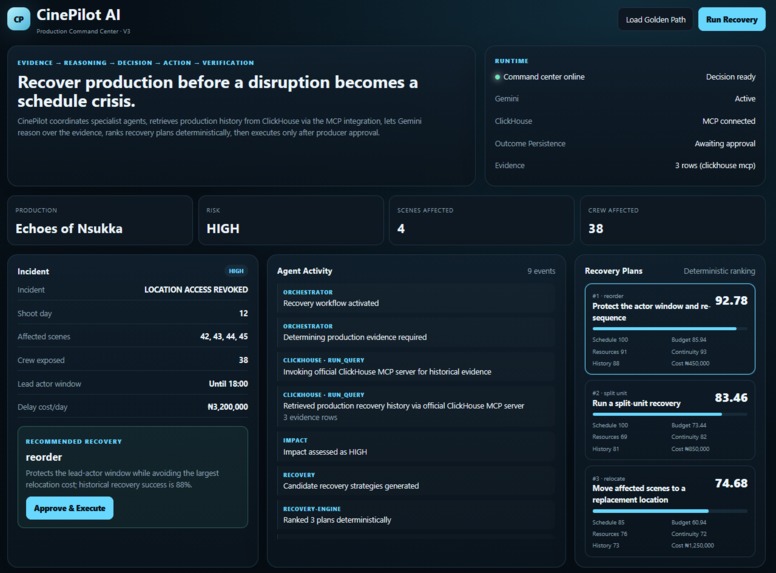
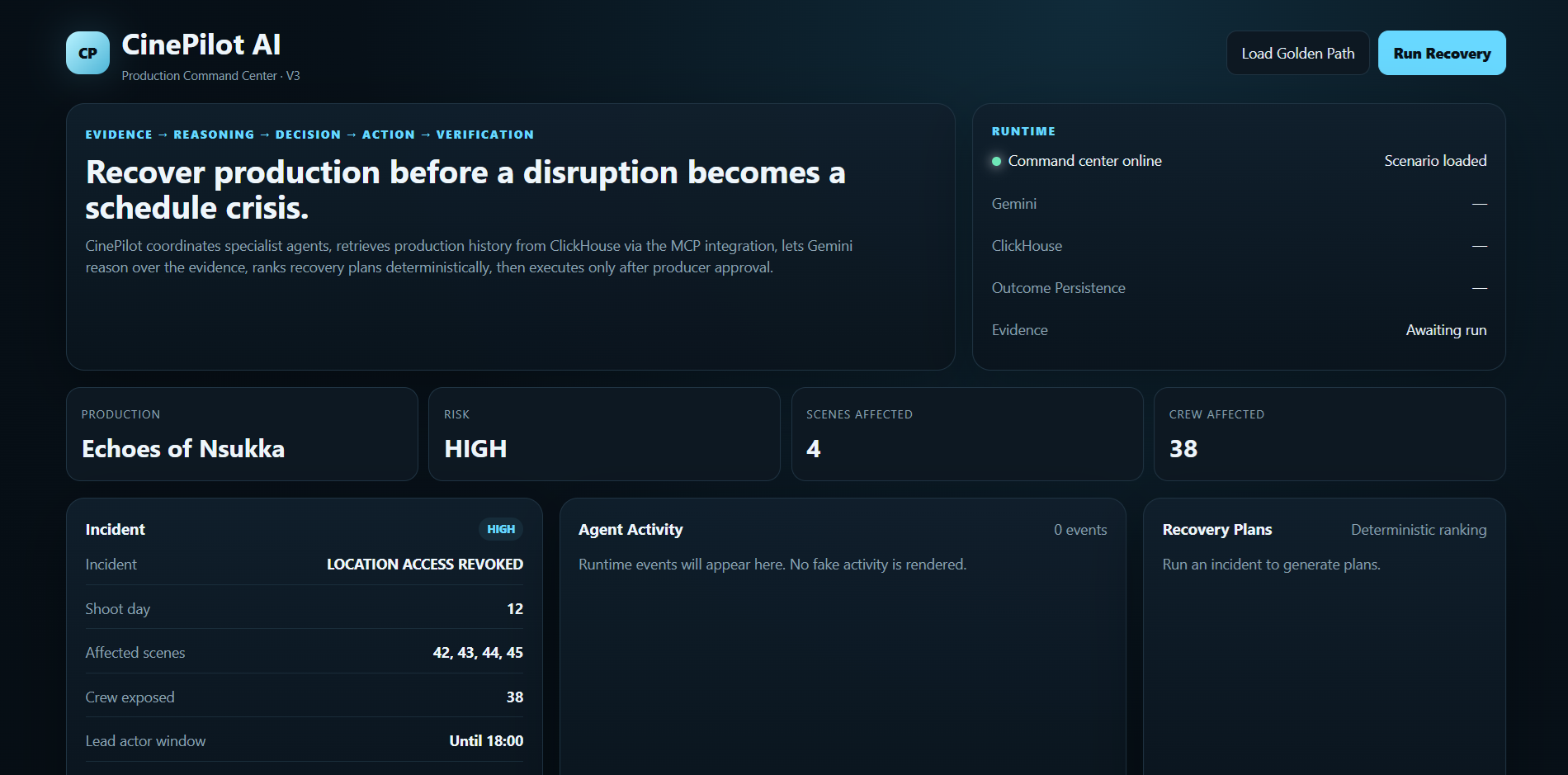
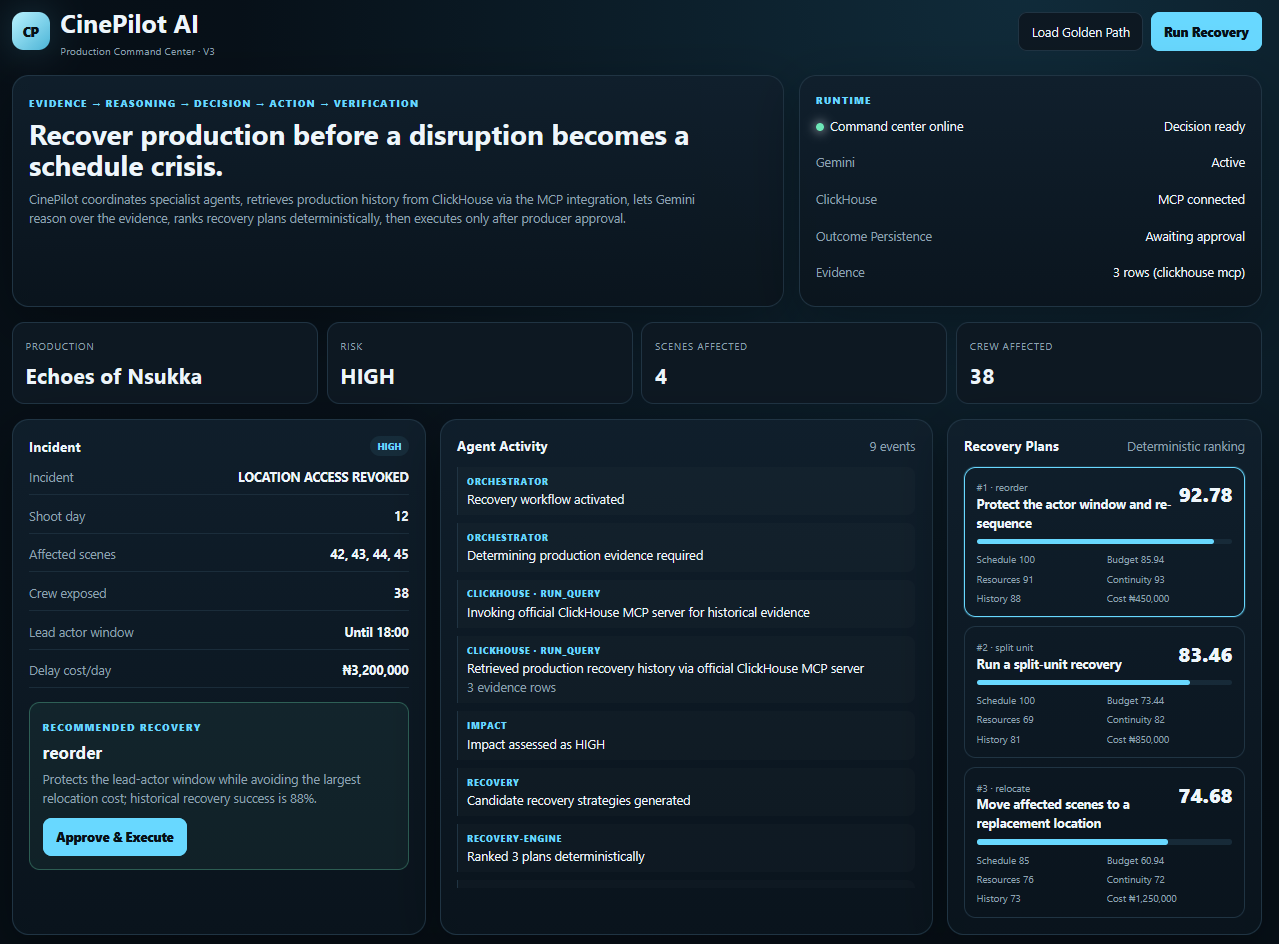
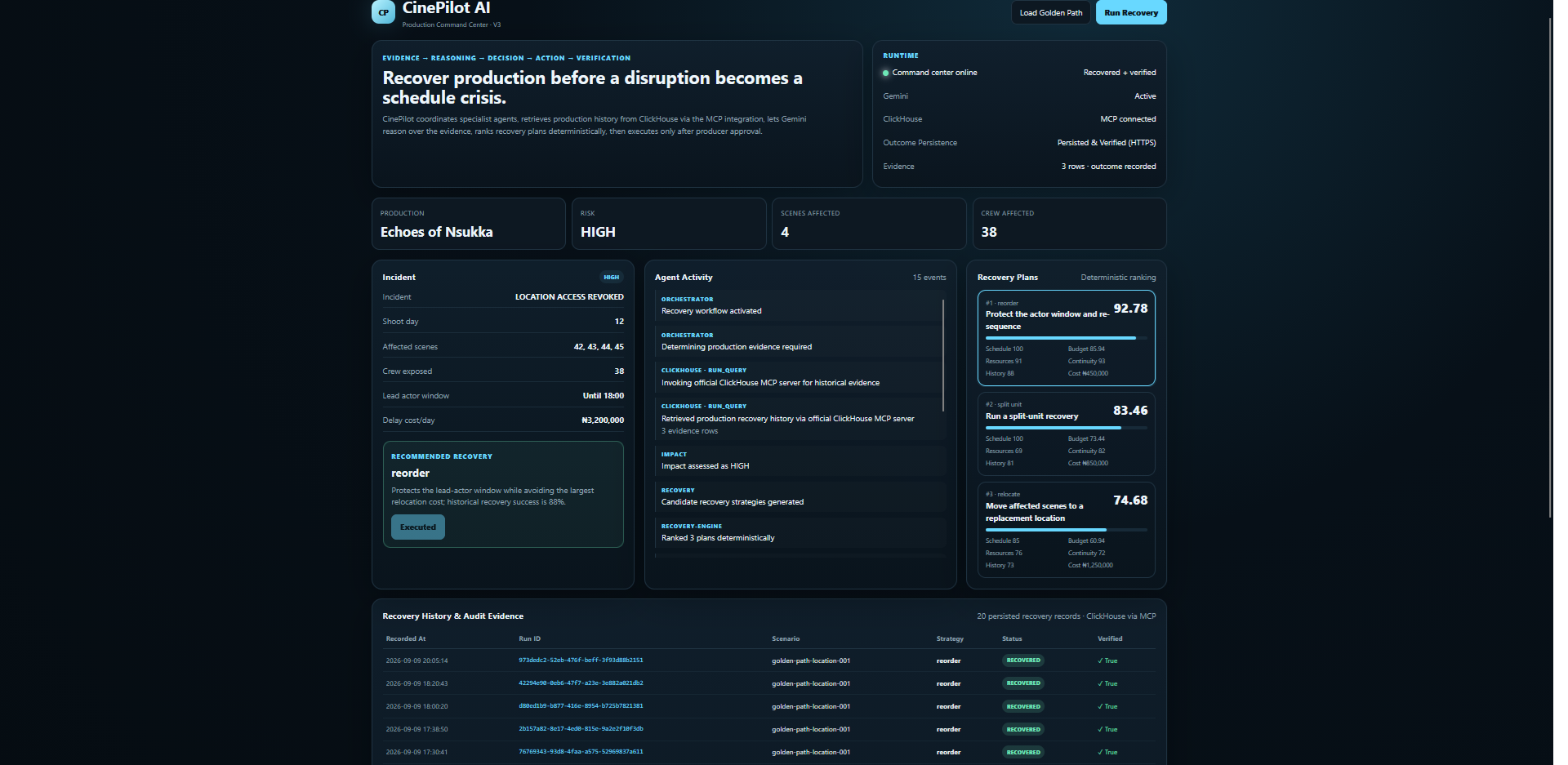
For the hackathon, I used a fictional production called Echoes of Nsukka to demonstrate this. The benchmark scenario involves losing access to a primary location during production and having to work out how to keep the shoot moving.
What it does
CinePilot helps filmmakers plan and manage production and respond to problems that can affect a shoot.
A production team can provide an incident, such as losing a location or having a scheduling problem. CinePilot looks at the available production information and helps identify what may be affected, then provides options the team can consider.
The system can also work with production history and scheduling information so that decisions are not made without context. It keeps the human production team involved in the decision instead of trying to make the decision for them.
The goal is simple: when something goes wrong during production, help the team understand the situation and work out the next step faster.
How we built it
I built CinePilot as a web application using TypeScript, React, Next.js, Node.js, ClickHouse, and MCP.
The application uses separate agents for different parts of the production workflow. They can retrieve and work with production information, while ClickHouse provides the data layer for analytical queries.
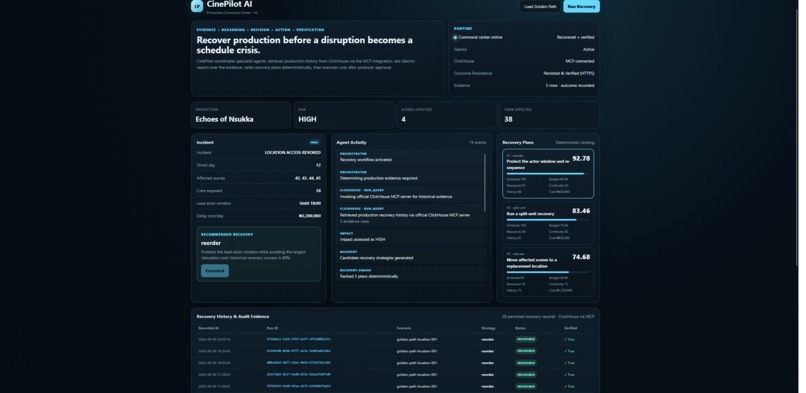
I used MCP to connect the application with the tools and data it needs. The system then brings the results together so the production team can see the situation, the relevant information, and the available options in one workflow.
I also built the project around a specific production scenario rather than creating a general-purpose chatbot. This helped me focus on how the software would actually be used when a production problem occurs.
Challenges we ran into
One of the biggest challenges was getting the different parts of the application to work together reliably.
It was not enough to have an agent generate a response. CinePilot needed to retrieve the right production information, use the available tools correctly, and return information that made sense in the context of the production.
Another challenge was making the workflow easy to understand. Production decisions can involve several connected factors, so I had to keep the interface focused on the actual problem instead of overwhelming the user with technical information.
I also spent time testing the ClickHouse and MCP integration and making sure the final demonstration reflected what the system could actually do.
Accomplishments that we're proud of
I am proud that CinePilot became a working production workflow rather than just an idea or a collection of separate features.
The Echoes of Nsukka scenario gave me a concrete way to test the system from the perspective of a production team dealing with an unexpected problem.
I am also proud of the way the project brings production data, analysis, recommendations, and human decisions into the same workflow. The system does not simply give an answer. It gives the production team information they can use to decide what happens next.
Most importantly, I was able to take the idea from an initial concept through development, testing, integration, and a working hackathon demonstration.
What we learned
I learned that building software for a specific industry requires more than connecting an AI model to a user interface.
The workflow has to make sense first. The technology should support that workflow, not become the main focus.
I also learned a lot about working with ClickHouse, MCP, and multiple agents in the same application. Getting these pieces to work together showed me how important good data structure, clear tool boundaries, and predictable workflows are.
Most of all, I learned that a useful production assistant should help people make decisions without taking away their responsibility for those decisions.
What's next for CinePilot AI
The next step is to take CinePilot beyond the hackathon scenario and build it around more of the day-to-day work involved in film production.
That could include more detailed scheduling and budgeting, production reports, crew and cast availability, location management, equipment planning, and better tracking of production changes.
I would also like to test CinePilot with real production teams and learn where it can provide the most practical value. The longer-term goal is to build something that can support filmmakers throughout production while keeping the people running the production in control of the important decisions.
Built With
- agents
- ai
- analytics
- clickhouse
- cloud
- context
- data
- film
- mcp
- model
- next.js
- node.js
- operations
- production
- protocol
- react
- typescript

Log in or sign up for Devpost to join the conversation.