-
-
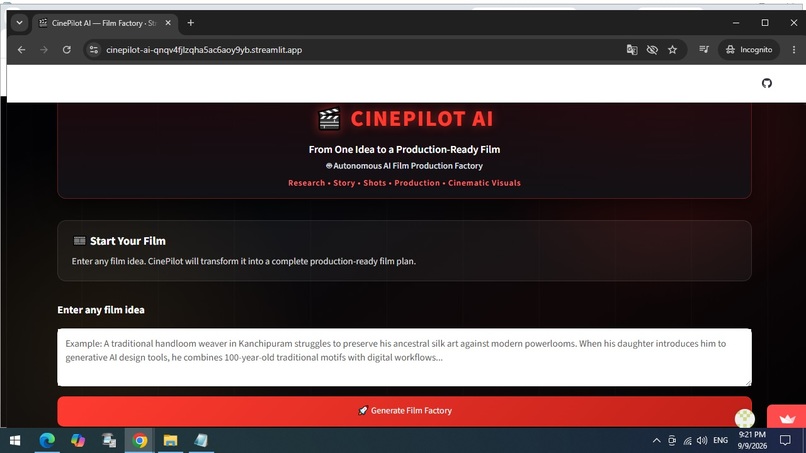
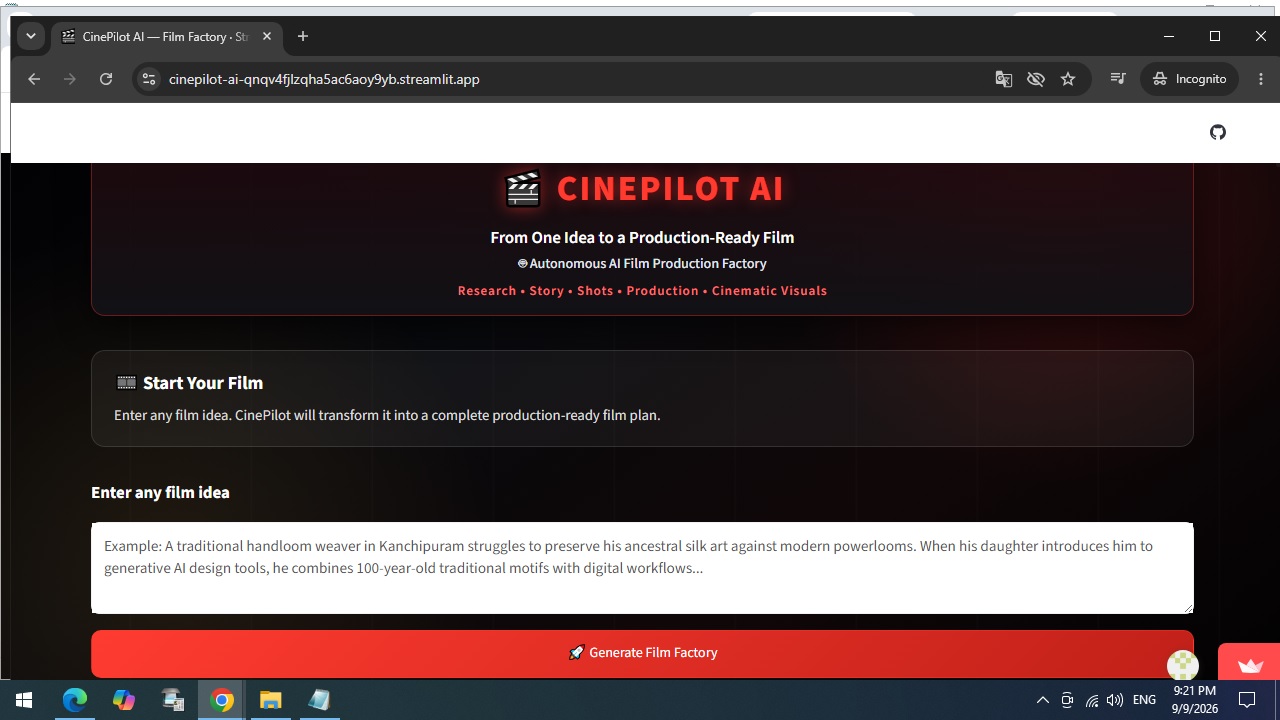
Main Ui
-
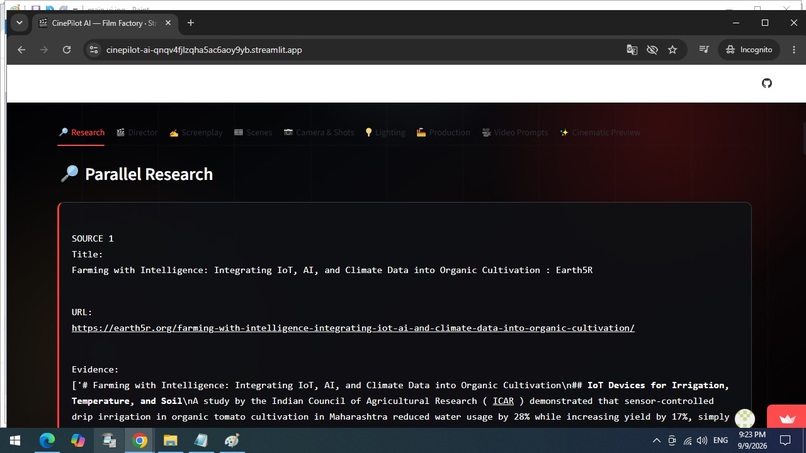
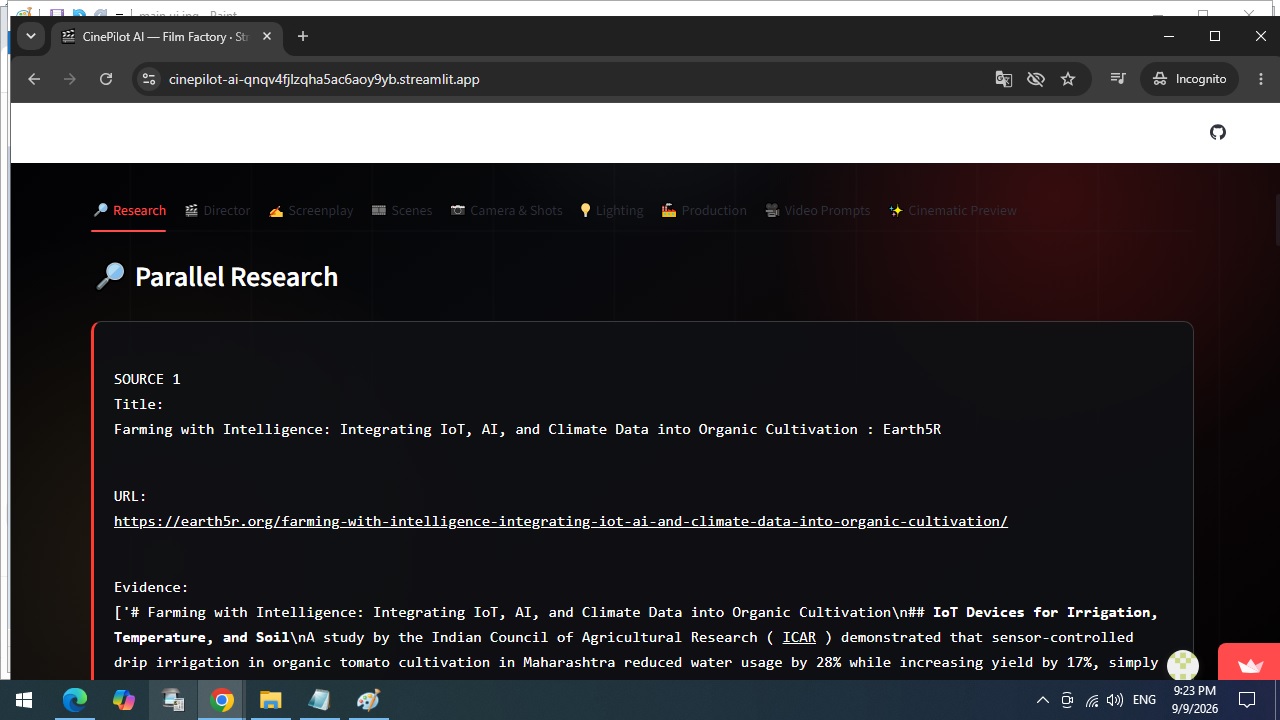
Parallel research
-
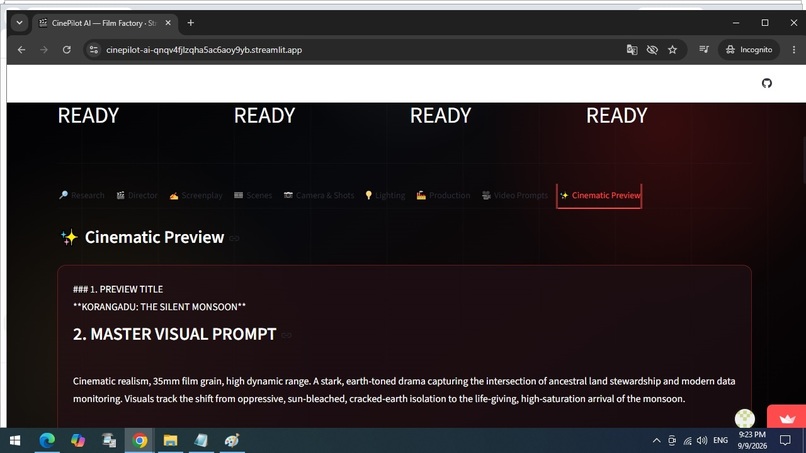
Cinimatic Preview
-
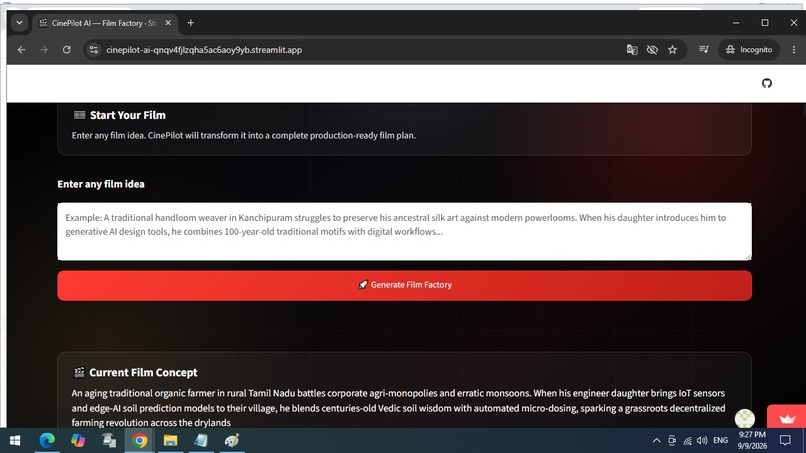
CinePilot output production package
-
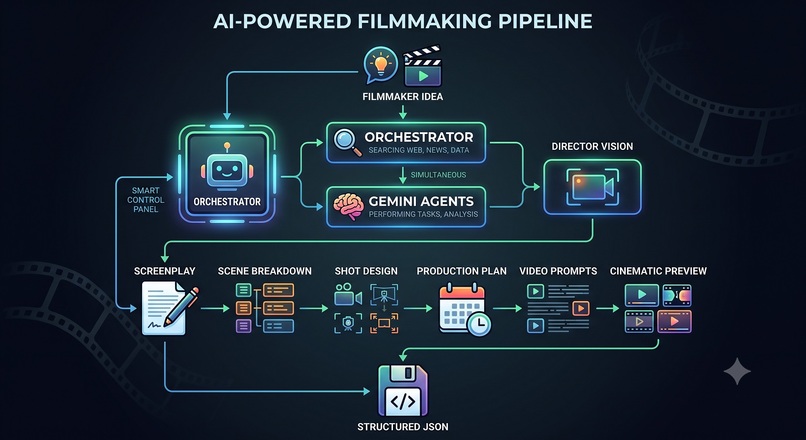
Pipeline
-
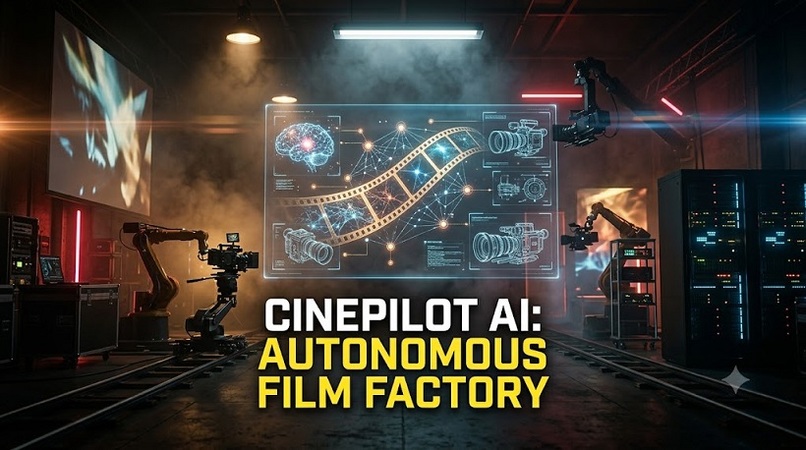
Cover
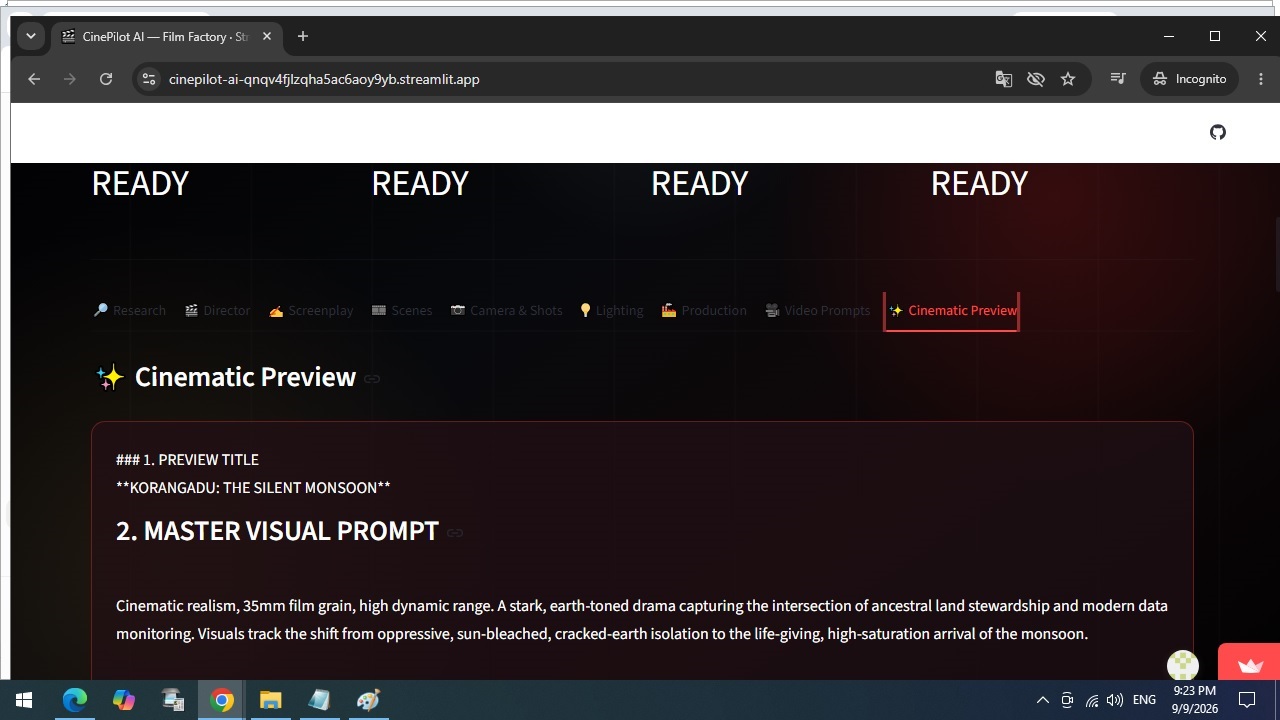
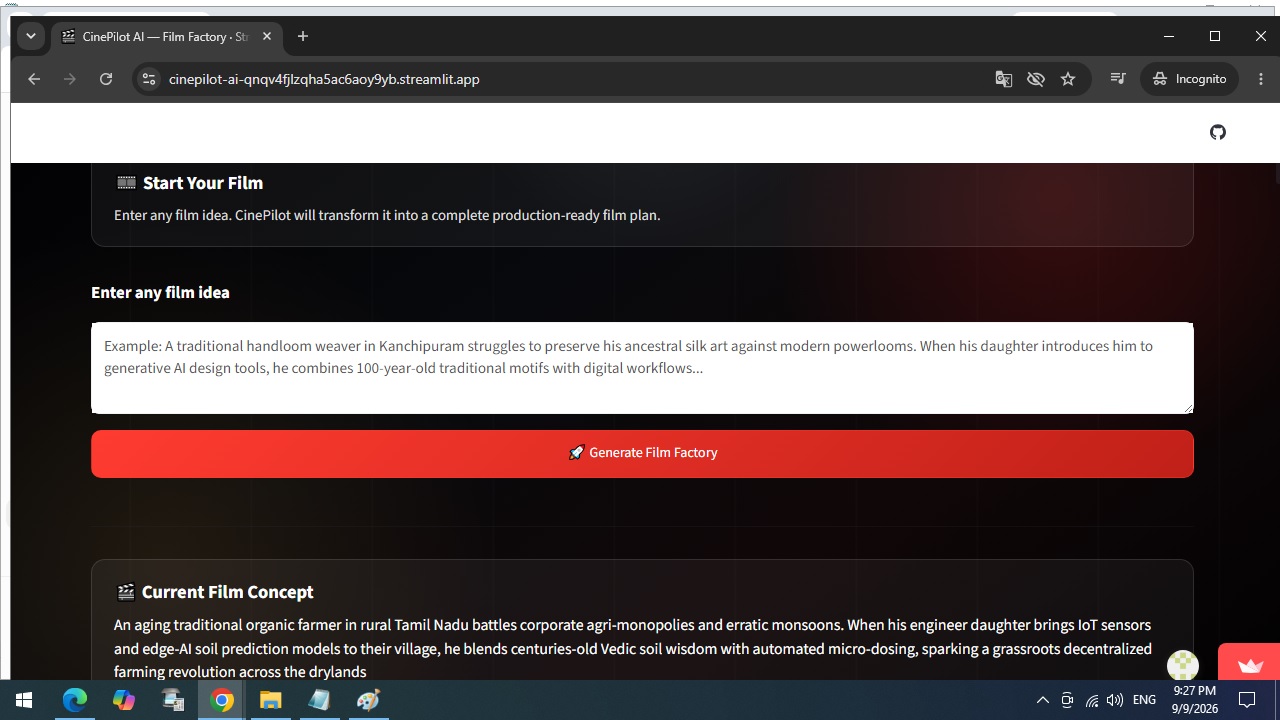

Filmmaking usually requires many separate steps: research, story development, screenplay writing, scene planning, camera design, lighting, production planning, and visual pre-production.
We wanted to explore a different approach: What if one filmmaker's idea could be transformed into a complete production-ready film plan by an autonomous AI film factory?
That idea became CinePilot AI.
The goal was not simply to generate a screenplay. CinePilot was designed to take a filmmaker's idea and autonomously transform it into a connected chain of filmmaking decisions, from research all the way to a cinematic preview.
What CinePilot Does
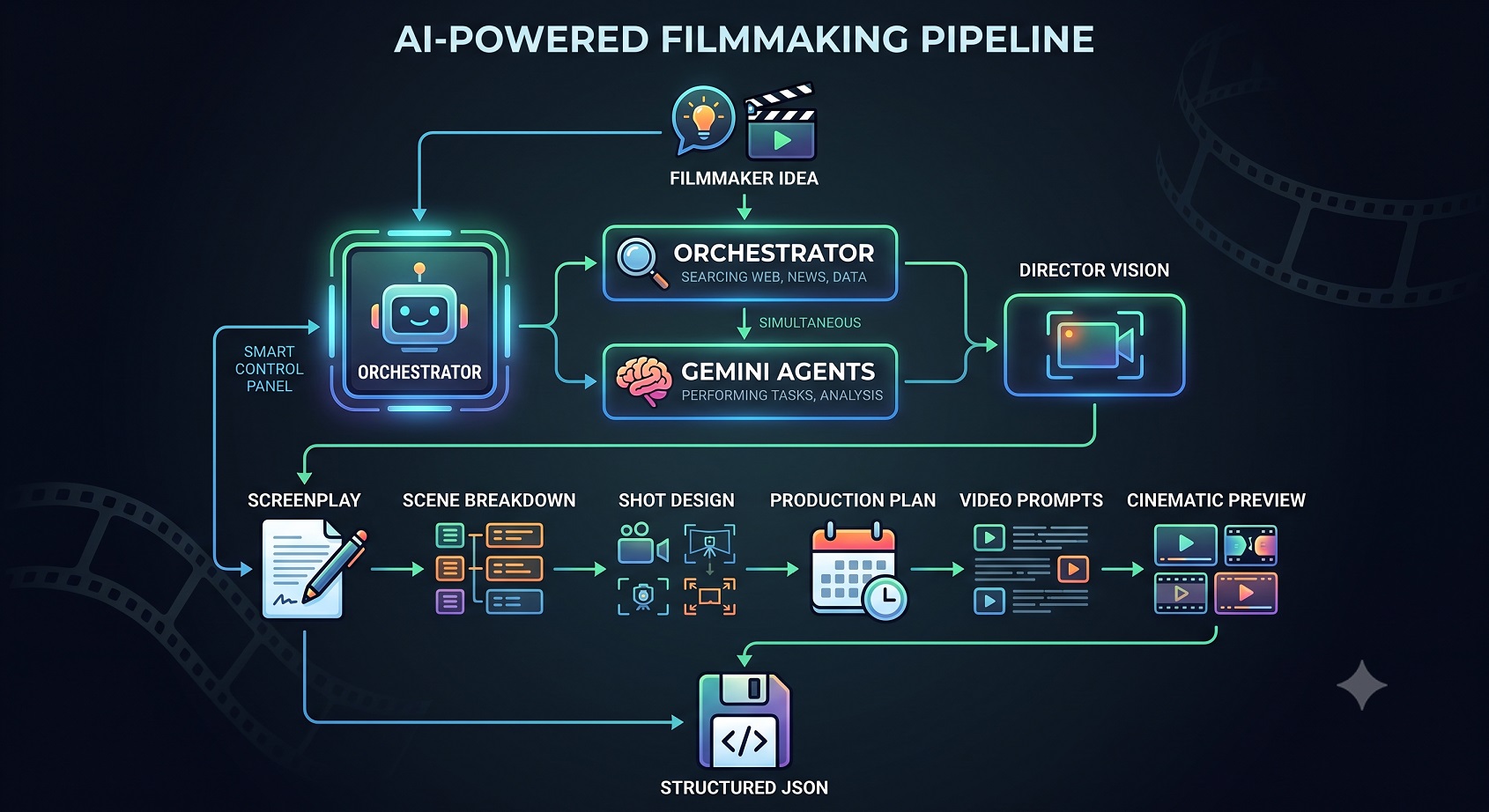
CinePilot AI follows this pipeline:
Filmmaker Idea → Parallel Research → Director Vision → Screenplay → Scene Breakdown → Camera & Shots → Lighting & Visual Direction → Production Plan → Video Prompt Package → Cinematic Preview
Each stage produces structured output that becomes useful context for the next stage.
The final production package is also stored as structured JSON in cinepilot_result.json, making the result easier to reuse, inspect, and extend.
Why It Is Agentic
CinePilot is designed as a multi-stage AI film factory rather than a single prompt-and-response application.
Different specialized agents handle different filmmaking responsibilities:
- Director Agent — develops the creative vision, genre, logline, characters, conflict, and visual identity.
- Screenplay Agent — transforms the director vision into a structured screenplay.
- Scene Agent — converts the screenplay into production-oriented scene breakdowns.
- Camera & Shots Agent — designs shot composition, lenses, movement, and hero shots.
- Lighting & Visual Direction — establishes lighting, color, mood, and visual continuity.
- Production Plan Agent — creates cast, locations, equipment, schedule, risks, and production requirements.
- Video Prompt Agent — converts visual decisions into prompts suitable for cinematic video generation.
- Cinematic Preview Agent — creates a visual preview specification showing how the finished film should look.
The agents work as a connected production pipeline, with each stage building on the previous stage.
How We Used Parallel
Parallel is used as the research layer of CinePilot.
When a filmmaker enters an idea, CinePilot sends the concept through Parallel Web Research to discover relevant real-world information before the creative pipeline begins.
The research can provide:
- locations and geography
- cultural and historical context
- technology references
- real-world filmmaking inspiration
- domain-specific details
- factual background relevant to the story
The research results are then passed into the creative pipeline so that the generated film concept is grounded in real-world context.
For example, during testing, CinePilot received an idea about a traditional farmer in rural Tamil Nadu combining ancestral farming knowledge with IoT sensors and edge AI.
Parallel research discovered information about Korangadu dryland farming, Tamil Nadu agriculture, traditional farming practices, IoT agriculture sensors, and precision irrigation.
CinePilot then transformed those findings into a coherent story world, characters, conflict, visual identity, production plan, and cinematic preview.
This demonstrated that Parallel was not just displayed as search results; its research informed downstream creative decisions.
How We Built It
CinePilot was built using:
- Python
- Streamlit
- Google Gemini API
- Parallel Web Research API
- Structured JSON outputs
- Specialized AI agents
- GitHub
- Streamlit Cloud
The application provides a simple Streamlit interface where the filmmaker enters an idea.
The CinePilot Film Factory then orchestrates the research and creative pipeline and produces a complete production package.
Challenges
One of the biggest challenges was making the pipeline useful beyond a single predefined story.
We repeatedly tested CinePilot with completely different film ideas to verify that the system could generalize.
A business-loss-and-AI-startup story produced “VELLUM: THE WIN.”
A completely different Tamil Nadu farming story produced “KORANGADU: THE SILENT MONSOON.”
Both ideas successfully passed through the same research-to-production pipeline.
Another challenge was maintaining consistency between stages. Characters, locations, visual style, camera language, lighting, and production requirements needed to remain connected throughout the generated package.
What We Learned
We learned that an agentic filmmaking system becomes much more useful when research, reasoning, and creative generation are connected rather than treated as isolated AI prompts.
We also learned that structured intermediate outputs are important. Each stage can produce information that another stage can consume, making the overall system easier to inspect, test, and extend.
Most importantly, we learned that agentic AI can act as a creative production coordinator, not just a text generator.
What's Next
Future versions of CinePilot could connect the production plan to actual video-generation systems, storyboard generation, budgeting tools, casting workflows, scheduling systems, and collaborative filmmaking platforms.
The long-term vision is to turn CinePilot into a complete AI-assisted pre-production workspace where filmmakers can move from an idea to an executable production package much faster.
Final Result
One Idea → One AI Film Factory → One Production-Ready Film Plan.
CinePilot AI demonstrates how autonomous AI agents, real-world web research, and structured creative workflows can work together to accelerate filmmaking from concept to cinematic preview.


Log in or sign up for Devpost to join the conversation.