-
-
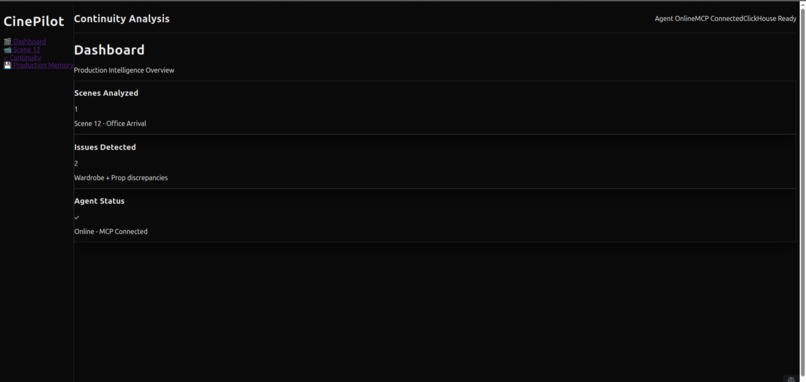
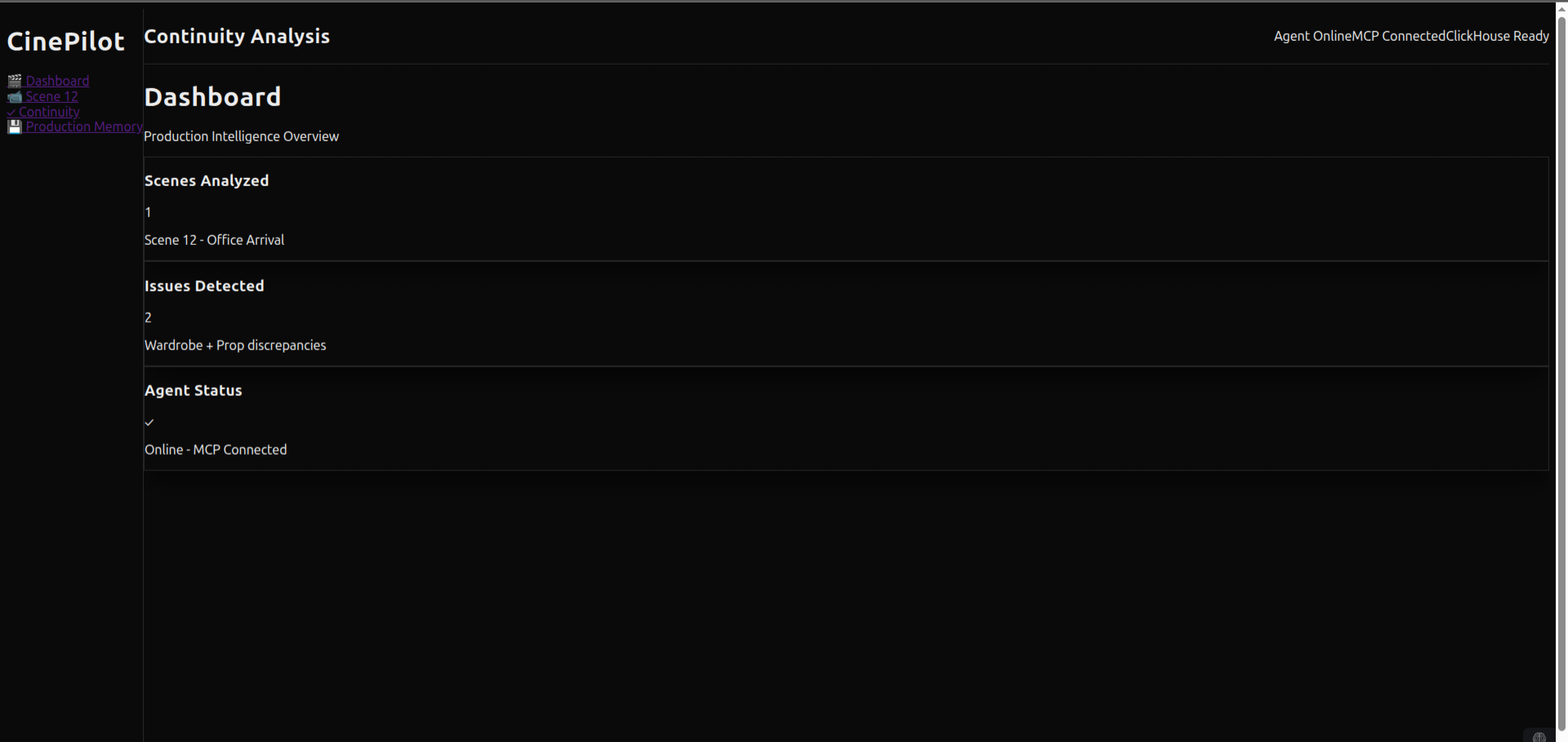
Dashboard — Production Intelligence Overview
-
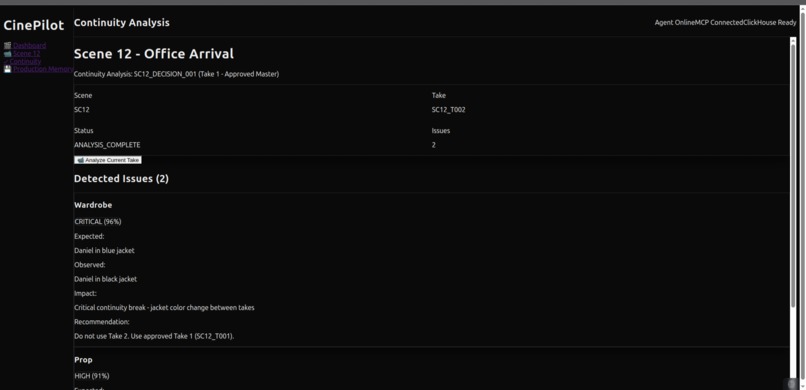
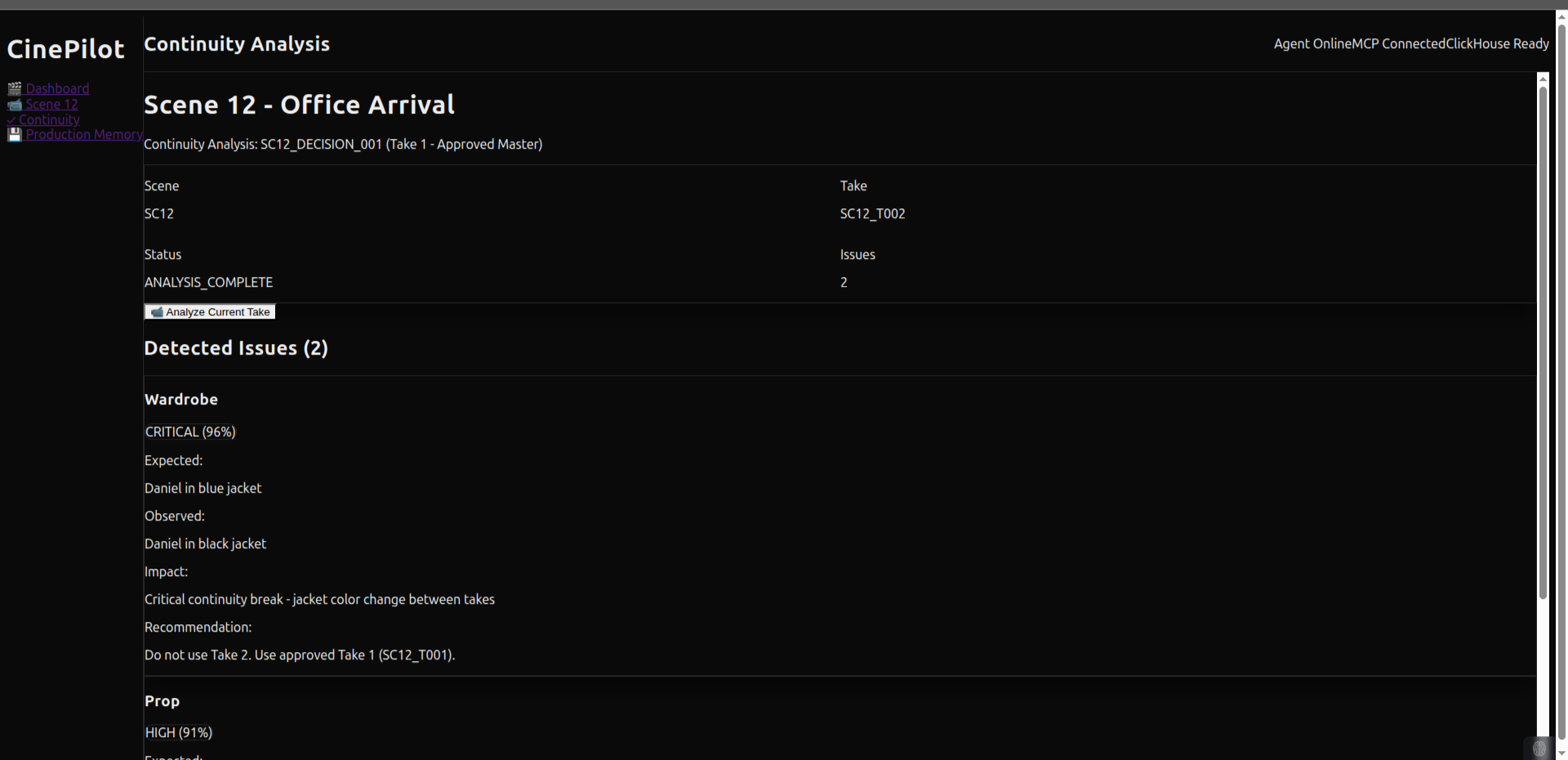
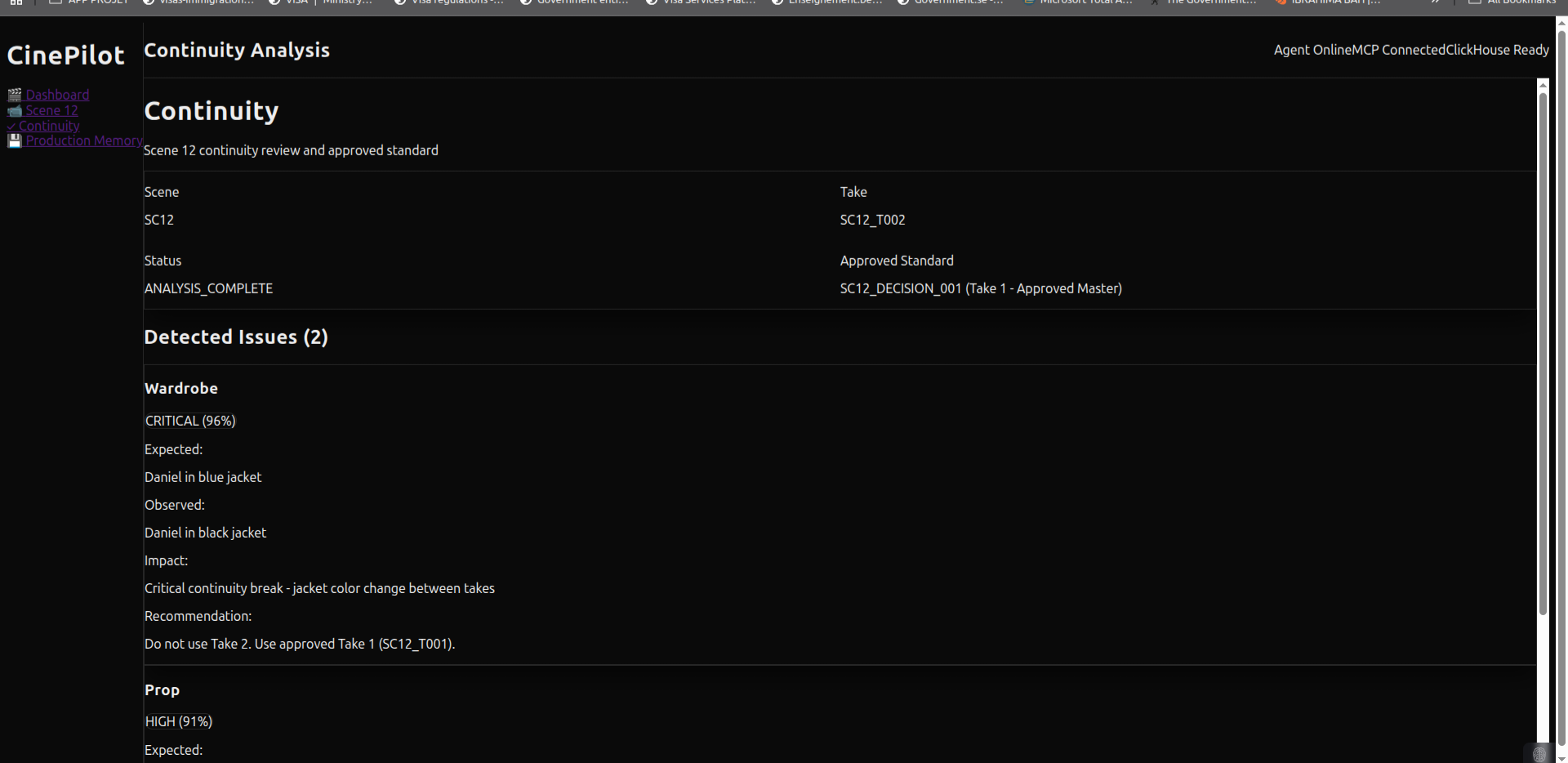
Scene 12 Analysis — Take SC12_T002 with the critical wardrobe issue
-
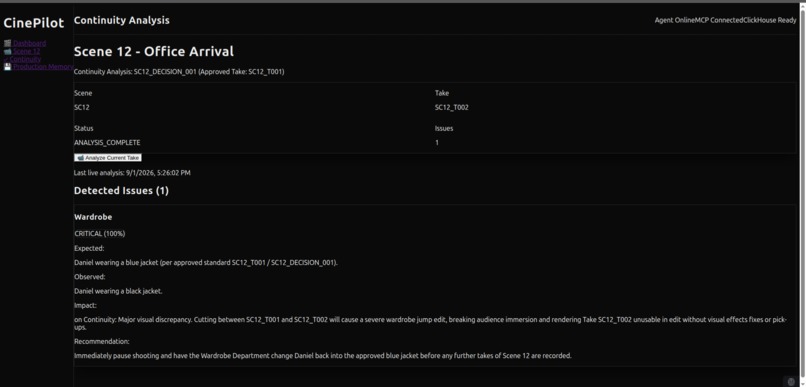
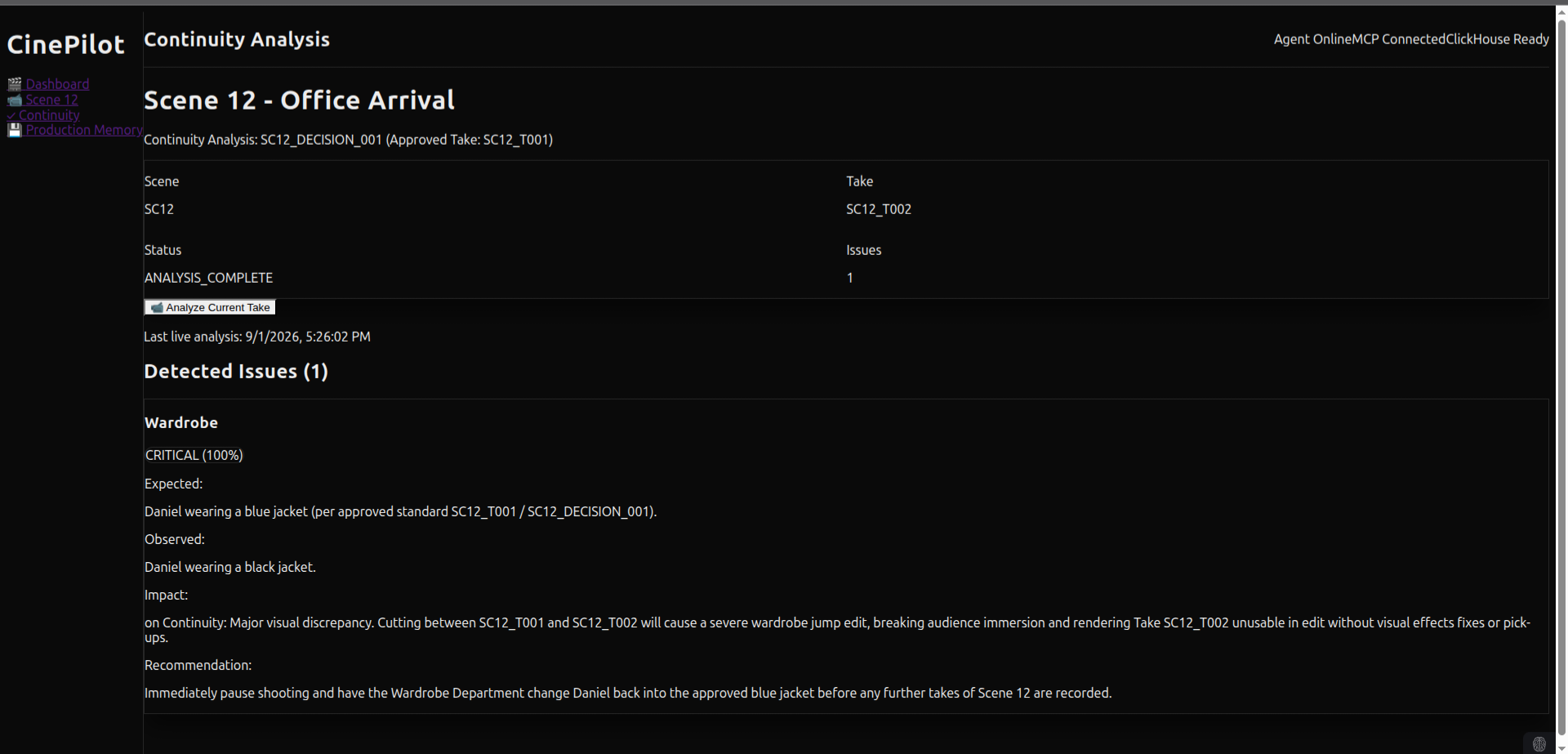
Live Analysis — Critical wardrobe mismatch
-
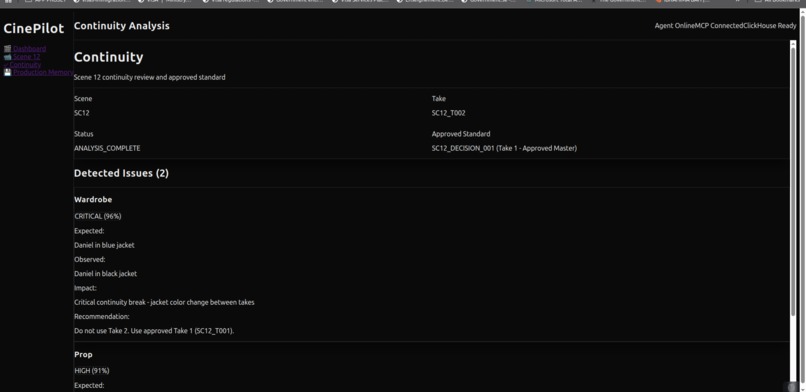
Continuity — Approved Standard / Take 1
-
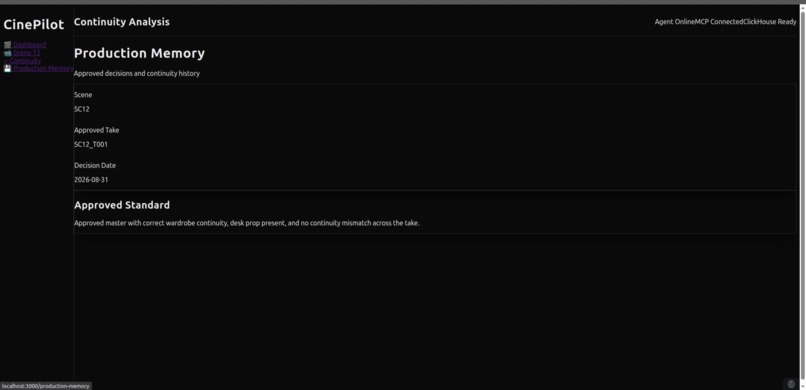
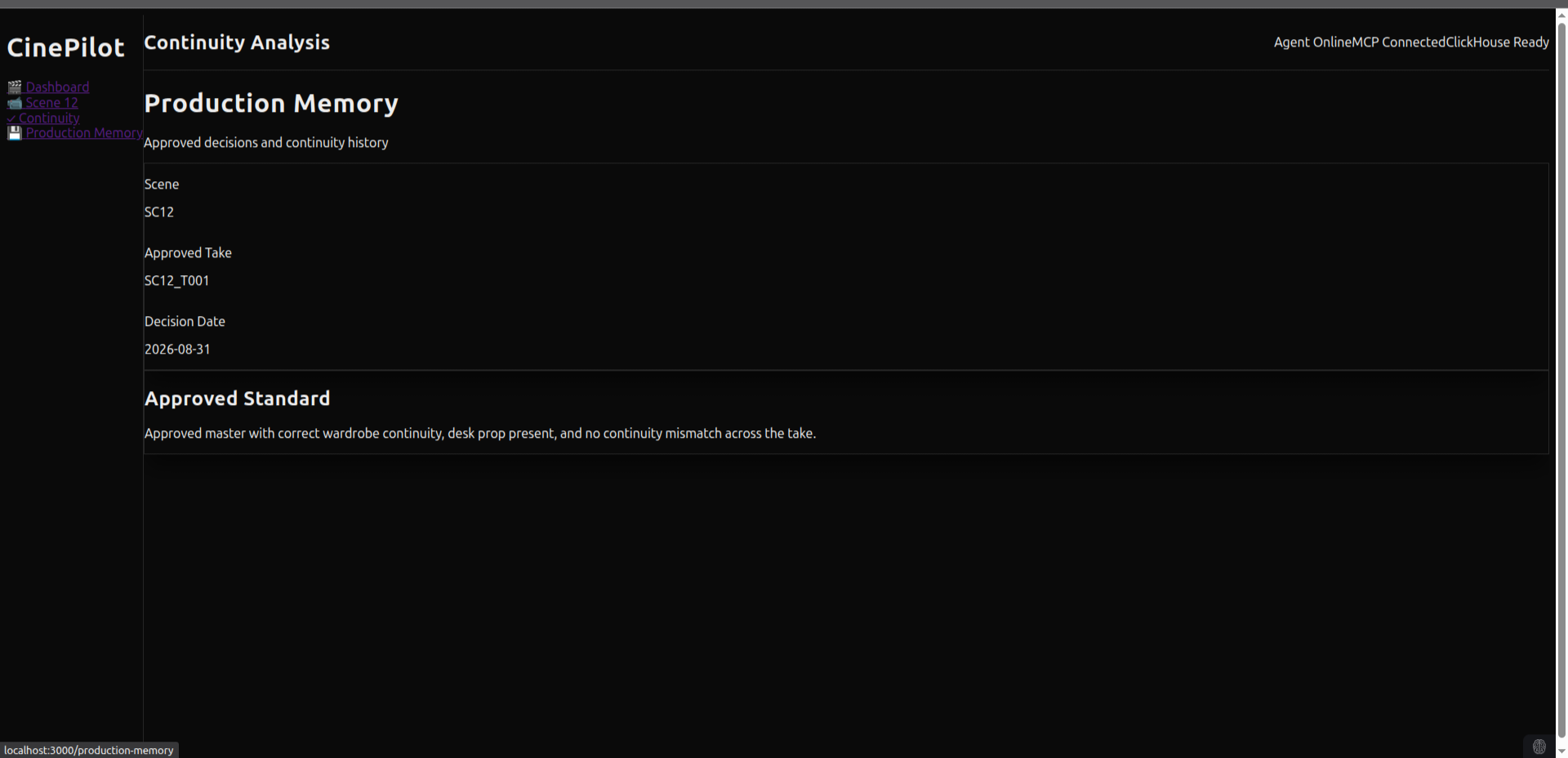
Production Memory — Approved Take SC12_T001
Inspiration
In film production, small continuity mistakes—an unintended wardrobe change, a coffee cup appearing or disappearing between shots, or environmental inconsistencies—can create massive downstream headaches in the editing room. These issues traditionally require tedious manual review across hundreds of shots and takes. We were inspired to build CinePilot AI to bring structure to this process, providing production teams with a fast, systematic way to catch continuity risks on set, while the camera is still rolling.
What it does
CinePilot AI supervises production continuity across scenes and takes.
Its workflow is:
Detect → Explain → Recommend → Remember
For our demonstration, CinePilot analyzes Scene 12 and identifies two continuity issues in Take 2:
- A critical wardrobe discrepancy: Daniel is expected to wear a blue jacket, but the observed take shows a black jacket.
- A prop discrepancy involving the expected scene setup.
CinePilot AI explains the production impact, identifies the issue severity, recommends rejecting the problematic take and using the approved Take 1, and preserves that decision in Production Memory.
The system connects live analysis, continuity supervision, and production memory so that a detected problem becomes an actionable production decision.
How we built it
CinePilot AI combines an interactive web application with an AI-oriented backend and production data layer.
The main components are:
- Next.js and React for the production intelligence dashboard and continuity interfaces.
- FastAPI and Python for backend APIs and application logic.
- An agent orchestration layer for continuity analysis and decision-making.
- Model Context Protocol (MCP) to connect the agent with production data and tools.
- ClickHouse for analytical production data.
- Production Memory to preserve approved takes, continuity decisions, and their reasoning.
The application was designed around a production workflow rather than a standalone AI response. The goal is for the system to move from detecting an inconsistency to explaining its impact, recommending corrective action, and remembering the approved decision.
Challenges we ran into
One of the biggest challenges was connecting multiple layers into a coherent production workflow.
We needed the frontend, backend APIs, agent orchestration, MCP integration, analytical data, and continuity interfaces to work together while keeping the experience understandable to someone on a production team.
Another challenge was representing continuity as more than a simple comparison. A useful production system needs to communicate severity, explain the consequences, recommend an action, and preserve the decision for later reference.
We also had to make the demonstration realistic enough to show the value of the concept while keeping the system reliable and repeatable for a hackathon environment.
Accomplishments that we're proud of
We are proud that CinePilot AI demonstrates a complete continuity-supervision loop rather than only showing an AI-generated analysis.
The working demonstration can:
- Present production intelligence through a dedicated dashboard.
- Analyze a specific scene and take.
- Identify critical continuity discrepancies.
- Explain the production impact of an issue.
- Recommend a corrective action.
- Compare a take against an approved continuity standard.
- Preserve the approved decision in Production Memory.
- Connect the user experience to MCP and ClickHouse-backed production data.
Most importantly, the system demonstrates how an agent can act as a production supervisor, helping transform raw observations into decisions that a crew can actually use.
What we learned
We learned that an effective agentic production tool needs to do more than detect problems.
Detection is only the beginning. The real value comes from connecting detection to context, impact, recommendation, and memory.
We also learned that production workflows contain important institutional knowledge: which take was approved, why it was approved, what continuity standard should be followed, and what action should happen when something changes.
CinePilot AI reinforced the idea that AI can be especially useful when it operates as part of an existing workflow rather than replacing the people making the final production decisions.
What's next for CinePilot AI
The next step is to move from a focused demonstration toward a more comprehensive production-continuity platform.
Future versions could include:
- Real-time computer-vision analysis from cameras or video feeds.
- Automatic detection of wardrobe, props, blocking, lighting, and set continuity.
- Richer production-memory capabilities across an entire project.
- Multi-scene and multi-day continuity tracking.
- Integration with call sheets, shot lists, script breakdowns, and production-management systems.
- More sophisticated agent collaboration between continuity, assistant-director, and production workflows.
- A production-ready interface for real film and television crews.
Our long-term vision is for CinePilot AI to become a persistent AI continuity supervisor that helps production teams protect consistency from the first shot through the final cut.

Log in or sign up for Devpost to join the conversation.