-
-
The landing page of CinemosBlazer
-
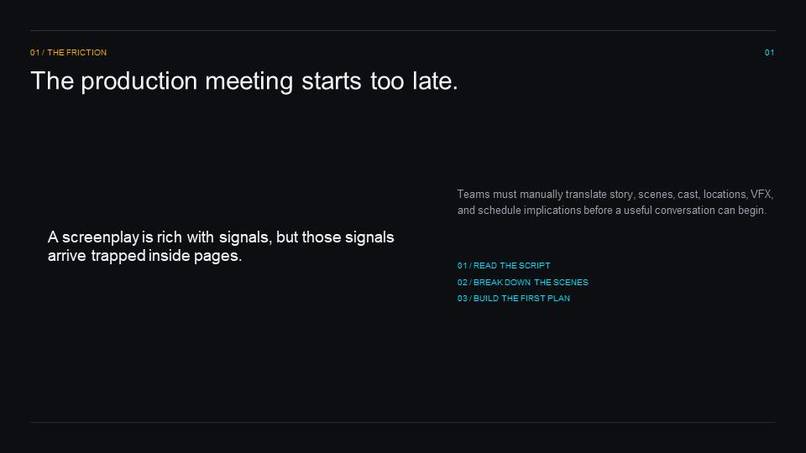
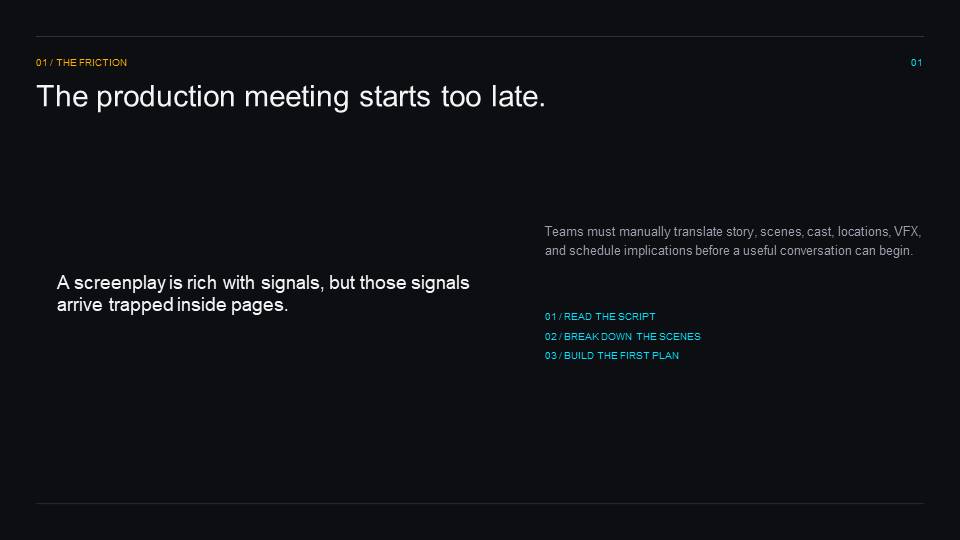
The friction
-
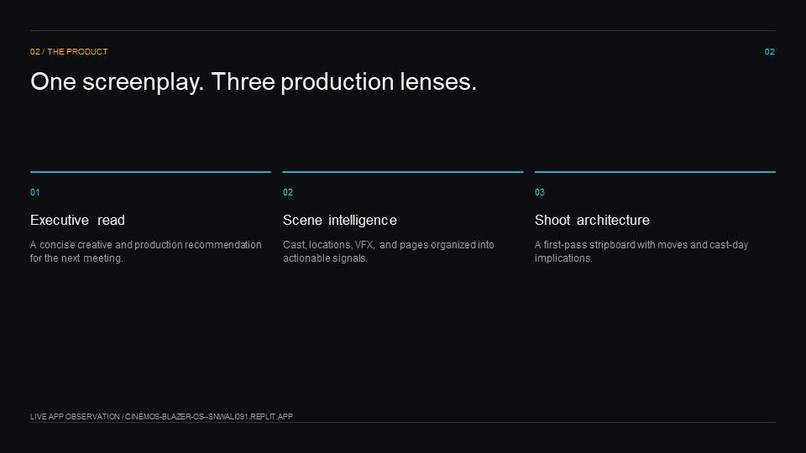
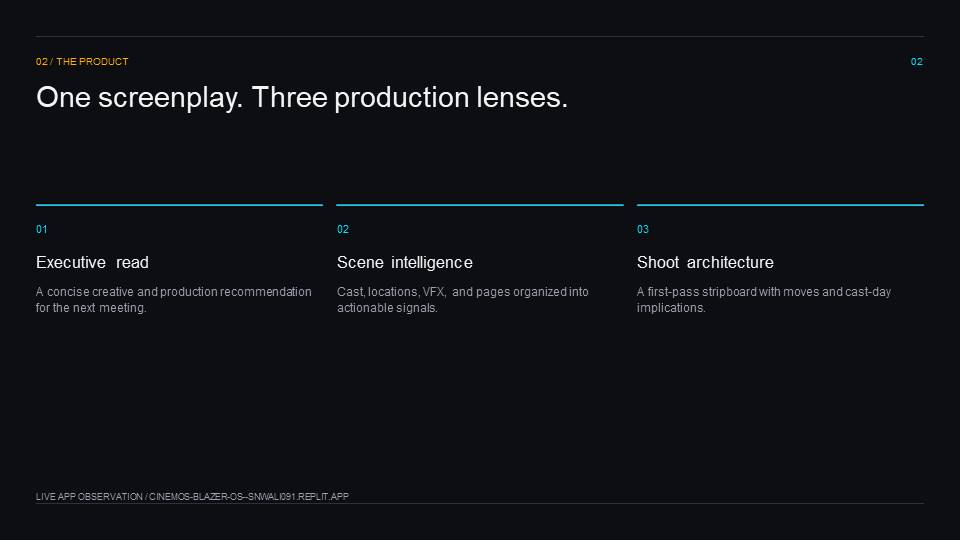
The product (One screenplay, three production lens)
-
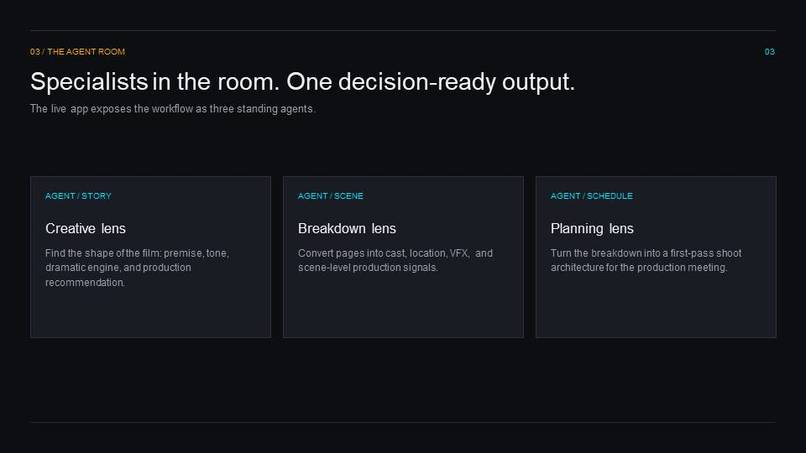
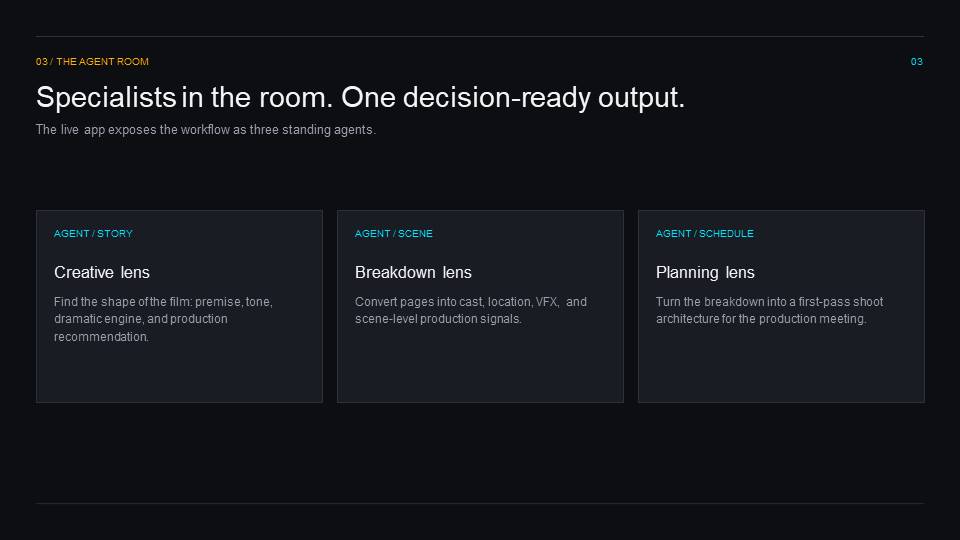
The agent room
-
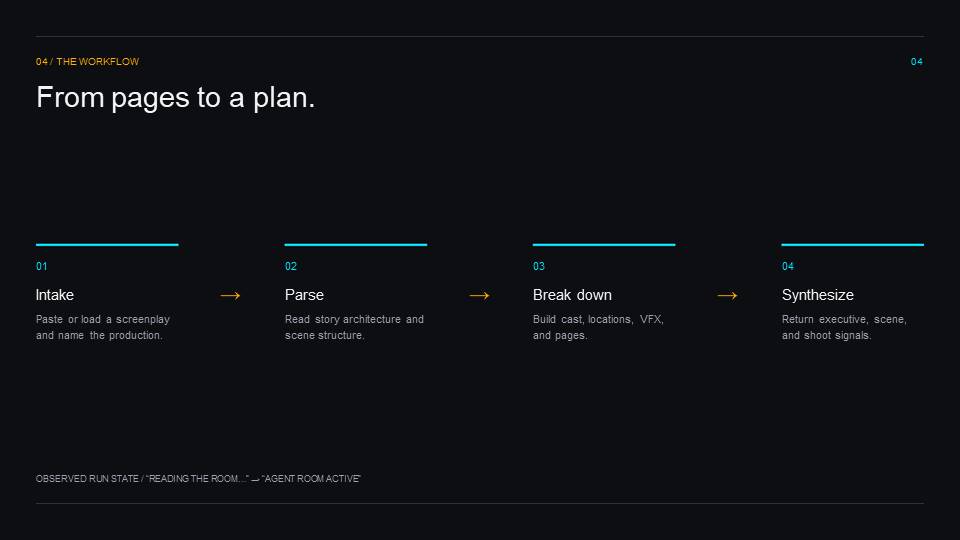
The workflow
-
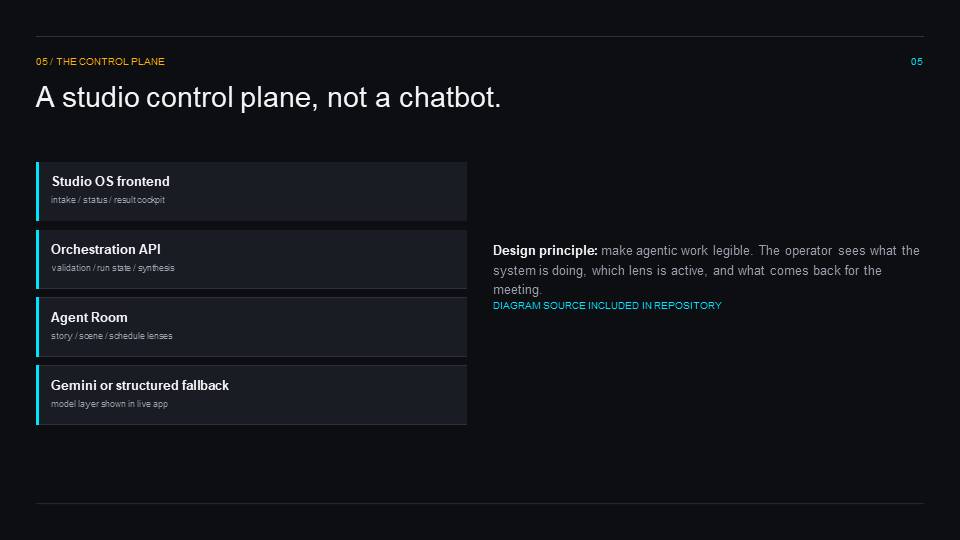
The control plane
-
The impact
-
The Trailer
-
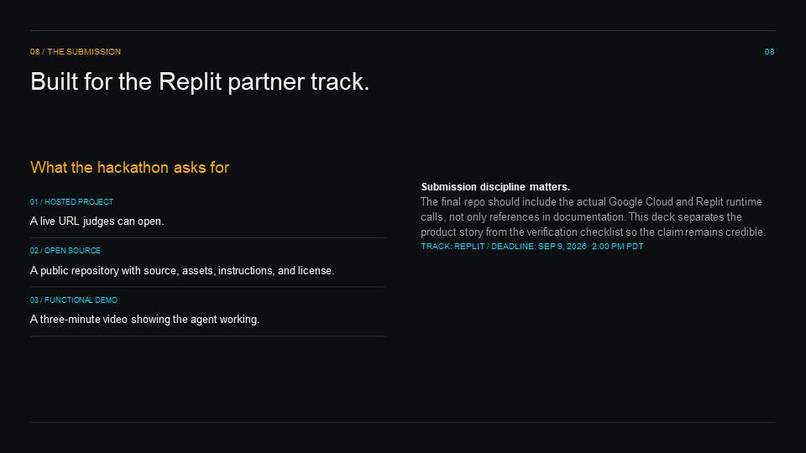
The submission
-
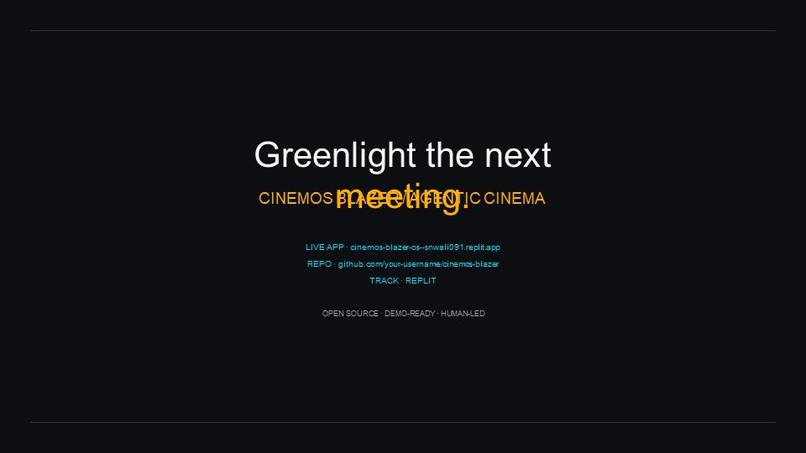
The green light
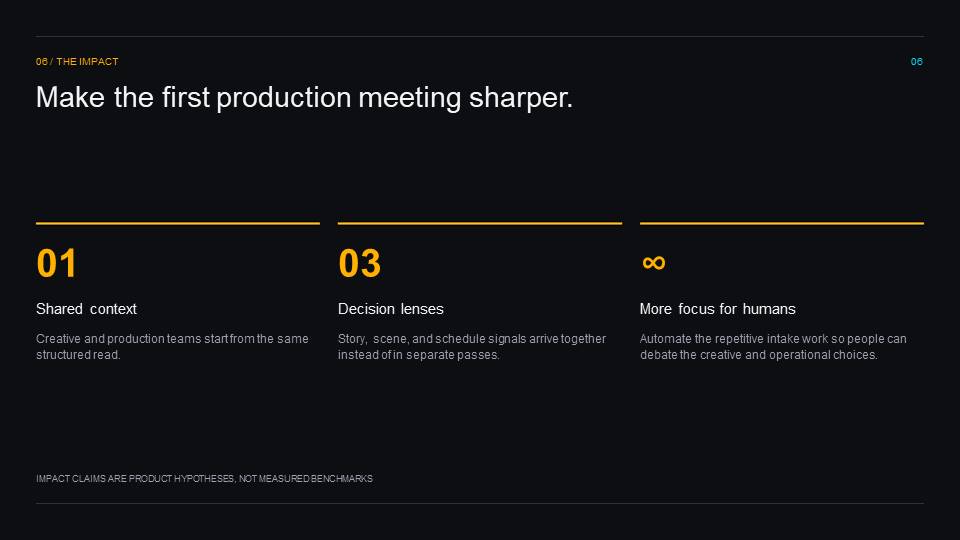
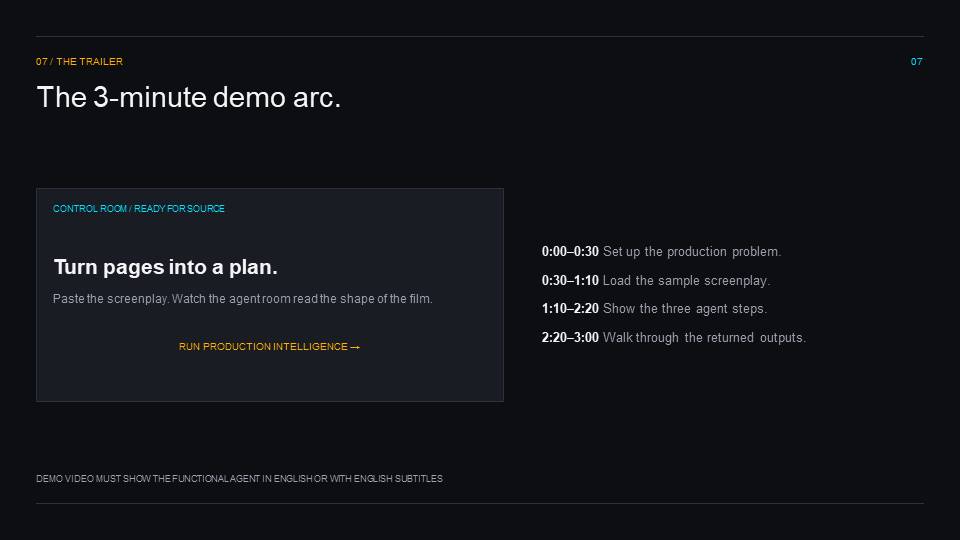
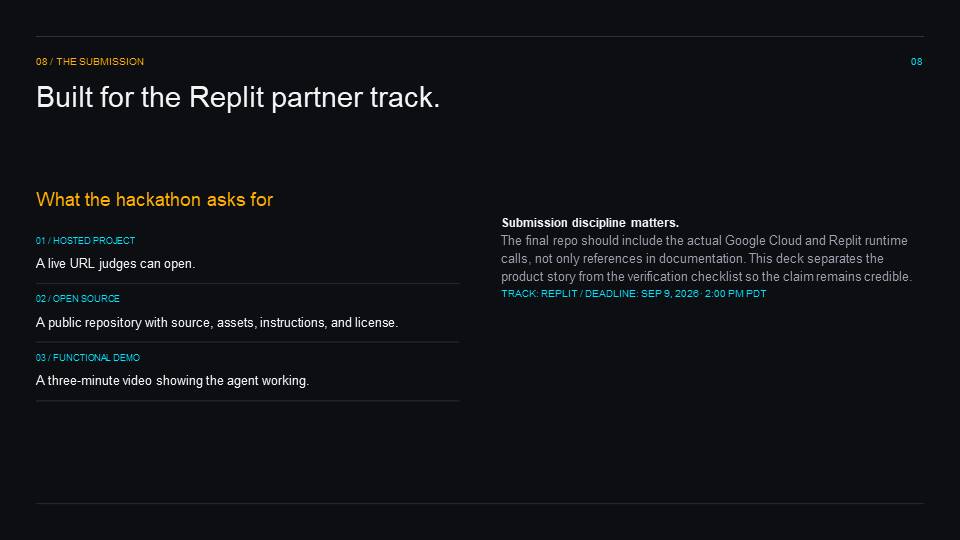
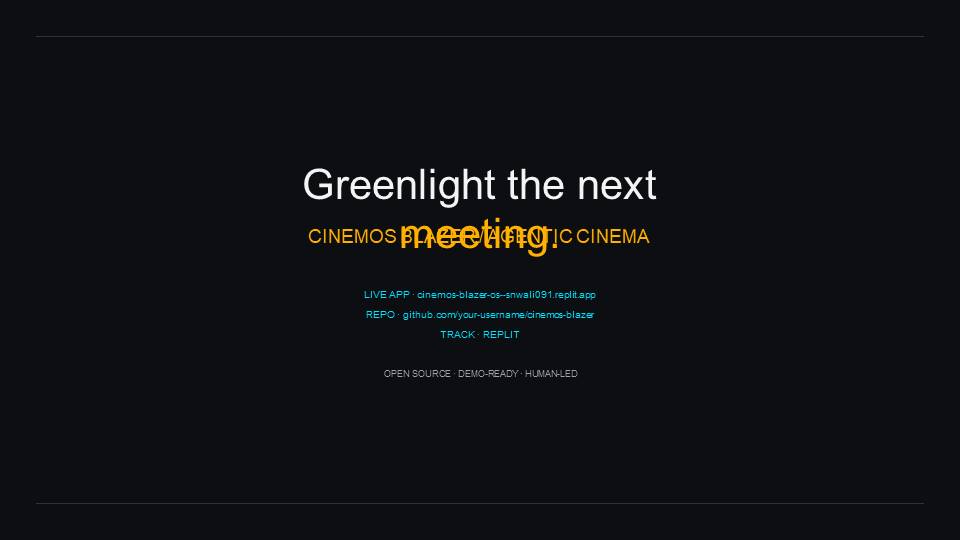
Inspiration Nollywood pre-production remains plagued by manual overhead, fragmented workflows, and costly delays. Moving from a raw narrative concept to a greenlighted film requires weeks of painstaking labor: breaking down scripts into scenes, calculating line-item budgets, drafting Day-Out-of-Days (DOOD) schedules, and producing visual storyboards.
We were inspired to build CinemosBlazer OS to solve this operational bottleneck. By unifying Google Cloud’s advanced generative AI models into an autonomous multi-agent pipeline hosted entirely on Replit, we sought to democratize pre-production—transforming unstructured story ideas into production telemetry and visual pre-visualization in seconds.
What it does CinemosBlazer OS is an end-to-end studio intelligence and orchestration engine designed for film producers, studio executives, and independent filmmakers.
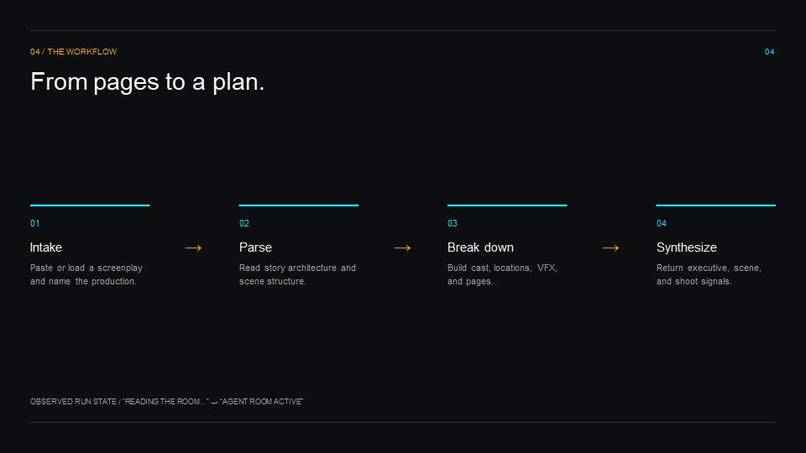
Story-to-Screenplay Adaptation (Agent 0): Acts as an intelligent pre-processing gateway that ingests raw, unformatted narrative prose or story ideas and automatically rewrites them into industry-standard screenplay syntax (sluglines, character cues, dialogue).
Automated Script Breakdown (Agent A): Extracts characters, locations, time of day, and visual effects (VFX) requirements into structured JSON schemas.
Production Scheduling & Budgeting (Agent B): Computes operational line-item cost estimates—such as location permits C loc , talent fees C talent , and VFX assets C vfx —and drafts sequential DOOD shooting schedules.
Studio Director Summaries (Agent C): Synthesizes operational data into an executive summary featuring risk analysis and greenlight recommendations.
Cinematic Pre-Visualization: Generates high-fidelity visual keyframes and video teasers for broken-down scenes using Google Cloud generative visual models.
How I built it CinemosBlazer OS is architected as a modular, full-stack application built and hosted directly on Replit:
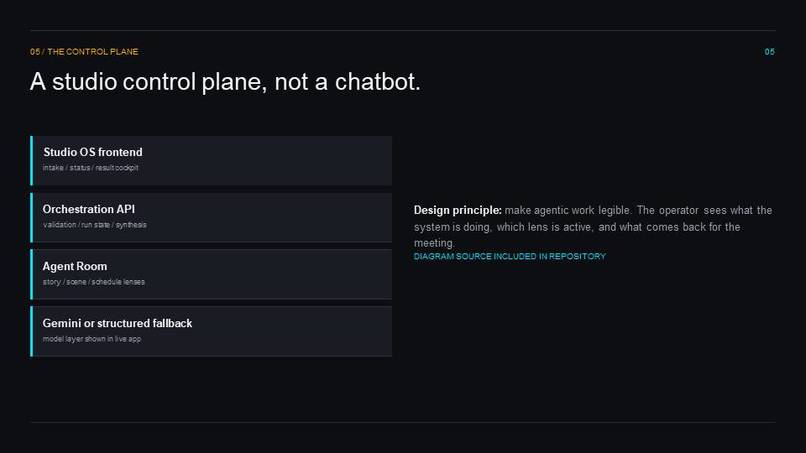
Platform & Hosting: Built, developed, and deployed on Replit, leveraging Replit's instant containerized environment, environment secret management, and FastAPI proxy integration to deliver a live .replit.app studio environment.
Backend Framework: Built with FastAPI and Uvicorn running on Python 3.11, exposing asynchronous RESTful endpoints (/api/v1/cinemosblazer/process).
Multi-Agent Orchestration Engine: Powered exclusively by the official google-genai SDK, leveraging Gemini Enterprise endpoints for specialized agent personas:
Agent 0: Formats unstructured prose into Fountain/screenplay format.
Agent A: Parses screenplay text into structured Pydantic schemas.
Agent B: Evaluates production costs using the formula:
C total = i=1 ∑ n (C loc,i +C talent,i +C vfx,i )+C overhead
Agent C: Synthesizes multi-agent state into final executive reports.
Pre-Visualization Pipeline: Integrates Google's Imagen and Veo models via google-genai to generate concept storyboards and video teasers.
Frontend Dashboard: A dark-themed React UI featuring real-time agent activity logs, dynamic cost charts, and interactive scene cards.
Challenges I ran into Replit & Gemini Enterprise Integration: Integrating Google Cloud Enterprise Agent Platform credentials inside Replit's environment required careful configuration of Replit Secrets (GOOGLE_GENAI_USE_ENTERPRISE, GOOGLE_CLOUD_PROJECT) to ensure live backend authentication without exposed API keys.
Navigating Google Cloud Billing & Hackathon Credits: Transitioning from local structured/mock execution mode to live production APIs required navigating Google Cloud's billing verification holds and requesting official Google Cloud hackathon credits to unlock Gemini Enterprise access.
Strict Screenplay Syntax Parsing: Transitioning from unstructured narrative text to rigid screenplay syntax often led to parsing errors when scene headers lacked standard prefixes (INT., EXT.). We solved this by implementing Agent 0 as a deterministic formatting gateway ahead of Agent A.
Context Window & Schema Enforcement: Ensuring each agent returned valid JSON required setting low temperature parameters (temperature=0.2) and applying Pydantic runtime validation via OpenAPI contracts.
Accomplishments that we're proud of Unified Replit & Google Cloud Architecture: Successfully deployed a fully functional multi-agent application on Replit relying strictly on Google Cloud AI infrastructure and the google-genai SDK.
Instant Production Telemetry: Reduced the time required to generate script breakdowns and preliminary budget estimates from days to under 15 seconds.
Interactive Pre-Viz Integration: Successfully bridged textual script analysis with generative video pre-visualization.
What I learned Agent Specialization Beats Monolithic Models: Breaking complex tasks into specialized agents (Agent 0 through C) with single responsibilities yields higher reliability than relying on a single prompt.
Data Schema Design is Essential: Enforcing structured JSON output at every stage of an LLM pipeline prevents downstream software failure.
What's next for Cinemo-Blazer OS Multi-Format Export Support: Adding native export options for industry tools like Final Draft (.fdx) and Movie Magic Budgeting.
Interactive Scene Editing: Enabling producers to edit generated budgets and schedules in real time with automatic live recalibration.
Collaborative Studio Workspace: Implementing multi-user role access (Producer, Director, Line Producer) for real-time team collaboration on studio projects.
Built With
- css
- css3
- fastapi
- gemini
- html5
- javascript
- json
- markdown
- multi-agent
- node.js
- powershell
- python
- react
- rest
- studio
- systems
- tailwind
- typescript
- uvicorn
- veo
- vertex
- websockets


Log in or sign up for Devpost to join the conversation.