-
-
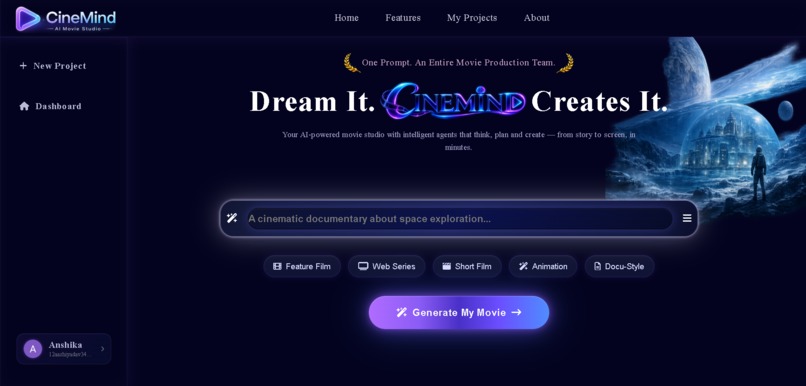
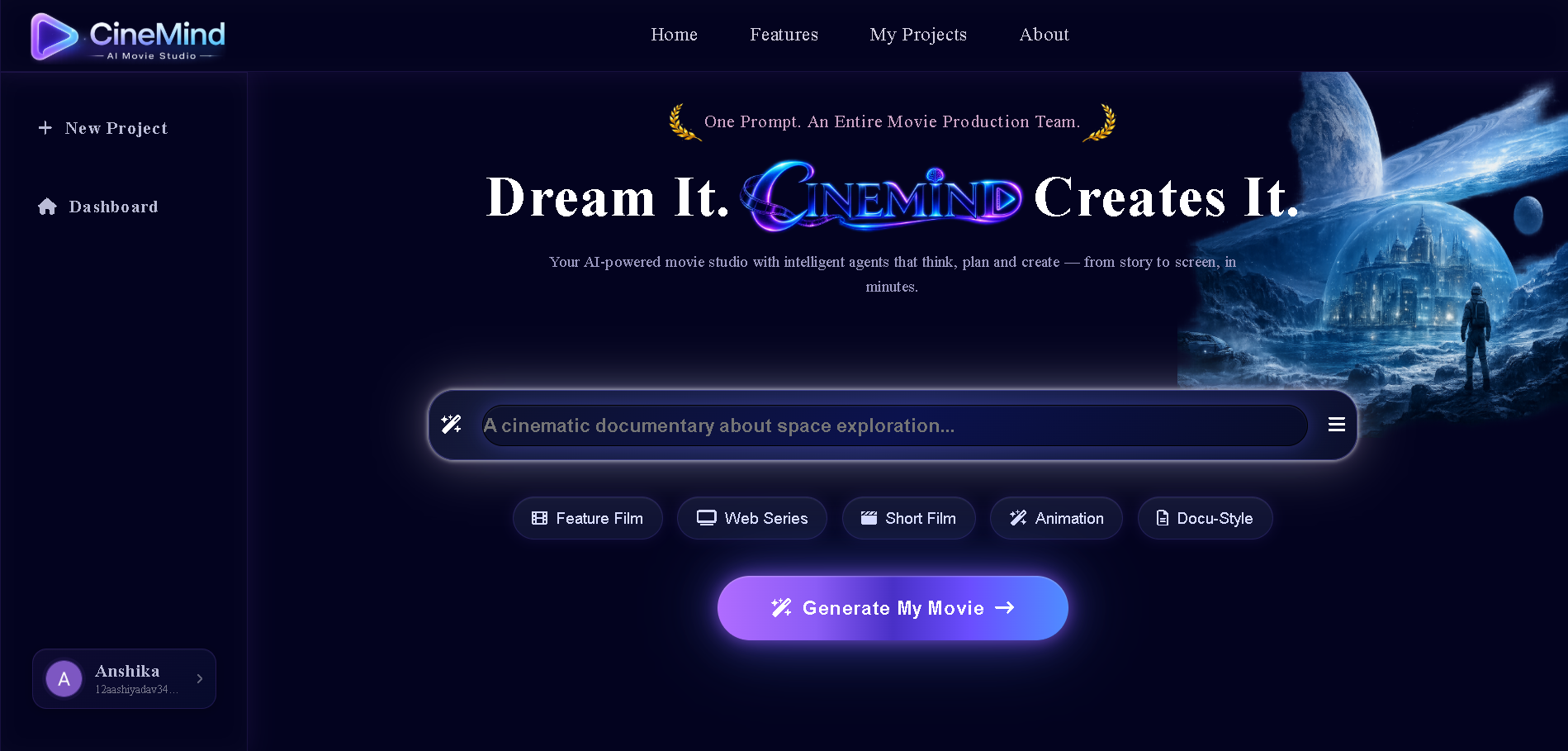
Landing Page Of The CINEMIND
-
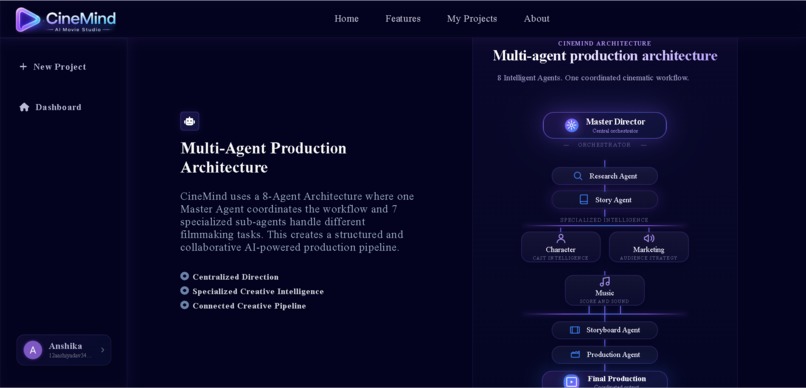
Multi-Agent AI Pipeline
-
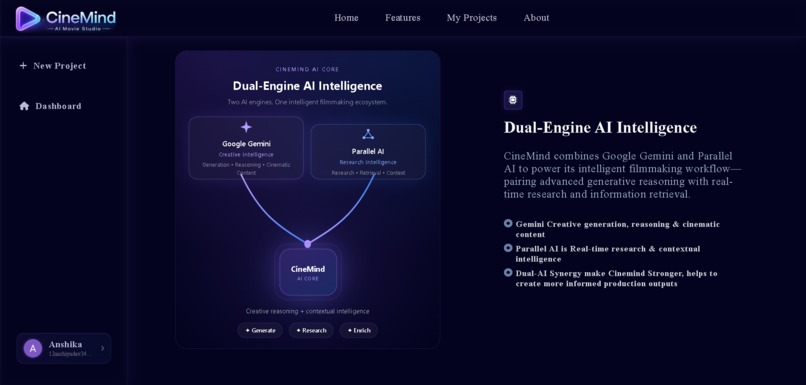
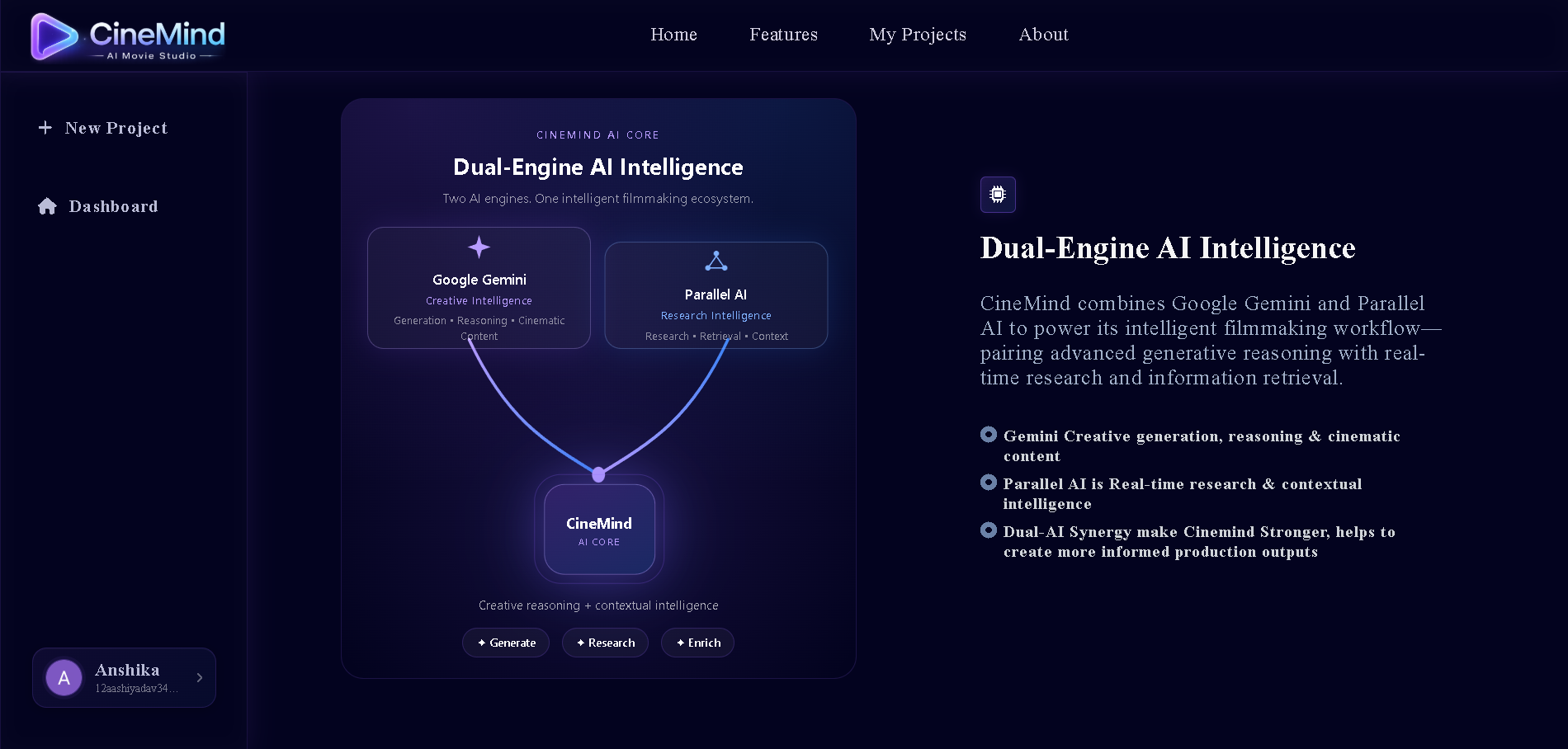
CineMind integrates Gemini for creation and Parallel for intelligent research.
-
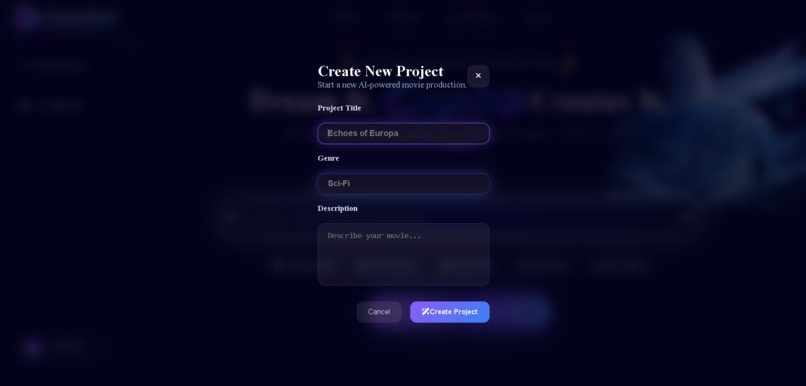
Creation Part
-
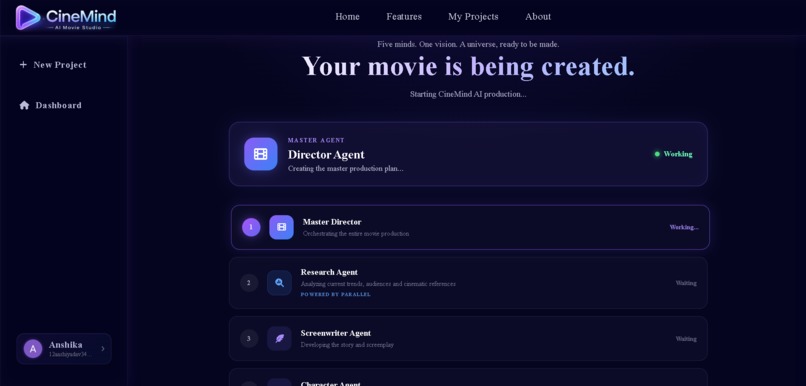
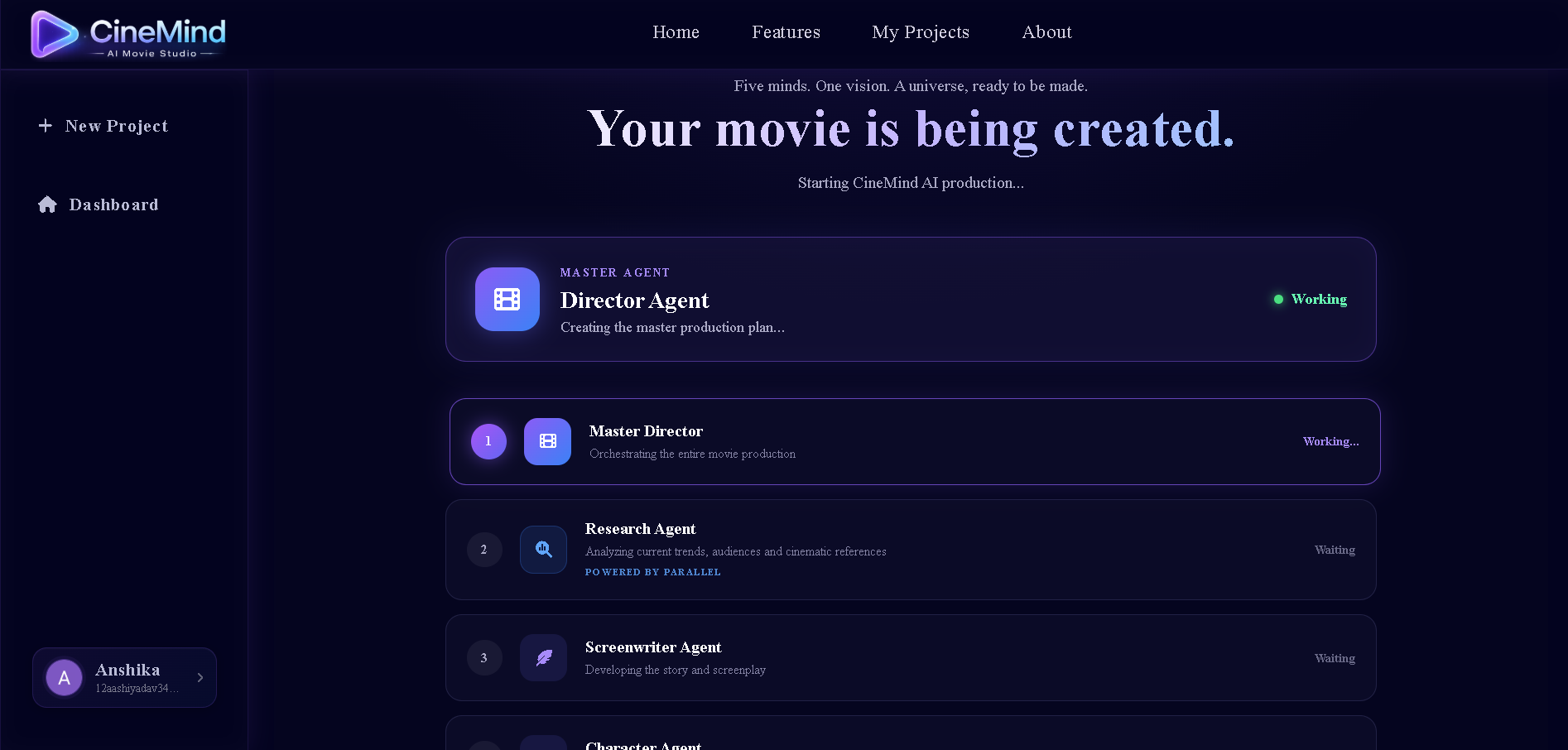
Generation of the Movie Blueprint by Multiple AI Agents
-
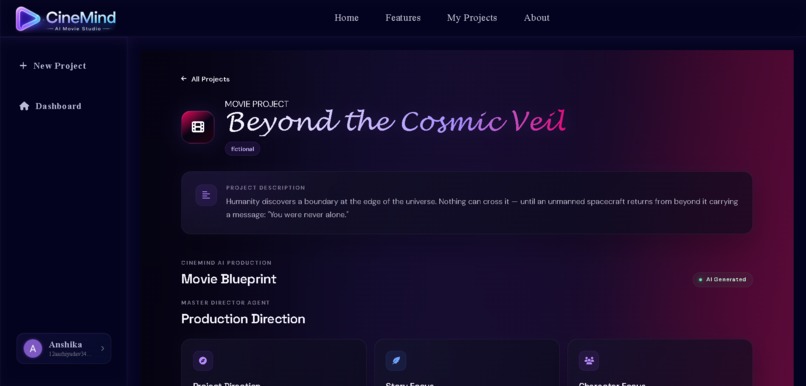
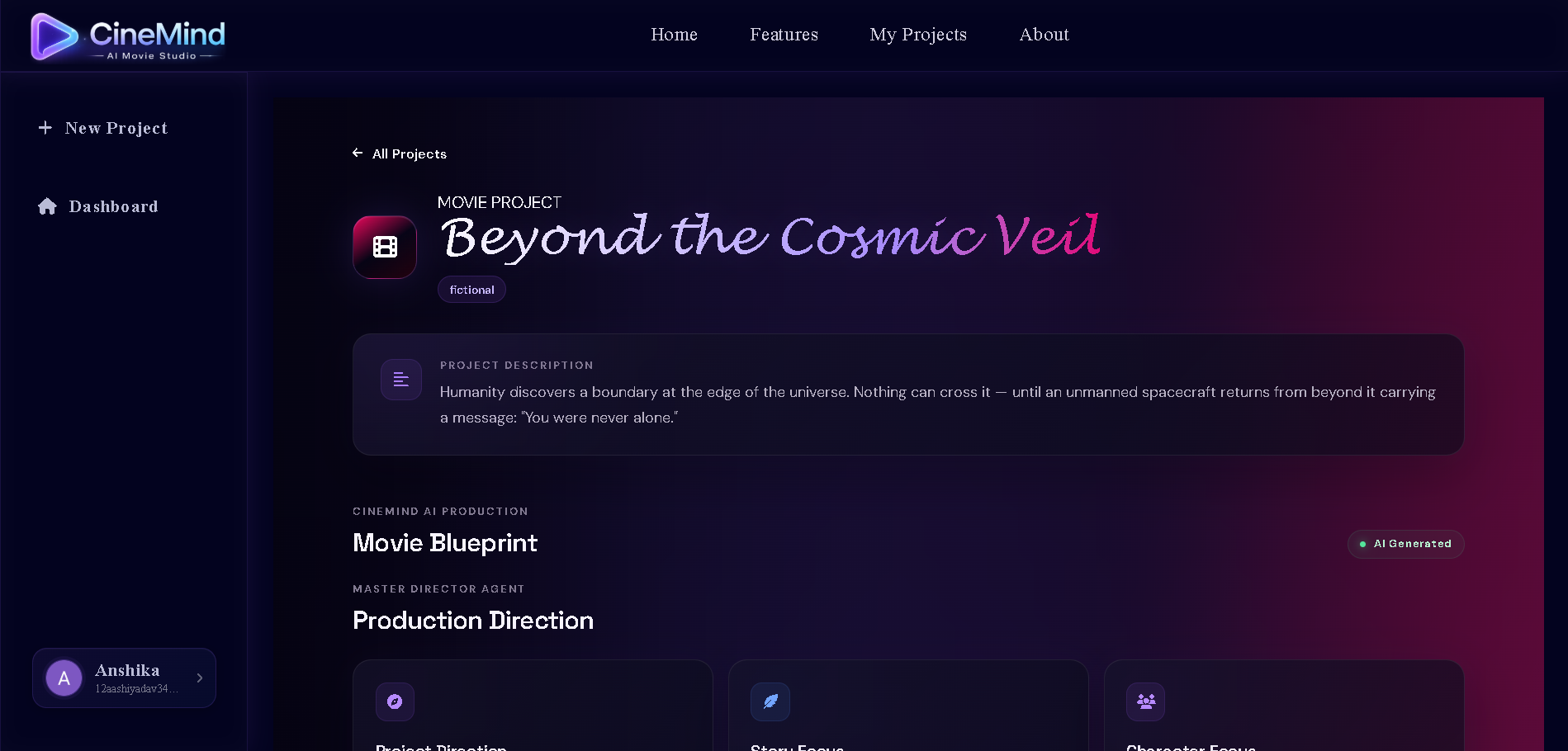
Final Generated Blueprint
-
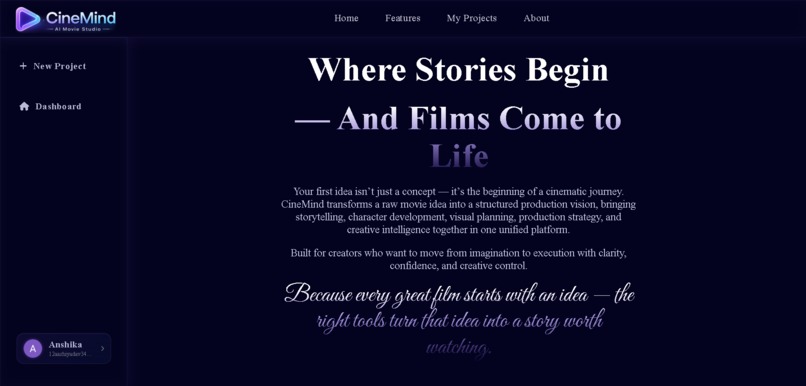
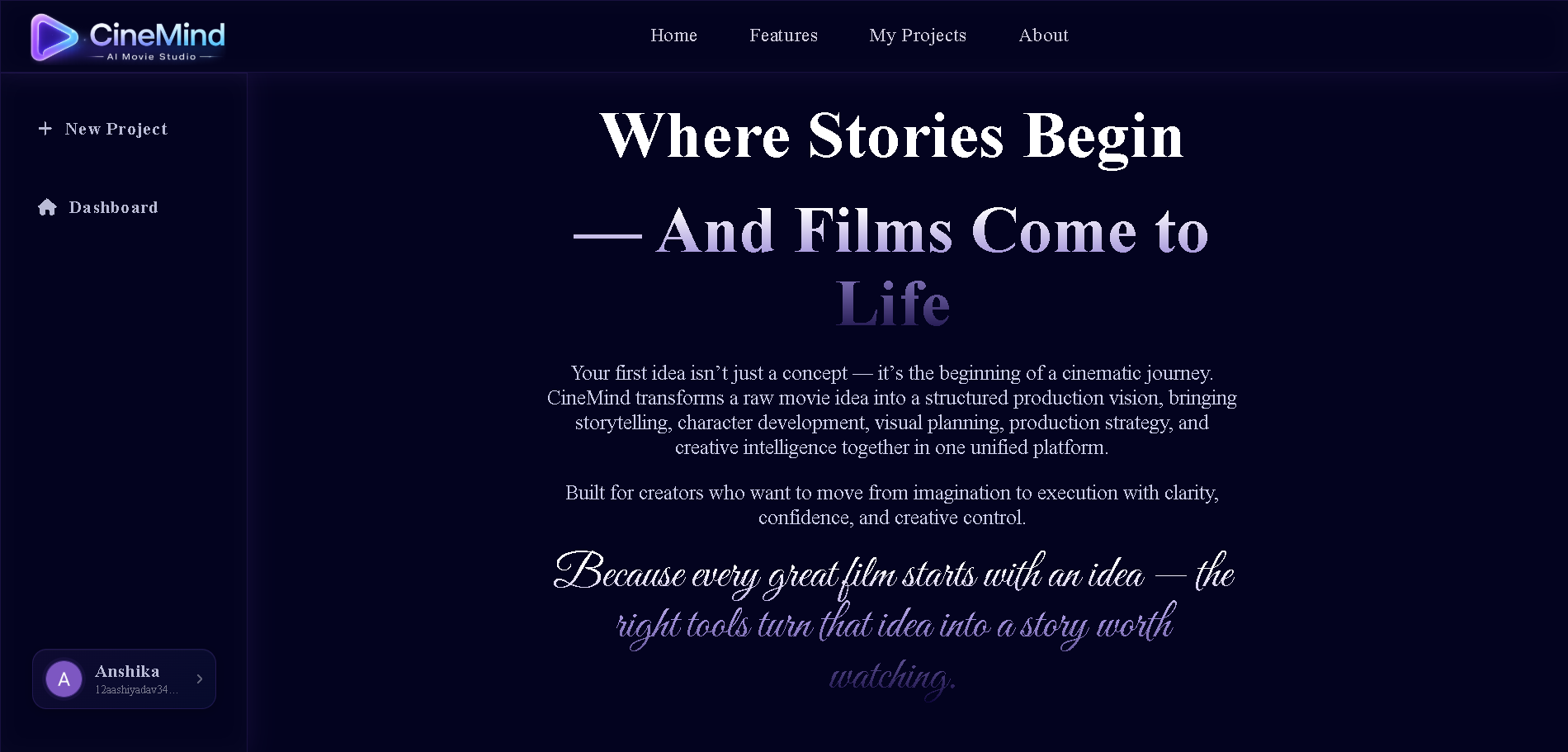
About Section
-
Ending Part
🎬 Inspiration
Movie creation involves many interconnected stages — from developing an initial idea and writing the story to designing characters, planning scenes, handling production, and creating marketing material. We were inspired by the idea of bringing this entire creative workflow into one intelligent platform.
That led to CineMind, an AI-powered agentic movie studio designed to turn a simple movie idea into a structured, production-ready movie blueprint.
💡 What CineMind Does
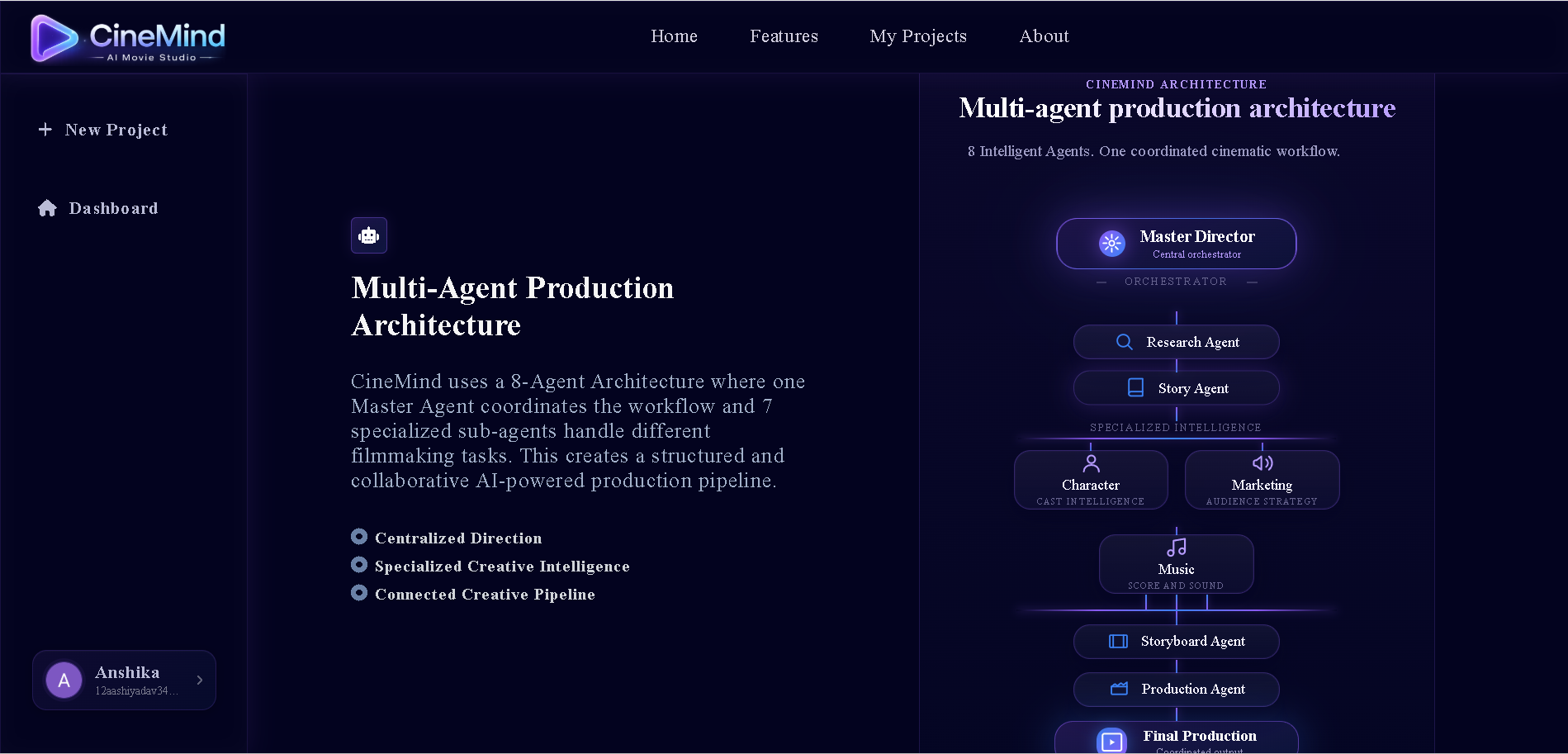
CineMind uses a team of specialized AI agents that collaborate across different stages of filmmaking.
The workflow includes:
- 🎭 Master Director Agent — coordinates the overall creative workflow.
- ✍️ Story Agent — develops the story, plot, themes, and narrative structure.
- 👤 Character Agent — creates detailed characters and their roles in the story.
- 🎞️ Storyboard Agent — transforms the narrative into structured scenes and visual planning.
- 🎬 Production Agent — organizes production-related details and planning.
- 📢 Marketing Agent — generates promotional concepts and marketing material.
- 🎵 Music Agent — develops music and soundtrack direction for the project.
- 🔎 Research Agent — gathers relevant information to support the creative process.
Instead of asking one AI model to handle everything, CineMind divides the workflow into specialized agents, allowing each agent to focus on a specific filmmaking task.
🧠 How I Built It
CineMind was built with a React-based frontend and a Python/FastAPI backend.
The backend orchestrates the different AI agents and uses structured outputs to pass information between stages. We used Google's Gemini API for generative AI capabilities and designed the system so multiple independent agents can work in parallel where possible.
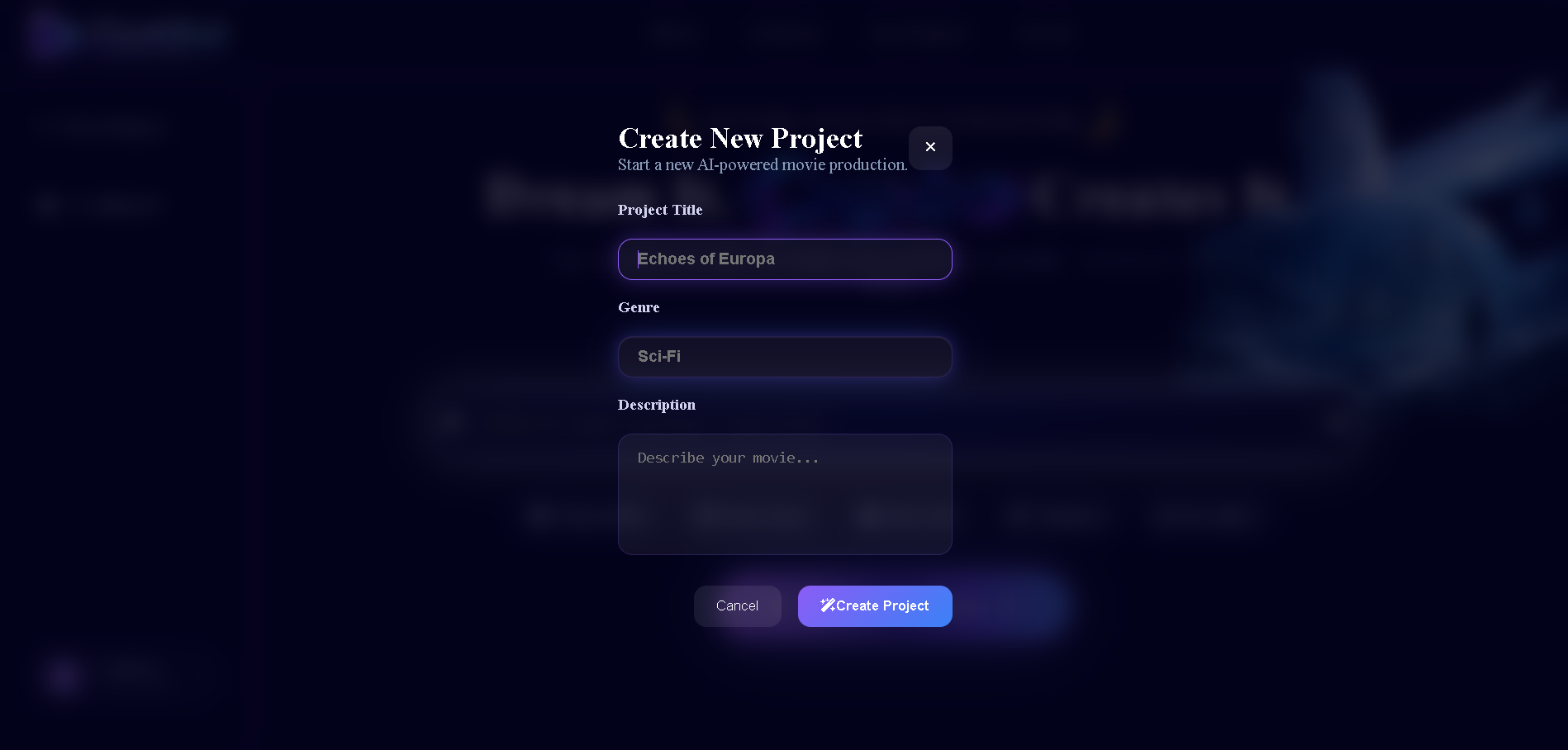
The frontend provides a cinematic interface where users can start a project and explore the generated movie blueprint.
🚧 Challenges I Faced
One of the biggest challenges was coordinating multiple AI agents while keeping their outputs consistent and structured. Since each agent depends on information produced by other parts of the workflow, reliable data flow and validation were important.
I also faced challenges with API integration, authentication, backend routing, structured JSON responses, and making the overall pipeline robust enough to handle failures without breaking the entire project.
Another challenge was designing an agentic workflow rather than simply building a chatbot. I had to think about how individual agents should communicate, which tasks could run independently, and how the final result should be assembled.
📚 What I Learned
Building CineMind taught me how to move beyond simple AI API calls and design a multi-agent application around a real-world workflow.
I learned more about:
- Multi-agent AI architecture
- Agent orchestration and parallel execution
- Prompt engineering and structured AI outputs
- Gemini API integration
- Python and FastAPI backend development
- React frontend development
- API authentication
- Connecting frontend and backend systems
- Handling errors and validating AI-generated data
🚀 What's Next
CineMind can be expanded into a more complete AI filmmaking workspace with richer visual storyboarding, stronger agent collaboration, production scheduling, budgeting, and additional creative tools.
Our goal is to make the filmmaking process more accessible by turning a creative idea into an organized production blueprint with the help of specialized AI agents.
CineMind — From an idea to a movie blueprint.
Built With
- aiagents
- clerk
- css
- fastapi
- geminiapi
- generativeai
- html5
- javascript
- multi-agent-system
- python
- react
- restapi
- sqlalchemy
- vite


Log in or sign up for Devpost to join the conversation.