-
-
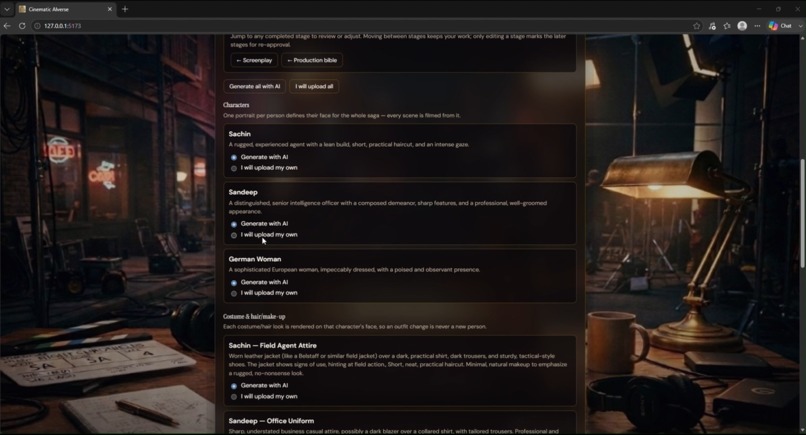
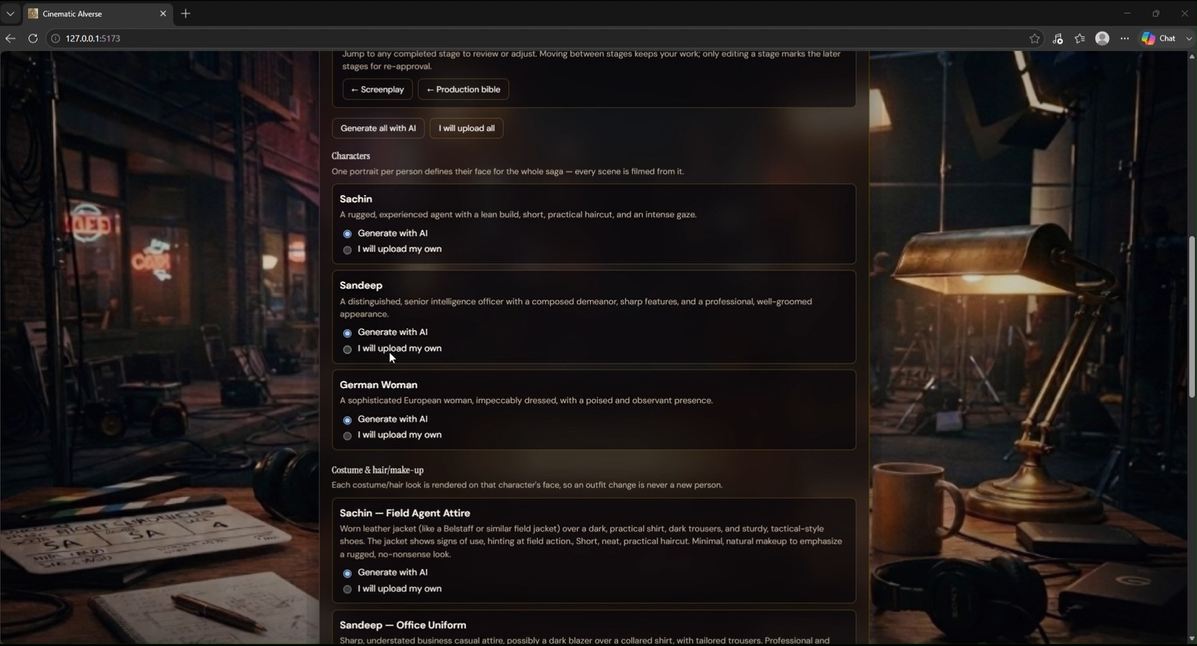
Image Generation or Upload Screen
-
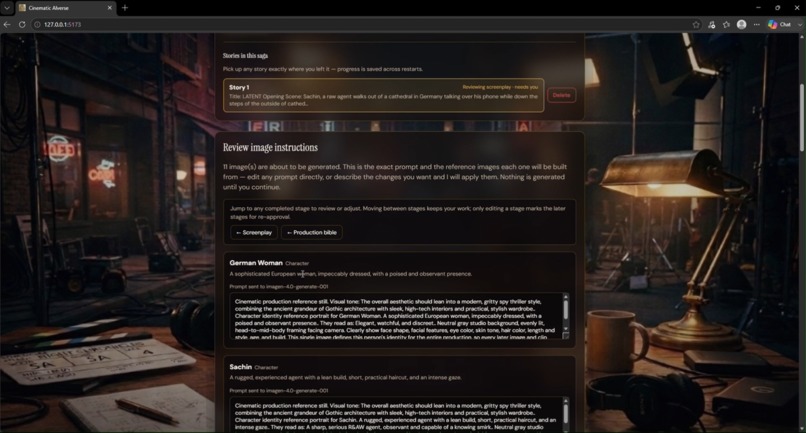
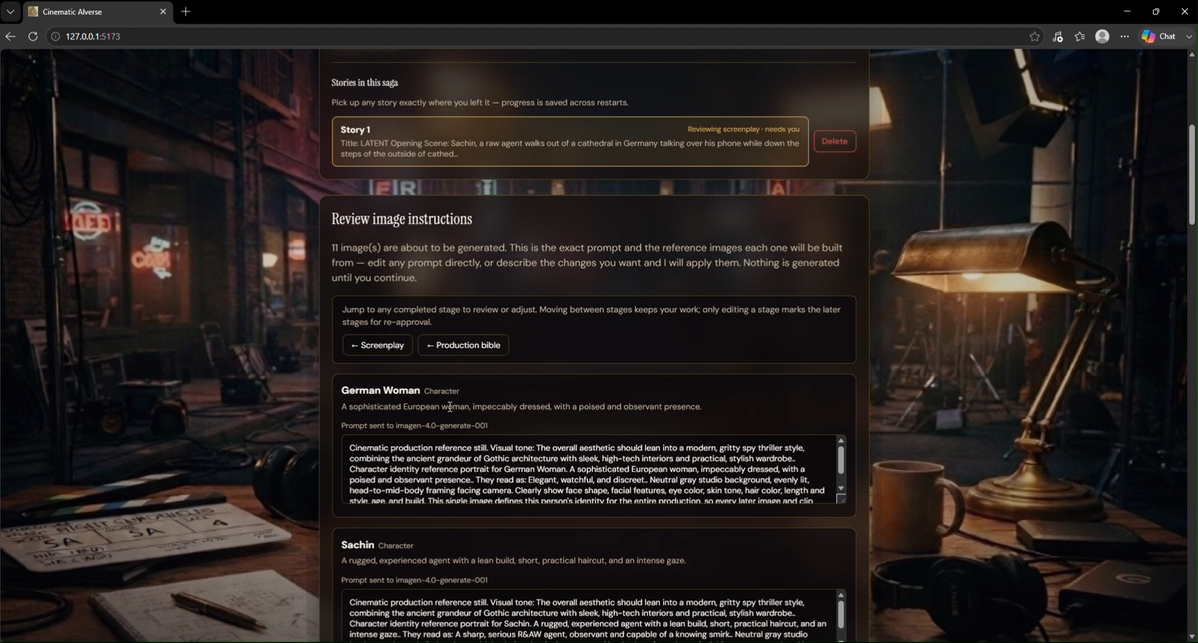
Image Generation Prompts Generated screen allowing edits
-
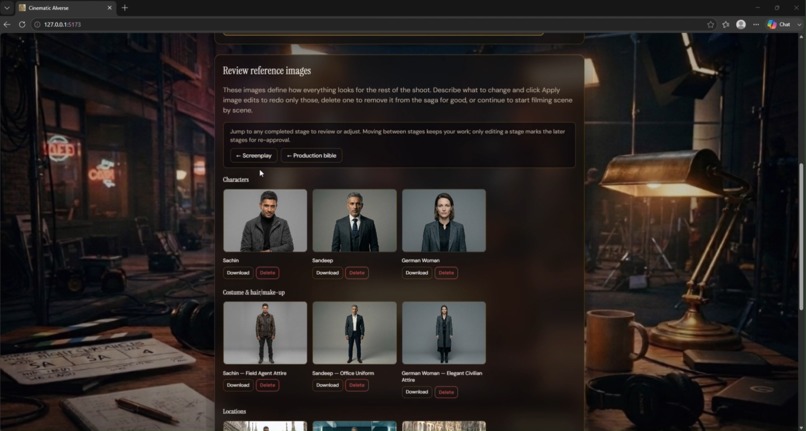
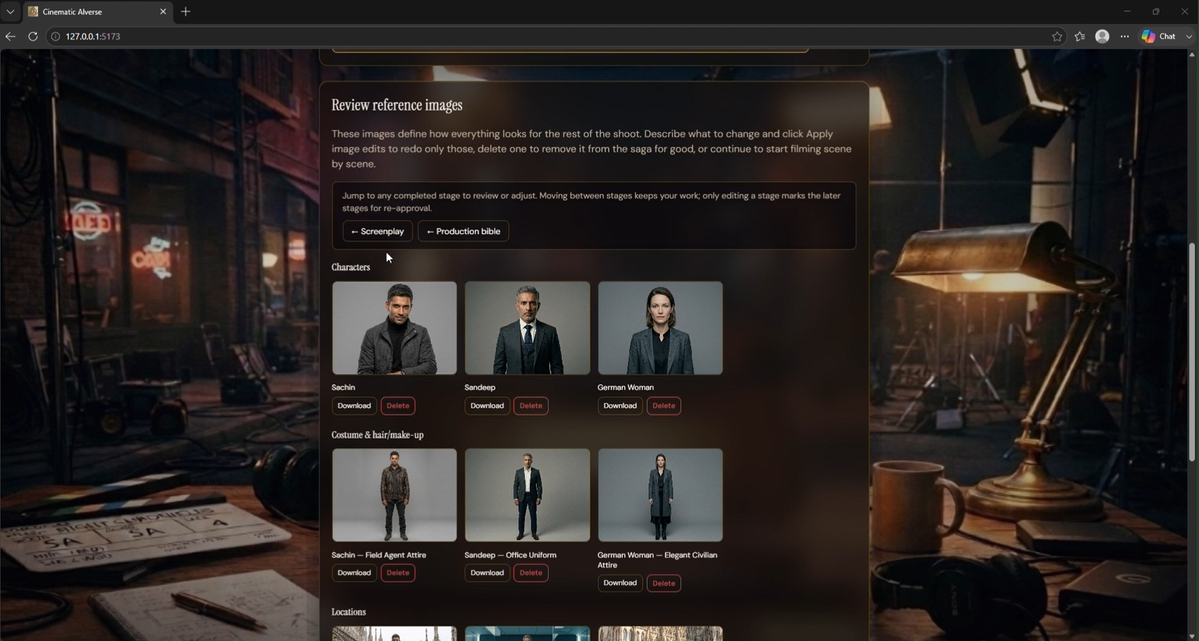
Generated Images
-
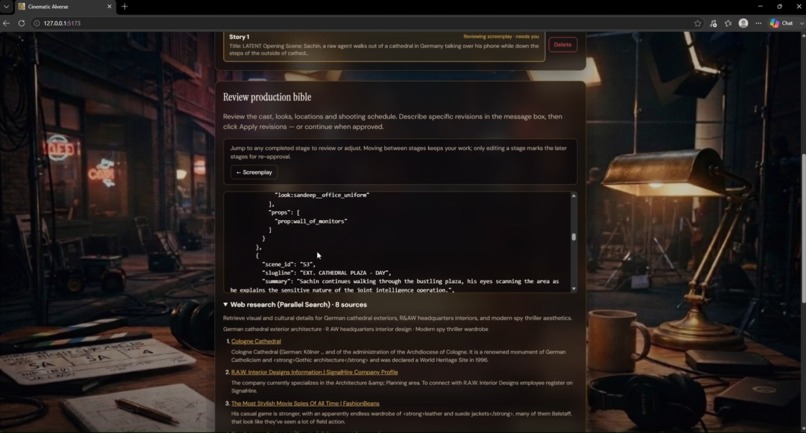
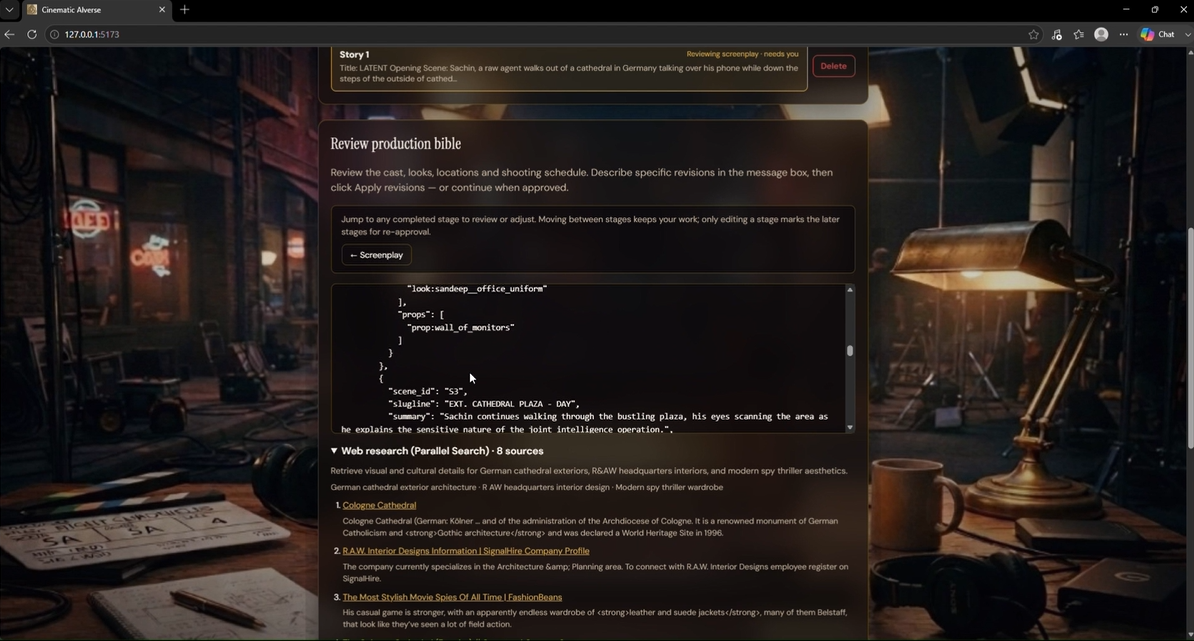
JSON Bible with Parallel Research
-
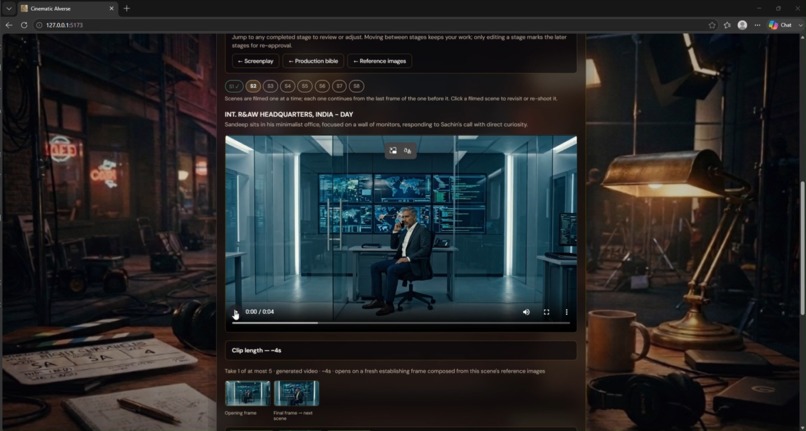
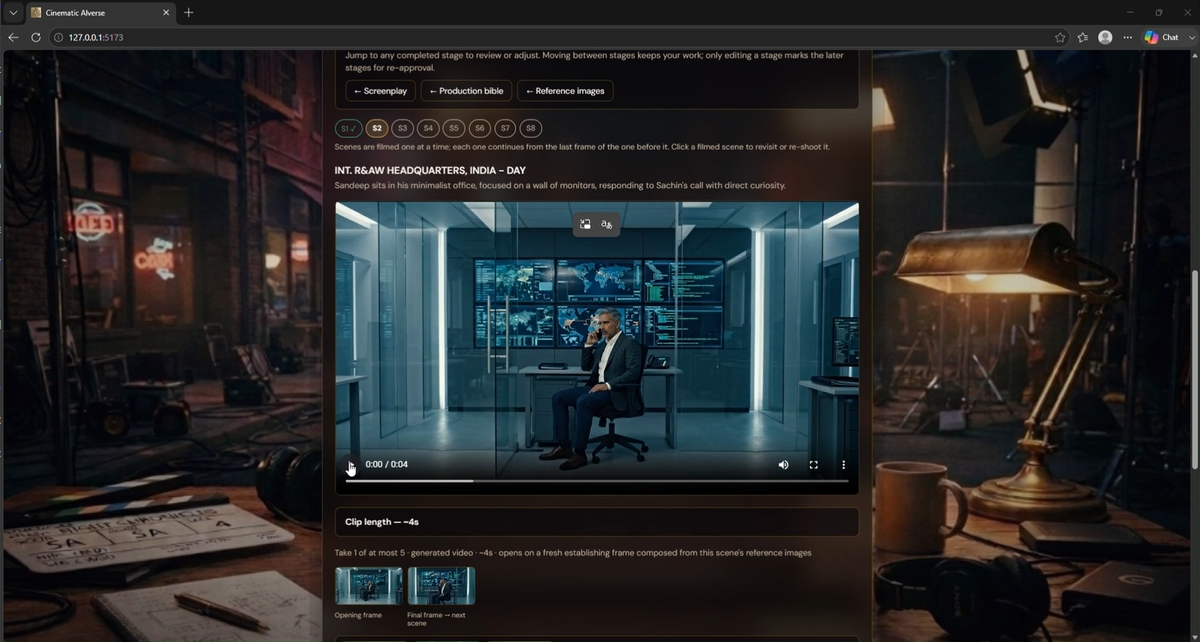
Scene 2 - Generated Video Clip
-
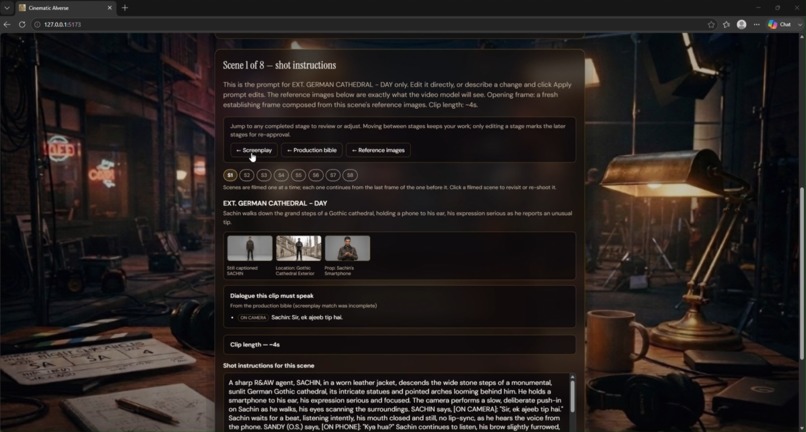
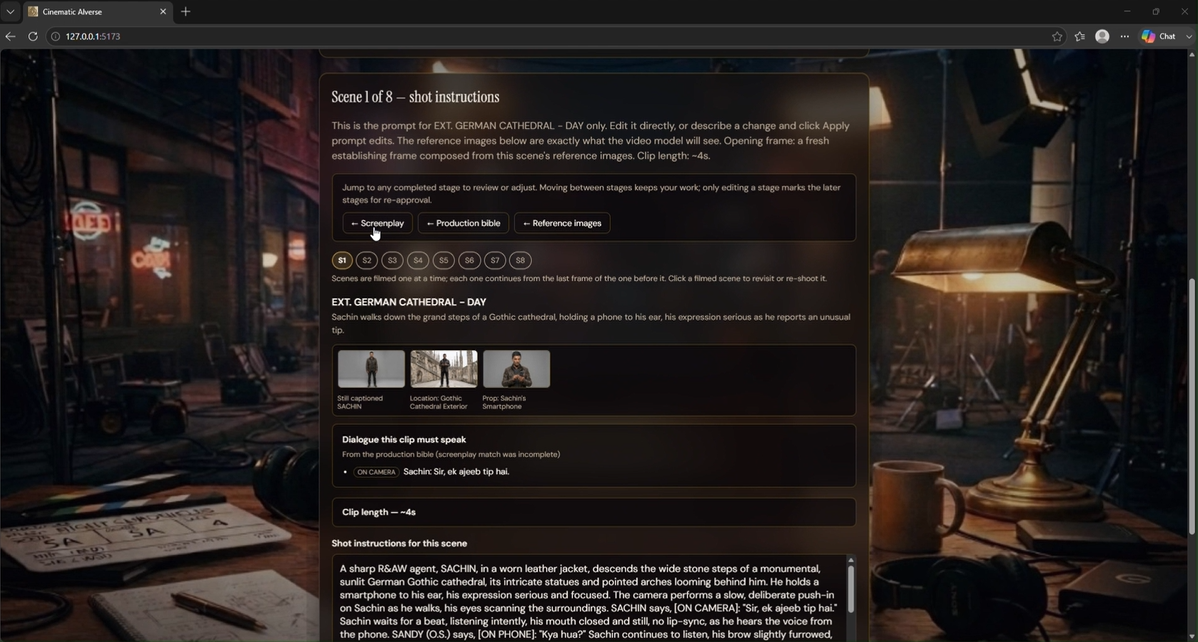
Scene 1 Shoot - Generated prompts & Identified Images for the scene
-
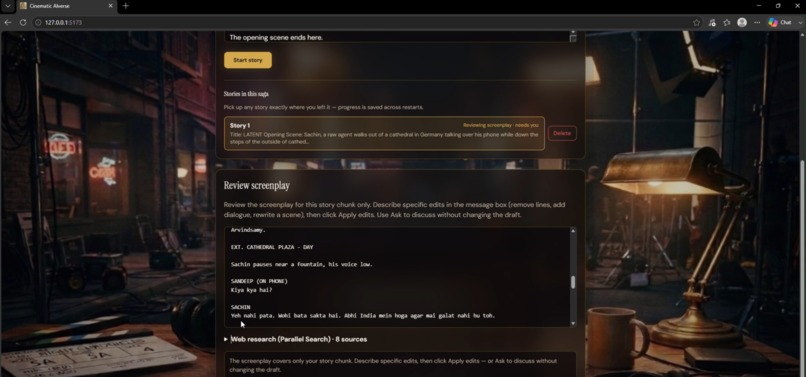
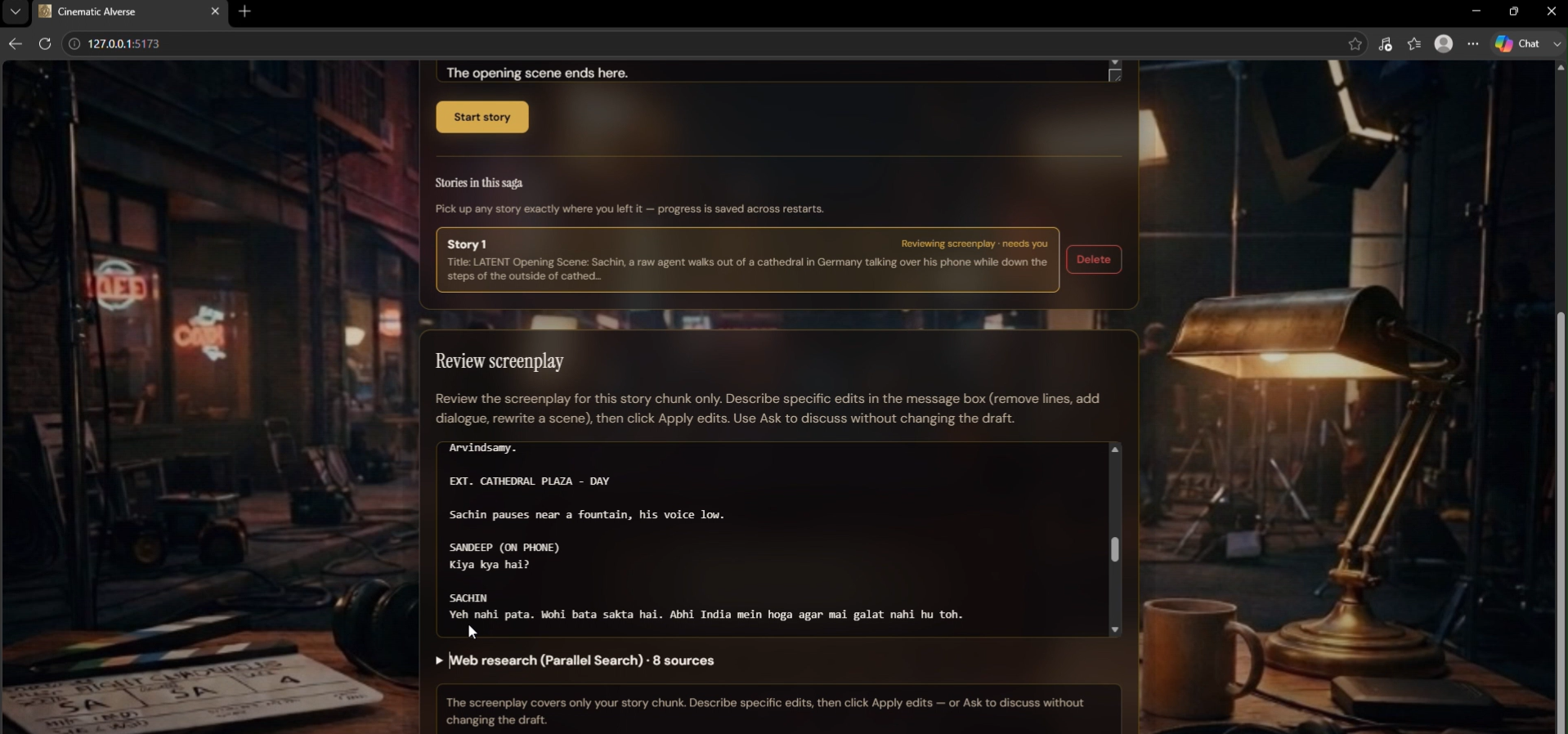
Screenplay Writer
-
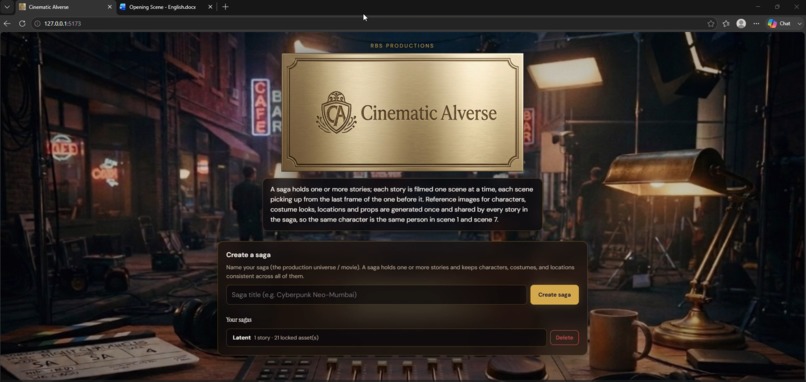
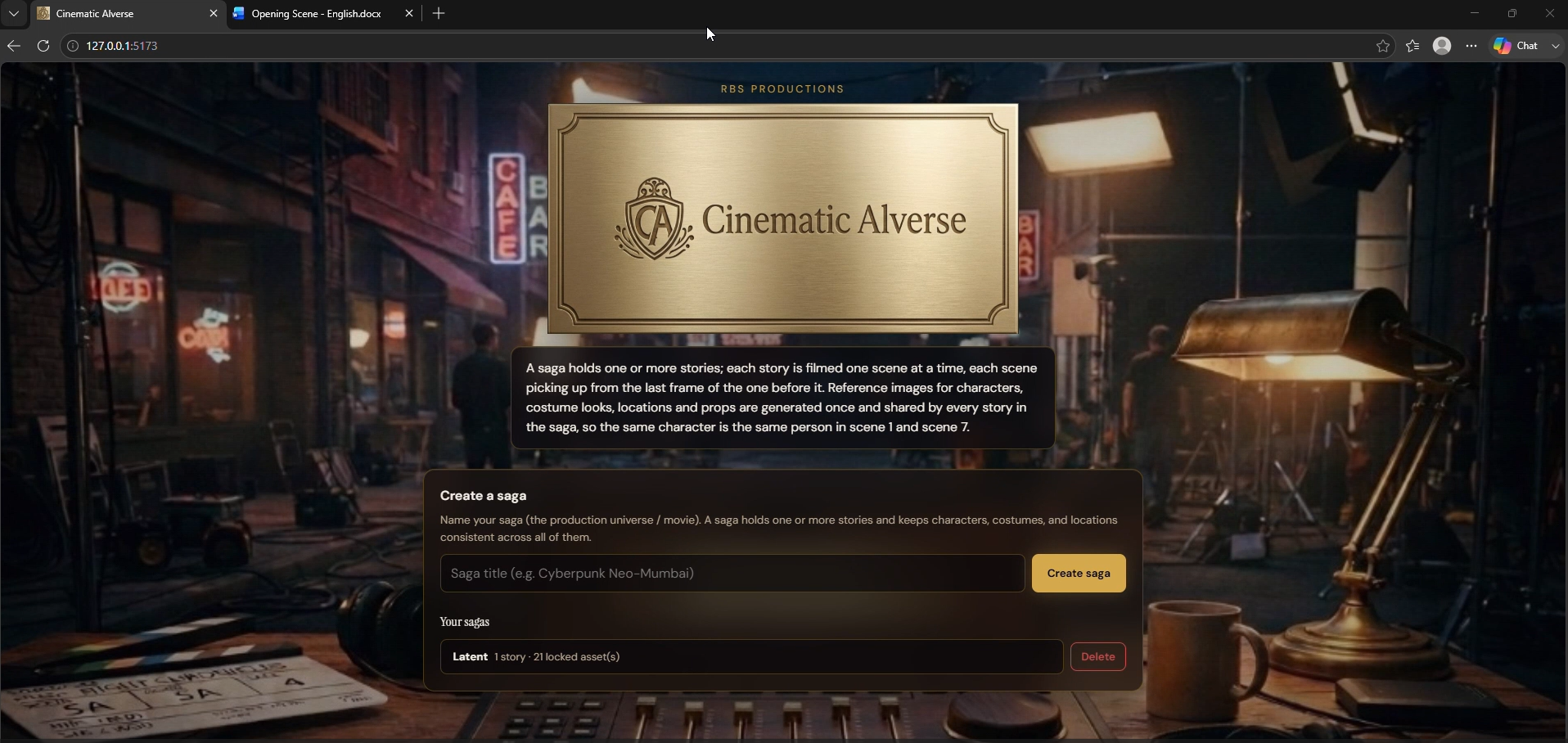
Landing Screen
-
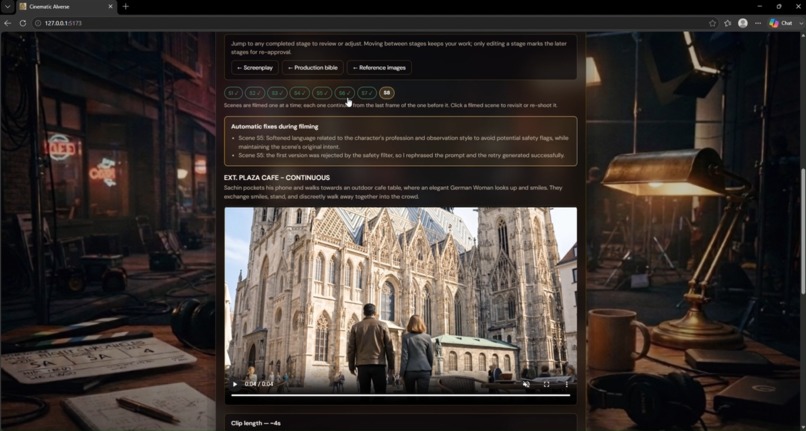
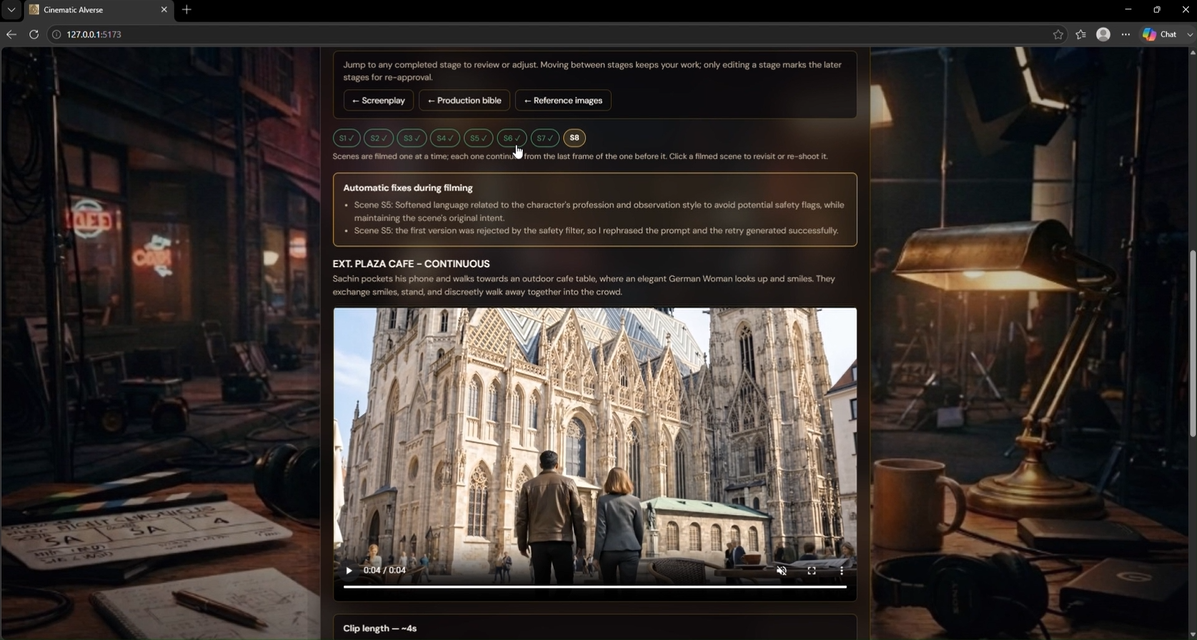
All scenes shot
Inspiration
I picked this because I wanted to turn a written story into a short film without a crew, and current clip tools do not do that. They expect the user to already have the perfect prompt and the right reference images for every shot. If you cannot write that prompt or supply those stills, you do not get a usable clip, let alone a film. This product takes that work off the user: you paste a story in basic form. The app writes the screenplay, builds the cast and locations, generates or locks the images, writes the shot prompts, and films one scene at a time. You review and approve; you do not have to be a prompt engineer.
A filmmaker who already has a character sheet or location stills can generate a scene they cannot shoot - the actor is unavailable for a particular scene, or the location is too expensive - and skip lights, camera, and crew for that scene.
What it does
Cinematic AIverse is software that turns a written story into a short film.
You paste a plot. The app writes a screenplay, then a production bible listing the characters, costumes, locations, and props. It generates a locked reference image for each of those, or you upload your own. You can talk to the app, edit the output, and approve or go back at every stage.
It then shoots video one scene at a time. You watch the take, change the shot instructions, reshoot, or approve before the next scene. Approved scenes are stitched into a full movie and a trailer.
Characters and places stay the same across scenes, and across later chapters of the same movie, because those images are locked and reused instead of generating a new clip from scratch each time.
How we built it
App: React + TypeScript + Vite on the frontend. Python 3.11, FastAPI, and LangGraph on the backend. SQLite for pipeline checkpoints. Local disk for images, clips, and the locked character/location assets. FFmpeg to stitch clips into the movie and trailer.
AI models (Google Vertex AI): Gemini 2.5 Pro writes the screenplay. Gemini 2.5 Flash writes the production bible and shot prompts. Imagen 4 and Gemini 2.5 Flash Image generate the locked reference stills. Veo 3.1 generates each scene’s video.
Coding tools: Cursor. I built and restructured the pipeline in it.
Parallel’s API, to research period, costume, location, and visual-style facts from the live web before the bible and stills are generated, so those stages are grounded in cited references instead of only the model’s memory.
Challenges we ran into
A story has to become a screenplay, a locked cast and world, then scenes that inherit those faces and the last frame of the previous shot - with the user approving each stage instead of authoring every prompt. Video models still cannot take a first frame and reference images at once, so likeness and continuity have to be composed before the clip is shot. That is why I lock images per character, costume, location, and prop (and reuse them in later chapters), parse dialogue out of the script so it actually gets spoken, and stop before spend. Veo is a supplier in our stack, not the product. If the models get better, this layer gets more valuable, not less.
Accomplishments that we're proud of
I am not coming from a studio. My expertise is the production system: running Gemini, Imagen, and Veo and fixing the failures that kill a film (characters changing face between shots, locations generated with nobody in them so the video model invents a new cast, dialogue dropped from prompts, broken continuity etc.).
What we learned
Direct substitutes today: HiggsField AI, Runway, Pika, Kling, Luma, and Google Veo. People also stitch ChatGPT (script) + image tools + a clip model + CapCut. Closer on “AI filmmaking” are LTX Studio, mStudio, and Fable’s Showrunner.
They are cameras and timelines. They assume the user already knows how to prompt, already has reference images, and will assemble a film by hand. Consistency is a per-clip trick (attach a still, hope the next shot matches). When it fails, the user regenerates.
What's next for Cinematic AIverse
Creators pay a monthly subscription, about $30-50, with a set number of image and video generations included. Extra clips are usage-based, because each Veo scene has a real Vertex bill. A short of ~6-8 scenes should cost us tens of dollars in generation; we price above that. Later, a filmmaker or small production pays per project (hundreds to a few thousand dollars) to generate a scene they cannot shoot - missing actor, too-expensive location - using a character sheet or location stills they already have.
How much: the first market is people who already publish story content on YouTube and similar, not all of Hollywood. At $40/month, 20,000 paying creators is ~$10M ARR. 250,000 is ~$120M ARR. Production-project fees sit on top of that. We do not need studios to have a large business; we need a slice of creators who today pay Runway/Pika and still cannot finish a film.
Built With
- cursor
- fastapi
- gemini2.5flash
- geminiflashimage
- langgraph
- parallelapi
- python
- react
- sqlite
- typescript
- veo3.1
- vertexai
- vite

Log in or sign up for Devpost to join the conversation.