-
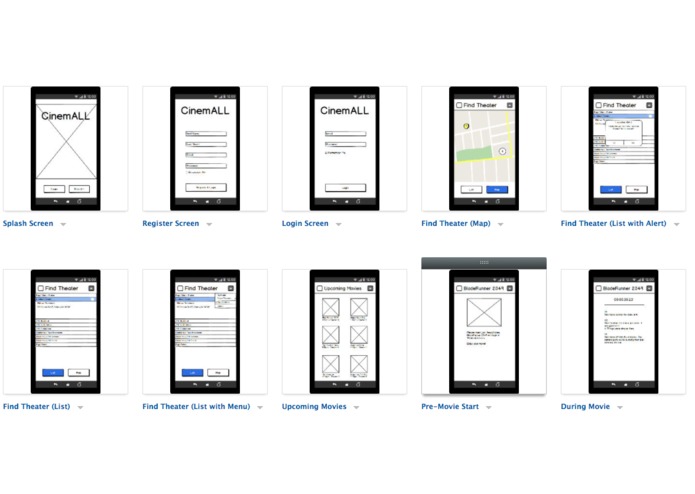
Initial UI Wireframes
-
Logo


Inspiration
When exploring different problems within the Visually Impaired community, one of the more surprising topics to come up was their movie theater experience. After further research it became evident that the user experience for the visually impaired was significantly different from that of a sighted guest. Because of their visual impairment, they rely on Descriptive Video (DV) tracks that fit within the movie's scripted lines to provide audio descriptions of the characters' movements and interaction with their environment. The DV fills in the rest of the necessary details in the storyline of the movie to create a truly immersive movie experience. In an age when IMAX, Real 3D, CGI, VFX and other new technologies in movie theaters are prospering, and theaters are focusing on providing experiences beyond the movie itself (such as dine-in and bar services) users with visual impairments are being forgotten. From the determining which movies offer assistive services, to obtaining the necessary technology and returning it at the end of the movie, these user experience many pain points. With this project we aim to improve these user's experiences which will create more positive feelings towards movie theaters which should eventually lead to more revenue for the movie theaters.
What it does
Our solution eliminates the dependence on outdated, expensive, and specialized RF equipment in movie theaters. Instead, it presents the same information in the efficient and comfortable context of the user's own cell phone. This, in turn, also eliminates the need for the user to complete additional steps when arriving at and exiting the movie theater, thus greatly improving the end user experience.
How we built it
After initial whiteboard brainstorming to define how our solution will solve user problems and looking at user design requirements and guidelines, we then created an initial clickable User Interface wireframe using Balsamiq.
Using our wireframe as a guide, we built our application using React. The core DV alignment feature is based on the use of an Azure Service Bus. Messages will be sent out regarding the timing of each movie in each theater. Then, the user's application will receive these messages whenever they arrive (even if it's after the movie starts). From here, the application will be able to match up the DV track to the movie playback in the theater seamlessly.
Challenges we ran into
Designing a user interface that works well for a whole range of sight impairments is a challenge. Learning how visually impaired people already interact with different apps on their phone was immensely helpful in designing our app. Consistent placement of navigational elements, meaningful labels for elements, and minimal extraneous information are a few guidelines that we followed. Additionally, although some apps ignore the color, themes, and detailed design due to this user group, we learned that many visually impaired people very commonly have caregivers of some sort with them a lot of the time. In this case, it is extremely important that our application is usable not only by the visually impaired, but also the sighted, with easy learnability.
Accomplishments that we're proud of
As sometimes happens, we spent the whole first 24 hrs floundering and going back and forth between ideas. We played around with a ton of APIs but didn't get anything going that we were happy with. We finally stepped back and did a few brainstorming sessions and design passes, coming up with what we have now. Going from 48 to 24 hours was a big constraint though, and we're happy we pulled it off!
What we learned
Brainstorm first! APIs are fun to play with, but if you have a solid idea and solid designs, the rest will come.
What's next for Cinema4All
The next step for Cinema4All is to start to expand our reach to more videos. Eventually this idea could be expanded to include not only in theater movies, but also movies watched at home. Additionally, this could easily be used in museums and schools, making these contexts even more accessible to the visually impaired at low cost to both the facilities and the user. This will help make smarter communities, and smarter cities that are more accessible to everyone.


Log in or sign up for Devpost to join the conversation.