-
-
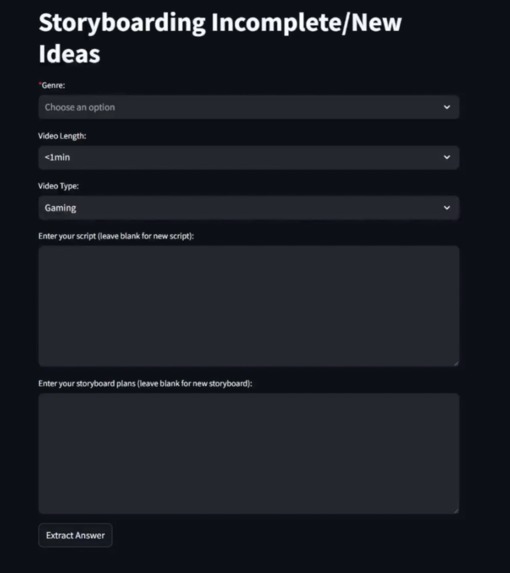
Mainpage
-
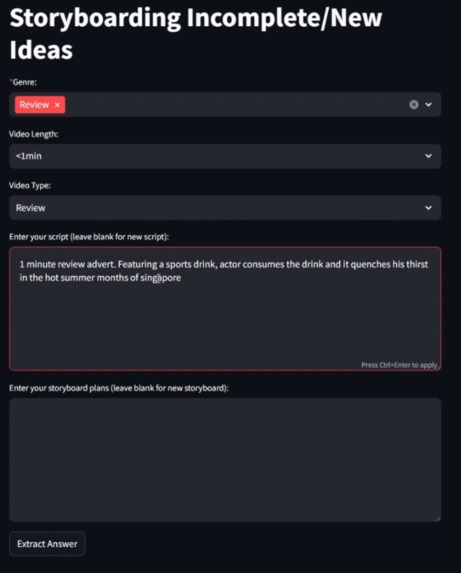
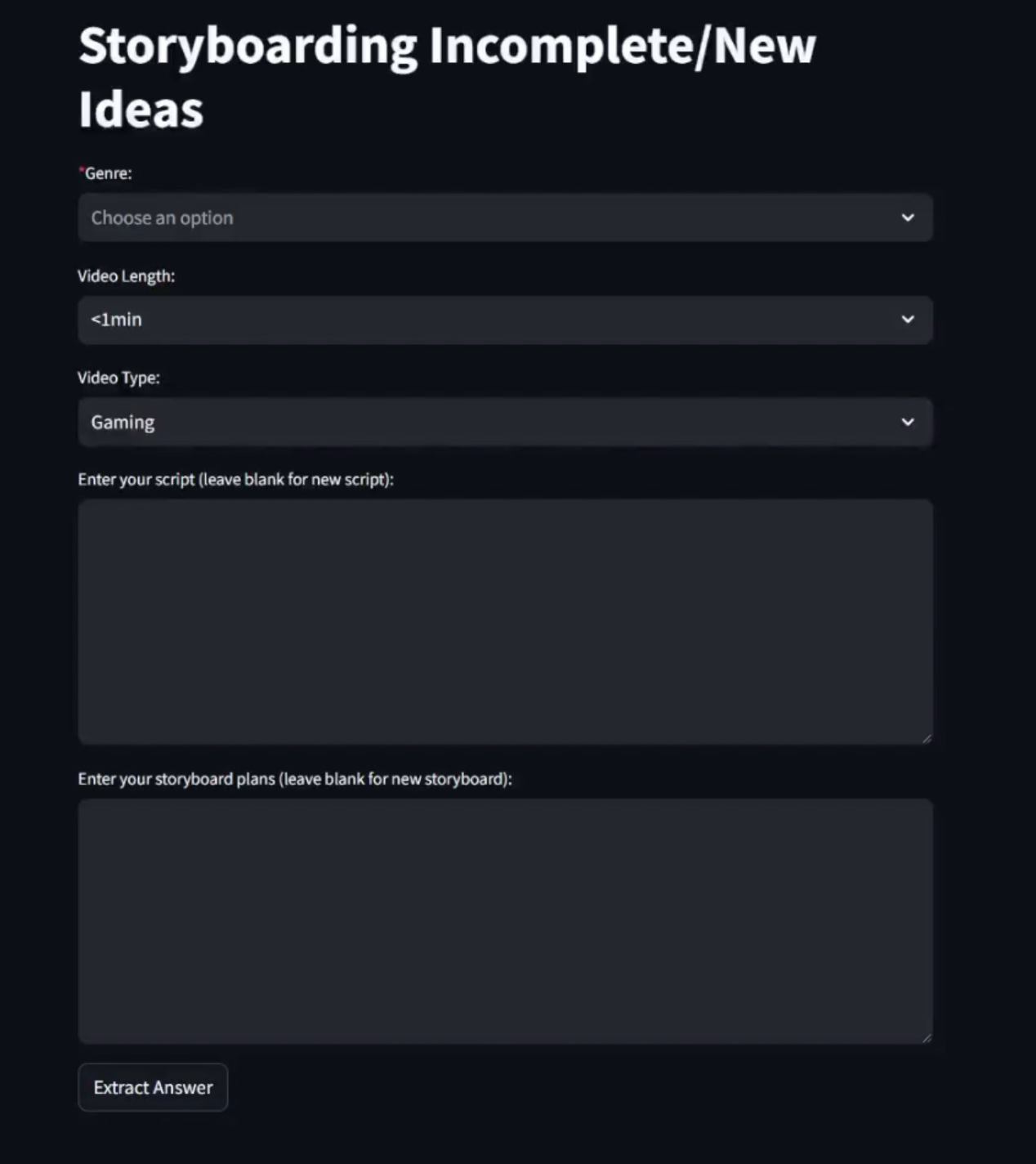
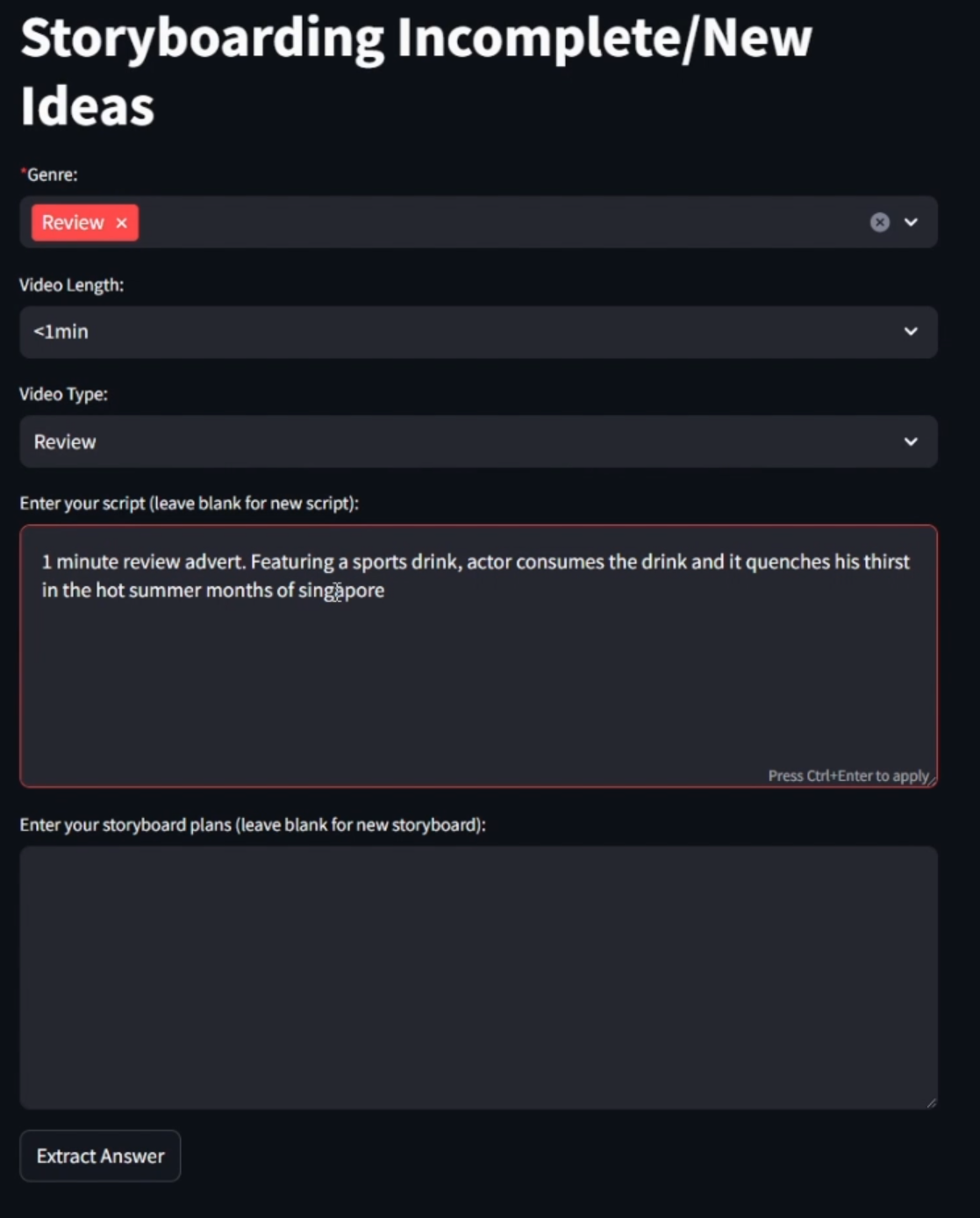
Users can key in information pertaining to their project
-
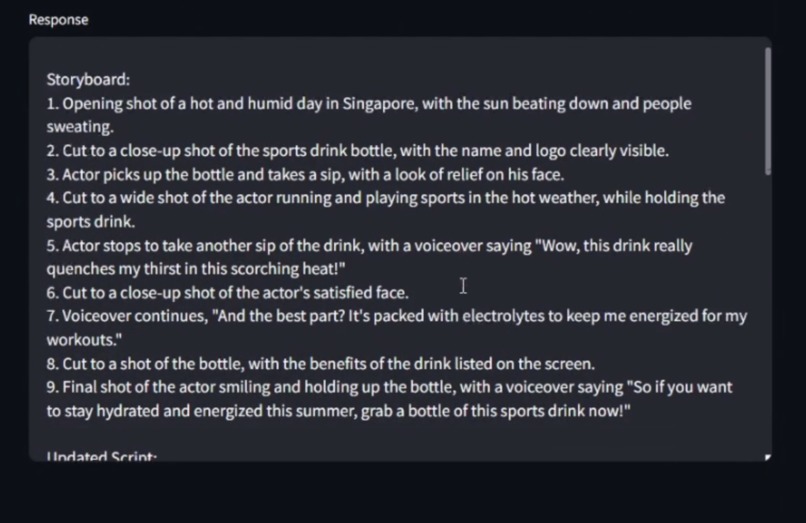
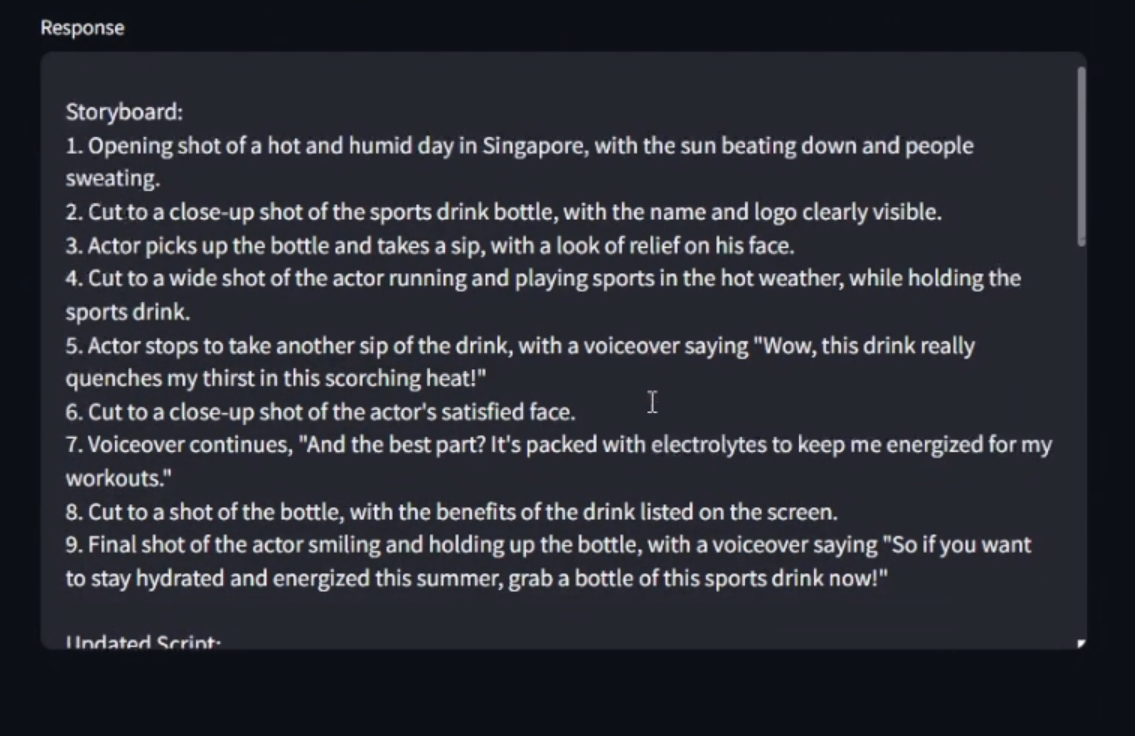
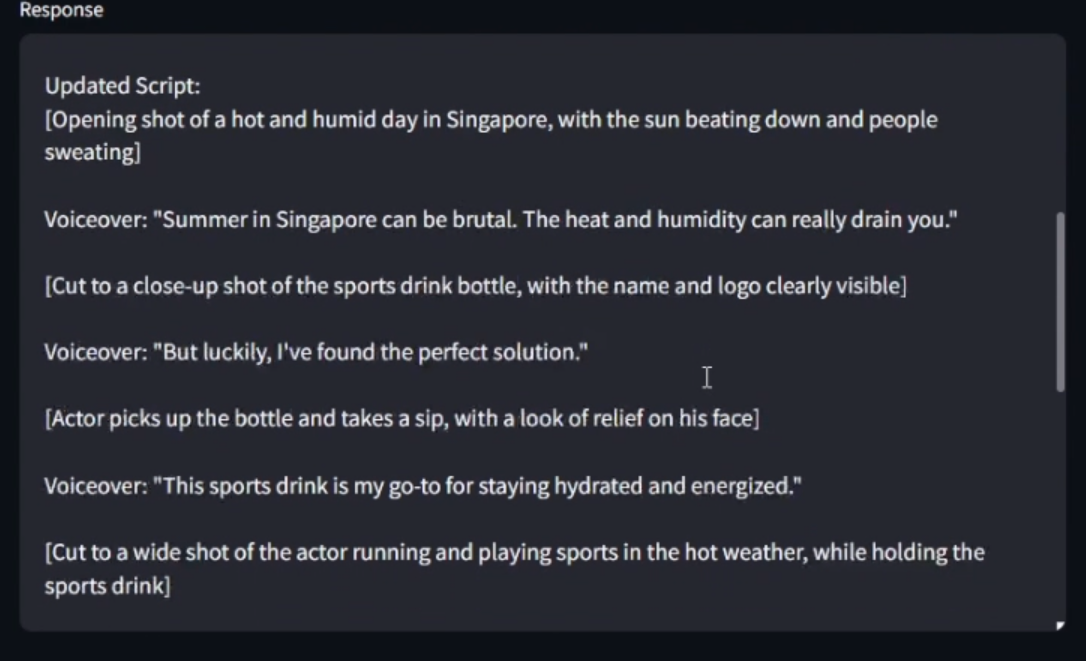
Generated storyboard
-
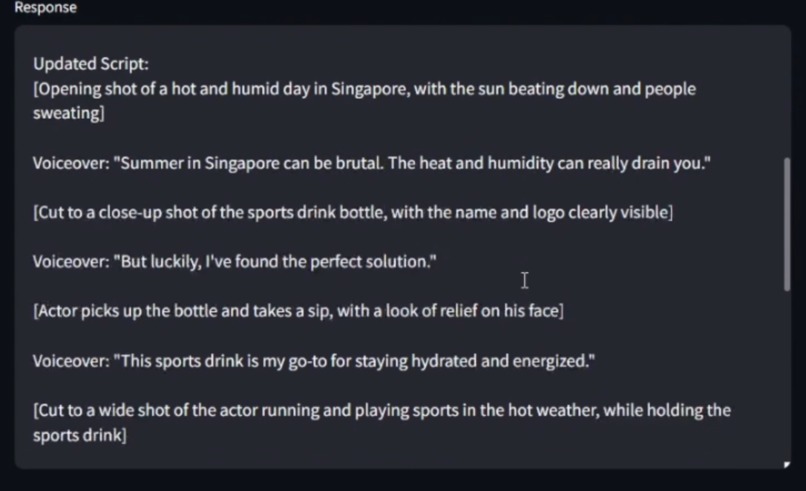
Generated scripts
-
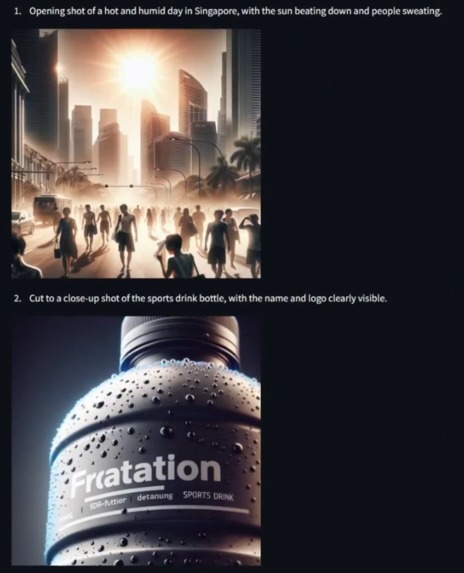
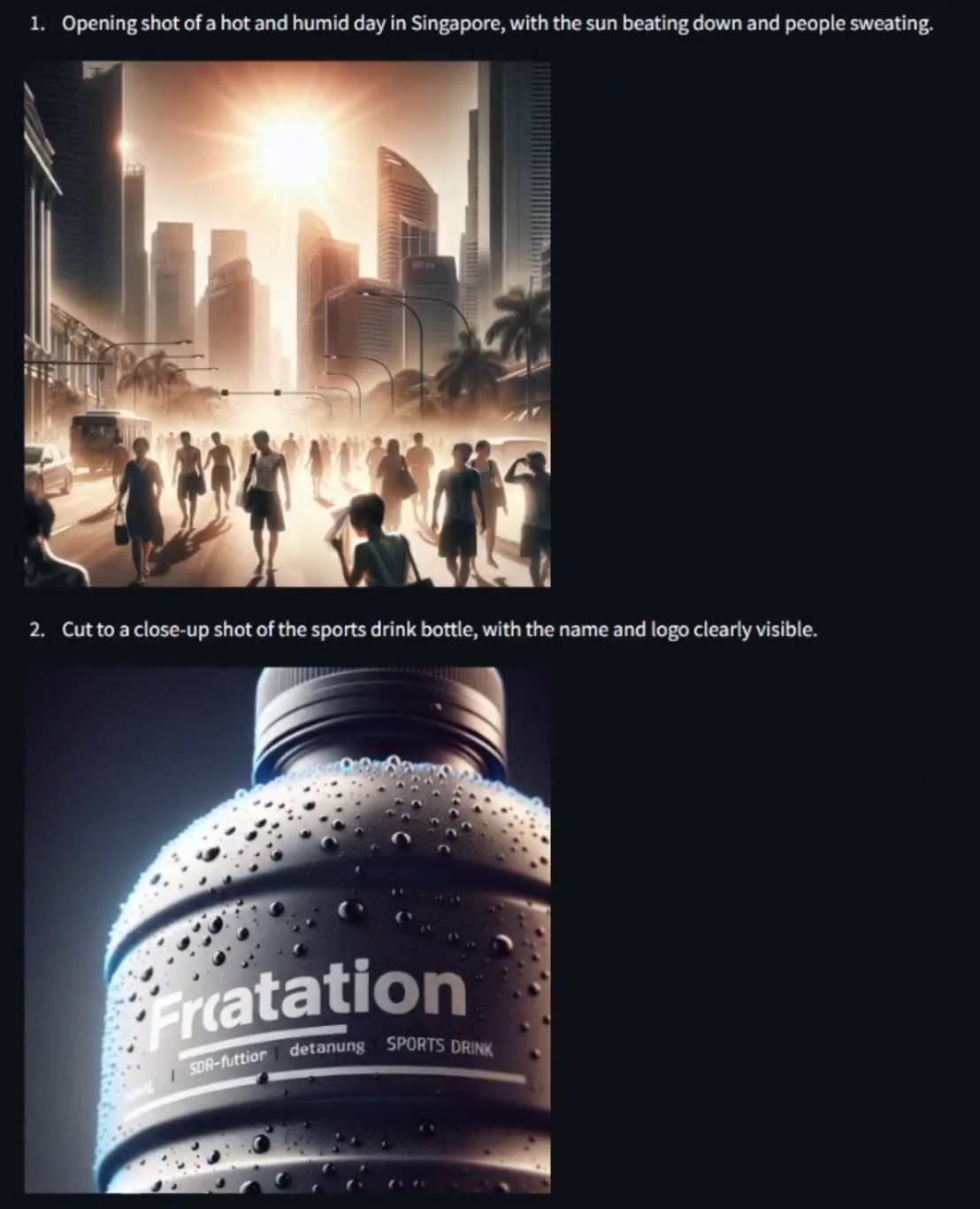
Generated pictures to help the creator visualise each frame
Inspiration
The idea behind CineFrame was to make content creator's planning processes easier and more enjoyable. We found that storyboarding and scriptwriting are difficult and time-consuming tasks for many creators. Our objective was to create a tool that would let designers realize their ideas more easily by automating these procedures and providing a visual depiction of photographs.
What it does
CineFrame is a creator-focused all-in-one storyboarding and scriptwriting tool. Users can enter the specifications such as genre, length of video, type of video it is going to be used for their projects, and CineFrame will produce a comprehensive script and storyboard based on these inputs. Additionally, the application produces visual representations of shots, which aids in the efficient framing and visualization of scenes by artists. CineFrame simplifies the process of creating material by incorporating these characteristics, freeing up producers to concentrate more on their artistic vision.
How we built it
Front End Development We chose to use Streamlit for our front end development as it's rapid development capabilities and ease of use. We can quickly design an interactive and user-friendly interface using Streamlit, allowing users to input project requirements and view created outputs with ease. Streamlit's simplicity allowed us to concentrate on creating a flawless user experience. Back End and AI integration We streamlined the workflow and managed interactions between different AI models on the back end by using LangChain. The process of integrating several AI tools and controlling data flow between them is made easier by LangChain. -Script Generation: We used OpenAI's GPT-3 with its API to manage tasks related to natural language processing. Based on the project requirements supplied by the user, GPT-3 creates comprehensive scripts that are both logical and pertinent to the context. -Image Generation: To generate the shots, we used OpenAI’s DALL-E API. DALL-E generates high-quality images that represent the framing of each shot in the storyboard, providing a visual aid that complements the script. We extracted the storyboard script and stored it in an array in the different sentences. We then called the API to generate the images based on the different sentences stored in the array. -Video Generation: MoviePy was used to create a video from a series of images combined that was generated by DALL-E, based on the user's script and storyboard inputs. Images are then downloaded and saved locally, the individual image clips were combined into a single video using MoviePy's concatenate_videoclips function. This function ensures that all the image clips are displayed sequentially, forming a continuous video.
Challenges we ran into
One of the main challenges we encountered was integrating multiple AI models seamlessly. Ensuring that the output from the script generation model aligned perfectly with the image generation process required careful coordination and data handling. We also faced difficulties optimising the image generation process to produce consistent, high-quality visuals that accurately represented the script's descriptions. Additionally, balancing the AI's creative suggestions with maintaining the user's original vision proved to be a delicate task, requiring us to fine-tune our prompts and implement user feedback mechanisms to achieve the right balance between automation and human creativity.
Accomplishments that we're proud of
We are incredibly proud of creating a cohesive, end-to-end solution that streamlines the creative process for content creators. Successfully integrating advanced AI models to generate both written and visual content in a user-friendly interface is a significant achievement. We are particularly pleased with the quality and relevance of the AI-generated scripts and storyboards, which often exceed expectations in terms of creativity and coherence. The positive feedback from our peers, who have found CineFrame to be a valuable tool in their creative workflow, is especially rewarding. Additionally, we are proud of overcoming technical challenges to create a scalable and efficient system that can handle diverse project requirements.
What we learned
Throughout the development of CineFrame, we gained valuable insights into the intricacies of AI-assisted content creation. We learned the importance of crafting precise prompts to guide AI models effectively, understanding the nuances of different AI APIs and their capabilities, and the critical role of user experience design in making complex AI tools accessible to creative professionals. The project also taught us about the balance between AI automation and human creativity, highlighting areas where AI excels and where human input remains irreplaceable. Furthermore, we deepened our understanding of the creative process in filmmaking and content creation, which helped us tailor our tool to meet real-world needs more effectively.
What's next for CineFrame
Looking ahead, we have exciting plans to expand CineFrame's capabilities and reach. We aim to incorporate more advanced AI models to improve the quality and diversity of generated content, including options for different artistic styles and genres. Implementing a feature for collaborative editing and real-time feedback is high on our priority list, allowing teams to work together seamlessly on projects. We're also exploring the integration of voice recognition and natural language processing to enable script generation from spoken ideas. Additionally, we plan to develop mobile applications to make CineFrame more accessible on the go. Lastly, we're considering partnerships with film schools and production companies to gather more specialised feedback and tailor CineFrame to industry-specific needs, ultimately aiming to become an indispensable tool in the creative industry.
Built With
- dall-e
- gpt-3
- langchain
- moviepy
- openai
- streamlit

Log in or sign up for Devpost to join the conversation.