-
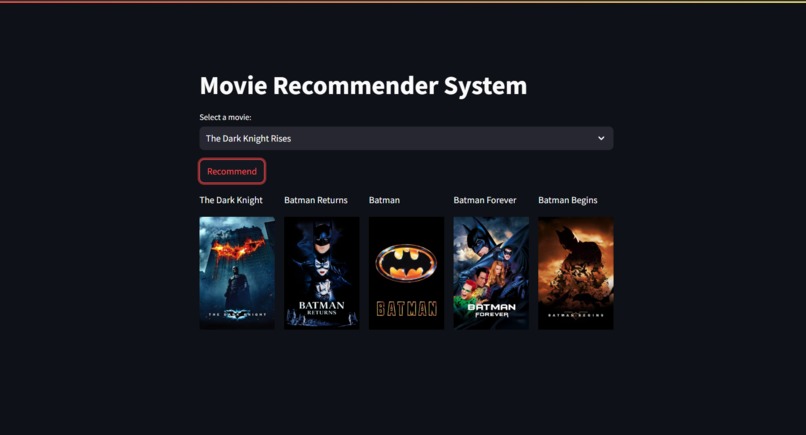
Demo

Inspiration:
The inspiration behind CineExplorer came from my own frustration with endlessly scrolling through streaming platforms, unsure of what to watch next. I realized that discovering movies tailored to my tastes could enhance the viewing experience, making it more enjoyable and efficient. That’s when I decided to build a machine-learning-driven movie recommender system that could suggest films based on individual preferences.
What it does:
CineExplorer is a machine learning-powered movie recommender system that provides personalized movie suggestions based on a user’s preferences and viewing history. It utilizes collaborative filtering and content-based algorithms to offer recommendations, ensuring that each user finds movies they’ll love. With a sleek, intuitive interface built on Streamlit, users can easily discover new movies across genres with just a few clicks.
How we built it:
I started by collecting a movie dataset containing ratings and movie information. I used Python and libraries like Pandas, NumPy, and Scikit-learn to preprocess the data and build the recommendation algorithms. I implemented collaborative filtering for users with similar tastes and content-based filtering for movies with similar genres or attributes. To ensure a smooth user experience, I built the front-end using Streamlit, creating an easy-to-navigate interface where users could input their preferences and instantly receive personalized movie suggestions.
Challenges we ran into:
One of the main challenges was fine-tuning the machine learning models for accurate recommendations. It took several iterations to improve the recommendation accuracy, balancing between content-based and collaborative approaches. Another challenge was ensuring the front-end was responsive and user-friendly while maintaining the backend’s performance. Integrating both the machine learning logic and the interactive front-end posed some technical hurdles, especially in terms of performance optimization.
Accomplishments that we're proud of
Successfully building a working recommendation system that provides accurate and relevant movie suggestions. Developing a user-friendly and visually appealing interface with Streamlit, making the system easy to use for anyone. Learning how to integrate machine learning models into a web application for real-time use, which improved my skills in both backend and frontend development.
What we learned:
Through this project, I deepened my understanding of machine learning, particularly recommendation systems. I learned how to leverage collaborative filtering and content-based filtering to generate movie suggestions. Additionally, I explored how to build an intuitive user interface using Streamlit to make the system easy to use and visually appealing. The integration of machine learning models with web frameworks like Streamlit also helped me learn about deploying machine learning applications for real-time use.
What's next for CineExplorer
Expanding the dataset to include more diverse movie genres and user preferences, making the recommendations even more accurate and tailored. Integrating user feedback to allow the system to learn and adapt to user tastes over time. Improving the recommendation system by incorporating additional machine learning techniques, such as hybrid models or deep learning-based approaches. Deploying the application on a cloud platform to make it accessible to a wider audience, and considering adding features like movie trailers or reviews.
