-
-
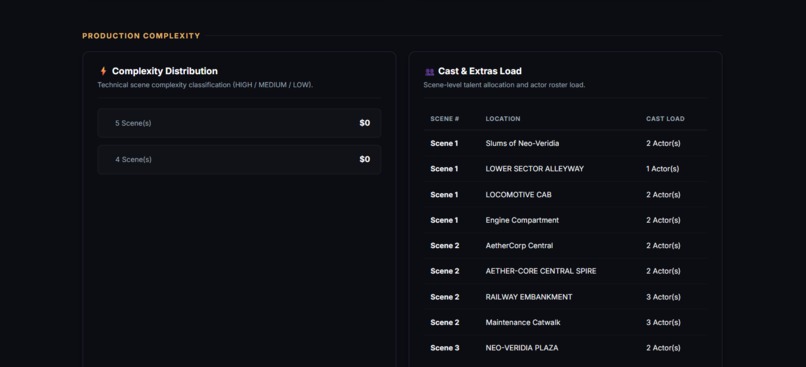
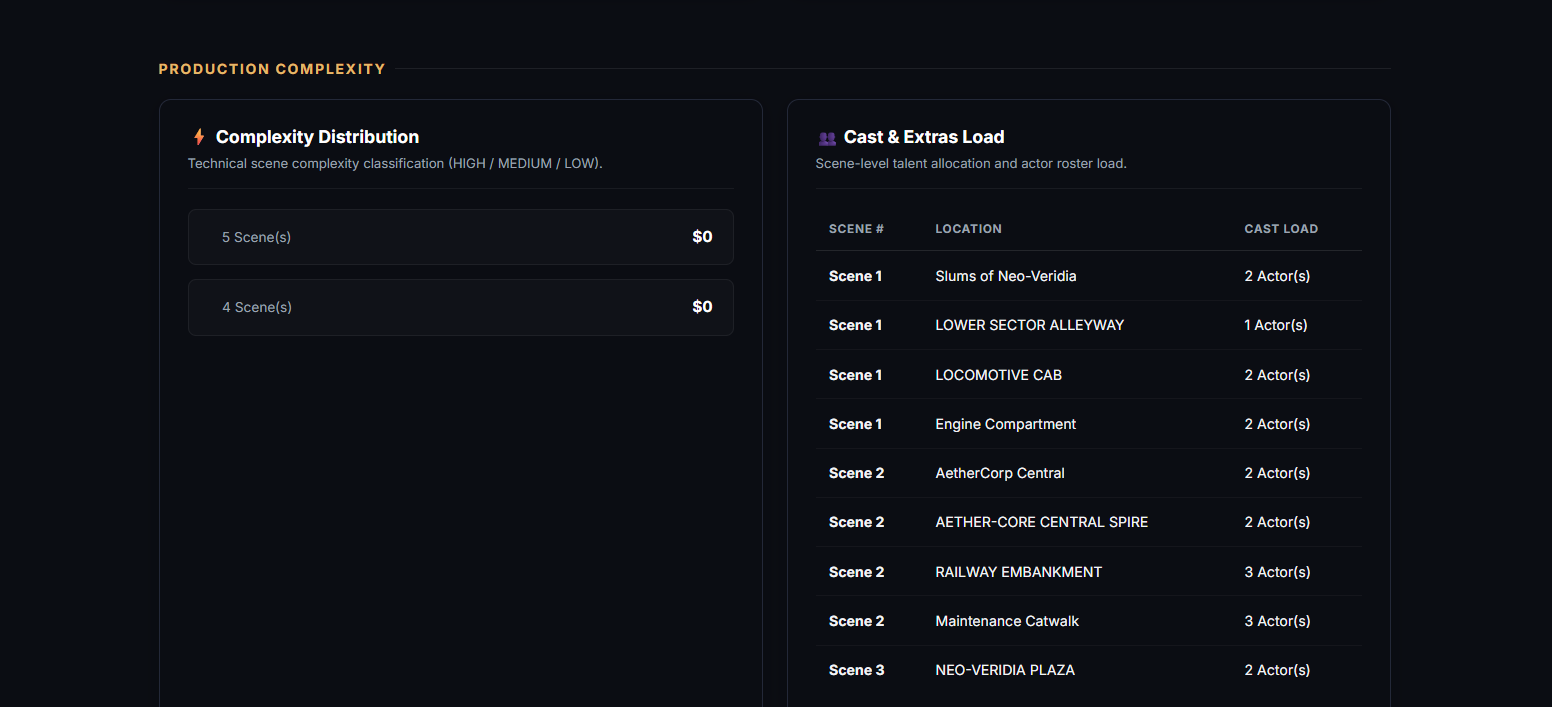
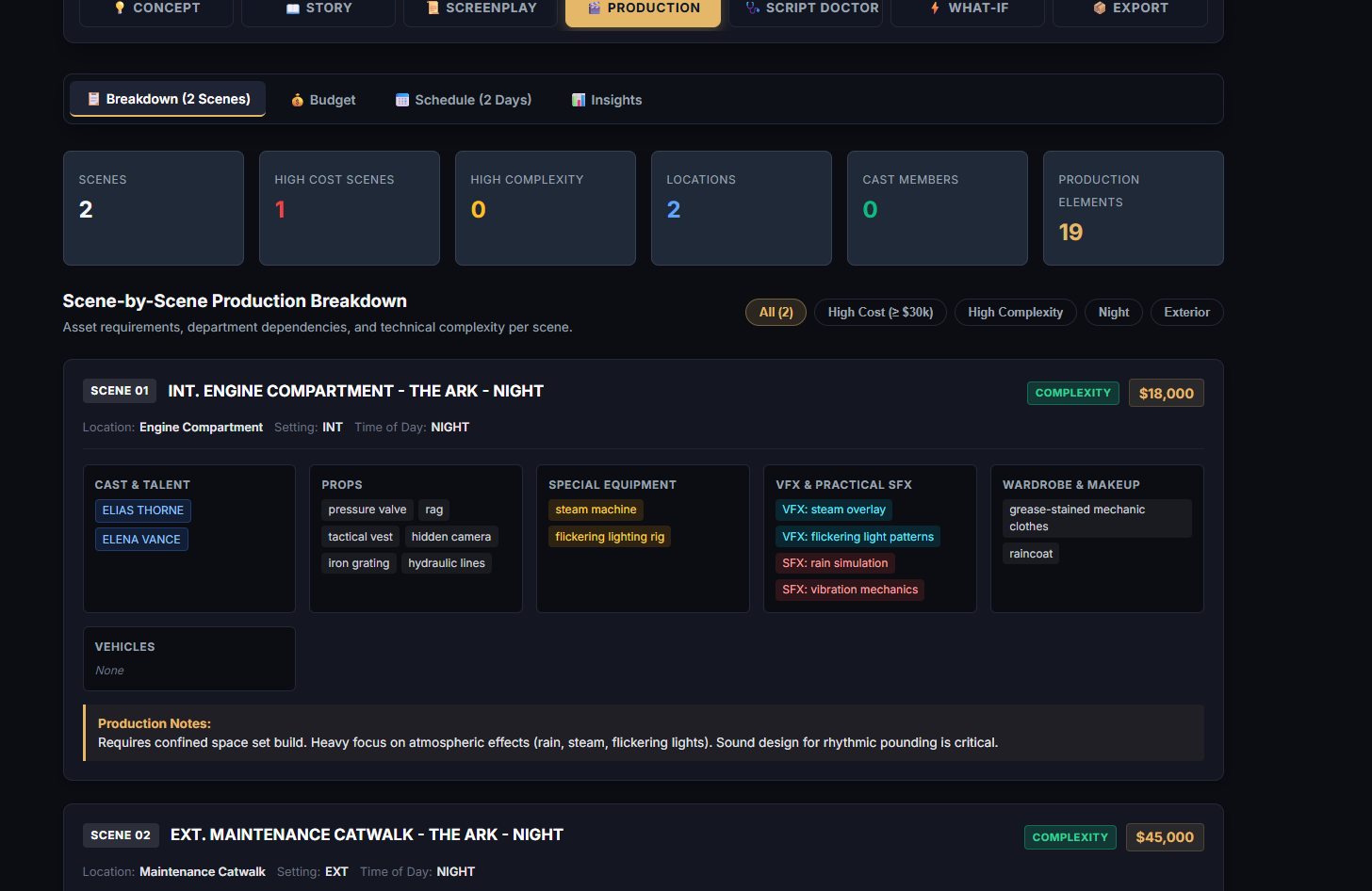
Production Complexity
-
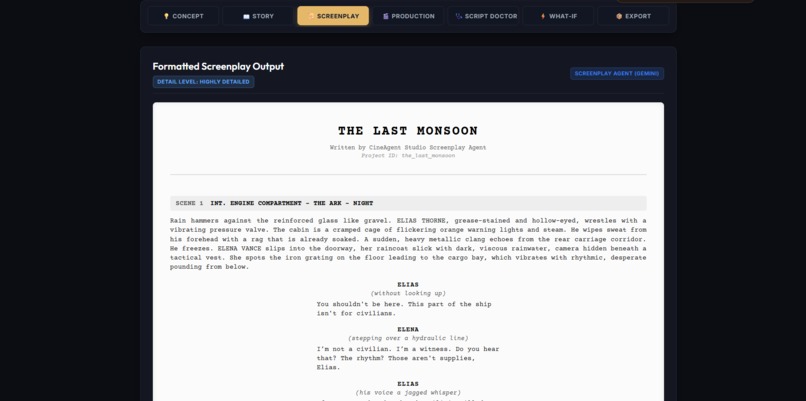
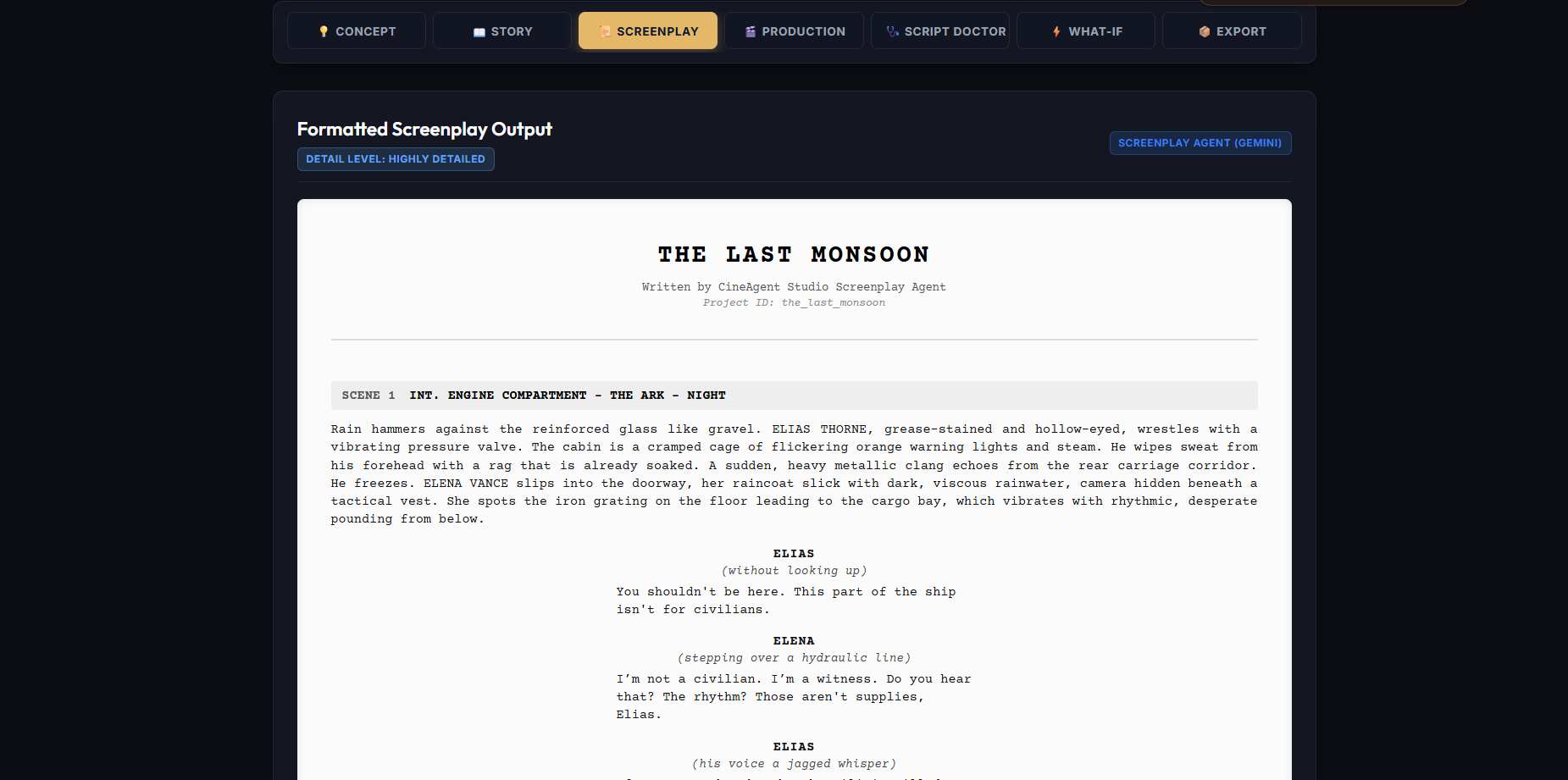
Highly Detailed Cinematic Screenplay
-
-
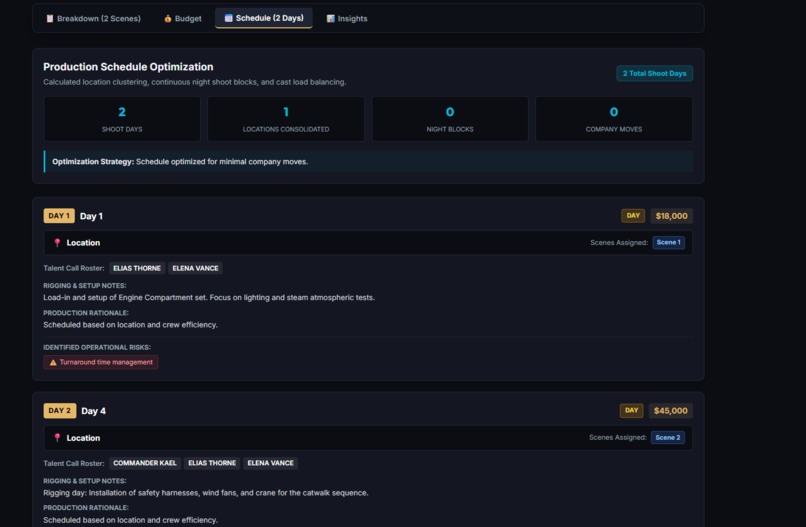
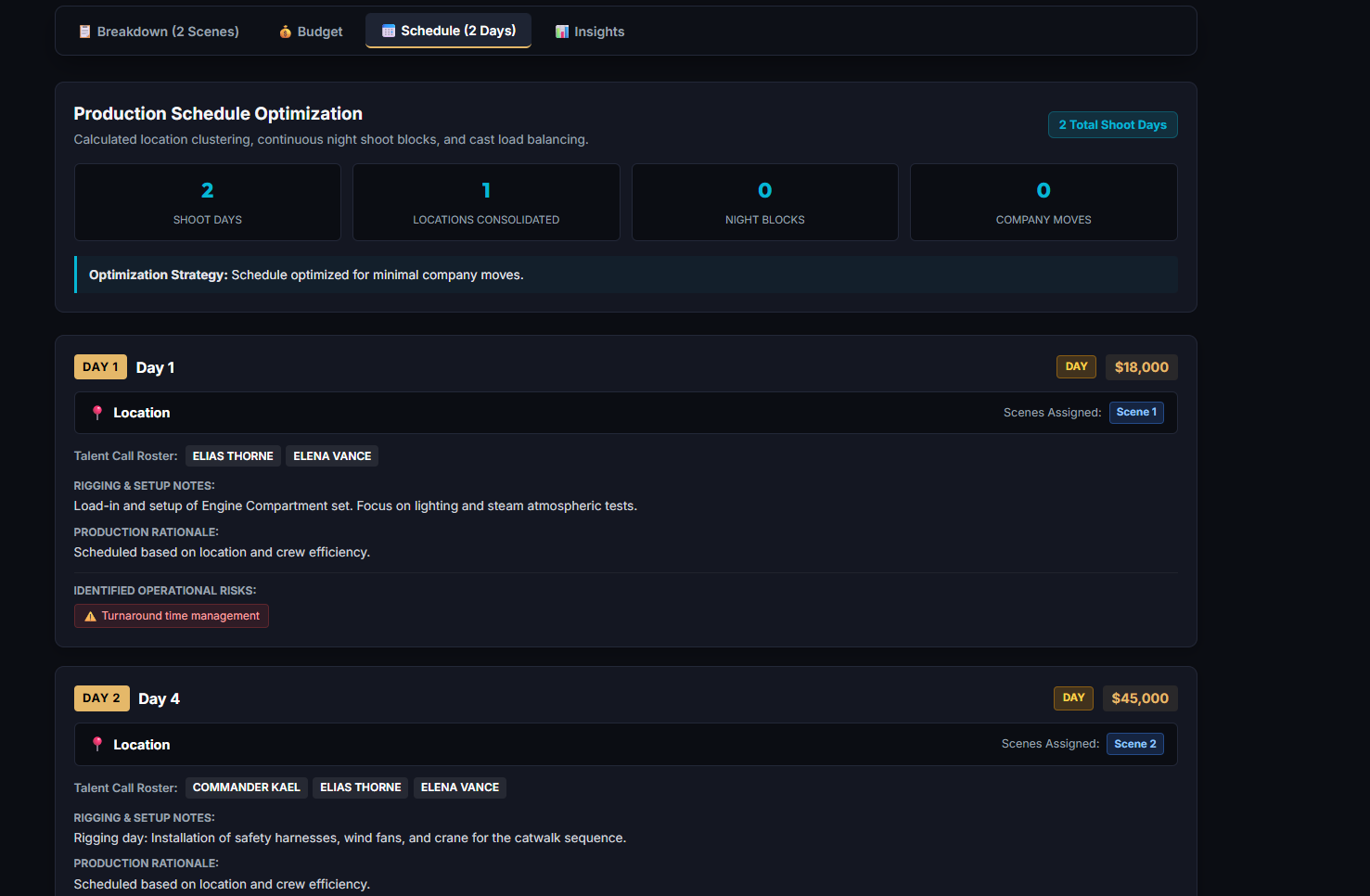
Production Schedule Optimization
-
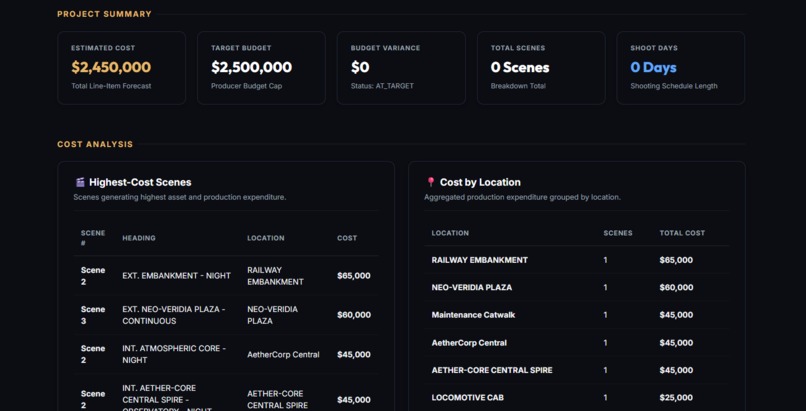
Production Insights
-
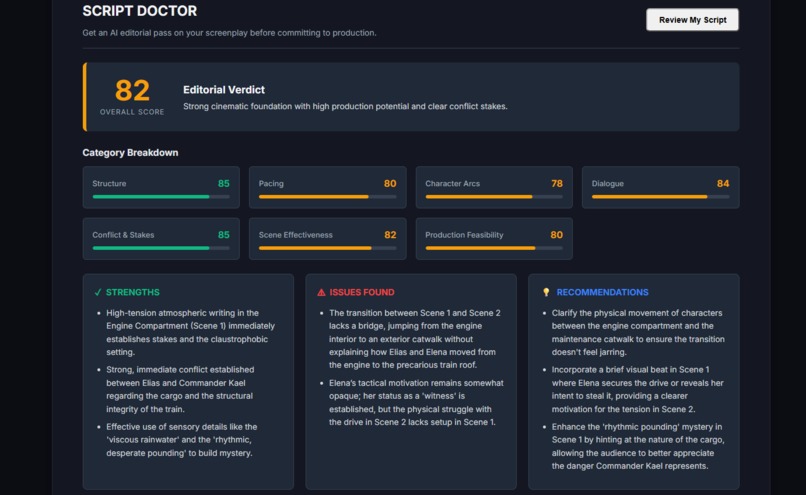
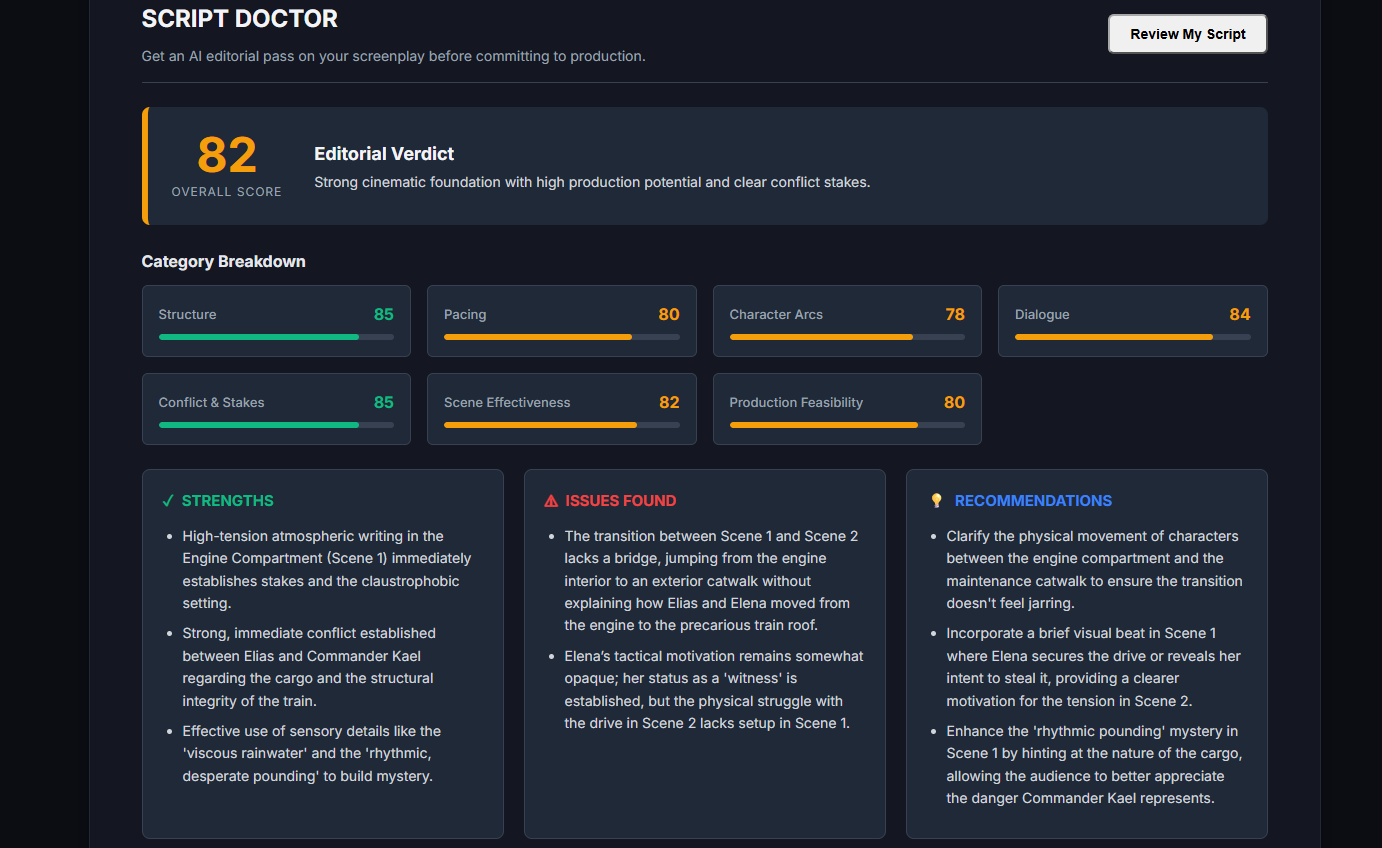
Script Doctor
-
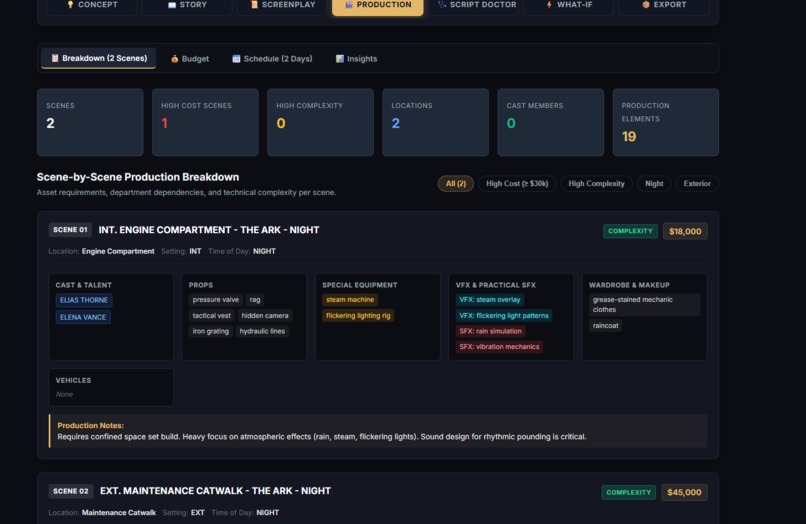
Scene-by-Scene Production Breakdown
-
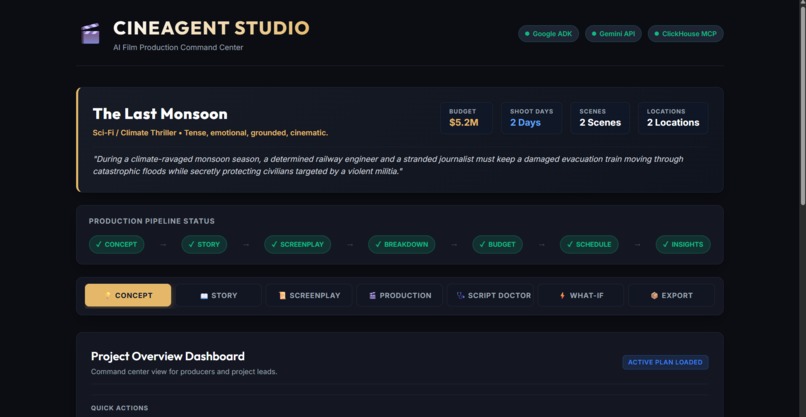
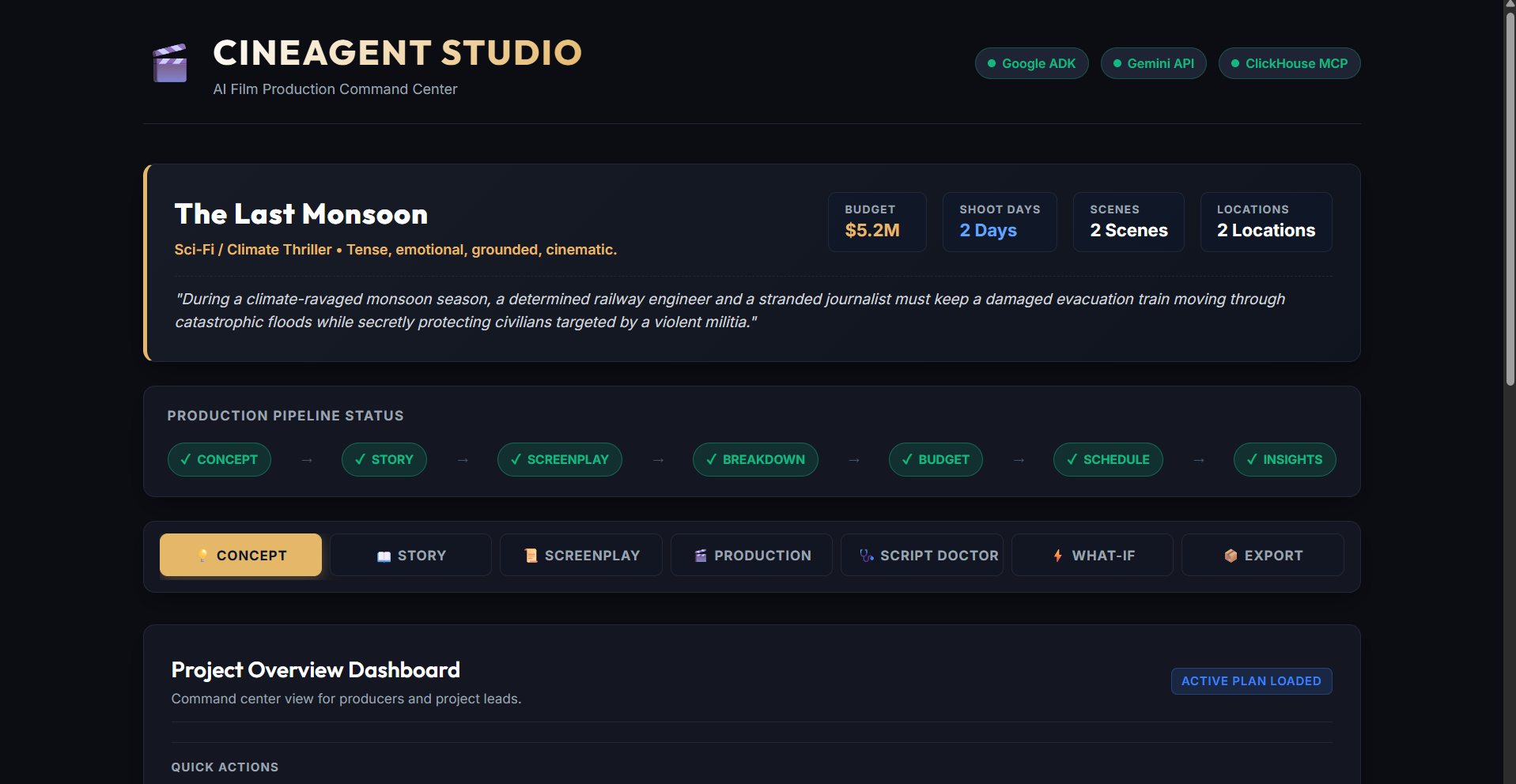
Home page of our dashboard
-
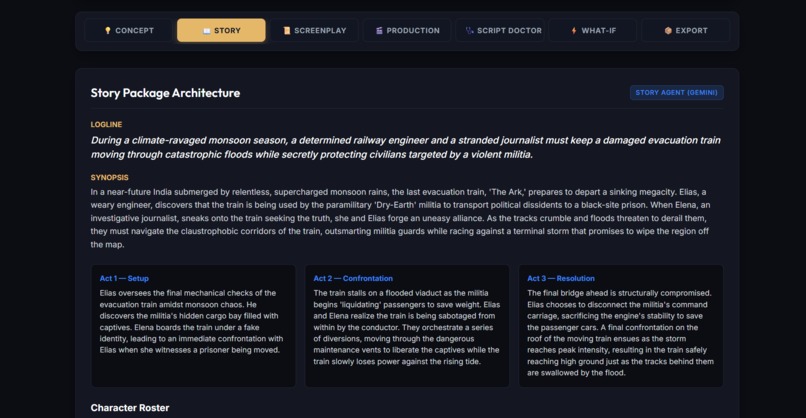
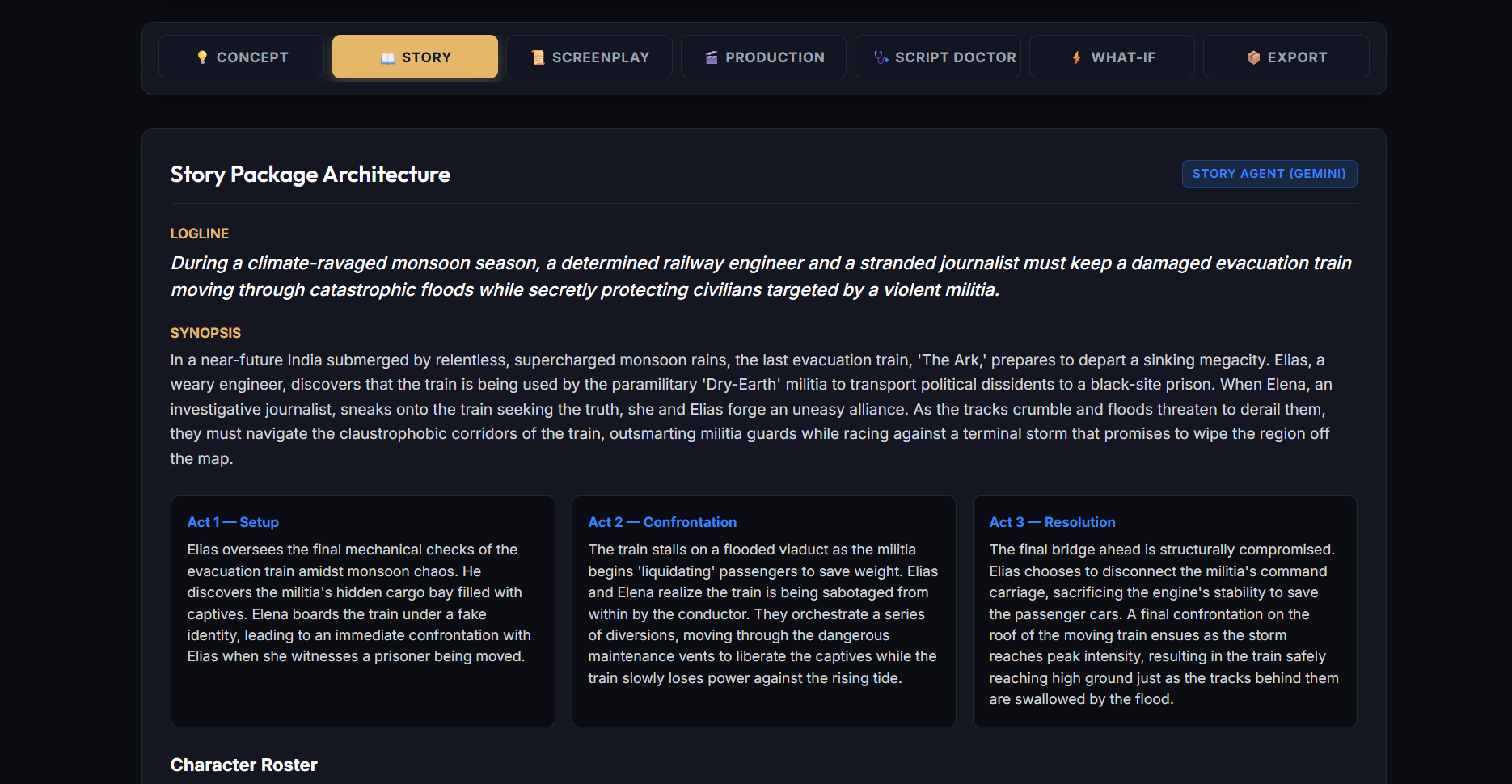
AI-Generated Story Architecture
-
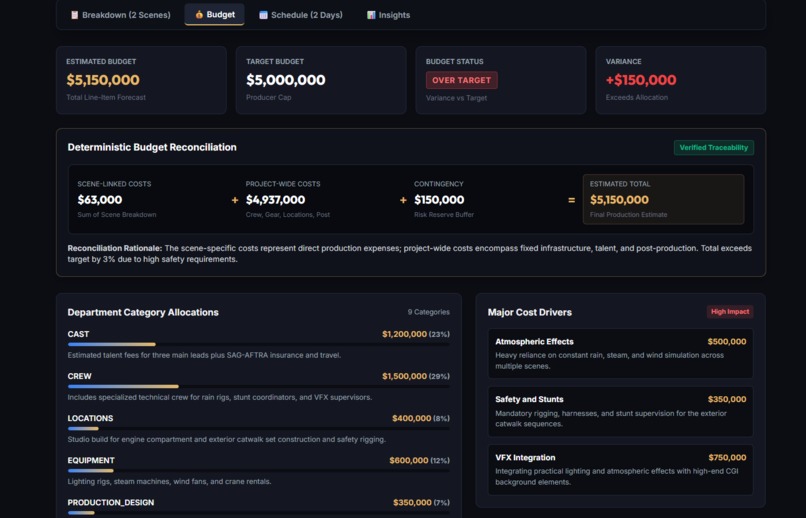
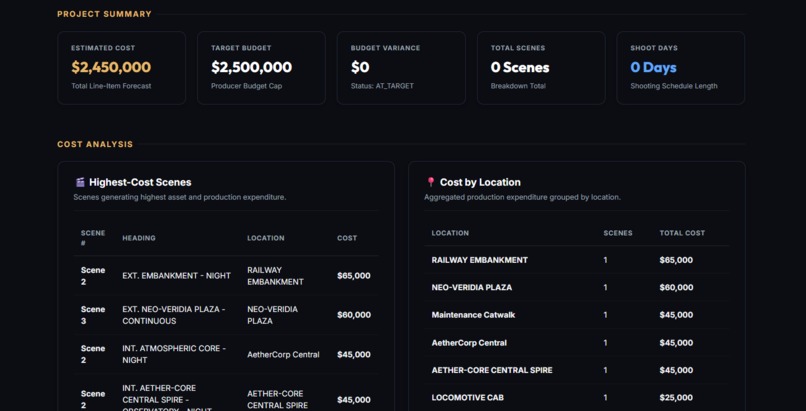
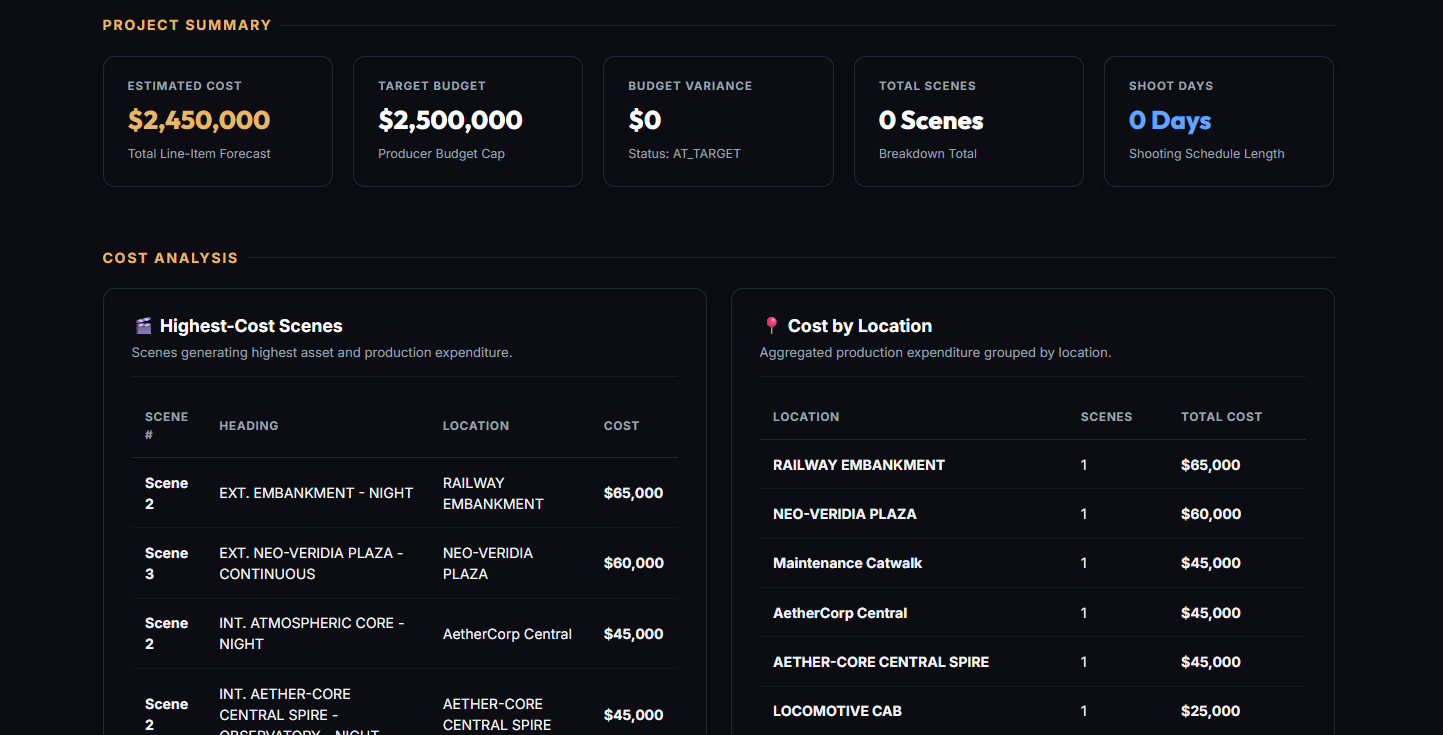
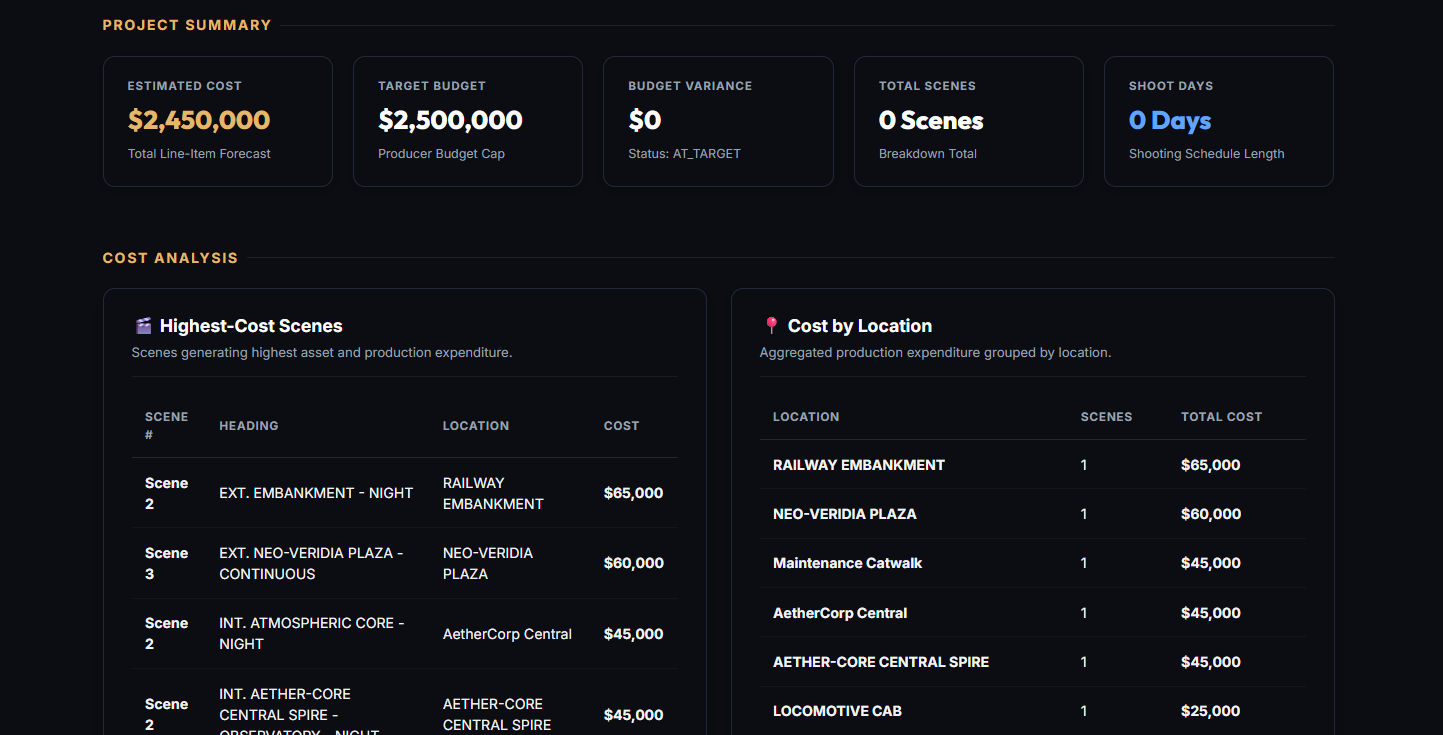
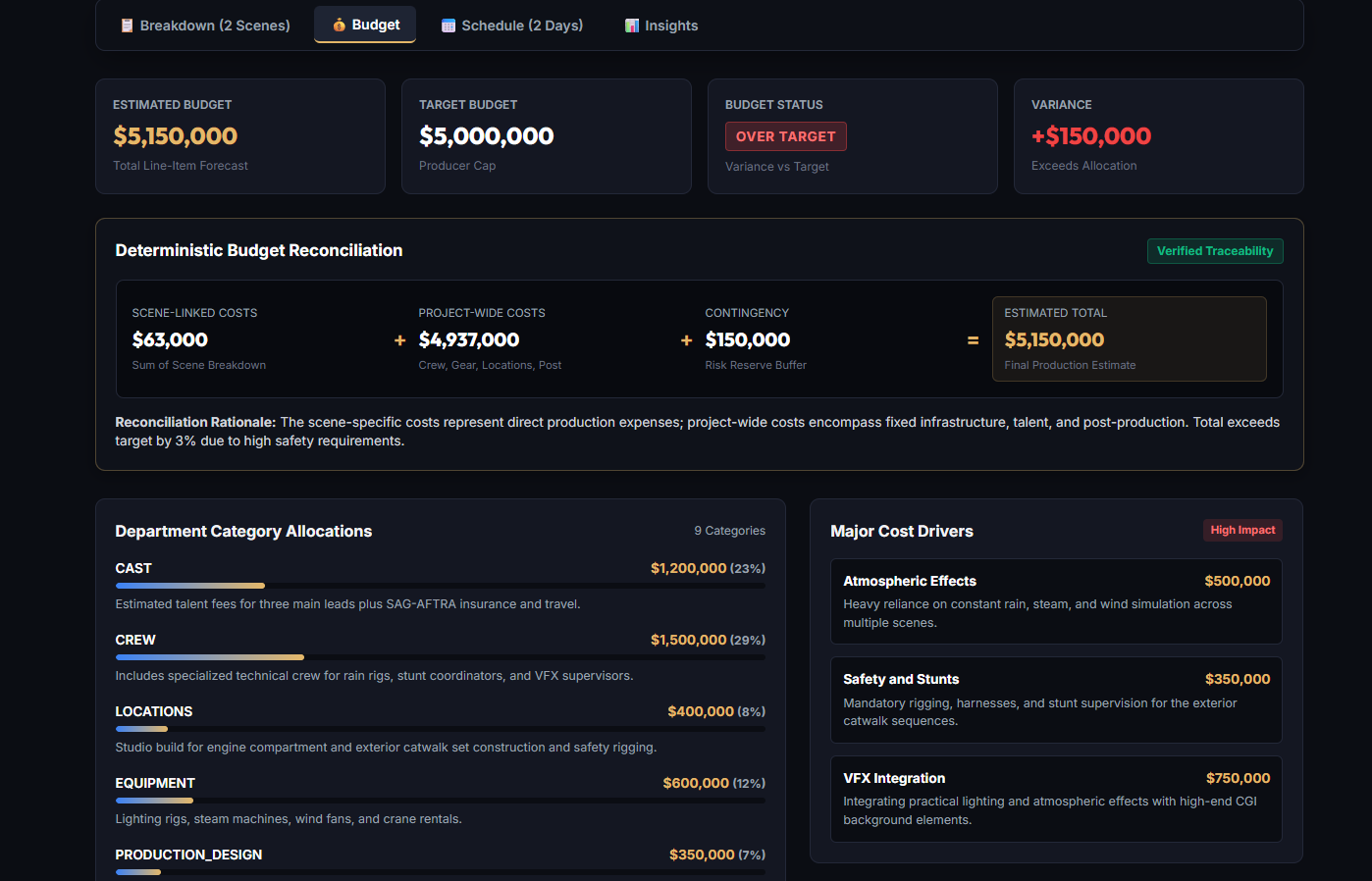
Deterministic Production Budget & Cost Drivers
-
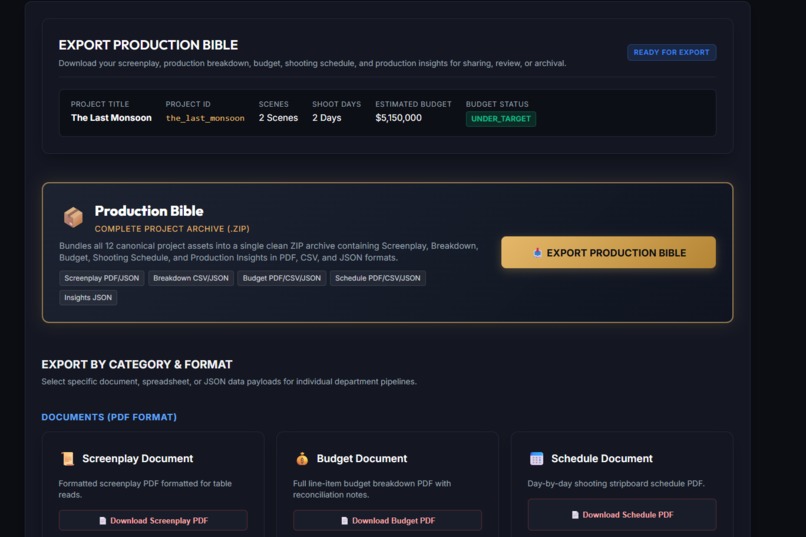
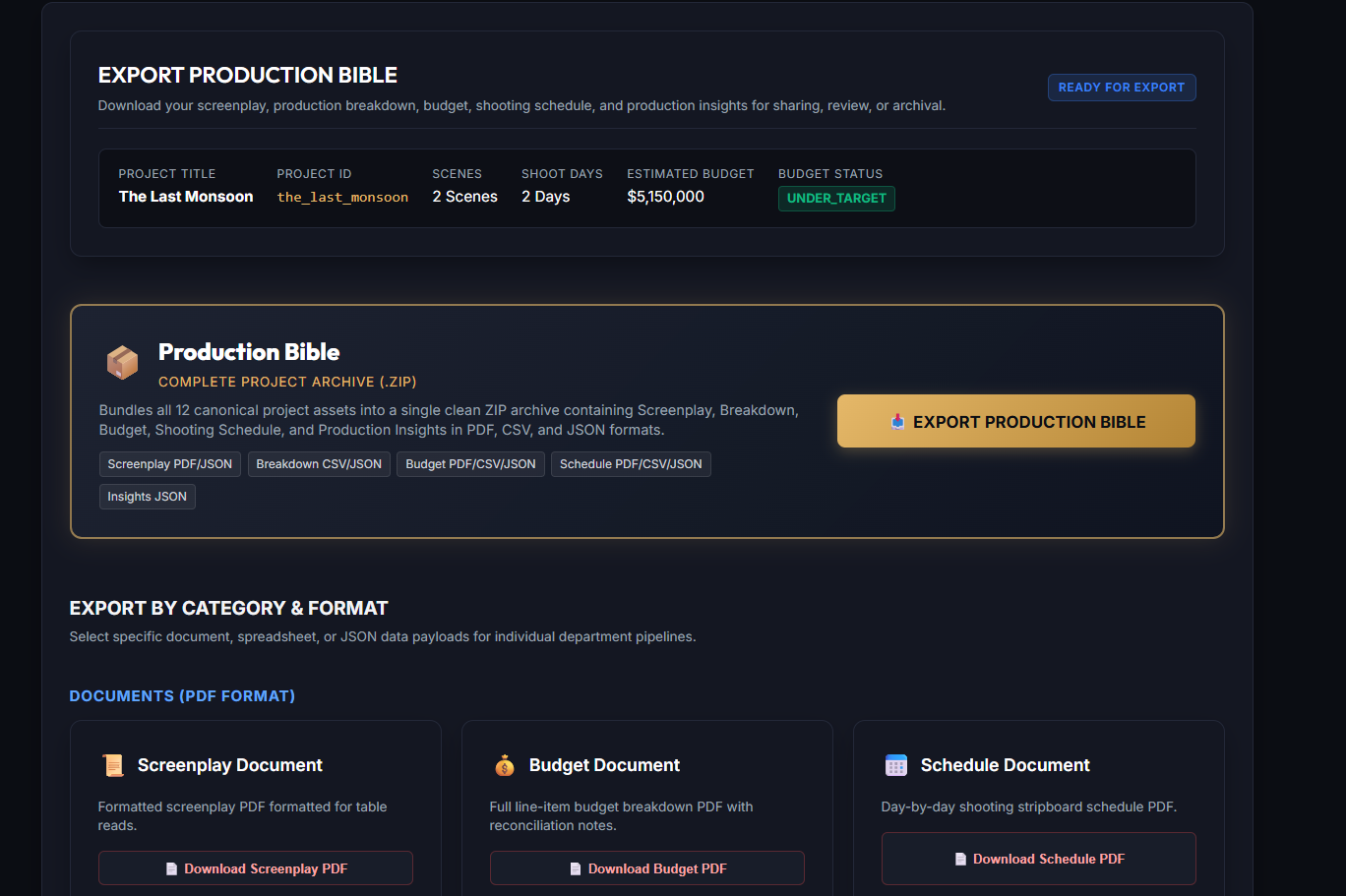
Export Workspace
Inspiration
Film production starts with a creative idea, but turning that idea into a production-ready plan is a fragmented and time-consuming process. Writers, producers, and production teams must move from story development to screenplay, scene breakdowns, budgeting, scheduling, analytics, and final deliverables—often across disconnected tools.
We wanted to build a system where AI could understand the creative intent of a film and then help turn it into real production decisions.
That idea became CineAgent Studio: an AI-powered film production decision system that connects creative development with practical pre-production planning.
What it does
CineAgent Studio takes a film concept and transforms it into a structured production workflow:
Concept → Story → Screenplay → Breakdown → Budget → Schedule → Insights → Review → Simulation → Export
The platform uses specialized AI agents for different stages of the workflow rather than relying on one general-purpose generation step.
It can:
- Generate a structured three-act story
- Generate a cinematic, highly detailed screenplay
- Break scenes into production requirements
- Build and reconcile a production budget
- Create a shooting schedule
- Analyze production data through ClickHouse Cloud
- Review the screenplay with Script Doctor
- Explore production changes with the What-If Simulator
- Export production-ready documents, spreadsheets, JSON, and a complete Production Bible
The key idea is that CineAgent Studio does not stop at generating creative content. It helps turn that content into production decisions.
How we built it
The frontend is built with React and Vite, with an Express backend serving the application and API layer.
The AI workflow uses Google Gemini together with the Google Agent Development Kit (ADK).
The production workflow is divided into specialized agents for:
- Story
- Screenplay
- Production Breakdown
- Budget
- Schedule
- Script Doctor
Each stage passes structured data to the next stage, with validation and continuity checks helping prevent broken or inconsistent handoffs.
We use Model Context Protocol (MCP) to connect the application to ClickHouse Cloud for production telemetry and analytics. This allows us to store and analyze information such as scene metrics, production costs, agent execution status, and cost drivers.
The application is deployed as a containerized service on Render.
Challenges we ran into
One of the biggest challenges was getting reliable structured output from generative AI.
A screenplay or production plan cannot simply be treated as free-form text because downstream agents depend on specific fields and relationships. We therefore built validation and normalization around the agent outputs and added targeted repair handling for malformed model responses.
Another challenge was maintaining continuity across agents. A screenplay generated by one agent has to remain consistent when it becomes the input for breakdown, budgeting, and scheduling.
We also had to handle ClickHouse schema evolution safely while preserving existing production data, and connect the Python-based ClickHouse MCP runtime with the Node.js application.
Finally, we had to make the entire system deployable as a single production service while keeping API credentials and database credentials isolated from the browser.
Accomplishments that we're proud of
We are proud that CineAgent Studio became much more than a screenplay generator.
A single concept can move through a complete production workflow and result in:
Story + Screenplay + Breakdown + Budget + Schedule + Analytics + Editorial Review + What-If Analysis + Production Bible
We are especially proud of two features:
Script Doctor
Script Doctor provides an editorial pass across structure, pacing, character arcs, dialogue, conflict and stakes, scene effectiveness, and production feasibility. It identifies strengths, issues, and grounded recommendations without modifying the original screenplay.
Production What-If Simulator
The What-If Simulator allows a producer to explore changes such as reducing shooting days or changing the target budget and immediately see the resulting trade-offs and risks.
It works deterministically from the existing production data, so producers can explore scenarios without repeatedly calling an AI model.
What we learned
We learned that building a useful AI system is not just about generating better text.
The real challenge is building reliable systems around the model: validation, structured contracts, continuity, error handling, observability, security, and deterministic processing where AI is unnecessary.
We also learned that different tasks benefit from different approaches. Generative AI is valuable for story and screenplay creation and editorial analysis, while deterministic logic is better for exports, scenario calculations, and other areas where consistency matters more than generation.
Most importantly, we learned that the strongest AI products do not simply automate a task—they help users make better decisions.
What's next for CineAgent Studio
CineAgent Studio currently focuses on film pre-production and decision support.
Future directions include collaborative production planning, richer visual development and storyboarding, expanded production rate-card support, and more advanced scenario modeling.
Our long-term goal is to make CineAgent Studio a collaborative AI production environment that helps filmmakers move from an initial idea to a production-ready plan with greater speed, clarity, and confidence.
What we learned
What's next for CineAgent Studio
Built With
- clickhouse
- clickhouse-cloud
- docker
- express.js
- gemini
- google-adk
- google-cloud
- javascript
- mcp
- model-context-protocol
- node.js
- python
- react
- render
- vite

Log in or sign up for Devpost to join the conversation.