cine_agent.py
💡 Inspiration
The pre-production phase of filmmaking—ranging from scriptwriting to casting and production management—is notoriously time-consuming and fragmented. Inspired by the "Agentic Cinema" challenge, CineAgent AI was born to bridge this gap. We wanted to see how far an autonomous Multi-Agent system could go in transform ing a raw, simple movie idea into a comprehensive, production-ready blueprint in seconds.
⚙️ How We Built It
CineAgent AI is crafted completely from a mobile environment using Termux, proving that powerful AI orchestration doesn't require a high-end desktop setup.
- Backend: Built using Python and Flask to serve a lightweight local server.
- AI Core: Powered by the Llama 3.1 (8B Instant) model via the ultra-fast Groq API using optimized
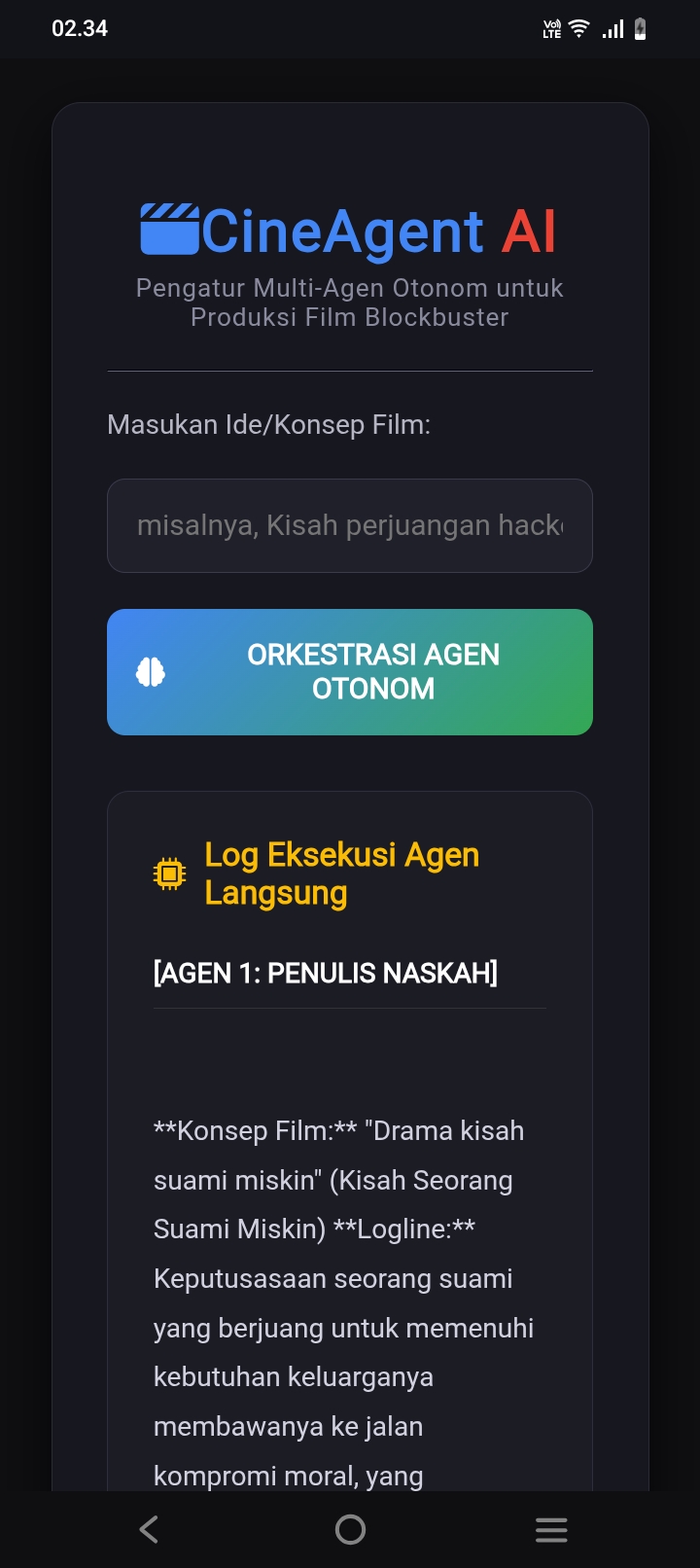
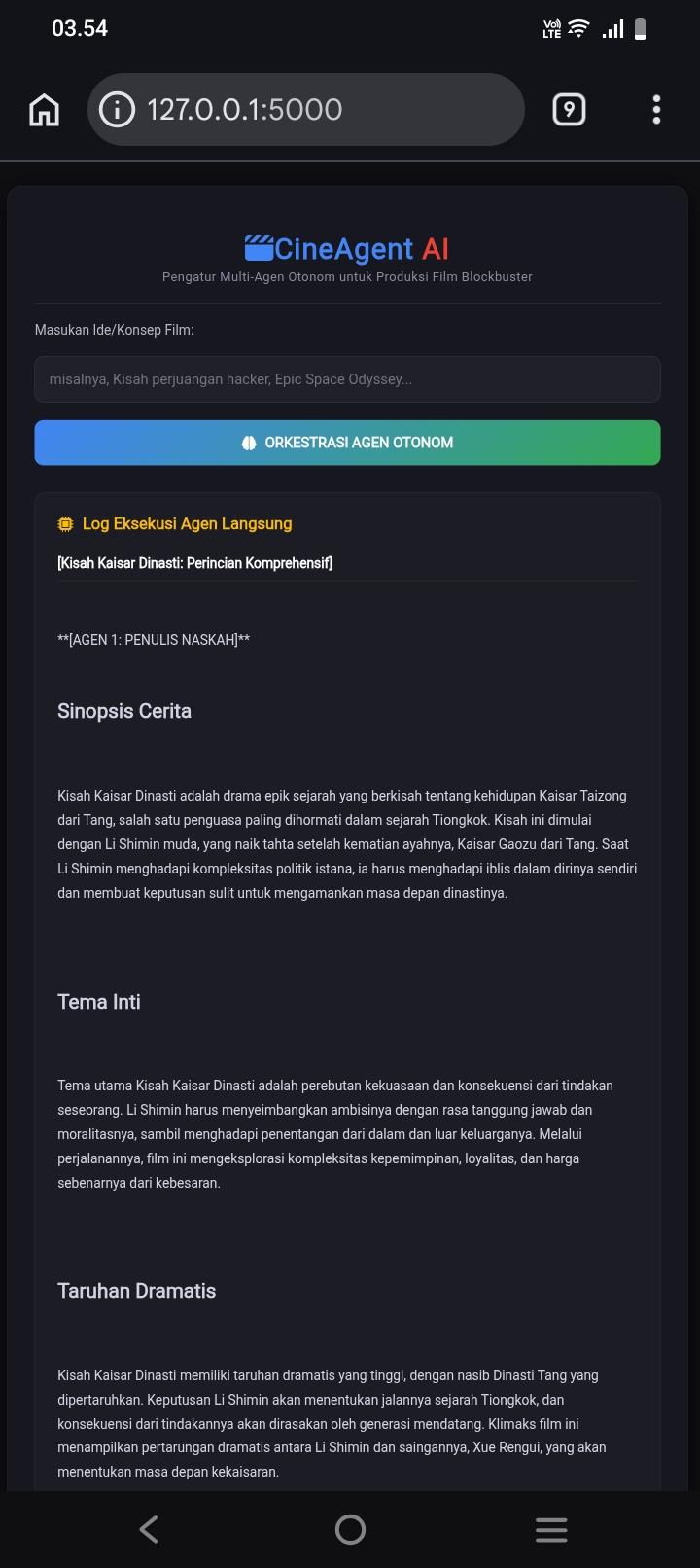
urllibraw requests for maximum speed and minimal dependencies. - Frontend: A clean, responsive dashboard designed with HTML5 and customized CSS variables for a modern "Studio Log" look.
🚀 What it Does (The Multi-Agent Orchestration)
When a user inputs a single movie concept, CineAgent AI automatically spins up 3 specialized autonomous agents to collaborate simultaneously:
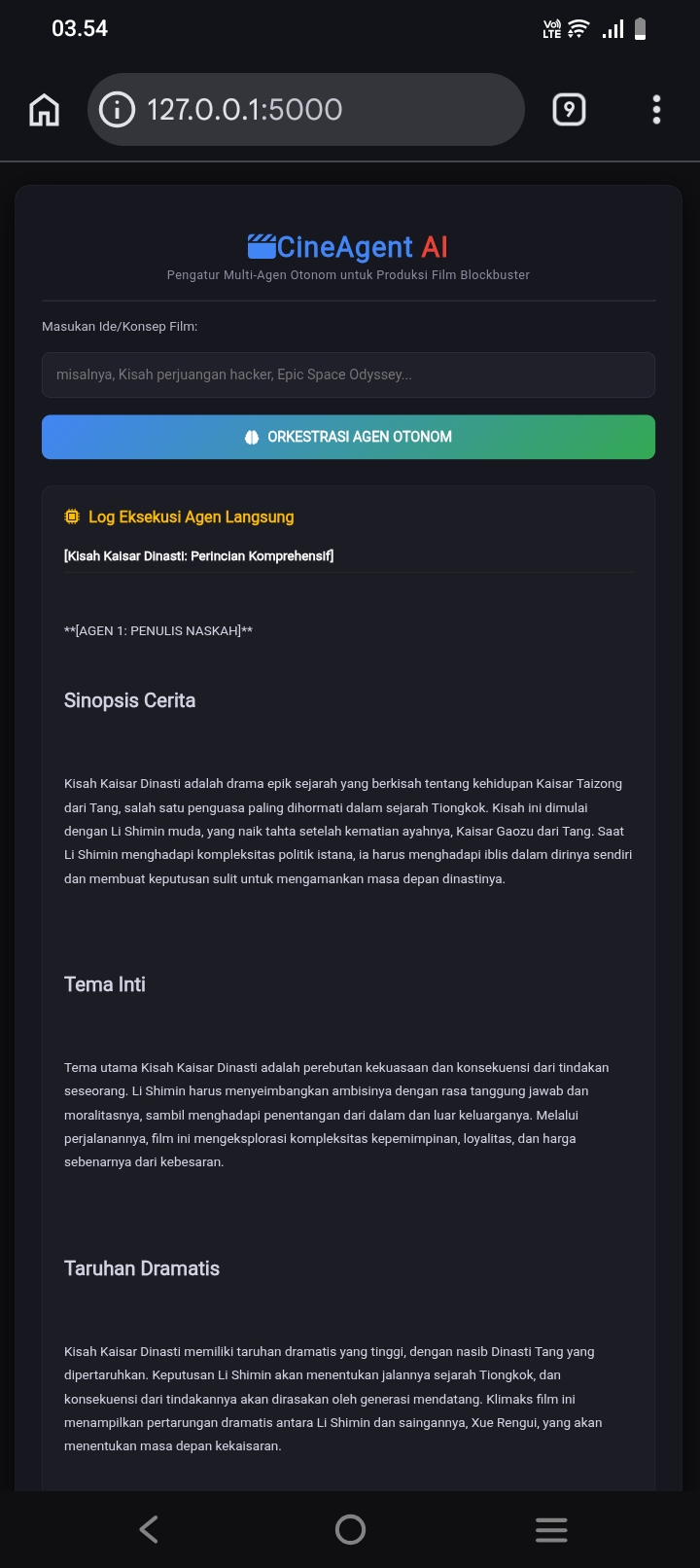
- Scriptwriter Agent: Breaks down the comprehensive plot synopsis, core themes, and dramatic stakes.
- Casting Director Agent: Formulates deep psychological profiles for the main protagonist and antagonist.
- Production Manager Agent: Outlines the specific cinematography style, color palette mood, and essential on-set props.
🚧 Challenges We Faced
Building and debugging a fully functional Flask application paired with LLM streaming/parsing entirely inside an Android Termux environment presented significant layout and terminal constraints. Managing API connection timeouts and structuring strict raw HTML response formats directly from the model prompt took rigorous prompt engineering, but we successfully cracked it.
🎓 What We Learned
We discovered the massive potential of lightweight Multi-Agent architectures. We also learned that with the right orchestration logic, large language models can handle highly specialized, domain-specific tasks (like film theory and production logistics) perfectly when separated into independent personas.


Log in or sign up for Devpost to join the conversation.