-
-
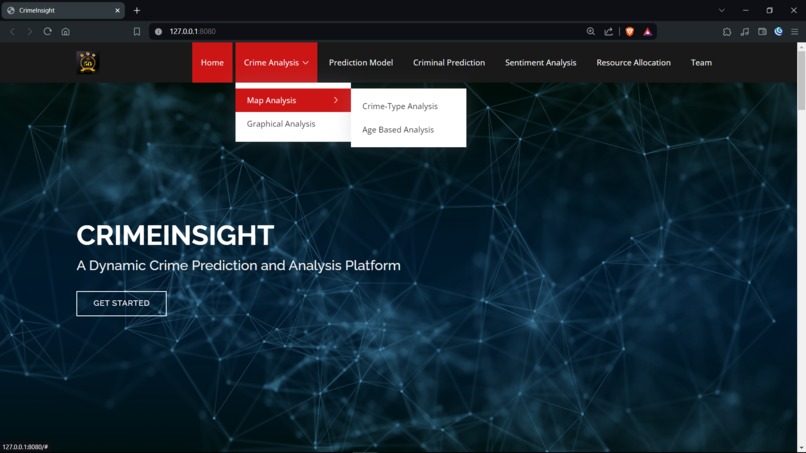
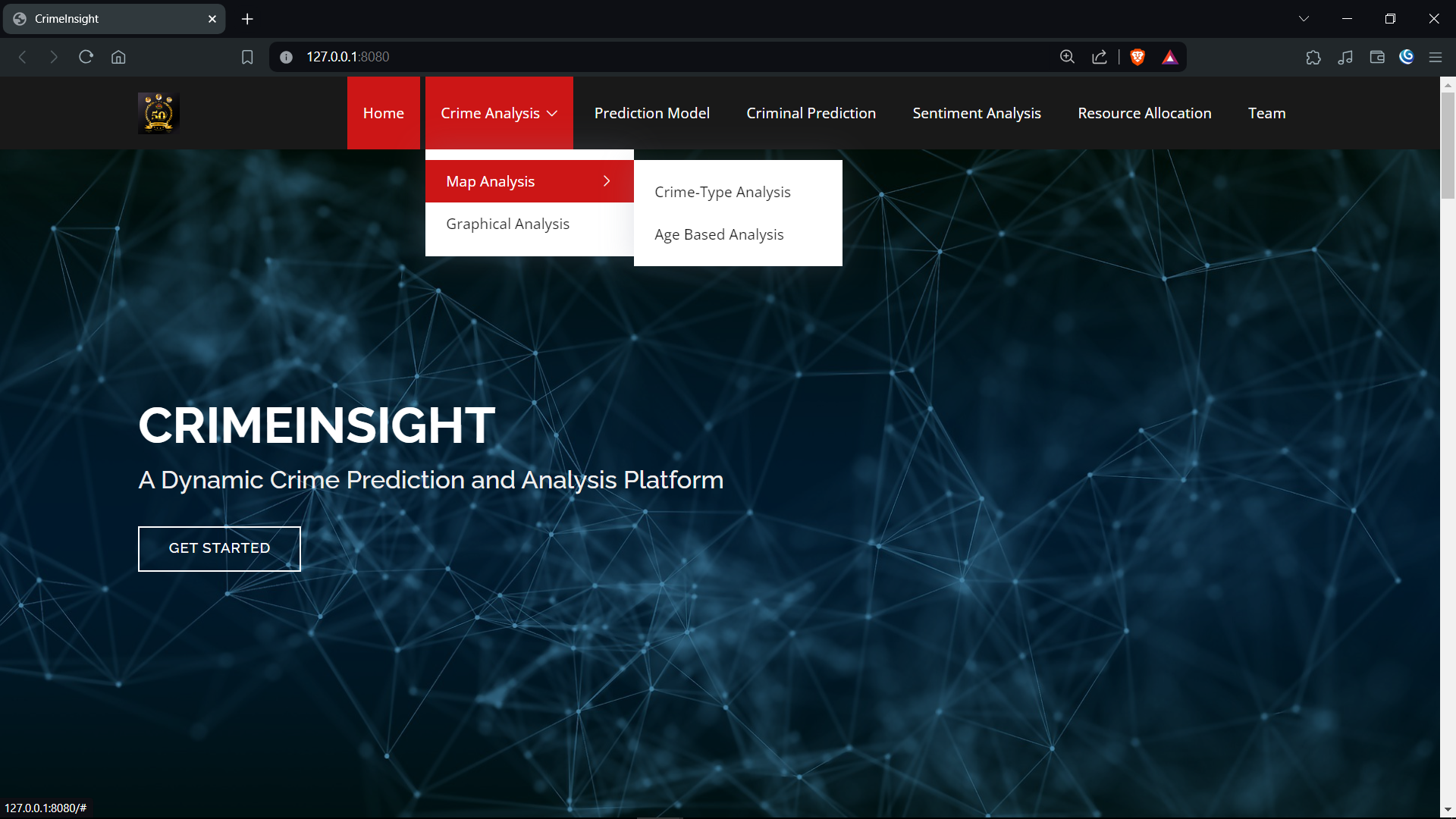
Home-page
-
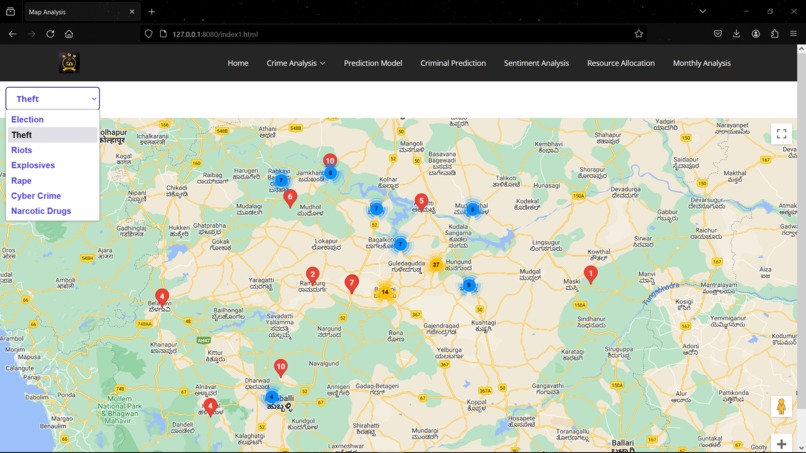
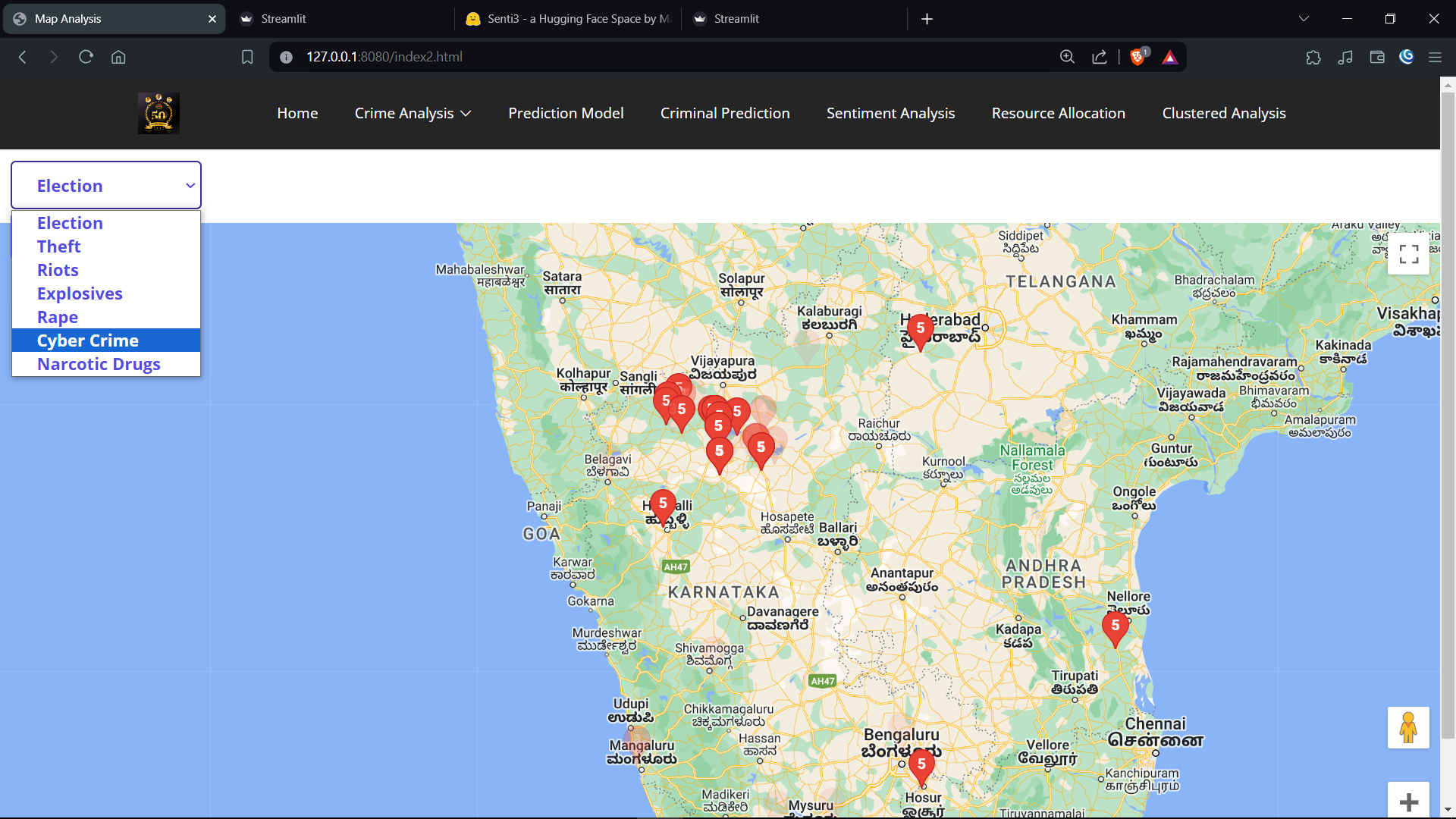
Clustered crime wise analysis
-
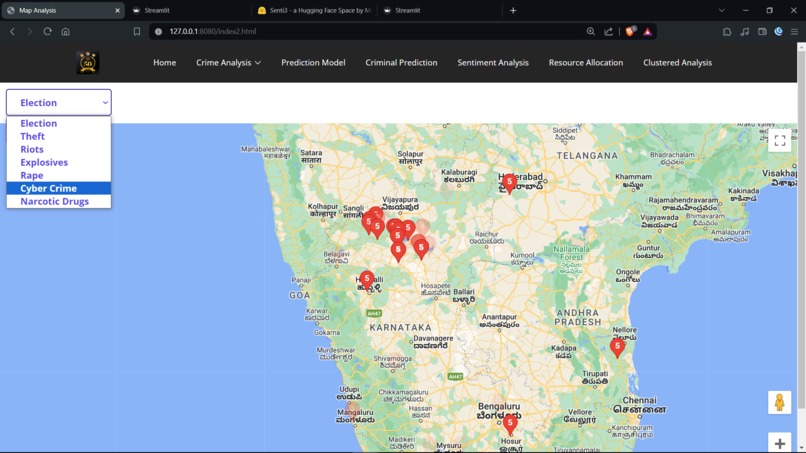
Crime wise month based analysis
-
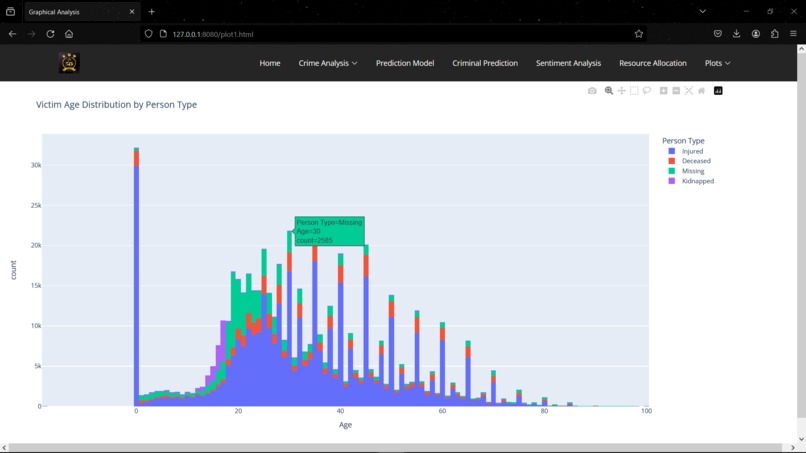
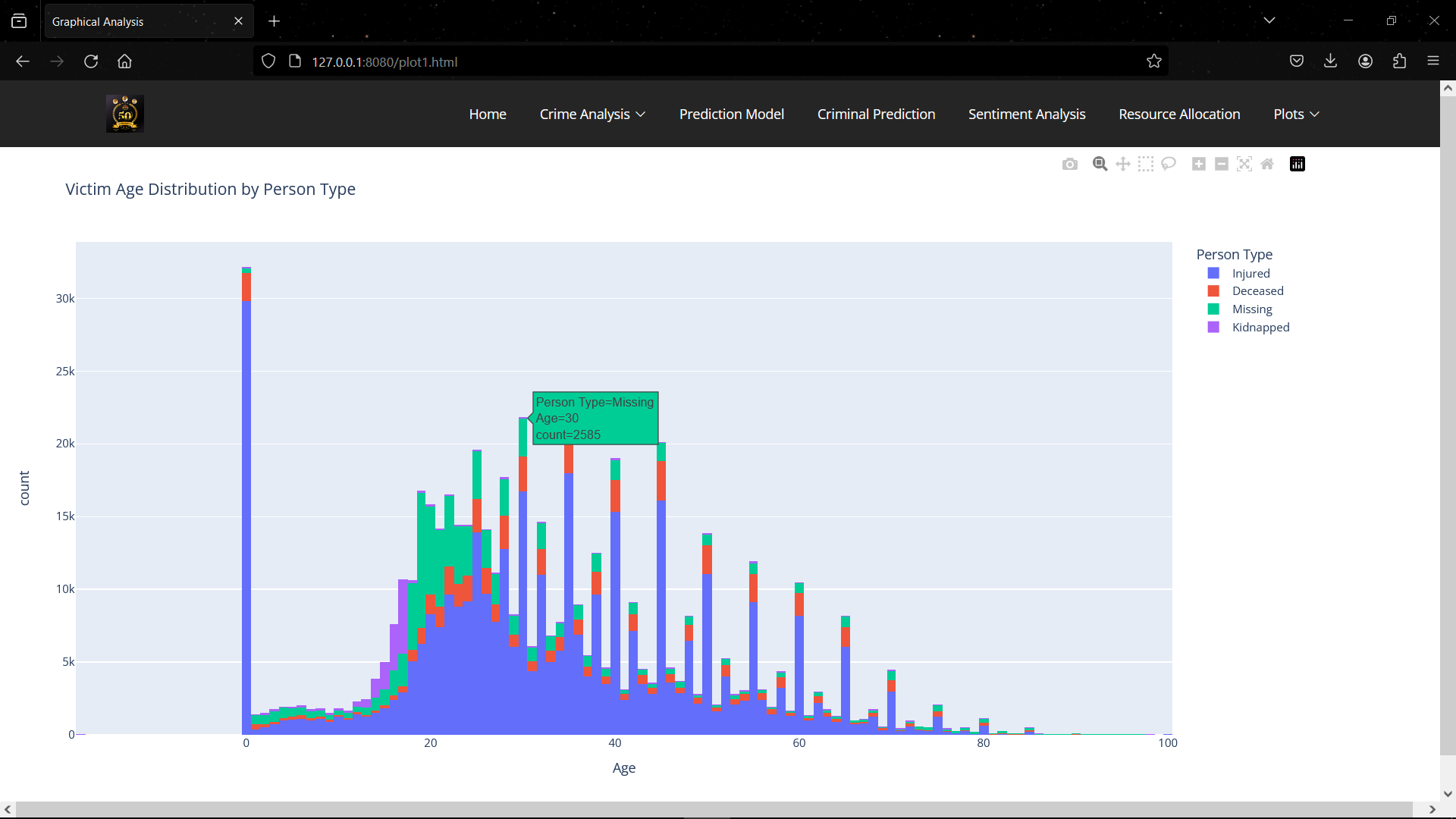
Graphical analysis
-
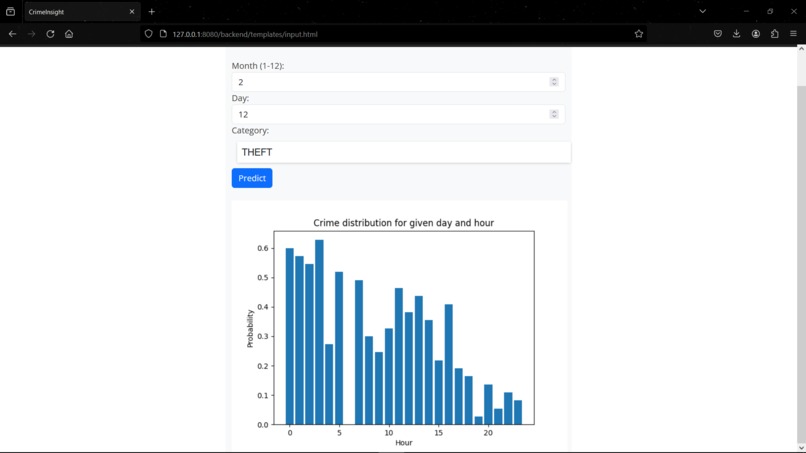
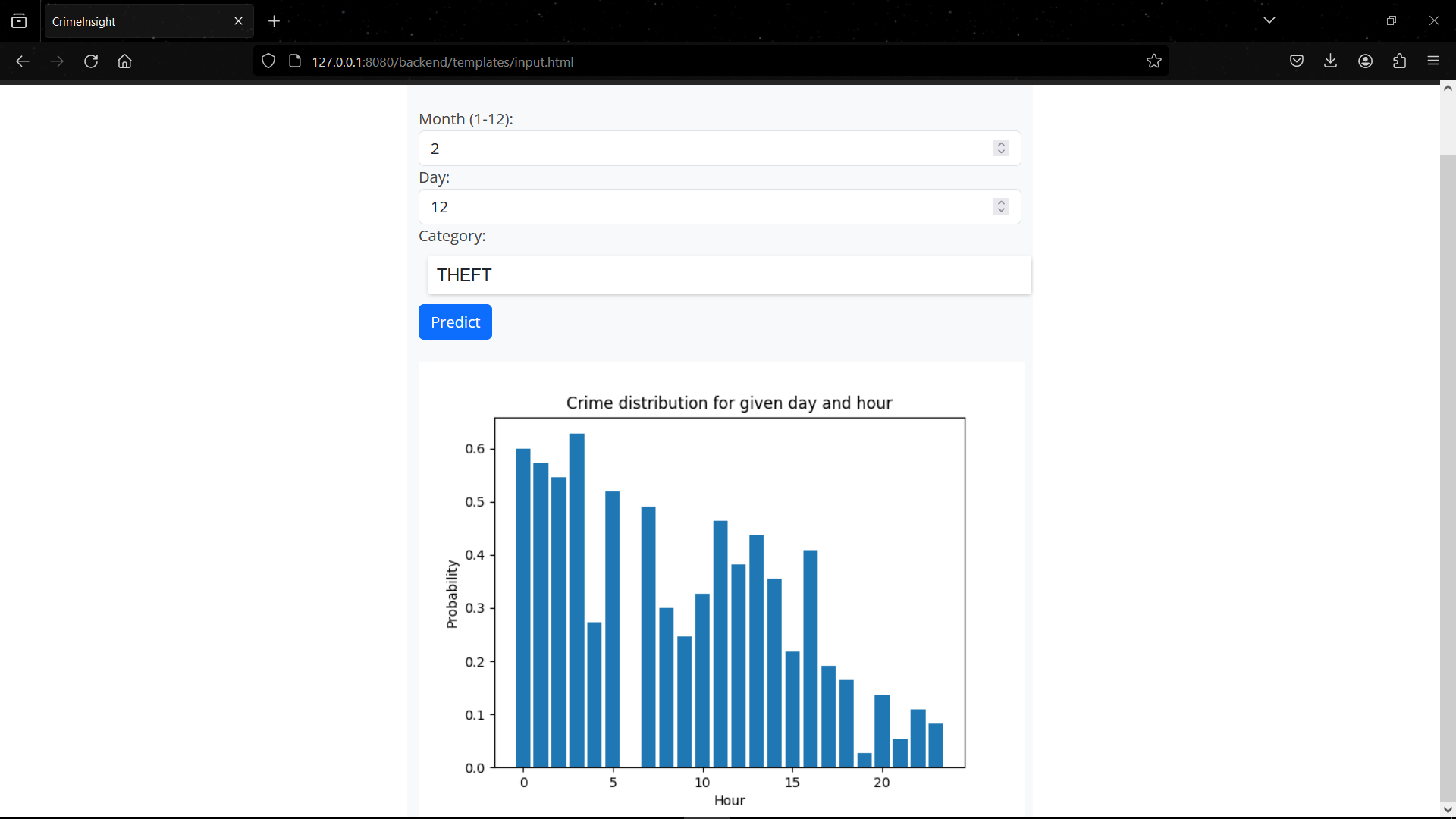
Crime probability distribution
-
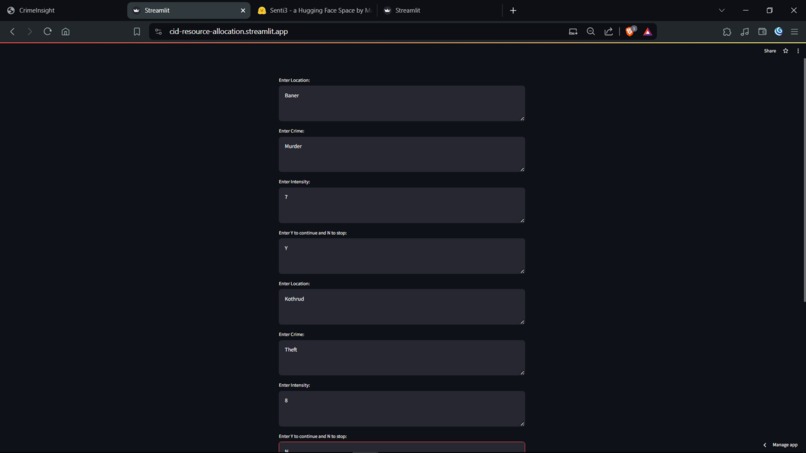
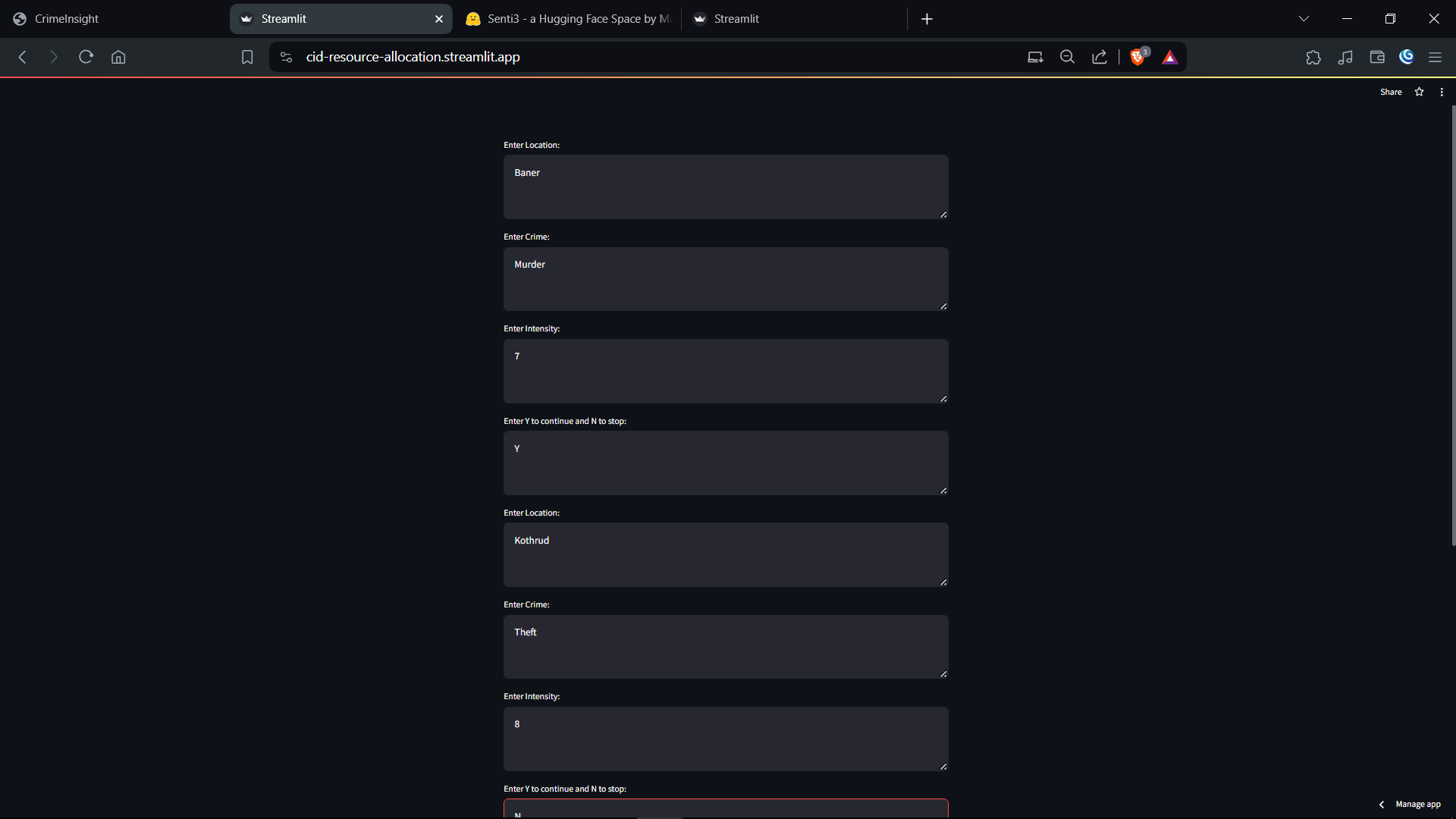
Resource-allocation-1
-
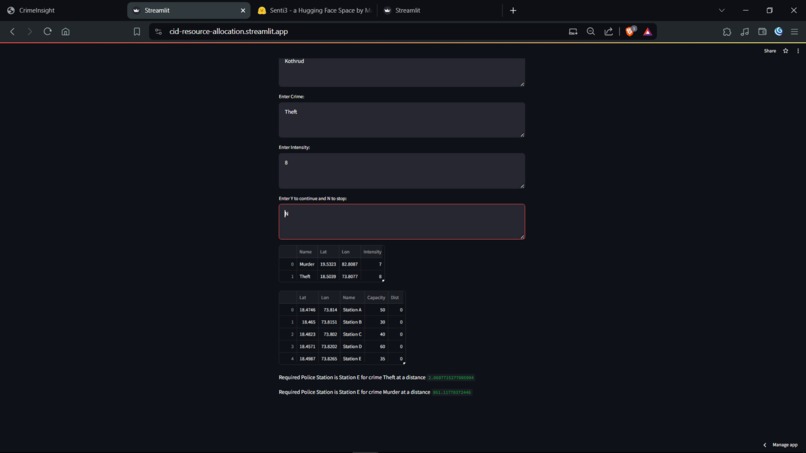
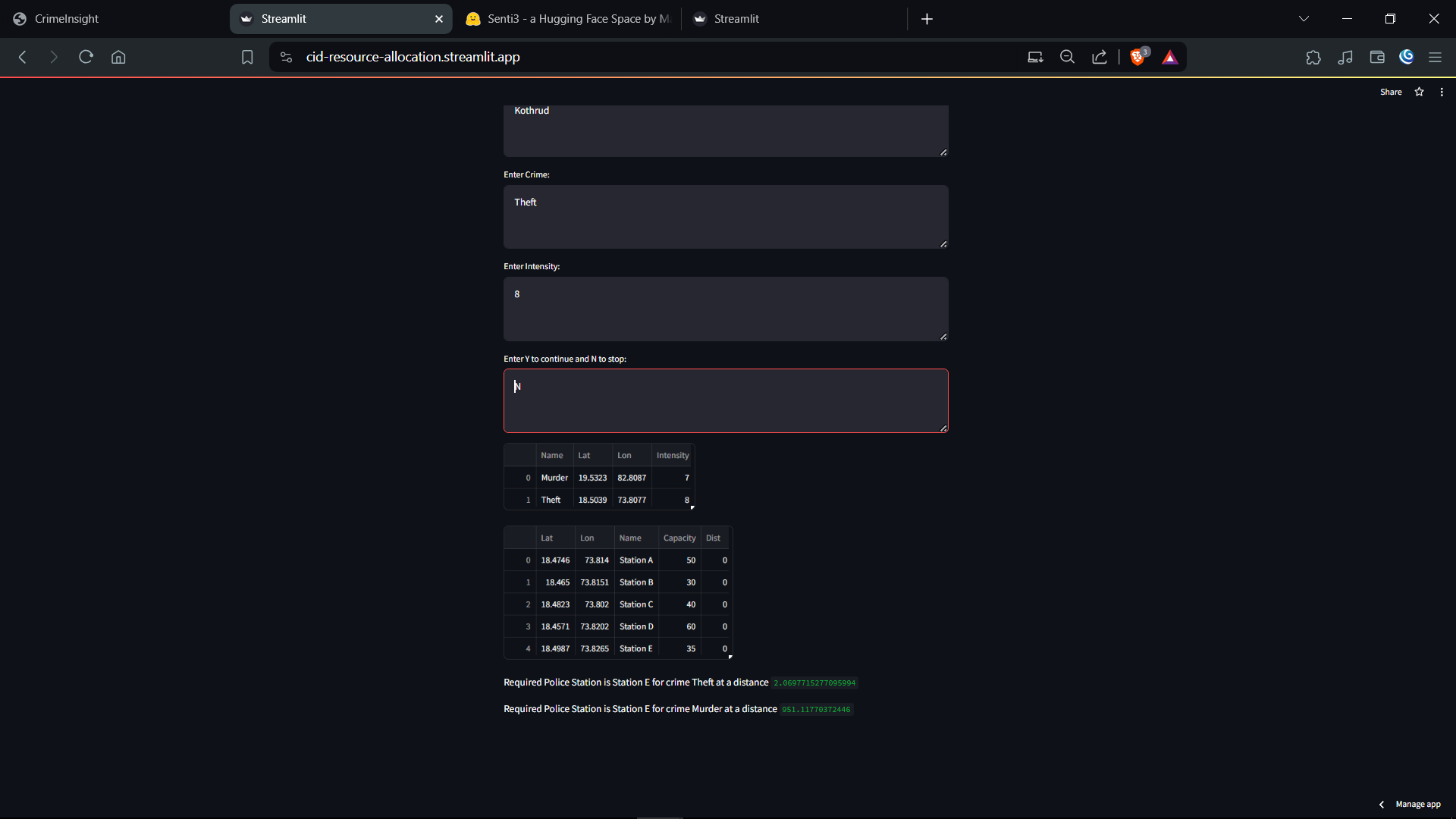
Resource-allocation-2
-
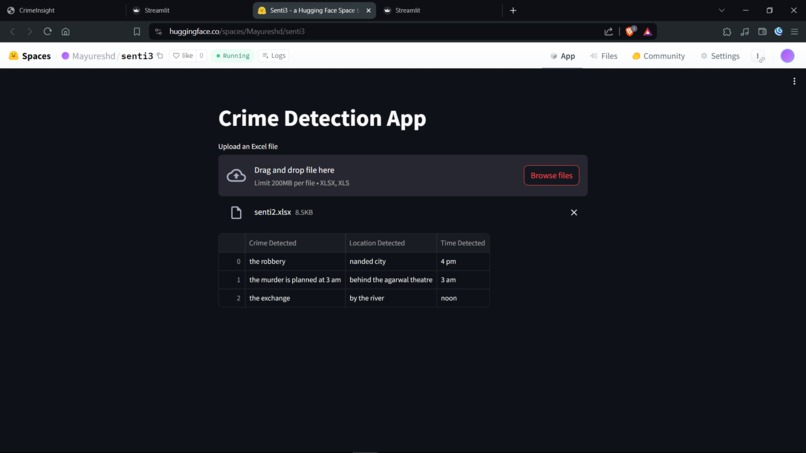
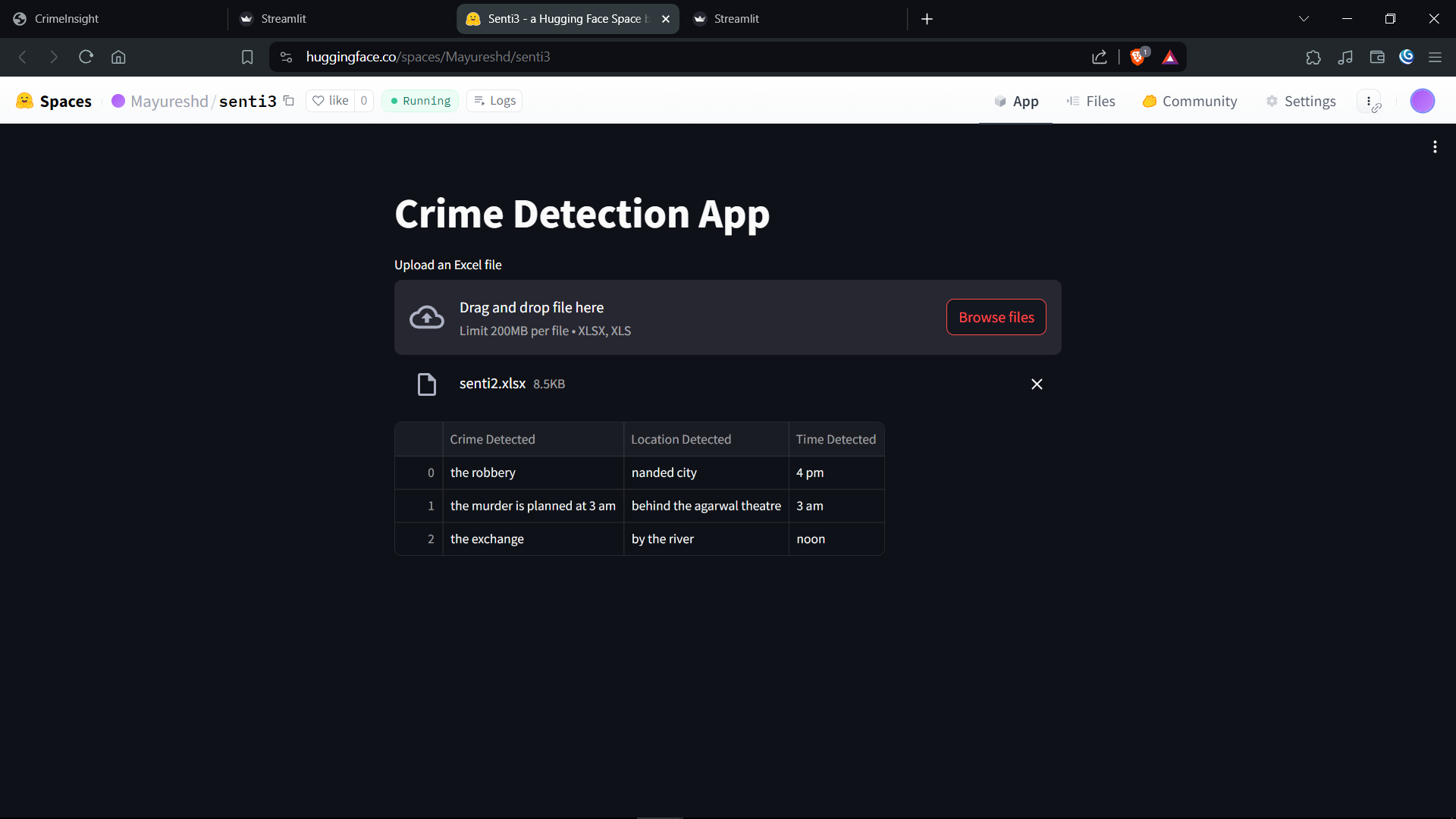
Sentiment analysis
-
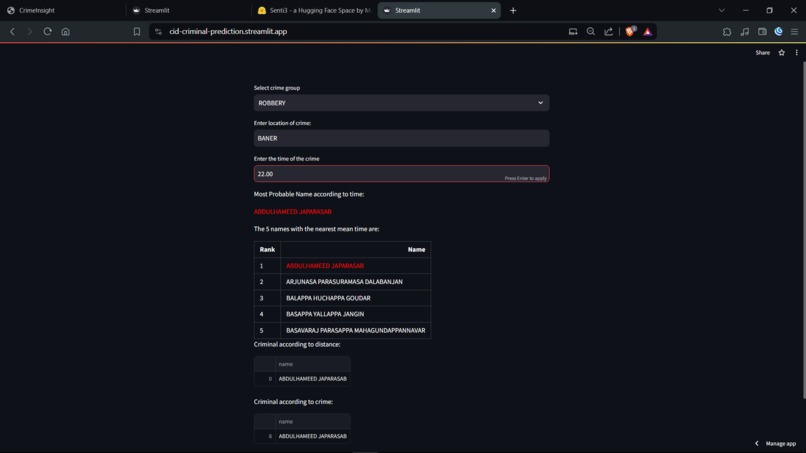
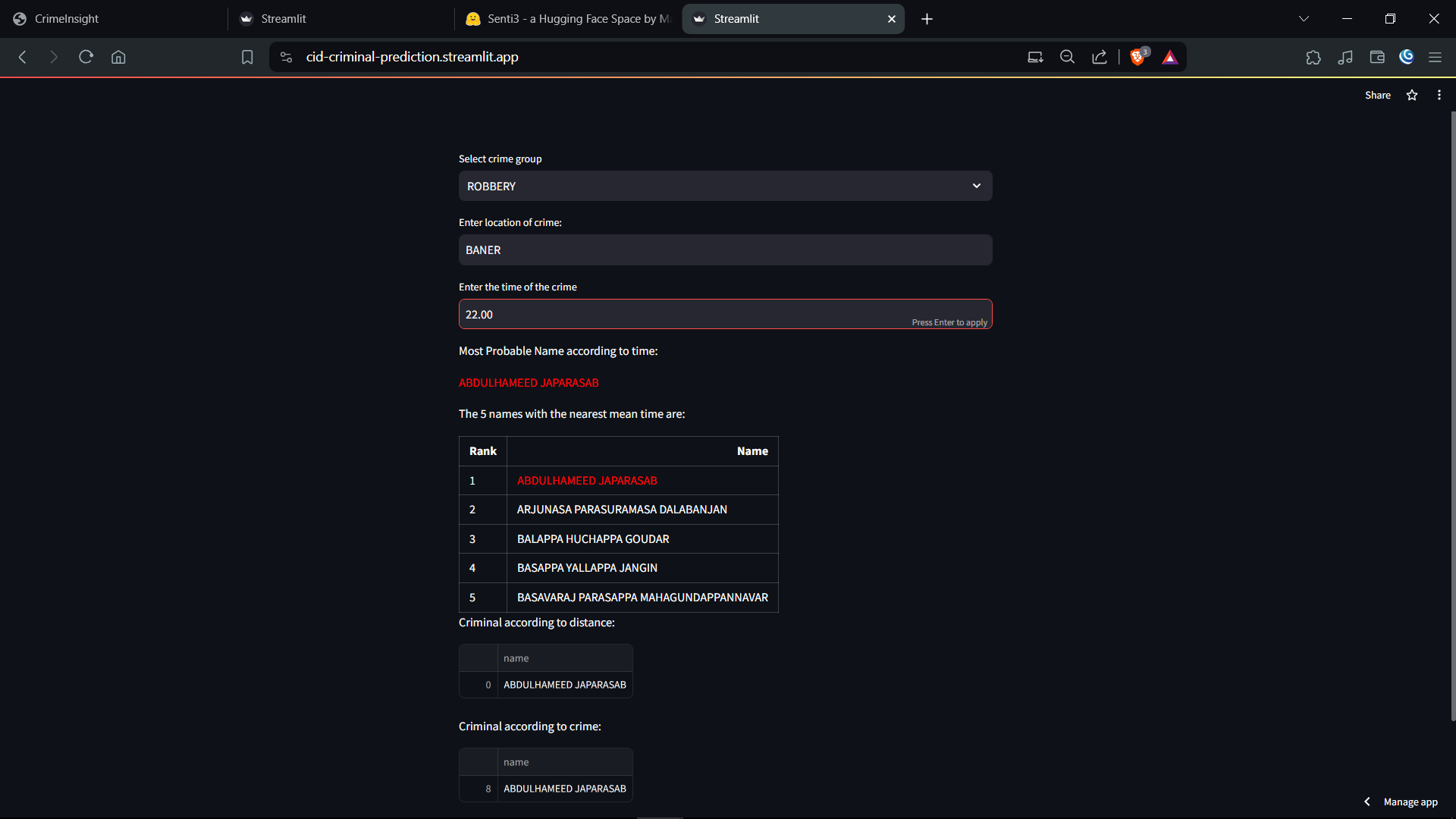
Criminal prediction
Inspiration
The CID project was inspired by the need for a comprehensive crime analysis tool that integrates various data sources and analytical techniques to provide actionable insights for law enforcement agencies and policymakers.
What it does
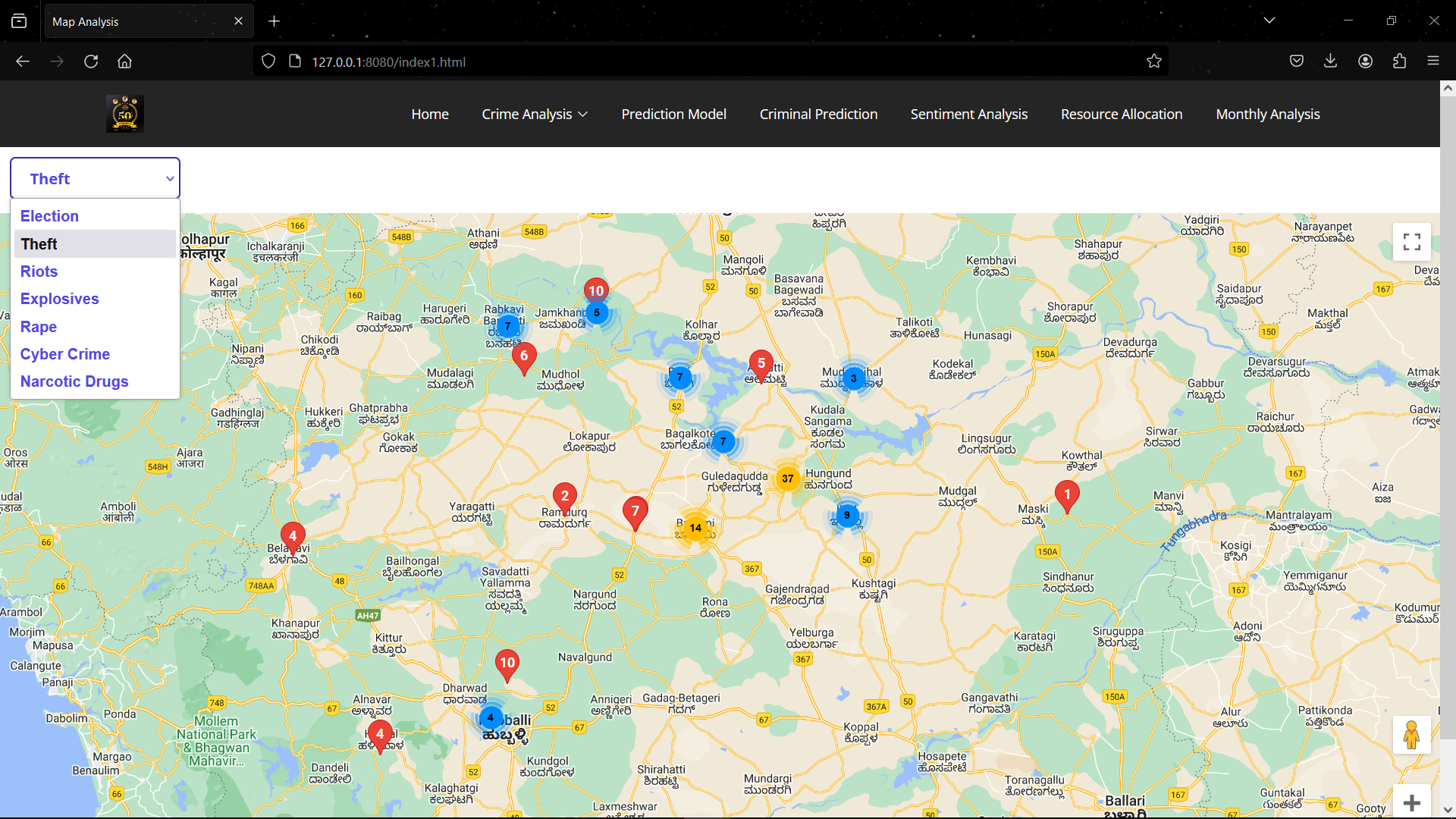
Map-Based Analysis Utilizes maps to visualize crime hotspots, aiding in understanding geographic patterns of criminal activities. Provides detailed views of crime distribution across different regions, enabling targeted interventions and resource allocation.
Month-Based Analysis Analyzes crime data based on months to identify seasonal trends and variations in criminal activities. Helps in understanding temporal patterns and planning preventive measures accordingly.
Age-Based Analysis Focuses on age demographics to study crime trends for women and sensitive age groups like the elderly and children. Provides insights into vulnerable age categories and potential areas for social interventions.
Crime Predictor Utilizes machine learning models to predict potential crime occurrences based on historical data and relevant factors. Aids law enforcement agencies in proactive planning and resource allocation.
Crime Sentiment Analysis Analyzes public sentiment related to crime through social media and other sources. Provides a sentiment score to gauge public perception and concerns regarding safety and security.
Resource Allocation Model A model for finding the nearest police station containing needed resources for the user-reported crime. Maximizes efficiency in resource utilization and response to varying crime scenarios.
Criminal prediction Model A model for predicting the most probable criminals based on the previous data for criminals including the time range, the locations of the crimes, and the crime type.
How we built it
The project started by collecting data from the State police. After collecting, the data was very raw and needed hard pre-processing. The addresses were stored in text format not accessible for analysis. We converted it into Lat, Long form for easier analysis using Google Maps and javascript. After that, we did analysis and visualization that gave an easier view of the crime locations using clusters. We felt that it is necessary to provide a separate analysis and visualization for more sensitive age groups like children, the Elderly, and Women. Apart from this analysis and visualization, we thought of integrating a prediction model that would take input of month, day, and crime. It would give the probability distribution (At what time the selected crime is likely to happen) of that crime for that day. Looking from the Police's point of view it is necessary for efficient and quick response to the crime. So we created a model that would take input as the crime type, the location, and the intensity and would provide the nearest police station for contact having needed resources to handle the crime. This would save time and resources and help in better resource management. Most of the criminals repeat the crimes in a specific area. Based on the criminal data we created a criminal prediction model that would take input as the crime location, the time of the crime, and the crime type (Like it is murder, theft, etc) and then provide the list of most possible criminals. Most of the crimes are discussed online through social media like riots, etc. Using entity analysis we can detect such crimes earlier and help in the prevention of these.
Challenges we ran into
Our main concern was that the Google Maps API is not free leading to more processing time.
Accomplishments that we're proud of
- Successfully integrating diverse analytical techniques into a unified dashboard.
- Achieving high accuracy in crime prediction using machine learning models.
- Creating an interactive and user-friendly interface for exploring crime data.
- Implementing efficient resource allocation strategies for law enforcement agencies.
What we learned
- Enhanced our skills in data analysis, machine learning, and web development.
- Gained insights into the complexities of crime analysis and resource management.
- Learned valuable lessons in project management, collaboration, and problem-solving.
What's next for CID
- Enhancing predictive analytics capabilities for more accurate crime forecasting.
- Incorporating real-time data streaming for dynamic updates on crime trends.
- Expanding sentiment analysis features to include social media monitoring.
- Collaborating with law enforcement agencies for practical deployment and feedback.
Built With
- aws-amplify
- css
- firebase
- flask
- google-maps
- html
- hugging-face
- javascript
- python
- streamlit

Log in or sign up for Devpost to join the conversation.