-
-
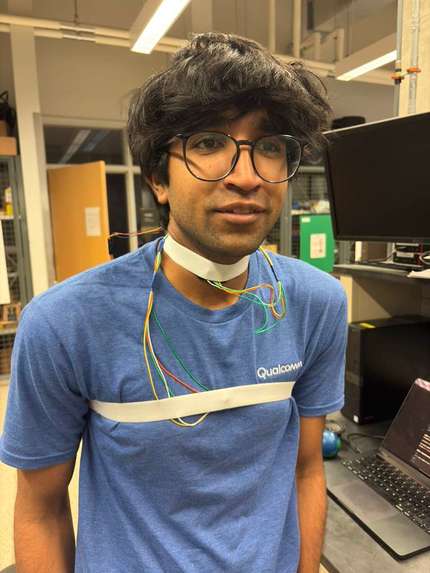
Simulating real-world tests of ChYme
-
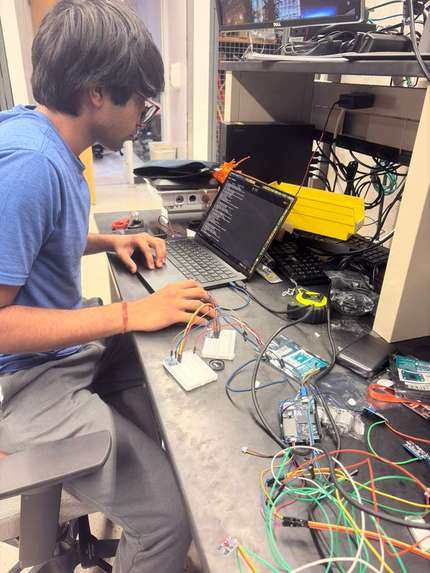
Training the ML Model on Edge Impulse
-
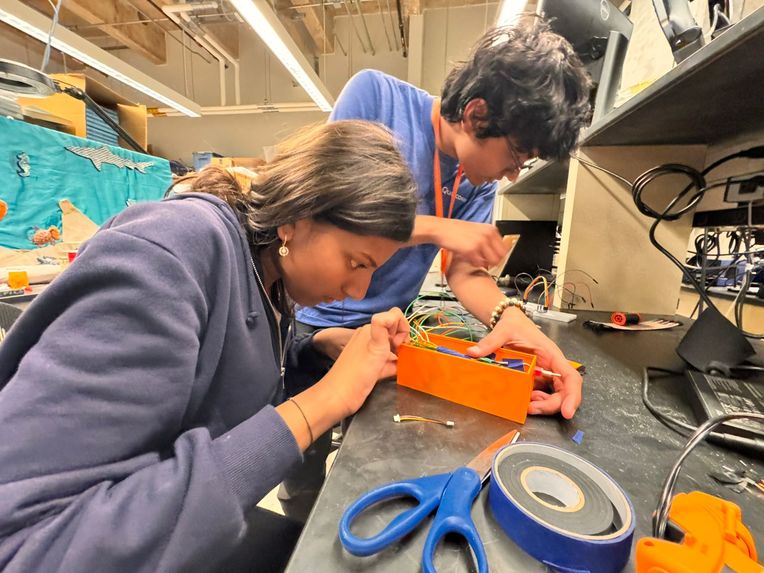
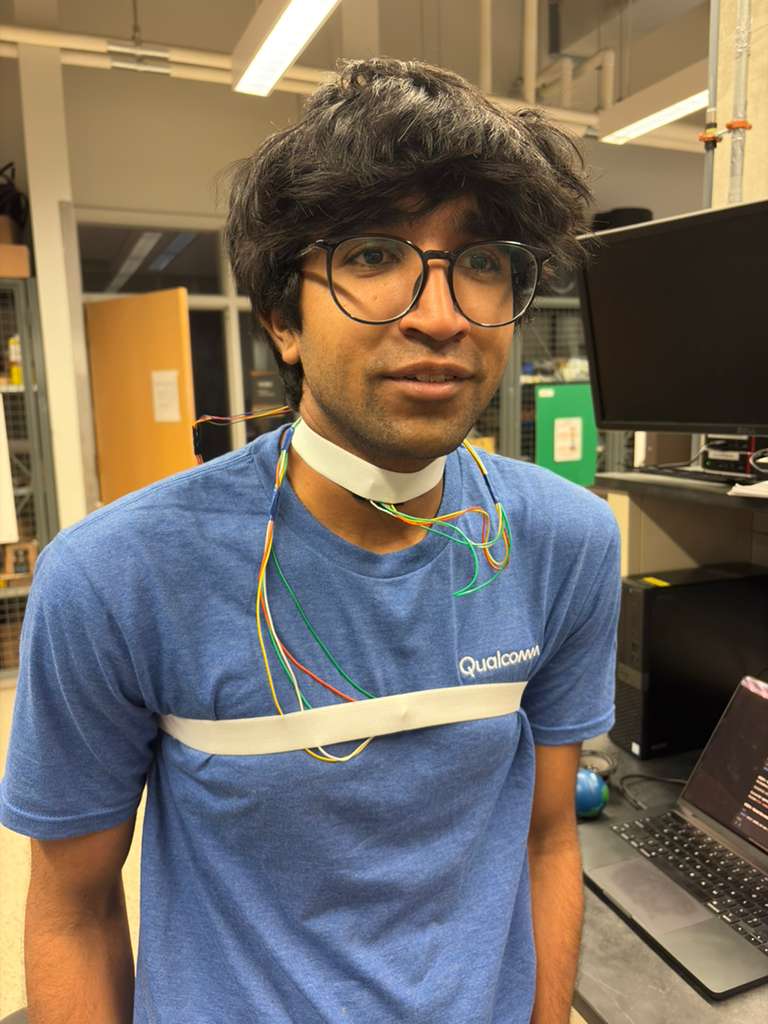
Mounting the hardware on the Wearable
-
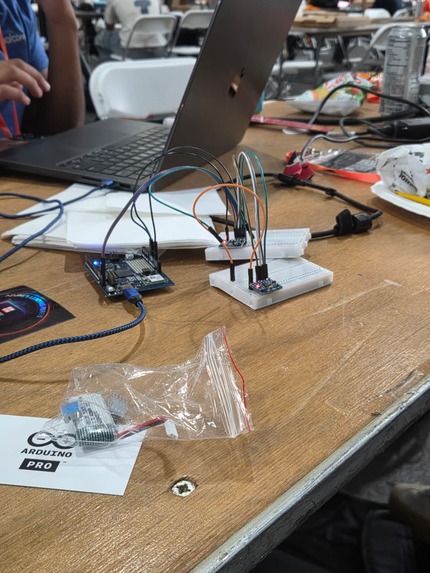
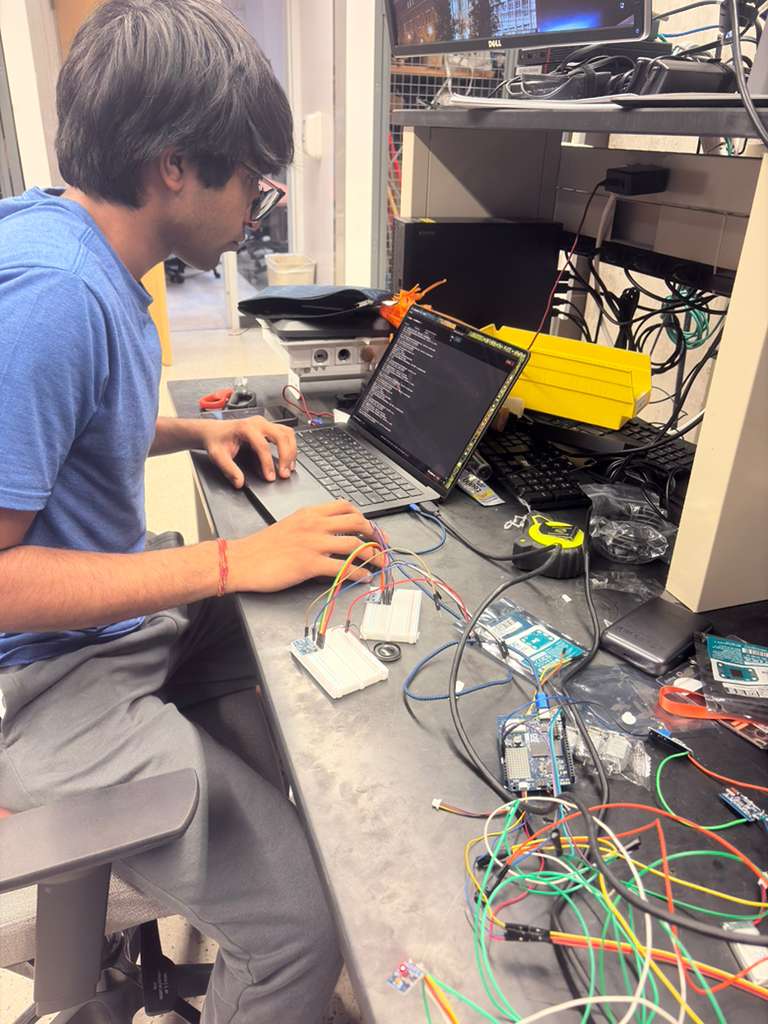
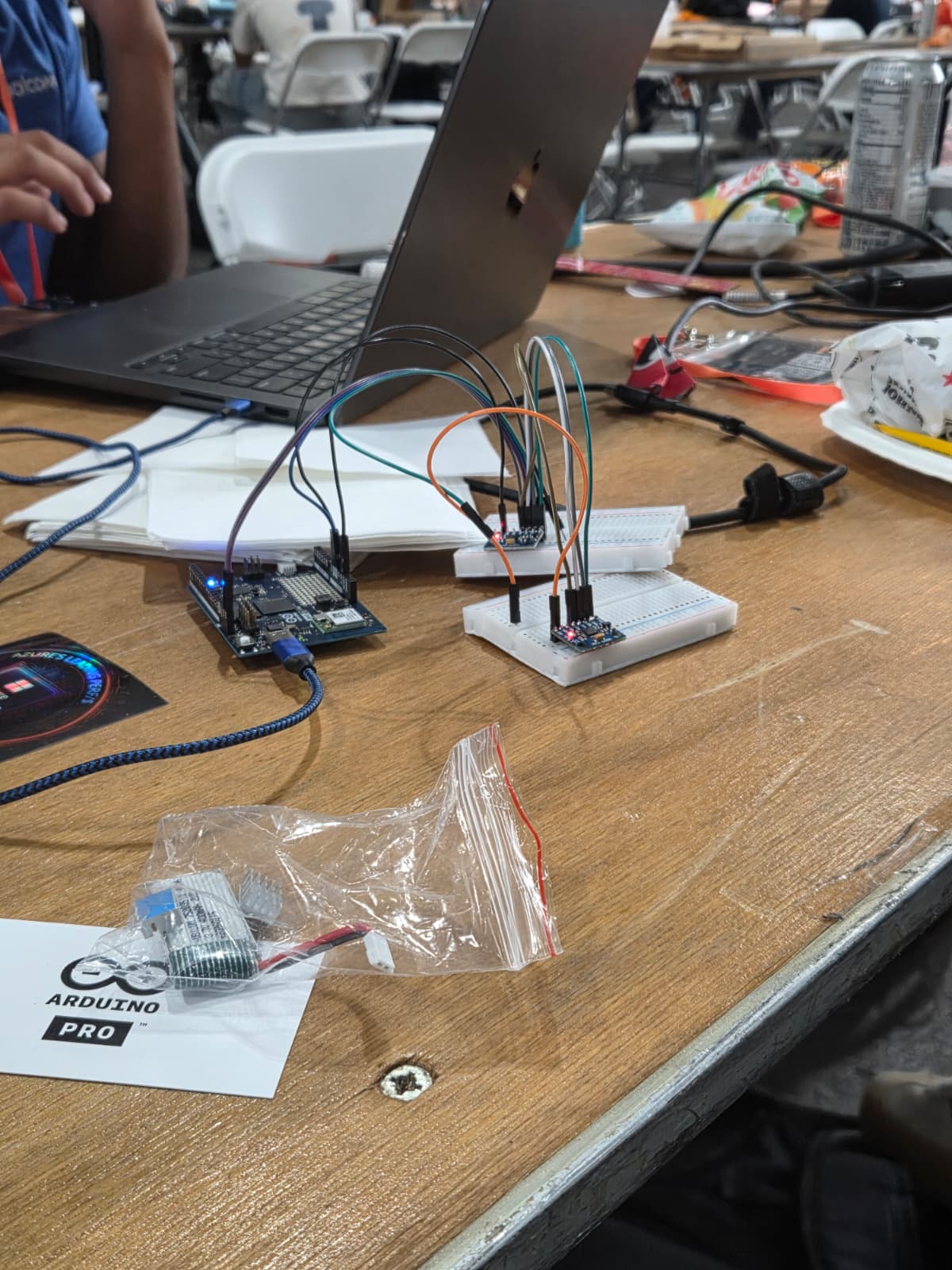
Connecting and calibrating the Accelerometers
Inspiration
Dysphagia, difficulty in swallowing, affects about 80% of Parkinson's patients and is the leading cause of death in such patients. As the disease progresses, the unconscious reflex to swallow fades that leads to saliva buildup, aspiration, and pneumonia. Swallowing becomes a conscious decision for these patients, which leads to a significant decrease in the frequency of swallowing and may end up proving fatal.
The fix is simple: patients can still swallow when reminded in a non-invasive and personalized manner. That's ChYme.
What it does
ChYme is a wearable swallow detection and reminder device. Two MPU-6050 accelerometers at the throat and sternum continuously monitor vibrations. A CNN classifies events in the respiratory tract as swallow, speech, or idle in real time. If no swallow is detected for 60 seconds, the device buzzes the patient to nudge them to consciously swallow. This reduces the mental load on the patient and removes an automatic reminder from their head. If ChYme doesn't detect a swallow for 5 minutes, it immediately contacts the caregiver and notifies them so that the patient can be immediately assisted.
How we built it
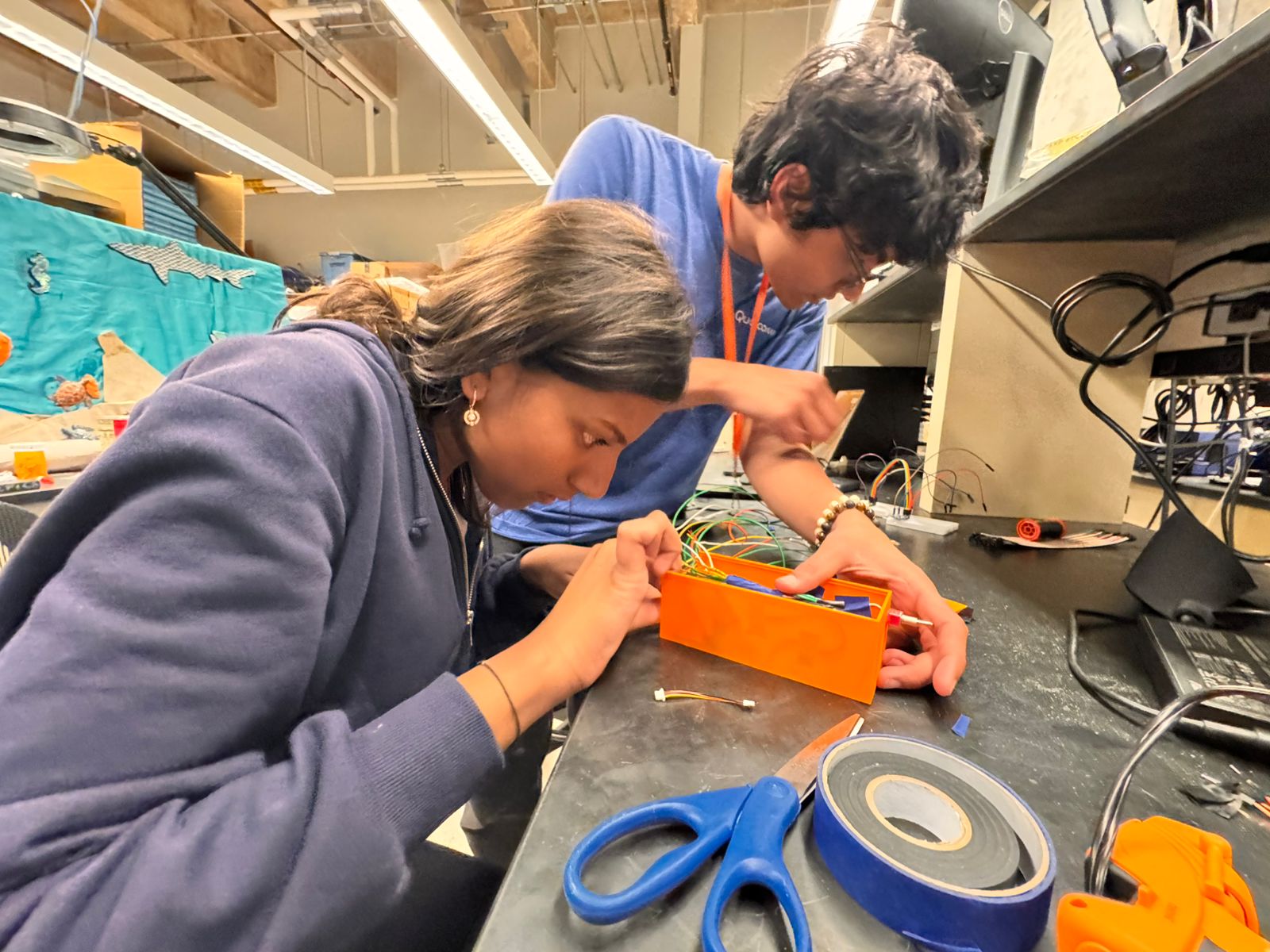
ChYme is built around the Arduino Uno Q, an extremely powerful board that was chosen since it could run large on-device AI and ML models without compromising on computational time. The STM32 handles everything time-sensitive: reading both MPU-6050 accelerometers via I2C at 100 Hz and maintaining a rolling ring buffer of the last 6 seconds of sensor data. The Linux side runs a Python inference script that pulls 2-second windows from the STM32 via the Arduino Bridge RPC, feeds them into the trained model, and handles all alert and notification logic. For the ML pipeline, we used Edge Impulse Studio to train a Machine Learning Classifier on a 1-Dimensional Convolutional Neural Network. We recorded labeled 2-second CSV samples (swallow, speech, idle) directly from the Arduino Serial Monitor, uploaded them to Edge Impulse, and designed an impulse using a Spectral Analysis DSP block with FFT to extract frequency-domain features from all 6 accelerometer axes. The resulting ML Model had a ~93% accuracy and could reasonably detect the different states, performing extremely well in real-world testing. The wearable itself uses both sensors mounted on a silicone neck band with medical-grade adhesive, elastic ribbons routing to a central module housing the Uno Q, a LiPo battery, and an Arduino Modulino Vibro vibration motor for haptic alerts. All of the power systems and the Microcontroller are all housed in a central mount that is located on the back of the patient. Power delivery was handled through a compact system built around a 400mAh LiPo battery charged via a TP4056 module. Since the Uno Q requires a stable 5V supply and the LiPo's output voltage sags as it discharges, we used an MT3608 boost converter to step the battery voltage up to a consistent 5V rail. A capacitor was placed across the output to smooth transient spikes and prevent voltage dips during peak current draw which particularly important during system start-up and inference. This gave ChYme clean, reliable power throughout operation without requiring a bulky or expensive battery solution.
Challenges we ran into
Data scarcity was our most persistent problem. Collecting the required amount of volume and diversity of labeled samples in 36 hours wasn't fully feasible. Given the lack of training and testing data, the resulting ML Model wasn't extremely accurate and did occasionally provide false positives and alerts. Sensor noise compounded the problem significantly. The MPU-6050s had to be repeatedly calibrated to remove sensor noise. Moreover, incidental movement such as adjusting posture and breathing heavily introduced noise that corrupted sample windows. We had no automated way to detect or reject these contaminated samples, so noisy data fed directly into training and degraded model quality in ways that were difficult to trace back to root cause. To resolve this challenge, we had to run our data through multiple filters and smoothen our data. We aimed to eliminate noise while balancing accuracy of the data received.
Accomplishments that we're proud of
In 36 hours, we went from an idea to a working wearable that detects swallows, classifies them against noise in real time, and escalates alerts to both patients and caregivers. We're proud of that end-to-end execution under pressure, especially given that nearly every stage threw us a curveball we hadn't anticipated. More than the technical achievement, we're proud of what ChYme represents: a tangible attempt to address a medical problem that quietly devastates lives but rarely makes headlines. Dysphagia in Parkinson's patients is under-resourced and under-discussed relative to its clinical impact. Building something that could realistically be worn by a patient and improve their safety at a cost accessible enough to scale feels meaningful in a way that goes beyond the hackathon.
What we learned
Building ChYme opened our eyes to what edge AI on accessible hardware can actually look like in practice. Getting the ML Model to run on the Arduino Uno Q truly felt magical, and our minds are filled with future possibilities of this technology. Beyond the hardware, this project fundamentally shifted how we think about wearable technology's role in healthcare. This project forced us to be more empathetic to the users' point-of-view, and fundamentally understand their perspectives. This helped us improve our product so as to maximize the utility of ChYme for a patient with dysphagia. Incorporating thatt human touch in our wearable was crucial to ensuring its functional and serves its purpose. That same principle scales: wearables that passively monitor, classify, and respond to physiological signals could transform outcomes for patients managing chronic and degenerative conditions across the world.
What's next for ChYme
Clinical validation with speech-language pathologists and Parkinson's patients along with further research on various ways such information can be utilized to curb and mitigate the condition could help improve the utility of the product. We reached out to multiple professors and research labs, and await their input on our proposed product and solution.


Log in or sign up for Devpost to join the conversation.