-
-
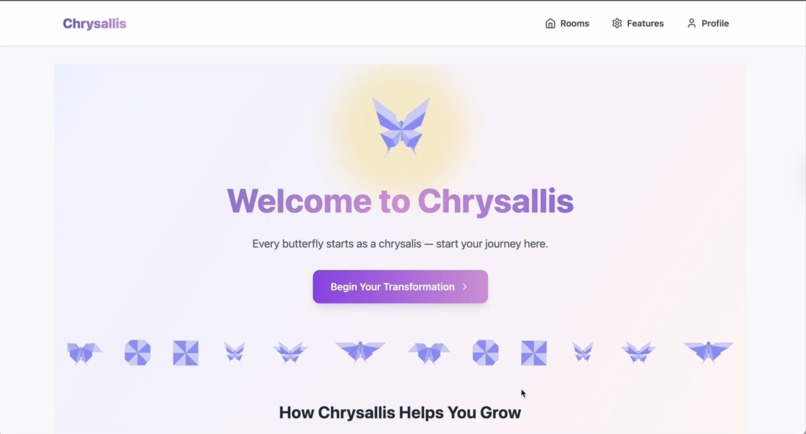
Home Page
-
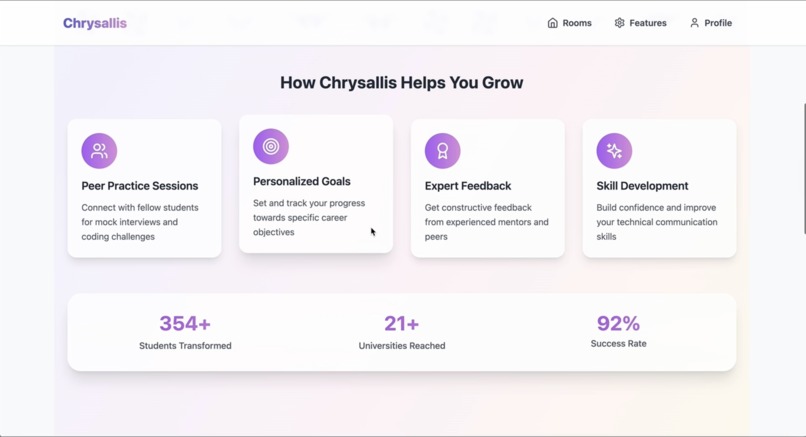
Purpose + Impact
-
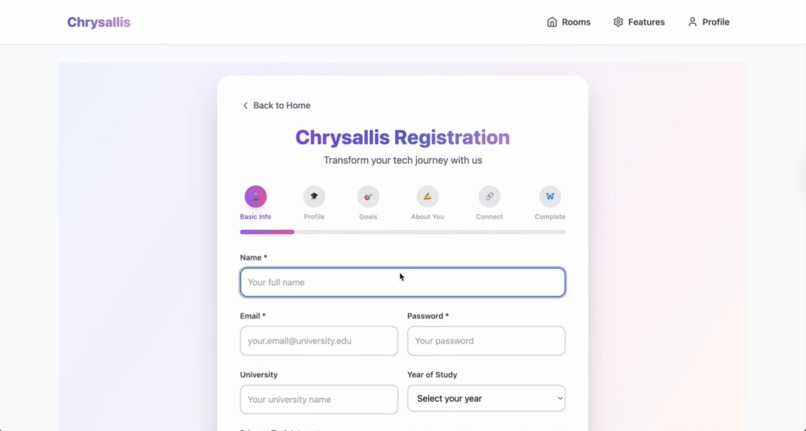
Registration
-
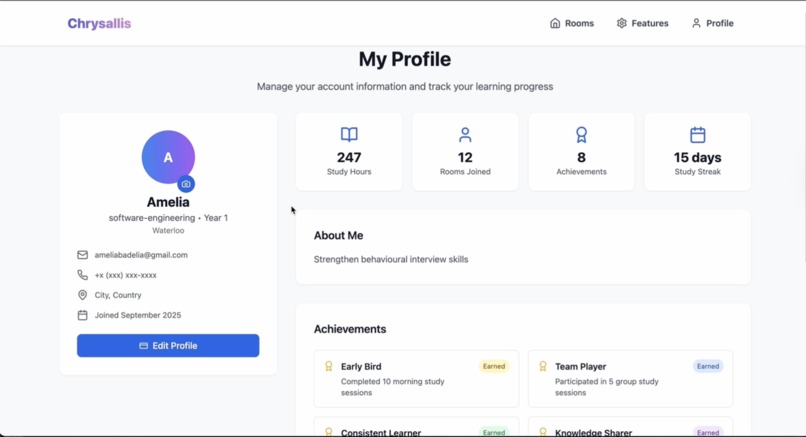
Profile
-
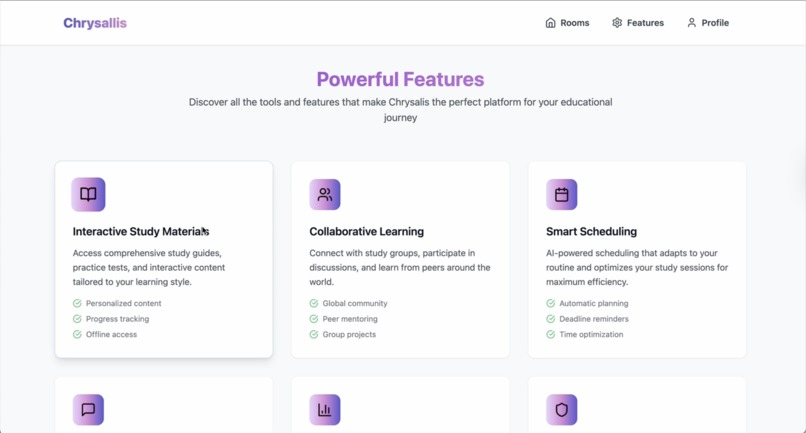
Features
-
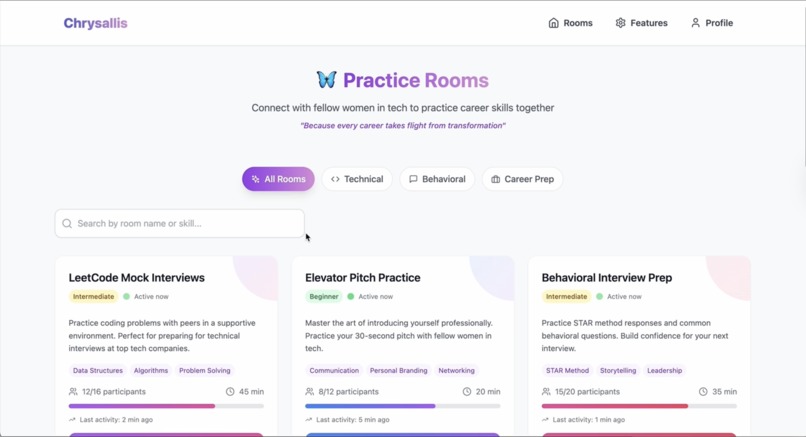
Meeting Rooms
Inspiration
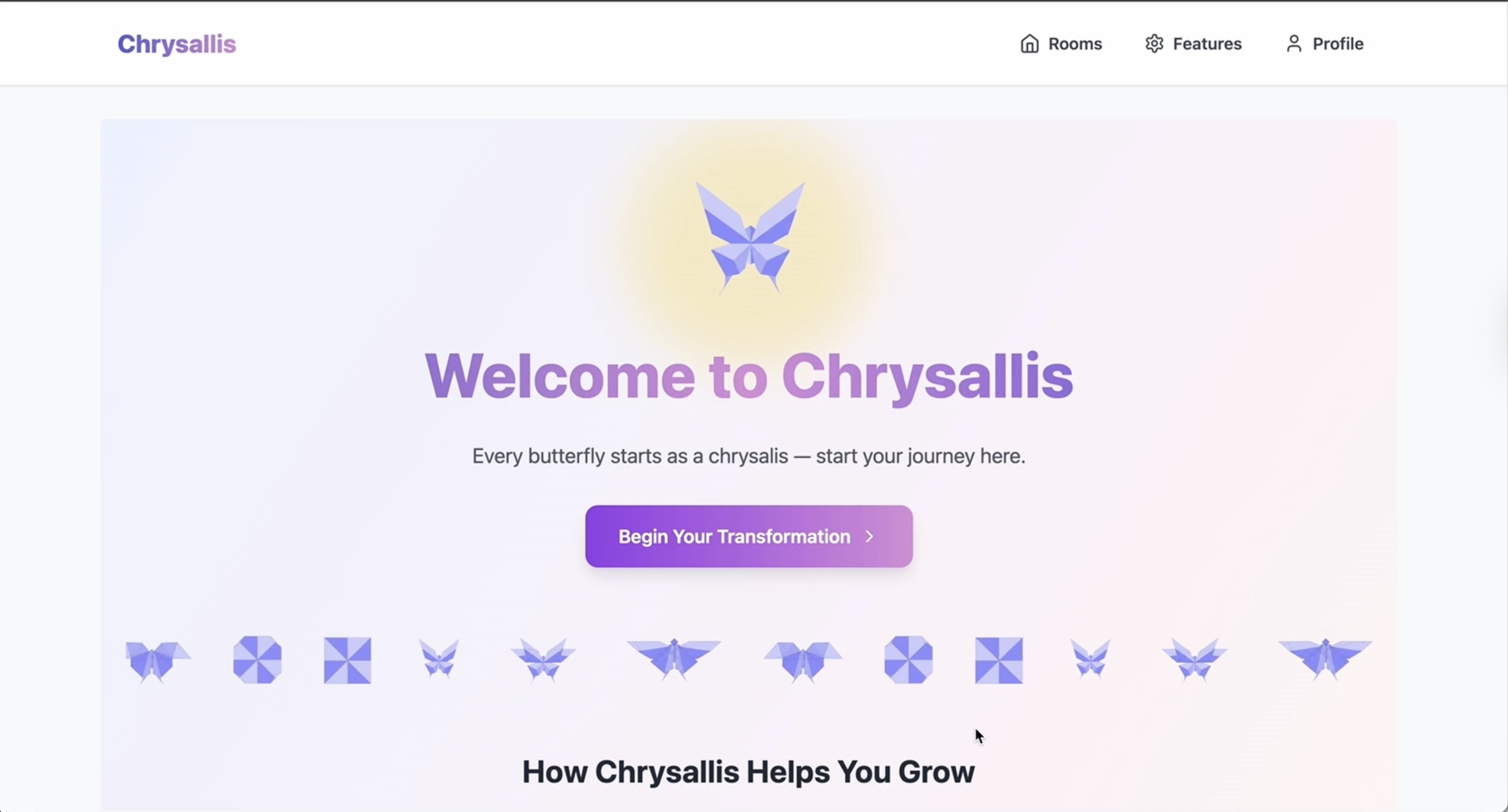
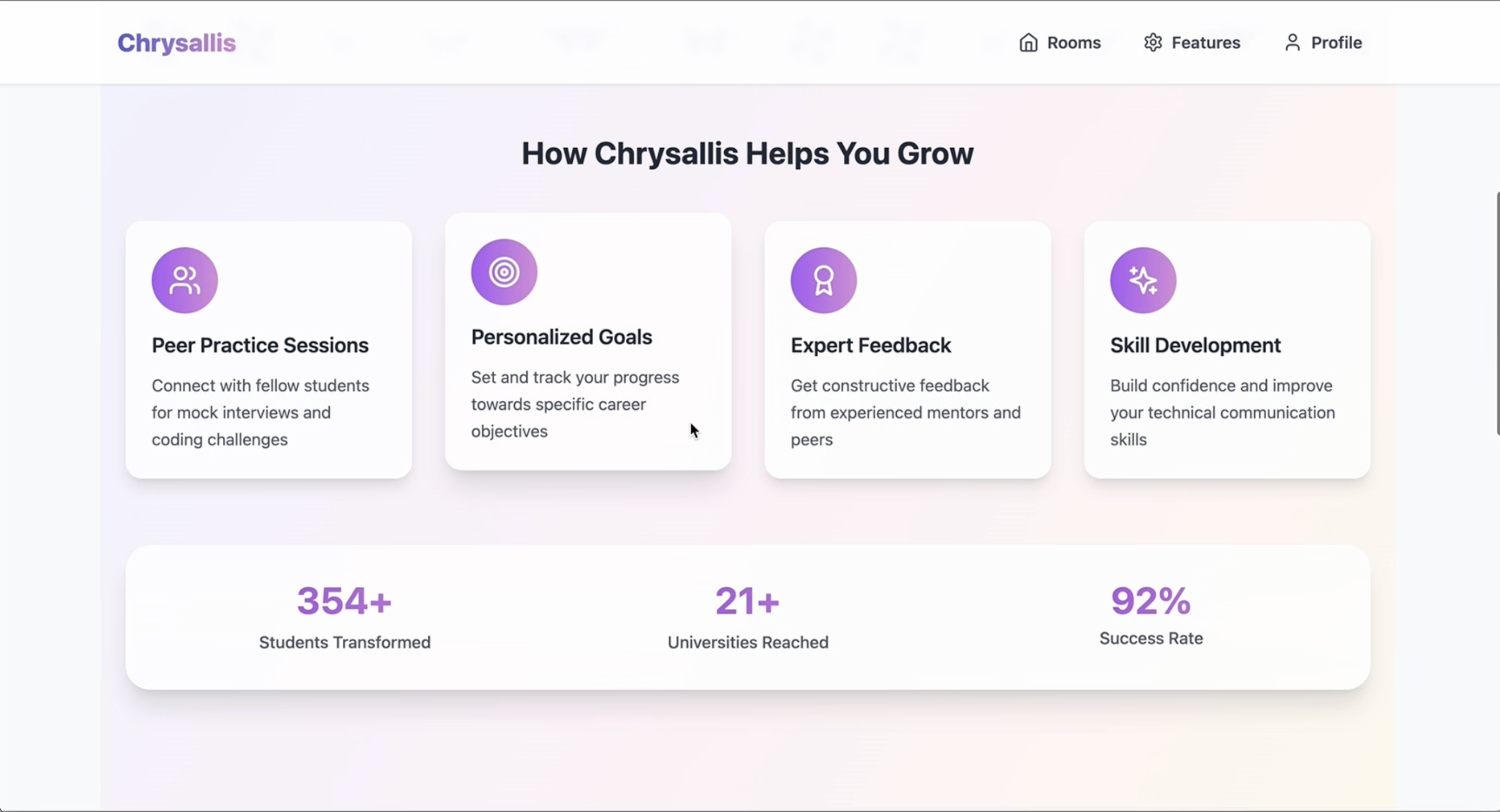
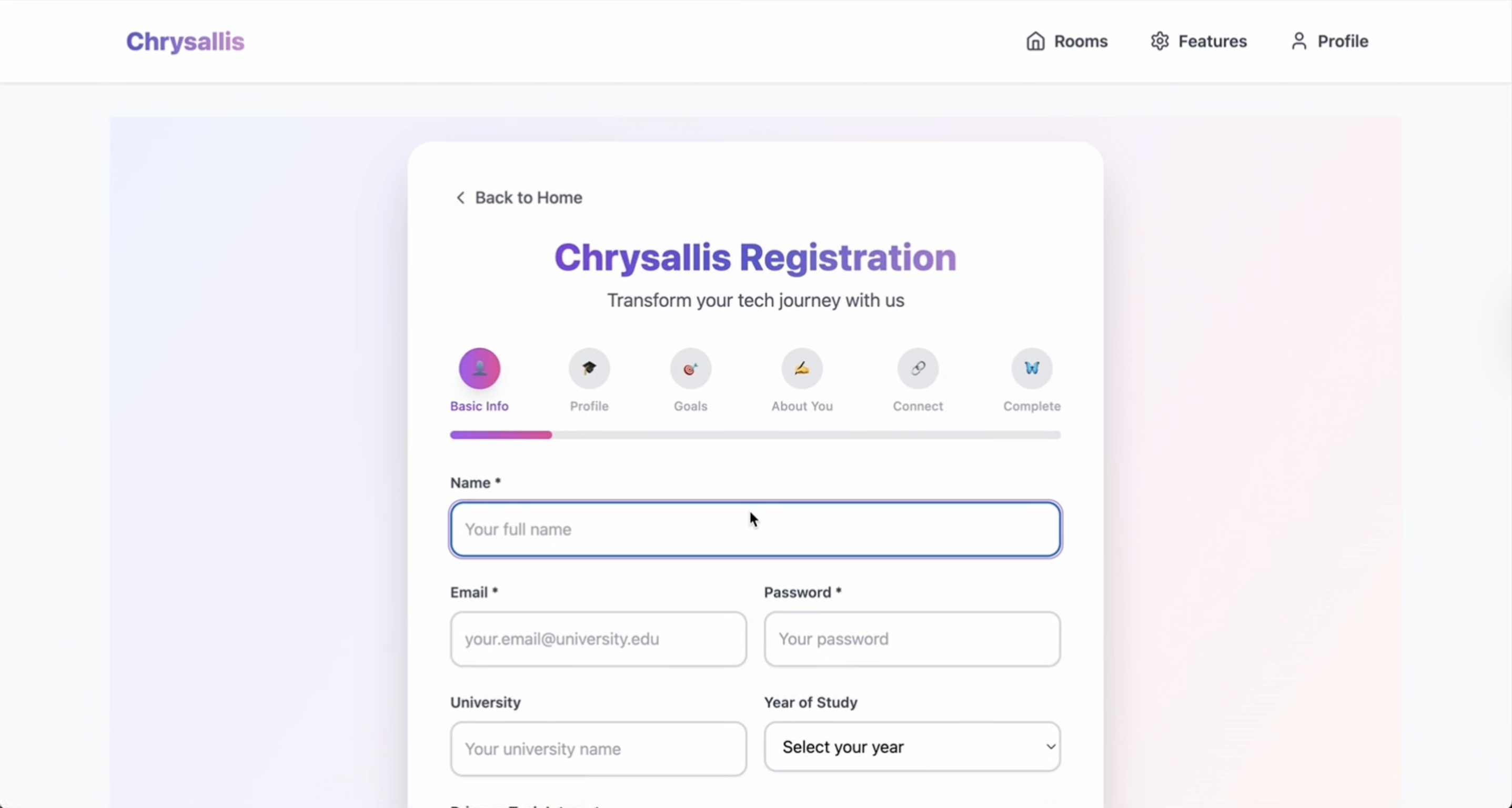
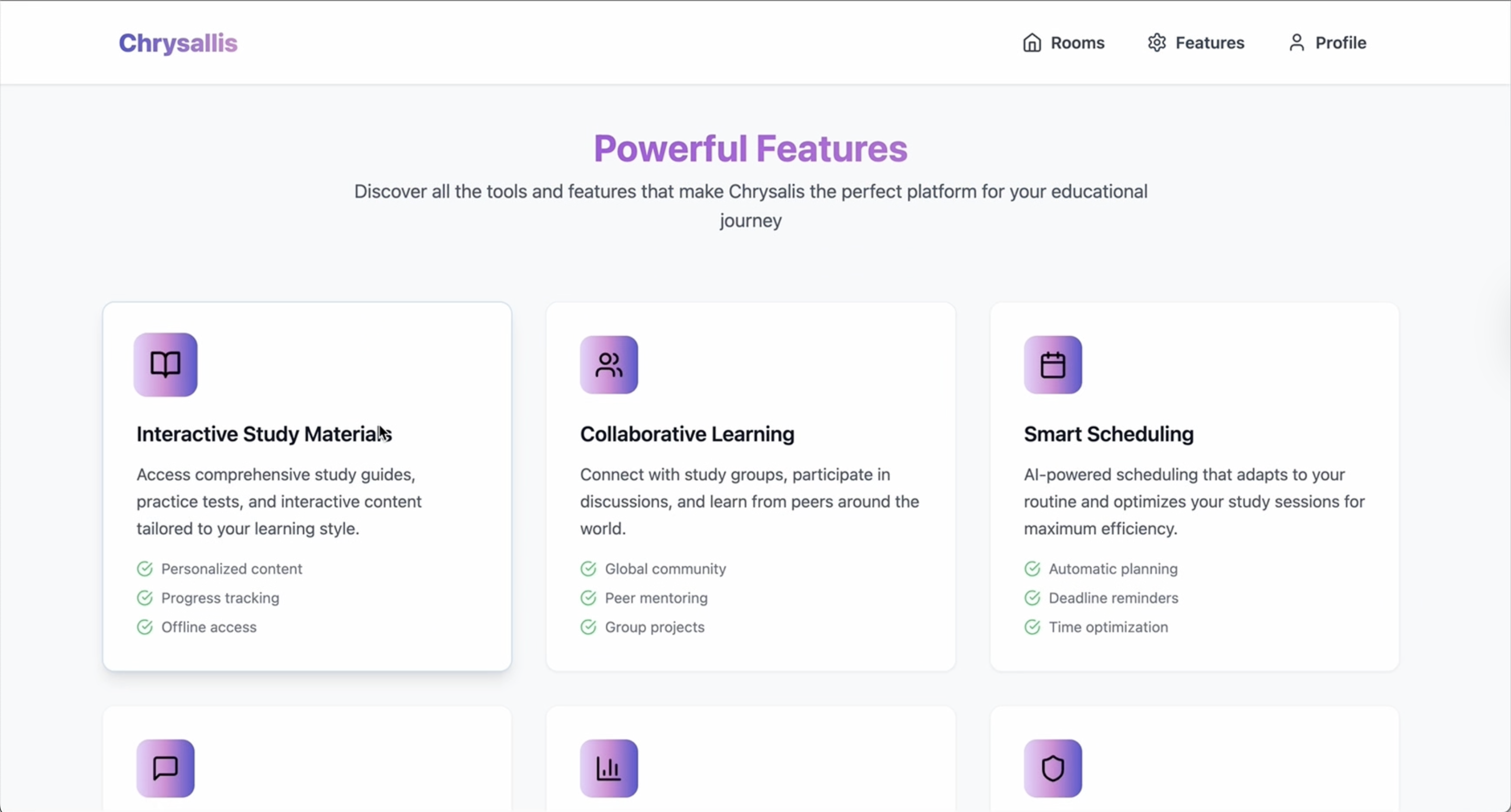
We built Chrysalis to support underrepresented women in tech as they prepare for their first roles in the industry. Breaking into tech can be especially challenging without access to mentorship, practice, or a strong peer network. Chrysalis offers a structured, supportive space to build those skills — through mock interviews, goal-sharing, and real-time feedback. The butterfly metaphor represents that steady, visible progress — growth that builds with each session.
What it does
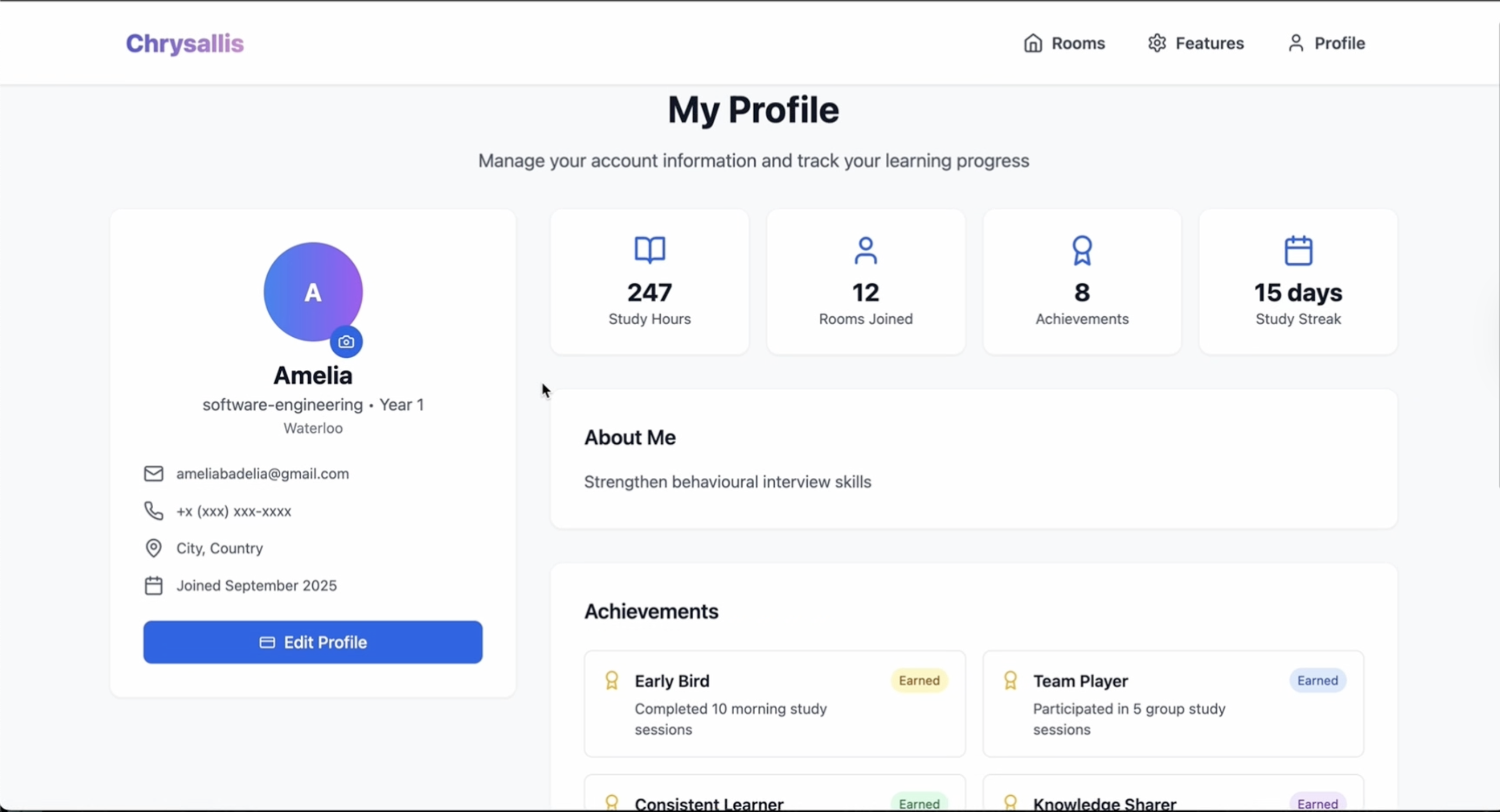
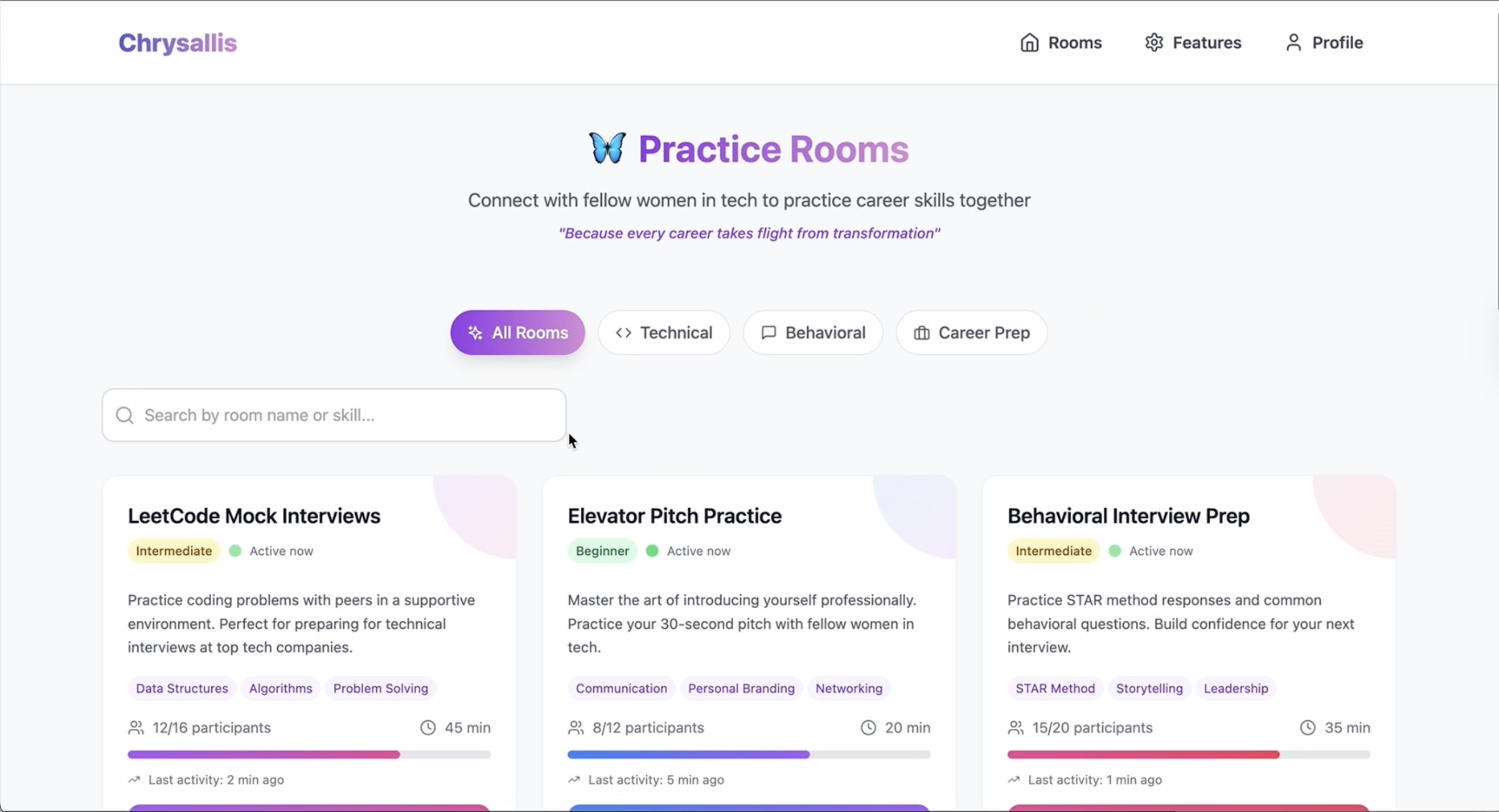
Chrysalis is a web app where users join themed practice rooms — LeetCode interviews, elevator pitches, or behavioral questions — and get paired with a peer working on the same skill. Before the session, users see each other’s goals and focus areas. During the session, AI keeps the conversation flowing with smart prompt suggestions and takes live notes.
Afterward, users receive feedback visualized as an origami butterfly — each session adding a new fold representing growth. Over time, they can track their transformation from student to career-ready professional.
How we built it
We built Chrysalis using:
- Frontend: React + TypeScript with Tailwind CSS for styling
- Backend: Node.js with MongoDB for real-time data syncing and user management
- AI Integration: Google Gemini API for intelligent prompt suggestions and session summarization
- Video/Audio: WebRTC integration for real-time communication between peers
- Deployment: Vercel for frontend and backend hosting
The AI component listens passively and only activates when needed (e.g., if conversation lags), ensuring that the experience feels natural but guided.
Challenges we ran into
- Real-time matching: Ensuring two random users could be correctly and consistently paired, while syncing their session data via MongoDB, was a tough technical challenge.
- Backend stability: Getting the server to reliably support real-time connections, especially with video and audio, took significant debugging.
- Gemini integration: Tuning the Gemini API to provide helpful, non-generic prompts during awkward silences took trial and error.
- WebRTC inconsistencies: One user's video/audio stream kept failing intermittently, highlighting the complexity of handling peer-to-peer communication across networks.
Accomplishments that we're proud of
- We successfully built a working prototype of Chrysalis that connects users in real time.
- The AI-guided feedback system is functional and actually feels useful — not intrusive.
- The visual "origami butterfly" progress metaphor adds emotional resonance to what could’ve been just another interview app.
- Despite technical hurdles, we deployed a full-stack app that’s stable and demo-ready
What we learned
- We deepened our knowledge of real-time systems and the complexity of peer-to-peer communication using WebRTC.
- We learned how to fine-tune LLM prompts and behaviors for real-time interactivity (not just chat).
- We gained experience working with MongoDB for live data syncing and TypeScript for safe, scalable frontend development.
- Most importantly, we saw firsthand how much more powerful a product can be when it's not just functional, but meaningful.
What's next for Chrysallis?
- Smarter user matching based on skill level and goals
- Session replays with AI-generated highlights
- Mobile-first redesign for on-the-go practice
- Career journaling and reflection features
- Bringing in mentors and alumni for live mock interviews or AMA sessions
Built With
- geminiapi
- mongodb
- node.js
- react.js
- tailwind.css
- typescript
- vercel
- webrtc


Log in or sign up for Devpost to join the conversation.