


Theme: Finance & FinTech
Problem Statement
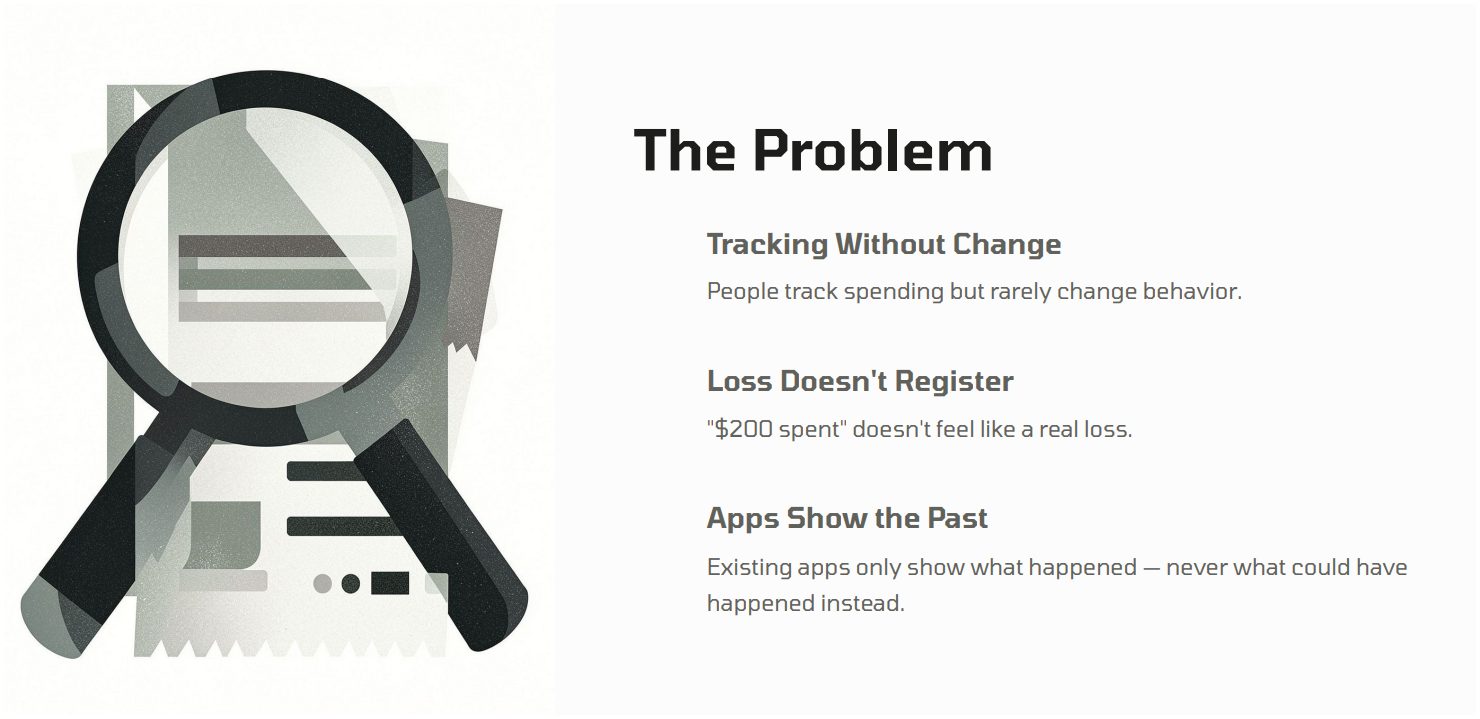
Every day, people make small, seemingly harmless spending decisions — a coffee, a subscription, an impulse purchase — without ever seeing the long-term cost of those choices. Traditional budgeting apps only show how much was spent, never what that money could have become over time.
This affects anyone trying to build savings or investment habits, especially young adults and students who are just starting their financial journey. It matters because the disconnect between spending and opportunity cost is a major reason people fail to change their financial behavior — a loss that isn't felt is a loss that gets ignored.
Existing finance apps are purely retrospective: they summarize what already happened. They don't answer the more powerful question — "what could have happened instead?" This is why most users glance at their spending report once and rarely act on it afterward.
Proposed Solution
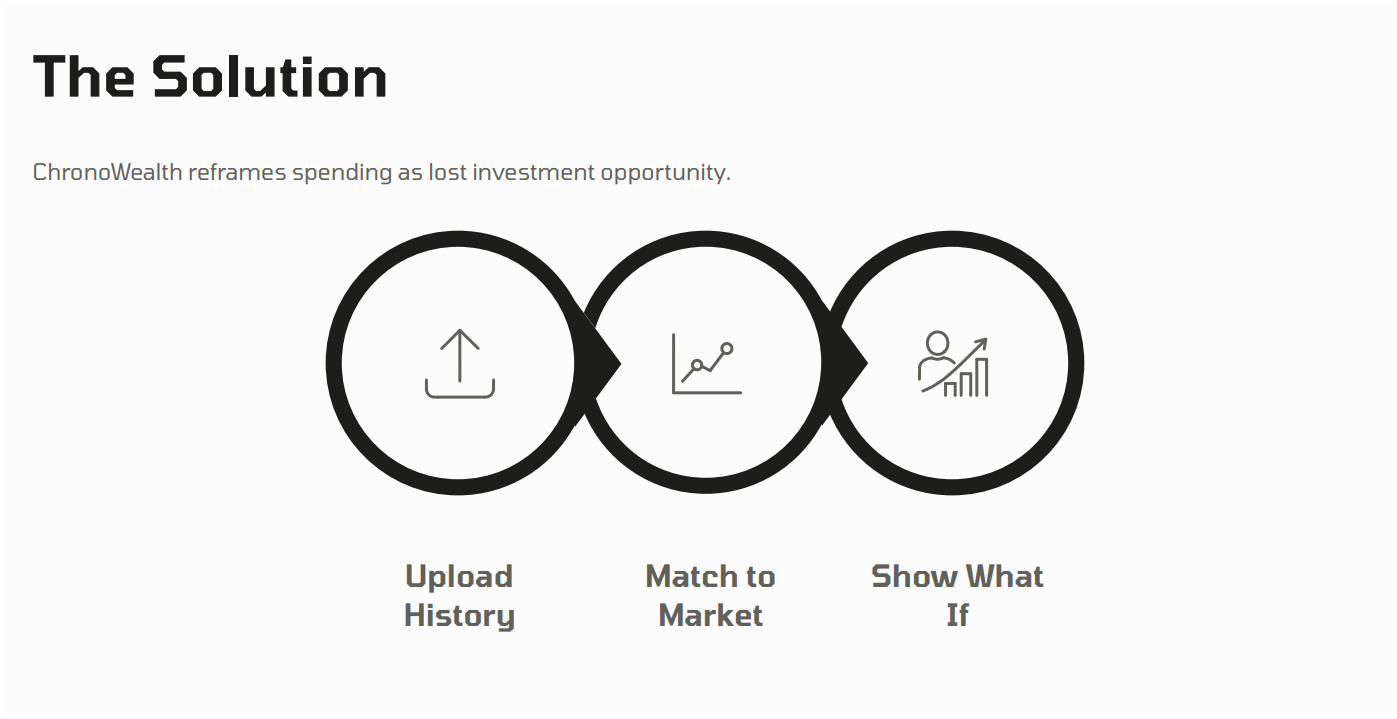
ChronoWealth is a financial awareness concept that reframes past spending as lost investment opportunity. Users upload their transaction history (such as a bank statement or CSV export). For each significant discretionary expense, ChronoWealth cross-references the transaction date with historical market data (for example, the S&P 500 index) and calculates what that same amount would be worth today if it had been invested instead of spent.
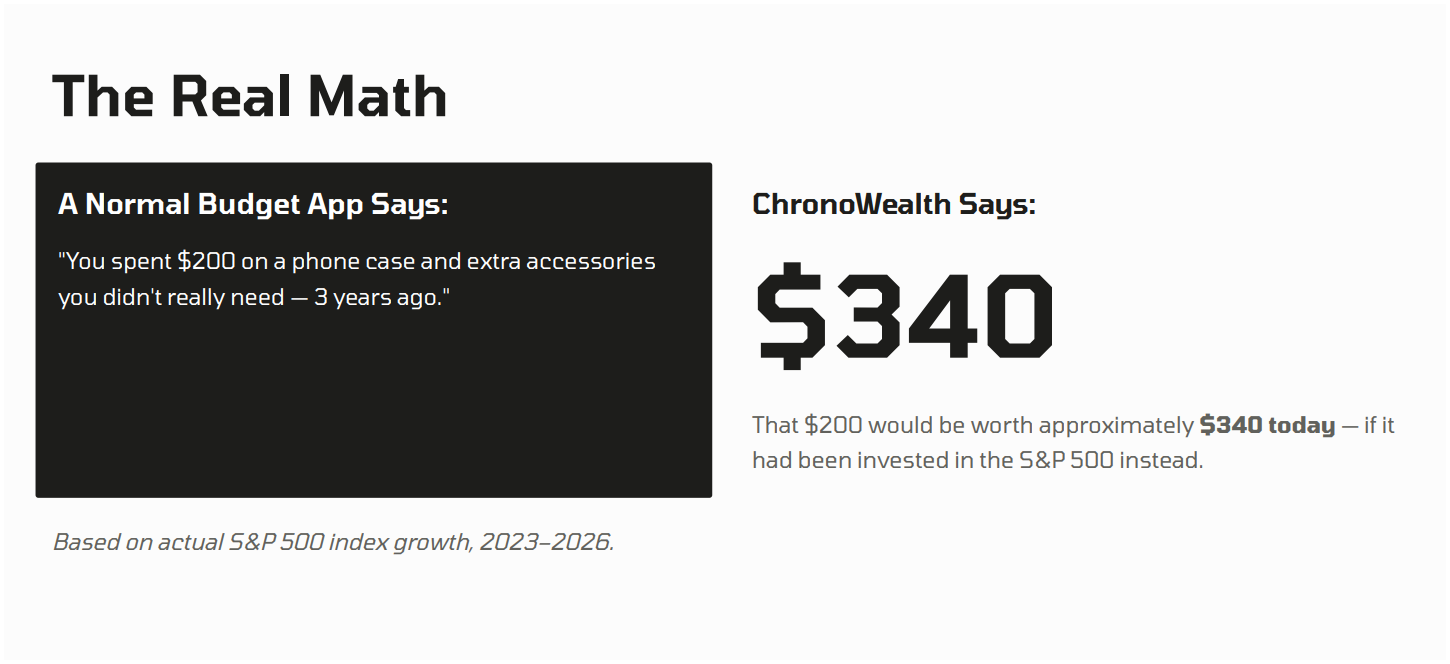
Rather than presenting this as a dry statistic, the result is delivered as a short, personalized narrative: "That $200 purchase would be worth $340 today." Users can browse their spending history as a timeline of missed compounding moments, turning abstract financial advice into a concrete, emotionally resonant story about their own money.
The primary users are young professionals and students who already track expenses but struggle to translate that data into real behavior change. Beyond personal finance, this concept also connects to financial literacy education, since it teaches the concept of compounding through personal, relatable examples rather than abstract formulas.
Innovation & Uniqueness
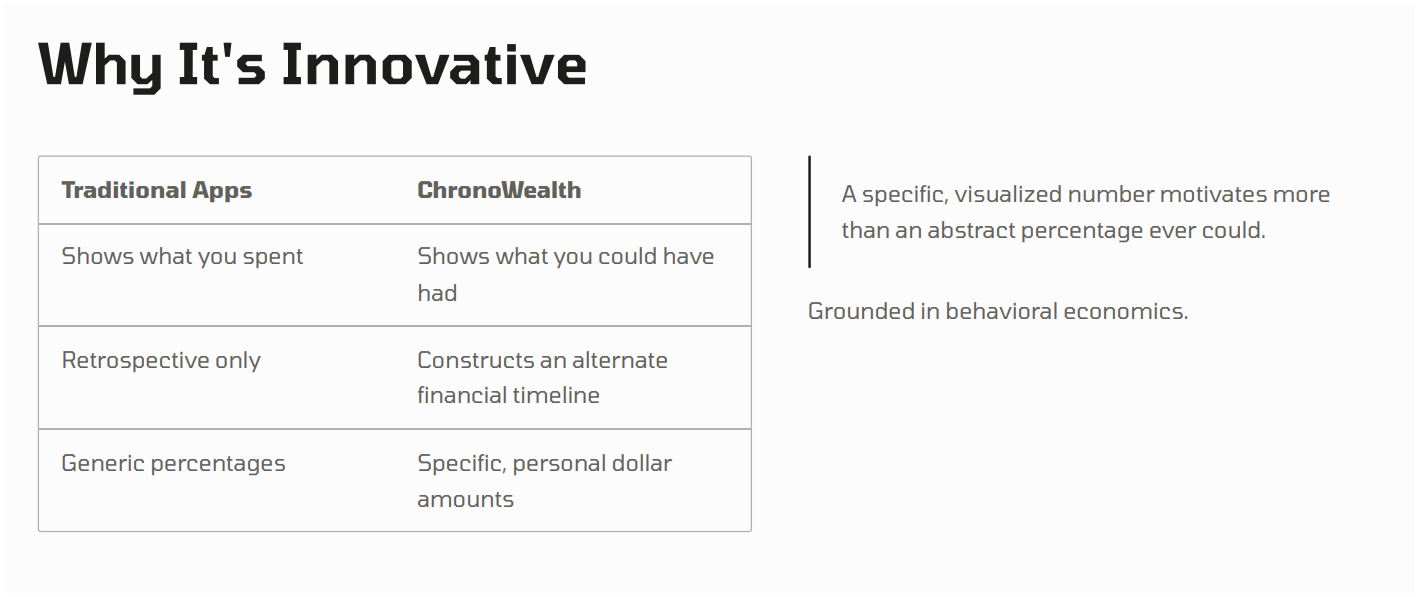
Most fintech tools are retrospective — they tell users what they did. ChronoWealth is prospective-in-reverse: it constructs an alternate financial history to make opportunity cost tangible rather than abstract.
This approach is grounded in behavioral economics: humans respond more strongly to a visualized, specific loss than to a generic percentage or chart. By turning "you spent $200" into "you gave up $340," ChronoWealth converts a neutral fact into a motivating story — without requiring the user to understand compound interest or read a financial report.
The innovation is not a new financial instrument, but a new communication model for existing financial data — a reframing layer that could be applied on top of any bank's transaction data.
Project Presentation
Expected users: Young professionals and students (ages 18–30) who already use budgeting apps but want deeper motivation to change spending habits.
Implementation process:
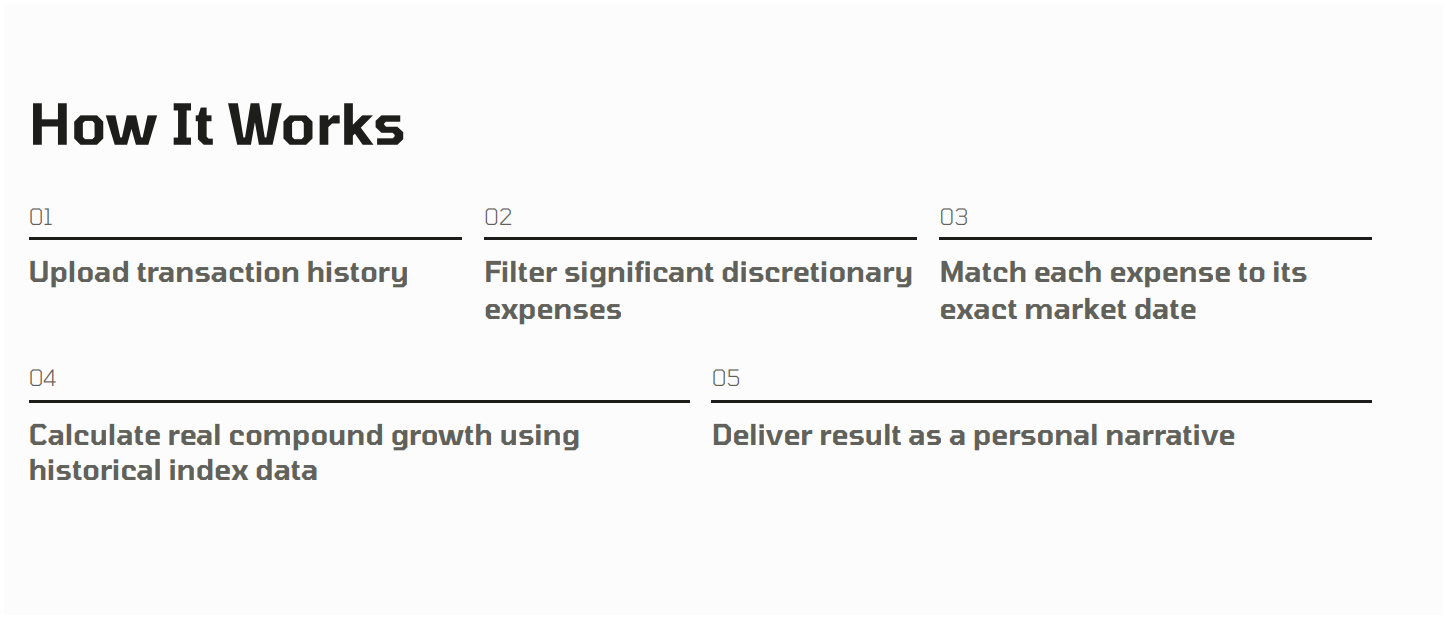
- User uploads transaction history (bank statement or CSV export).
- The system filters discretionary transactions above a set threshold.
- Each transaction is matched to historical market index data via a public financial data API (e.g., Yahoo Finance, Alpha Vantage).
- A calculation engine computes the compounded present-day value.
- A plain-language narrative summarizes the findings for the user.
Resources required: A financial data API, a bank integration service (such as Plaid) for automatic transaction import, and a lightweight backend for the compounding calculations.
Potential challenges: Ensuring users feel informed rather than shamed by the comparisons, and handling irregular or incomplete transaction data gracefully.
Expected outcome: Increased engagement with personal finance tools and measurable behavior change in discretionary spending habits over time.
What's Next
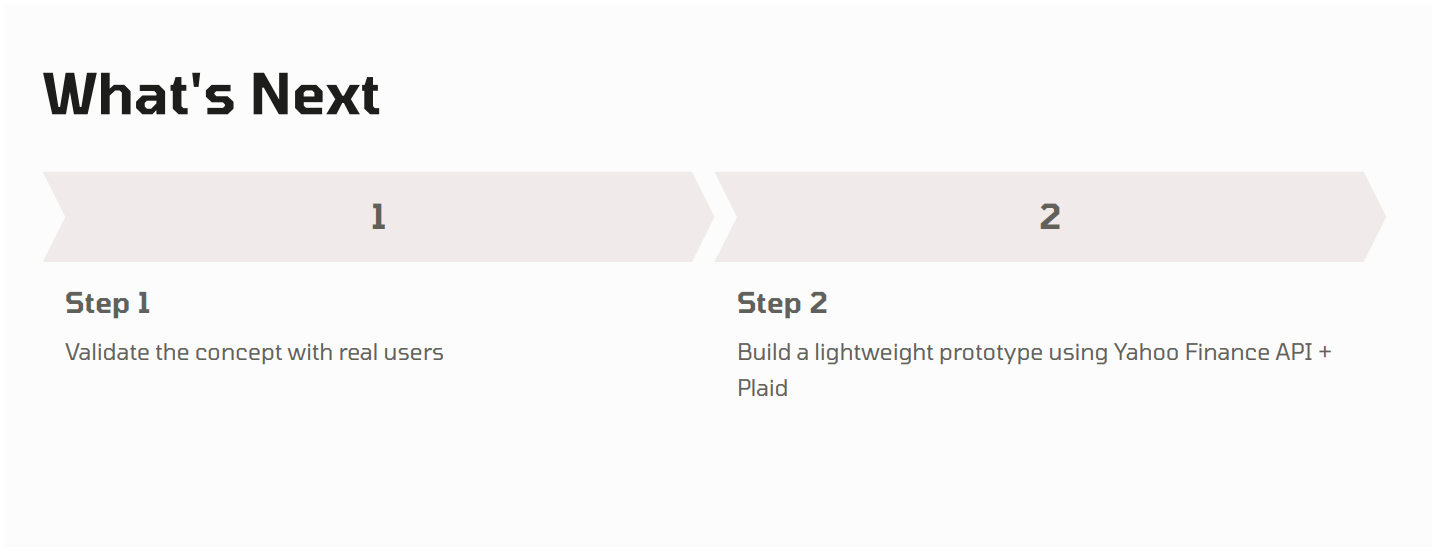
The next step would be validating this concept with real users to test whether the reframing actually changes spending behavior, followed by building a lightweight prototype using a public financial data API paired with a bank-linking service like Plaid.
Built With
- apis
- behavioral-economics
- concept-design
- data
- financial
- financial-modeling
- market-research
- public

Log in or sign up for Devpost to join the conversation.