Inspiration
What it does
How we built it
Challenges we ran into
Accomplishments that we're proud of
What we learned
🌌 Chronoverse: The Museum of Lost Futures
Inspiration
Most websites are designed to give users information. For the 3D Websites Hackathon, I wanted to create something different — a website that feels like entering another world.
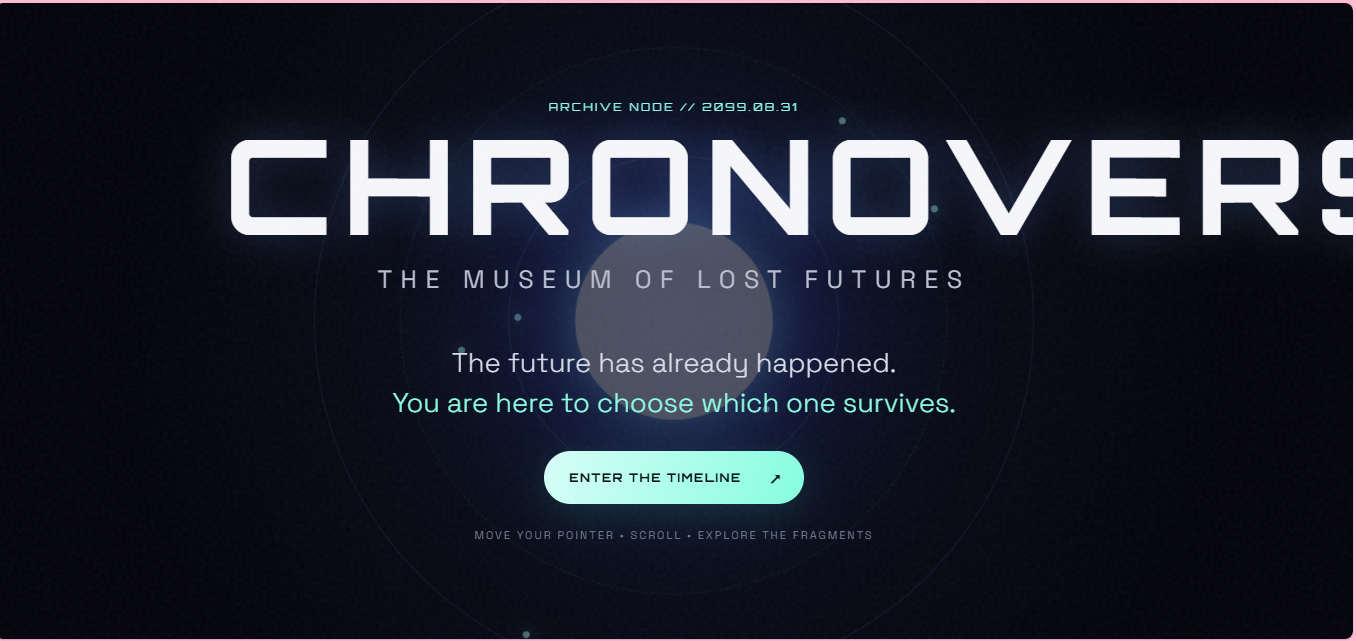
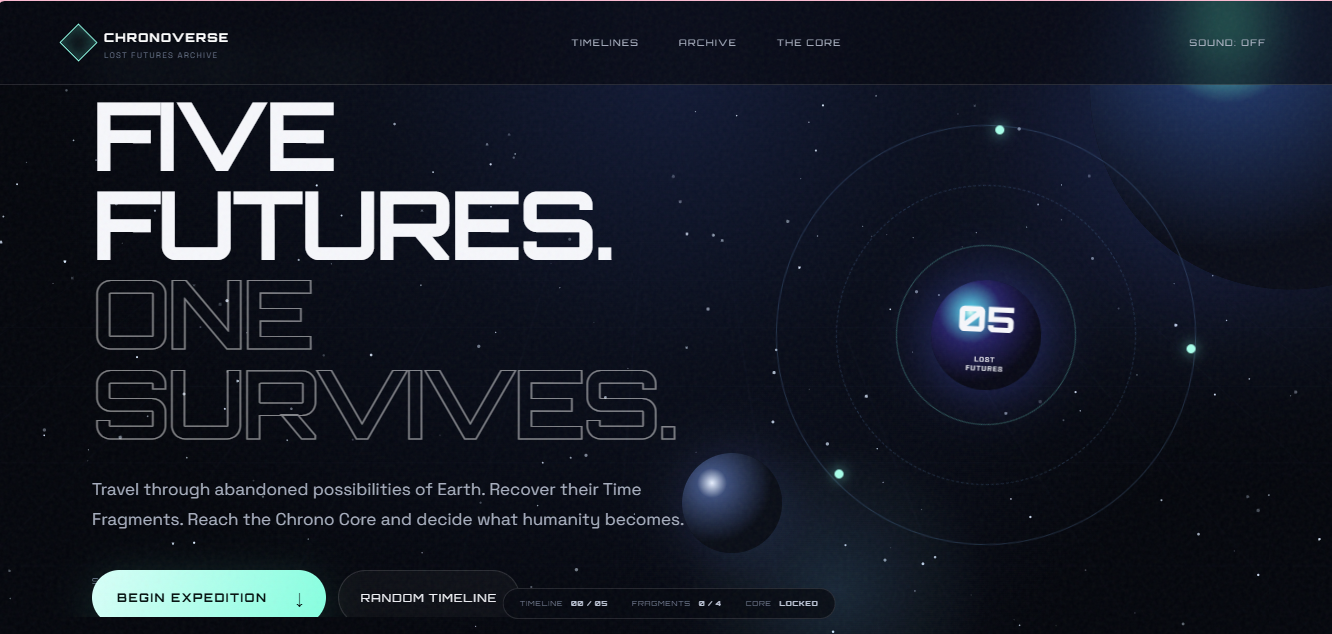
That idea became Chronoverse: The Museum of Lost Futures, an immersive futuristic experience where visitors explore multiple possible versions of Earth's future, recover lost Time Fragments, and ultimately decide which future should survive.
The goal was simple:
Explore. Choose. Evolve.
What it does
Chronoverse transforms a traditional website into an interactive sci-fi adventure.
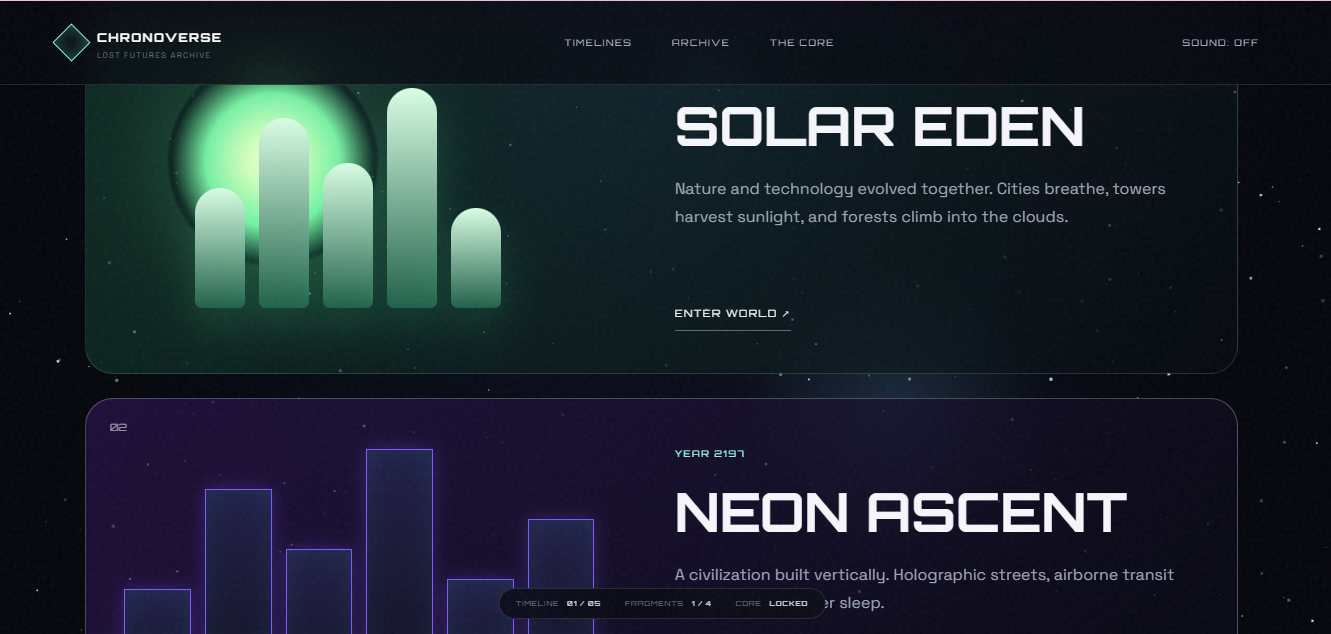
The visitor begins with a cinematic portal sequence before entering the Timeline Vault, which contains different possible futures of Earth.
🌿 Solar Eden — 2150
A future where nature and technology exist together. Living architecture, renewable energy, floating structures, and green cities define this timeline.
🌃 Neon Ascent — 2197
A massive cyber-futuristic civilization filled with vertical megacities, holographic environments, airborne transportation, and digital infrastructure.
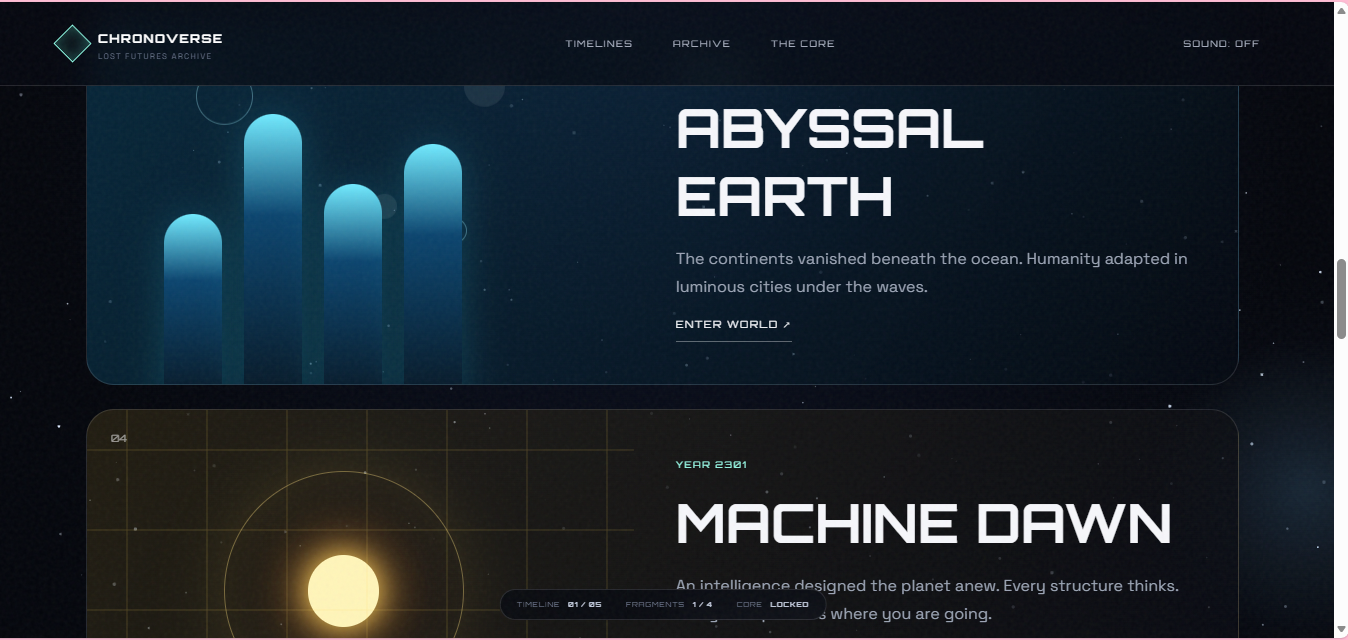
🌊 Abyssal Earth — 2240
An ocean-covered Earth where humanity has adapted by constructing futuristic civilizations beneath the water.
🤖 Machine Dawn — 2301
A world rebuilt around advanced artificial intelligence, autonomous infrastructure, intelligent buildings, and machine-designed environments.
🔒 The Forgotten Earth — ????
The mysterious final timeline is initially locked.
Visitors must explore the first four timelines and recover four Time Fragments. Once all fragments have been collected, the Forgotten Earth becomes accessible.
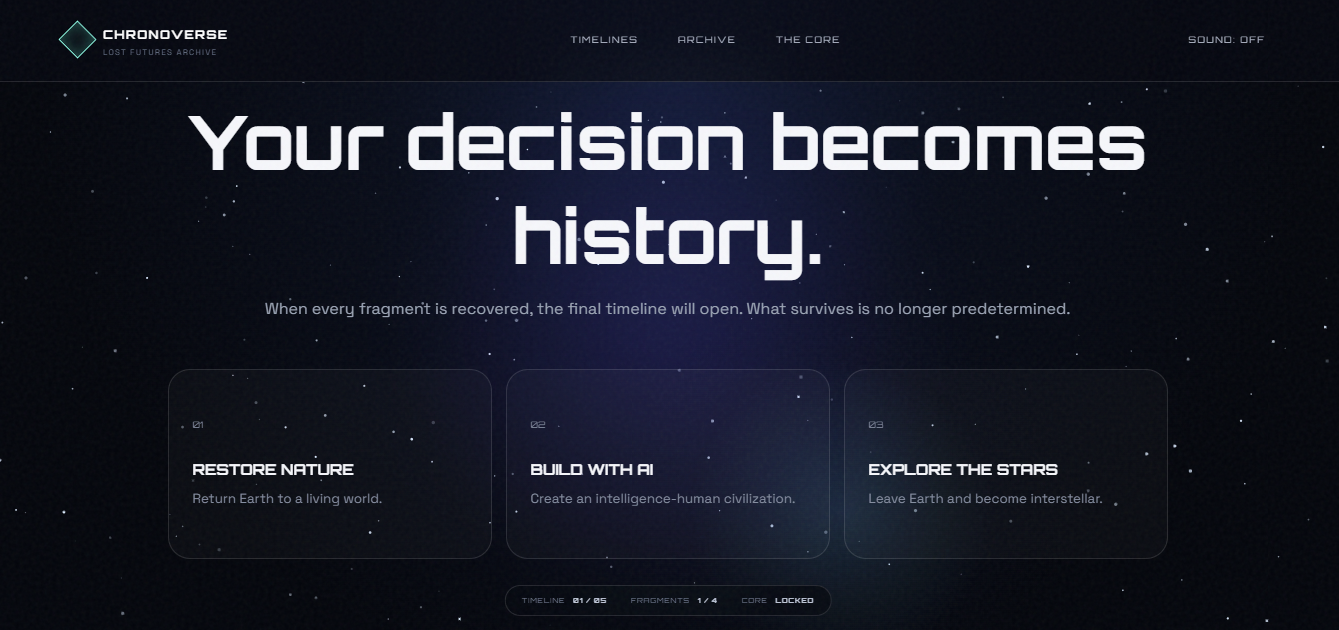
At the end of the experience, visitors reach the Chrono Core and choose humanity's future:
- 🌿 Restore Nature
- 🤖 Build With AI
- 🚀 Explore the Stars
Each decision represents a different vision for humanity.
How I built it
Chronoverse was built as a browser-based interactive experience using HTML5, CSS3, and JavaScript.
I used the HTML Canvas API to create the animated starfield and space atmosphere. CSS animations, gradients, lighting effects, glassmorphism, responsive layouts, and transitions create the futuristic visual style.
JavaScript controls the interactive elements, including:
- Timeline exploration
- World selection
- Time Fragment collection
- Final-world unlocking
- Chrono Core choices
- Dynamic HUD information
- Portal transitions
- Mouse-reactive effects
- Scroll animations
- Ambient sound
- Persistent progress using Local Storage
The interface was designed to feel closer to a cinematic game menu or interactive museum than a conventional website.
Challenges I faced
One of the biggest challenges was creating a strong sense of depth and immersion while keeping the project lightweight enough to run smoothly inside a browser.
Another challenge was connecting the visual experience with meaningful interaction. Instead of simply displaying futuristic environments, I created the Time Fragment system, giving visitors a reason to explore each timeline.
Responsive design was also important because cinematic interfaces can become difficult to use on smaller screens. The layouts and interactions therefore adapt for desktop and mobile devices.
What I learned
Building Chronoverse helped me learn more about:
- Creative web development
- Interactive UI/UX design
- Canvas animation
- CSS animation and visual effects
- JavaScript state management
- Local Storage
- Responsive design
- Designing game-like experiences for the web
Most importantly, I learned that an immersive website is not only about impressive visuals. Storytelling, interaction, movement, atmosphere, and user experience must work together.
What's next for Chronoverse
Future versions could expand Chronoverse with true WebGL/Three.js environments, explorable 3D worlds, spatial audio, interactive objects, shaders, additional timelines, achievements, cinematic camera sequences, and more complex endings.
Chronoverse began as a question:
What if you could visit the futures humanity never chose?
This project turns that question into an interactive web experience.


Log in or sign up for Devpost to join the conversation.