-
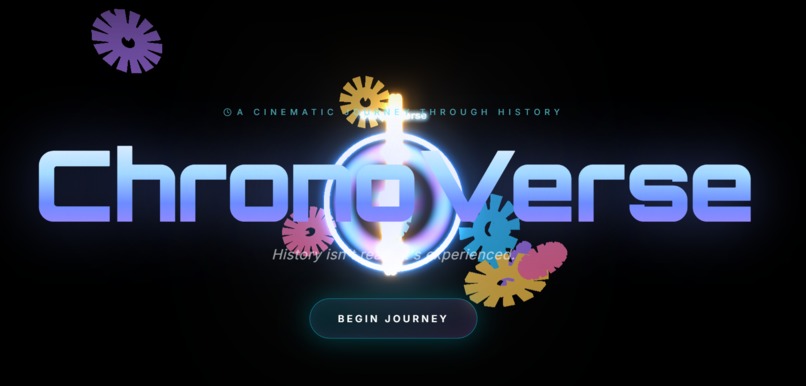
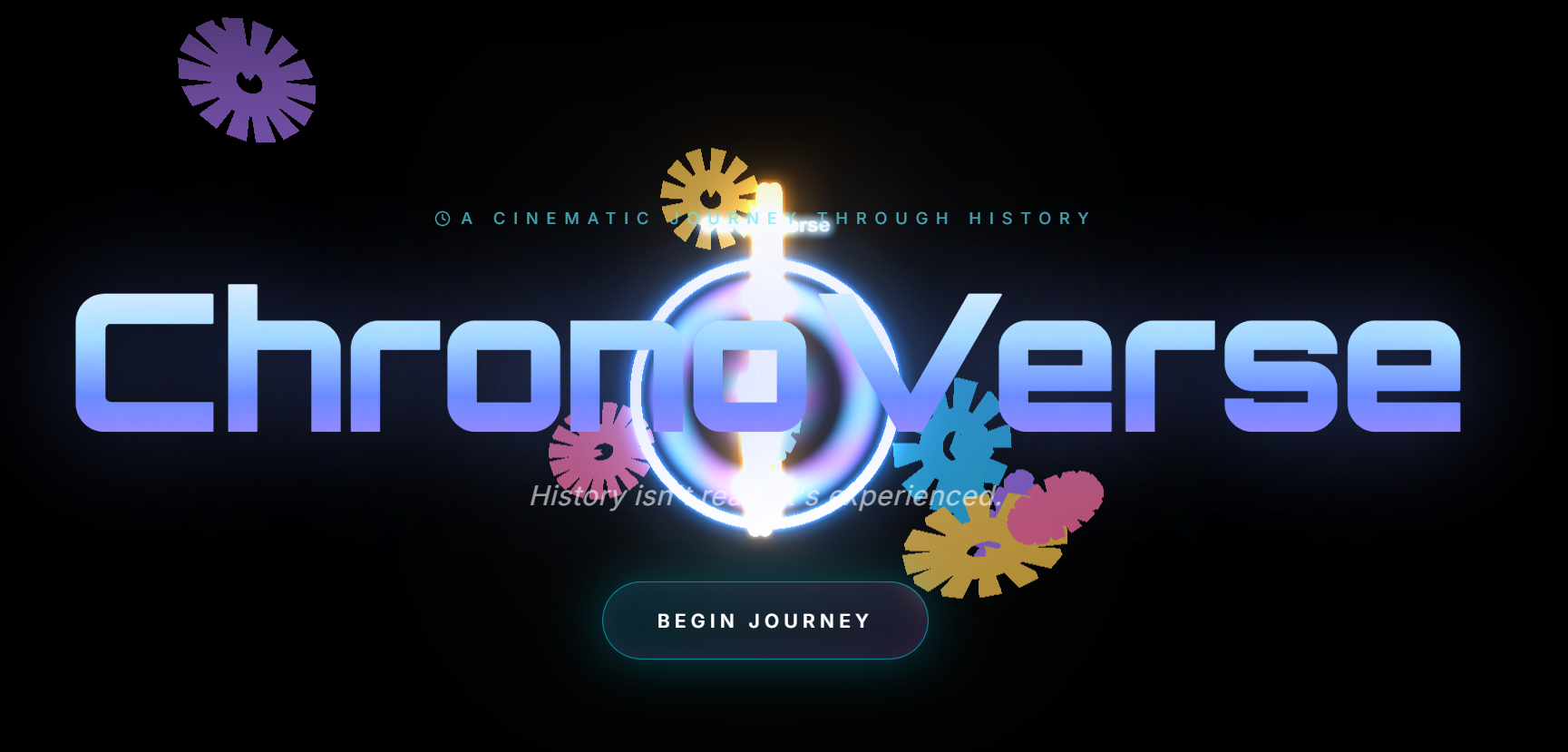
ChronoVerse landing page featuring a cinematic time portal that welcomes users into an immersive historical adventure.
-
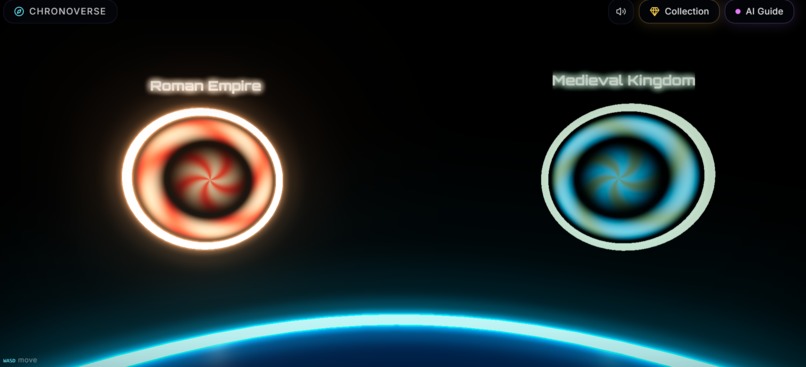
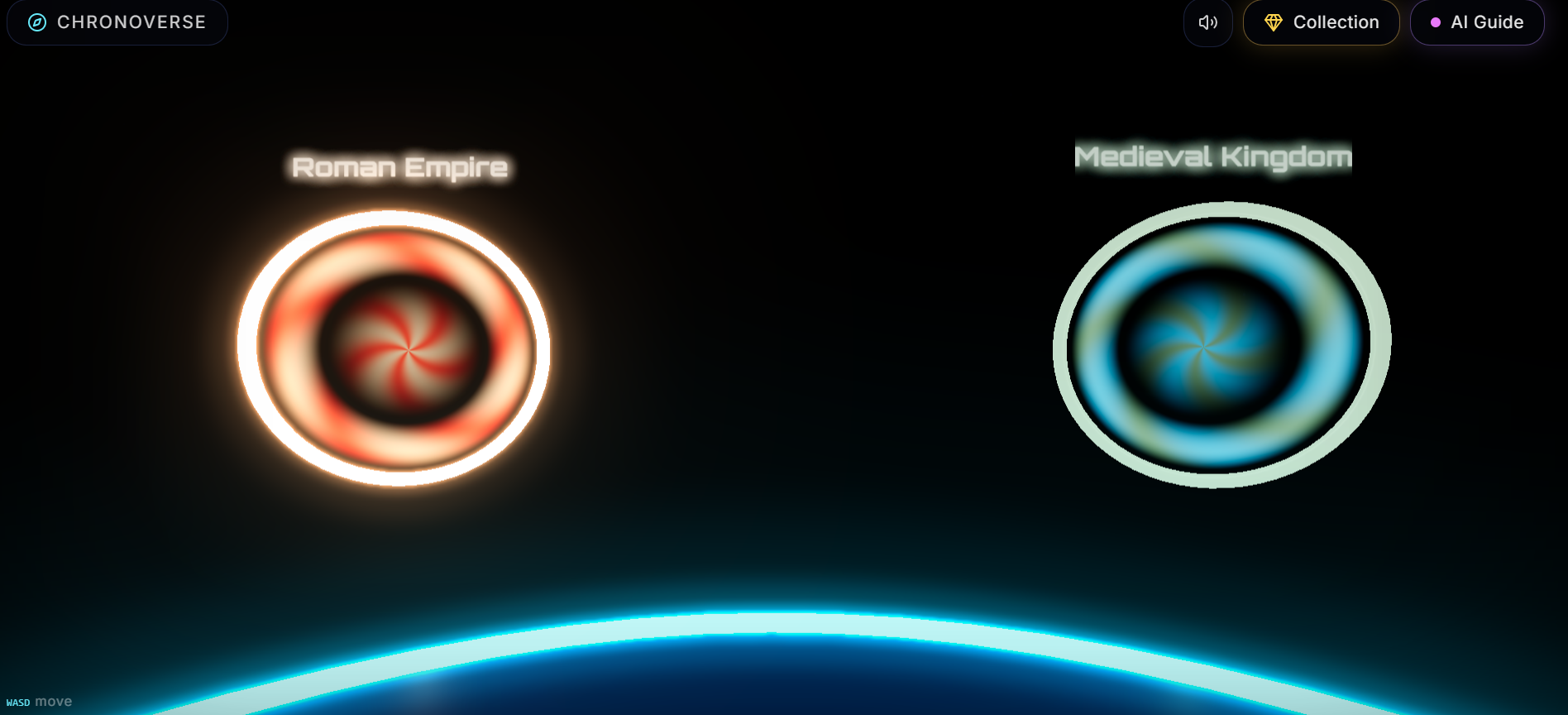
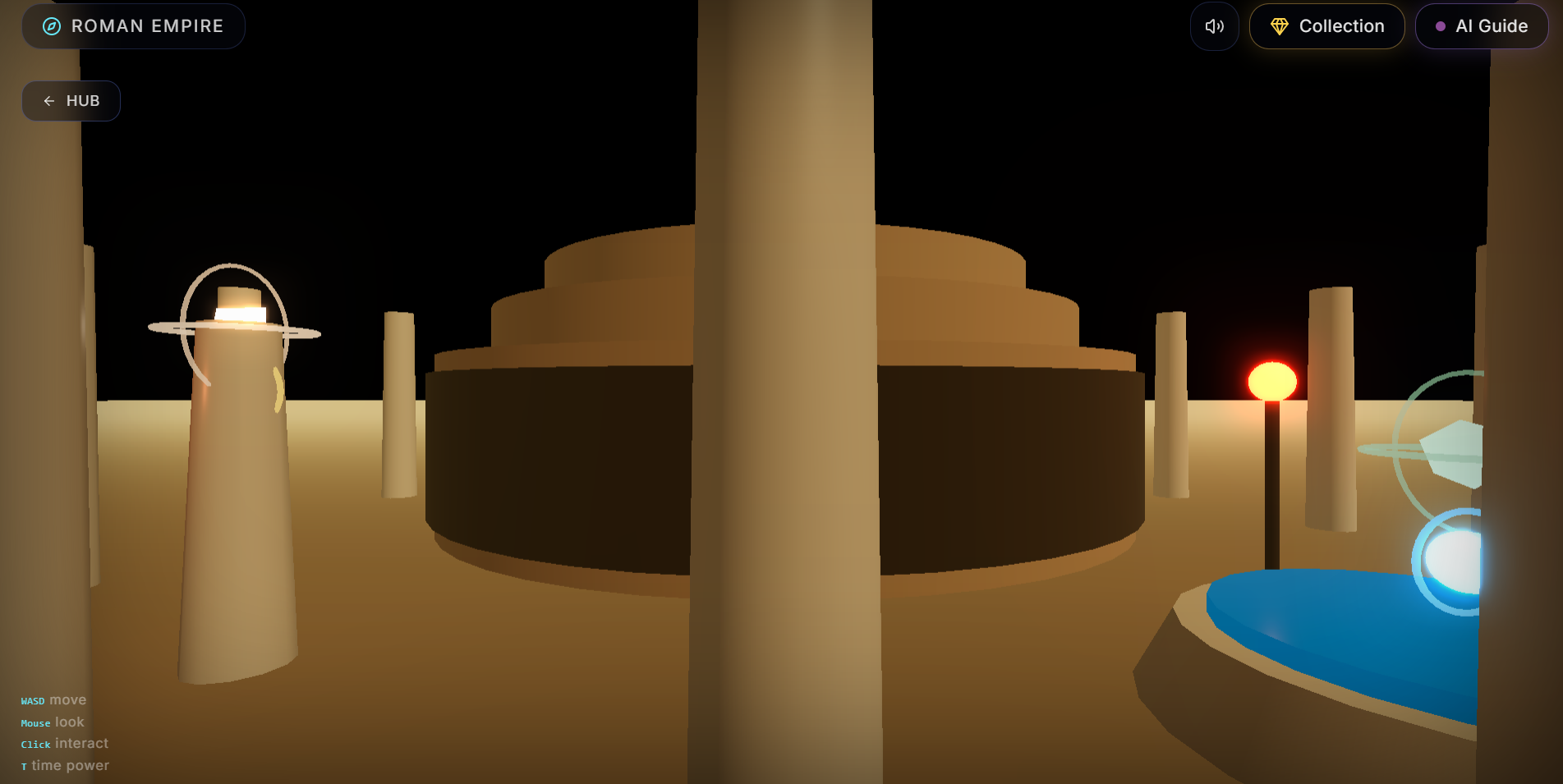
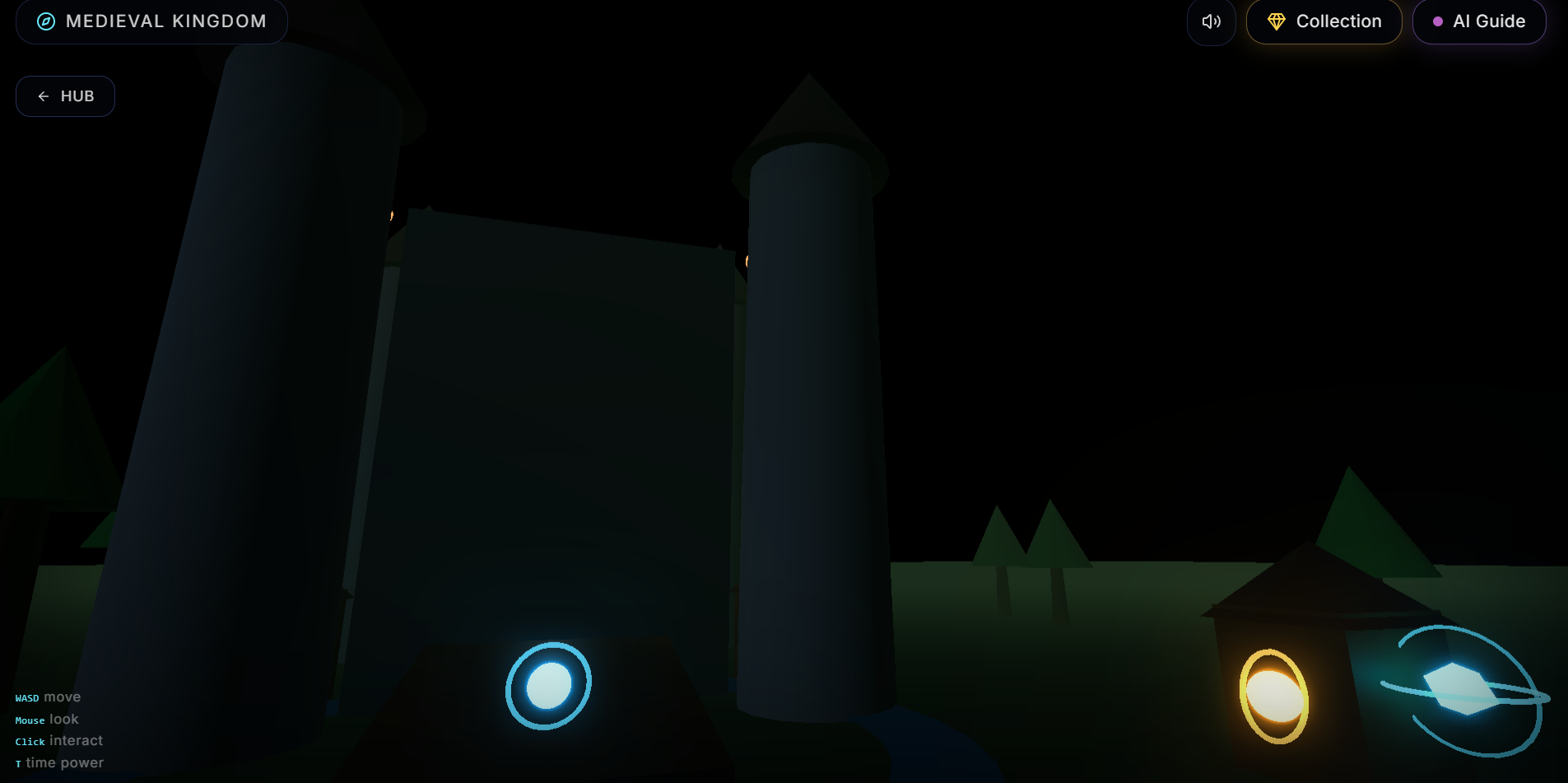
Choose between the Roman Empire and Medieval Kingdom, featuring immersive 3D worlds, cinematic transitions, and interactive storytelling
-
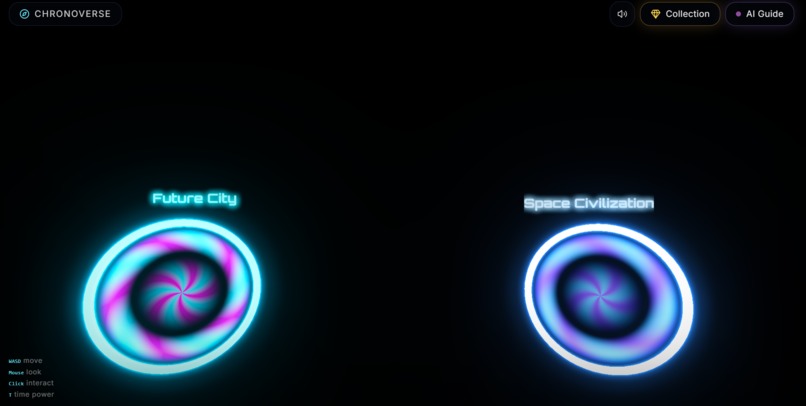
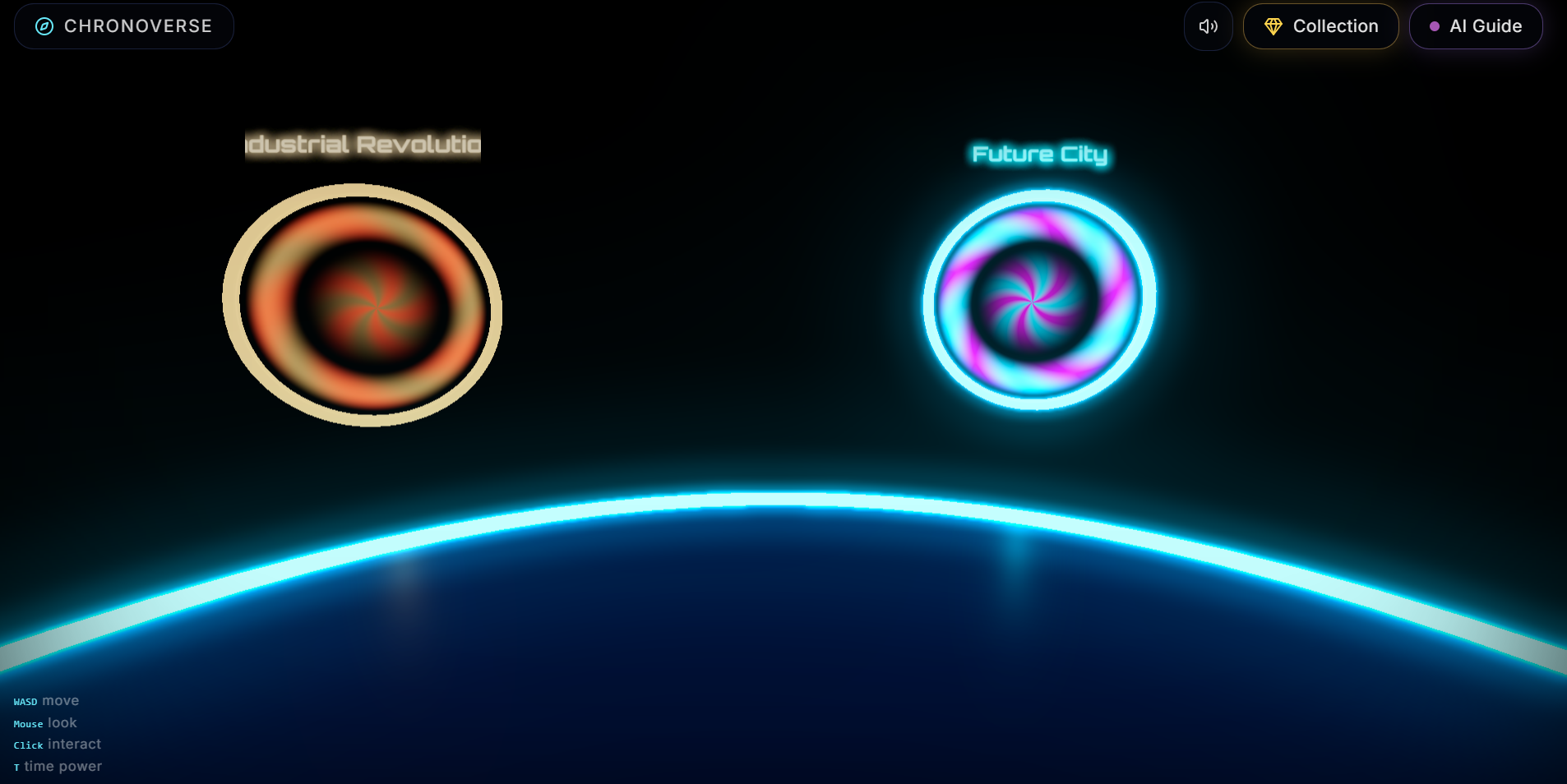
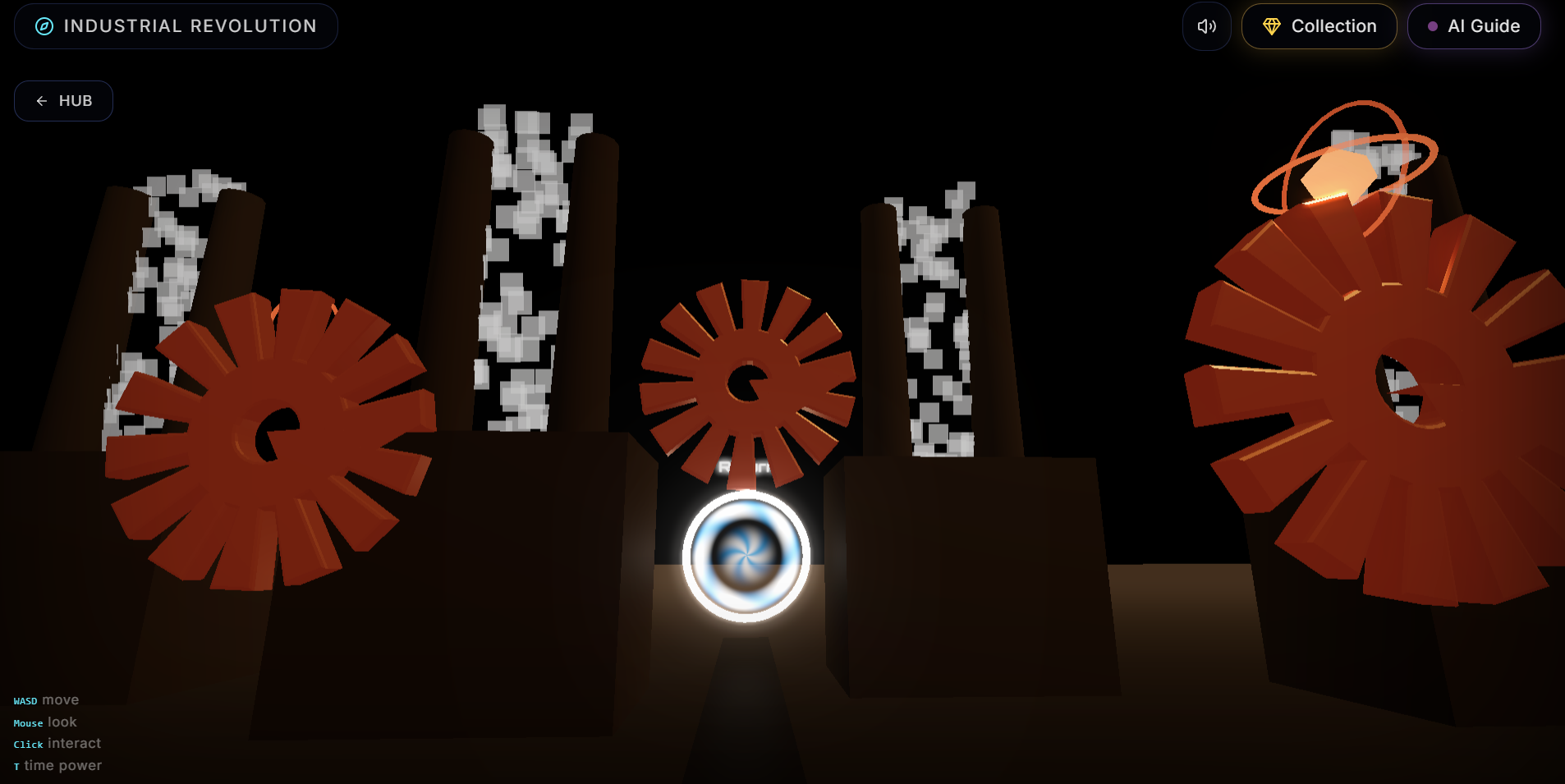
Travel from the Industrial Revolution to the Future City through dynamic technological evolution and futuristic innovation.
-
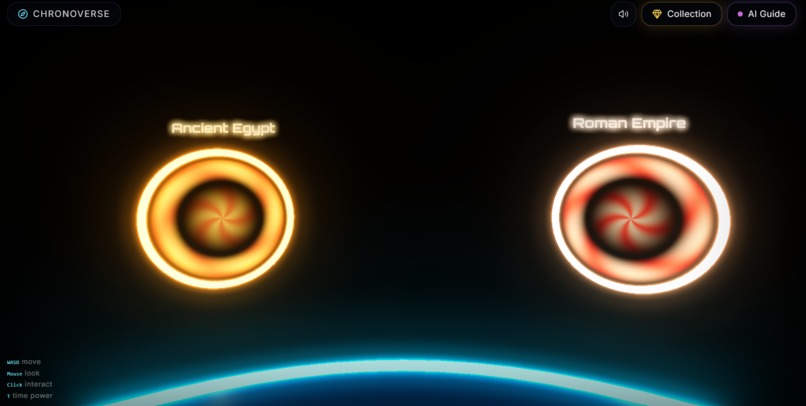
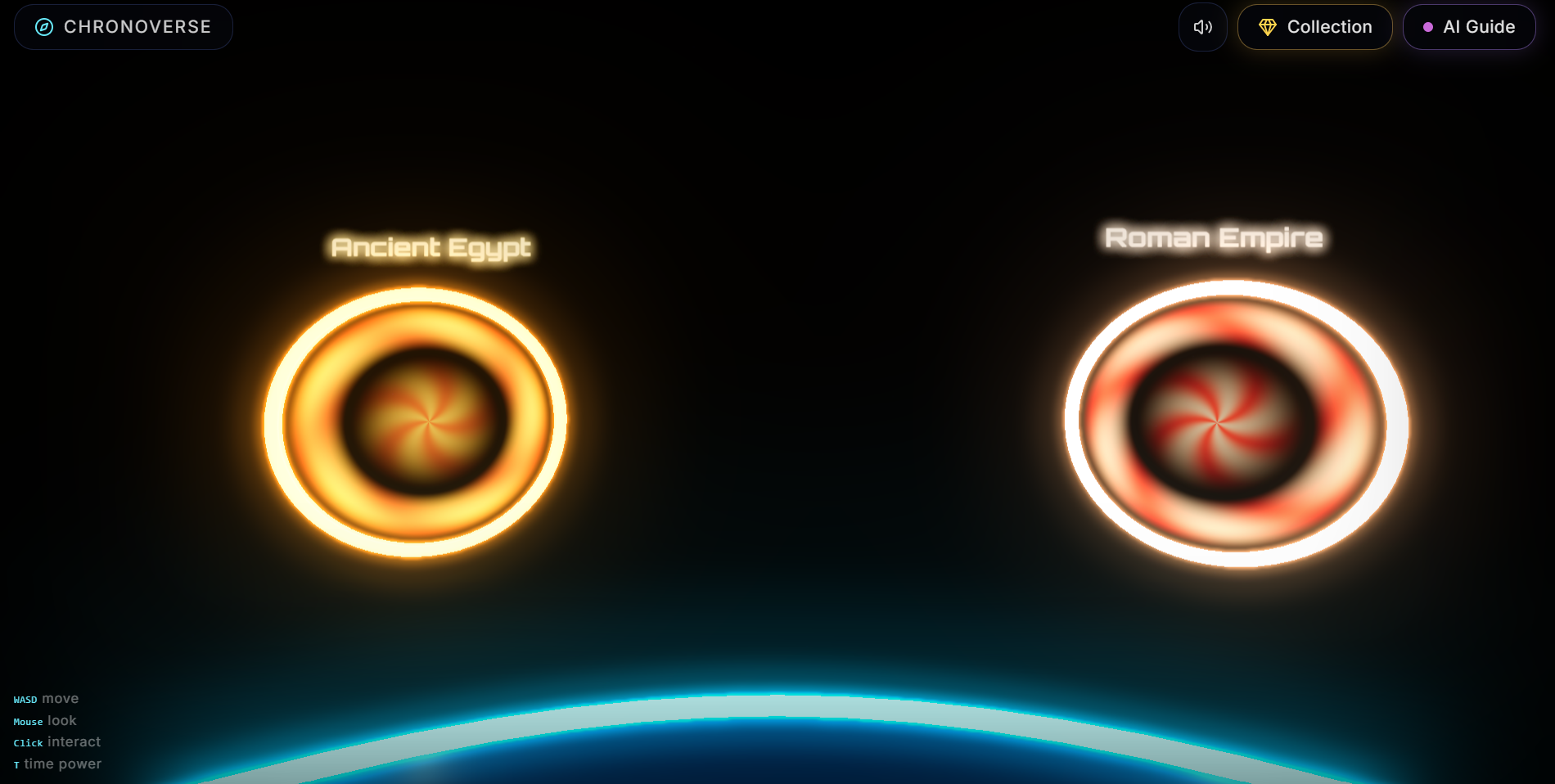
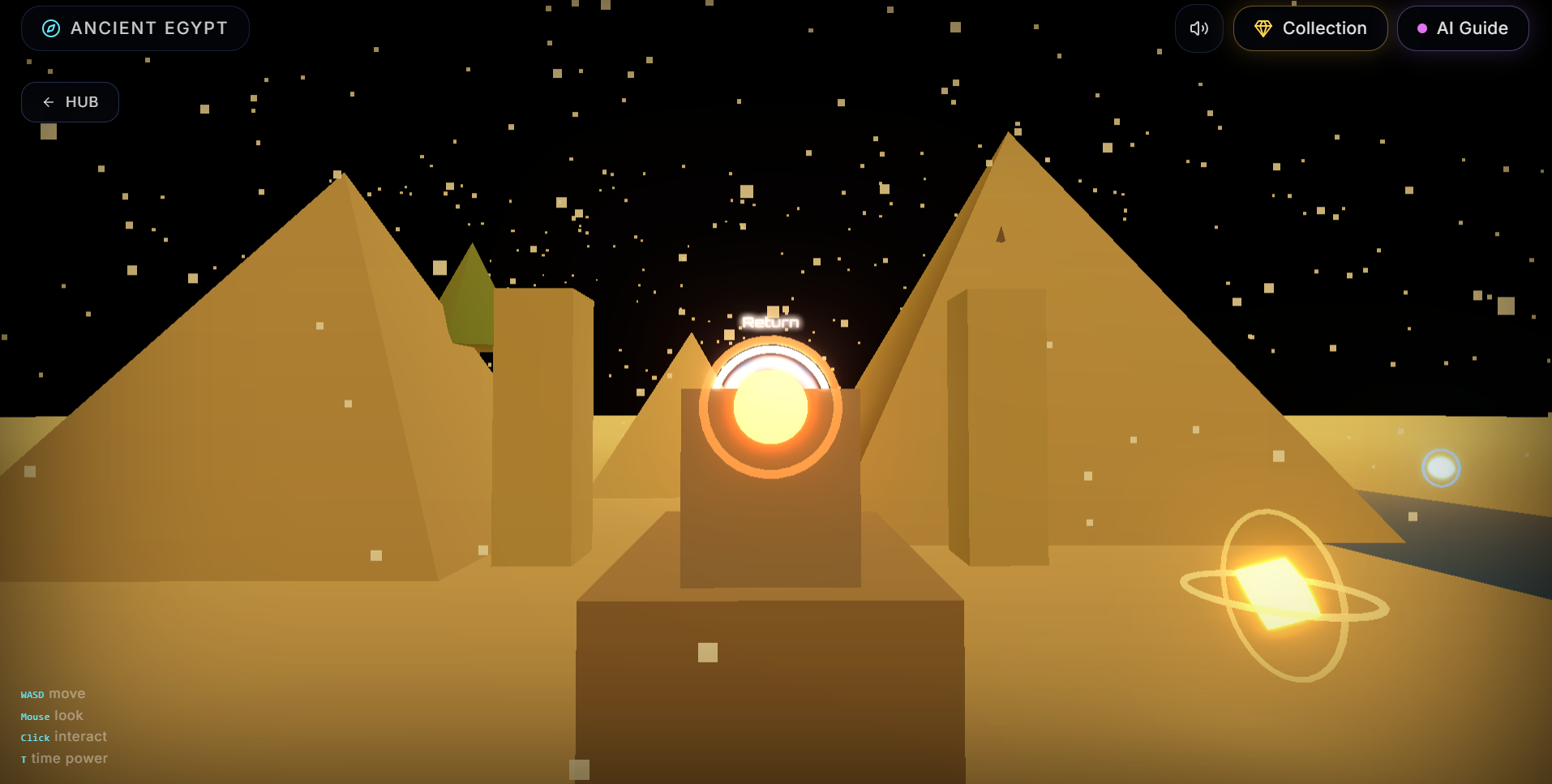
Navigate through interactive portals to explore Ancient Egypt and Roman Empire, offering unique environments, and historical experiences.
-
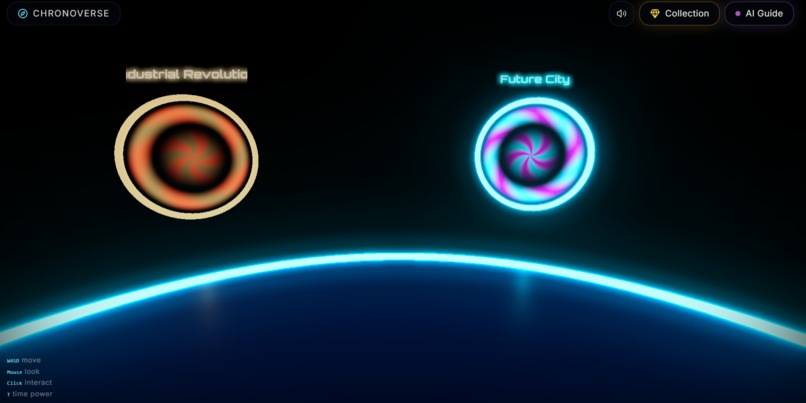
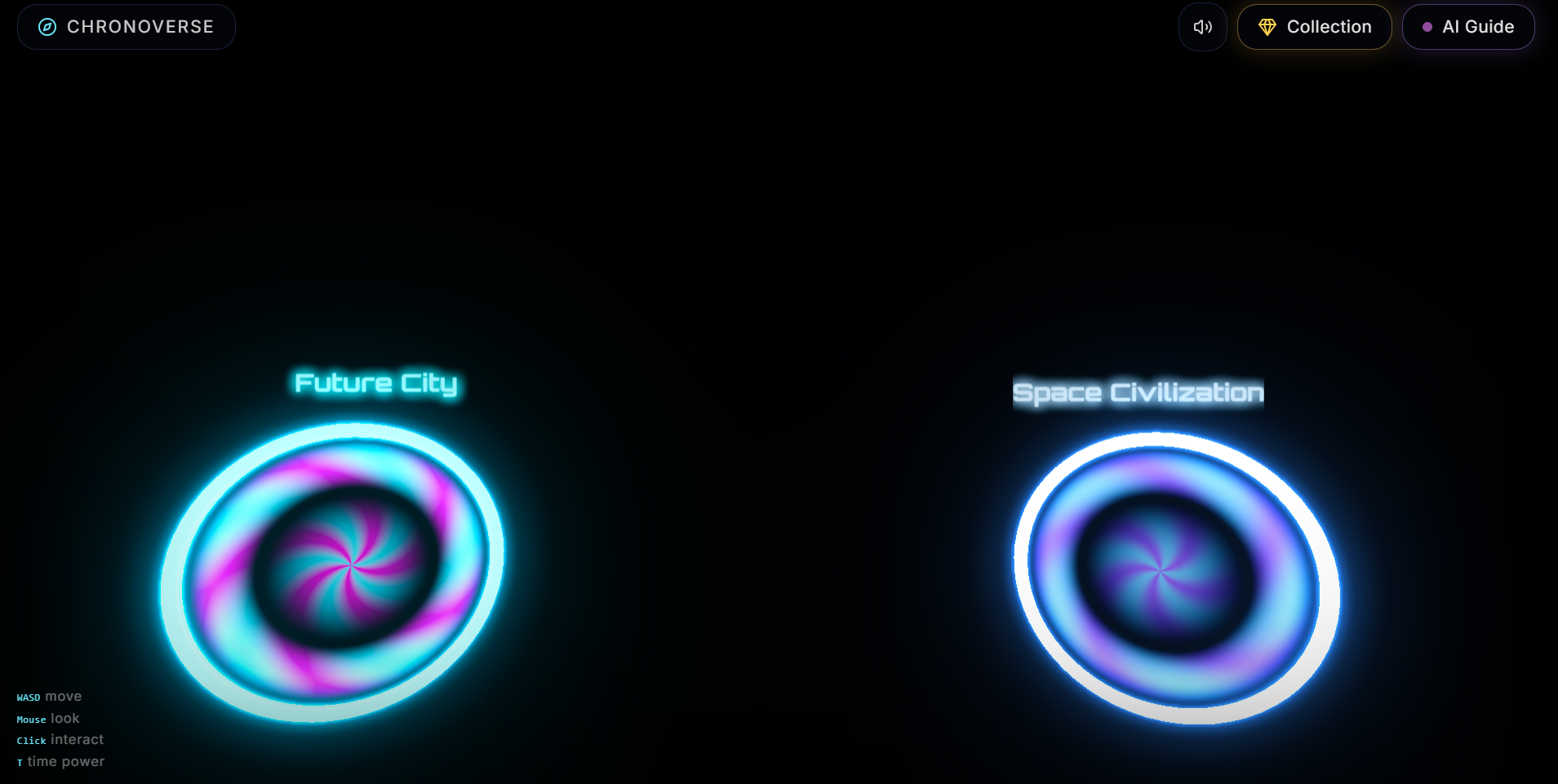
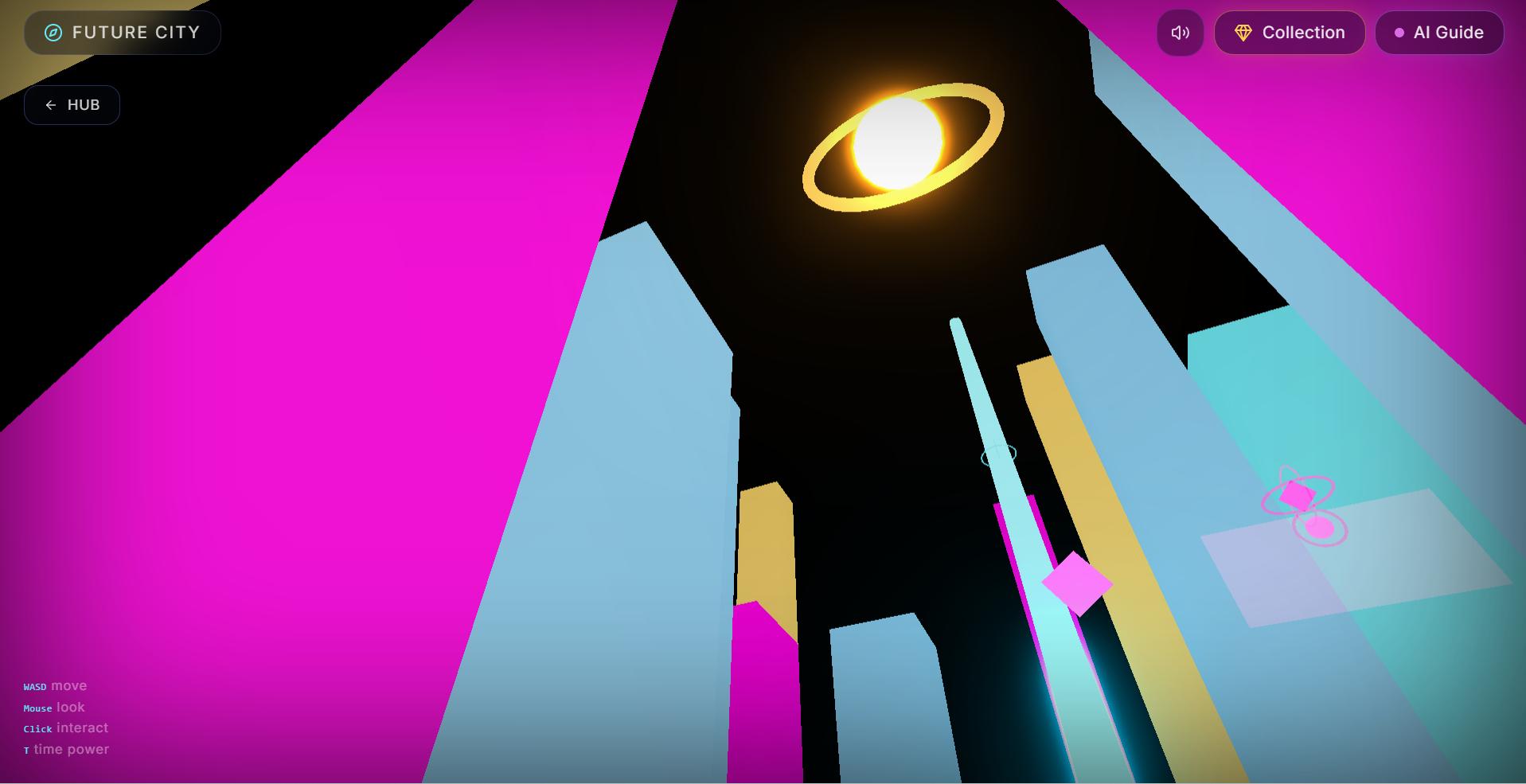
Explore futuristic civilizations and outer space through visually rich portals enhanced with cinematic effects and immersive environments
-
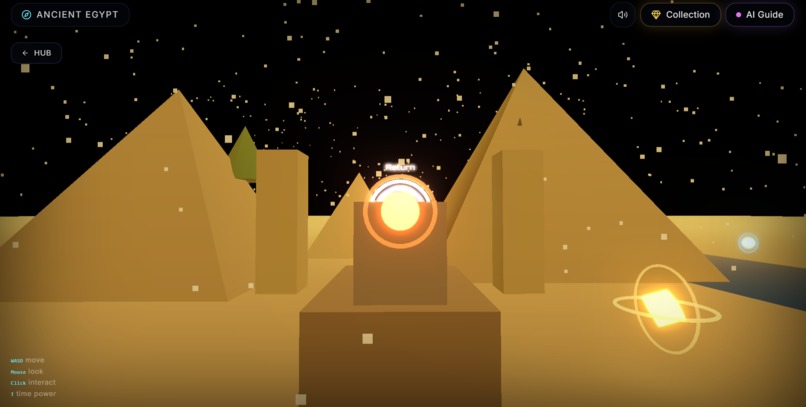
Ancient Egypt - "Uncover the mysteries of Ancient Egypt and unlock the secrets of the pharaohs."
-
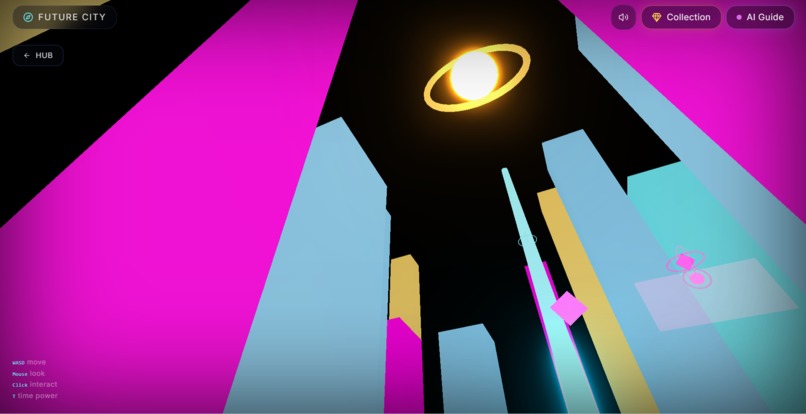
Future City - "Step into a futuristic world where innovation shapes the destiny of tomorrow
-
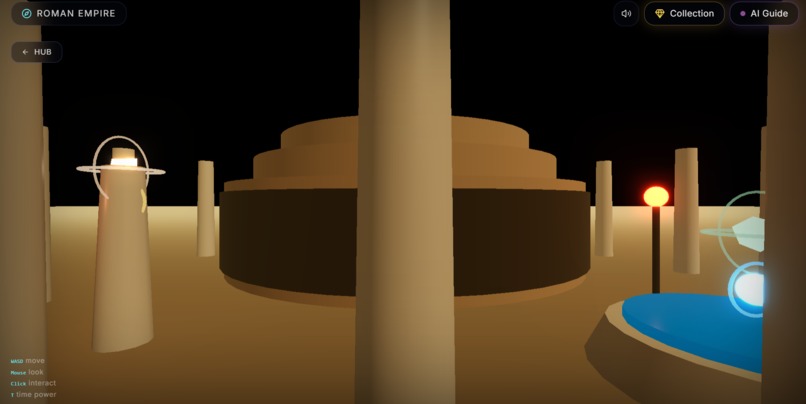
Roman Empire - "Walk through the grandeur of Rome and witness the rise of a legendary civilization."
-
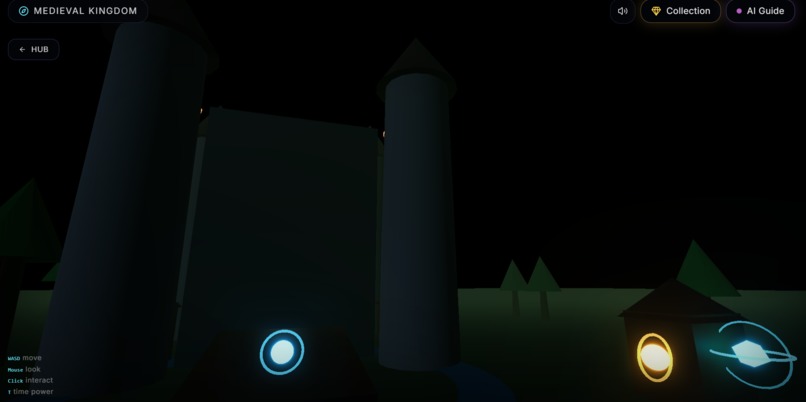
Medieval Kingdom - "Journey into the medieval age of castles, knights, and timeless legends."
-
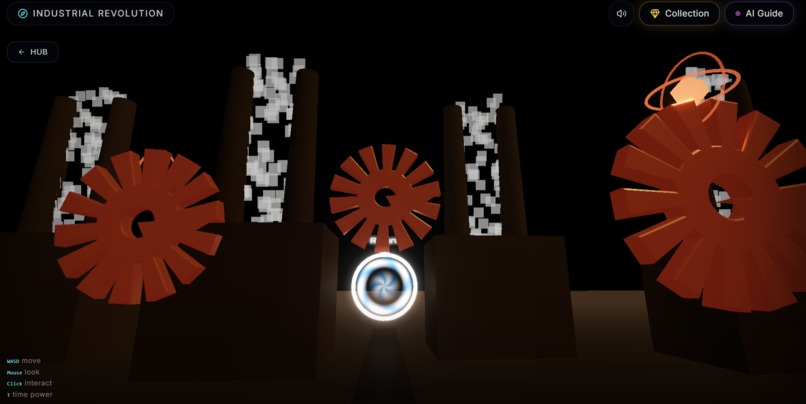
Industrial Revolution - "Experience the era that transformed human history through machines and innovation."
-
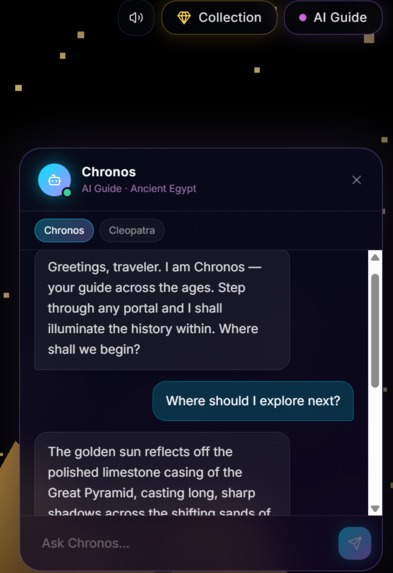
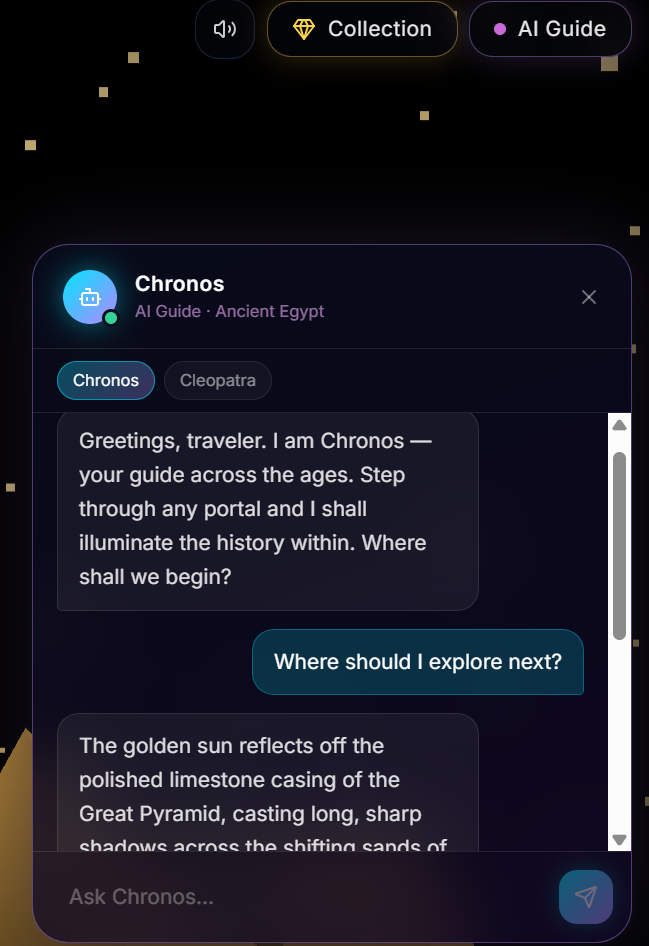
Chronos, the AI-powered guide, provides contextual historical insights, answers questions, and enhances exploration across every er
-
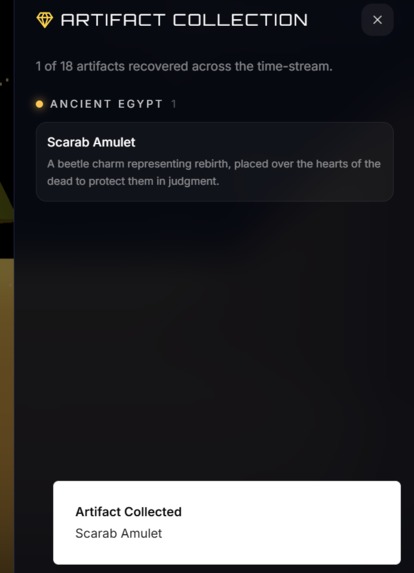
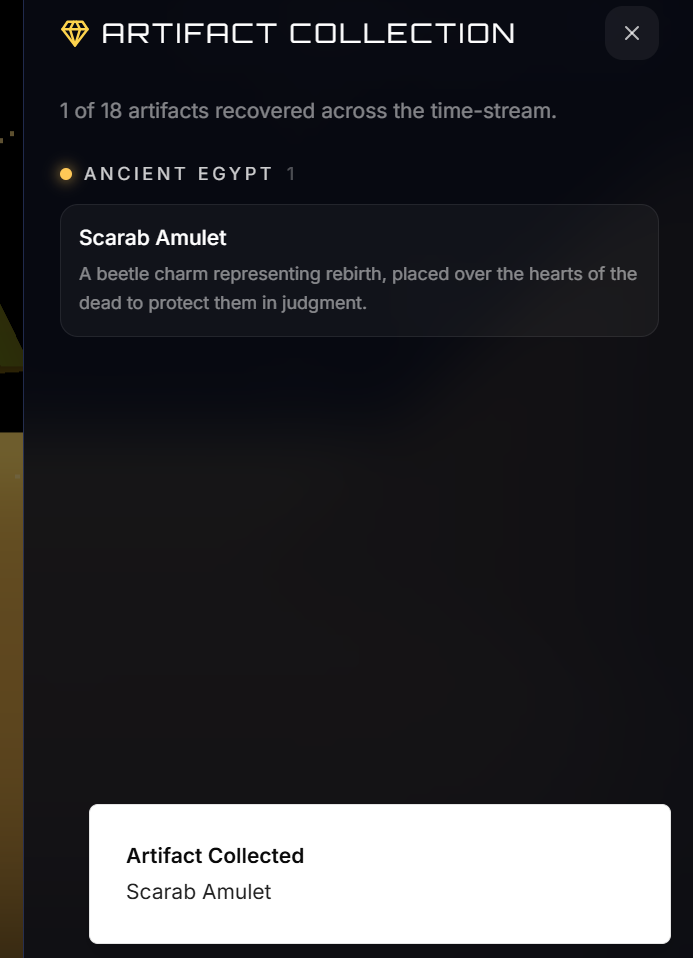
Artifact Collection - "Collect legendary artifacts across timelines to preserve the history of humanity."
ChronoVerse – The Time Portal
Inspiration
History is often taught through books and static websites, which can feel less engaging. We wanted to transform learning into an immersive experience where users don't just read about history—they explore it. Inspired by modern AAA games and virtual museums, we built ChronoVerse to make historical discovery interactive, cinematic, and AI-powered.
What it does
ChronoVerse is an AI-powered 3D time-travel experience that allows users to explore six historical and futuristic worlds through interactive portals. Users can walk around using WASD controls, interact with historical landmarks, solve puzzles, collect artifacts, chat with an AI guide, and experience dynamic environments with cinematic transitions, immersive sound, and visual effects.
How we built it
We developed ChronoVerse using React, Three.js, React Three Fiber, Drei, GSAP, Framer Motion, and Tailwind CSS. The 3D environments were built with optimized models, particle systems, bloom lighting, and post-processing effects. An LLM-powered AI guide provides contextual historical information, while modular components ensure scalability and responsiveness across devices.
Challenges we ran into
Building multiple interactive 3D environments while maintaining smooth performance was our biggest challenge. We optimized lighting, particle systems, textures, and animations to achieve a responsive experience. Integrating AI with immersive gameplay and creating seamless portal transitions also required careful planning and testing.
Accomplishments that we're proud of
- Built a fully immersive 3D historical exploration platform.
- Designed six unique interactive worlds with cinematic transitions.
- Integrated an AI guide for contextual learning.
- Added collectible artifacts, puzzles, dynamic effects, and responsive gameplay.
- Created a polished experience that feels more like a game than a traditional website.
What we learned
This project helped us gain hands-on experience with advanced 3D web development, performance optimization, animation systems, AI integration, and user-centered interactive design. We also learned how storytelling can make educational content far more engaging.
What's next for ChronoVerse Time Portal
Our future plans include multiplayer exploration, voice-based AI conversations with historical figures, adaptive weather and seasons, more historical eras, educational quizzes, VR support, and personalized learning paths. We aim to evolve ChronoVerse into a complete interactive digital museum that makes history accessible and engaging for everyone.


Log in or sign up for Devpost to join the conversation.