Inspiration
The inspiration behind ChronoTrace Intelligence Suite came from recognizing that modern financial crime is no longer limited to isolated suspicious transactions but operates through coordinated mule networks designed to obscure the flow of funds. At the same time, the emergence of quantum computing introduces long-term risks to today’s cryptographic systems through “Harvest Now, Decrypt Later” attacks. We wanted to build a platform that addresses both immediate operational fraud and future cryptographic vulnerabilities in a unified and intelligent manner.
What it does
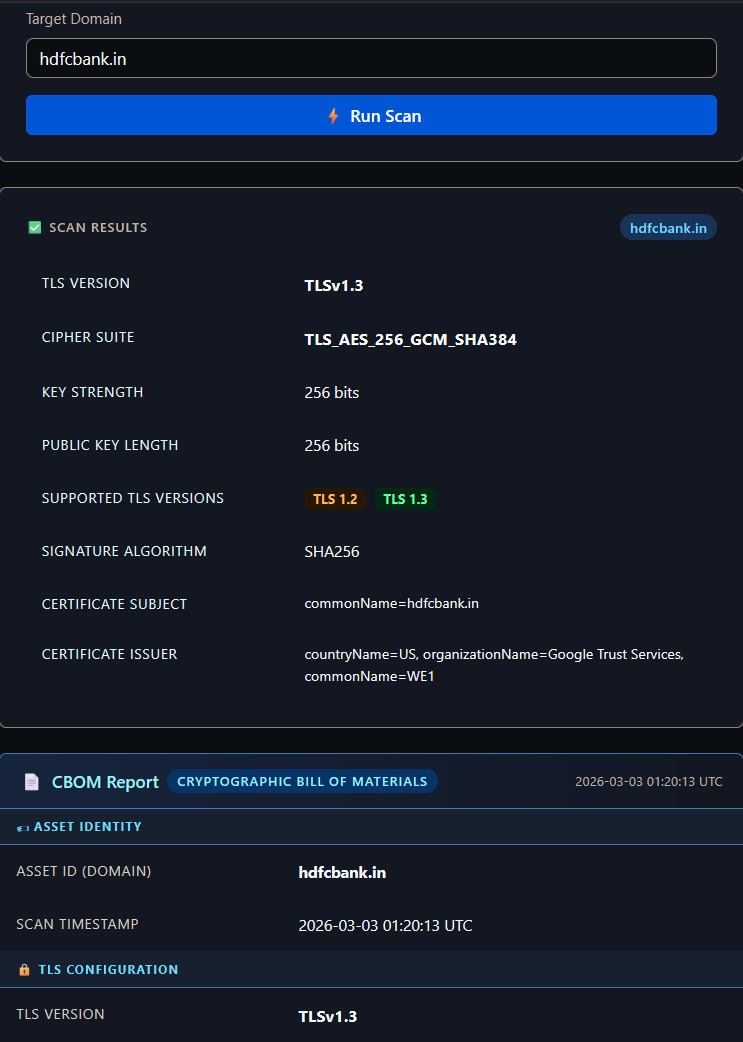
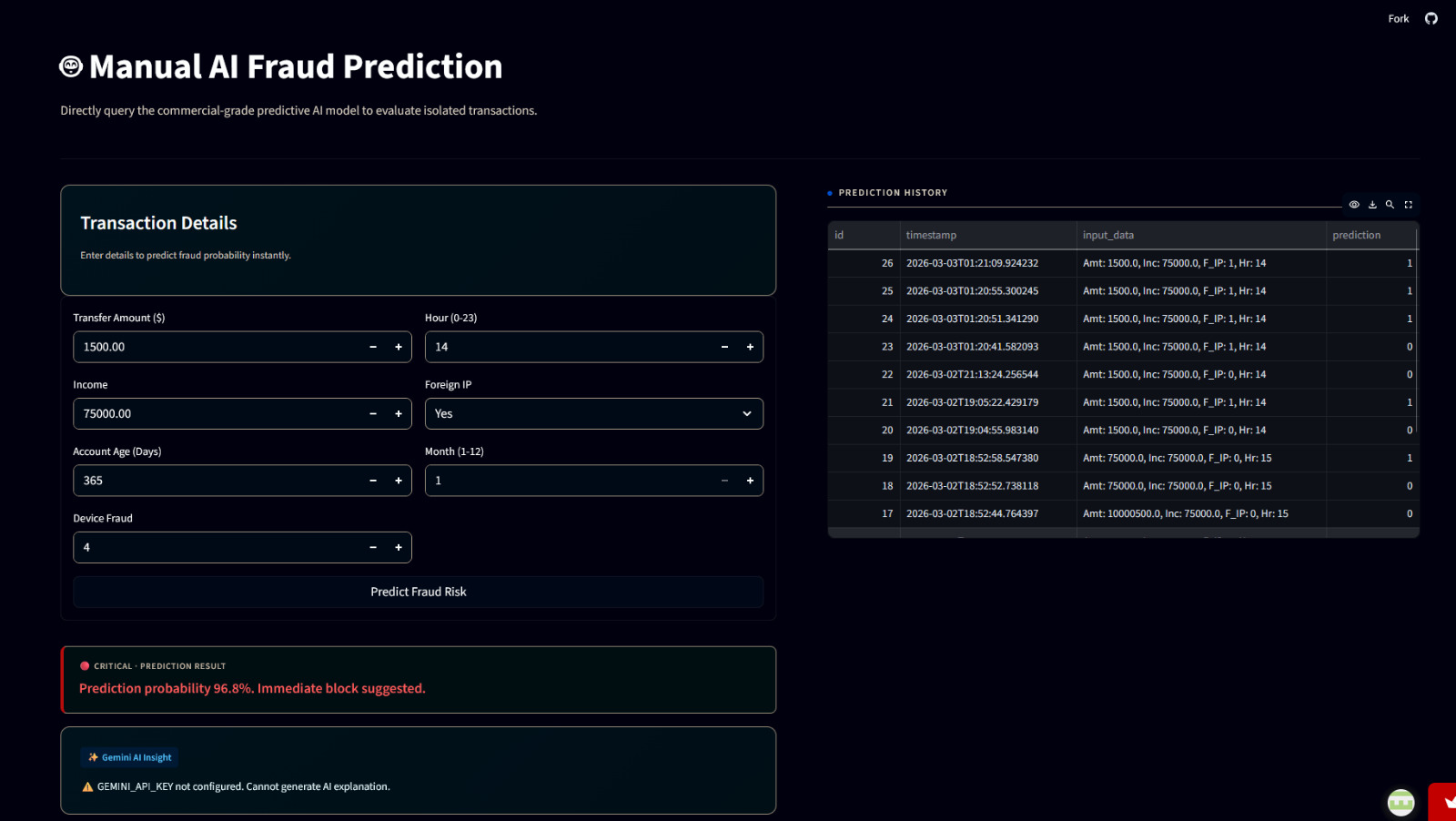
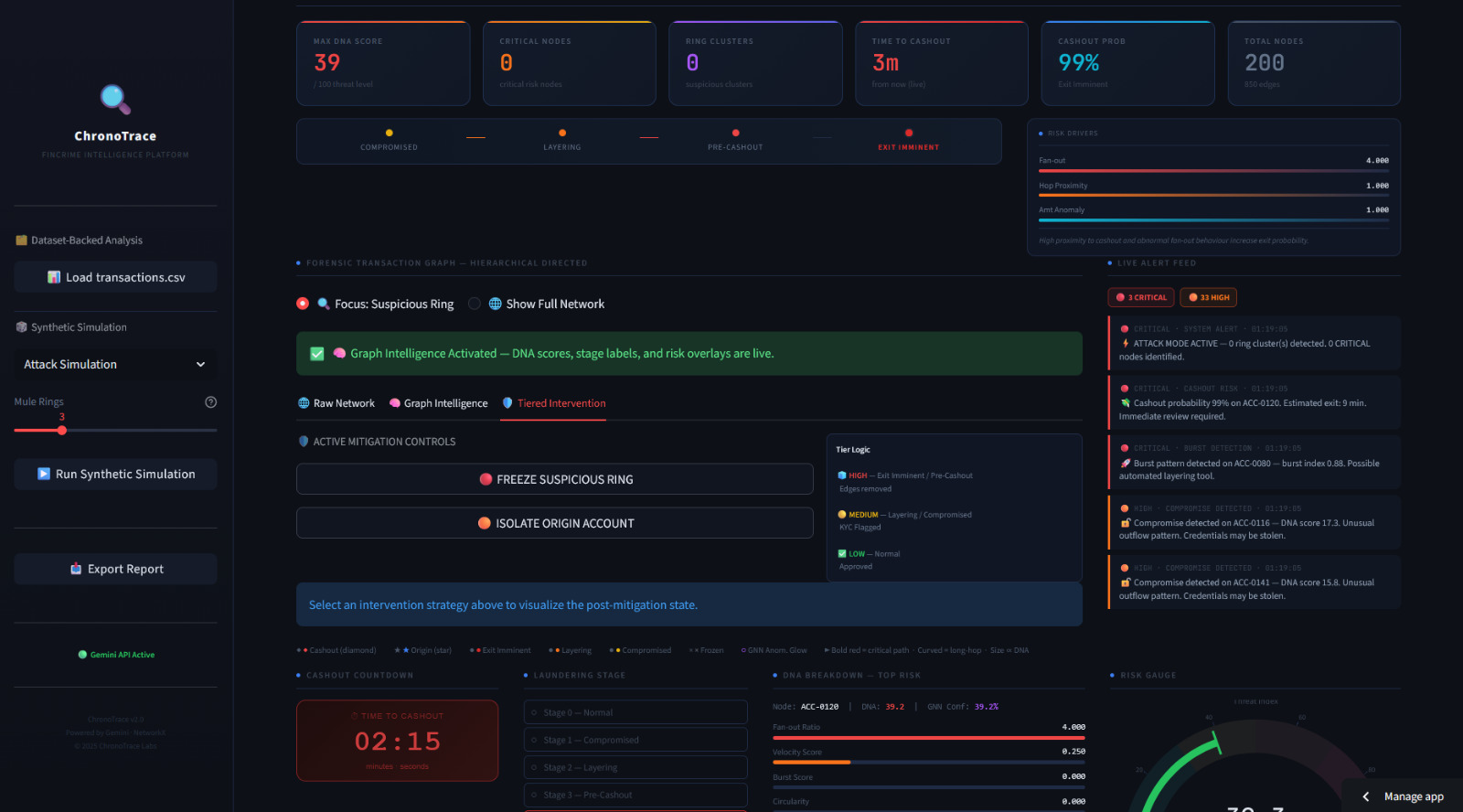
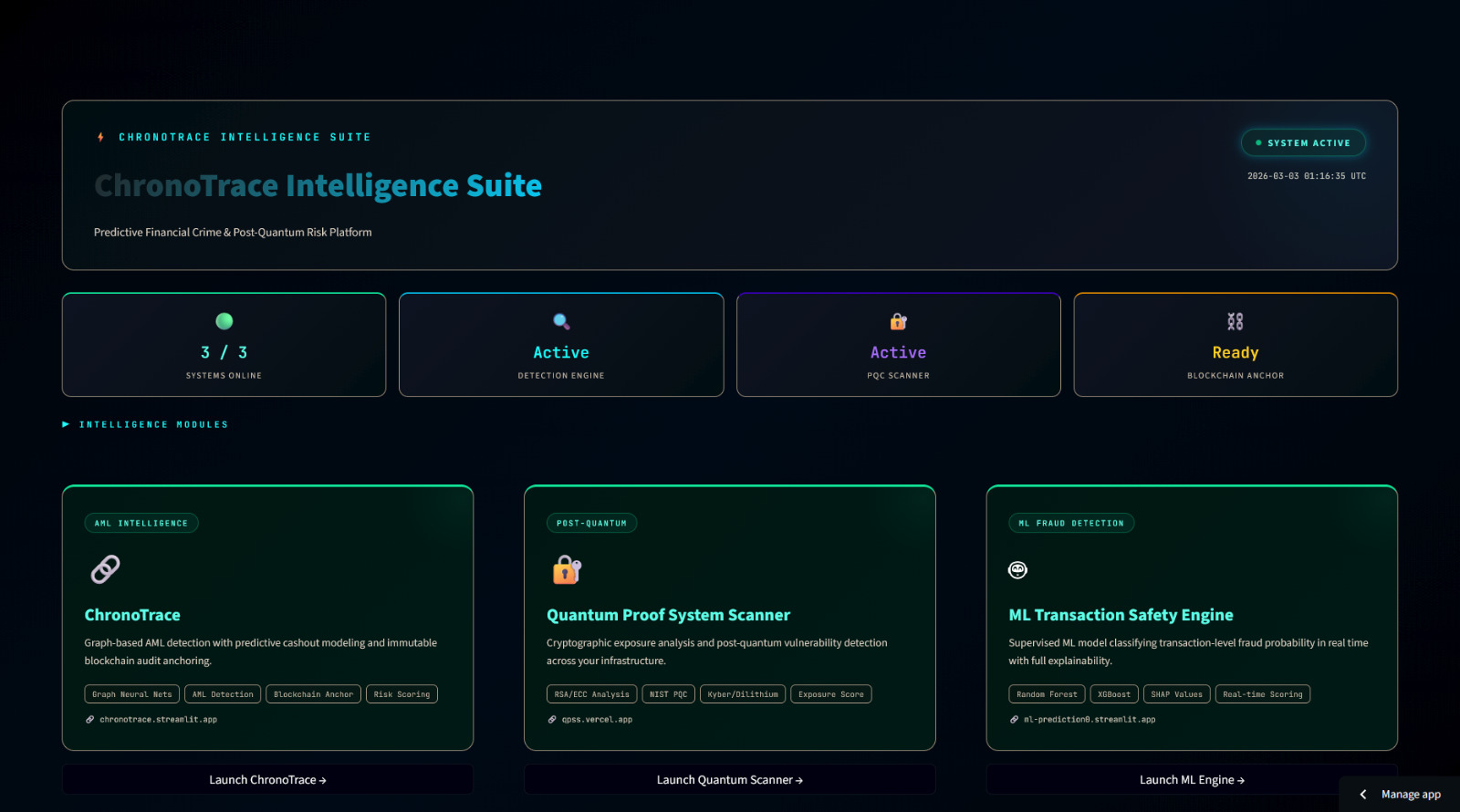
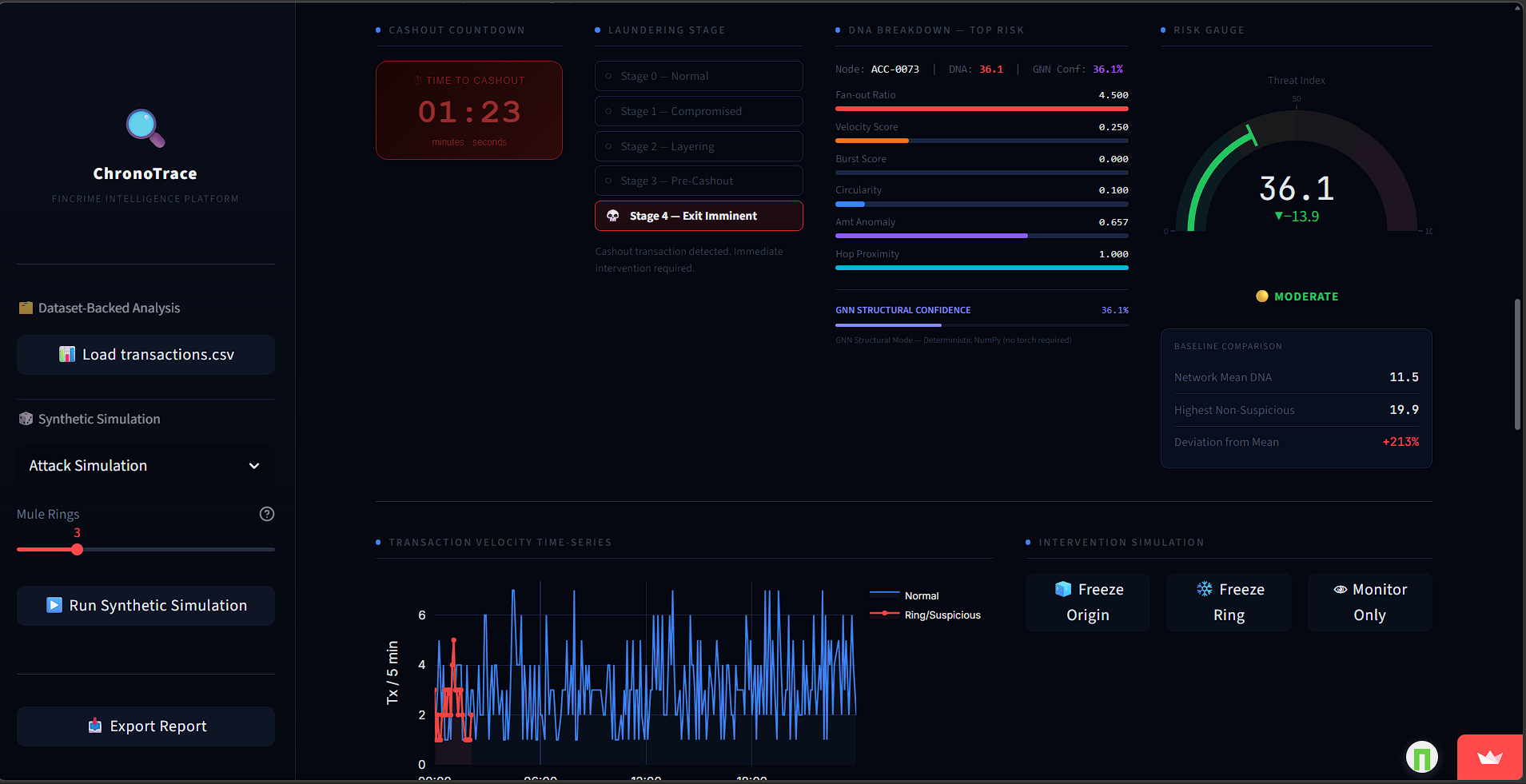
ChronoTrace is a financial security platform that models transaction flows as a graph to detect coordinated laundering activity rather than analyzing transactions individually. It computes a Mule Ring DNA score using structural metrics such as fan-out ratio, burst velocity, circularity, amount anomalies, and proximity to cashout nodes to identify high-risk accounts and predict laundering stage along with estimated time-to-cashout. A Graph Neural Network enhances this by learning complex structural patterns within the transaction network. The platform also includes an ML-based fraud predictor that evaluates manually entered account parameters to determine fraud probability, and a Quantum Proof System Scanner (QPSS) that assesses cryptographic configurations, generates a Cryptographic Bill of Materials, and classifies systems based on post-quantum readiness. High-severity alerts are hashed and anchored on blockchain to ensure immutable audit integrity.
How we built it
We developed ChronoTrace using Python and Streamlit for deployment. Transaction graphs were modeled using NetworkX, and custom structural metrics were engineered to compute Mule Ring DNA scores. A lightweight Graph Neural Network was integrated using PyTorch Geometric to enhance structural anomaly detection. The ML fraud predictor was implemented using supervised learning techniques, while the QPSS module analyzes cryptographic configurations to assess quantum vulnerability. Blockchain anchoring was implemented using Web3 integration to store hashed alerts on Ethereum testnet, ensuring tamper-proof audit records. The entire system was built modularly to maintain stability and scalability.
Challenges we ran into
One of the main challenges was ensuring that the graph visualization dynamically reflected changes in data and intervention logic without appearing hardcoded. Integrating a Graph Neural Network in a lightweight Streamlit environment required careful performance optimization and caching to avoid runtime instability. Designing tiered intervention logic that recalculated risk and visibly altered the network structure also required multiple refinements. Additionally, ensuring blockchain anchoring worked reliably with fallback mechanisms for deployment environments added complexity.
Accomplishments that we're proud of
We are proud of successfully combining deterministic graph-based intelligence with a learning-based GNN model within a single cohesive system. Implementing real-time tiered intervention that visibly changes network structure and projected risk was a significant achievement. We also integrated a quantum-readiness assessment module alongside AML intelligence, bridging present and future security risks, and implemented blockchain-based immutable audit anchoring to strengthen compliance integrity.
What we learned
Through this project, we learned that financial crime detection is fundamentally a structural problem best addressed through graph modeling rather than isolated transaction analysis. We gained experience integrating rule-based analytics with machine learning models, managing performance constraints in real-time systems, and combining multiple advanced technologies into a stable and explainable platform. We also realized the importance of clear visualization in communicating complex intelligence effectively.
What's next for ChronoTrace Intelligence Suite
Moving forward, we aim to train the GNN on larger and more realistic datasets to improve predictive accuracy, integrate real-time transaction streaming, expand the QPSS module for live TLS scanning of internet-facing systems, and automate regulatory reporting workflows. Our long-term vision is to evolve ChronoTrace into a scalable enterprise-grade financial threat control platform that protects institutions from both operational fraud and emerging cryptographic risks.
Built With
- cbom-generation-module
- custom-tls/algorithm-classification-logic
- ethereum-sepolia-testnet
- gemini-api(for-explainable-aml-intelligence-and-reporting)
- graph-neural-network(gnn)
- hashlib(sha-256-hashing-for-alert-anchoring)
- networkx(transaction-graph-construction-and-structural-metrics)
- numpy
- pandas
- python
- python-cryptographic-libraries
- pytorch
- pytorch-geometric(gcn-based-structural-learning)
- rpc-provider(alchemy/infura)
- scikit-learn(fraud-prediction-model)
- streamlit(for-ui-and-cloud-hosting)
- streamlitcloud(for-deployment)
- web3.py


Log in or sign up for Devpost to join the conversation.