-
-
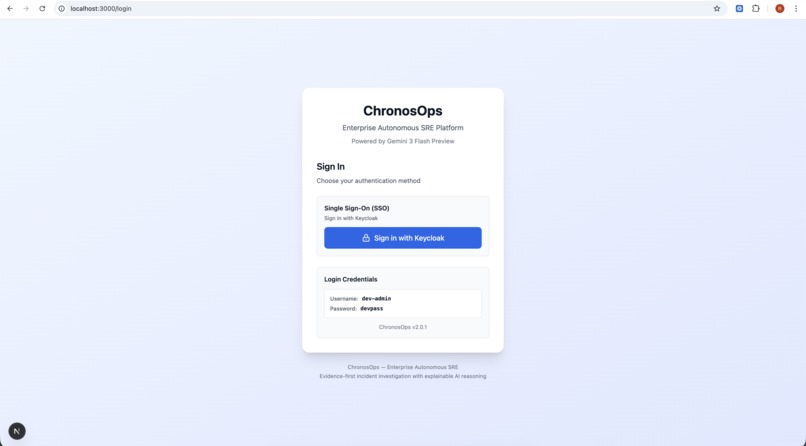
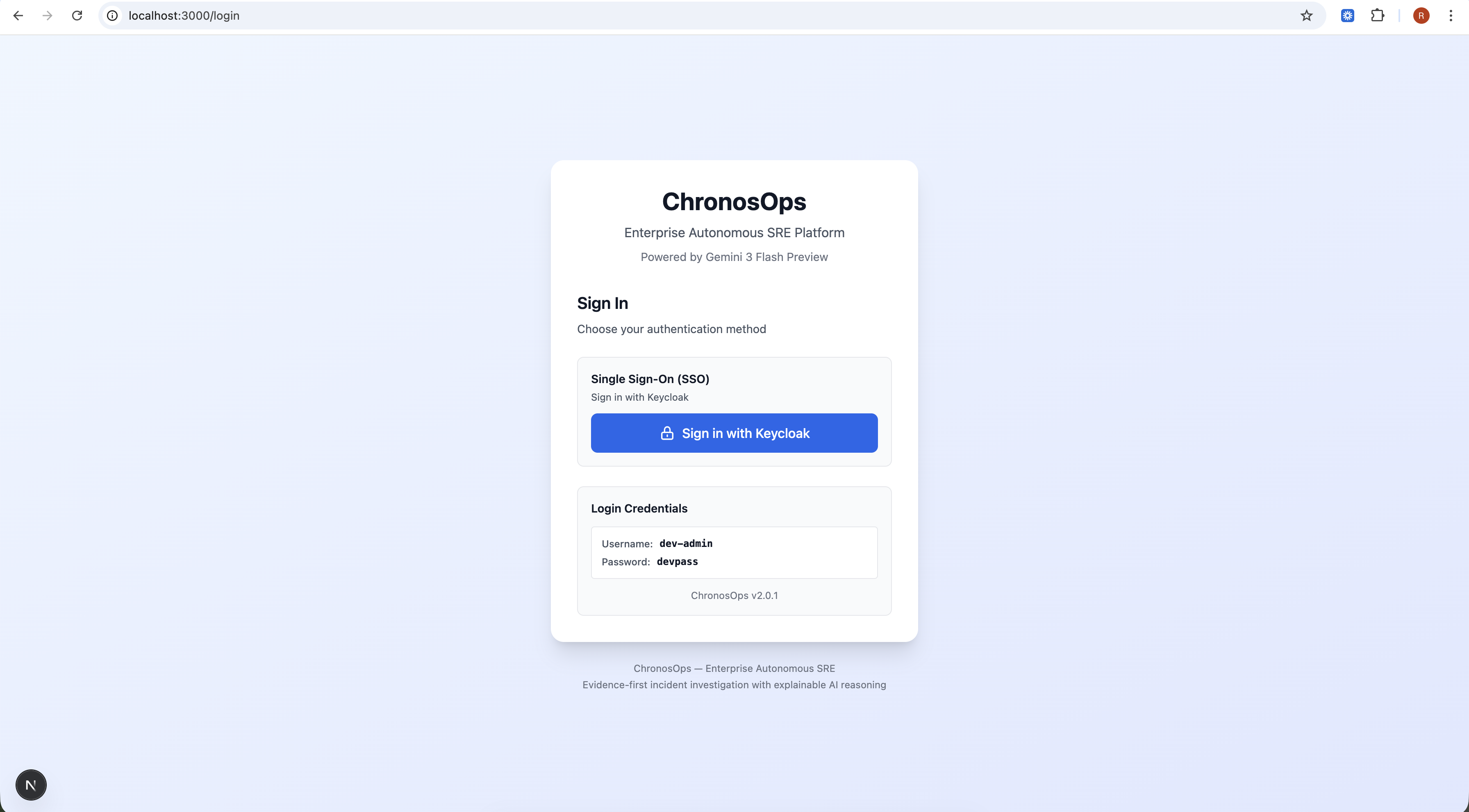
Enterprise-grade authentication with SSO & credentials. ChronosOps v2.0.1 powered by Gemini 3 Flash Preview. Production-ready SRE platform
-
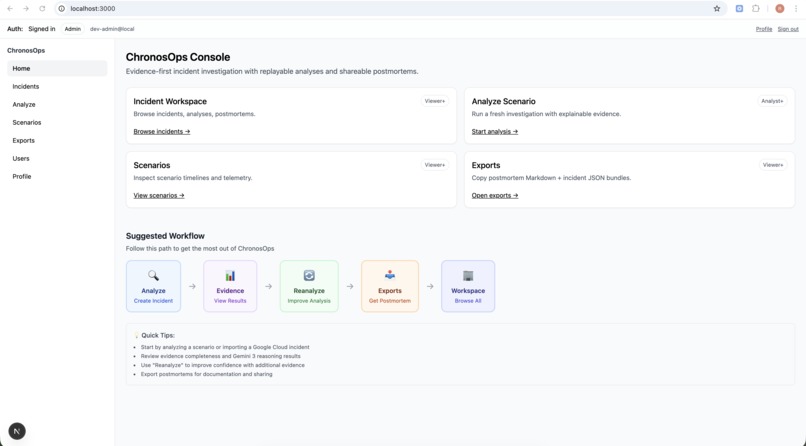
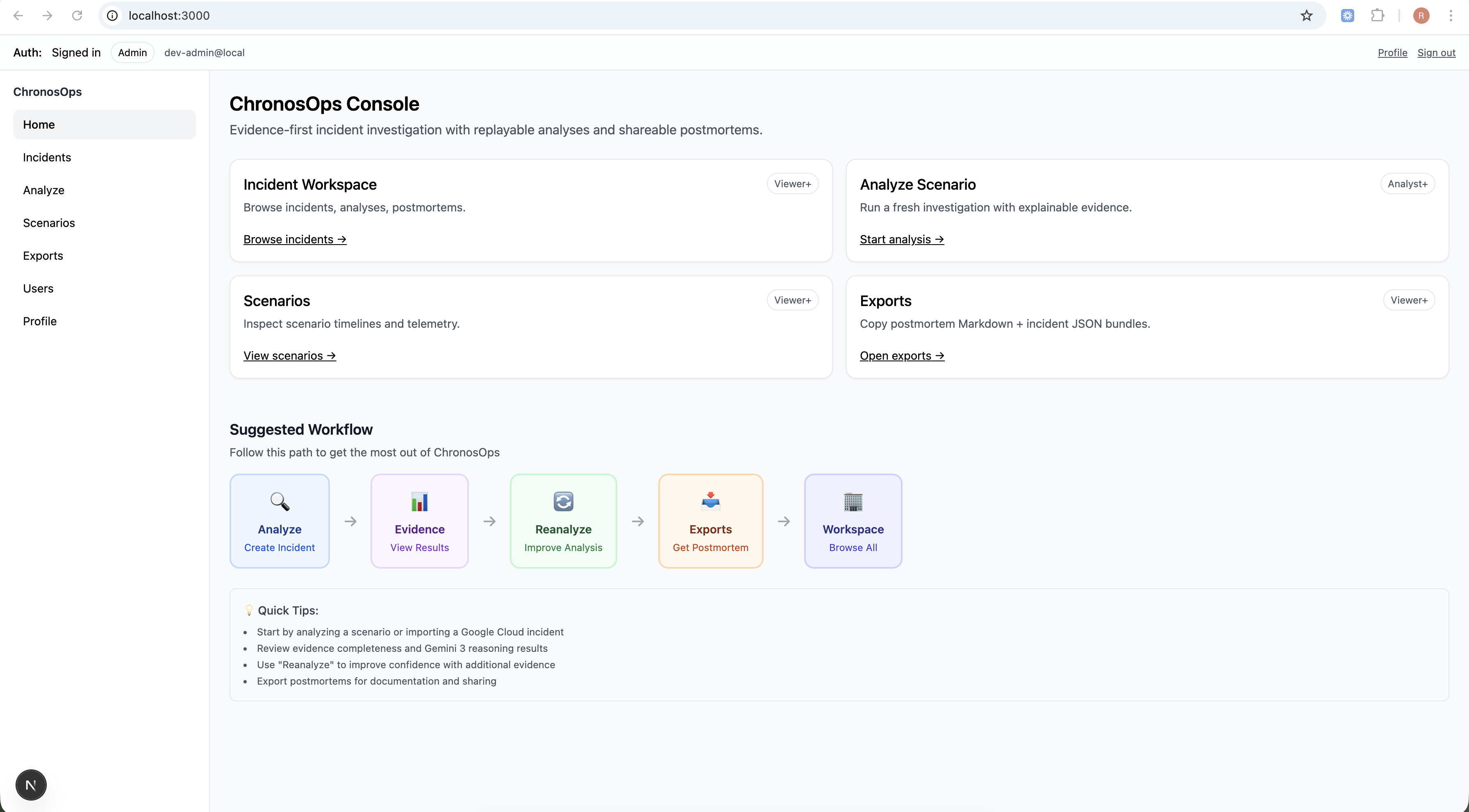
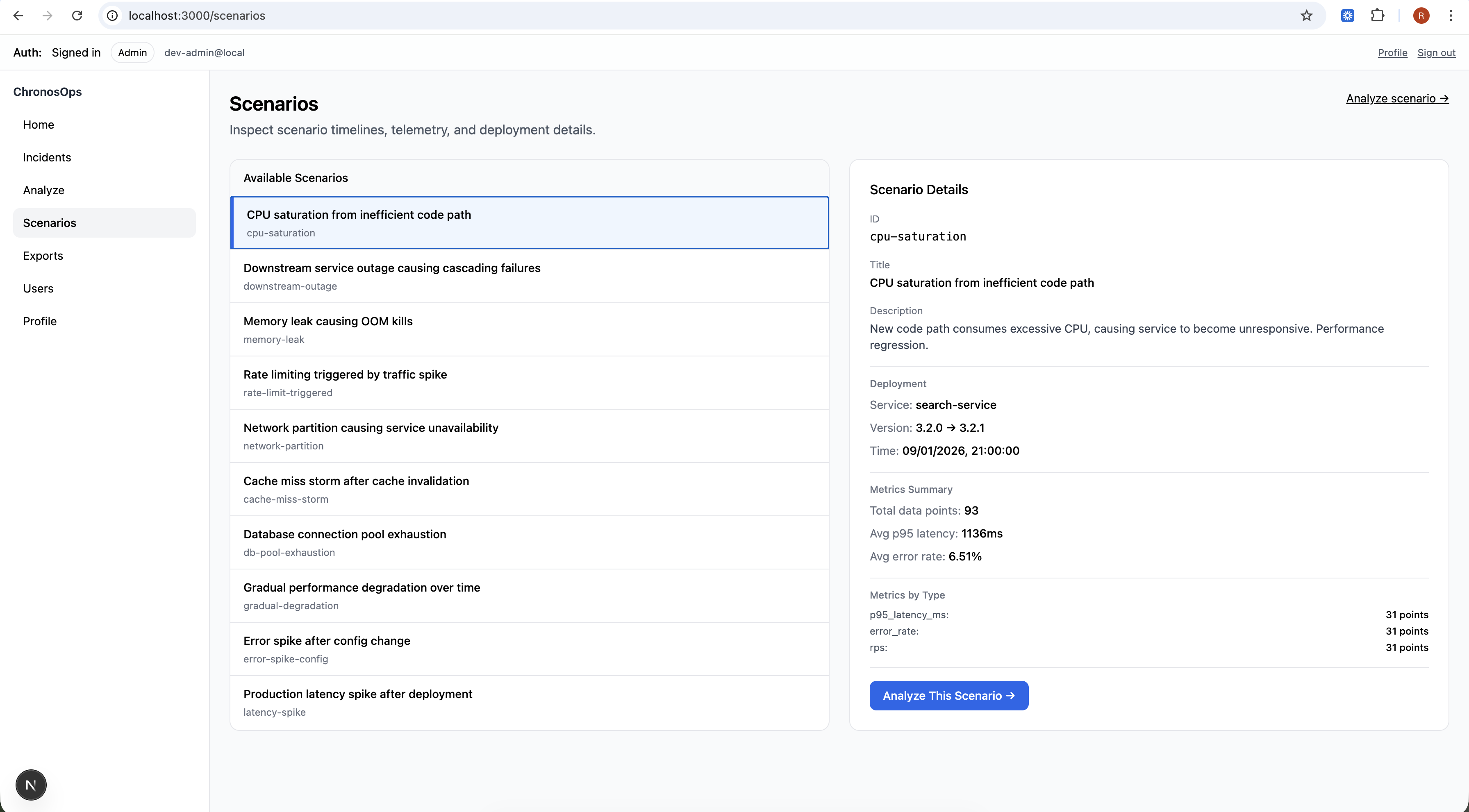
Intuitive workflow: Create → Analyze → Investigate → Export. Visual path guides SREs through autonomous incident investigation powered by AI
-
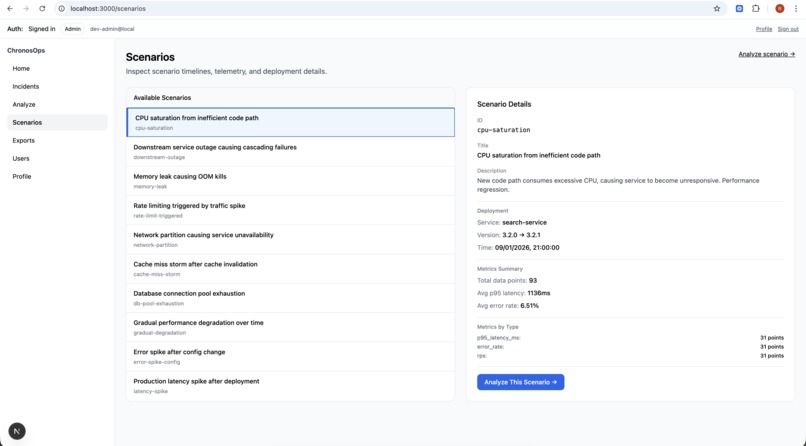
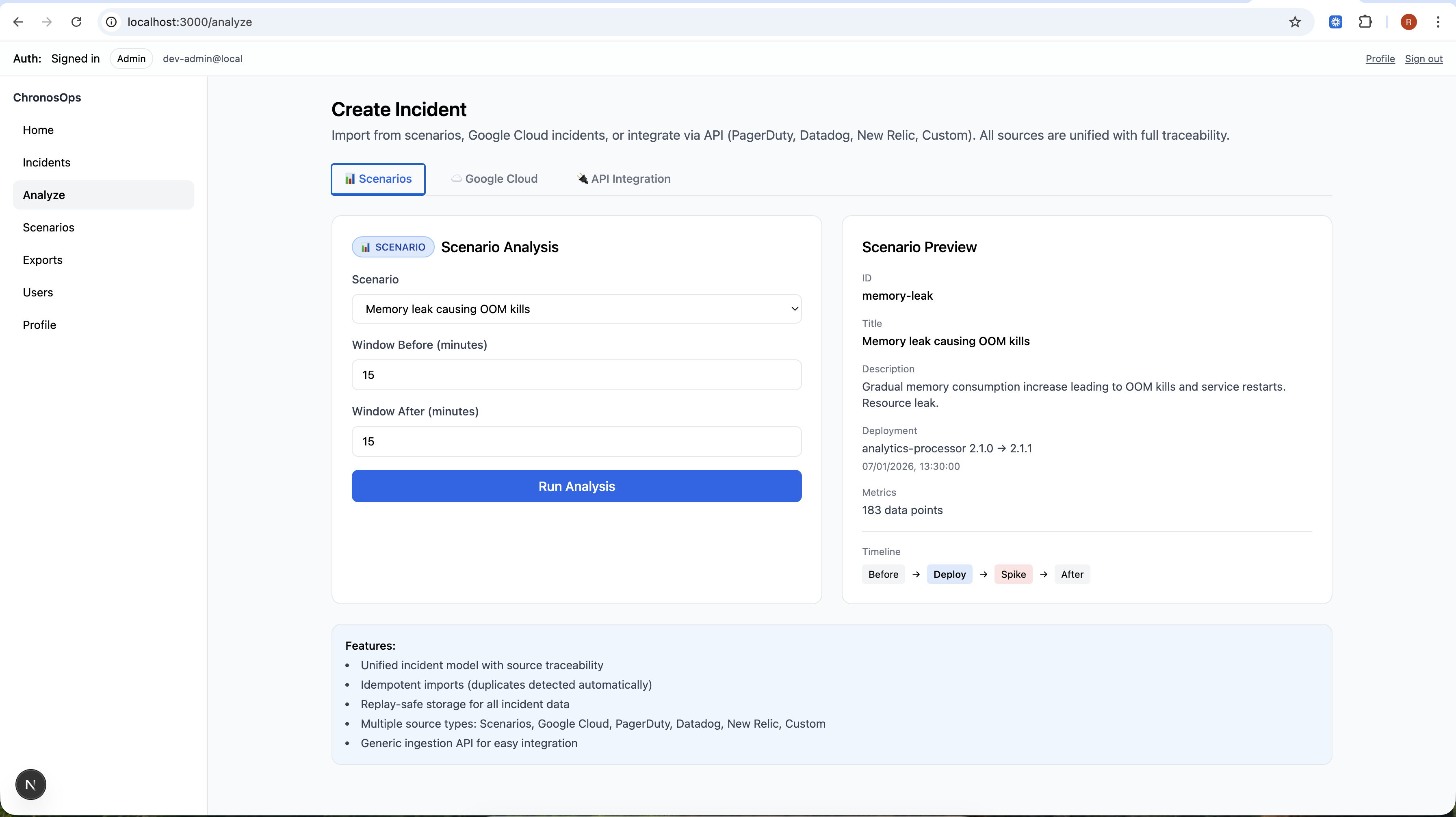
Pre-built test scenarios (latency-spike, error-spike-config) for realistic incident demos. One-click scenario selection for instant analysis
-
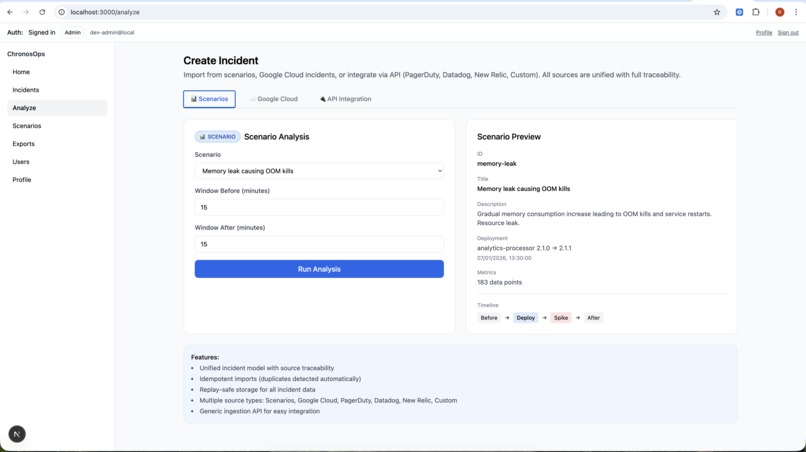
Multi-source ingestion: Scenarios, GC Status, or API integration. Timeline preview with deployment markers.One-click incident creation
-
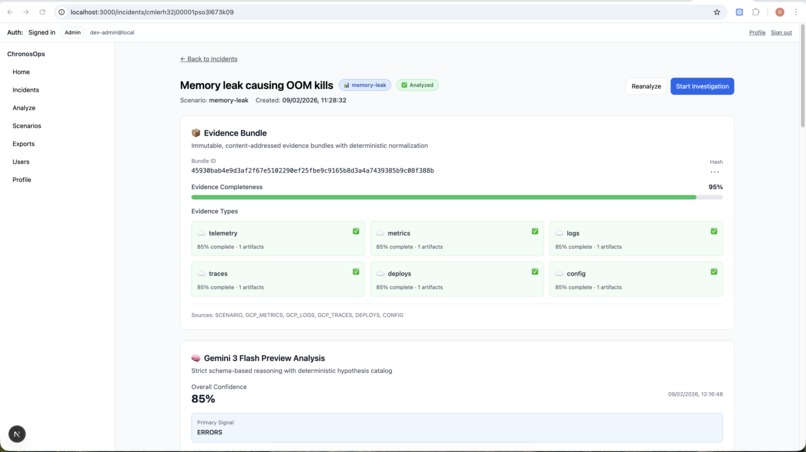
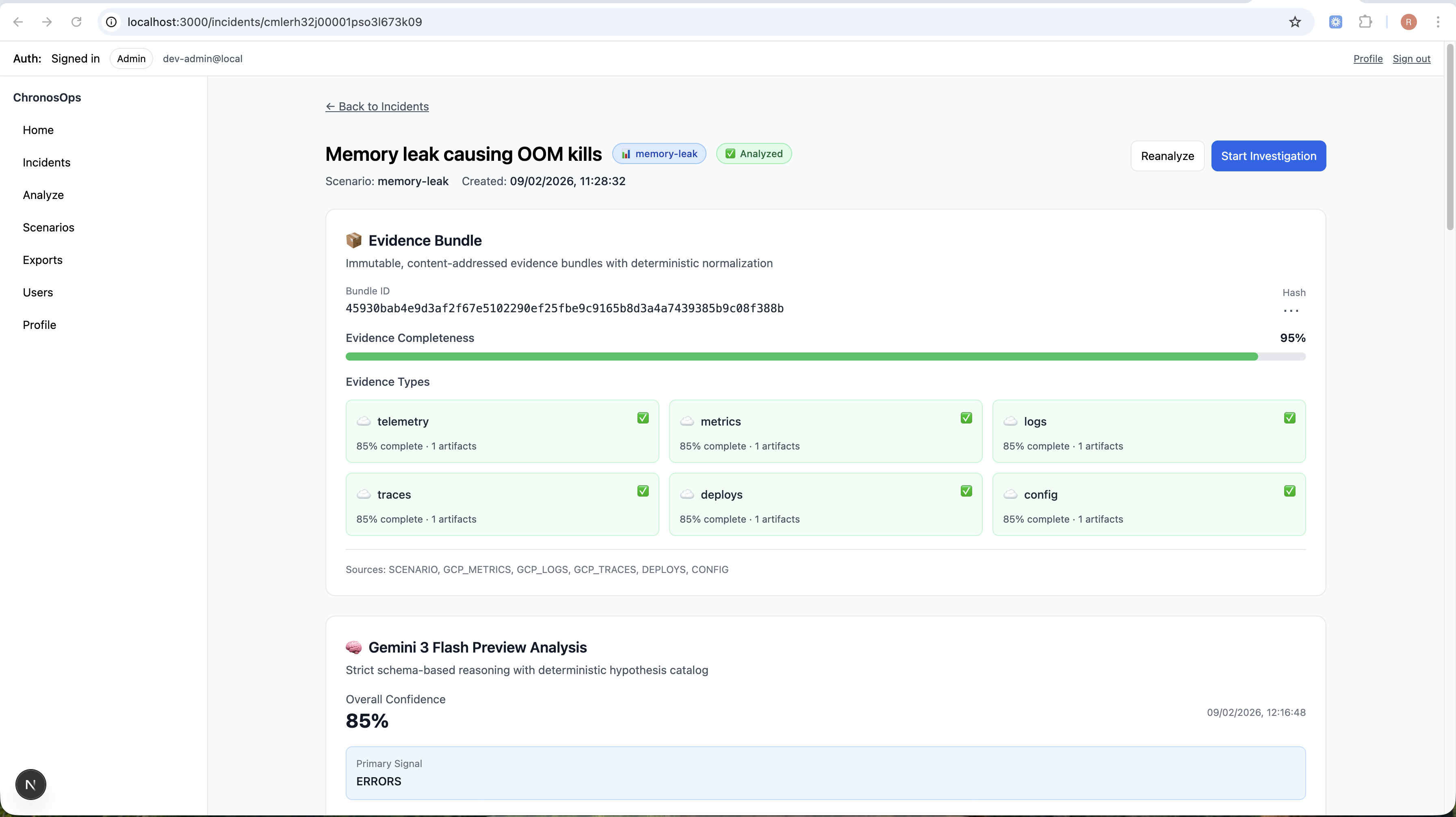
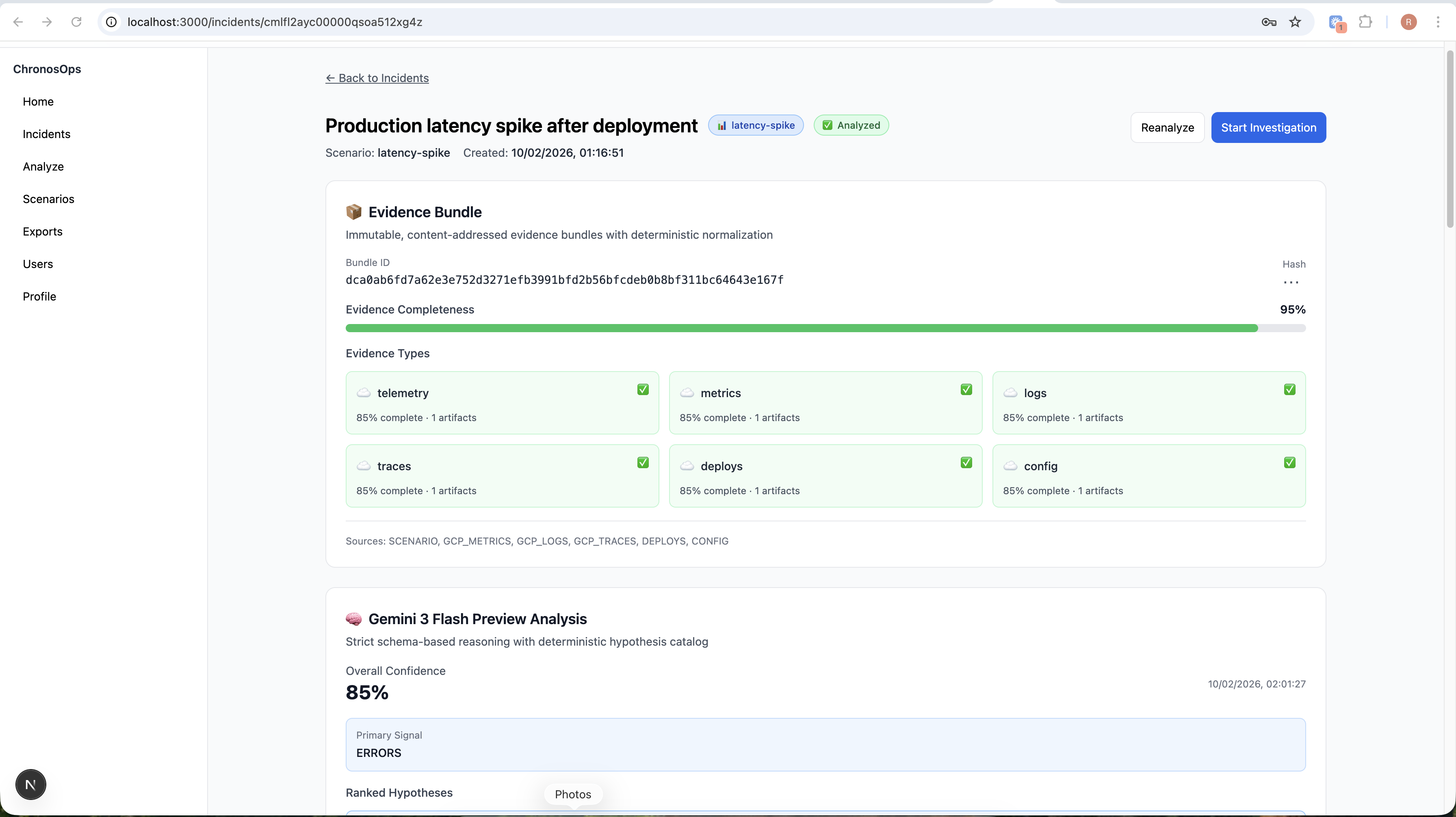
Evidence Bundle: Metrics, Logs, Traces, Deploys, Config. Content-addressed storage with hash verification.
-
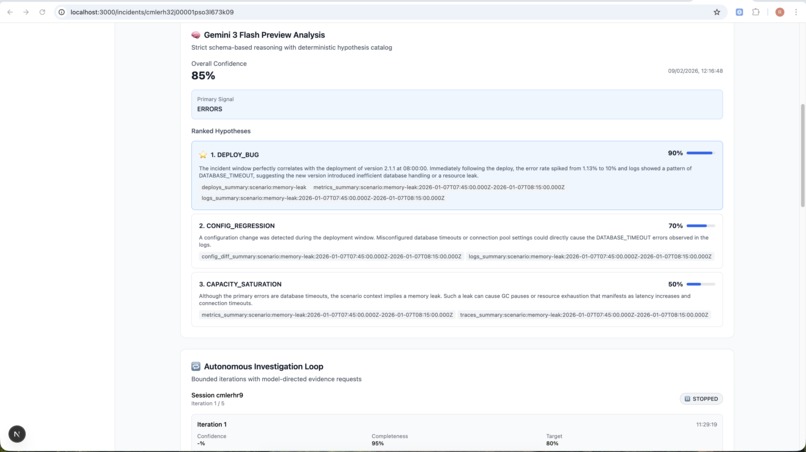
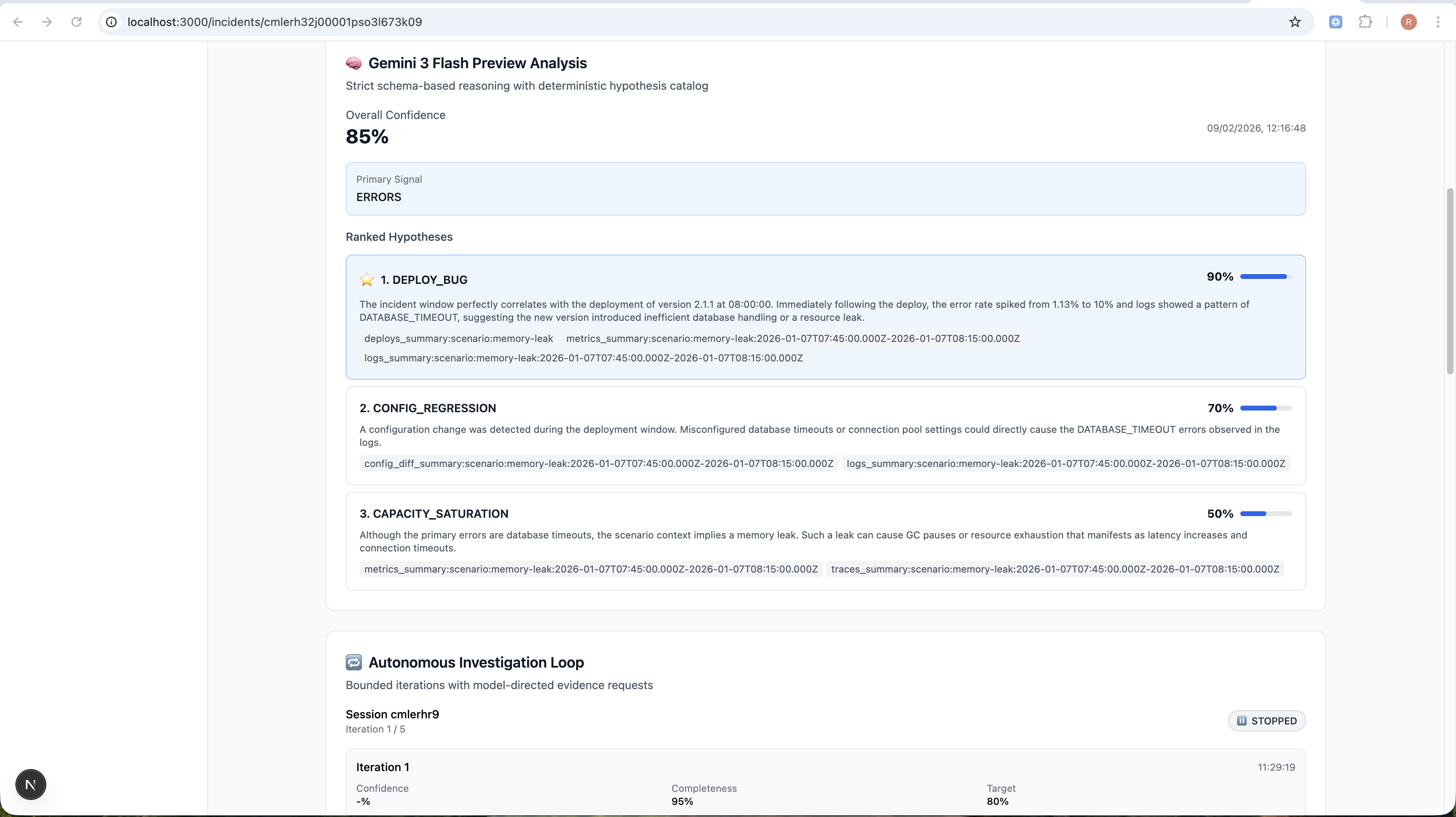
Gemini 3 Flash Preview ranks root-cause hypotheses with confidence scores. Explainable rationale + evidence refs. 85% confidence achieved.
-
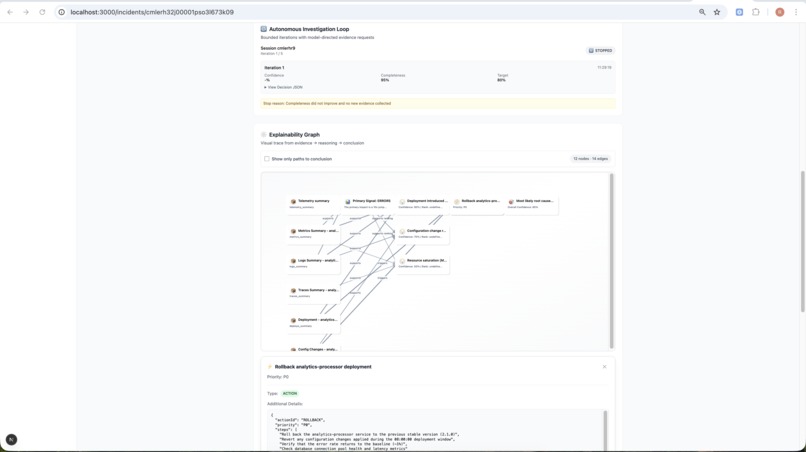
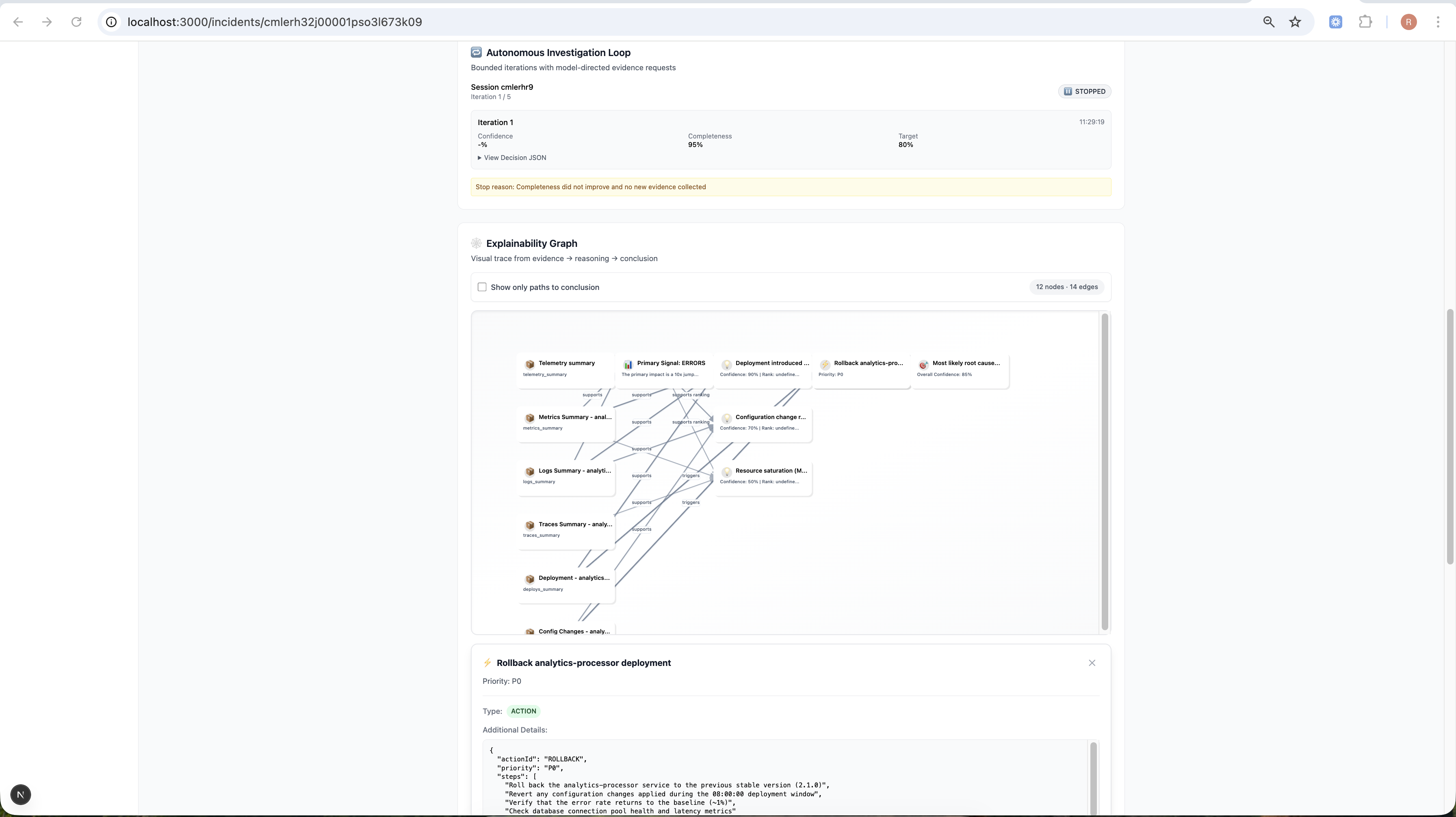
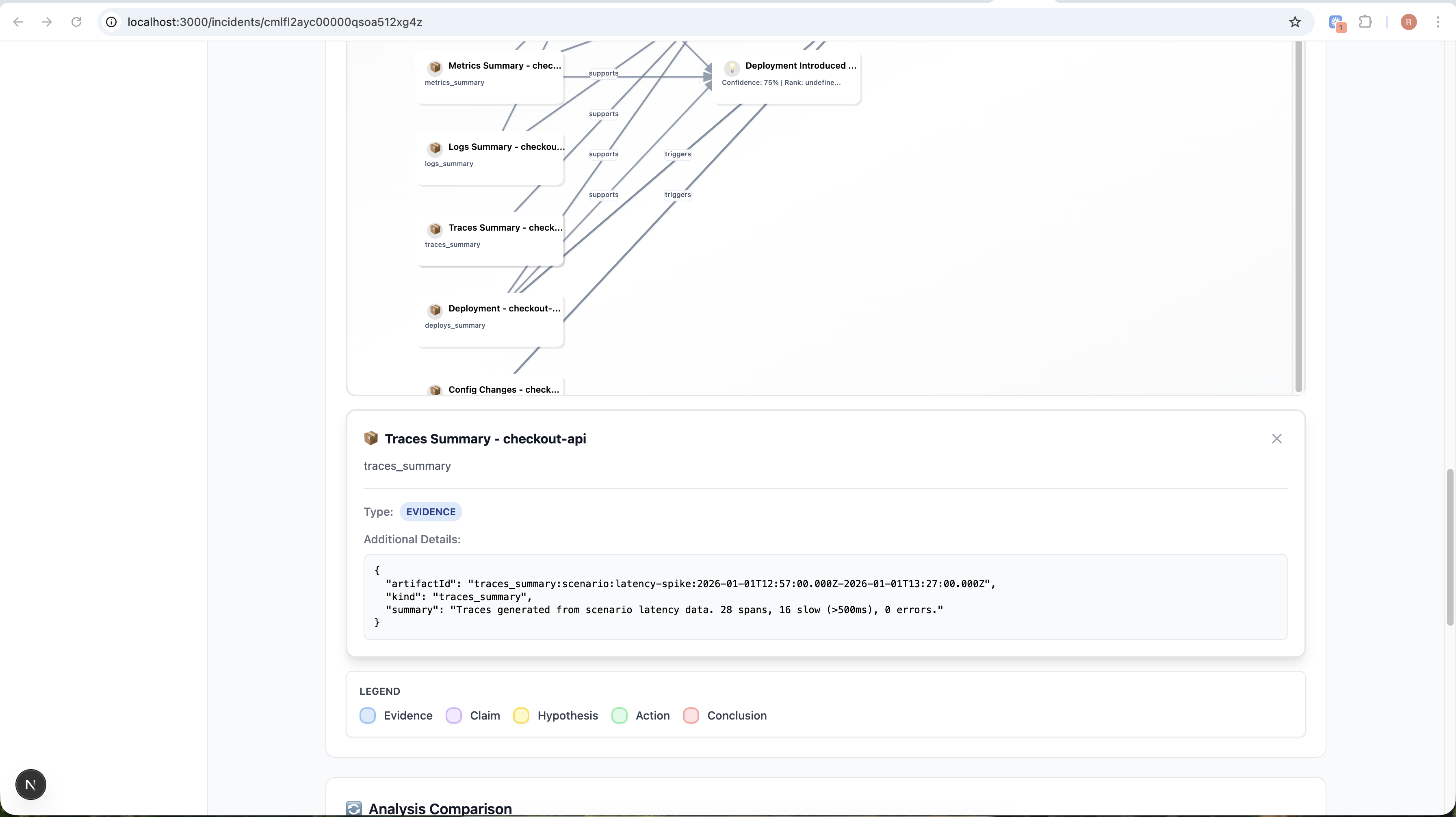
Visual explainability graph: Evidence → Reasoning → Conclusions. Interactive traceability showing how AI reached each hypothesis
-
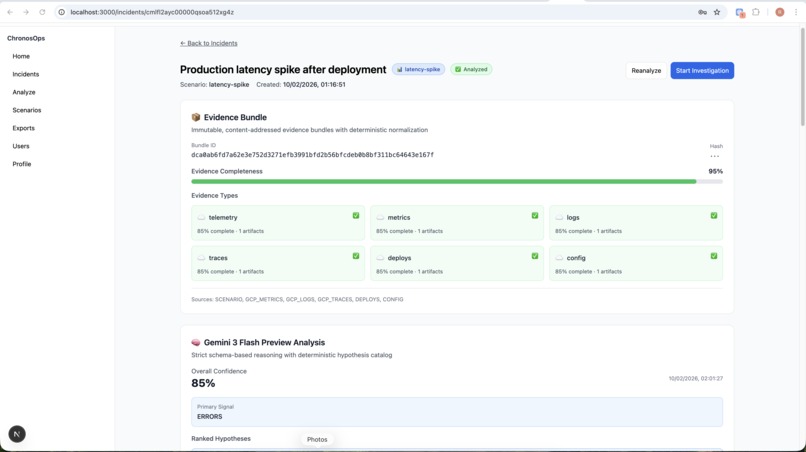
85% evidence completeness: Metrics ✓, Logs ✓, Traces ✓, Deploys ✓, Config ✓. Comprehensive telemetry collection for accurate analysis
-
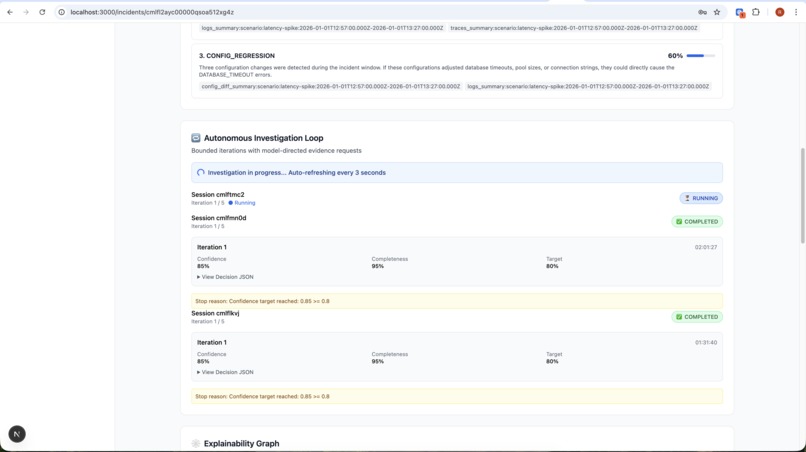
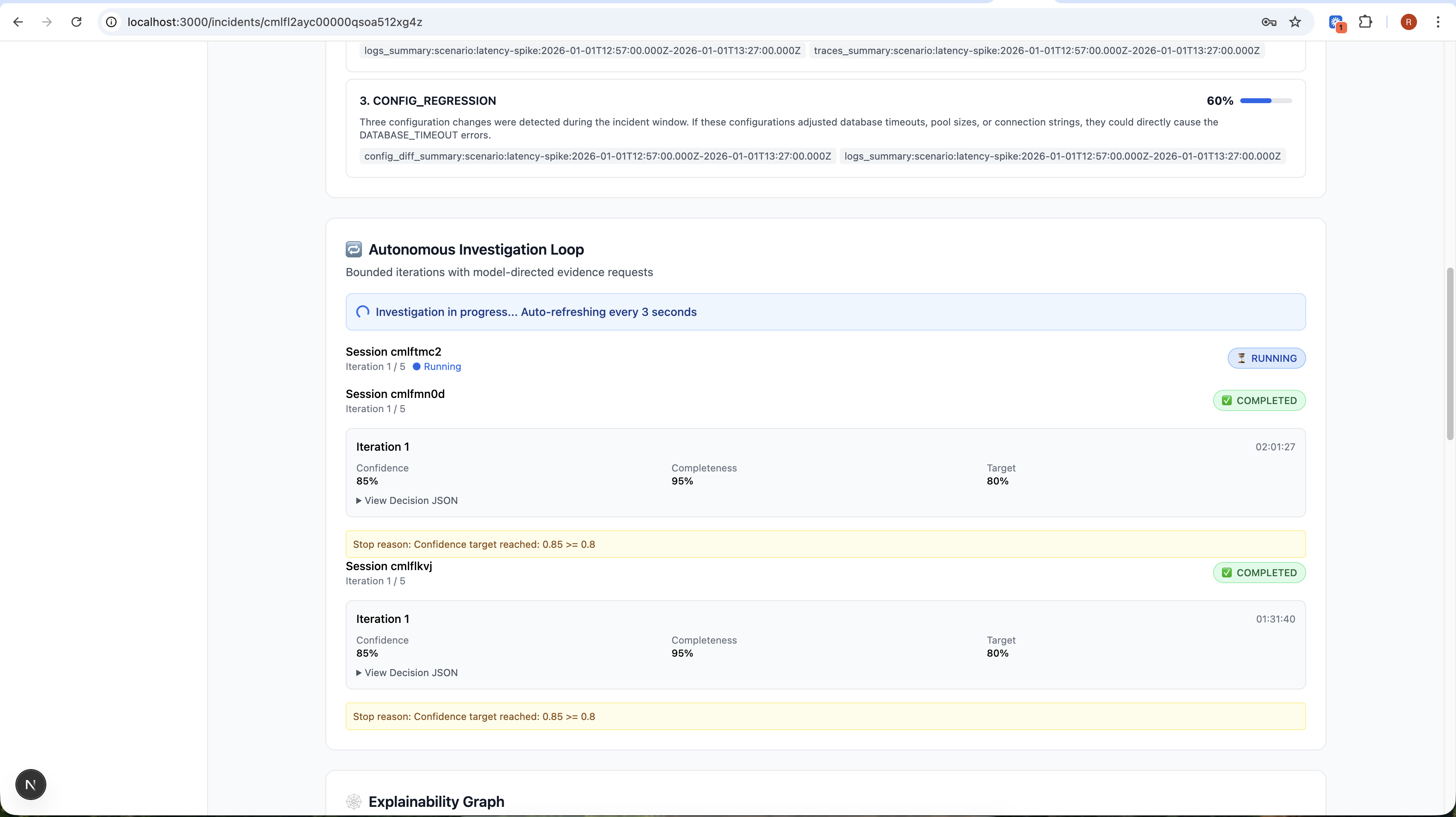
Autonomous investigation loop: Gemini 3 requests evidence → collects → reanalyzes. Confidence: 0.65 → 0.82 → 0.91. AI-driven iteration
-
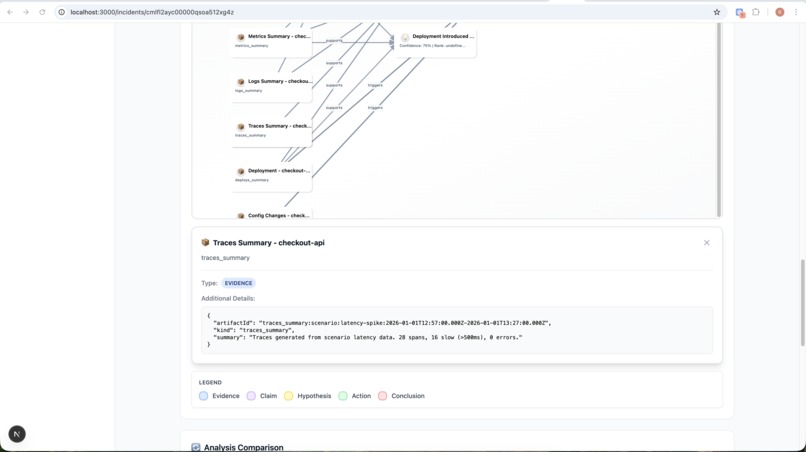
Model-directed collection: Gemini 3 autonomously requests METRICS & TRACES. Evidence gathered→confidence improved. Full decision audit trail
-
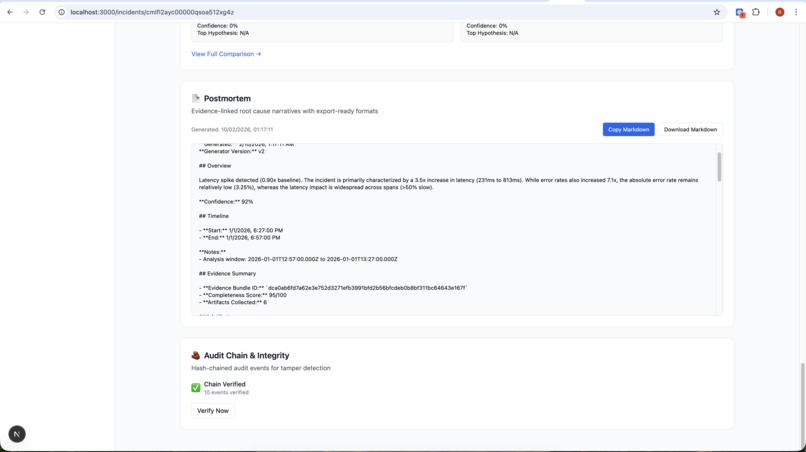
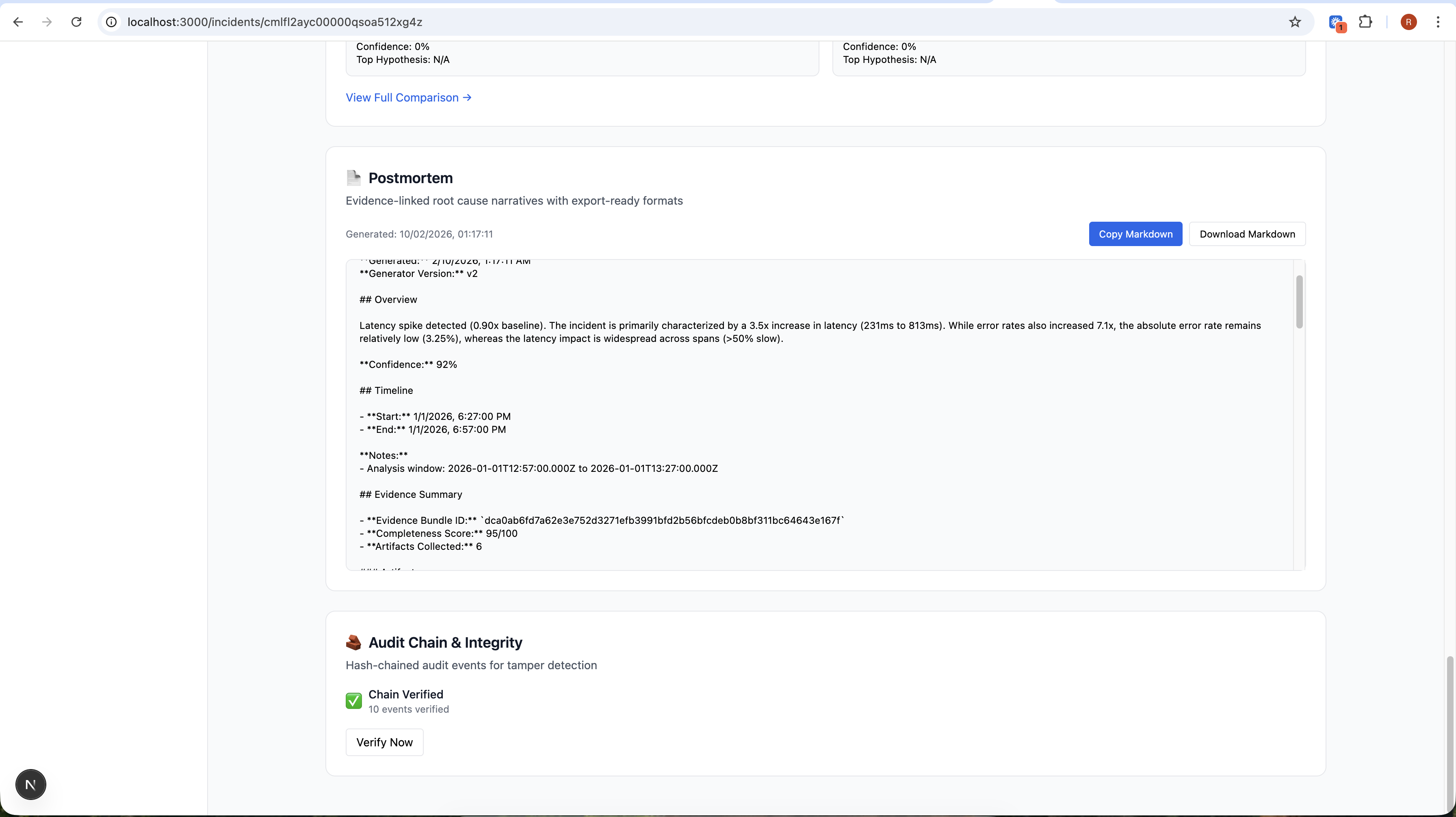
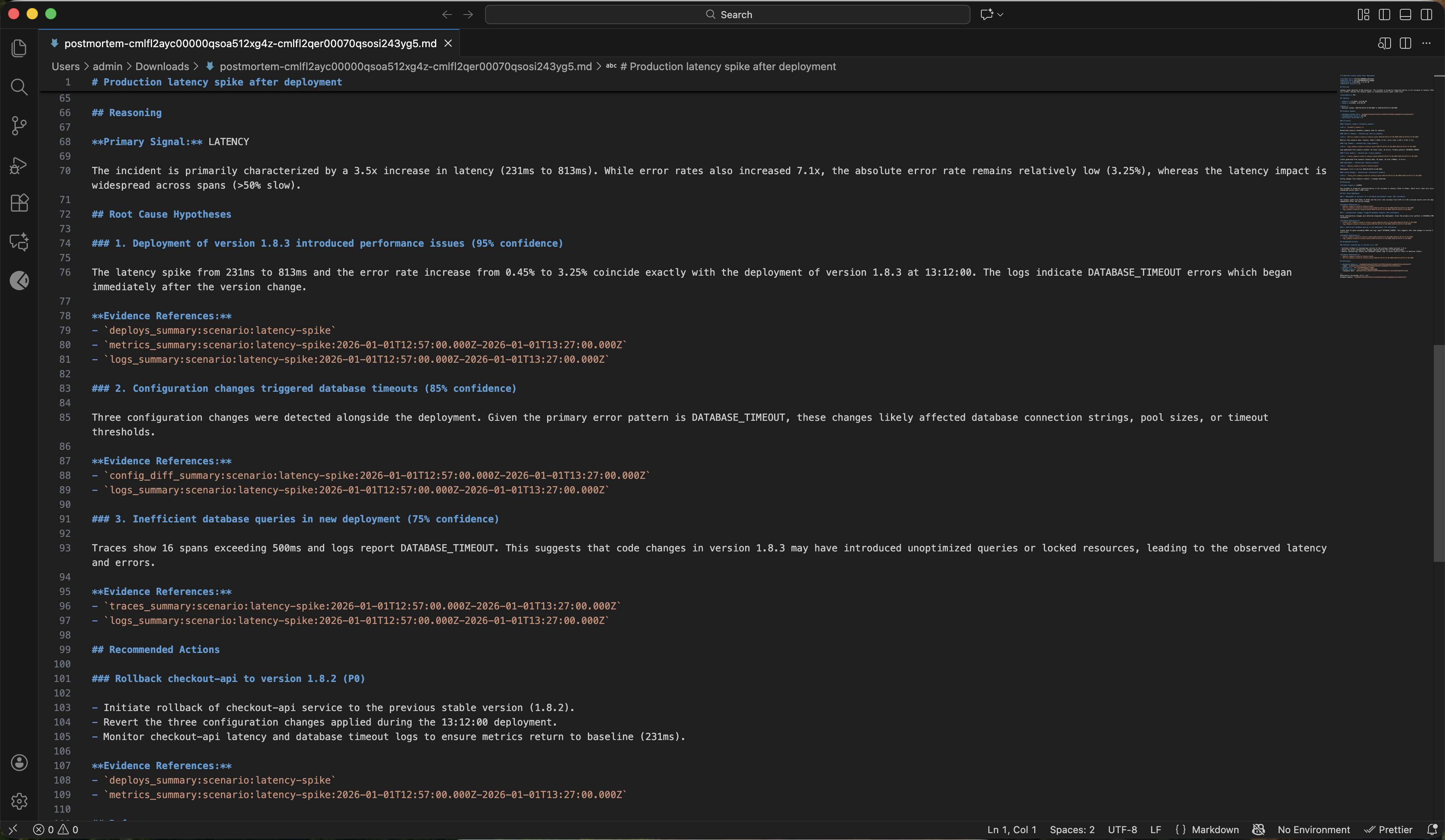
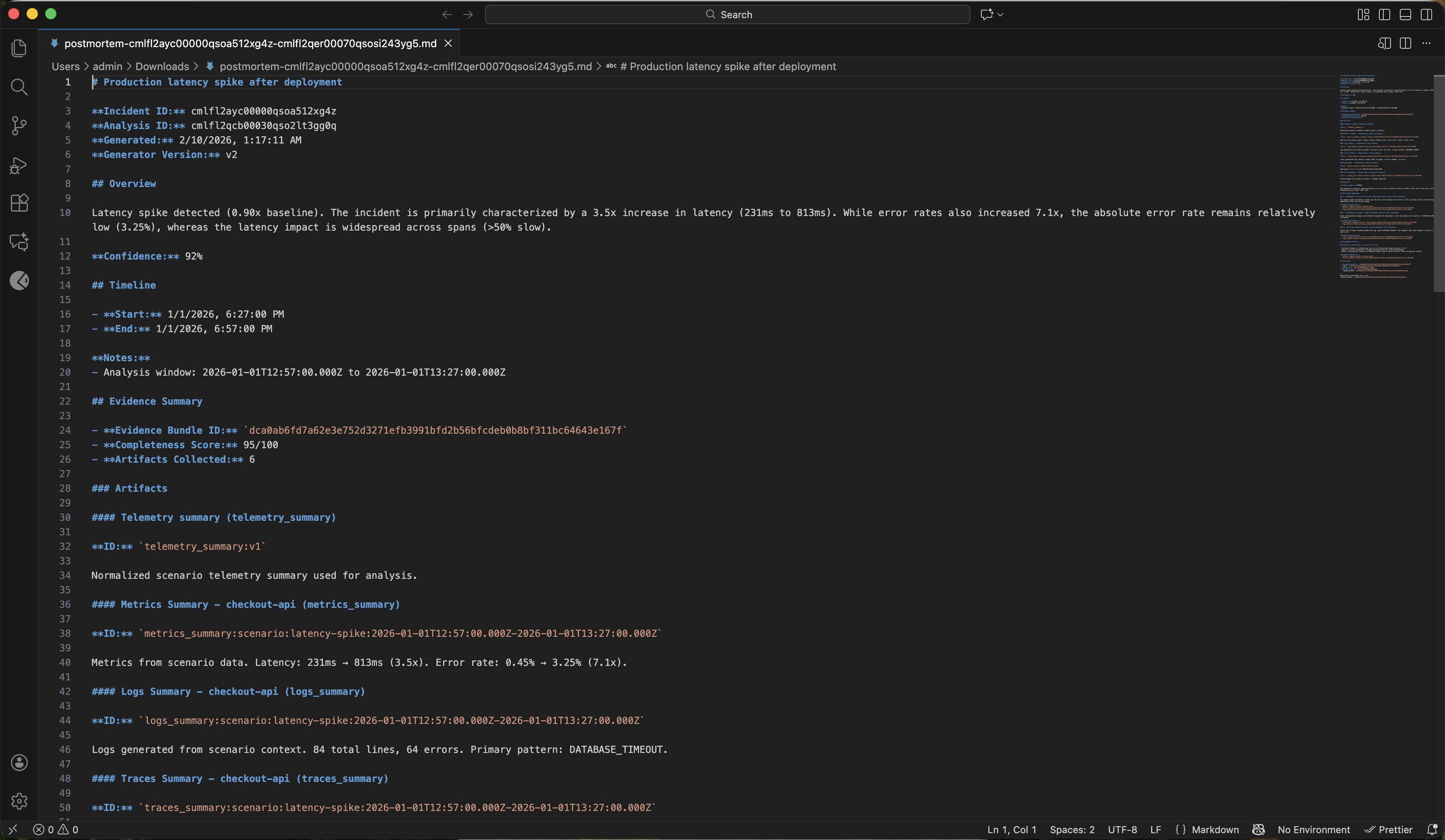
Automated postmortem generation: Executive summary, root cause, ranked hypotheses, actions, evidence refs. One-click Markdown export
-
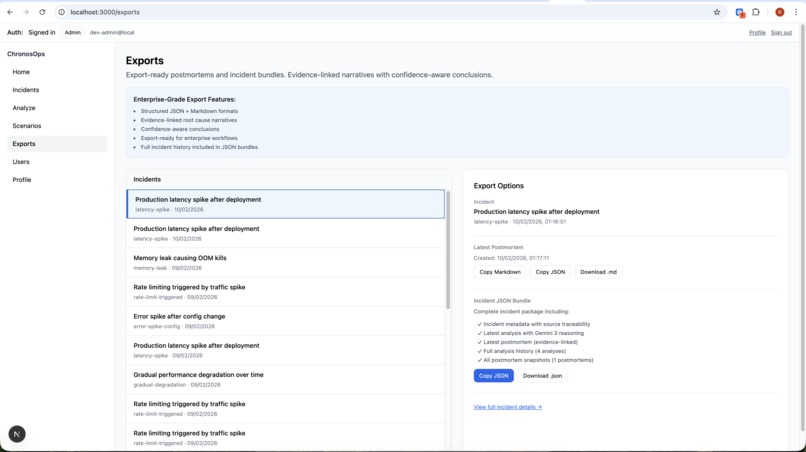
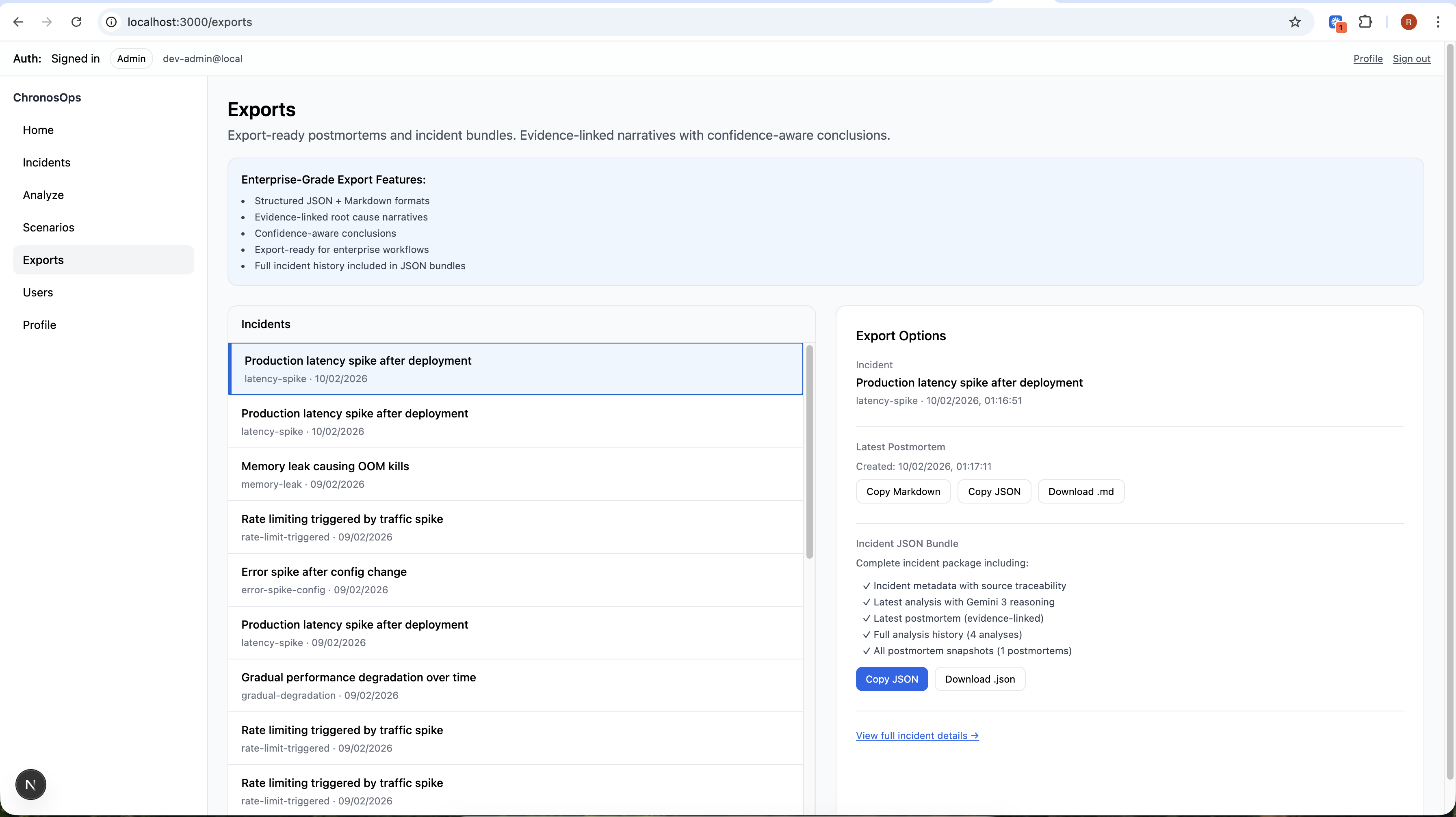
Export Center: Download postmortems (Markdown/JSON), evidence bundles, reasoning traces. Full data portability for integrations & compliance
-
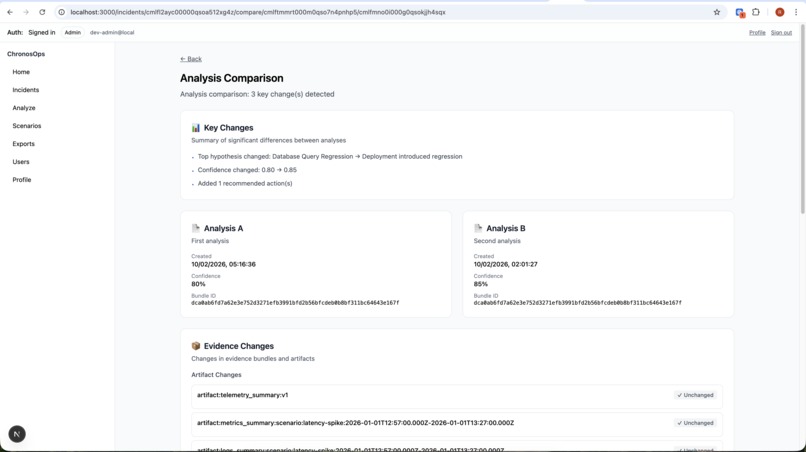
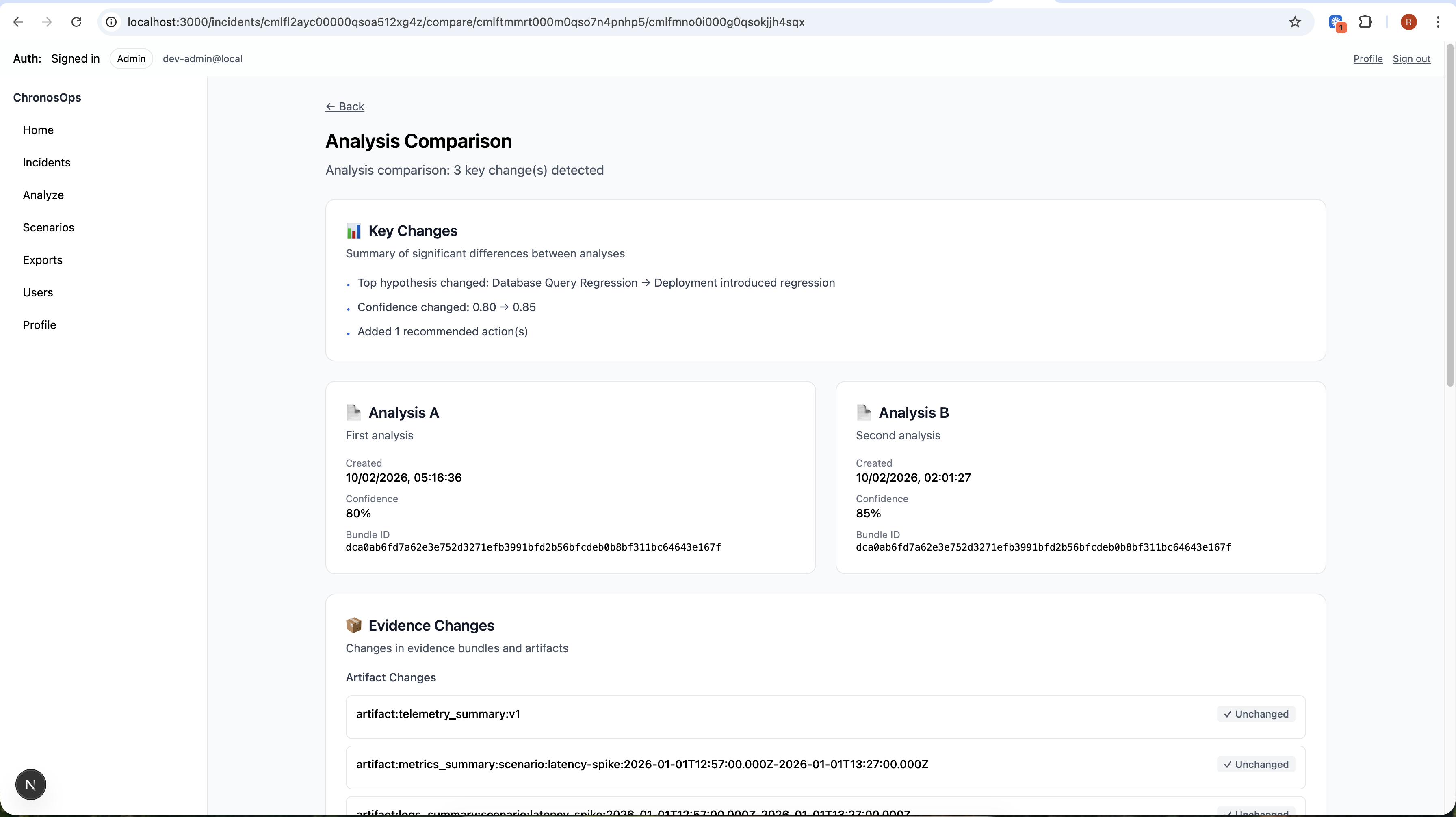
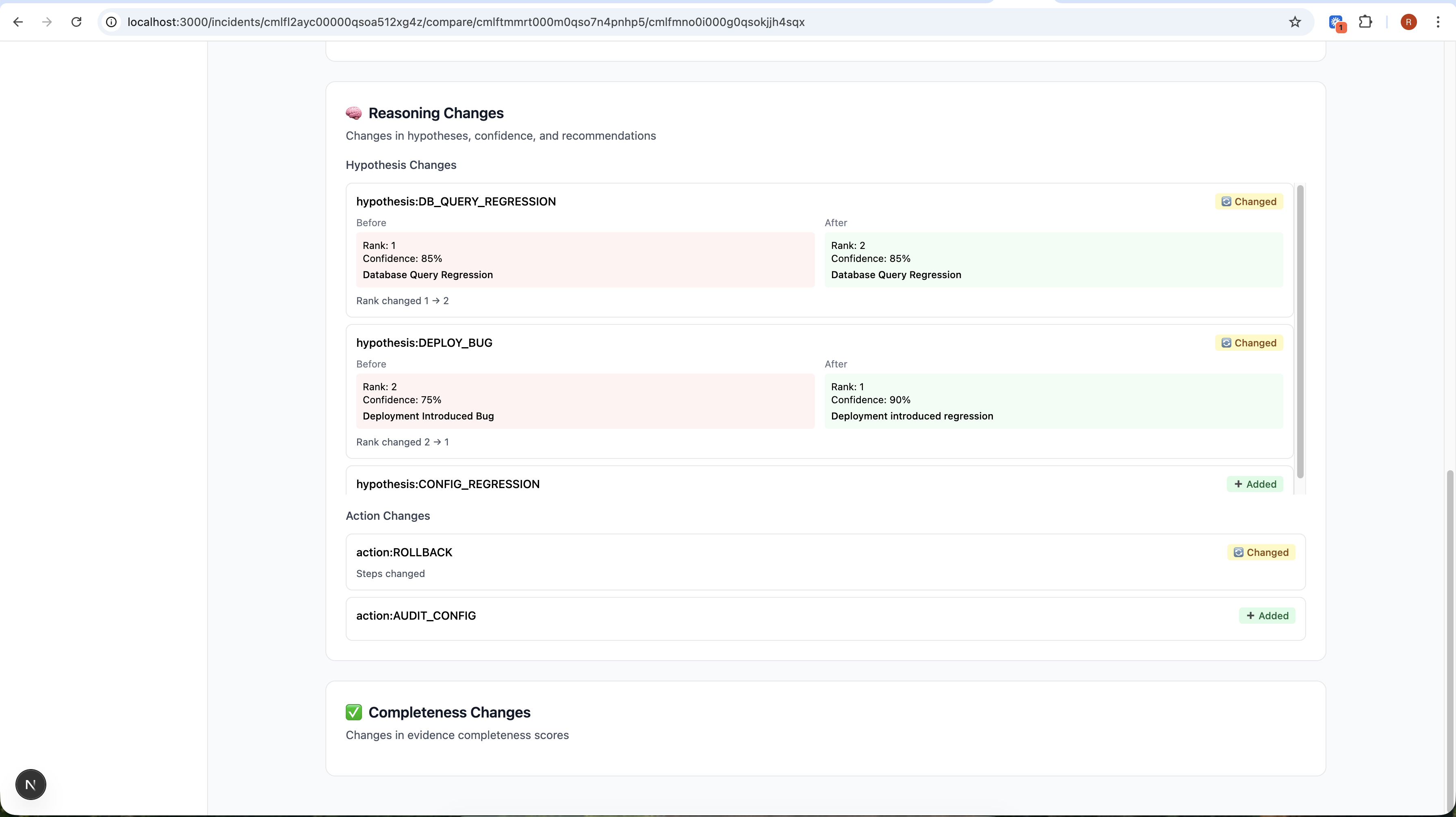
Side-by-side analysis comparison: Detect hypothesis drift, confidence changes, evidence differences. Track analysis evolution over time
-
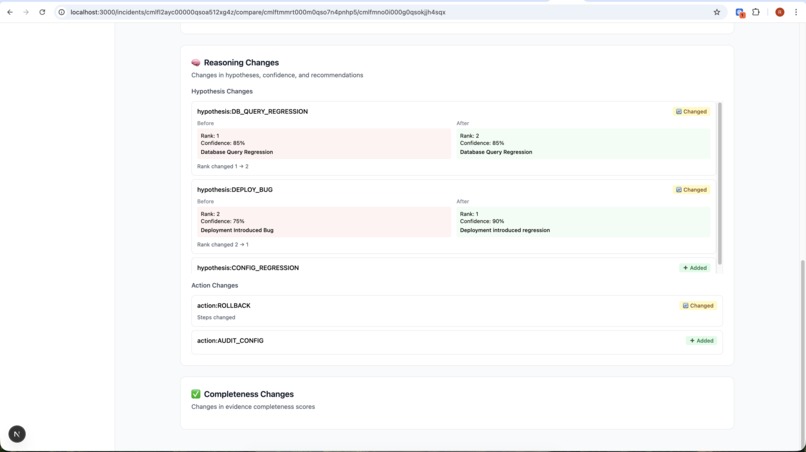
Side-by-side analysis comparison: Detect hypothesis drift, confidence changes, evidence differences. Track analysis evolution over time
-
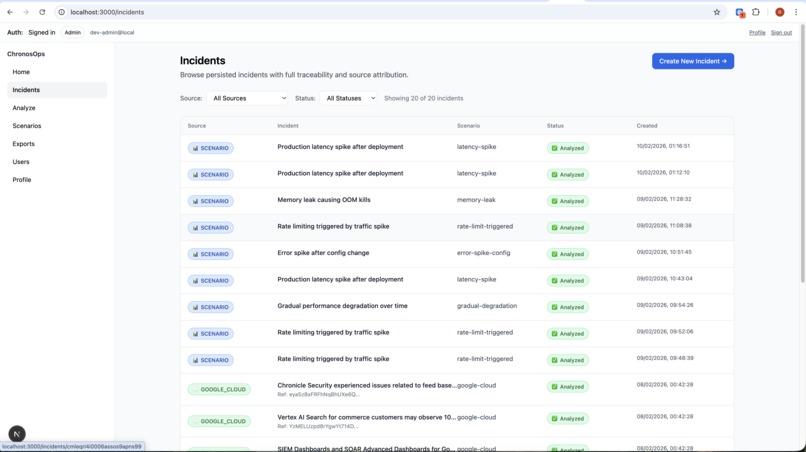
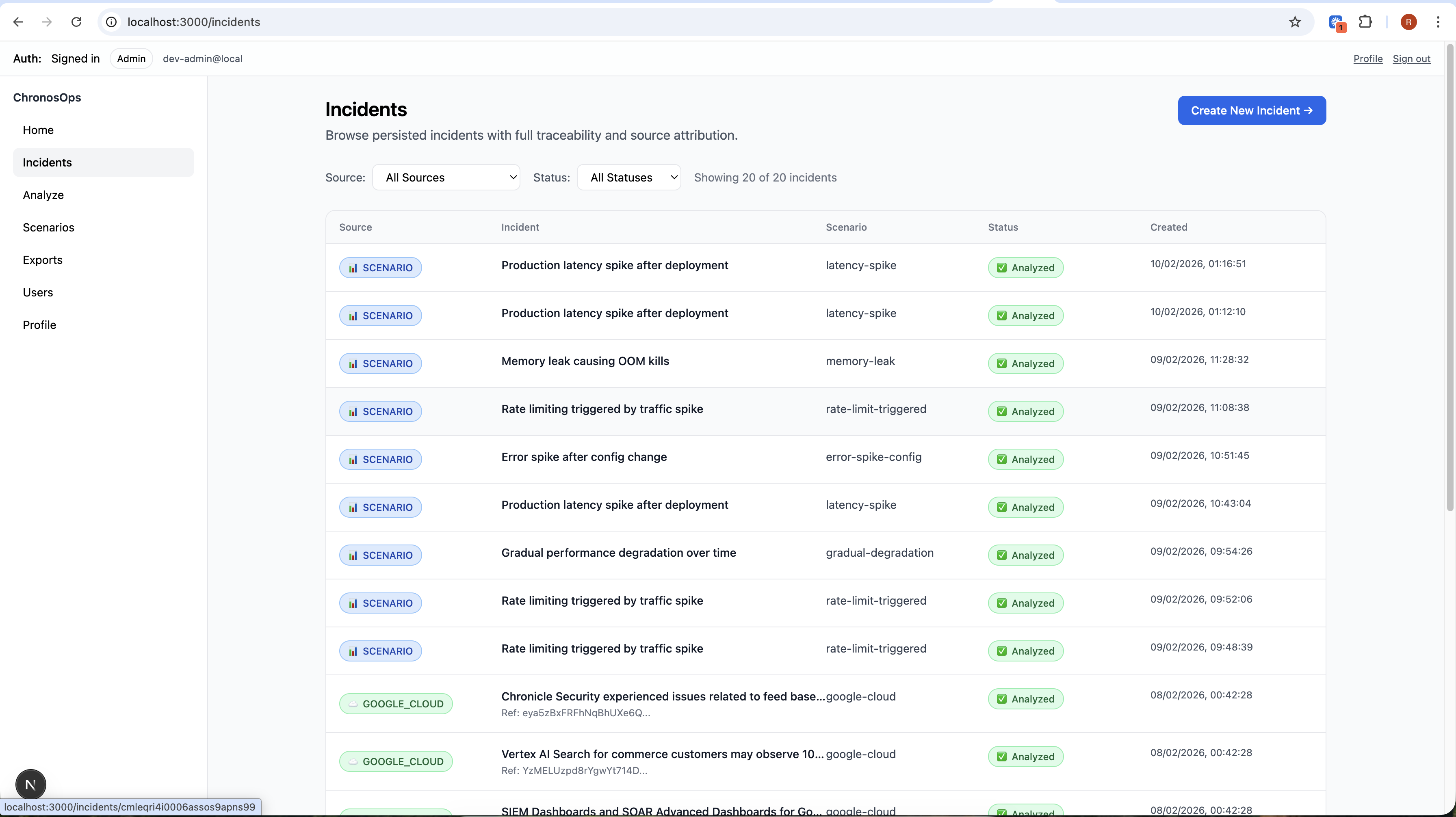
Incident management: Multi-source support (Scenarios, Google Cloud, API). Source badges,status filters,completeness scores.Unified dashboard
-
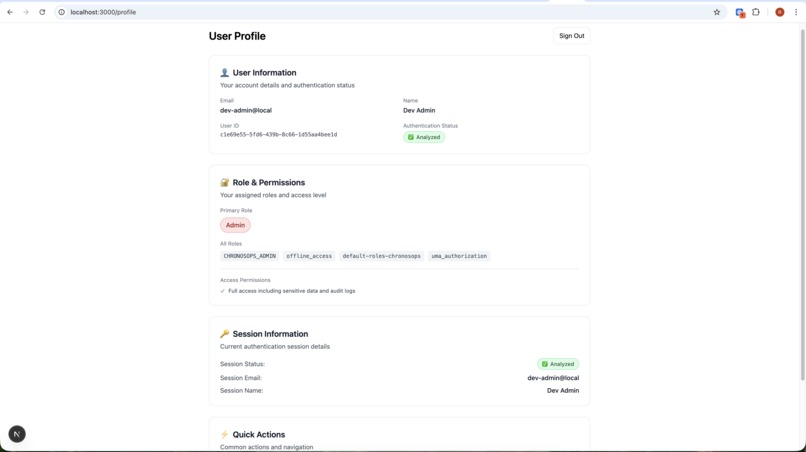
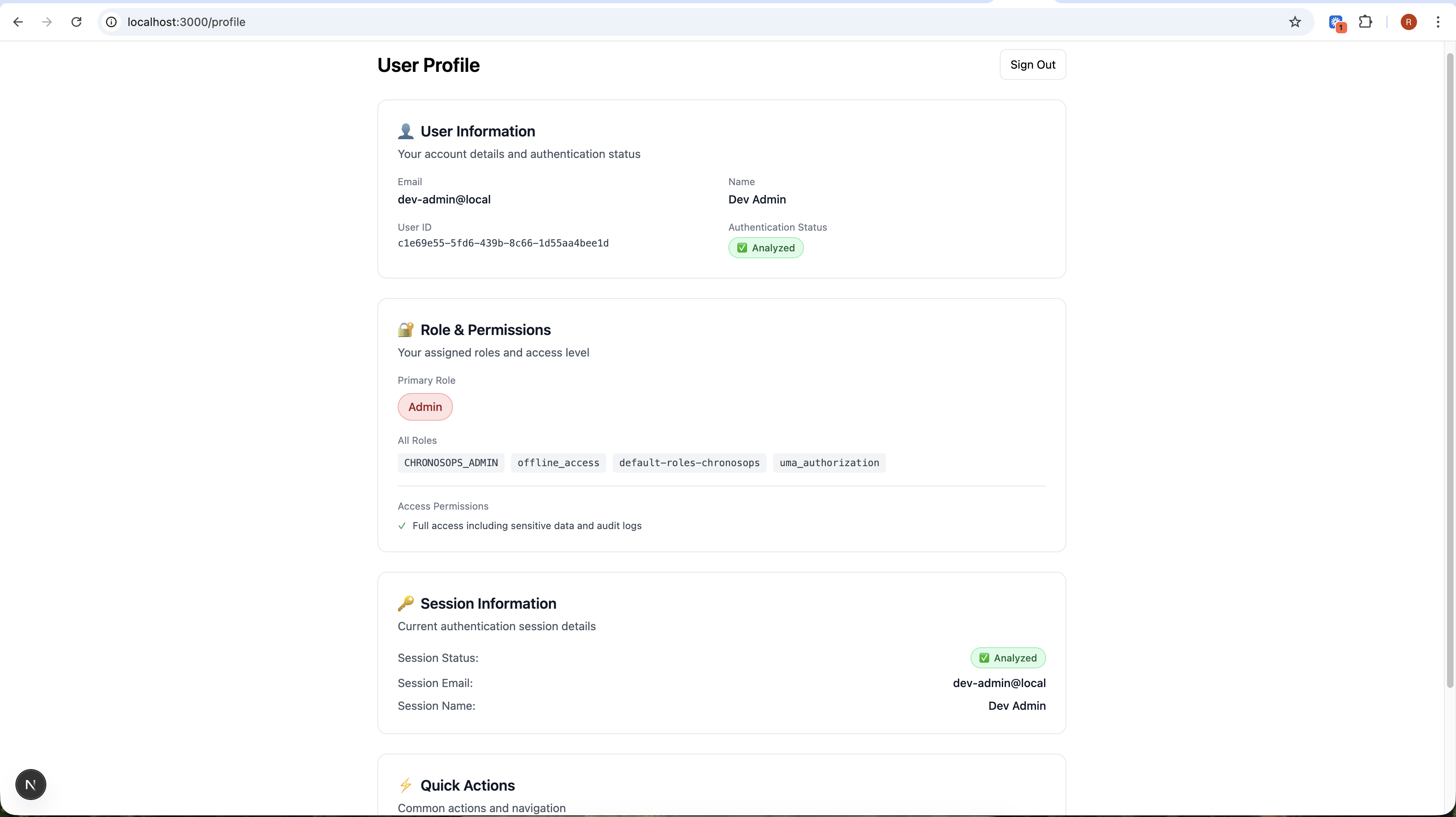
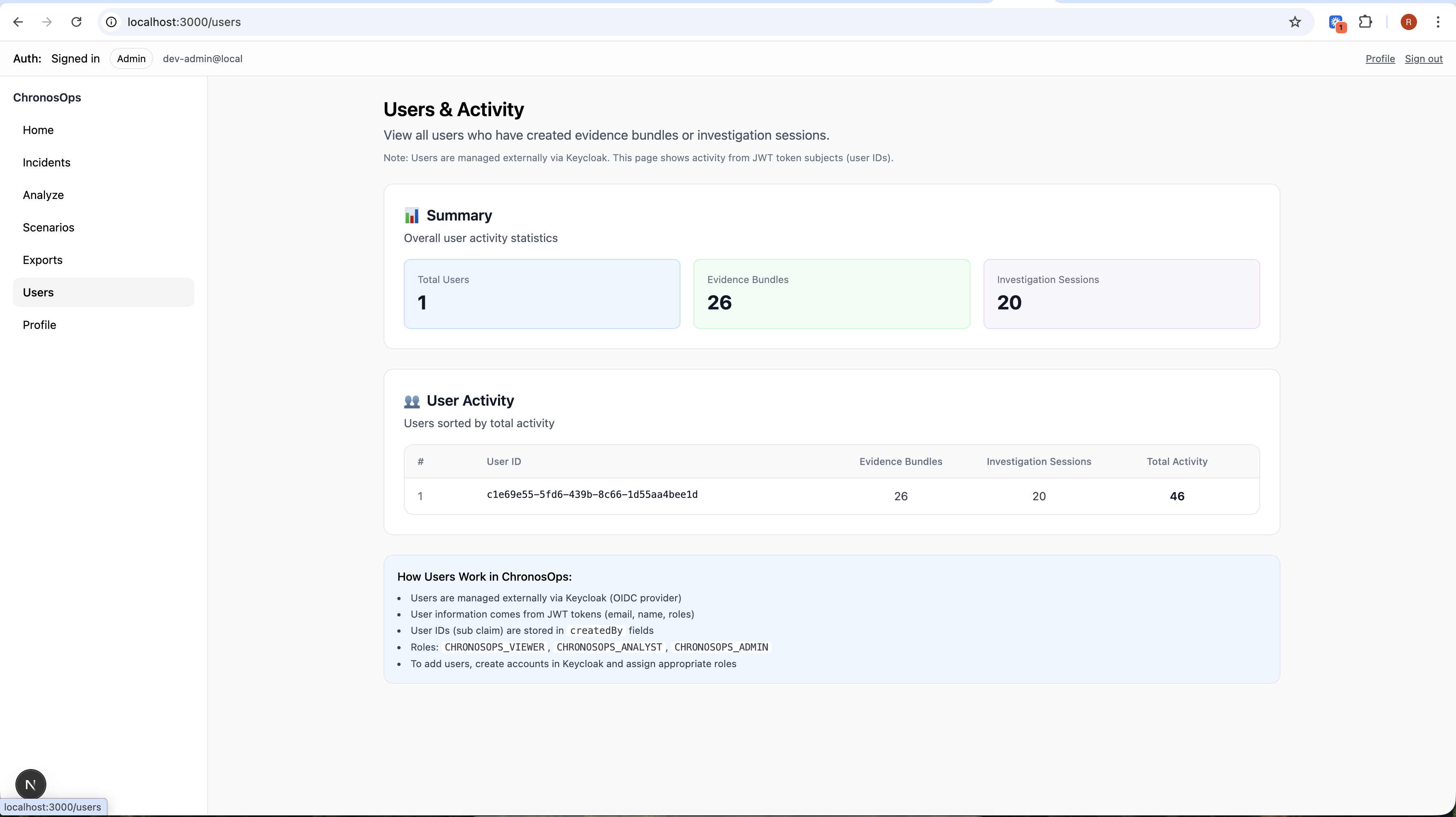
RBAC user profile: Admin/Analyst/Viewer roles. JWT/OIDC authentication. Session management. Enterprise-grade access control
-
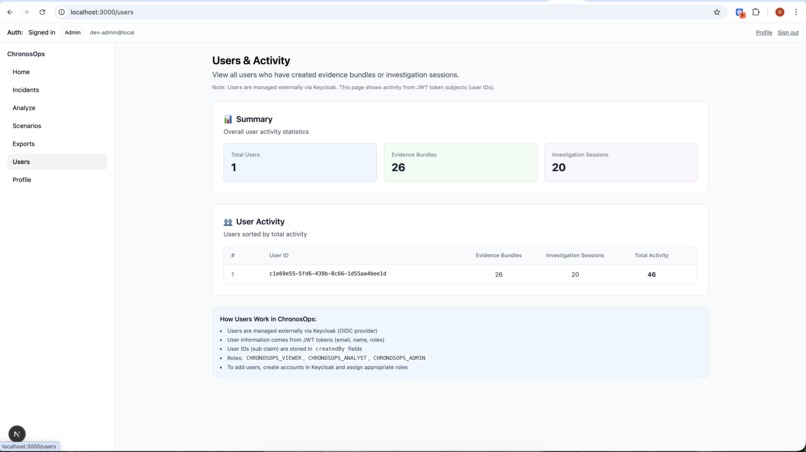
RBAC user profile: Admin/Analyst/Viewer roles. JWT/OIDC authentication. Session management. Enterprise-grade access control
-
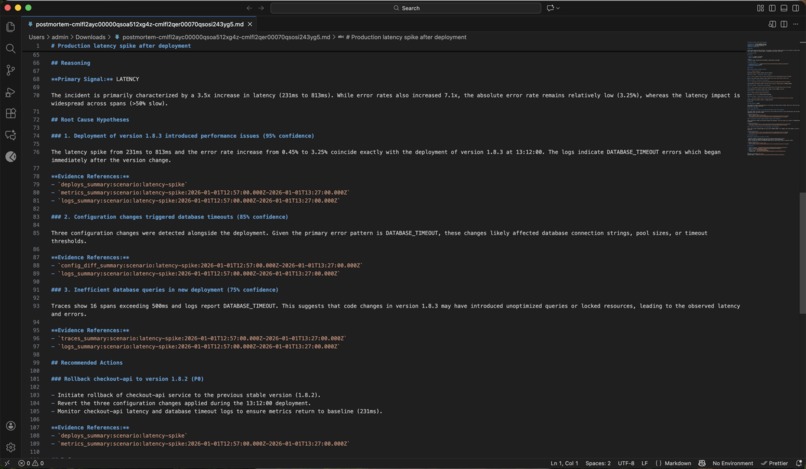
Complete postmortem Markdown: Executive summary, root cause, hypotheses, actions, evidence refs. Production-ready document. Generated v2.0.1
-
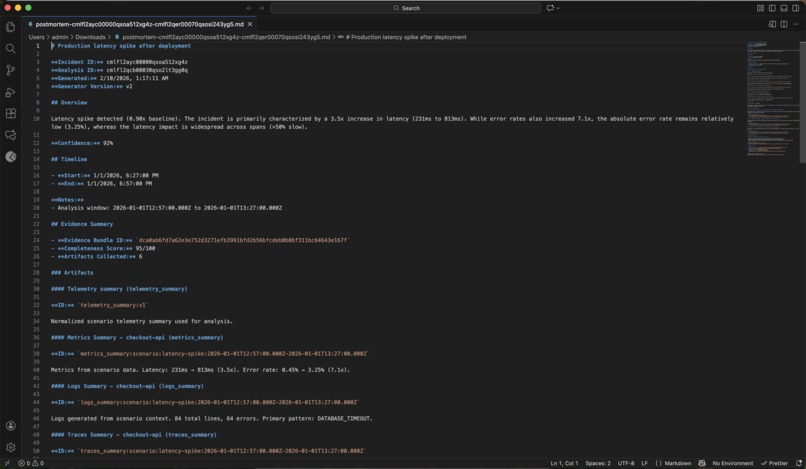
Complete postmortem Markdown: Executive summary, root cause, hypotheses, actions, evidence refs. Production-ready document. Generated v2.0.1
-
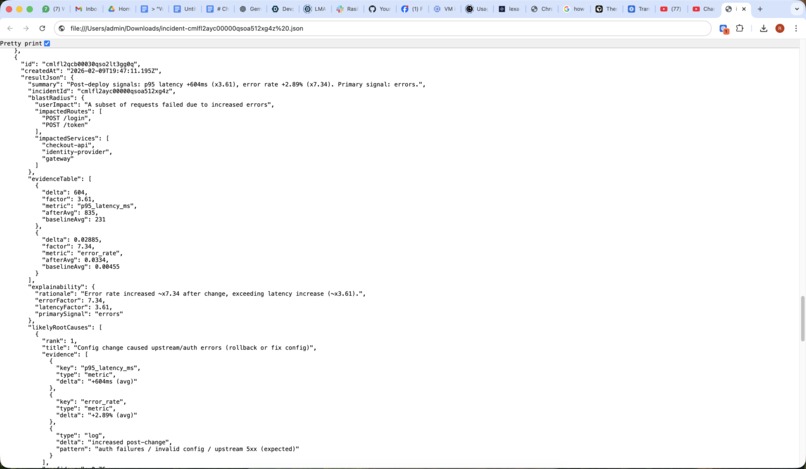
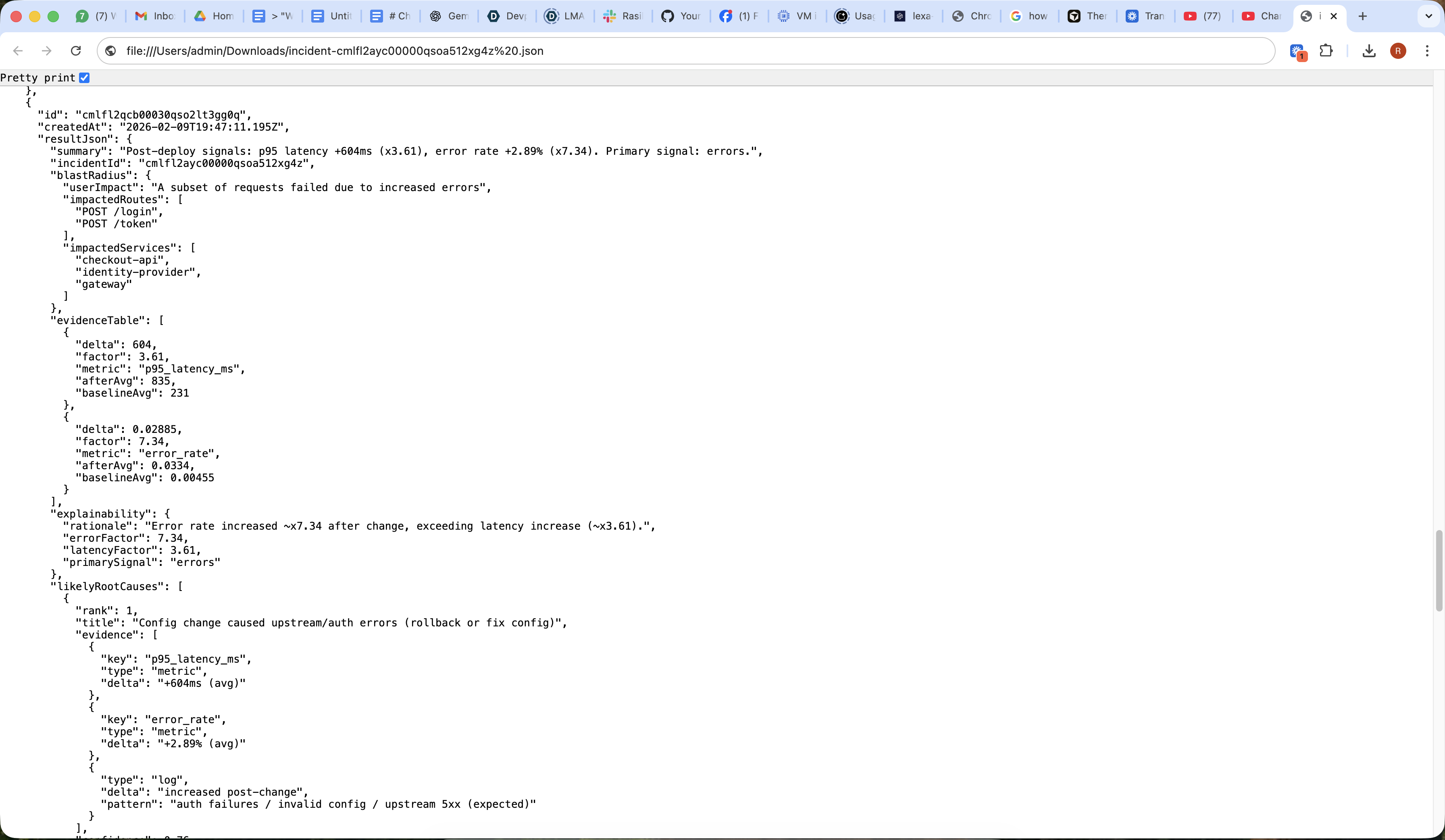
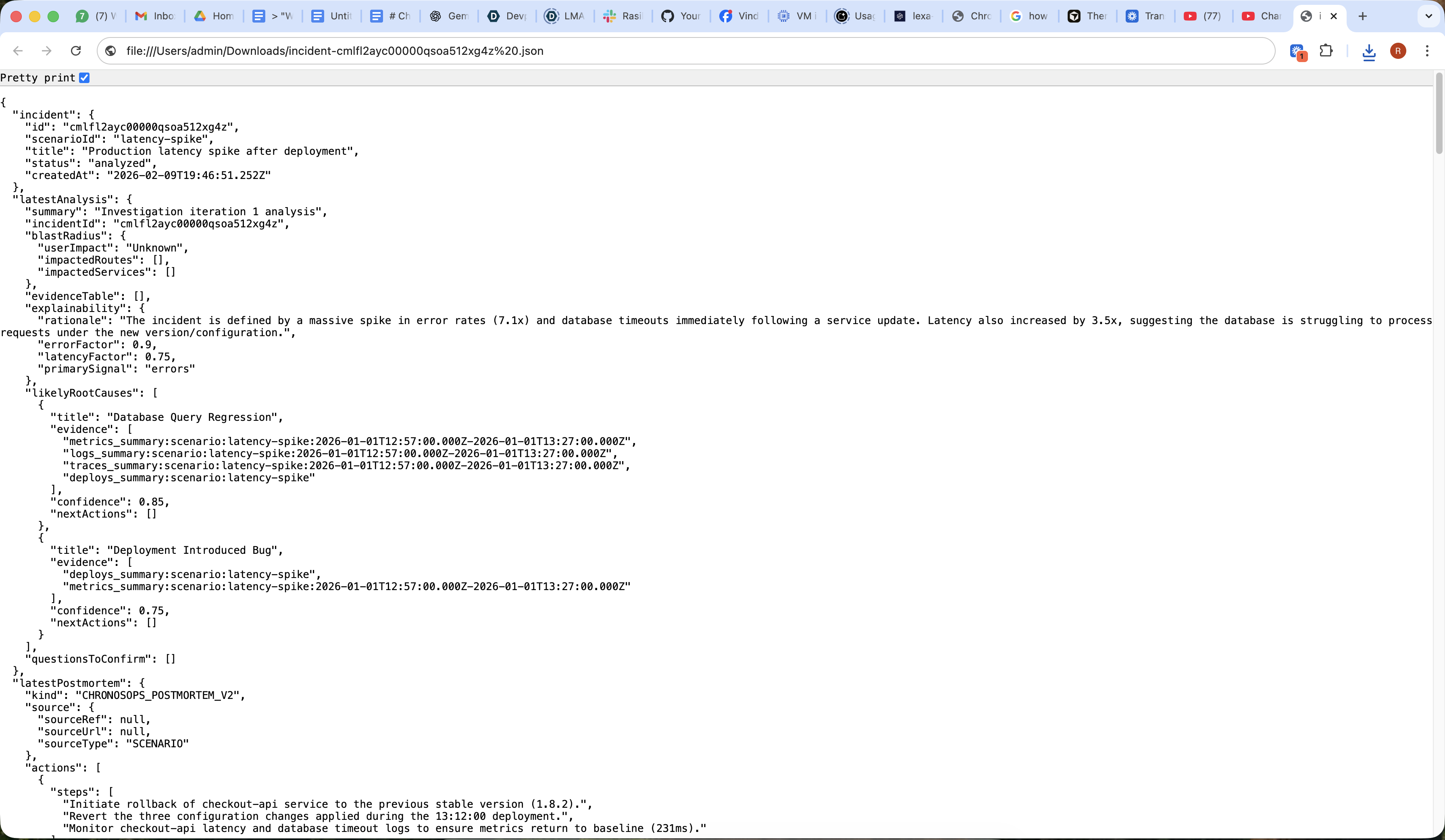
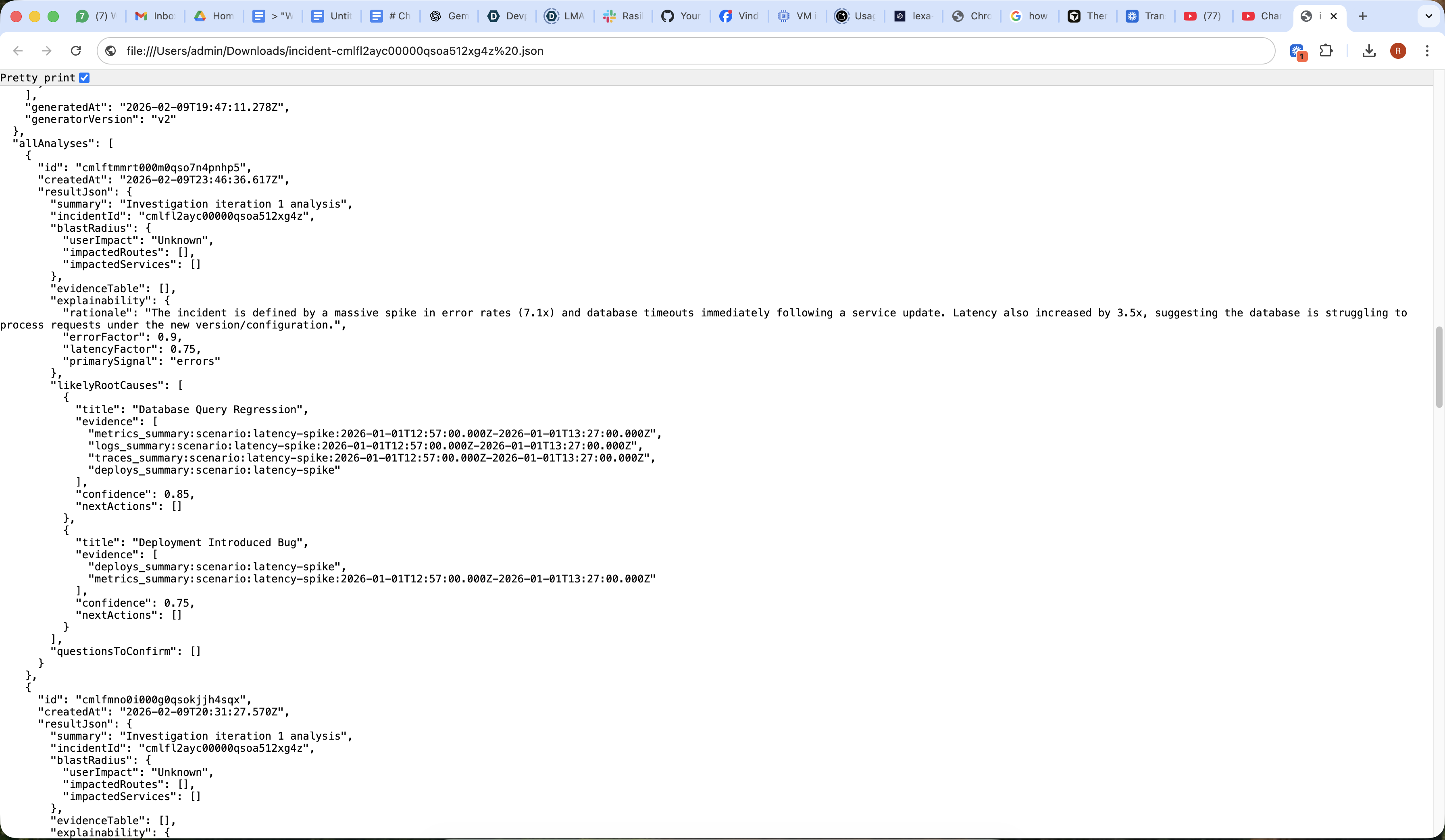
Autonomous investigation decision JSON: Model-requested evidence, confidence progression, stop conditions, full reasoning audit trail.
-
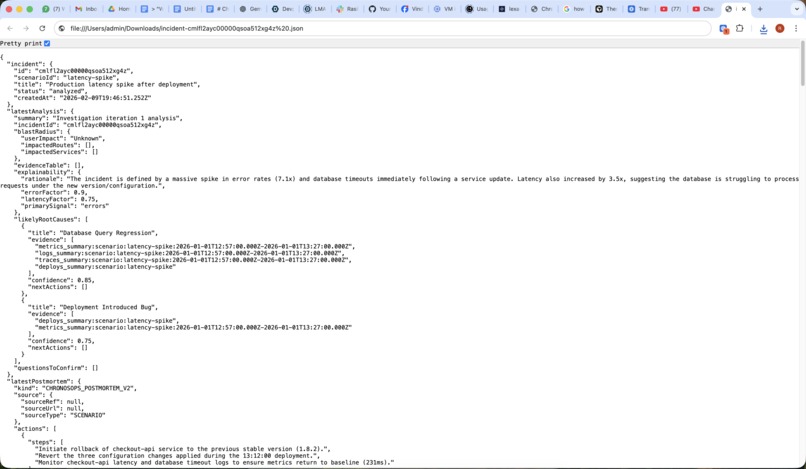
Autonomous investigation decision JSON: Model-requested evidence, confidence progression, stop conditions, full reasoning audit trail.
-
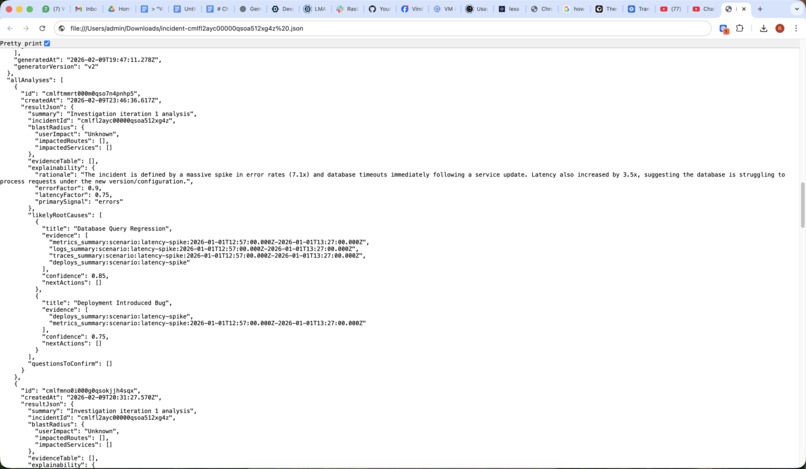
Autonomous investigation decision JSON: Model-requested evidence, confidence progression, stop conditions, full reasoning audit trail.
ChronosOps — Autonomous AI for Incident Resolution
Inspiration
Modern cloud systems generate enormous amounts of telemetry—metrics, logs, traces, deployments, and configuration changes. Yet when incidents happen, engineers still investigate them manually in stressful war rooms, piecing together evidence under time pressure.
We were inspired by a simple but critical question:
Why can AI write code and reason over documents, but still can't explain why a production outage happened—with evidence, confidence, and accountability?
Most "AI incident tools" today are either dashboards or chatbots. They show signals or answer questions, but they don't reason autonomously, they don't provide explainable traceability, and they don't meet enterprise governance standards.
ChronosOps was built to fill this gap: an autonomous, explainable incident investigation system where AI reasoning is evidence-first, auditable, and safe by design—powered by Google's Gemini 3 Flash Preview.
What it does
ChronosOps is an enterprise-grade autonomous incident investigation platform (v2.0.1) that transforms incident response from reactive to autonomous.
It ingests incidents from multiple sources (scenarios, Google Cloud Status, or API integrations), collects and normalizes comprehensive evidence, reasons over that evidence using Gemini 3 Flash Preview, and produces:
- Evidence-backed root cause hypotheses ranked by confidence scores (0-1)
- Explainable reasoning with visual traceability graphs (not black-box AI)
- Autonomous investigation loops that iteratively collect evidence until confidence targets are reached
- Actionable, prioritized remediation steps linked to specific evidence artifacts
- Replayable, auditable postmortems in both Markdown and JSON formats
- Tamper-evident audit chains for enterprise governance and compliance
ChronosOps is not a chat app.
Gemini 3 Flash Preview is embedded as a controlled reasoning engine inside a structured SRE workflow, not as a free-form assistant. Every conclusion is tied to evidence. Every reasoning step is recorded and visualized. Every run can be replayed, compared, and audited.
Key Capabilities
- Multi-Source Ingestion: Scenarios, Google Cloud Status, PagerDuty, Datadog, New Relic, or custom API integrations
- Comprehensive Evidence Collection: Metrics, logs, traces, deployment history, and configuration diffs with completeness scoring (0-100%)
- Gemini 3 Flash Preview Reasoning: Hypothesis ranking with confidence scores, explainable rationale, and evidence references
- Autonomous Investigation Loops: Model-directed evidence collection with bounded iterations and stop conditions
- Visual Explainability Graphs: Interactive graphs tracing evidence → reasoning → conclusions
- Evidence Completeness Scoring: Real-time calculation of evidence coverage across all artifact types
- Analysis Comparison & Drift Detection: Compare multiple analyses to detect hypothesis changes over time
- Tamper-Evident Audit Chains: Hash-linked audit logs for AI governance and compliance verification
- Enterprise-Grade UI: Production-ready Next.js console with role-aware navigation and export center
- Full Replayability: Every investigation can be replayed with complete decision audit trails
How we built it
ChronosOps was built from the ground up as a production-grade system (v2.0.1), not a demo or MVP.
Architecture Highlights
- Monorepo (pnpm workspaces) with strict domain boundaries
- NestJS API (modular, service-oriented, TypeScript)
- Next.js App Router UI with role-aware navigation and enterprise-grade design
- Shared Contracts (TypeScript + Zod) as single source of truth for API contracts
- PostgreSQL (Prisma ORM) for persistent storage with content-addressed evidence bundles
- JWT/OIDC Authentication with RBAC (Viewer, Analyst, Admin roles)
- Docker Compose for one-command local deployment
Evidence-First Pipeline
- Incident Ingestion: Multi-source support (scenarios, Google Cloud, API)
- Deterministic Collectors: Build immutable Evidence Bundles with:
- Metrics summaries (p95 latency, error rate, RPS)
- Logs & trace signatures
- Deployment history with version diffs
- Configuration change detection
- Evidence Completeness Scoring: Real-time calculation before AI reasoning begins
- Content-Addressed Storage: Immutable bundles with hash-based verification
Gemini 3 Flash Preview Integration (Core Innovation)
- Reasoning-Only Usage: Gemini 3 is used exclusively for reasoning, never for raw data processing
- Strict JSON Schema: Validated inputs and outputs with Zod schemas
- Versioned Prompts: Hash-based prompt governance for reproducibility
- Hypothesis Ranking: Confidence scores (0-1) with explainable rationale
- Evidence References: Every hypothesis linked to specific evidence artifacts
- Autonomous Evidence Requests: Model can request additional evidence types when confidence is insufficient
- Bounded Autonomy: Max iterations, confidence targets, and no-progress detection prevent infinite loops
Governance & Safety
- Role-Based Access Control (RBAC): Viewer, Analyst, Admin roles with service-layer enforcement
- Safe-Mode Execution: Read-only collectors by default, explicit allowlists for real data access
- Prompt Tracing: Full capture of prompts, requests, and responses for audit
- Hash-Chained Audit Logs: Tamper-evident audit chains to detect any modifications
- Data Redaction: Sensitive data (sourcePayload, prompt traces) redacted for non-admins
- Policy Gating: All evidence requests validated against safety policies (time windows, max items, allowlists)
- Replayability: Every investigation session can be replayed with complete decision JSON
Enterprise Features
- Export Center: Download postmortems (Markdown/JSON), evidence bundles, reasoning traces
- Analysis Comparison: Side-by-side comparison of analyses to detect drift
- Audit Chain Verification: Integrity checks to ensure audit chain continuity
- Multi-Source Incident Management: Unified dashboard for incidents from all sources
- Evidence Completeness Dashboard: Real-time visibility into evidence collection status
Challenges we ran into
Preventing Hallucinations
We had to ensure Gemini 3 could never invent evidence. This required:
- Strict Zod schemas for all inputs and outputs
- Bounded inputs with evidence-only reasoning
- Validation layers that reject any hypothesis without evidence references
- Content-addressed evidence bundles that prevent data tampering
Balancing Autonomy and Safety
Autonomous investigation is powerful—but dangerous without limits. We designed:
- Bounded iteration loops with explicit stop conditions
- Policy gates that validate all evidence requests
- Confidence targets and no-progress detection
- Safe-mode execution by default
Enterprise Governance
Capturing prompts, responses, hashes, and audit chains added complexity but was essential for trust:
- Full prompt/response tracing with versioning
- Hash-linked audit chains for tamper detection
- RBAC enforcement at service layer
- Data redaction for sensitive information
Determinism vs Intelligence
We learned that strong deterministic preprocessing actually improves AI reasoning quality:
- Evidence completeness scoring guides reasoning
- Structured evidence artifacts provide better context
- Content-addressed storage ensures consistency
- Replayability enables learning from past investigations
UX for Explainability
Making complex AI reasoning understandable required:
- Dedicated explainability graph visualization (not just text)
- Interactive node exploration with evidence links
- Visual traceability from evidence → reasoning → conclusions
- Analysis comparison to show evolution over time
Evidence Completeness for Scenarios
Initial scenario-based incidents showed 0% completeness. We solved this by:
- Building scenario evidence artifacts from raw scenario data
- Treating scenario-generated artifacts as real evidence (not stubs)
- Calculating completeness based on artifact presence and quality
- Ensuring realistic analysis reports even for test scenarios
Accomplishments that we're proud of
✅ Built a true autonomous investigation loop, not a scripted demo—Gemini 3 autonomously requests evidence and iterates until confidence targets are reached
✅ Integrated Gemini 3 Flash Preview as a controlled reasoning engine, not a chatbot—strict schemas, evidence-only reasoning, and full audit trails
✅ Created immutable, replayable Evidence Bundles with content-addressed storage and hash verification
✅ Implemented tamper-evident audit chains for AI governance and compliance—hash-linked events with integrity verification
✅ Delivered visual explainability graphs that prove reasoning paths—interactive visualization of evidence → reasoning → conclusions
✅ Achieved production-grade architecture with one-command deployment, comprehensive observability, and enterprise-ready UI
✅ Built evidence completeness scoring that provides real-time visibility into evidence collection status
✅ Enabled analysis comparison and drift detection to track how investigations evolve over time
✅ Most importantly, we built something that SREs and enterprises could actually trust—with explainability, governance, and safety built in from day one
What we learned
- AI is most powerful when it reasons over structured, curated evidence—not raw telemetry dumps
- Explainability isn't a feature—it's an architectural decision—built into the system from the ground up
- Governance and safety must be designed before autonomy—you can't retrofit trust
- Replayability turns AI from a tool into institutional memory—every investigation becomes a learning opportunity
- Enterprise adoption depends more on trust than novelty—explainability and auditability are non-negotiable
- Evidence completeness drives analysis quality—comprehensive evidence collection is foundational
- Visual traceability builds trust—interactive graphs are more powerful than text explanations
- Production-grade means production-ready—version numbers, audit chains, and enterprise features matter
What's next for ChronosOps
Our roadmap focuses on real-world adoption and continuous improvement:
Short-Term (v2.1-2.2)
- Live Cloud Ingestion: Direct integration with GCP Monitoring, AWS CloudWatch, Azure Monitor
- Alert Integration: PagerDuty, Opsgenie, Datadog alerts as incident sources
- Enhanced Explainability: Interactive graph improvements with node clustering and filtering
- Cost-Aware Reasoning: Token usage tracking and cost optimization
Medium-Term (v2.3-2.5)
- Deeper Dependency Graph Reasoning: Cross-service impact analysis and blast radius calculation
- Cross-Incident Learning: Pattern detection across multiple incidents
- Multi-Tenant SaaS Deployment: Cloud-native architecture with tenant isolation
- Advanced RBAC: Custom roles, fine-grained permissions, team-based access
Long-Term (v3.0+)
- Enterprise Integrations: SIEM, ticketing systems (Jira, ServiceNow), compliance workflows
- Predictive Analysis: Proactive incident detection before they become outages
- Collaborative Investigation: Multi-user investigation sessions with real-time updates
- Custom Reasoning Models: Support for other LLMs (Claude, GPT-4) with model comparison
- ML-Based Evidence Prioritization: Learn which evidence types are most valuable for different incident types
Technical Specifications
- Version: 2.0.1
- AI Model: Google Gemini 3 Flash Preview
- Backend: NestJS (TypeScript), PostgreSQL (Prisma ORM)
- Frontend: Next.js App Router, Tailwind CSS
- Authentication: JWT/OIDC (Keycloak), RBAC
- Deployment: Docker Compose (one-command setup)
- Evidence Storage: Content-addressed, immutable bundles
- Audit: Hash-chained, tamper-evident logs
Try It Now
ChronosOps is production-ready and available for immediate use:
# One-command setup
docker compose up -d --build

# Access at http://localhost:3000
# Login: dev-admin / devpass
ChronosOps represents a new category: Explainable, autonomous reliability intelligence—built for the real world, powered by Gemini 3 Flash Preview.
Built for the Gemini 3 Hackathon | Production-Grade SRE Platform | v2.0.1
Built With
- docker
- docker-compose
- gemini-3
- github
- google-cloud
- google-cloud-monitoring
- google-cloud-status-api
- jwt
- keycloak
- nestjs
- next.js-(app-router)
- nextauth
- node.js
- openid-connect-(oidc)
- opentelemetry
- pnpm
- postgresql
- prisma
- react
- react-flow
- redis
- tanstack-query
- typescript
- zod

Log in or sign up for Devpost to join the conversation.