-
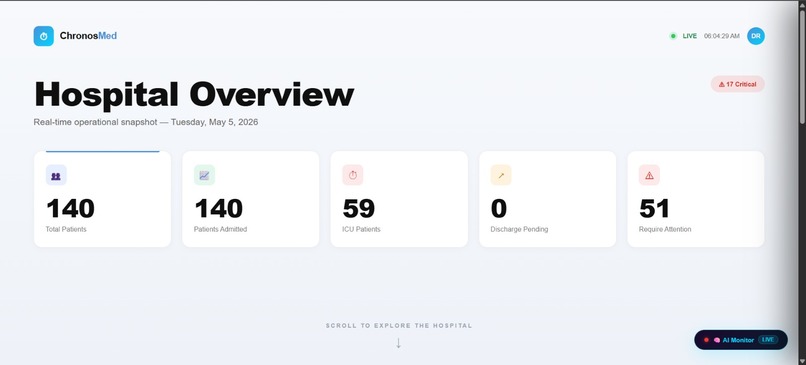
frontend
-
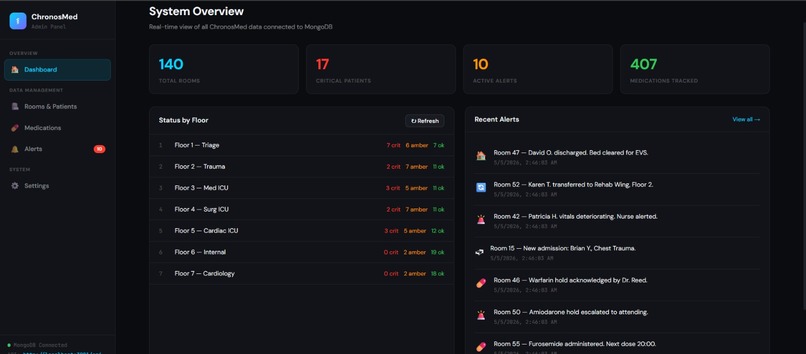
backend
-
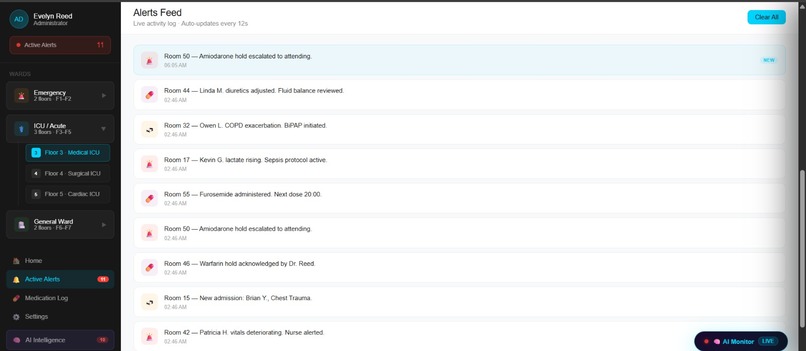
frontend
-
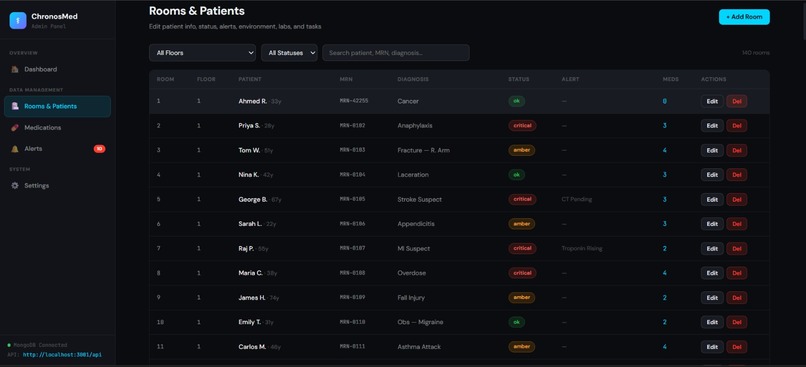
backend
Inspiration
Modern hospitals are extremely advanced in recording patient data — medications, lab reports, vitals — everything is documented in detail. However, during our research, we noticed a critical gap:
Most systems track what has already happened, but very few track what should have happened next.
Clinical errors are often not due to incorrect decisions, but due to missed follow-ups, delayed tests, and fragmented workflows across departments and shifts. A drug may be prescribed correctly, but the required monitoring might never occur. A lab test might be ordered but delayed without visibility.
This gap between intended care and actual execution over time became the core inspiration behind ChronosMed.
What We Built
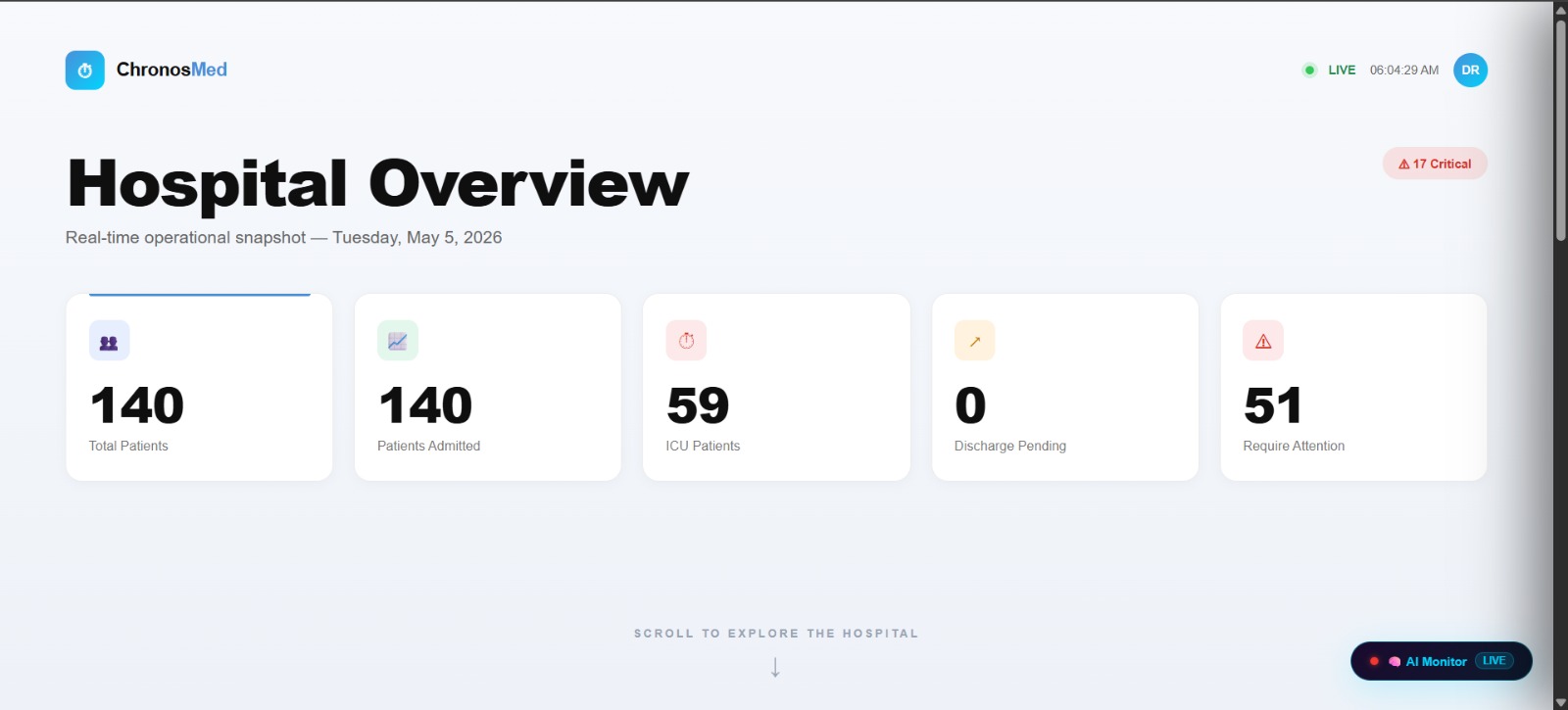
ChronosMed is a clinical workflow intelligence system that transforms static patient records into a time-aware, continuously monitored process.
Instead of just displaying data, our system tracks:
- What happened → through a structured patient timeline
- What should have happened → through drift and follow-up detection
- What is happening right now → through lab workflow tracking
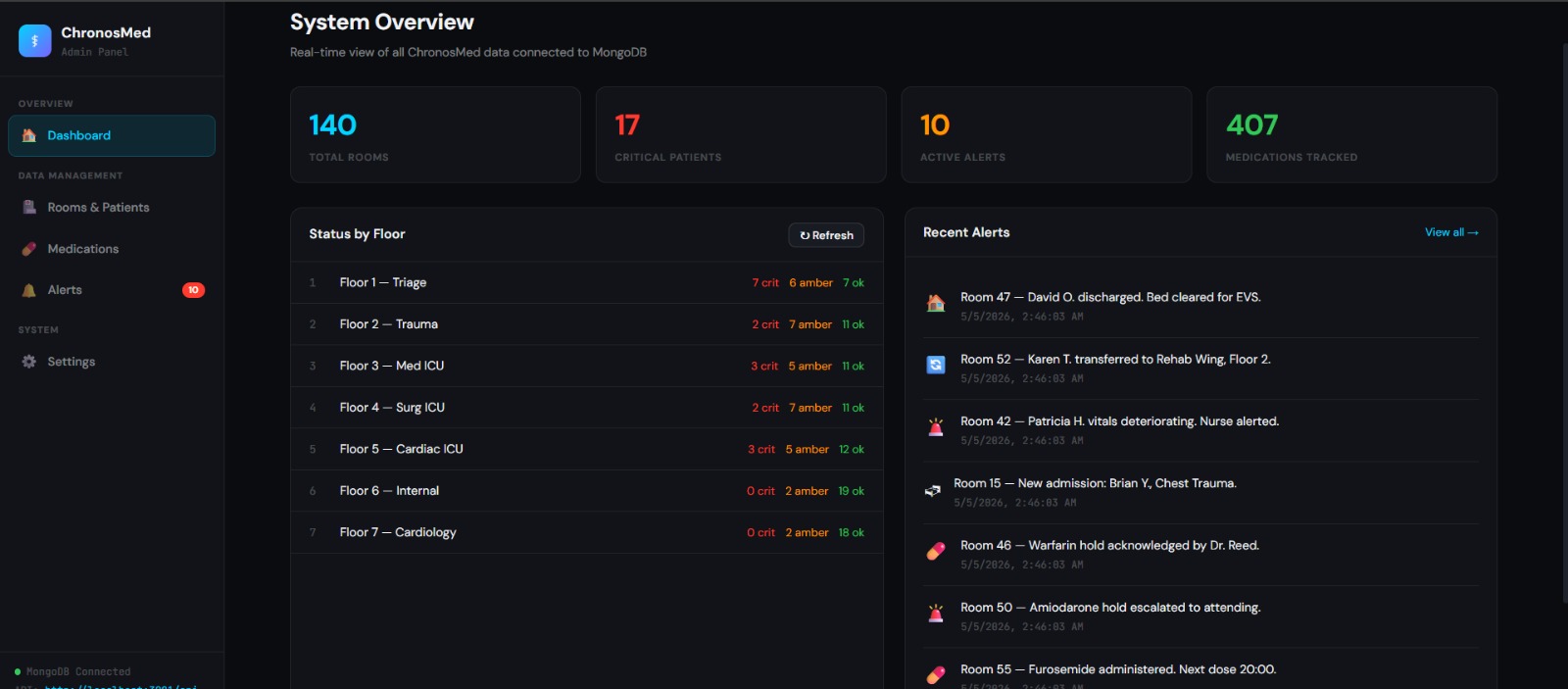
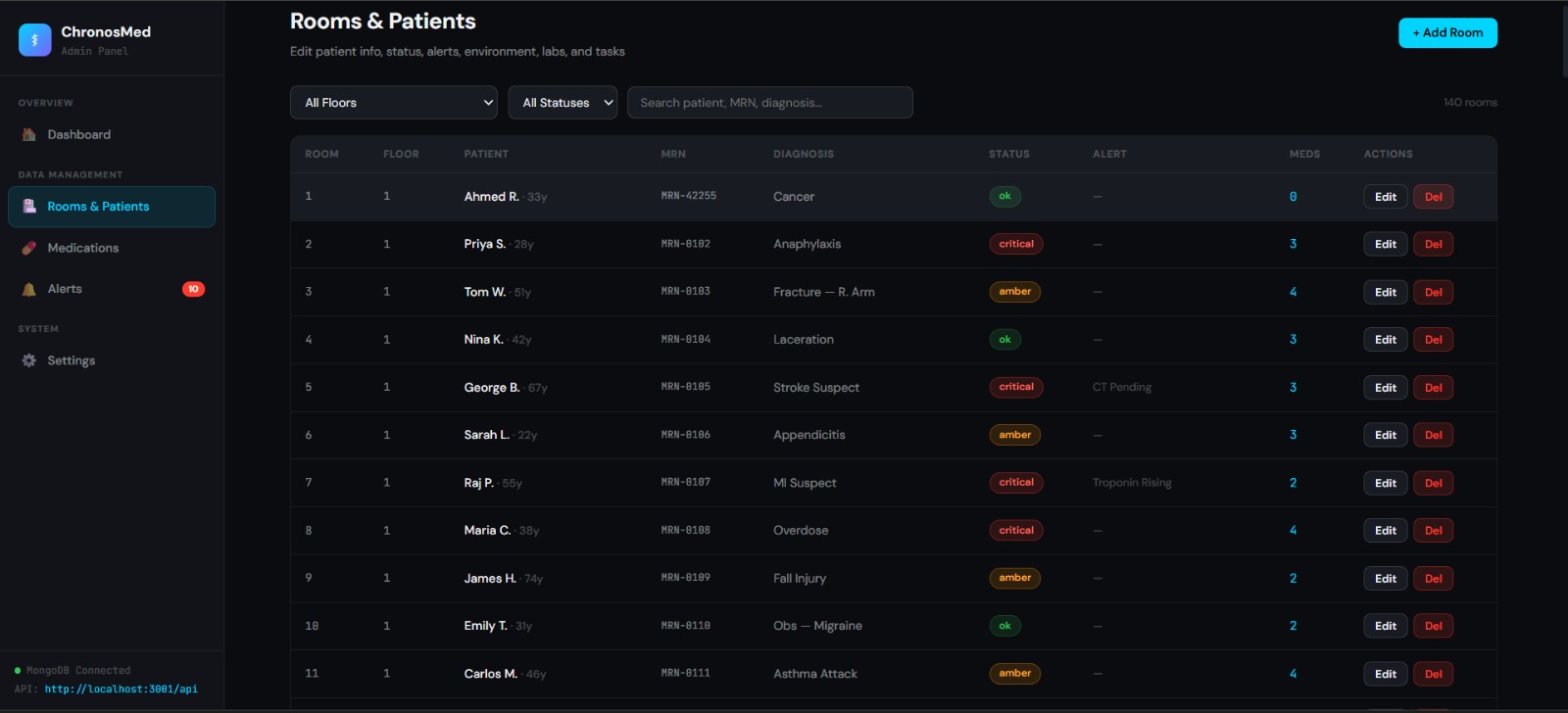
We structured the interface to mirror real hospital navigation:
Department → Floor → Room → Patient
Within each patient, the system provides:
- A medication timeline that shows when drugs were given and where expected actions are missing
- A lab workflow tracker that highlights real-time progress and delays
- A clinical task checklist that dynamically suggests next steps
This transforms the system from a passive dashboard into an active clinical control layer.
How We Built It
We designed the system as an event-driven architecture.
All patient activity — including medications, lab events, and clinical updates — is treated as a sequence of time-based events. These events are processed to build a continuous timeline of care.
To make the system fully dynamic, we integrated a backend powered by MongoDB. All patient data is stored as structured records in the database rather than being hardcoded.
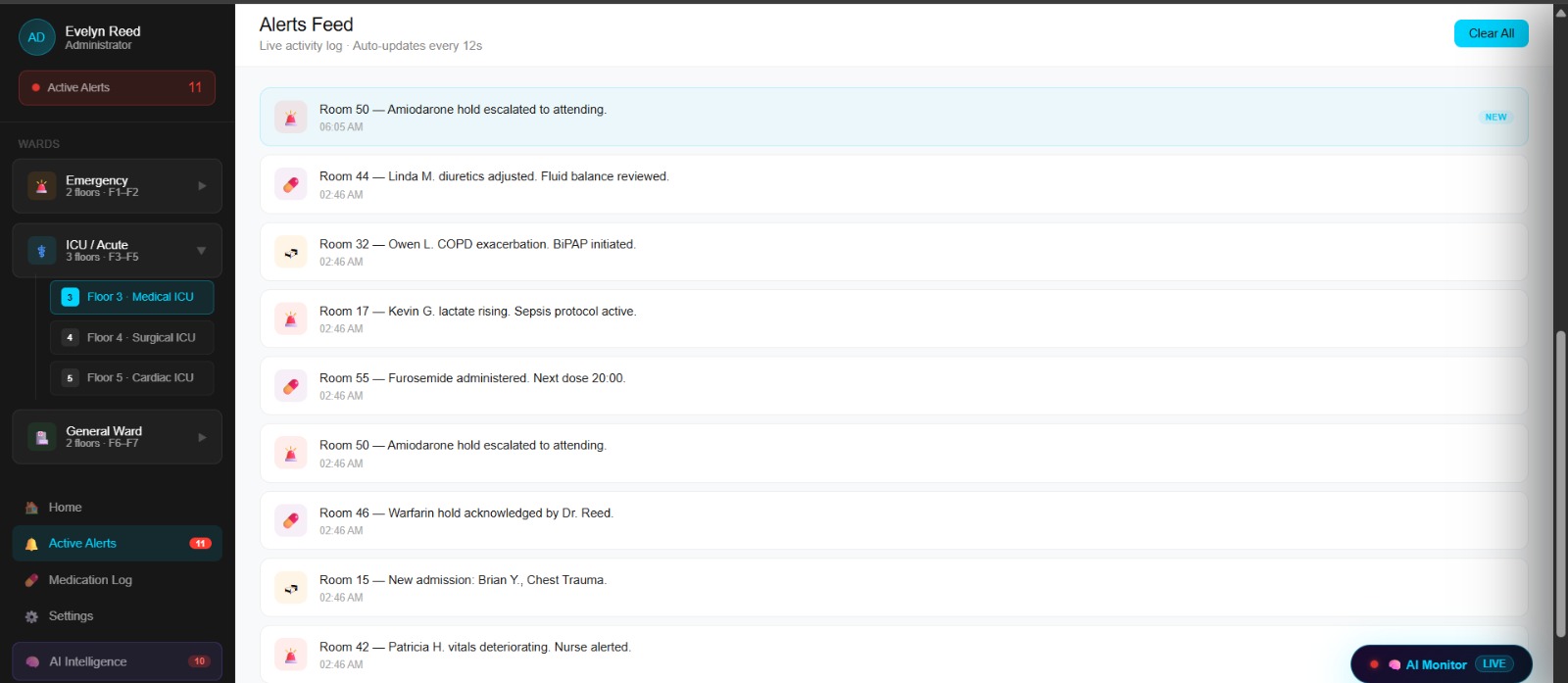
Whenever new data is added or updated — such as a medication being administered or a lab progressing through stages — it is treated as an event. This triggers:
- an update to the patient timeline
- re-evaluation of expected follow-ups
- regeneration of the clinical task checklist
As a result, the dashboard updates automatically in response to data changes, making the system behave like a live hospital environment rather than a static demo.
Challenges We Faced
One of the biggest challenges was moving beyond a traditional dashboard mindset.
It was relatively straightforward to display patient data, but much harder to design a system that understands missing actions — identifying what did not happen but should have.
Another challenge was balancing complexity with usability. Clinical systems can easily become overwhelming, so we focused on presenting deep insights in a clean and intuitive way.
We also had to simulate real-world hospital workflows without direct access to live clinical systems, which required building a dynamic backend and event simulation layer.
What Makes ChronosMed Unique
Most healthcare systems answer:
“What is the current state of the patient?”
ChronosMed answers:
“Is the patient’s care progressing the way it should over time?”
This shift — from data tracking to process tracking — is what makes our system fundamentally different.
We are not replacing clinical decision-making. We are ensuring that nothing in the care process gets missed.
What We Learned
This project taught us that innovation in healthcare is not always about introducing new technology, but about rethinking how problems are framed.
By focusing on time, continuity, and workflow gaps, we uncovered a layer of healthcare that is largely invisible in current systems.
We also learned how to combine backend architecture, dynamic data handling, and intelligent reasoning into a system that is both practical and scalable.
Future Scope
In the future, ChronosMed can be integrated directly with hospital EHR systems using standards like FHIR to enable real-time data ingestion.
We also plan to enhance the intelligence layer by incorporating more advanced predictive models to anticipate risks before they occur, and expand the system to operate across multiple hospital units simultaneously.
Ultimately, our goal is to make ChronosMed a system that not only tracks care, but actively ensures its continuity and quality at scale.
Built With
- charting/visualization-libraries
- css3
- event-driven-architecture-(for-real-time-updates)
- express.js
- git/github
- html5
- javascript-(es6)
- mongodb-(nosql-database)
- node.js
- react-(for-frontend-ui)
- rest-apis
