-
-
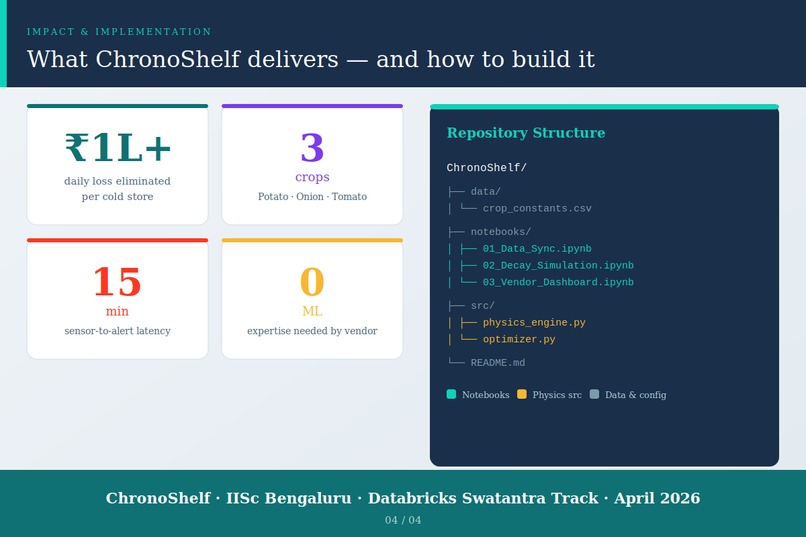
Slide4: Chrono-shelf buildup
-
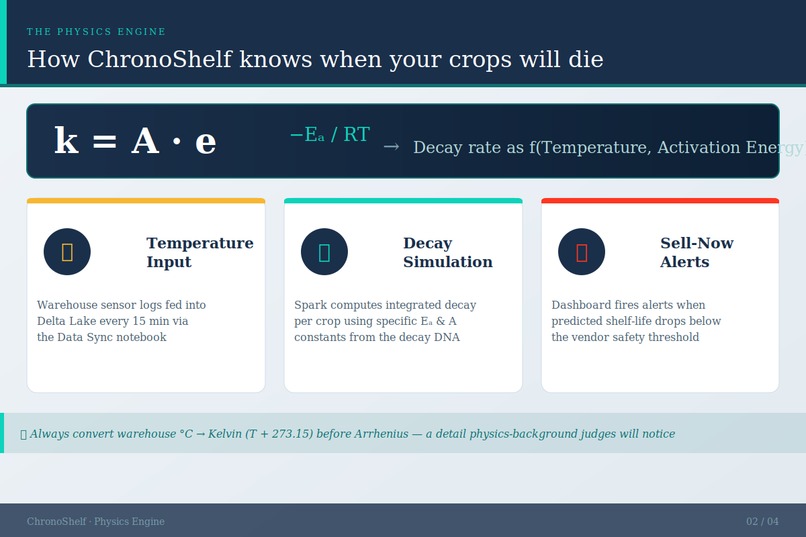
Slide2: from Physics Principle
-
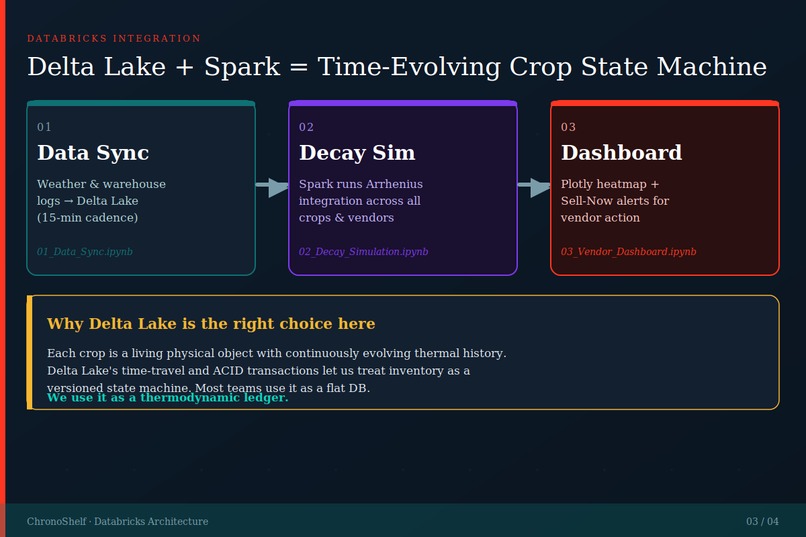
Slide3: Time Evolving machine
-
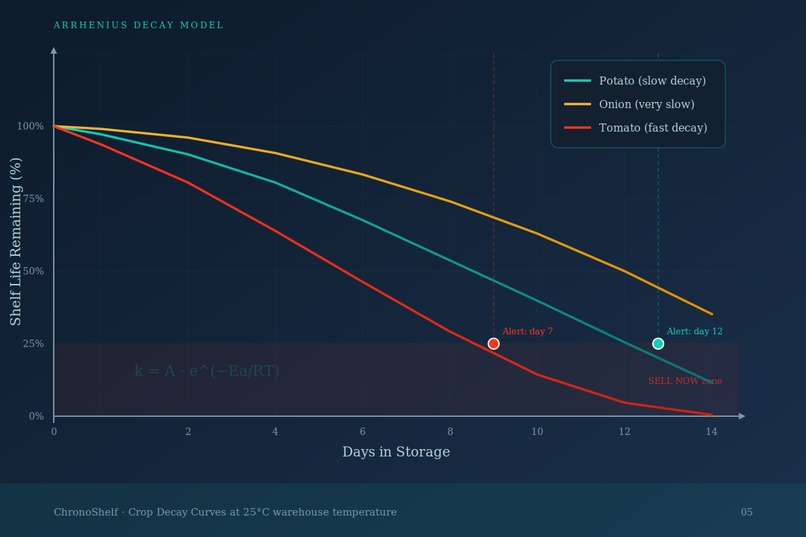
Graph1: Arrhenius decays
-
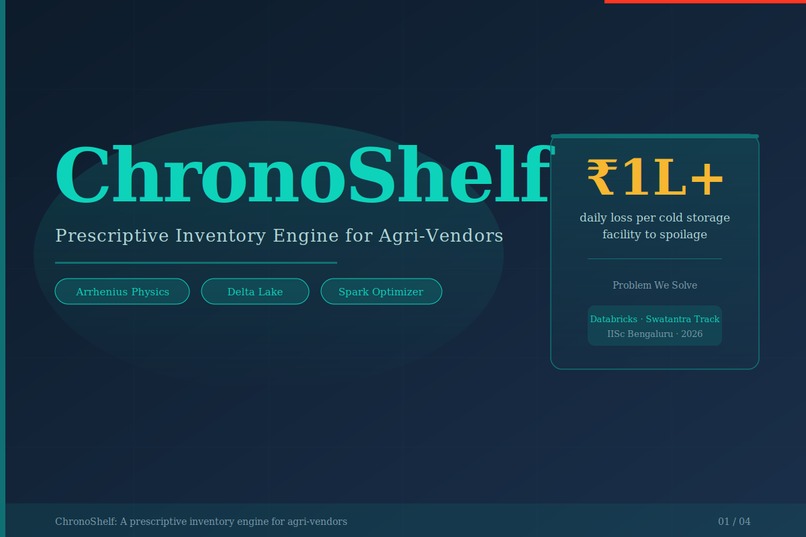
Slide1: Preventing 1L+ revenue loss
-
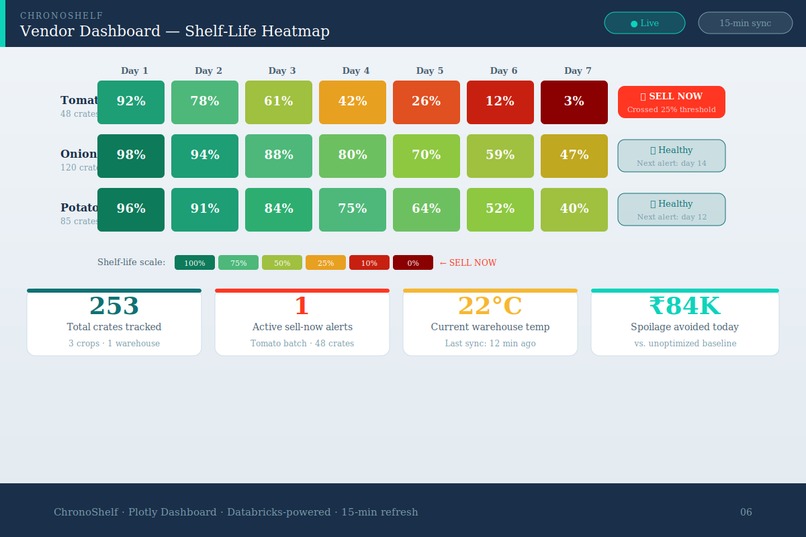
Table1: Heatmap lifetimes
-
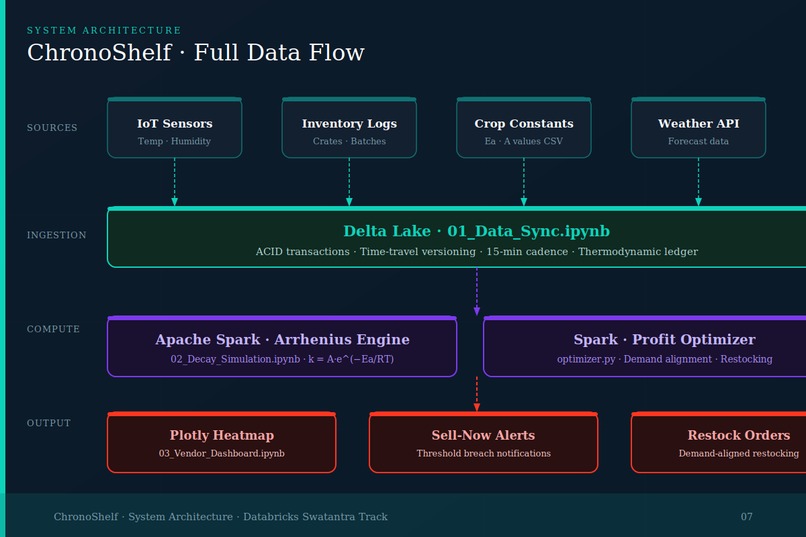
Architecture 1


Inspiration-
Cold storage owners across India lose ₹1 Lakh+ daily to crop spoilage — not from lack of data, but from lack of predictive tools. We wanted to apply thermodynamics, not guesswork, to this problem.
What it does-
ChronoShelf predicts when each crop will spoil using the "Arrhenius decay equation" — the same kinetics model used in pharmaceutical shelf-life studies. It ingests real-time warehouse temperature logs, simulates decay rate per crop, and fires "Sell-Now alerts" before spoilage occurs.
How we built it-
- "Delta Lake" stores a time-versioned thermal history for each crop batch
- "Apache Spark" runs the Arrhenius integration across all vendors in parallel
- "Plotly dashboard" surfaces a heatmap of decay state + actionable restock recommendations
- Crop-specific activation energy (Eₐ) constants for Potato, Onion, and Tomato power the physics engine
Challenges-
Converting continuous temperature logs into integrated decay — accounting for temperature fluctuations rather than assuming steady-state — required careful numerical integration in Spark.
What we learned-
Delta Lake's time-travel capability is a natural fit for tracking physical state evolution. Most teams use it as a flat database; we used it as a thermodynamic ledger.
What's next-
Expand crop constants library, add humidity as a second decay variable, and deploy as a mobile-first vendor app.
Built With
- apache-spark
- databricks
- delta-lake
- google-notebook
- jupyter
- numpy
- plotly
- python
- scipy

Log in or sign up for Devpost to join the conversation.