

Inspiration
When a critical supplier fails, the real question is not simply “What is delayed?”
The real questions are:
- Which production orders will stop next?
- Which customer commitments are at risk?
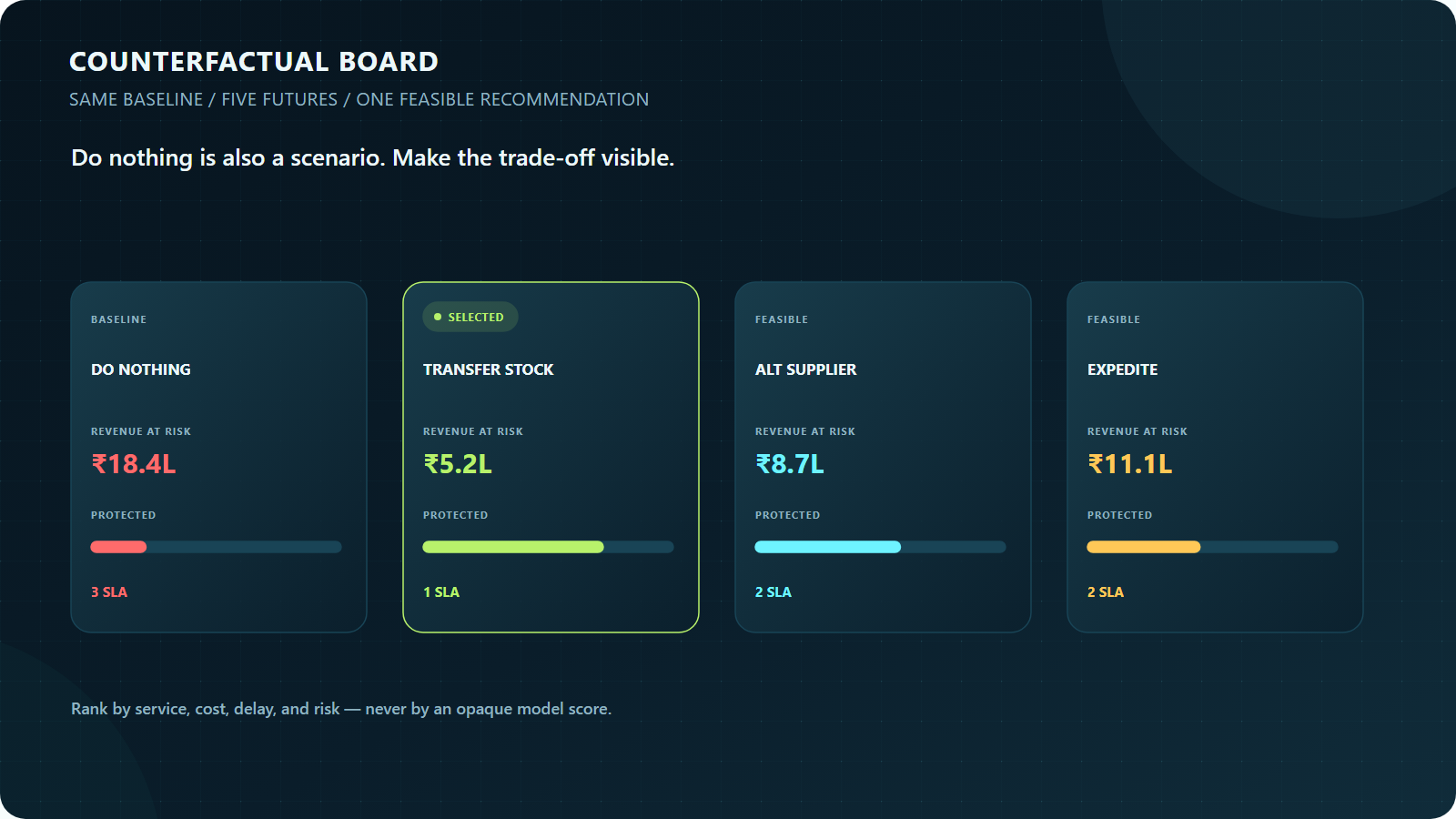
- What happens if we do nothing?
- Which recovery plan protects the most value?
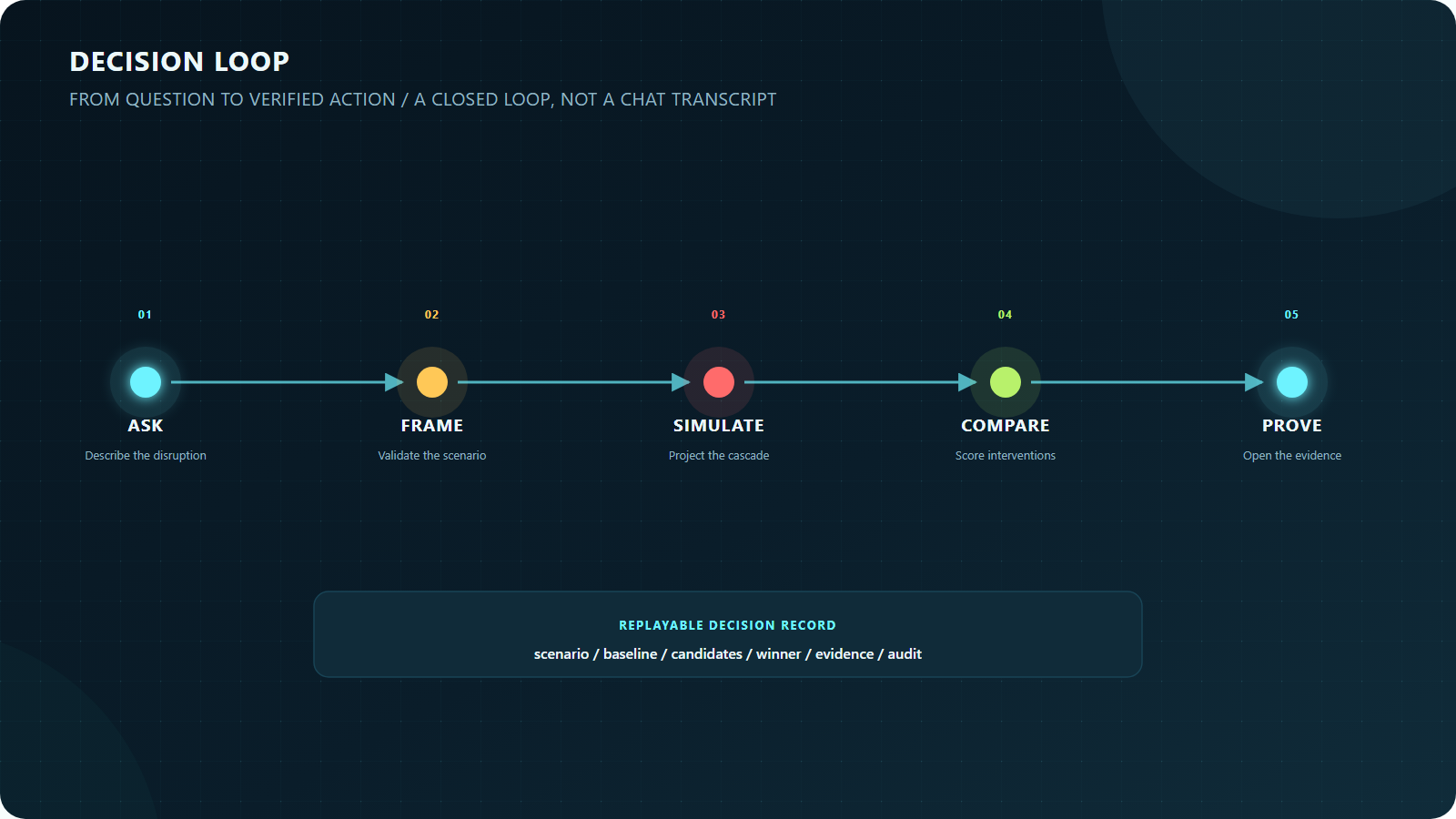
- Can we prove why that plan is the right choice?
Most dashboards show the problem after it happens. Most AI assistants explain the problem without proving their numbers. ChronosDB was created to bridge that gap.
What it does
ChronosDB turns IBM Db2 into a time machine for supply-chain decisions.
A user can simulate a scenario such as:
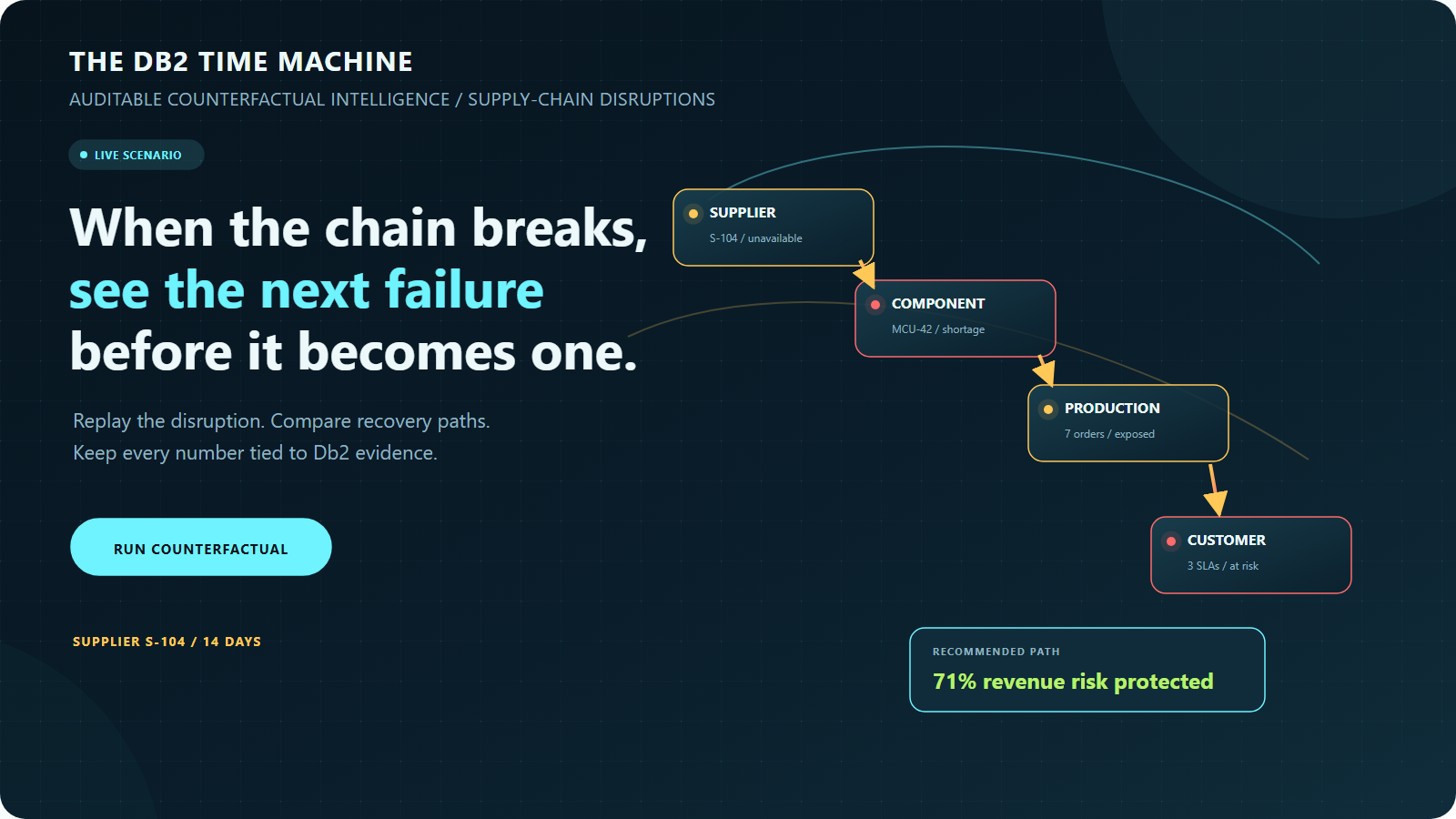
“Supplier S-104 is unavailable for 14 days. Keep recovery costs below ₹2 lakh.”
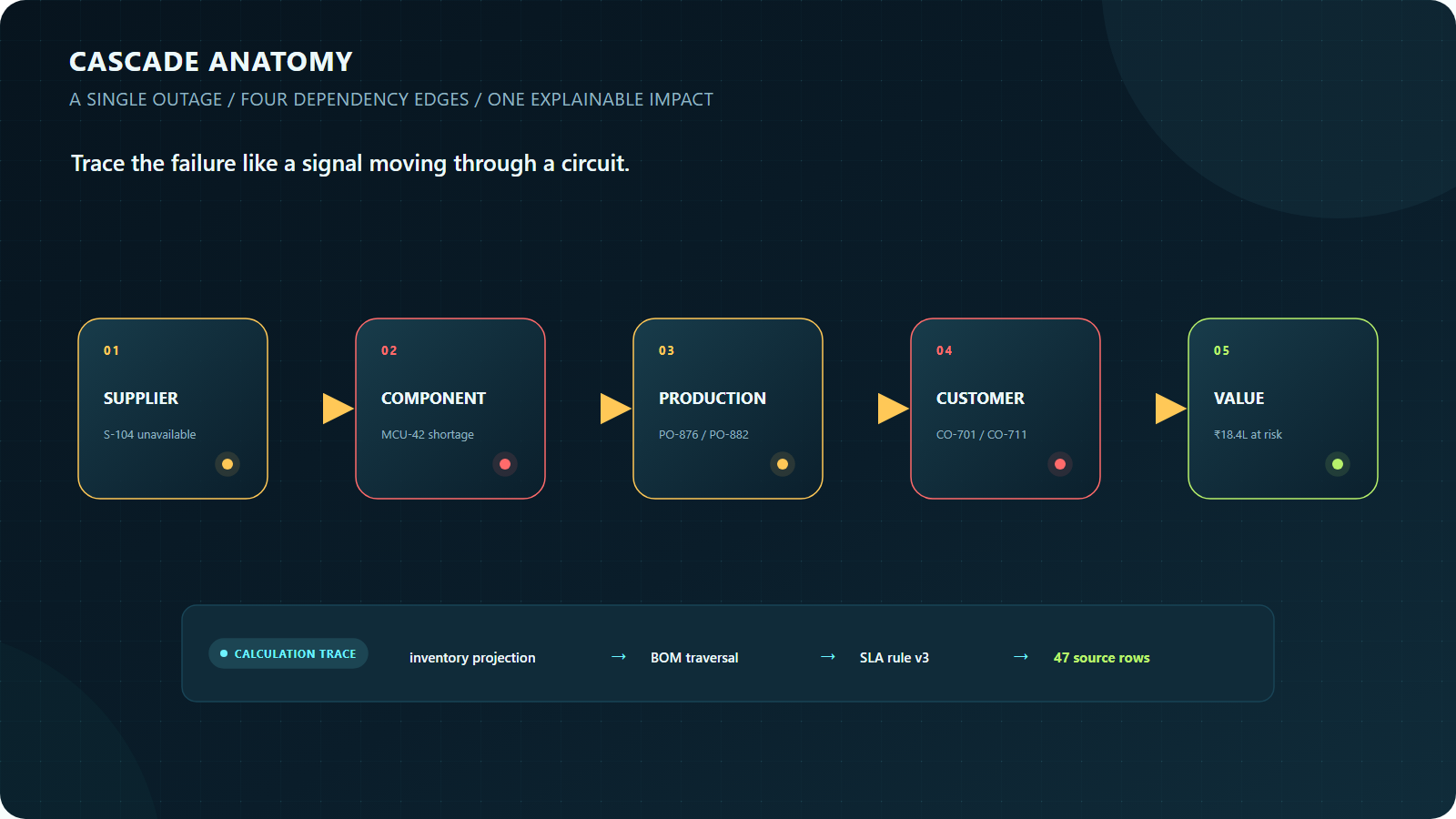
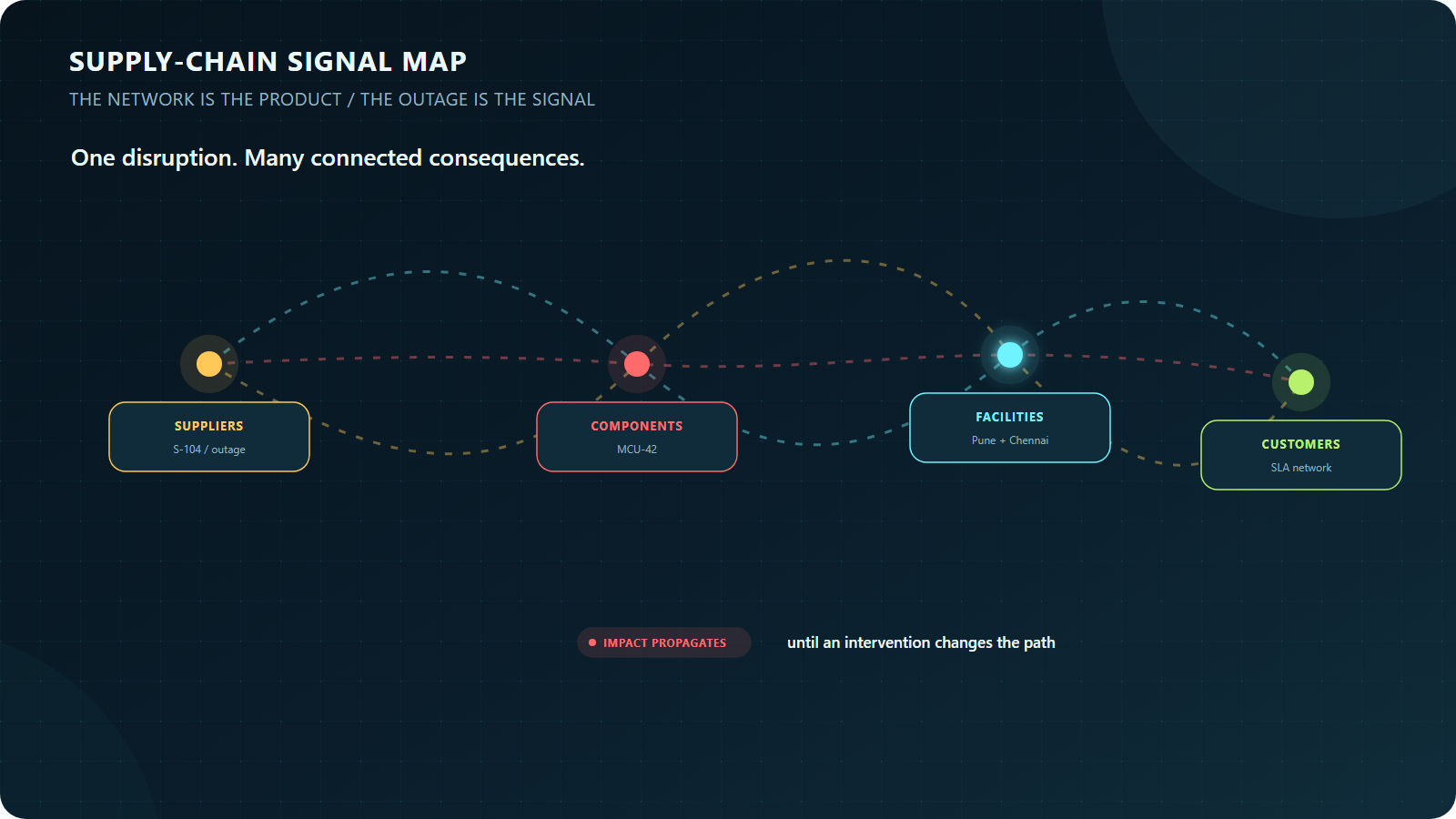
ChronosDB follows the disruption through the supply chain:
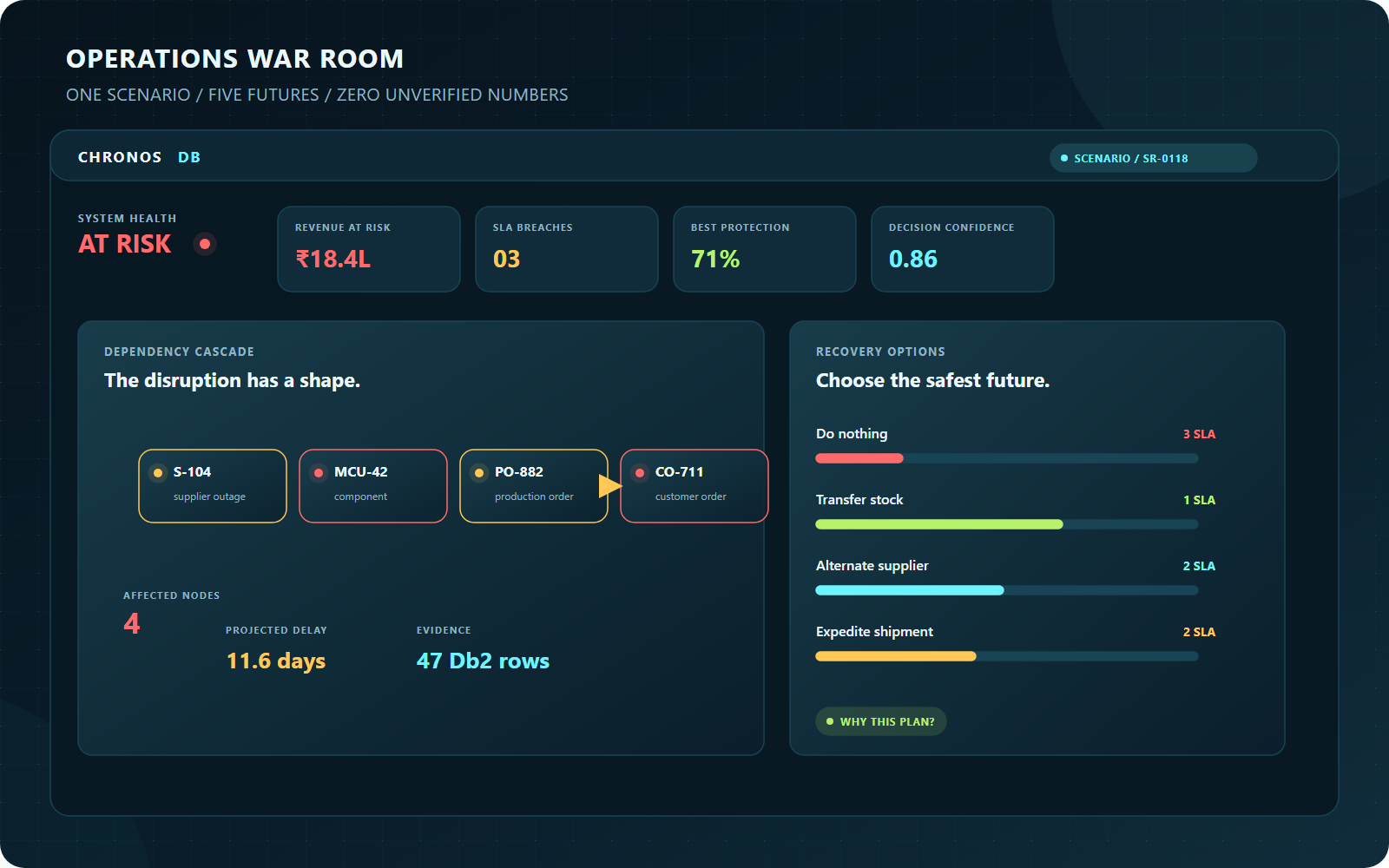
Supplier → Component → Production → Customer → SLA → Revenue at risk
It calculates the operational impact, compares recovery options, identifies the best feasible intervention, and shows the evidence behind every result.
Instead of simply saying “use an alternate supplier,” ChronosDB shows the cost, delay, service impact, risk, supporting records, and calculation trail for each option.
How we built it
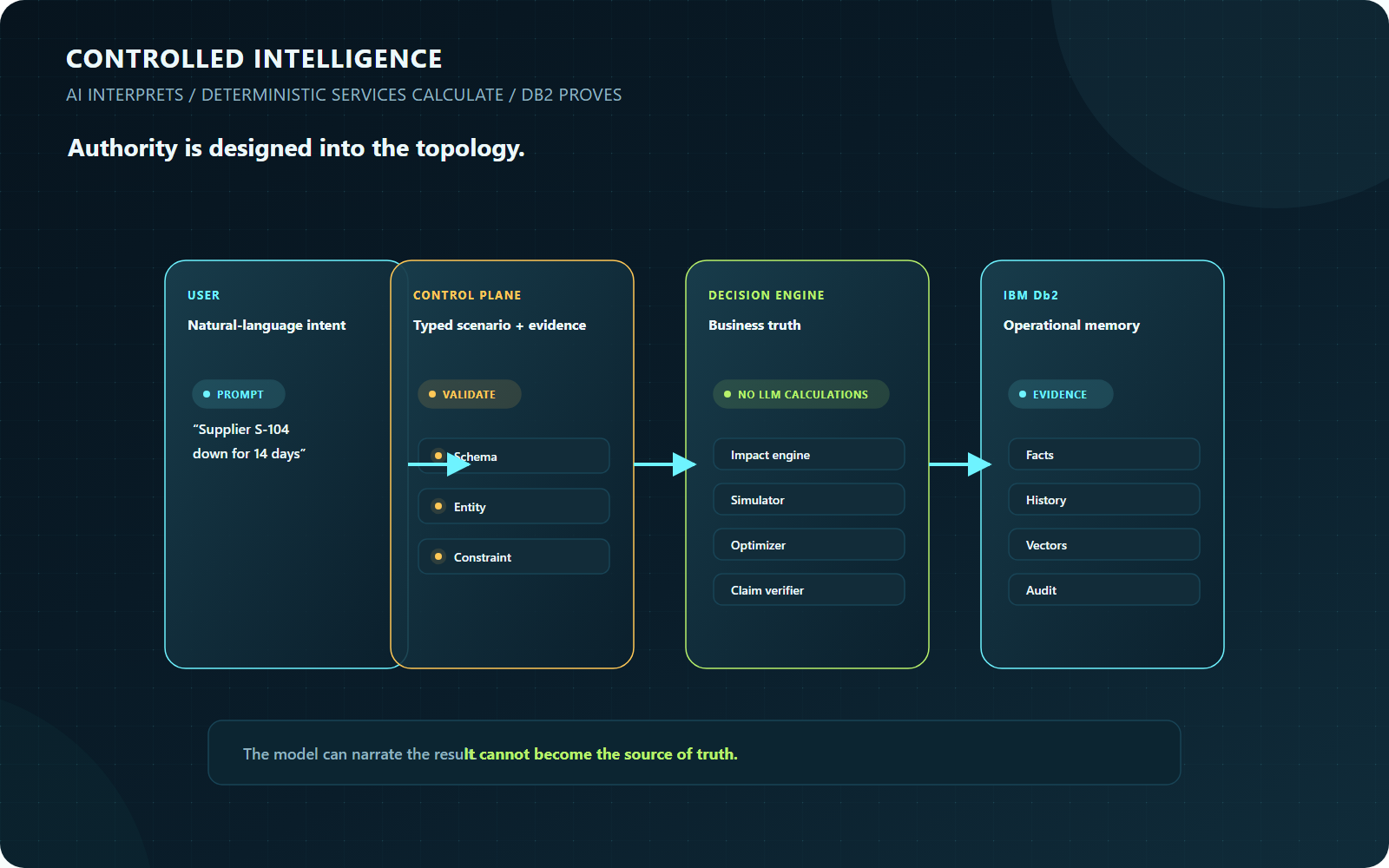
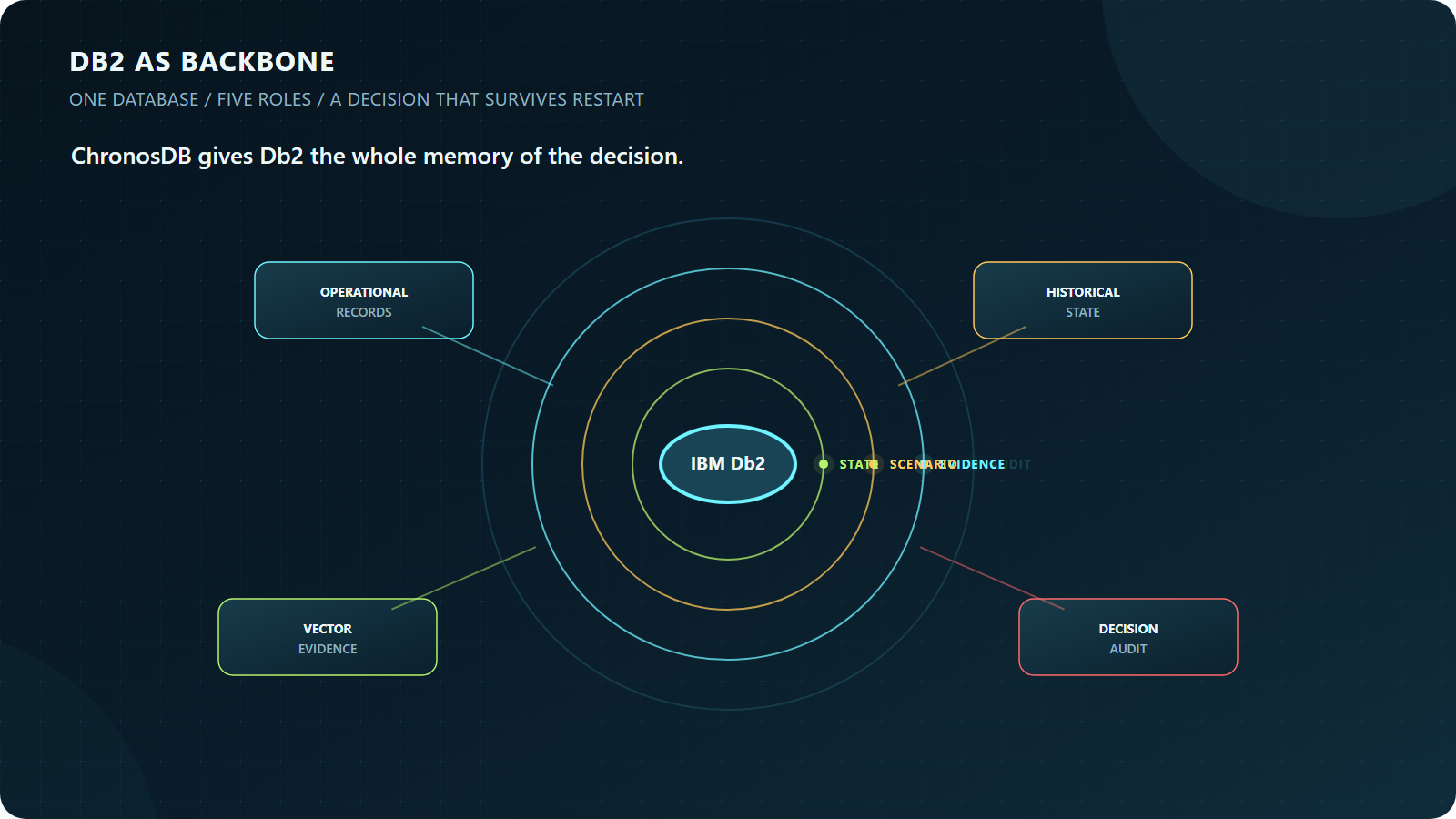
IBM Db2 is not just a storage layer. It acts as ChronosDB’s operational memory, scenario ledger, evidence store, and audit trail.
The system uses Python, FastAPI, SQL, and IBM’s ibm_db connector. Deterministic Python and SQL calculate inventory shortages, production delays, SLA breaches, revenue at risk, and intervention outcomes.
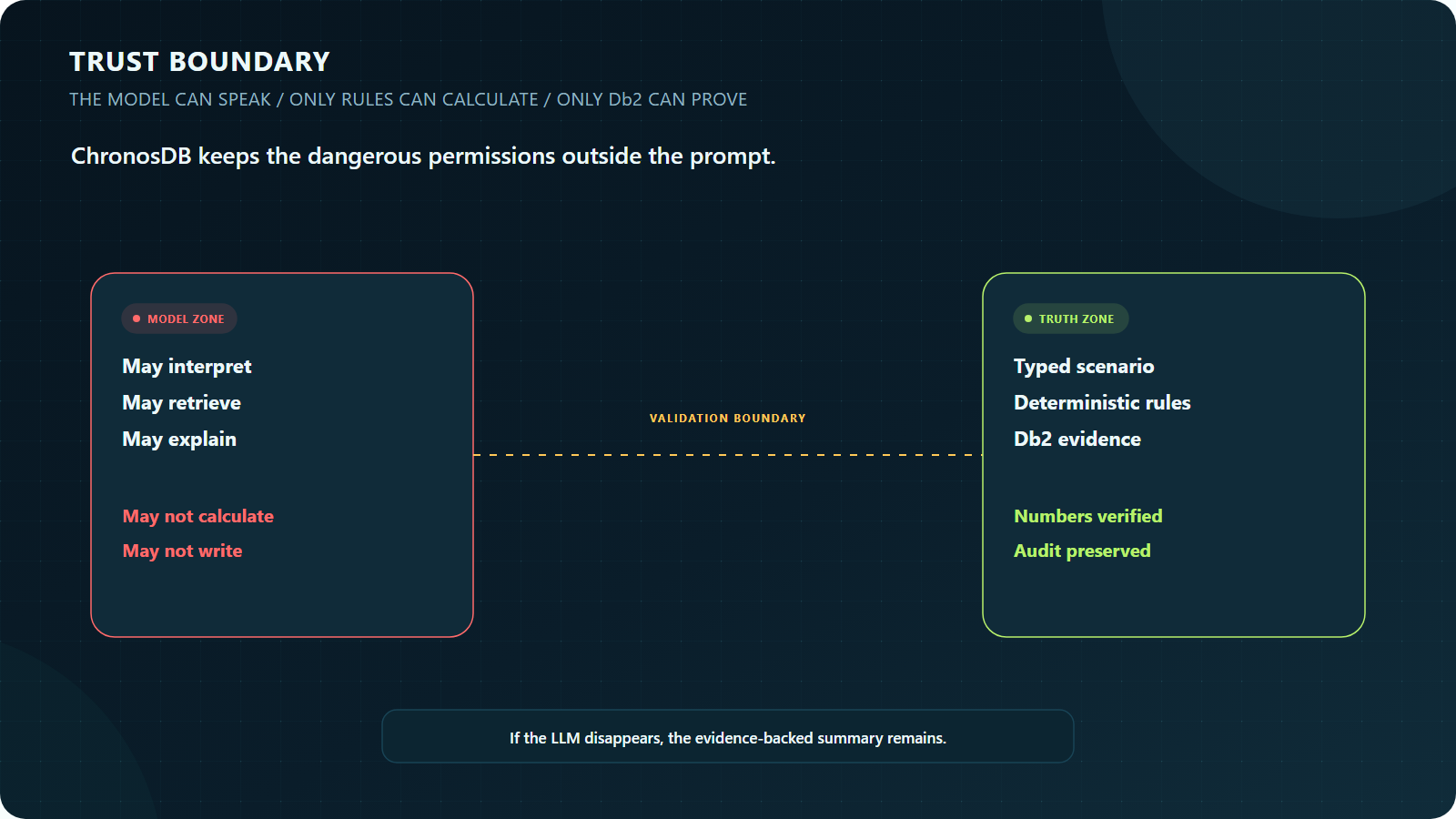
LangChain provides the natural-language interface, but the AI does not control business truth. It interprets the request and explains verified results; it cannot invent calculations or change operational records.
This separation makes ChronosDB both useful and trustworthy: AI provides the conversation, while Db2 and deterministic rules provide the facts.
Challenges we ran into
The hardest challenge was resisting the temptation to build another generic AI chatbot.
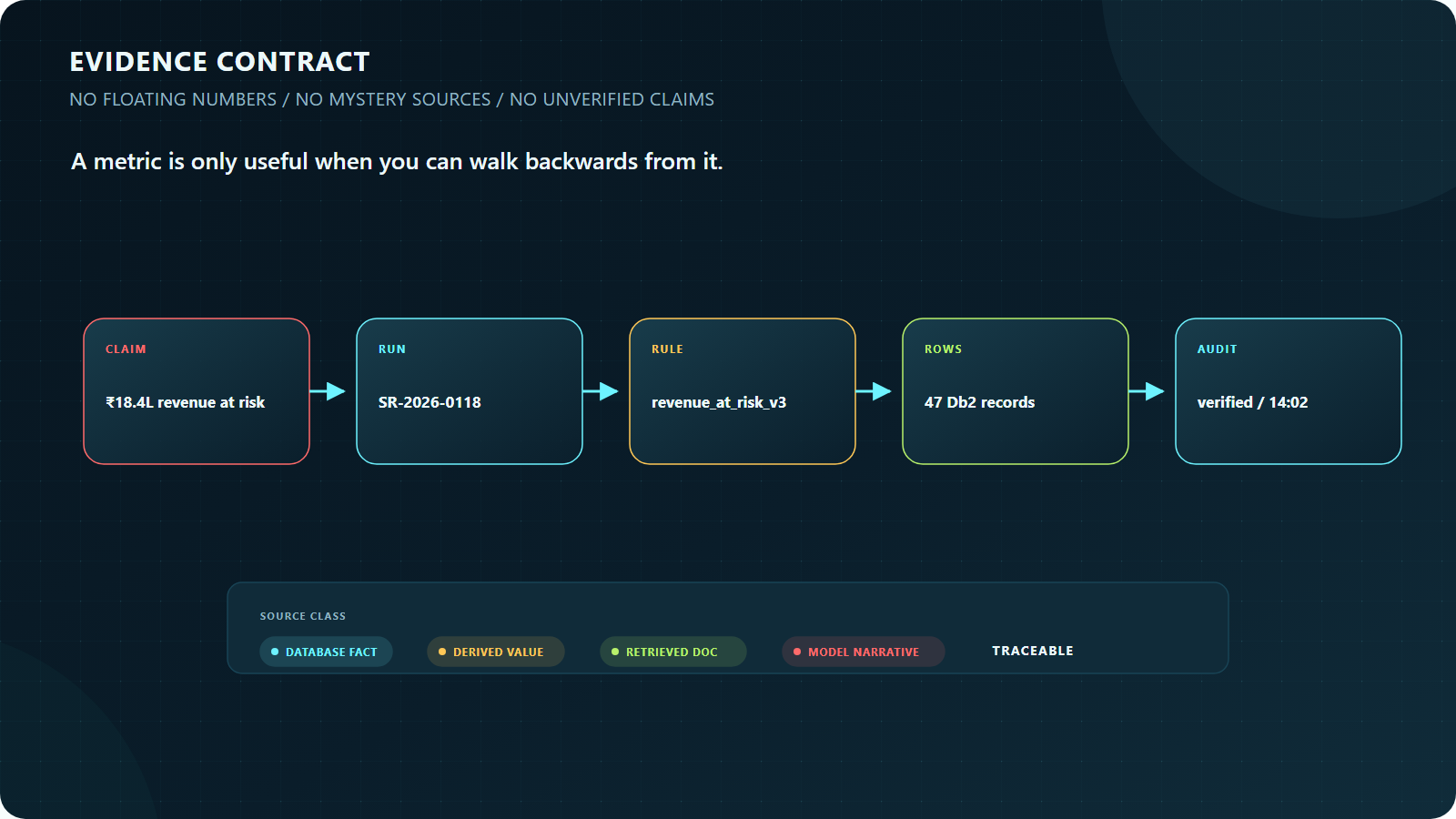
We had to design a system where every important number could be traced back to a scenario run, source record, rule version, and timestamp. We also had to model cascading dependencies, time-based state, alternative futures, cost constraints, and failure cases such as unavailable AI or database services.
The central design question was simple but demanding:
How can AI help make a decision without being allowed to make up the decision?
Accomplishments that we're proud of
We transformed a broad digital-twin concept into a focused decision system with a clear real-world use case.
ChronosDB combines:
- Counterfactual supply-chain simulation
- Constraint-aware recovery planning
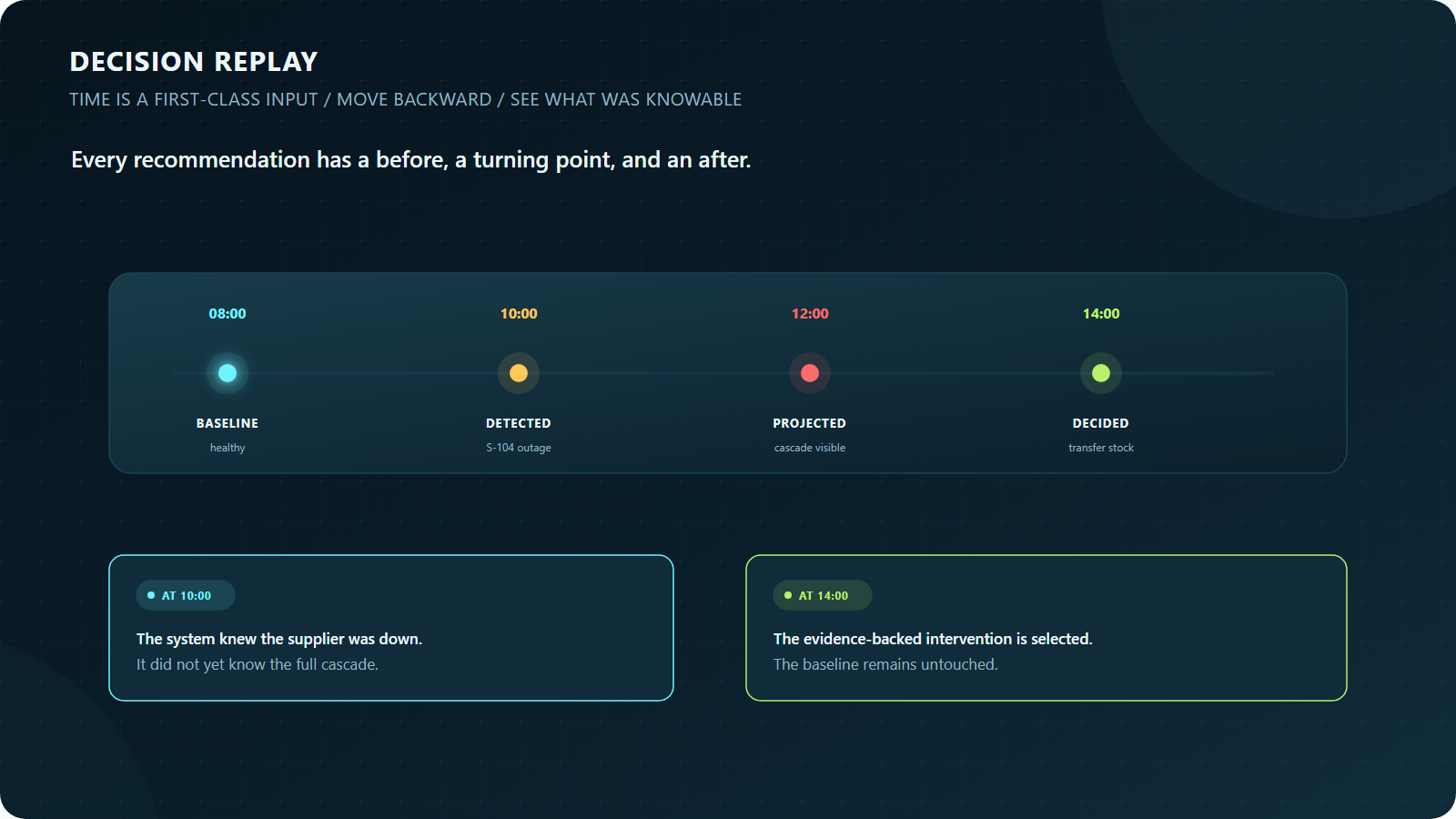
- Temporal state reconstruction
- IBM Db2 evidence and auditability
- Deterministic business calculations
- Controlled natural-language interaction
We are especially proud of making trust a visible product feature. Users can inspect not only the recommendation, but also the cascade, competing options, source records, calculation rules, and audit history behind it.
What we learned
We learned that the most impressive AI system is not necessarily the one that generates the most text.
For operational decisions, trust comes from boundaries. The language model should interpret and explain, while deterministic software and the database calculate and preserve the truth.
We also learned that a strong product needs a narrow problem, measurable outcomes, reproducible data, and an interface that makes complex reasoning understandable within seconds.
What's next for ChronosDB
Next, ChronosDB will evolve from a supplier-outage vertical slice into a broader resilience platform.
Planned extensions include demand spikes, warehouse closures, production-capacity failures, multi-event disruptions, uncertainty analysis, human approval workflows, and integrations with live enterprise systems.
The long-term vision is simple:
When the supply chain changes, ChronosDB should show what changed, what happens next, and what action is safest—with proof.
Built With
- audit-logging
- deterministic-simulation
- docker
- evidence
- explainable-ai
- fastapi
- ibm-db
- ibm-db2
- langchain
- python
- react
- rest-apis
- scenario-analysis
- sql
- supply-chain-analytics
- temporal-data
- typescript
- vector-search
- vite
