-
-
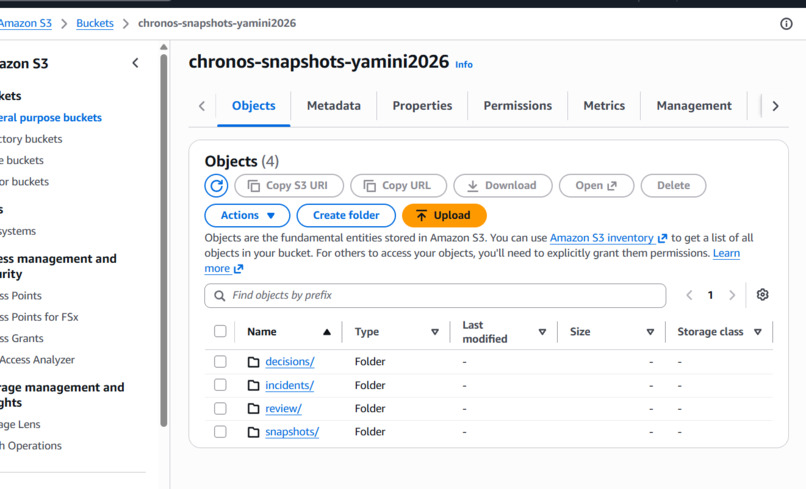
picture 1
-
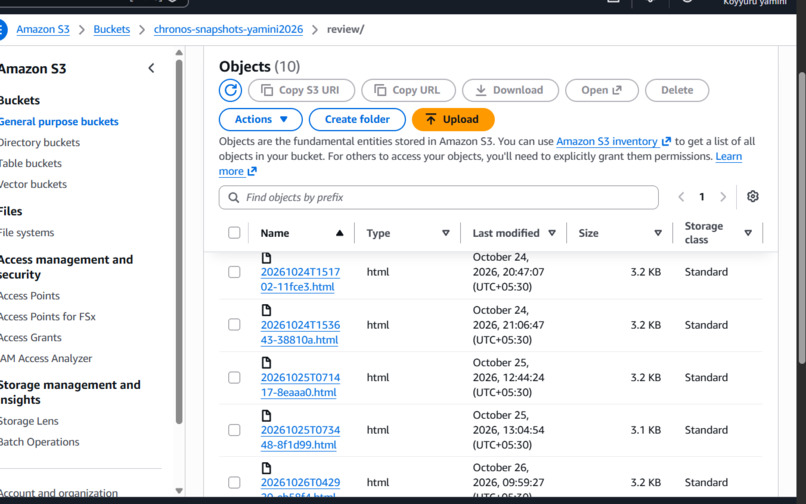
picture2
-
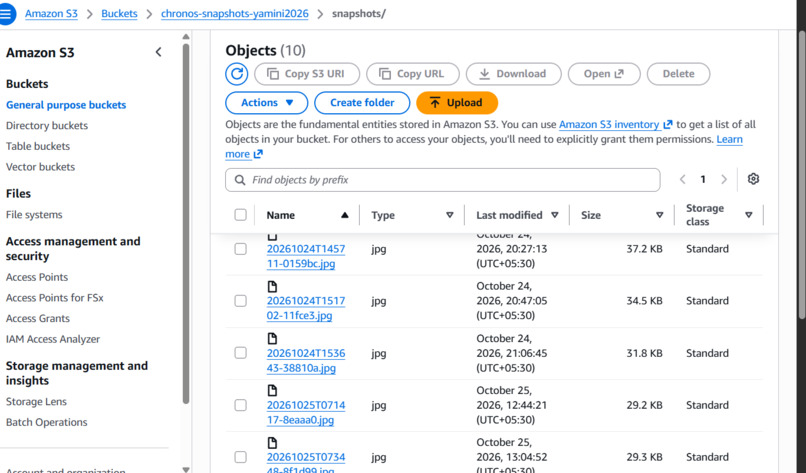
picture3
-
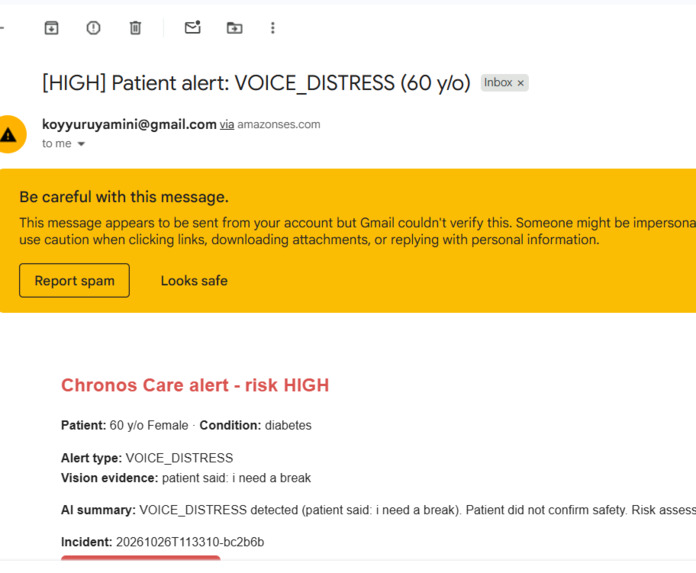
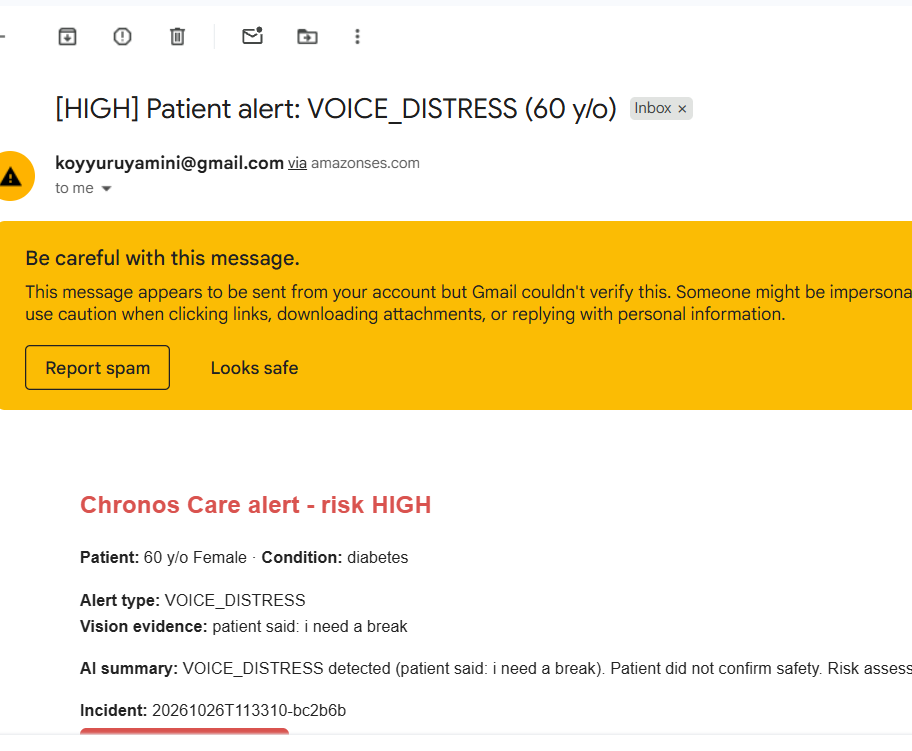
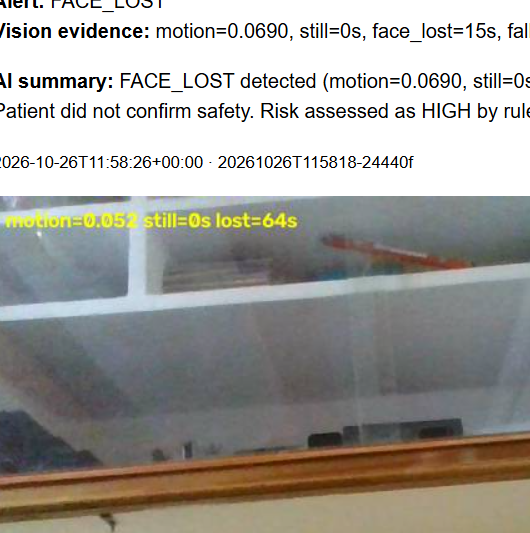
mail alert to doctor
-
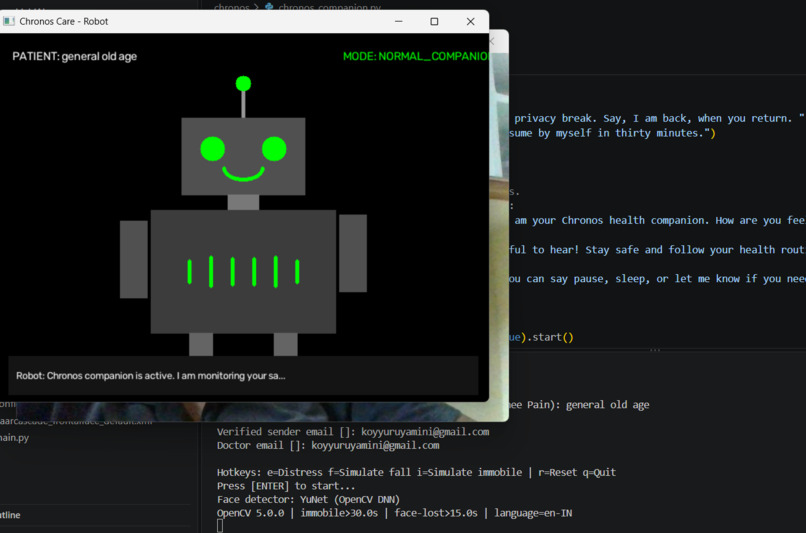
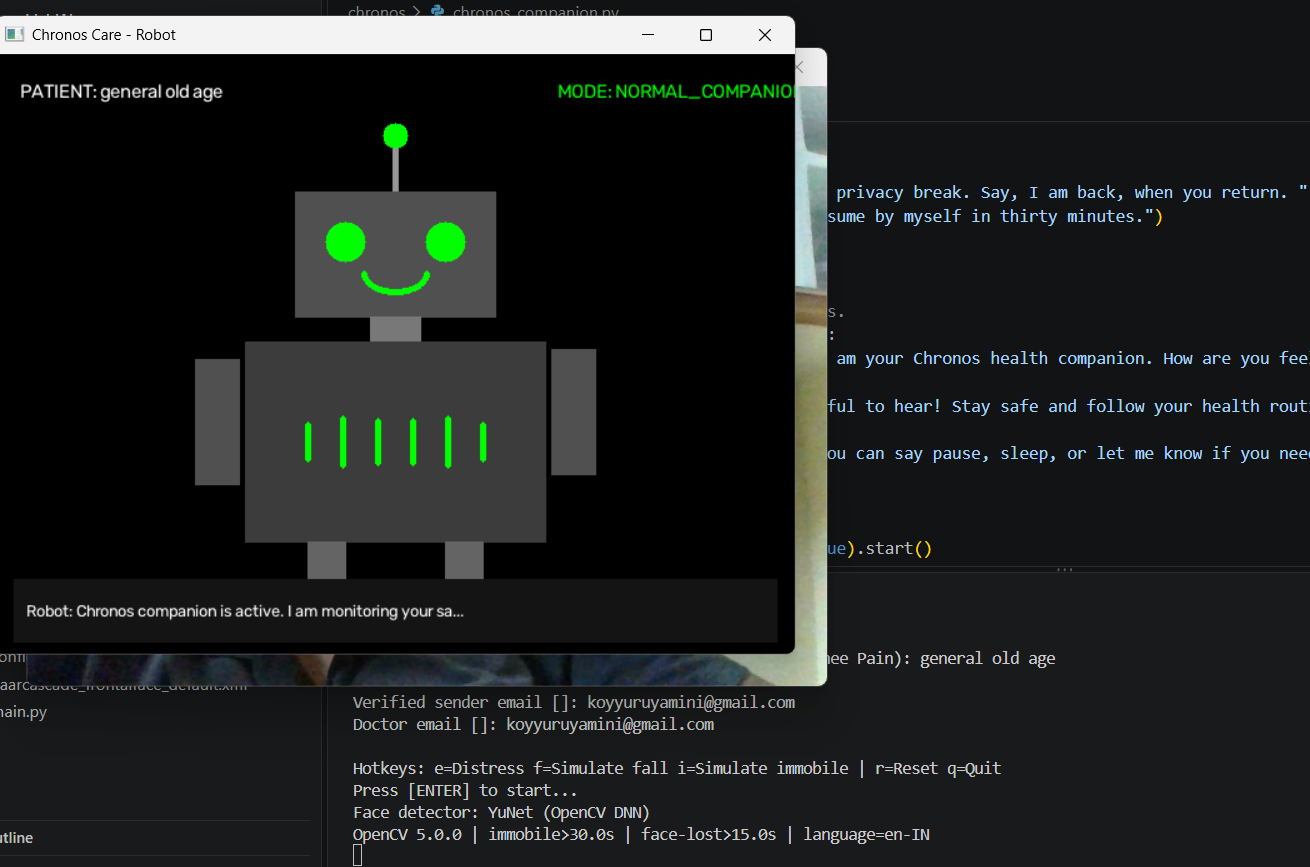
companion ai normal mode
-
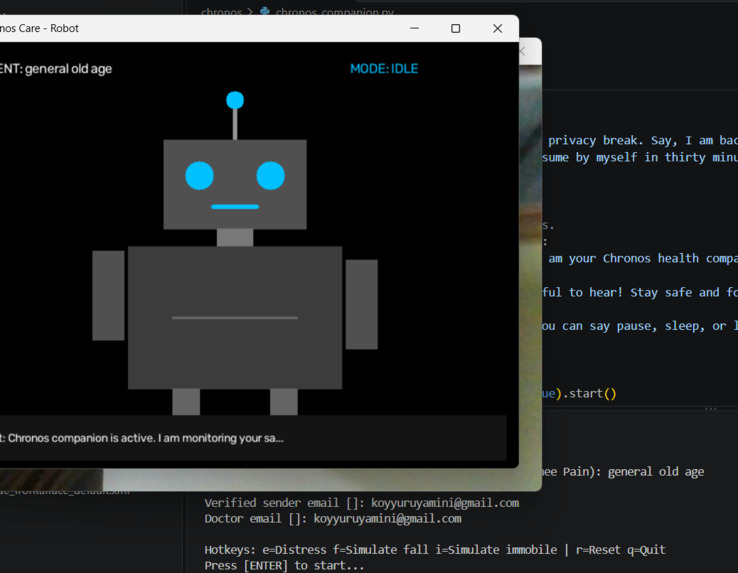
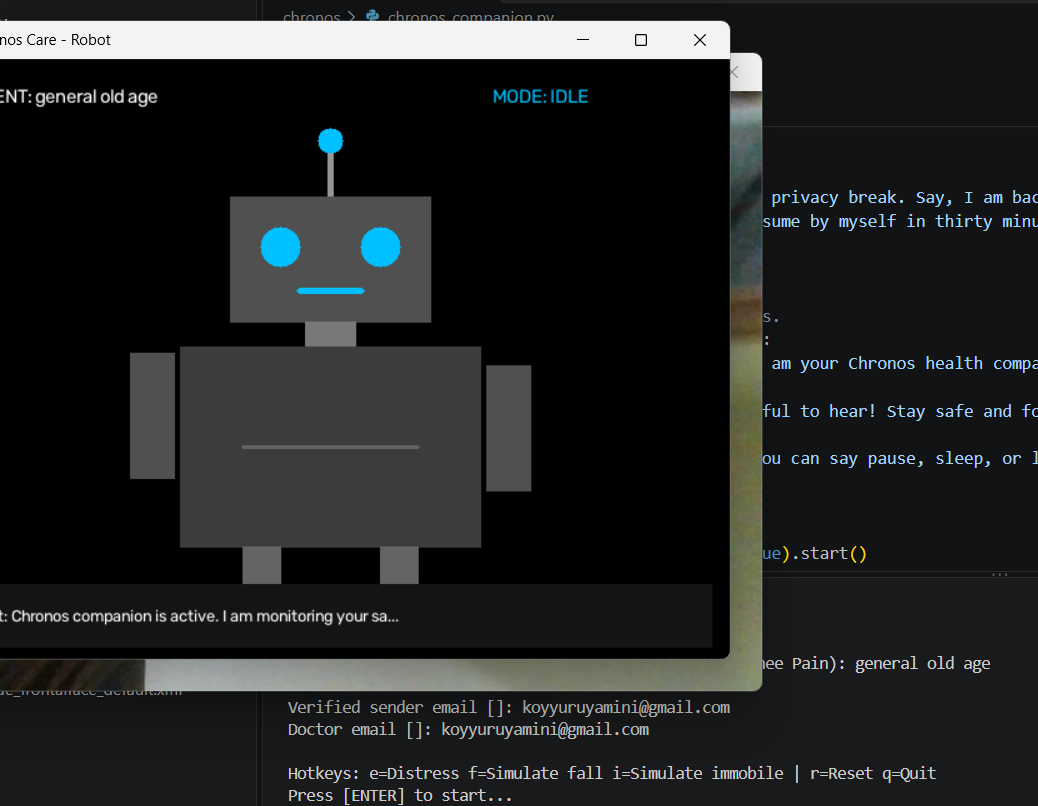
companion mode waiting for the response from user
-
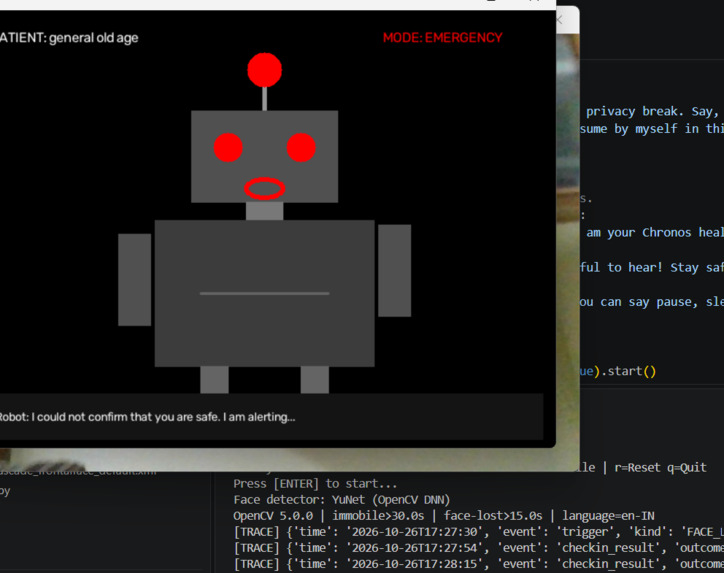
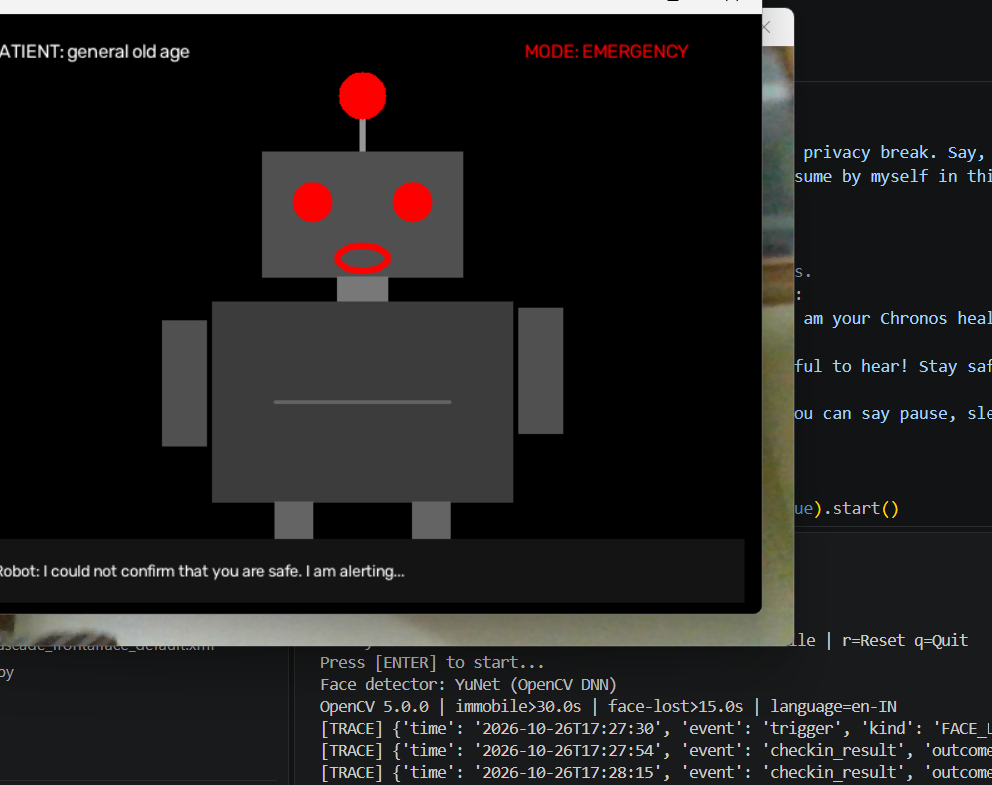
companion ai giving emergency alerts
-
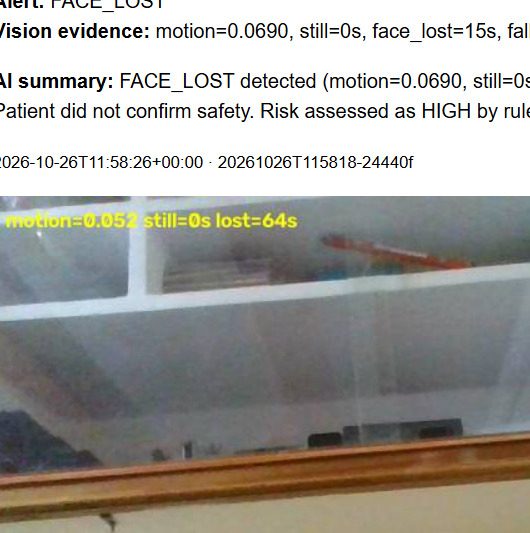
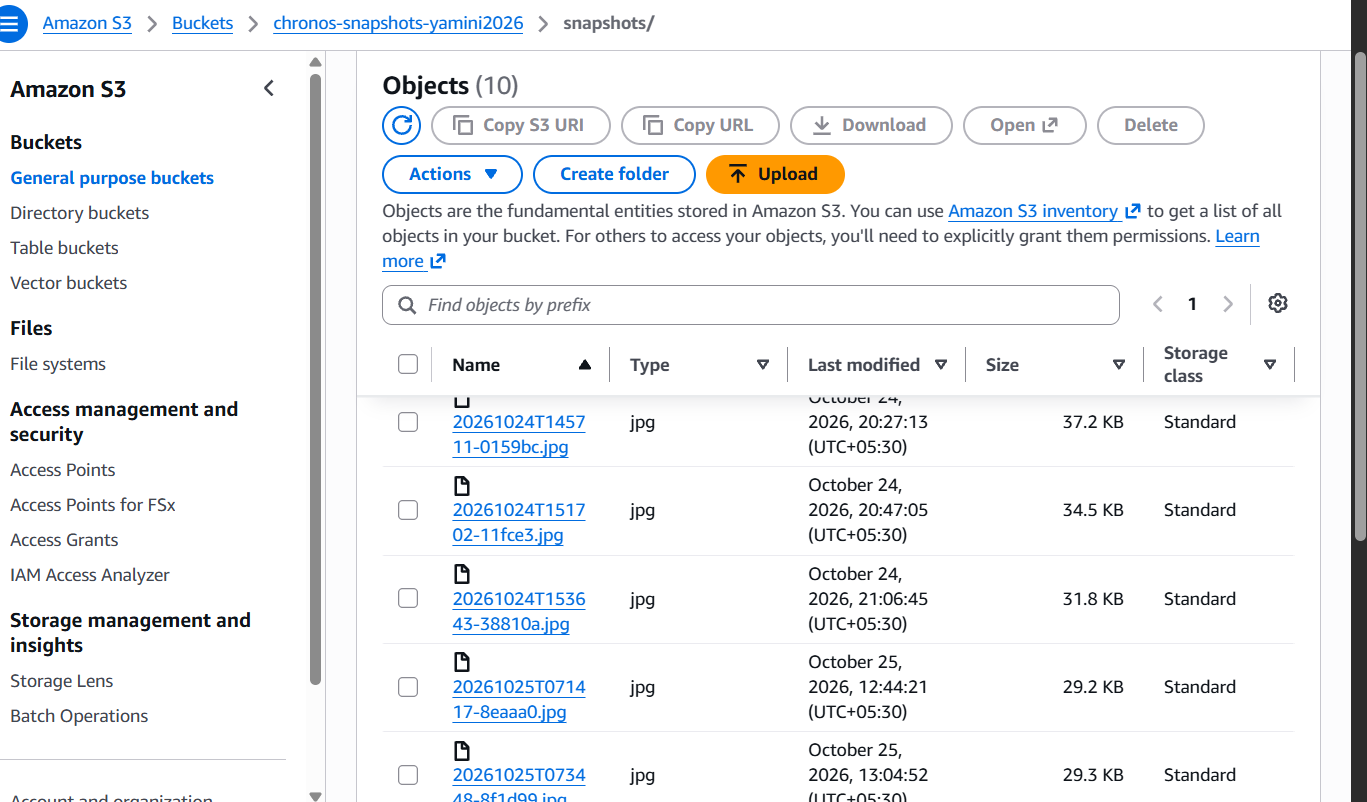
image proof which is sent for doctor
-
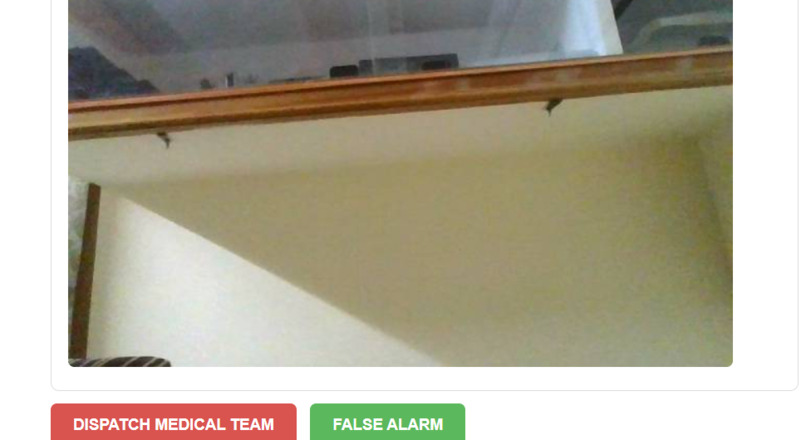
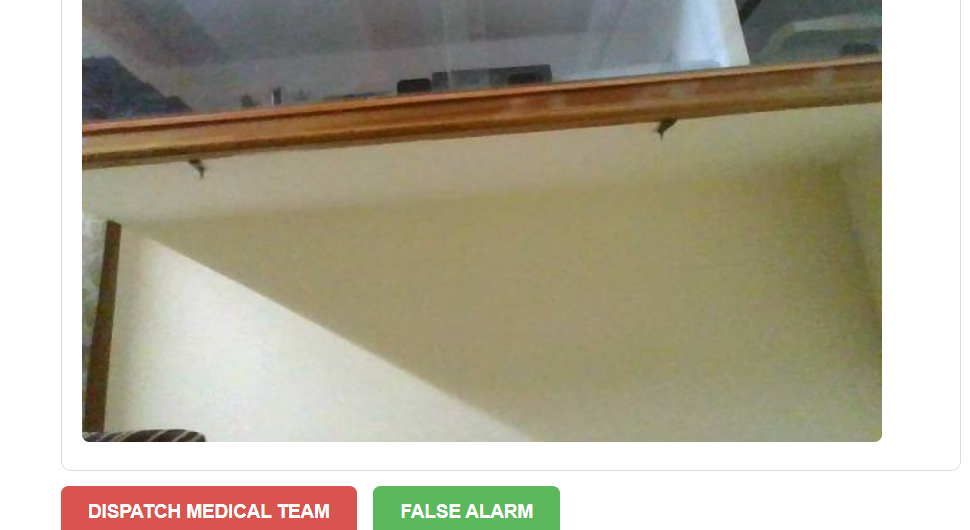
options showing to dispatch the medical team or cancelling it as false alarm
-
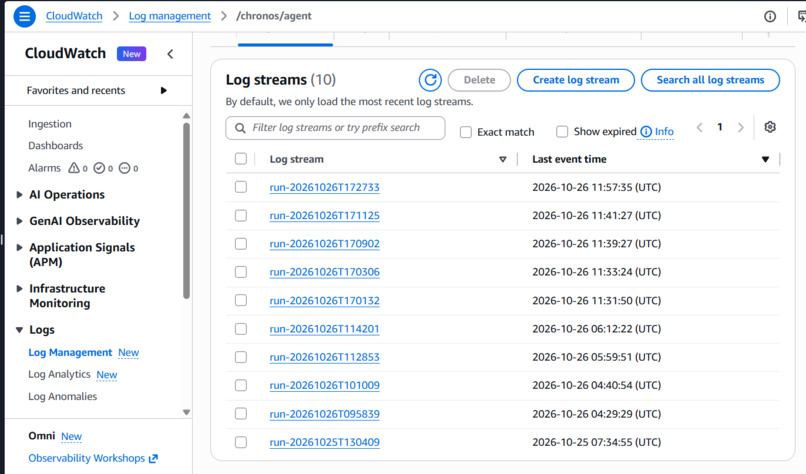
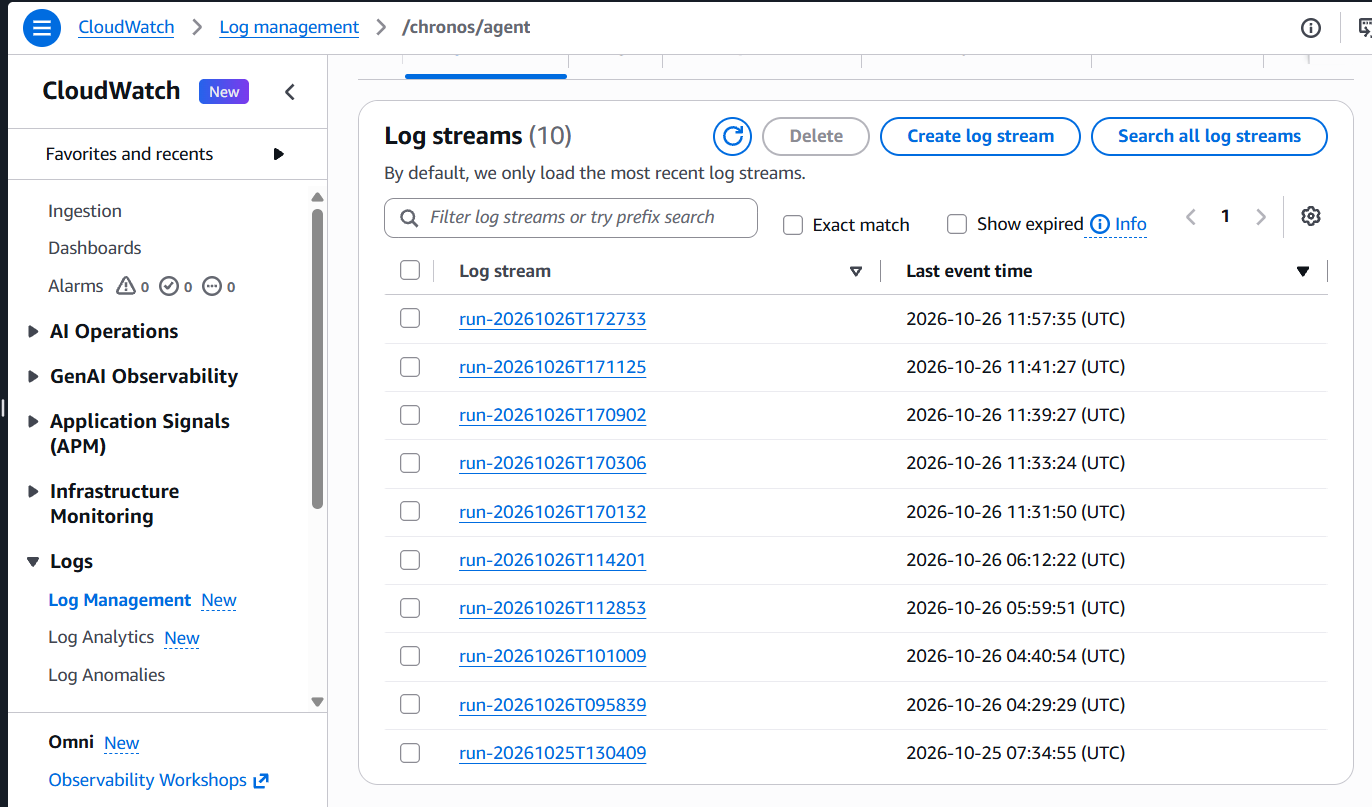
cloud watch log
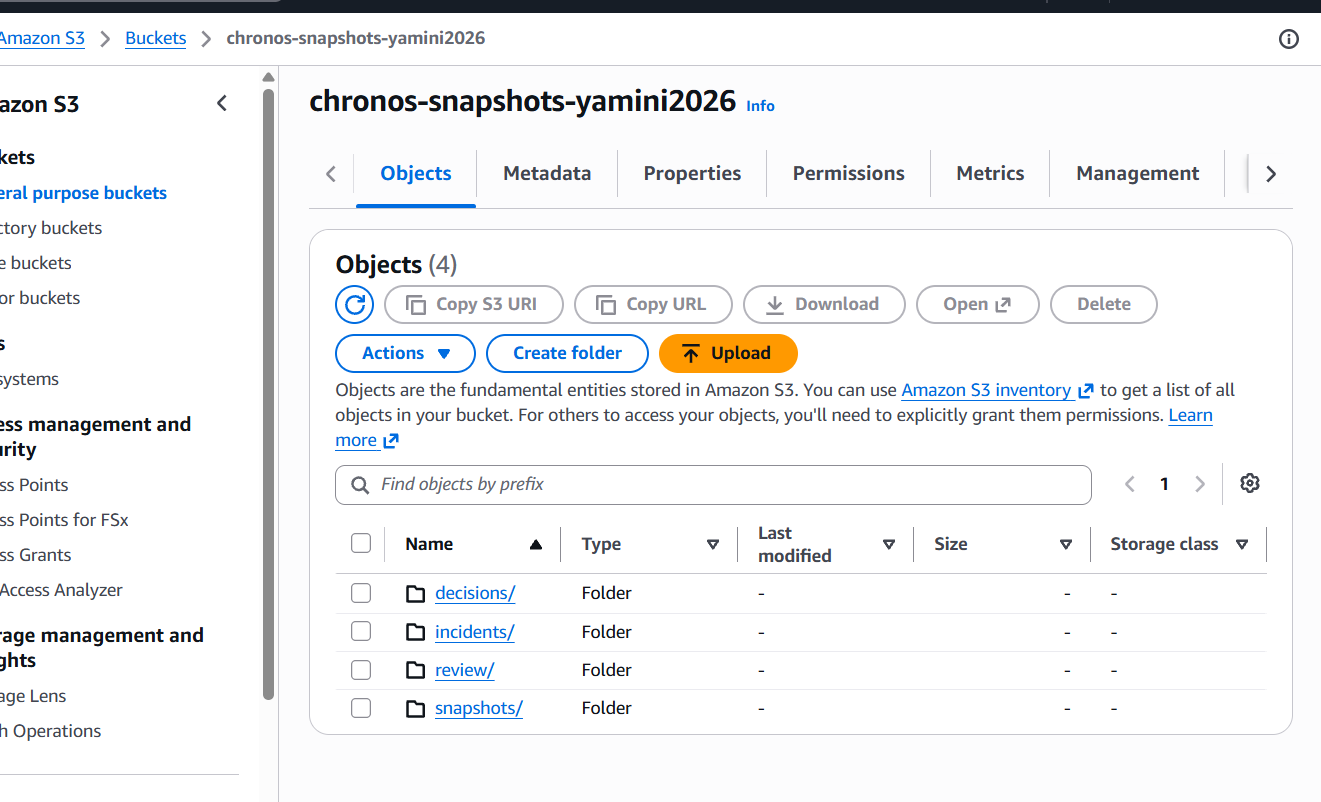
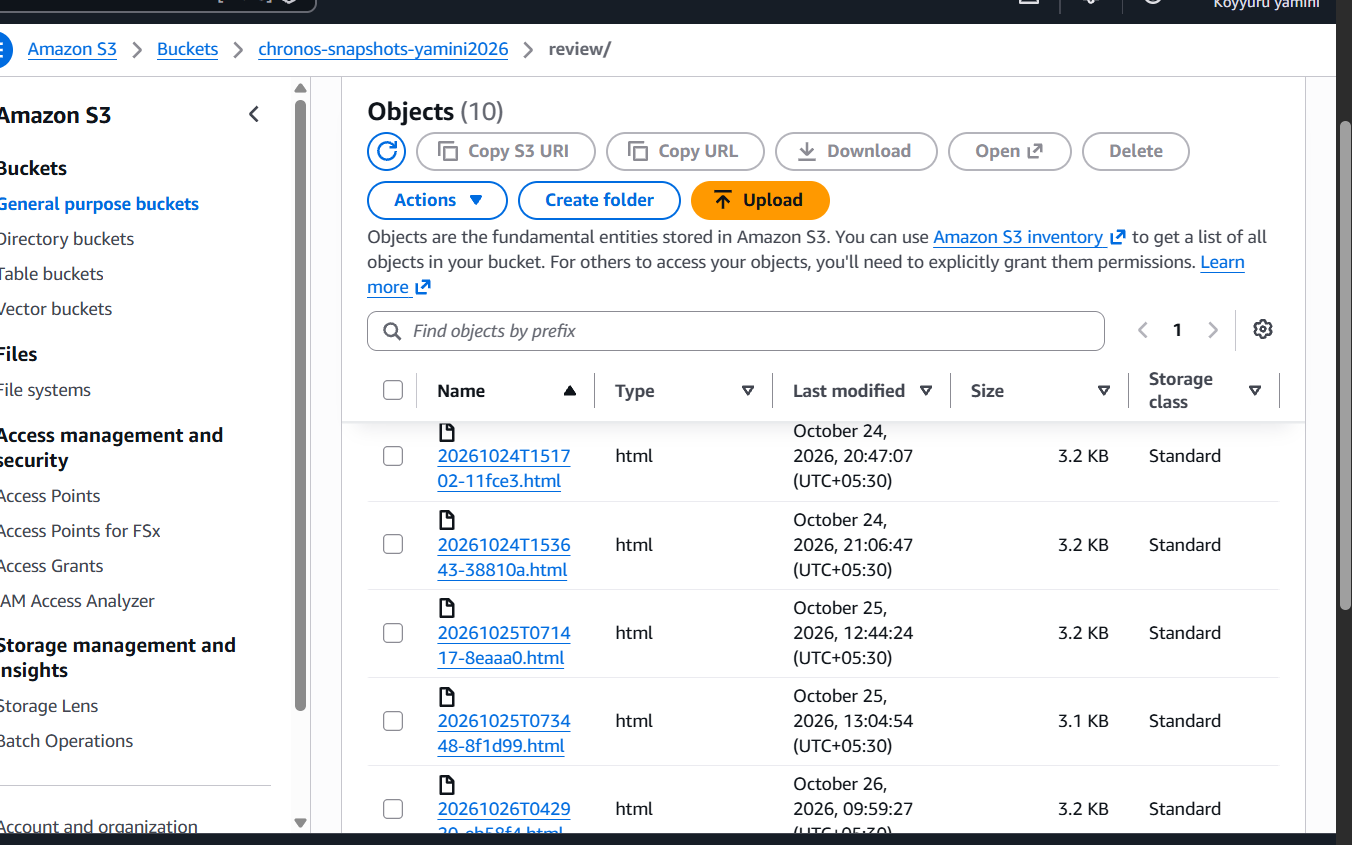
Inspiration
Every year, older adults living alone face risks from unexpected falls, medical emergencies, and situations where they may be unable to call for help. A fall or an unusual absence from view does not always mean an emergency, but failing to recognize a genuine emergency in time can have serious consequences.
ChronosAI Companion was inspired by the need to make independent living safer for older adults through intelligent, context-aware assistance. Our goal is to build a system that can recognize potential distress, respect a person's independence, minimize unnecessary alerts, and help connect them with medical assistance when needed.
What it does
ChronosAI Companion is an AI-powered intelligent patient companion designed to support older adults who live alone.
The system aims to recognize potential emergency situations, such as a person falling, moving out of the monitored camera frame, or verbally requesting assistance. Instead of automatically treating every unusual event as an emergency, it uses a verification workflow to help distinguish between routine activities and situations that may require intervention.
Key features include:
- Fall and activity monitoring: Uses computer vision to identify potential falls and relevant changes in the monitored scene.
- Context-aware assistance: Aims to recognize when a person needs help rather than generating alerts for every period of inactivity.
- User-controlled pause: Allows the user to request a break or pause monitoring-related alerts, while preserving an appropriate way to request assistance.
- Two-stage well-being verification: When a potential concern is detected, the system checks whether the person is okay at two separate intervals before escalating an unanswered concern.
- Medical alert escalation: If the person does not respond and the situation meets the escalation criteria, the system can notify the designated medical contact.
- Medical response confirmation: The receiving medical professional can review the alert and confirm whether a response team should be dispatched or the alert should be cancelled.
The objective is to balance timely emergency assistance with user comfort, privacy, and fewer unnecessary notifications.
How we built it
ChronosAI Companion combines computer vision, AI capabilities, and an event-driven response workflow. The system is designed to interpret visual information, identify potentially concerning events, and initiate an appropriate verification process.
The workflow incorporates user interaction, timed well-being checks, conditional alert escalation, and a medical response confirmation step. This approach is intended to prevent every detected event from immediately triggering an emergency response.
The project brings these components together in a prototype demonstrated through a dedicated video. Its architecture is designed around the principle that detecting a potential emergency is only the first step; verification and appropriate escalation are equally important.
Challenges we ran into
One of the main challenges was designing a system that could recognize potential emergencies without generating excessive false alarms. A person leaving the camera frame, resting, or remaining still does not necessarily indicate danger.
Another challenge was designing an escalation process that gives the user an opportunity to respond before a medical alert is sent. Creating a clear interaction between the user, the AI system, and the medical responder also requires careful handling of timing, communication failures, and emergency cancellation.
We also had to consider user privacy, reliable event detection, and the importance of ensuring that a pause feature does not unintentionally prevent a genuine request for help from being recognized.
Accomplishments that we're proud of
We are proud of the concept and prototype behind ChronosAI Companion, particularly its focus on combining intelligent monitoring with human verification.
Rather than relying solely on automatic alerts, the system is designed around a sequence of event detection, well-being checks, conditional escalation, and medical response confirmation.
We are also proud to have developed this as a solo project, bringing together the idea, technical implementation, integration work, and demo presentation. Our goal is to explore how AI can support safer independent living while respecting the dignity and autonomy of older adults.
What we learned
This project reinforced the importance of designing AI systems around real human needs rather than detection accuracy alone.
We explored why context matters in computer vision, why false positives can create unnecessary stress, and why a verification process can be valuable before escalating a potential emergency. We also learned the importance of clear user controls, dependable communication, and appropriate human involvement in high-stakes decisions.
Most importantly, we learned that an intelligent companion should not simply detect events; it should help people receive the right support at the right time.
What's next for ChronosAI Companion
Our next goal is to strengthen detection reliability, test the system across varied real-world scenarios, improve privacy safeguards, and evaluate the complete alert workflow with appropriate safety measures.
We also plan to explore extending the concept beyond elderly care. One potential future application is driver safety, particularly for long-distance car, bus, and lorry drivers.
Using driver-monitoring computer vision, a future version could identify signs of drowsiness or reduced alertness and trigger graduated warnings. If a serious risk persists, it could explore appropriate emergency escalation mechanisms.
Additional future directions include more robust emergency communication, integration with authorized healthcare workflows, and testing the system's reliability under different lighting, camera, and connectivity conditions.
Our long-term vision is to develop ChronosAI Companion into an intelligent safety companion that supports vulnerable people, helps prevent avoidable harm, and enables timely human intervention when it matters most.
Built With
- amazon-cloudwatch
- amazon-web-services
- boto3
- computervisibility
- json
- opencv
- python
- pyttsx3
- virtual


Log in or sign up for Devpost to join the conversation.