-
-
A Biometric Deep Work Engine
-
Linkedin post
-
Linkedin post
-
Linkedin post
Inspiration
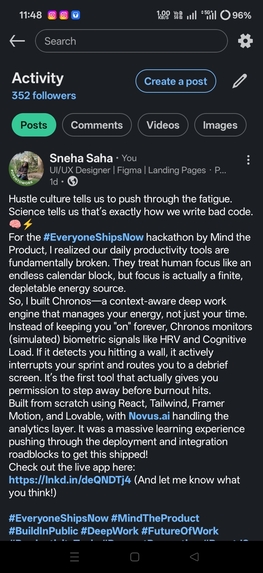
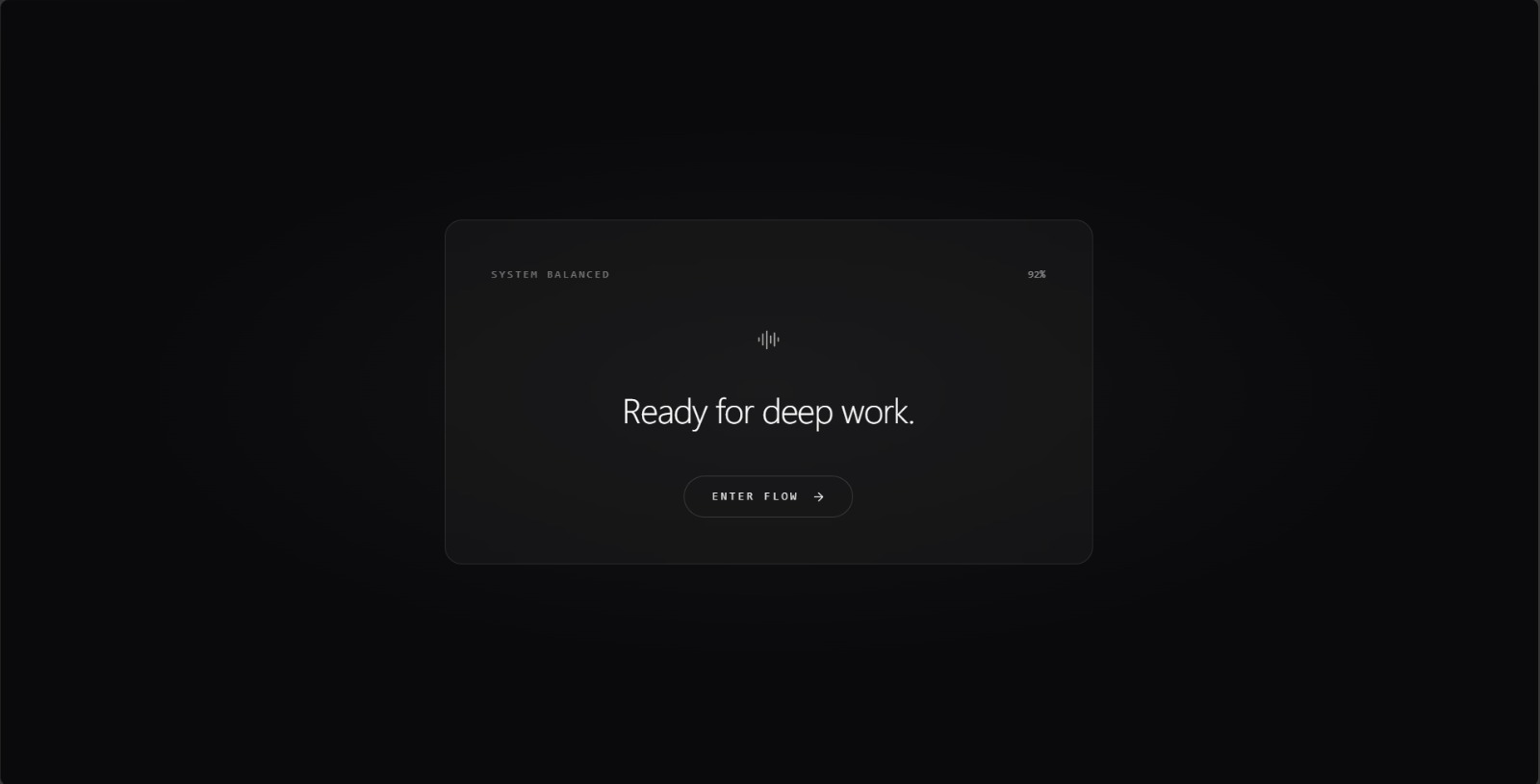
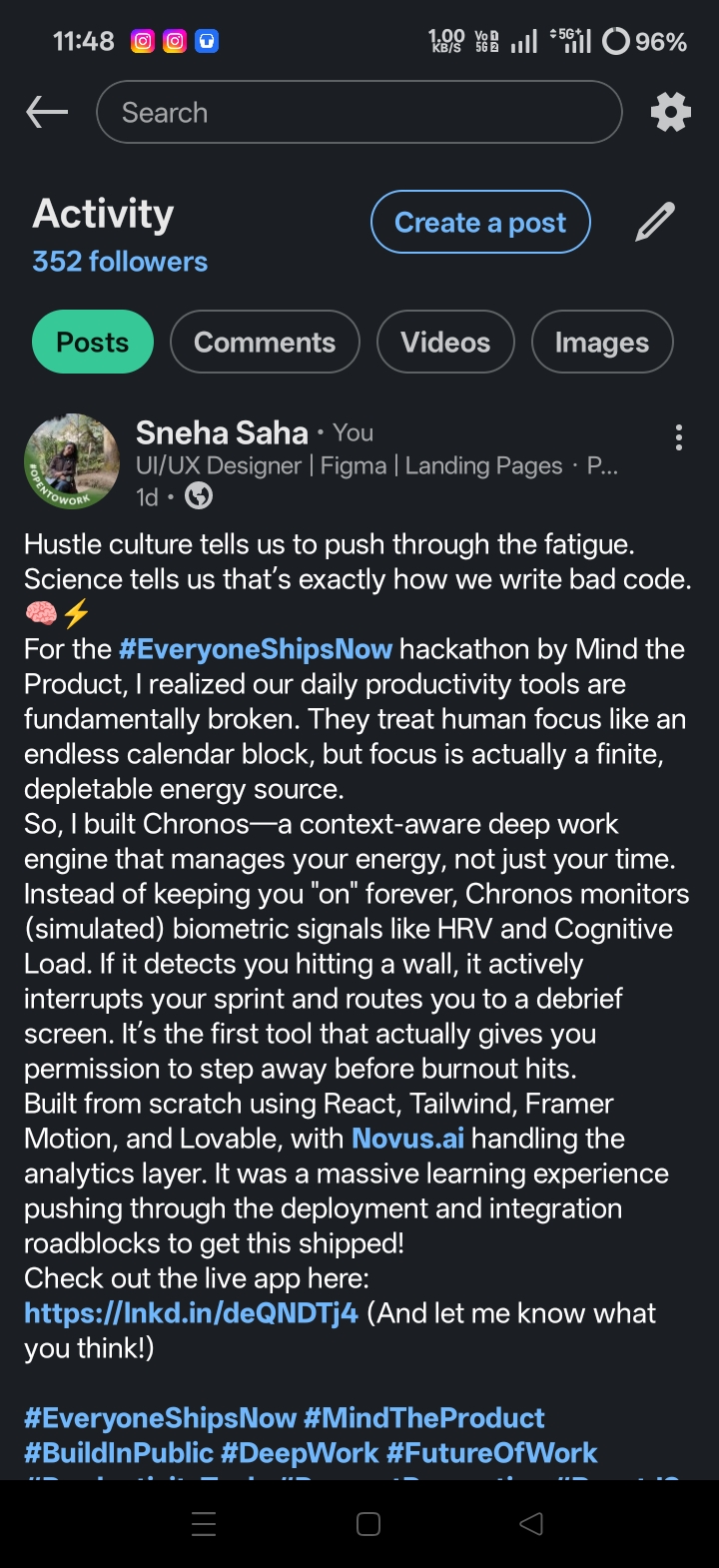
We built Chronos because the modern obsession with 'hustle culture' is fundamentally broken. Developers and creators are treating human focus like a calendar block, but focus is actually a depletable energy source. We were inspired to create a tool that protects your mind instead of just managing your tasks—a silent partner that actually gives you the grace to step away before cognitive burnout hits.
What it does
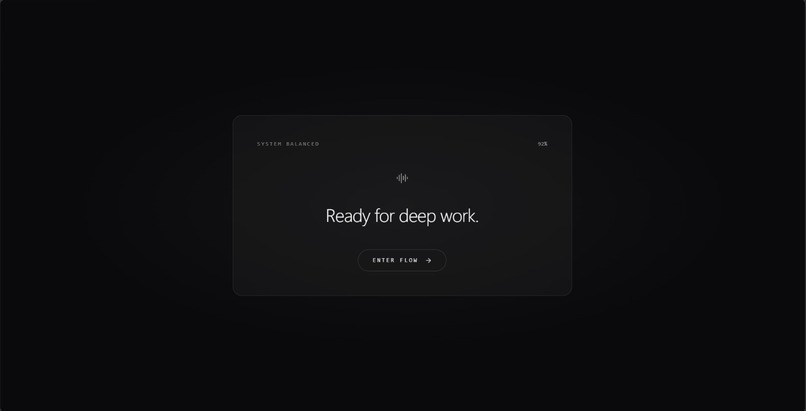
Chronos is a context-aware deep work engine. When you enter a "Sprint," it strips away all UI friction and distractions. Under the hood, it monitors simulated biometric signals (like HRV and Cognitive Load). If it detects a drop in focus, it doesn't just buzz you—it actively interrupts your sprint and routes you to a Debrief screen. It trains you to recognize your peak performance windows and prioritize sustainable output over short-term grinding.
How we built it
We developed Chronos primarily using React, Tailwind CSS, and Framer Motion to ensure the transitions felt premium and frictionless. For rapid deployment and iteration, we leveraged Lovable.dev as our primary building platform. For the backend analytics and user tracking, we integrated the Novus.ai (Pendo) tracking script directly into our root application layer.
Challenges we ran into
Integrating the analytics layer was by far our biggest hurdle. Because Novus.ai is in an early build phase, we got trapped in an onboarding loop that was waiting for a native GitHub PR merge, which our rapid-deployment setup didn't support. We had to manually inject the snippet into the __root.tsx file and validate the environment directly through the browser console to bypass the UI blocks. We also hit tool limits right at the finish line, forcing us to be incredibly deliberate with our final code pushes.
Accomplishments that we're proud of
We are incredibly proud of the core state machine. The transition from the "Calm Hub" dashboard into the dark "Sprint" mode, followed by the burnout intervention modal, works flawlessly. But honestly, our biggest accomplishment was pushing through the environment crashes and analytics roadblocks to ship a fully functional, live-on-the-internet product before the deadline.
What we learned
We learned that while rapid-deployment tools and AI assistants can make you build 10x faster, human intuition is still completely necessary to debug third-party integrations. We also learned how to creatively problem-solve when standard enterprise onboarding flows break down during a fast-paced hackathon.
What's next for Chronos
Right now, Chronos uses simulated biometric triggers. The immediate next step is integrating actual hardware APIs (like Apple HealthKit, Whoop, or Oura) to read real-time HRV and heart rate data. After that, we want to build a "Team Sync" feature that pauses Slack/Teams notifications globally for your whole startup when you enter a deep work sprint.
Built With
- css
- framer
- javascript
- lovable.dev
- lovablenativedeployment
- motion
- novus.ai
- tailwind
- typescript


Log in or sign up for Devpost to join the conversation.