About the project
Inspiration
Most Git tools stop at the commit. Diffs are walls of +/-, blame is a sidebar of emails, and “who changed this function?” still means scrolling through history by hand. We wanted Chronos to feel closer to how people actually reason about code: this function used to look like that, these commits touched only this file, put this one function back without rewriting the whole branch.
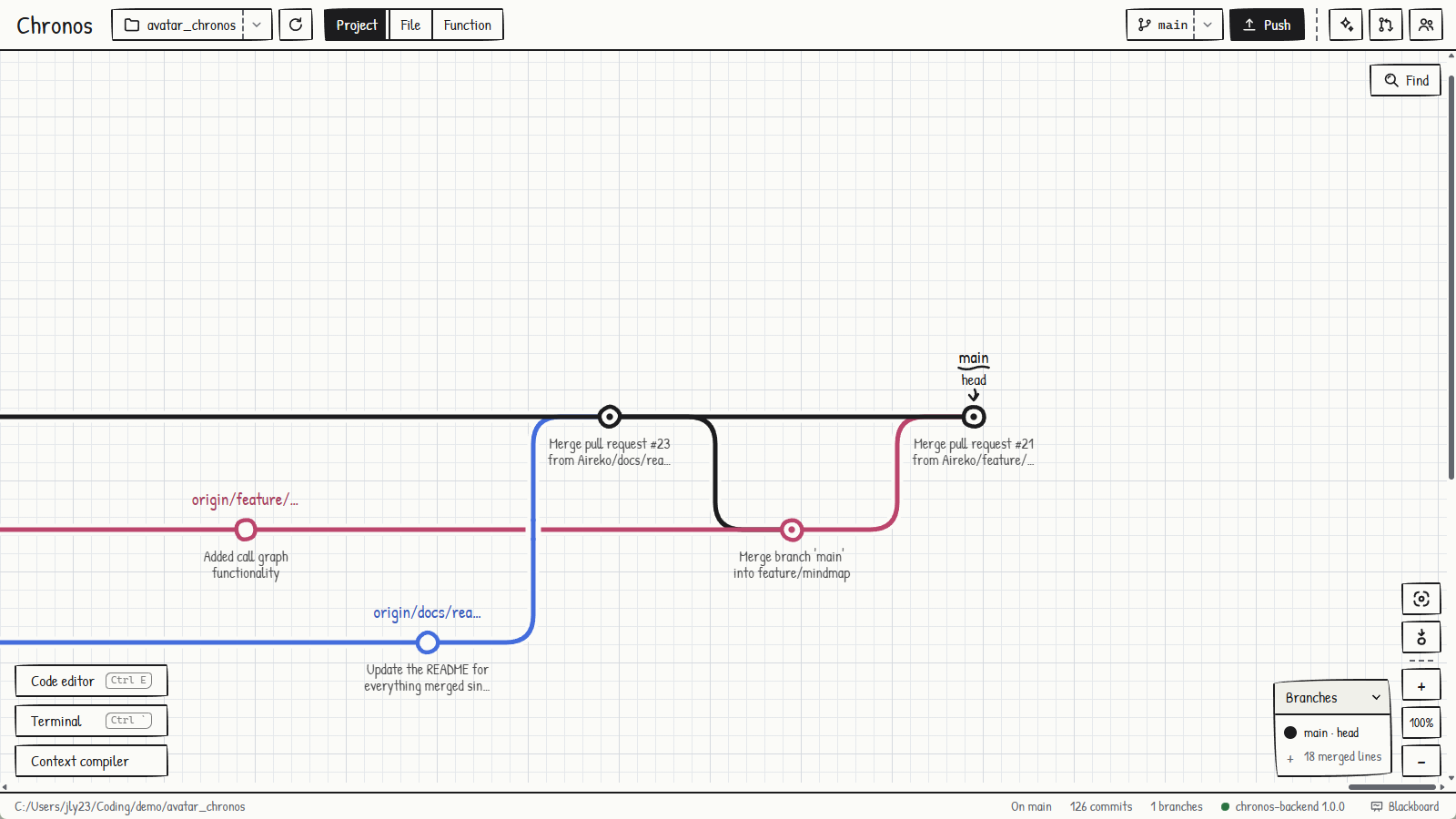
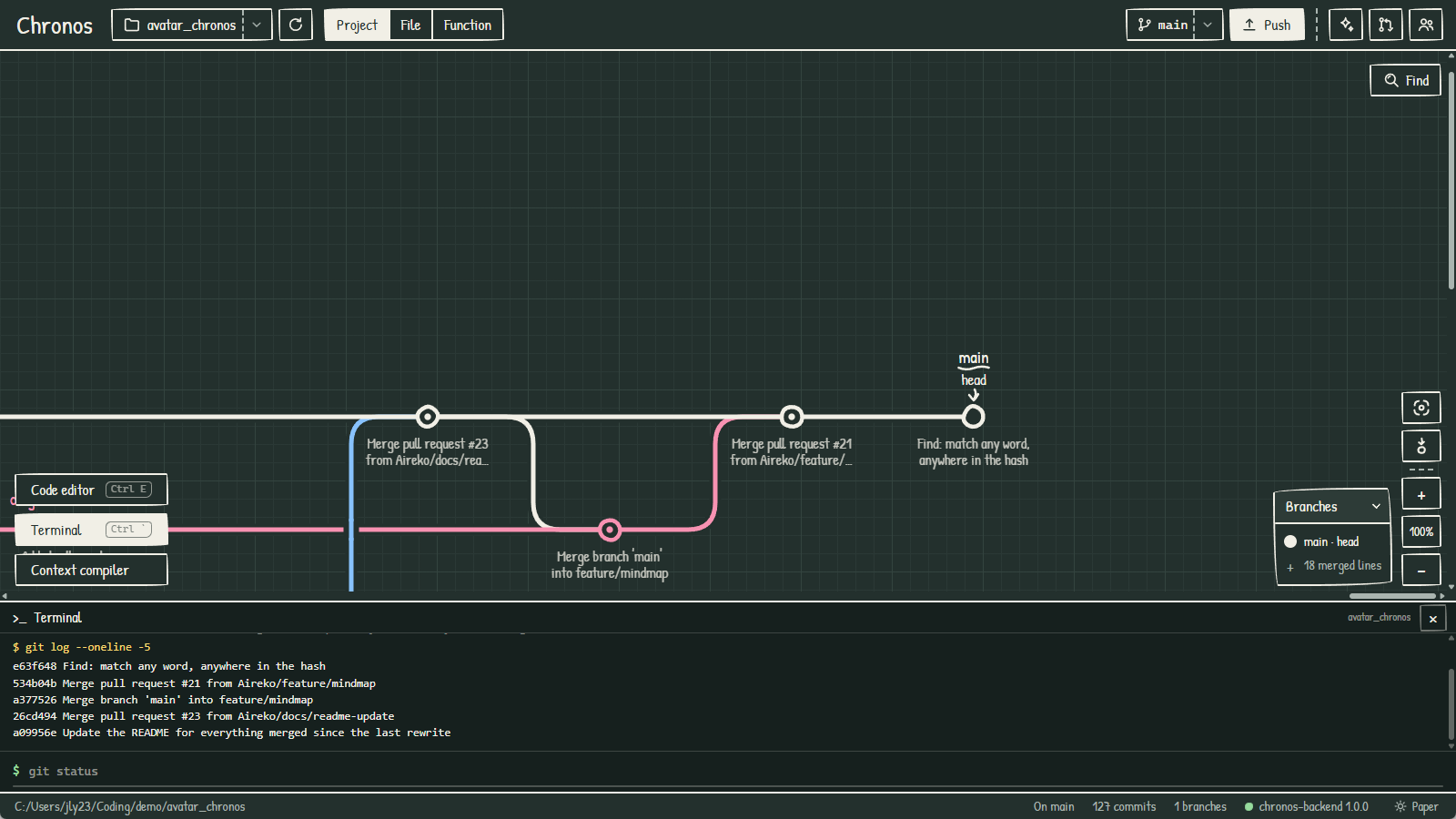
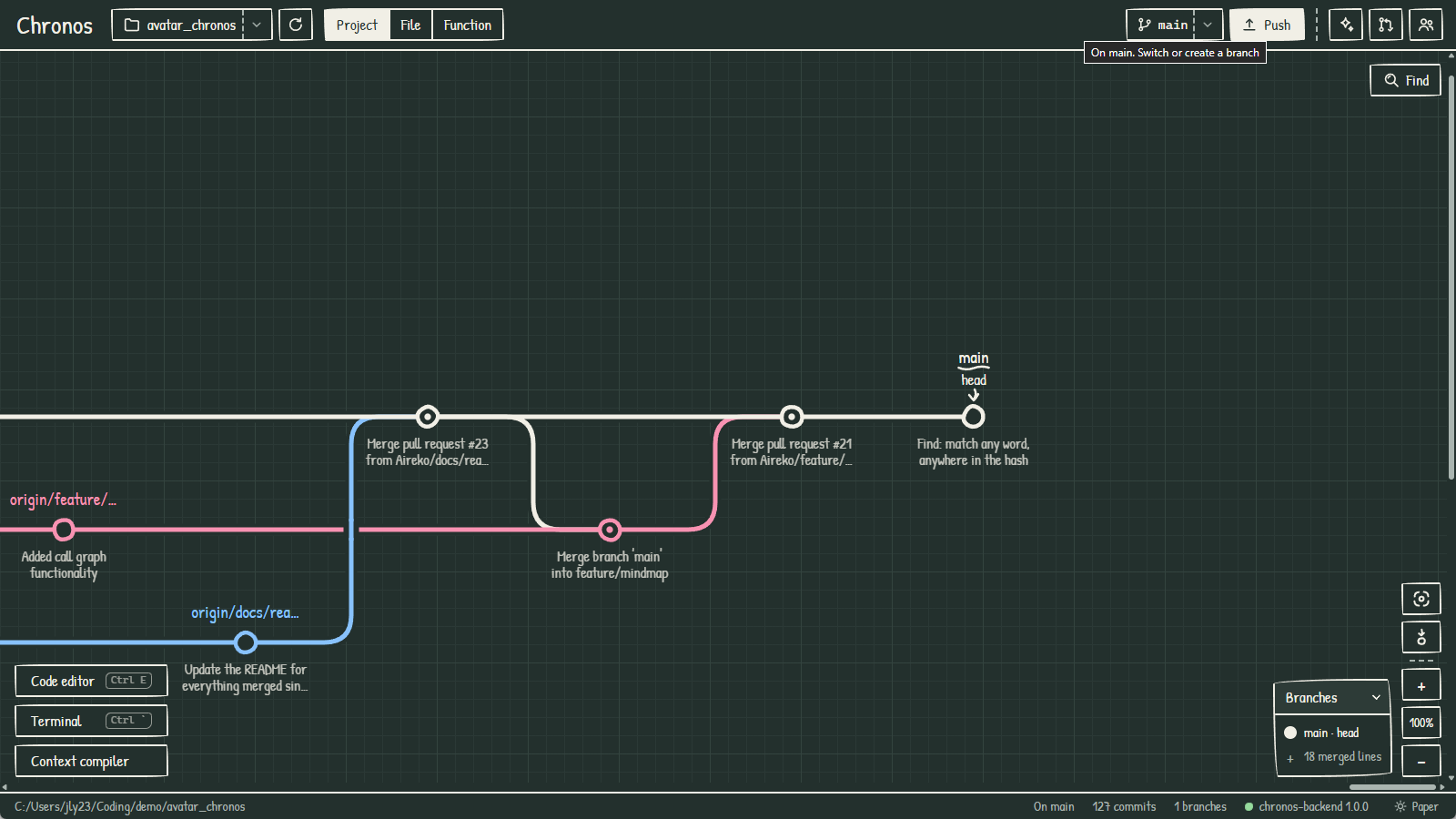
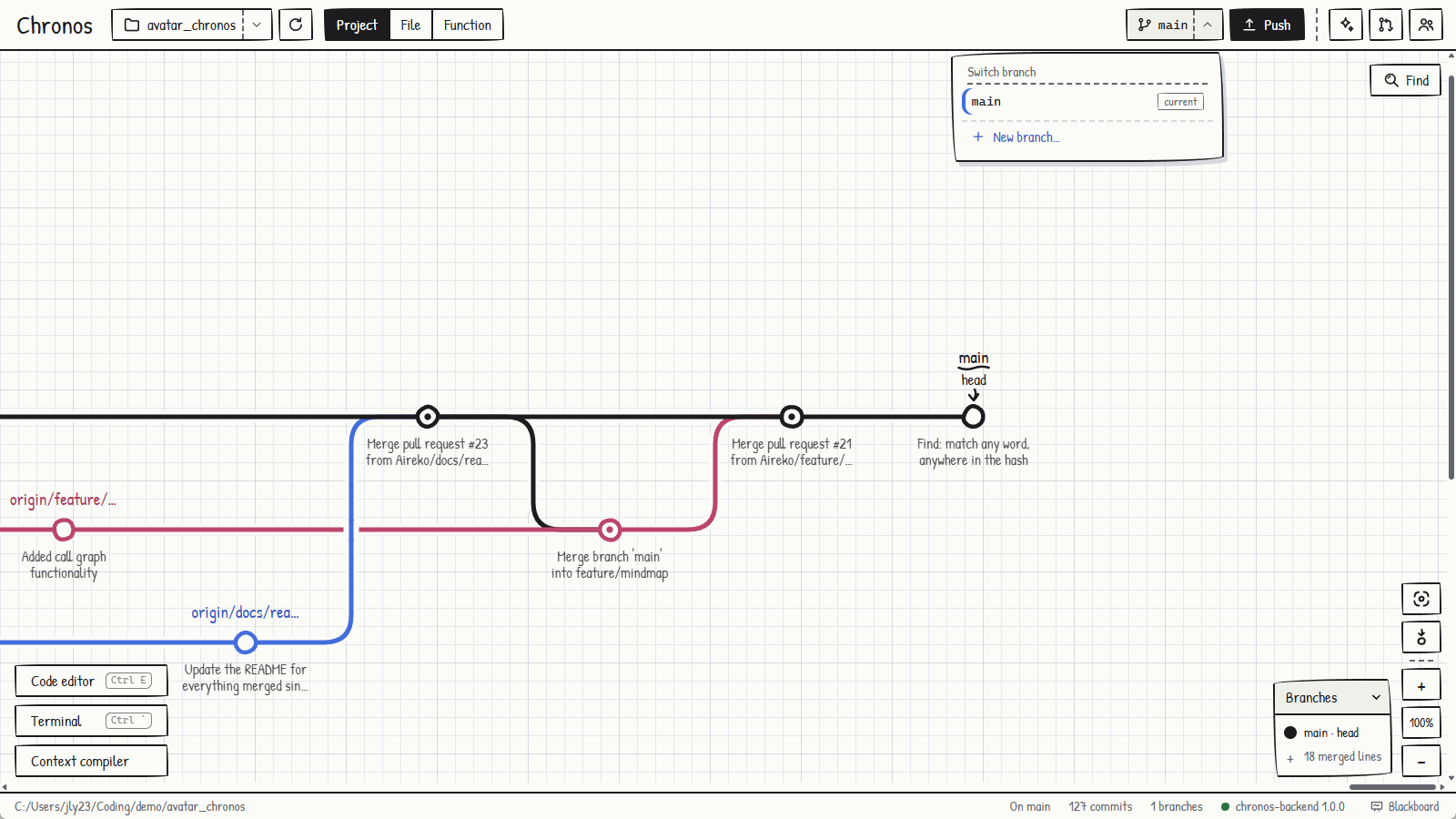
We also wanted it to feel alive — a hand-drawn commit graph on paper (or a blackboard), not another dense IDE panel.
What we built
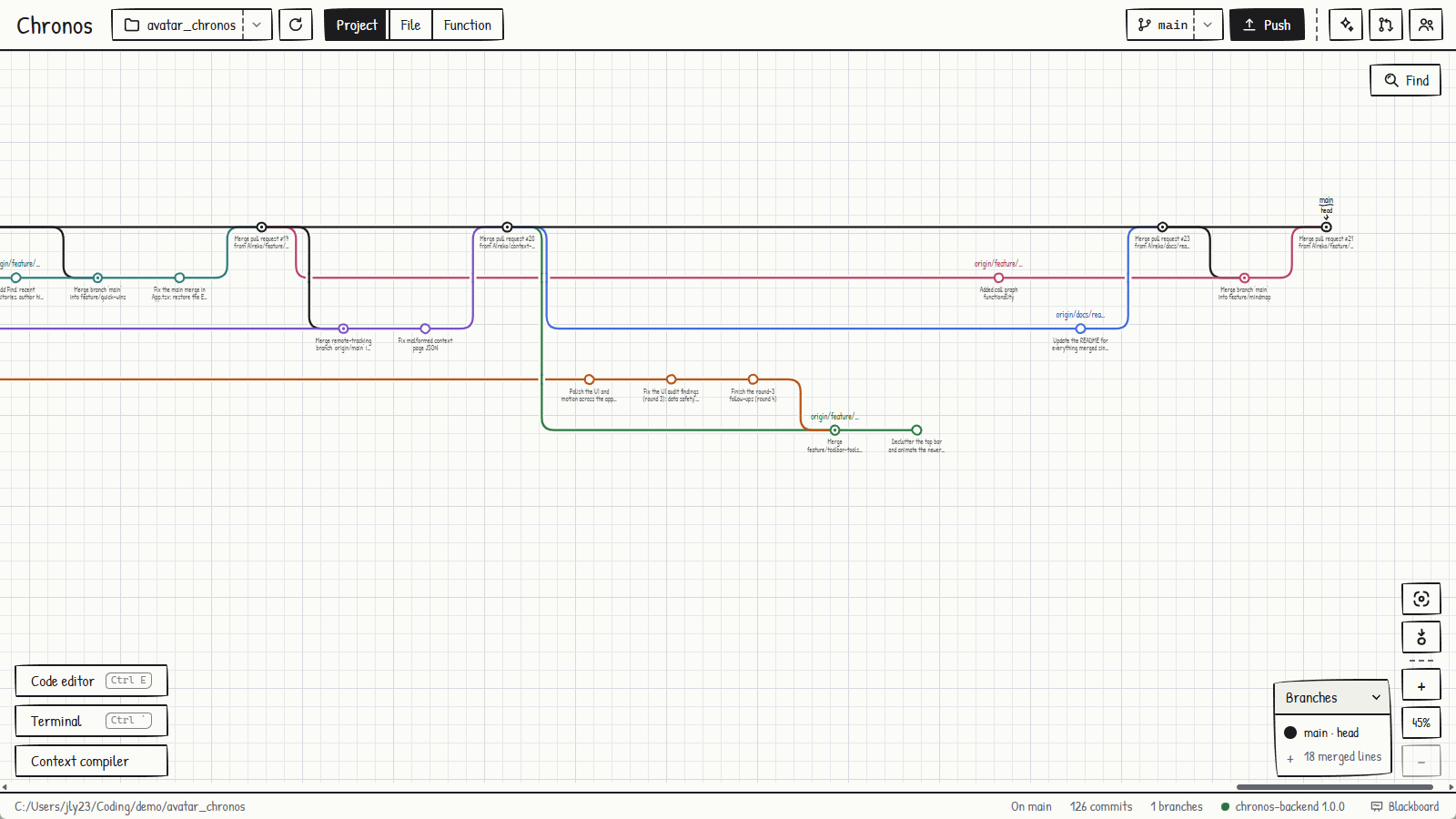
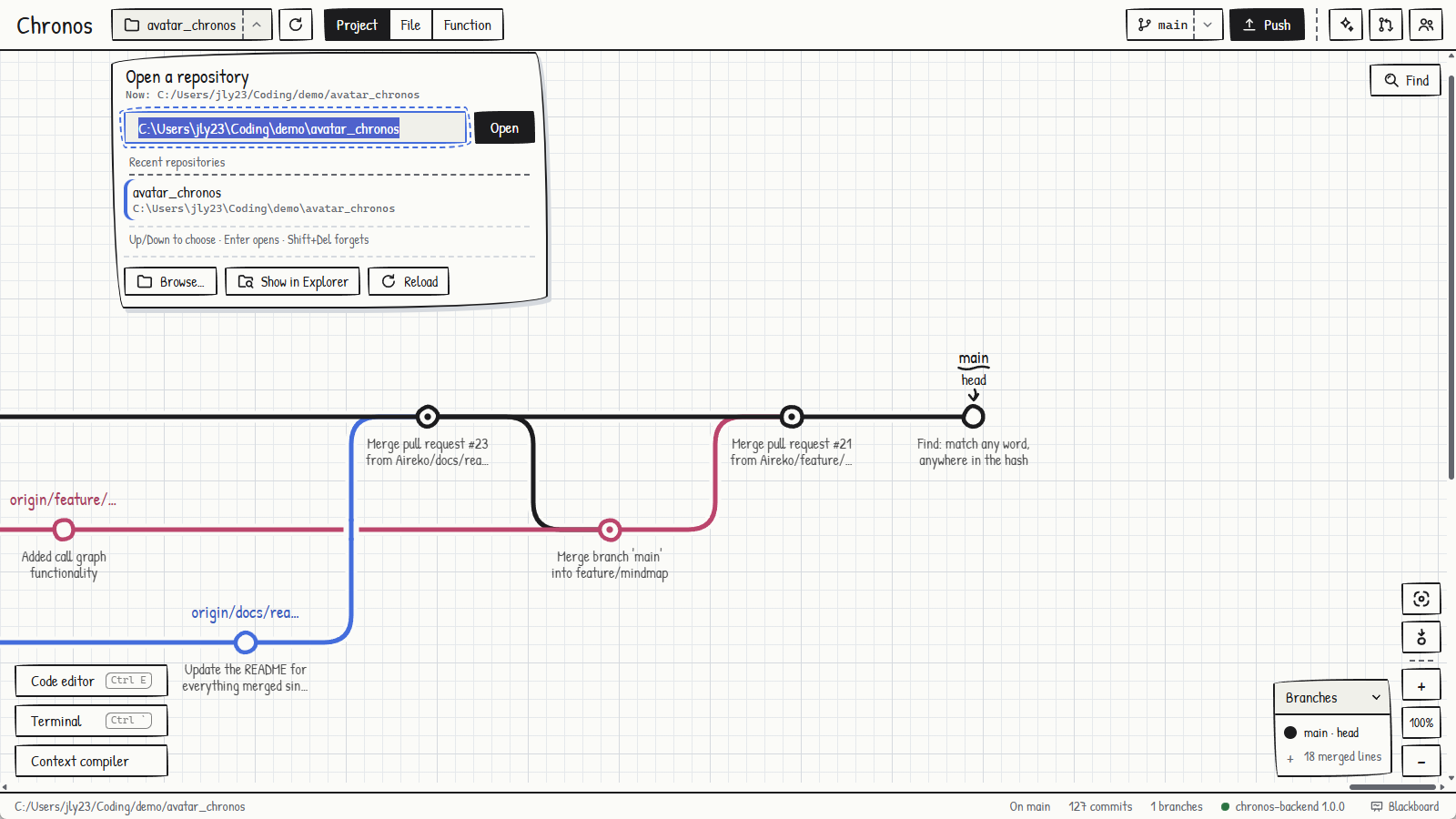
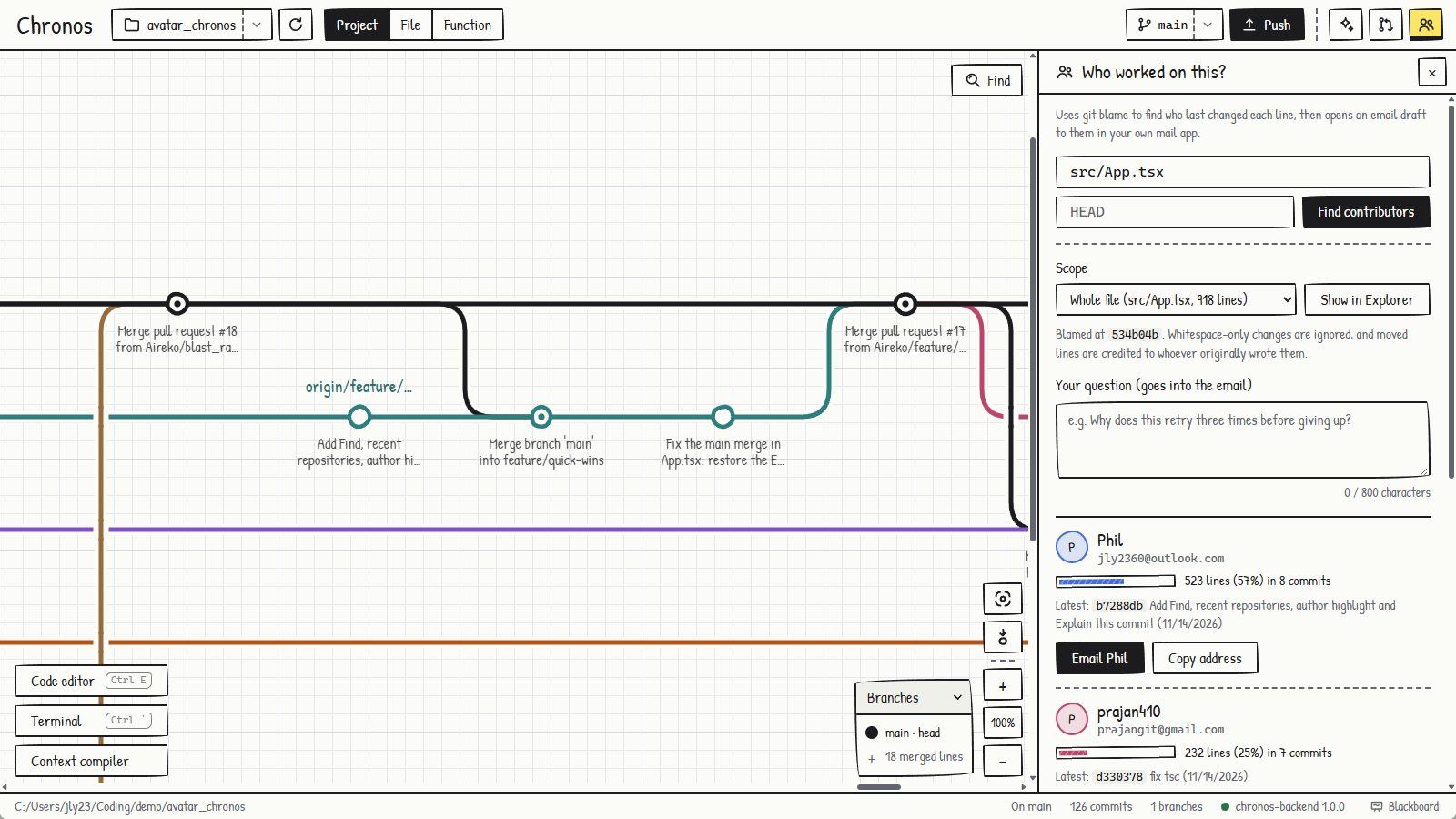
Chronos is a Tauri desktop app that opens a real Git repo and draws its history as a transit-map-style commit graph. From there you can:
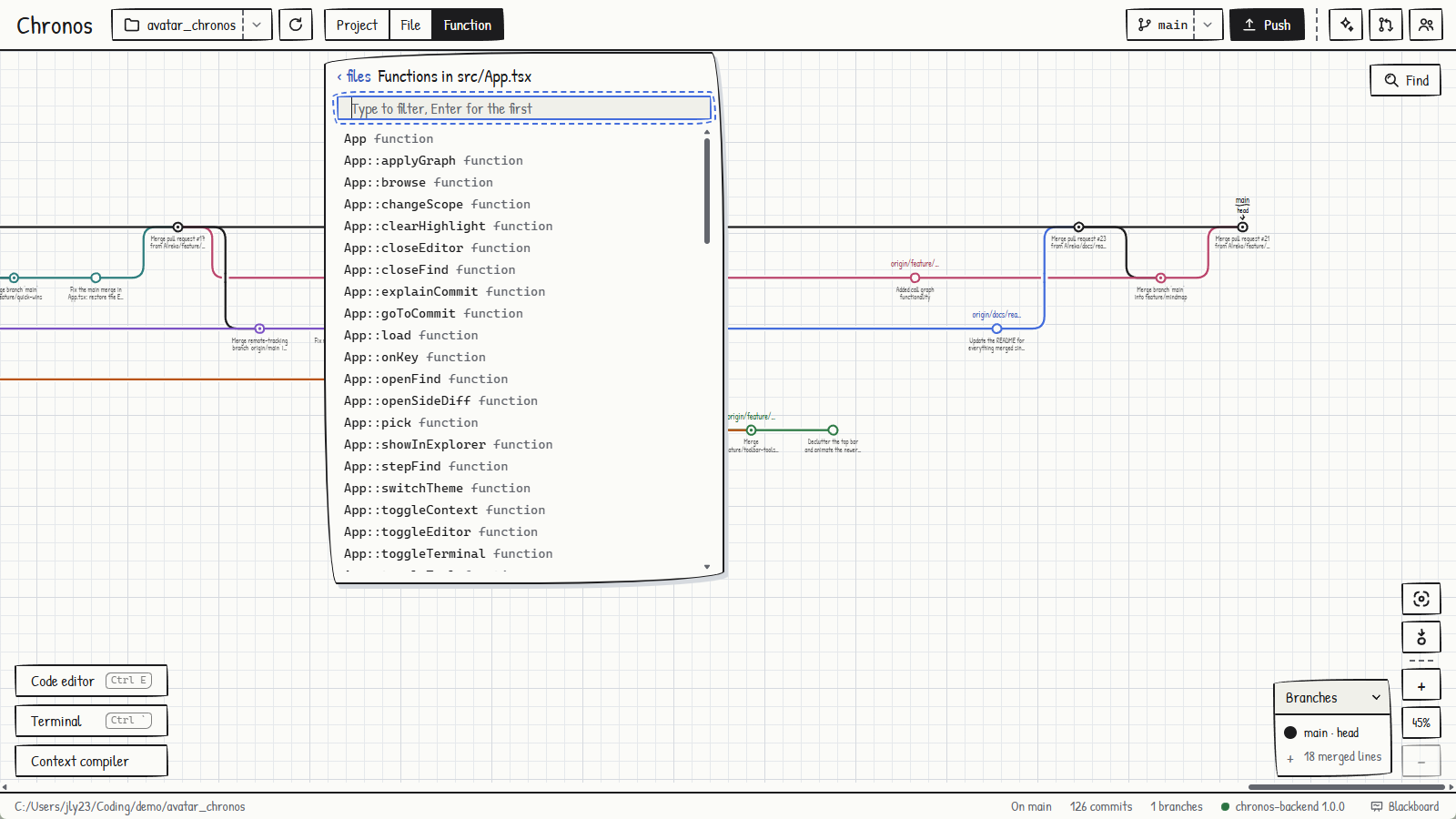
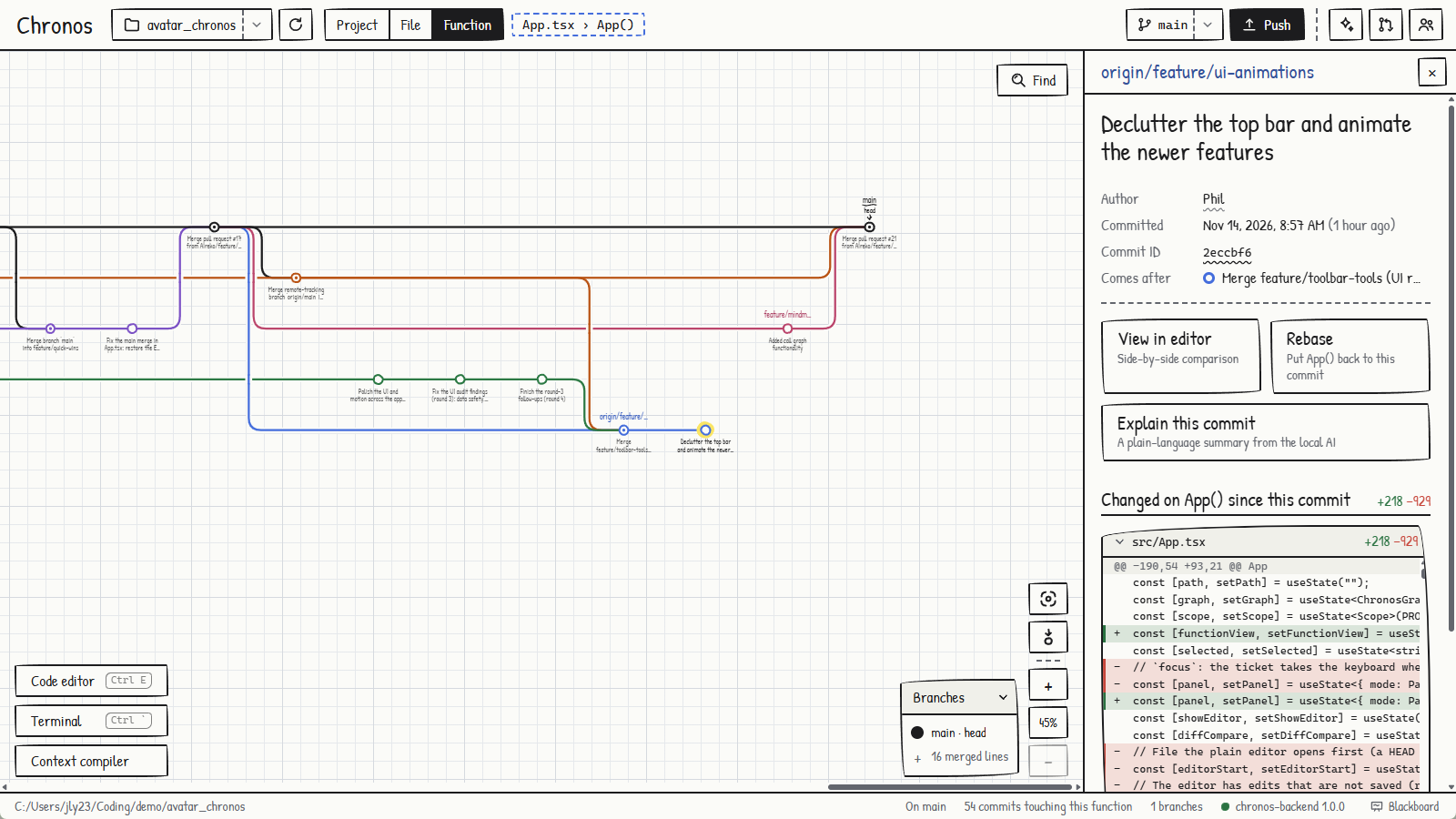
- Scope the graph to a project, file, or function
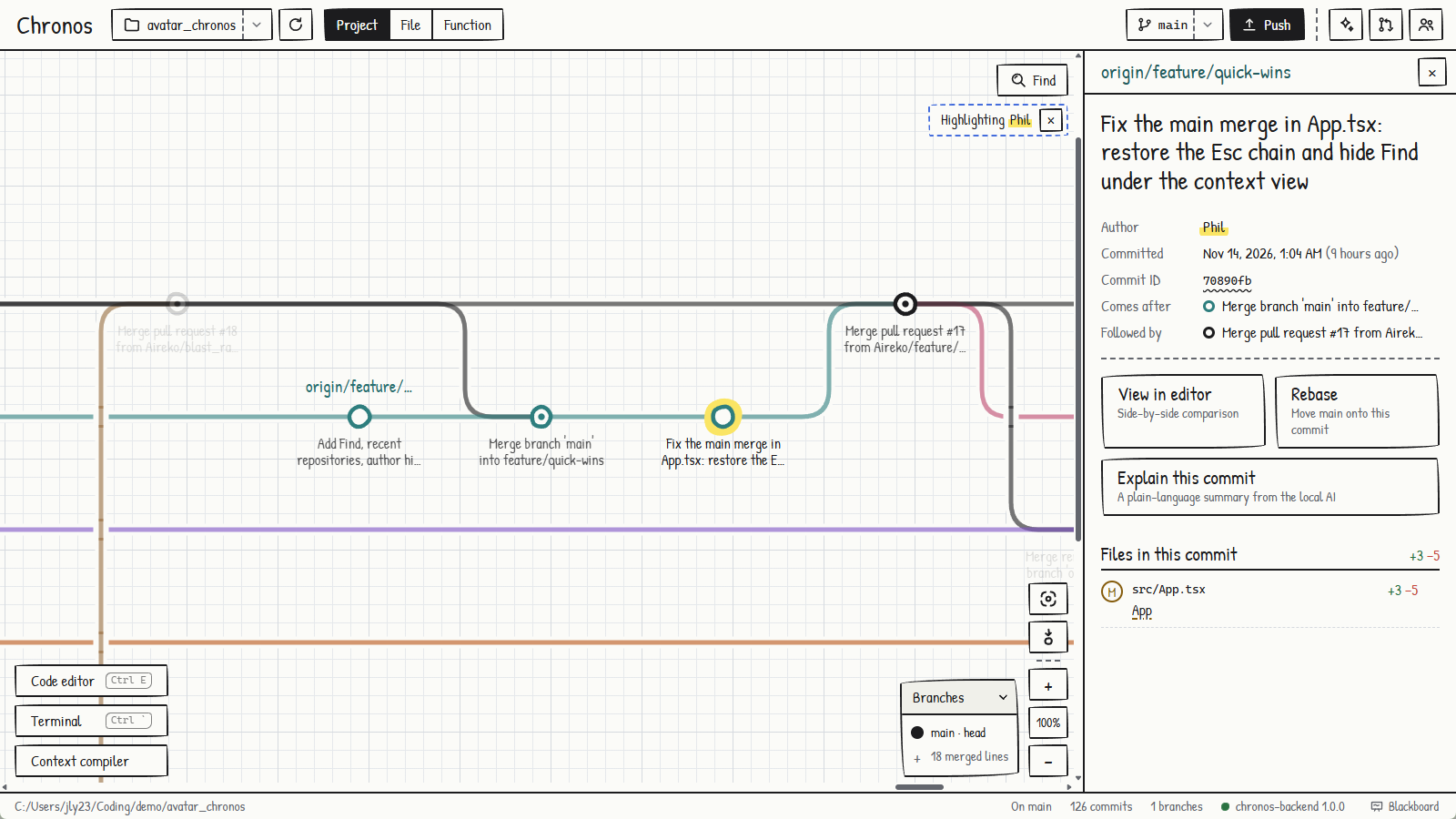
- Open commit details, side-by-side diffs in a built-in editor, and a docked terminal
- Rebase in the usual sense — or, when scoped, restore one file or one function to an older version as a new commit (no history rewrite)
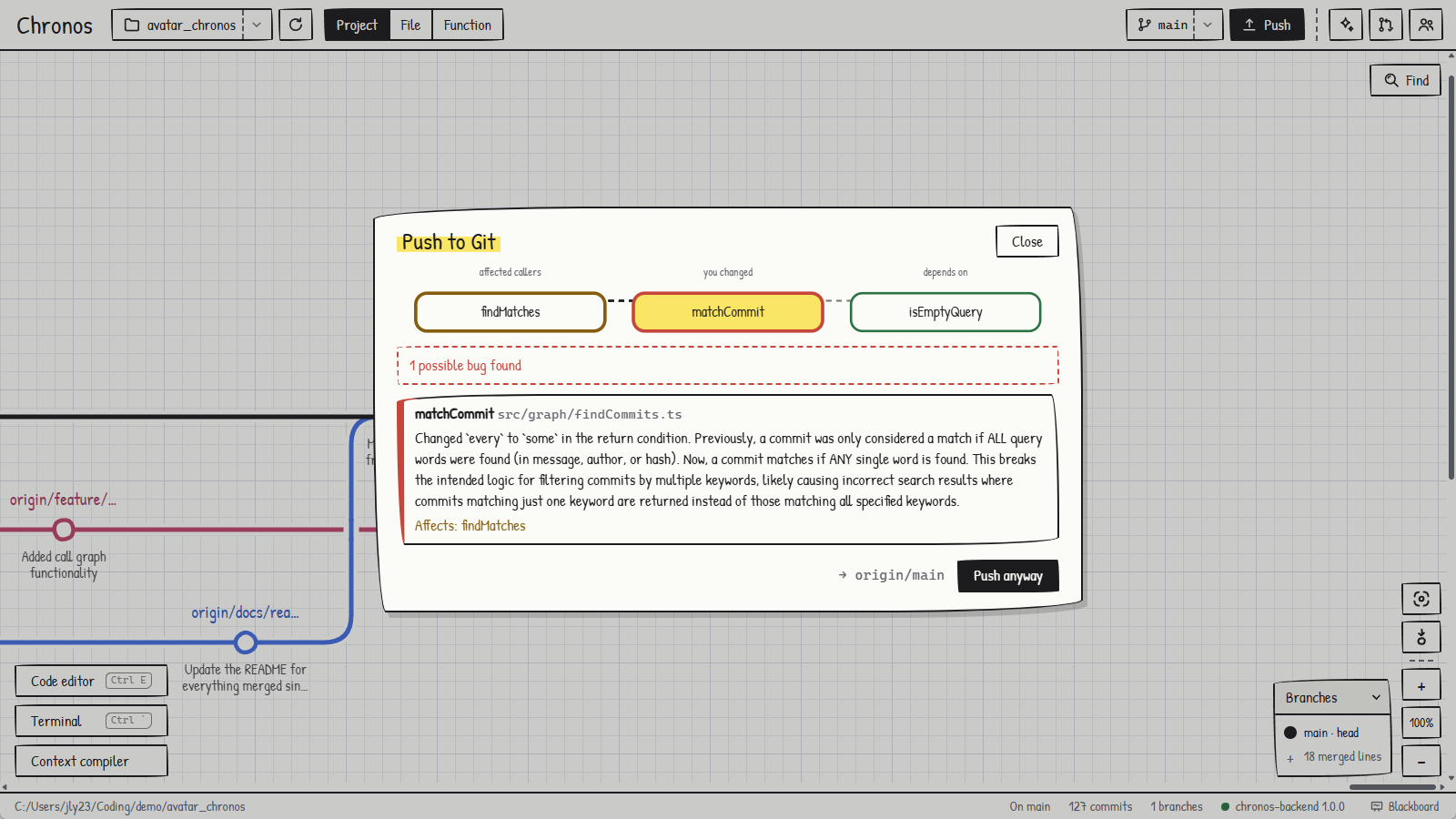
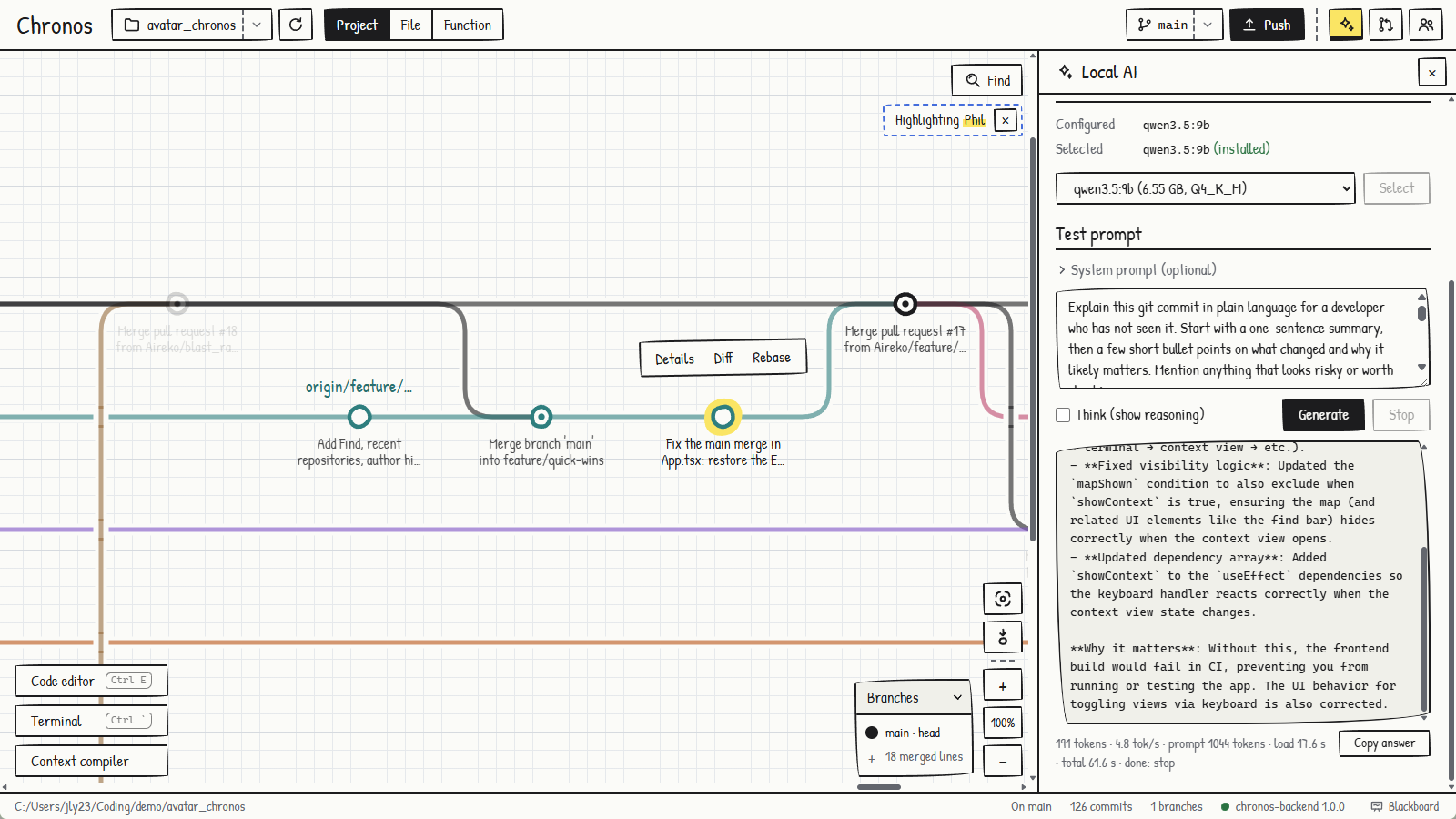
- (Backend ready) local AI via Ollama, PR bug review via
gh, and blame/“People” tooling - Call graph visualization. View an intuitive map of the callers and callees for a specified function. Choose the depth of the graph, and centre on another function with two clicks.
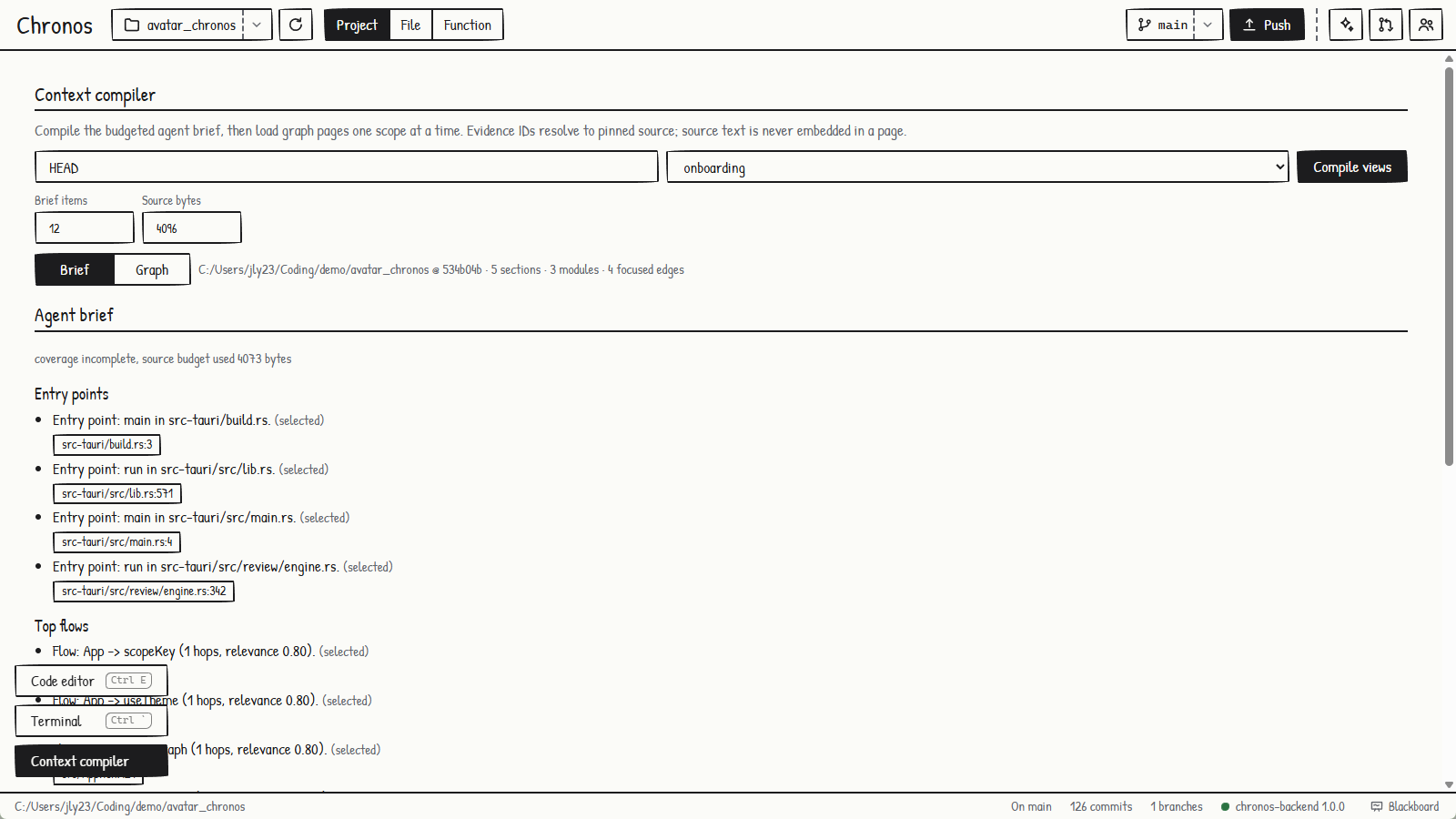
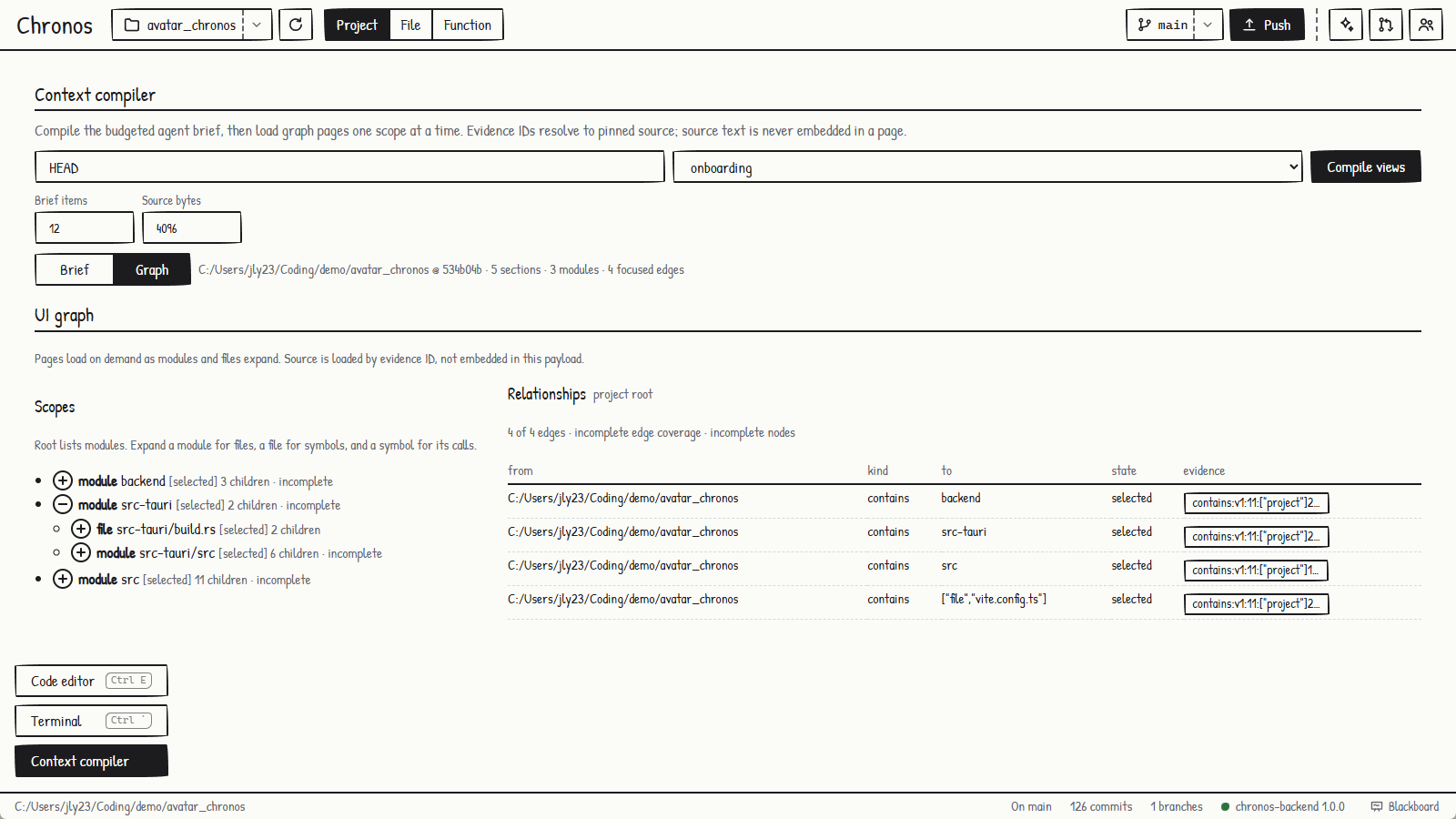
Under the hood: a C11 Chronos backend (Git + Tree-sitter indexing + context compiler), bridged through Rust/Tauri, with a React + TypeScript UI.
What we learned
- Function-level history is harder than commit-level history: renames, hunk headers, and “what function owns this line?” need careful heuristics before a full AST story is ready everywhere.
- Keeping a sketchy, friendly UI on top of a serious systems stack (C FFI, async Tauri commands, Git process I/O) is a constant design and packaging fight.
- Merging parallel feature branches (editor/diff, scope/rebase, toolbar tools) taught us to treat APIs as unions — keep both — and resolve UI conflicts by product intent, not by “last merge wins.”
- Local-first AI (Ollama, localhost-only rules) is a good fit for review tooling when you care about privacy and control.
Challenges
- Blank UI / tooling gaps — missing JS packages (e.g.
@tauri-apps/plugin-dialog) andcargonot onPATHmade the app look “dead” even when the native shell was running. - Merge conflicts across stacks — same files owned by editor work, scope/rebase work, and mainline tools UI; we had to keep both command sets (
list_repo_filesvslist_files, etc.) because they mean different things. - Side-by-side editing — comparing an old commit to the working tree while allowing edits only on the current checkout, and updating the left pane when you pick another node.
- Scope accuracy — function attribution from diffs is useful but imperfect; full Tree-sitter indexing is the longer-term answer we’re already building toward.
What’s next
Wire the context compiler and review panels fully into the toolbar UI, push function history onto the Tree-sitter index, and make every AI finding point at a real function and line.


