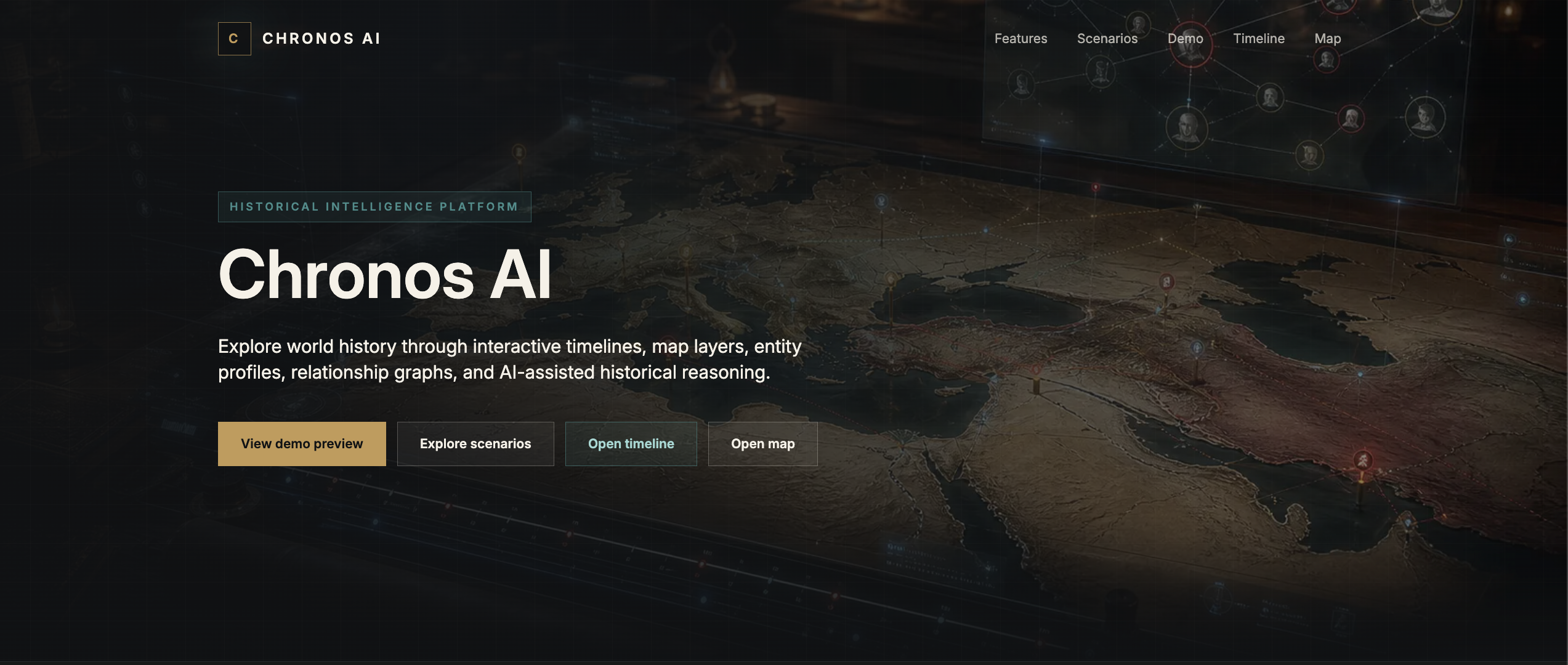
Chronos AI
Inspiration
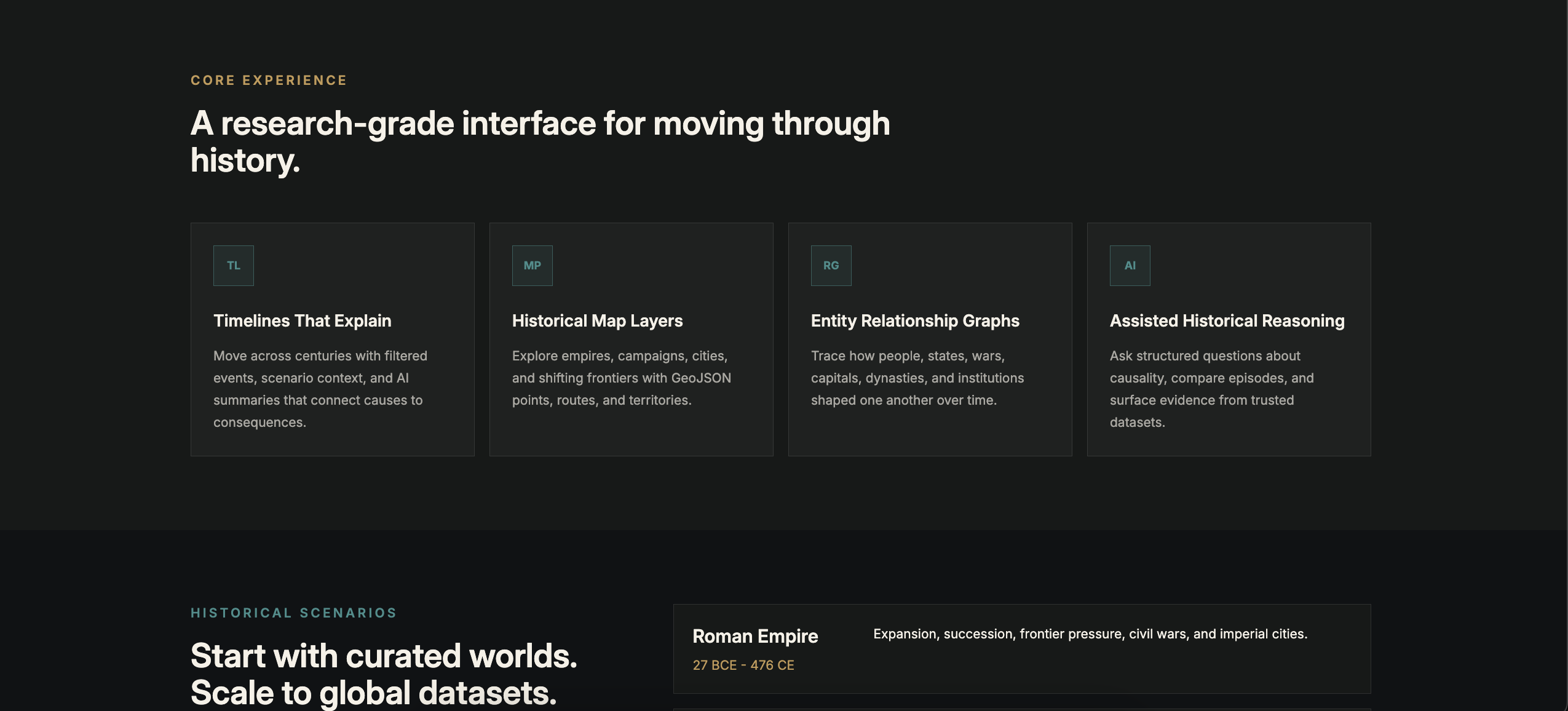
History is usually taught as isolated facts, dates, and static articles. We wanted to build a platform where history can be explored as a connected knowledge graph—allowing users to navigate civilizations, people, wars, empires, and events visually while asking natural language questions.
Our vision is to create an AI-powered historian that helps users understand not only what happened, but also why it happened through evidence-backed historical data.
What it does
Chronos AI transforms structured historical datasets into an interactive historical knowledge platform.
Current features include:
- Importing historical entities and events from Wikidata
- Enriching historical records with Wikipedia summaries and metadata
- Storing historical knowledge in Amazon Aurora PostgreSQL
- REST APIs for:
- Historical entities
- Events
- Relationships
- Search
- Scenarios
- Relationship graph generation
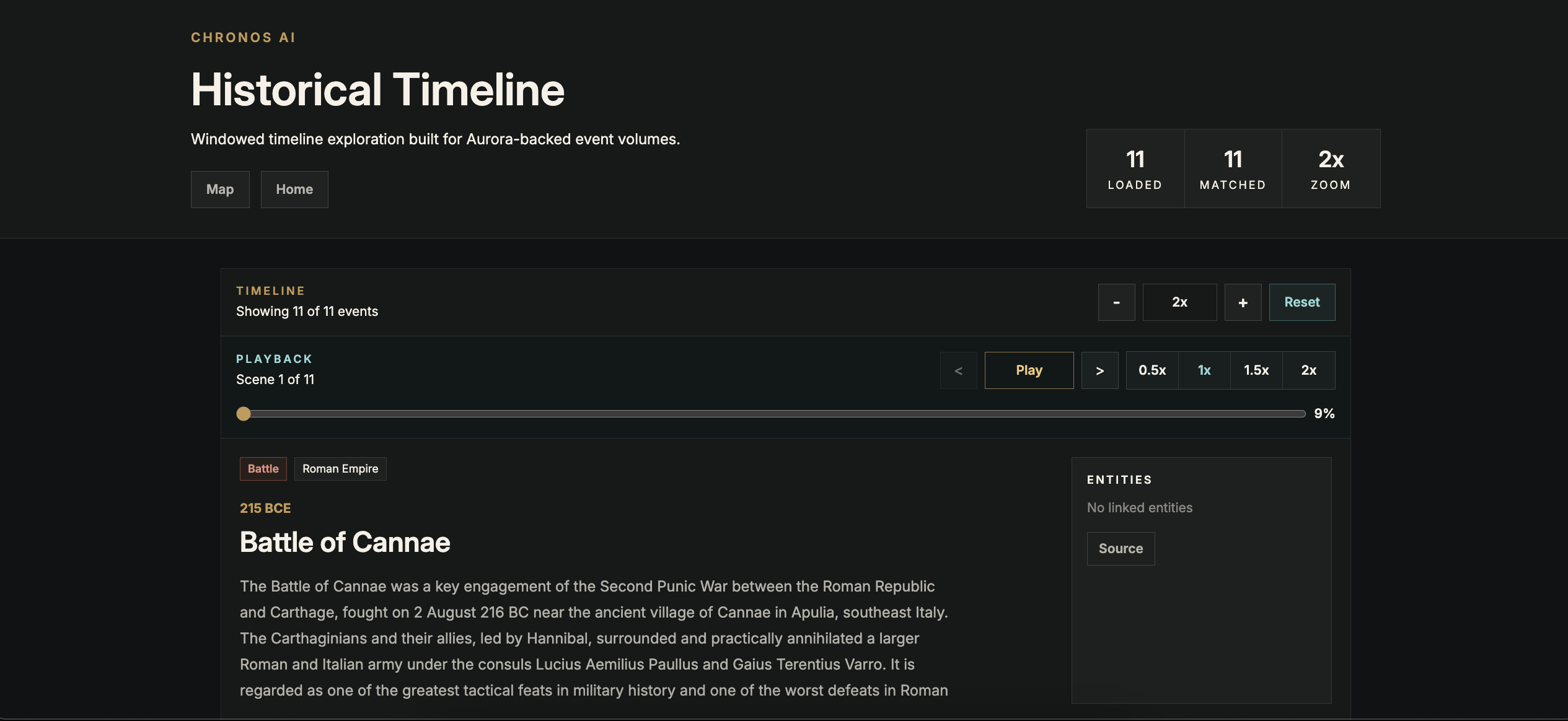
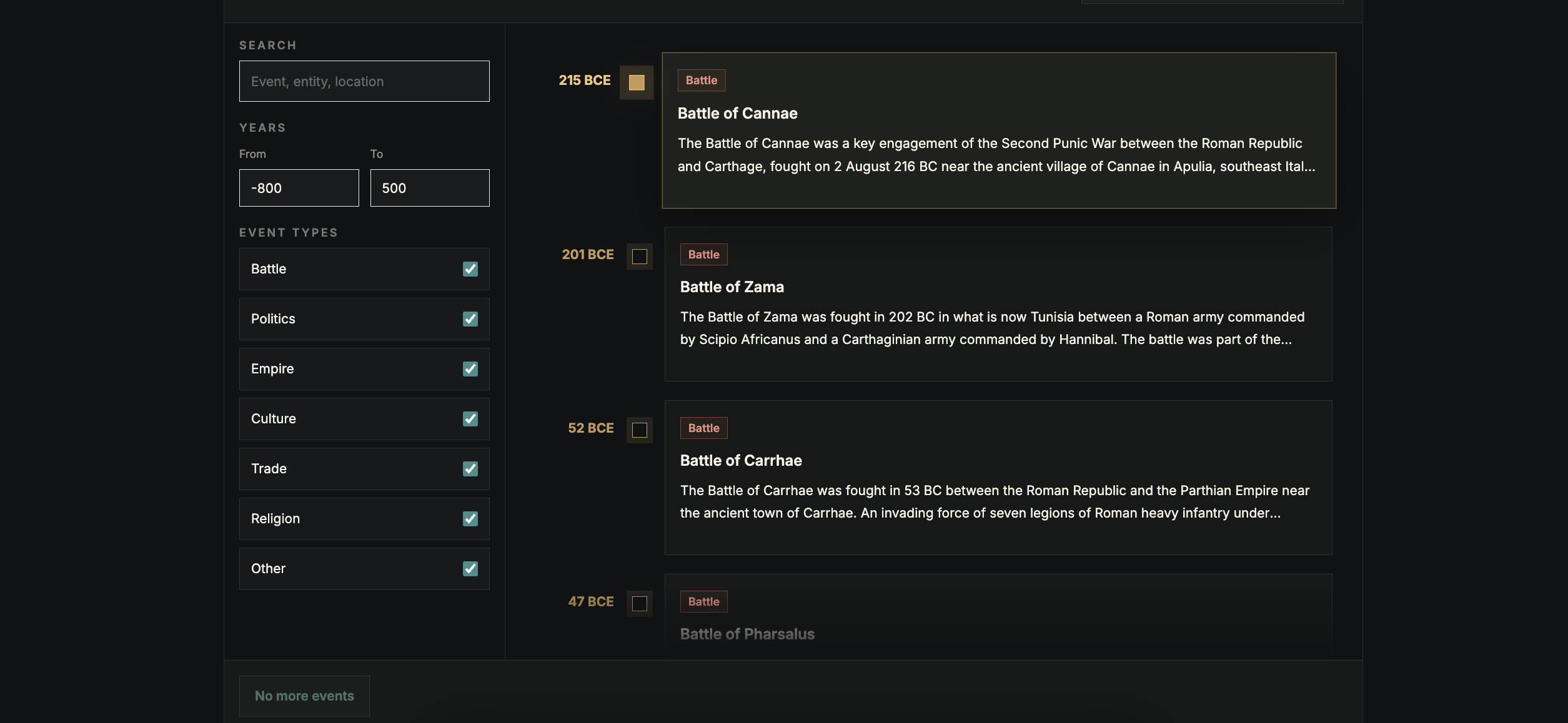
- Timeline-ready event retrieval
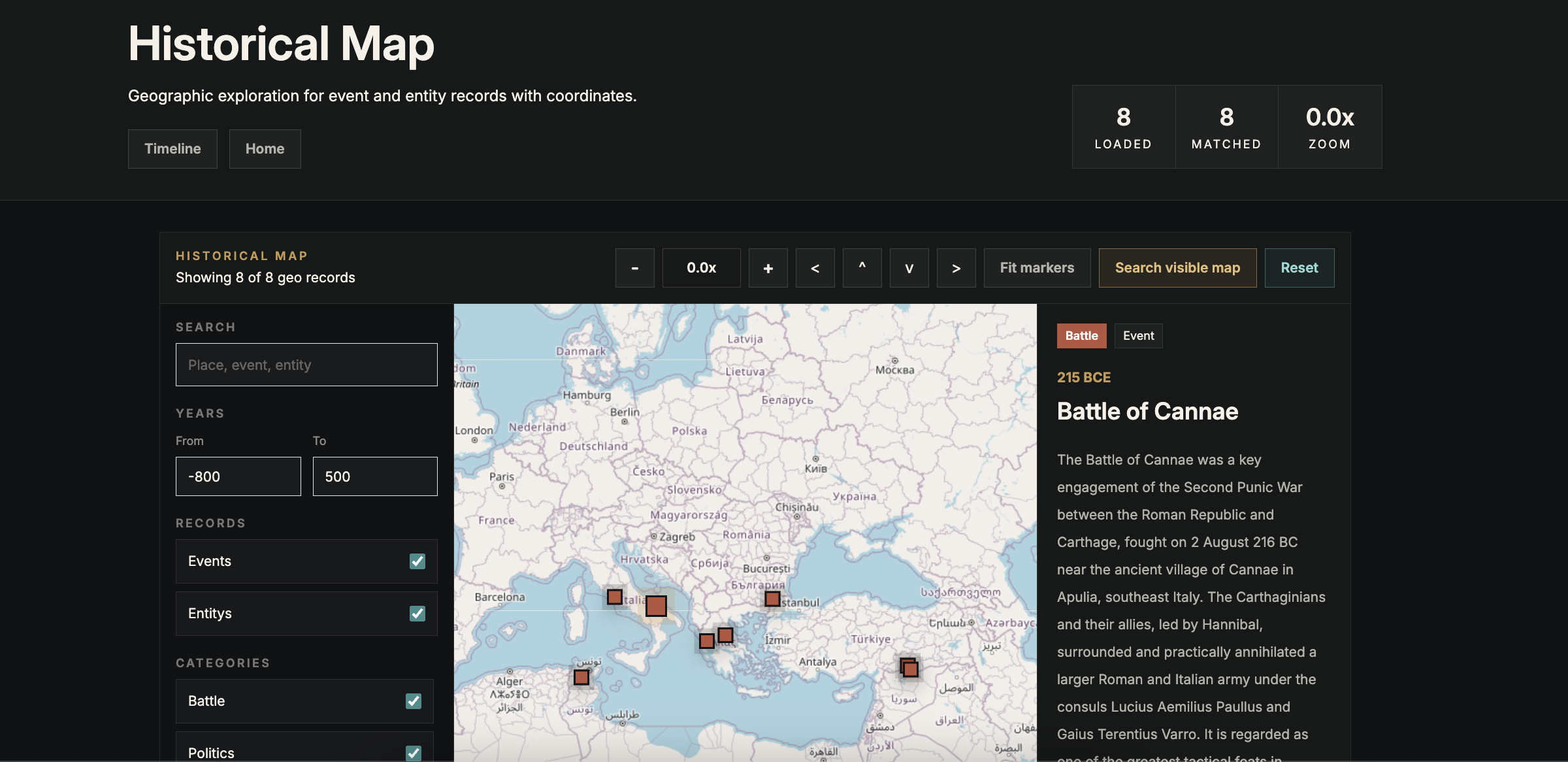
- Map-ready geographic data
- Foundation for an AI Historian retrieval system
Our long-term vision includes:
- Interactive historical timelines
- Dynamic historical maps
- Relationship graph exploration
- Evidence-backed AI conversations
- Alternate history simulations
How we built it
The application is built using a modern full-stack architecture.
Frontend
- Next.js 15
- React
- TypeScript
Backend
- Next.js Route Handlers
- TypeScript
- REST APIs
Data Pipeline
Historical information is ingested from Wikidata using SPARQL queries. The imported entities and events are then enriched using the Wikipedia REST API before being stored in Amazon Aurora PostgreSQL.
The backend exposes APIs for entities, events, relationships, search, scenarios, timelines, and maps, allowing the frontend to consume structured historical knowledge.
Challenges we ran into
Building a historical knowledge platform presented several challenges:
- Designing a schema flexible enough to represent civilizations, people, battles, wars, and empires.
- Building an idempotent ingestion pipeline that can safely rerun without duplicating data.
- Mapping multiple historical data sources into a consistent model.
- Securely connecting Amazon Aurora PostgreSQL during development.
- Preserving source attribution for future evidence-backed AI responses.
Accomplishments that we're proud of
- Built a complete historical data ingestion pipeline.
- Connected Wikidata and Wikipedia into a unified historical dataset.
- Designed a scalable historical knowledge graph model.
- Built REST APIs powering entities, events, relationships, search, and scenarios.
- Established the backend foundation for an AI Historian capable of retrieval-augmented historical reasoning.
What we learned
This project reinforced that history is naturally represented as a graph rather than isolated records.
We also learned that trustworthy AI applications require structured retrieval, source attribution, and clean historical data before introducing large language models.
What's next for Chronos AI
Chronos AI is intended to become a comprehensive historical exploration platform.
Our roadmap includes:
- Fully connected interactive timeline and historical map
- Rich entity profile pages
- Graph exploration of historical relationships
- AI Historian with citations and confidence scores
- Hybrid semantic + keyword search
- Knowledge graph reasoning
- Alternate history simulation engine
- Expanded datasets covering additional civilizations and historical eras
Built With
- amazon
- amazon-web-services
- api
- aurora
- ec2
- leaflet.js
- next.js
- postgresql
- rds
- react
- rest
- sparql
- tailwind
- typescript
- wikidata
- wikipedia

Log in or sign up for Devpost to join the conversation.