-
-
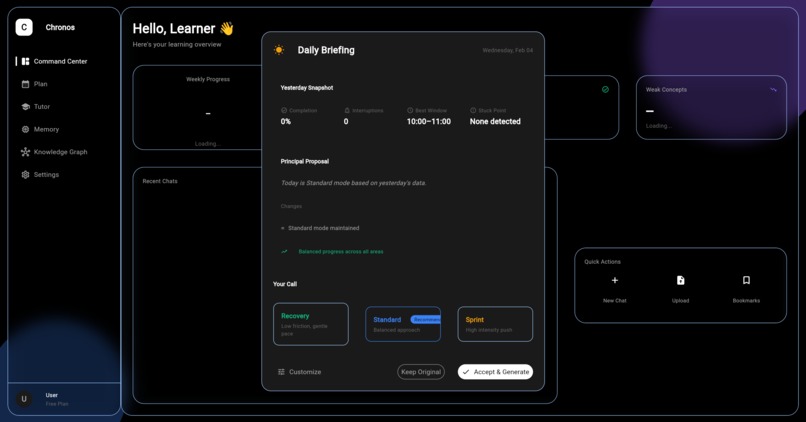
Daily briefing modal showing the Principal’s plan adjustments and reasons.
-
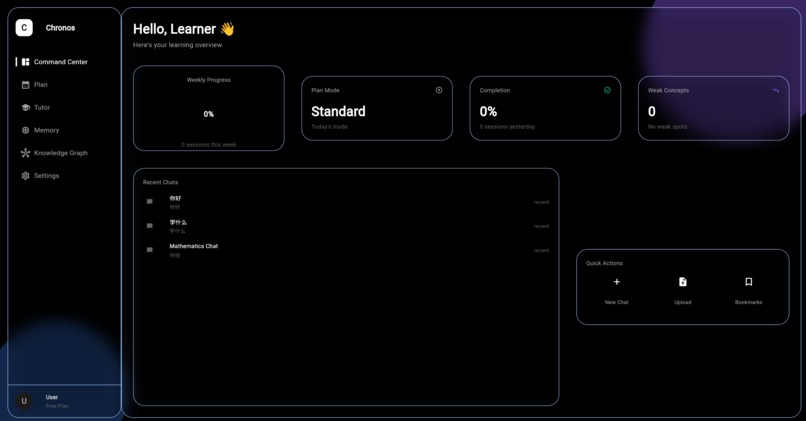
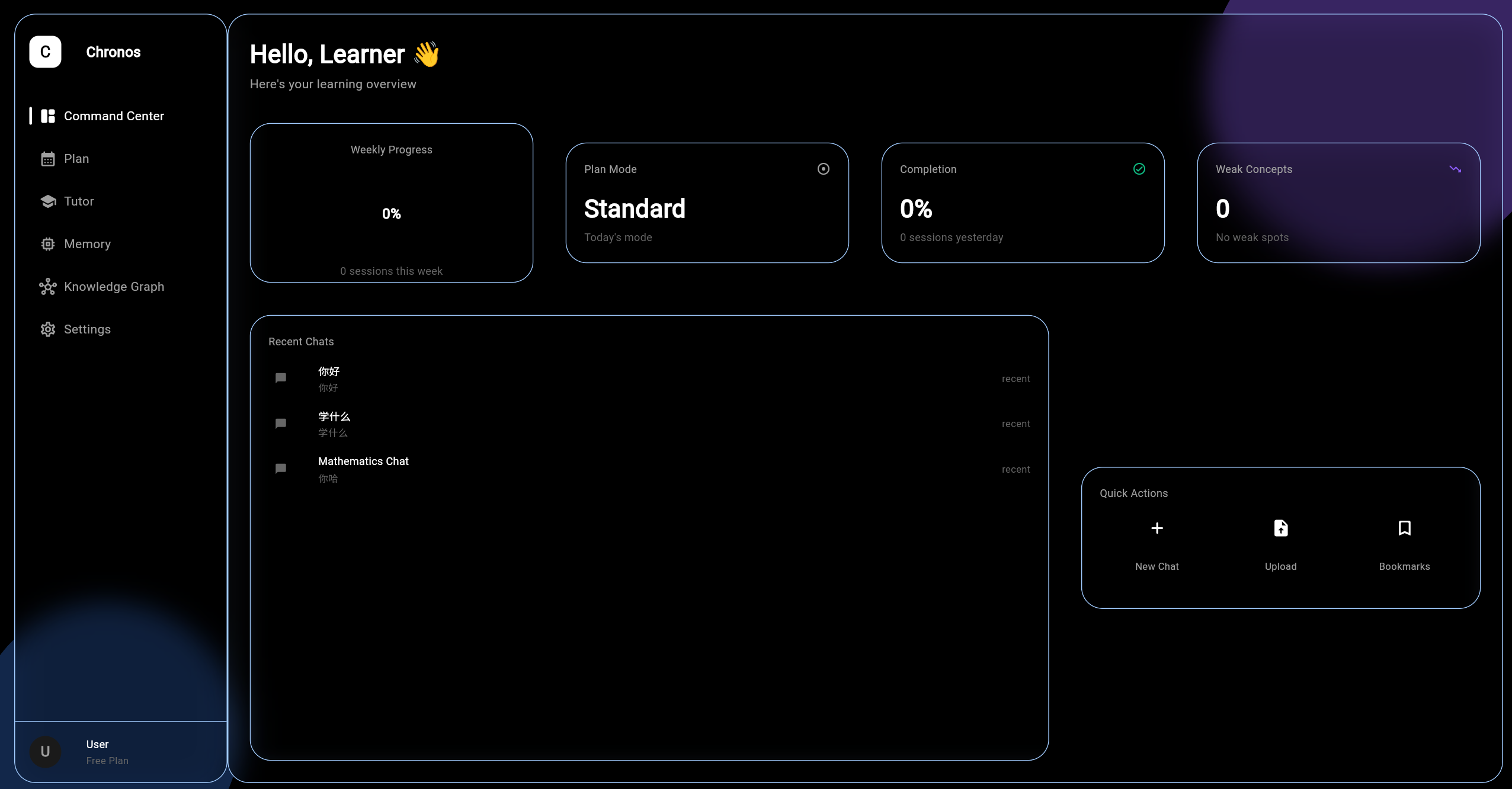
Dashboard overview with key learning metrics and quick actions.
-
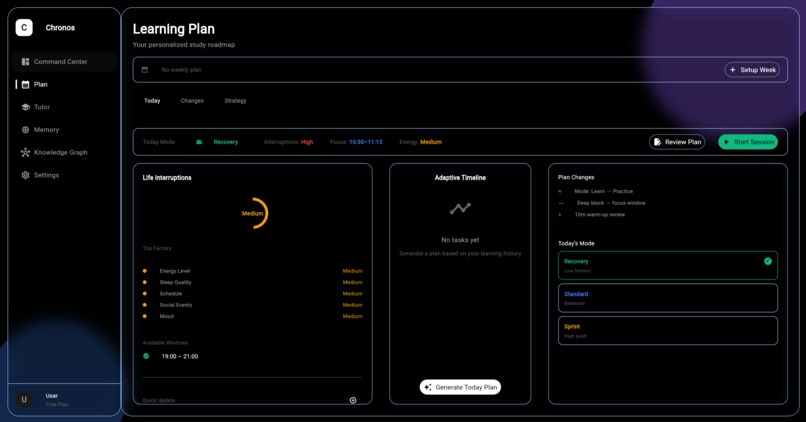
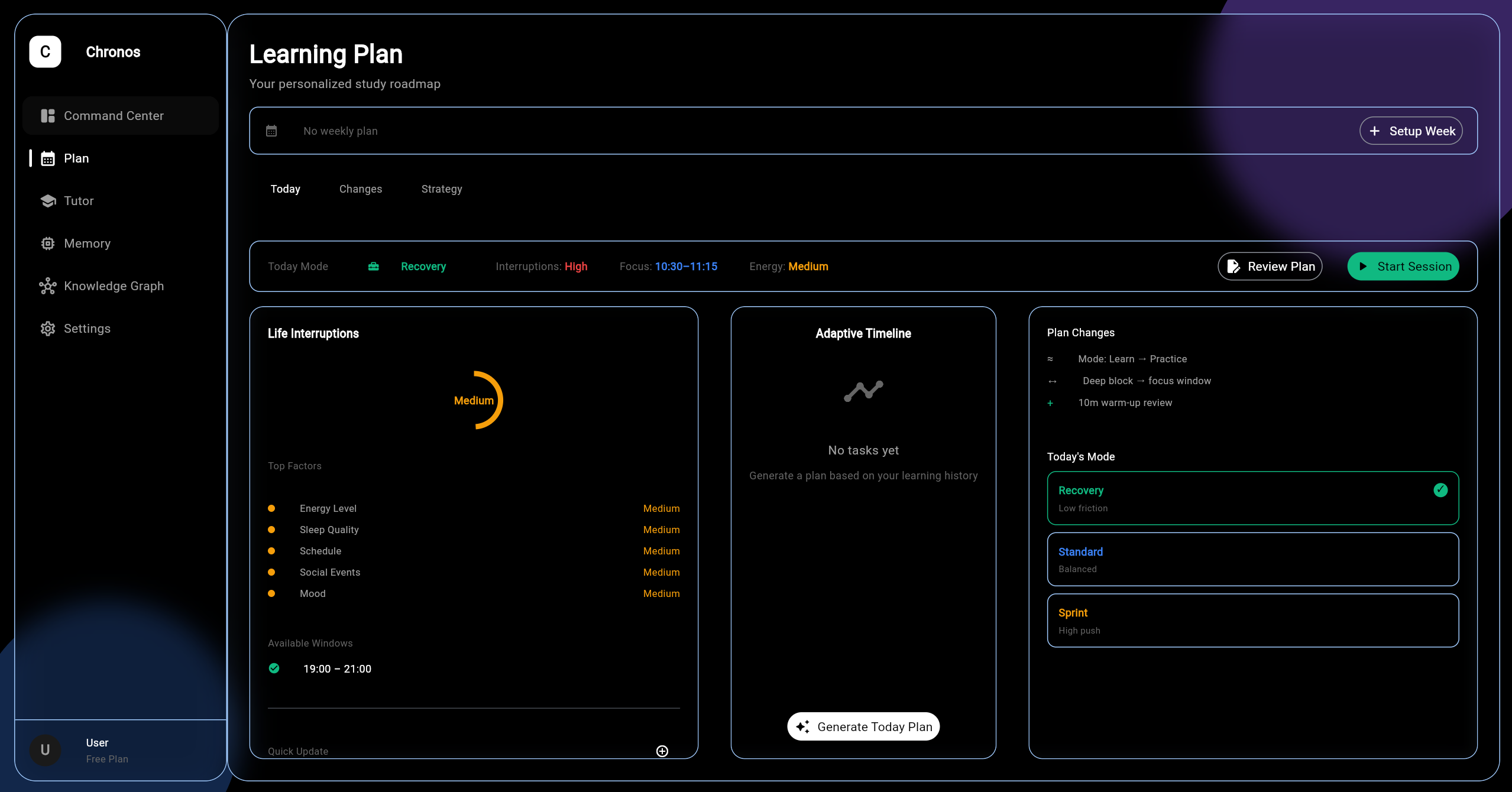
Plan view with life interruptions, adaptive timeline, and mode selection driven by the Principal.
## Inspiration Study plans often fail when real life changes. Late meetings, poor sleep, or stress can derail the best schedule. I wanted a learning system that adapts to life events instead of blaming the learner.
## What I learned
- A good learning system needs a decision layer, not just a task list.
- User “complaints” are valuable signals of life pressure.
- Recommendations must be explainable to build trust.
## How I built it Chronos has three layers:
- Life Event Capture: natural language complaints are stored as structured life events.
- Principal Decision Engine: combines life events, learning records, and weekly plans to adjust today’s mode and tasks.
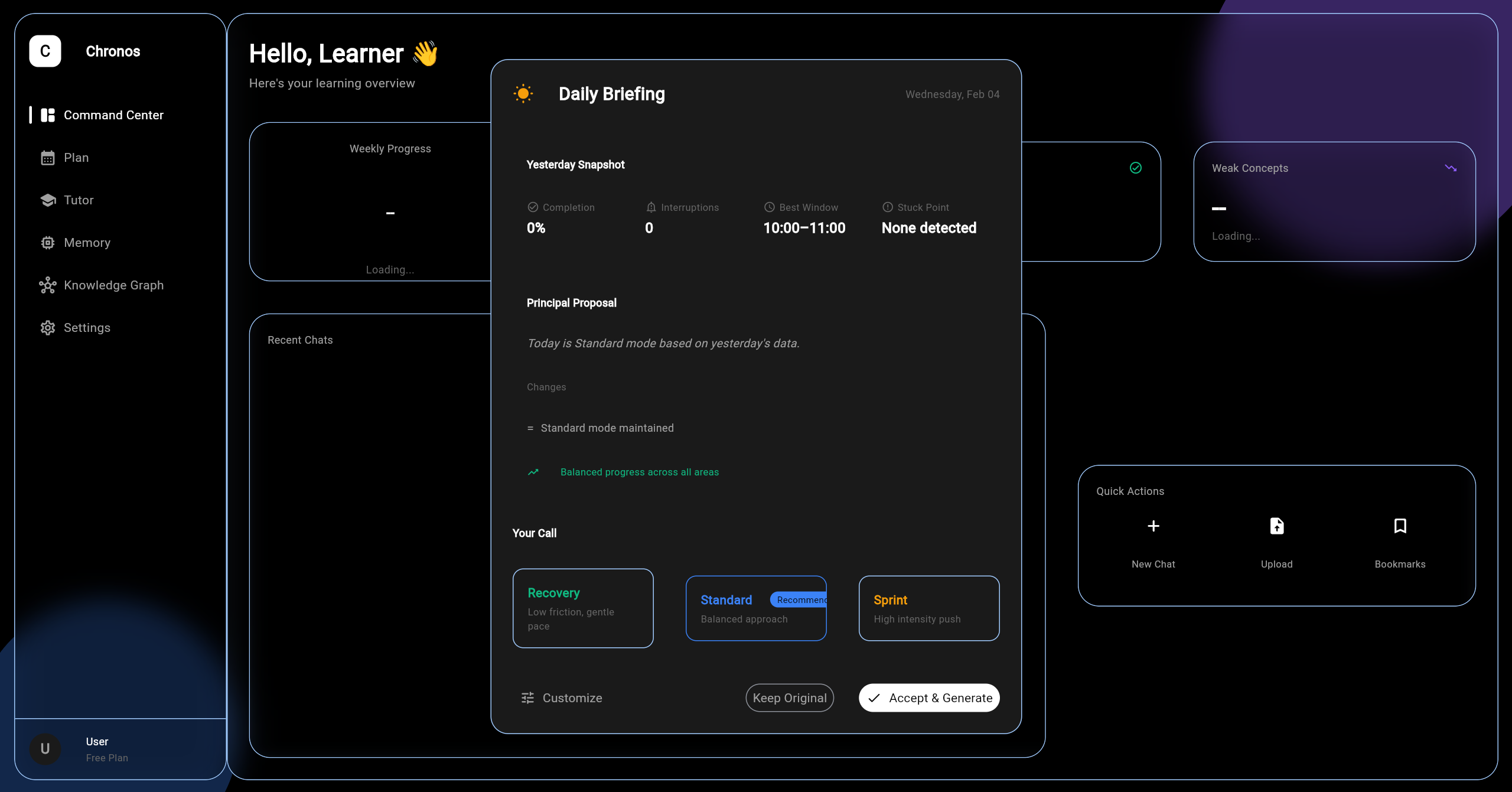
- Daily Briefing: shows the adjusted plan with reasons so users can accept or modify.
We optimize for plan–reality alignment: [ \text{Plan}^*=\arg\min_P \left(\alpha \cdot \text{LifePressure}(t) + \beta \cdot \text{PlanDeviation} (P,R)\right) ]
## Challenges
- Converting free‑form complaints into structured signals.
- Making adjustments explainable rather than a black box.
- Keeping real‑time updates lightweight for users.

Log in or sign up for Devpost to join the conversation.