-
-
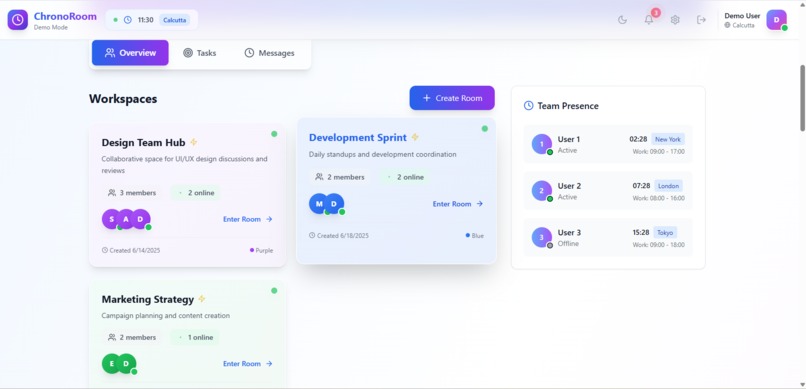
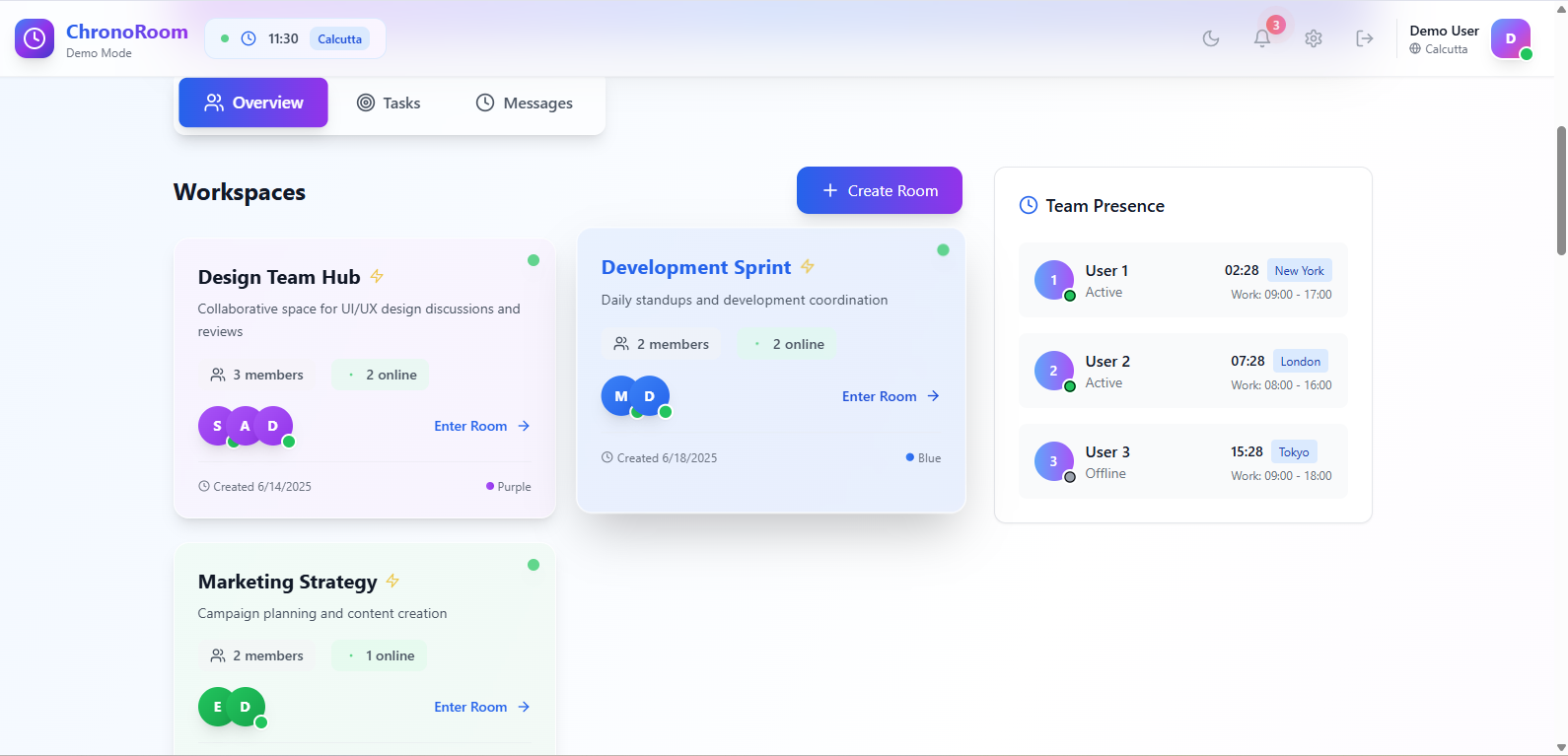
workspace
-
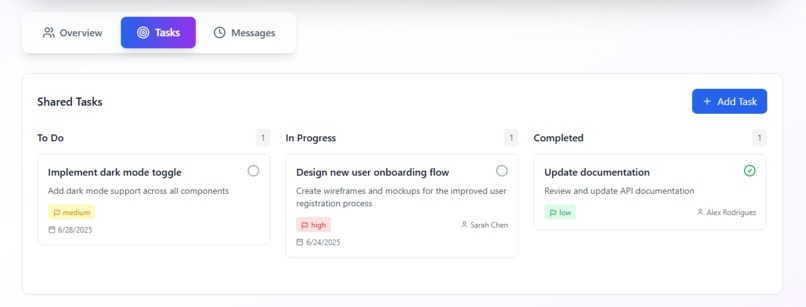
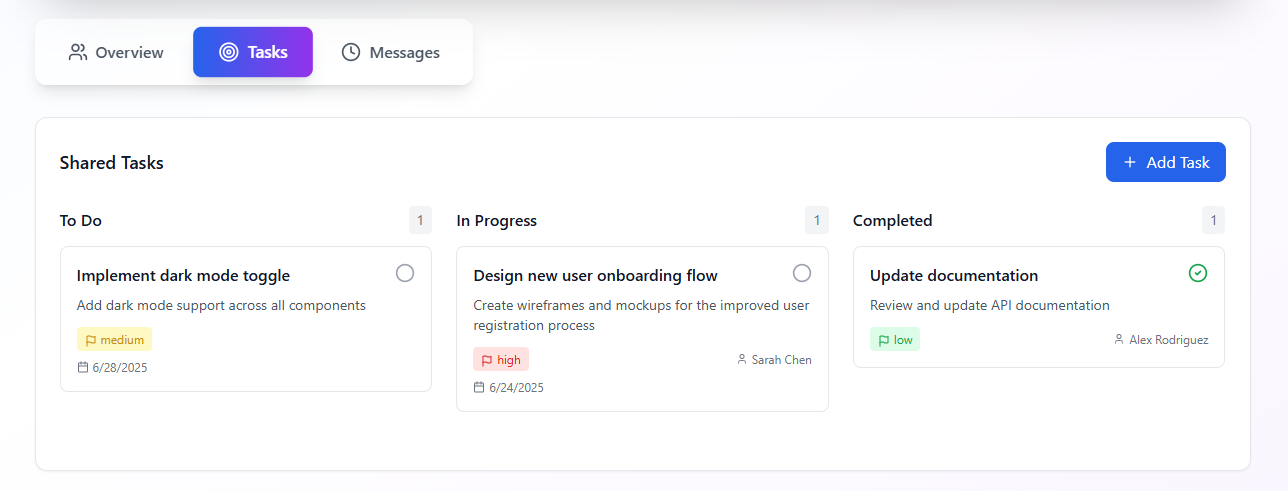
tasks
-
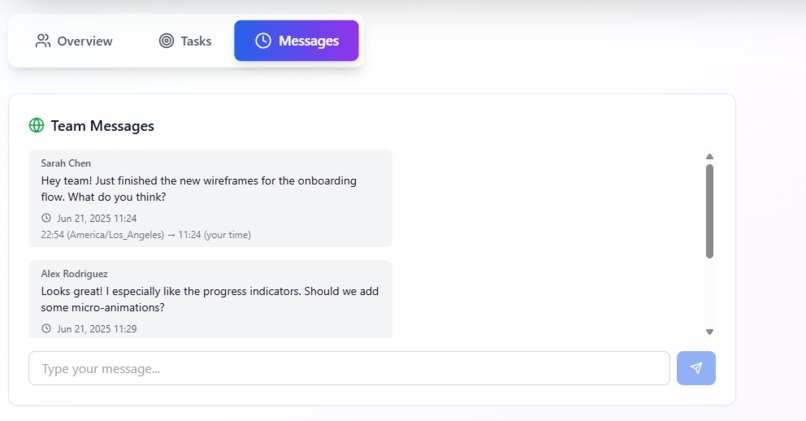
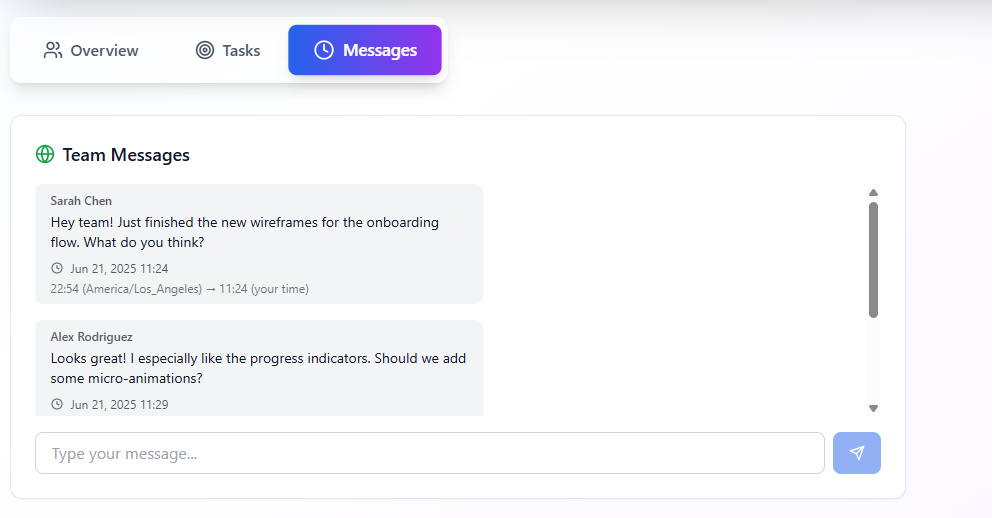
messages
-
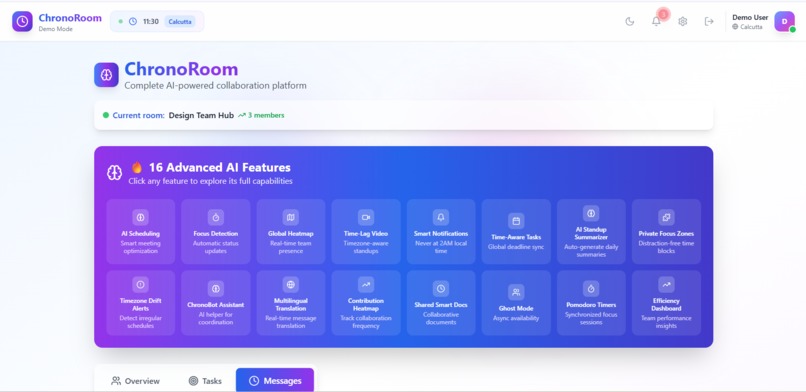
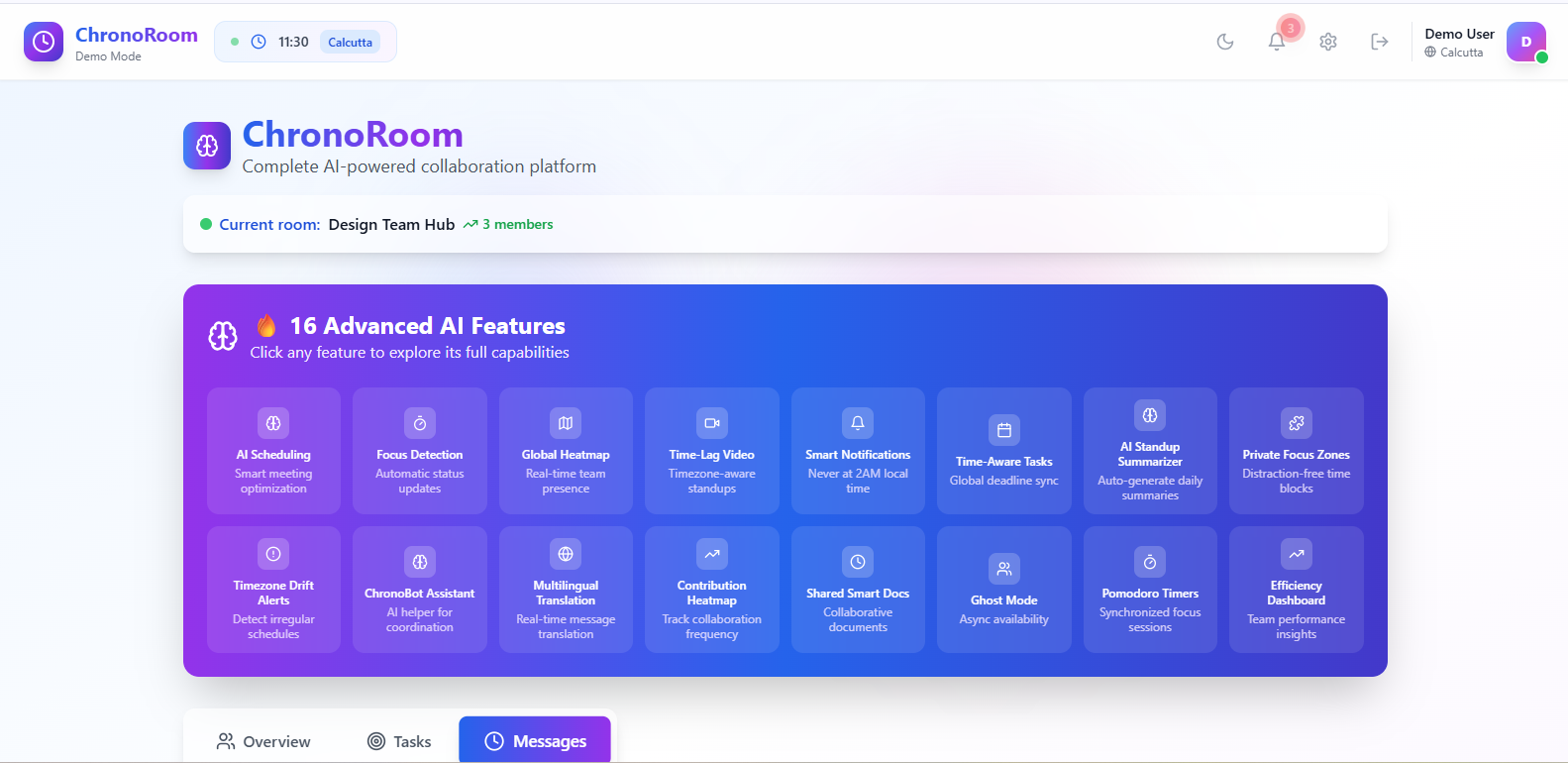
16 AI advanced features
Inspiration
What it does
How we built it
Challenges we ran into
Accomplishments that we're proud of
What we learned
What's next for ChronoRoom
Inspiration Working with distributed teams across multiple time zones, I experienced firsthand the frustration of coordinating meetings, waiting for responses, and missing collaboration opportunities. Traditional tools treat time as an afterthought, but for remote teams, time is everything. I was inspired to create ChronoRoom after realizing that the future of work isn't just remote—it's asynchronous and timezone-intelligent. The pain of asking "What time works for everyone?" in a team spanning New York, London, Tokyo, and Sydney sparked the idea for a platform that makes timezone collaboration effortless.
What it does ChronoRoom is a timezone-aware virtual co-working platform that transforms how distributed teams collaborate. It features:
Smart Presence Timeline: See when teammates are working in real-time across different timezones Intelligent Time Overlap Prediction: Automatically calculates optimal collaboration windows when multiple team members are available Time-Translated Messaging: Messages show timestamps in both sender's and receiver's local time for clarity Shared Task Management: Collaborative to-do lists with timezone-aware due dates and assignments Virtual Work Rooms: Dedicated spaces for different projects with member presence indicators Async-First Design: Built for teams that don't work at the same time but need to stay connected The platform automatically detects user timezones, displays working hours visually, and helps teams find the perfect windows for synchronous collaboration while supporting asynchronous workflows.
How we built it I architected ChronoRoom as a modern React application with a focus on clean, maintainable code:
Frontend Architecture:
Built with React 18 + TypeScript for type safety and modern development patterns Used Vite for lightning-fast development and optimized builds Implemented responsive design with TailwindCSS utility-first approach Added smooth animations with Framer Motion for enhanced user experience Timezone Logic:
Created comprehensive timezone utilities using date-fns and date-fns-tz Developed algorithms for calculating optimal time overlaps across multiple users Implemented time translation features for cross-timezone communication Built working hours visualization and presence detection systems Component Design:
Followed modular architecture with single responsibility principle Created reusable components for rooms, tasks, messages, and presence indicators Implemented proper state management with React hooks Ensured accessibility and mobile responsiveness throughout User Experience:
Designed intuitive interfaces that make complex timezone data easy to understand Used consistent visual language with gradients, shadows, and micro-interactions Implemented real-time updates and notifications for better collaboration Challenges we ran into Timezone Complexity: Managing multiple timezones simultaneously while keeping the UI intuitive was the biggest technical challenge. Converting between timezones, handling daylight saving time transitions, and presenting this information clearly required deep understanding of temporal data structures.
Overlap Algorithm: Calculating optimal collaboration windows across multiple users with different working hours and timezones required careful consideration of edge cases, timezone offsets, and user preferences. The algorithm needed to be both accurate and performant.
User Experience Design: Balancing feature richness with simplicity was crucial. The challenge was showing enough timezone information to be useful without overwhelming users with temporal complexity.
Performance Optimization: Ensuring smooth animations and responsive interactions while handling complex timezone calculations required optimization of component re-renders and efficient state management.
Cross-Platform Consistency: Making sure the app works seamlessly across different devices, browsers, and operating systems while maintaining consistent timezone behavior.
Accomplishments that we're proud of Intuitive Timezone UX: Created a user interface that makes complex timezone coordination feel natural and effortless. Users can instantly see team availability without mental timezone math.
Smart Overlap Detection: Built an intelligent algorithm that automatically finds optimal collaboration windows, turning the pain point of "when can we all meet?" into a solved problem.
Production-Ready Design: Developed a polished, professional interface that feels like a real SaaS product, complete with smooth animations, responsive design, and attention to detail.
Comprehensive Feature Set: Delivered a full-featured platform with presence tracking, messaging, task management, and room organization—all timezone-aware.
Clean Architecture: Wrote maintainable, well-structured code with proper TypeScript typing, modular components, and clear separation of concerns.
Accessibility Focus: Ensured the app is usable across different devices and screen sizes with proper contrast ratios and intuitive navigation.
What we learned Timezone Programming Complexity: Learned the intricacies of working with timezones in web applications, including handling daylight saving time, timezone abbreviations, and cross-browser compatibility.
Advanced React Patterns: Deepened understanding of React hooks, component composition, and state management patterns for complex applications.
Design Systems: Gained experience building consistent design systems with TailwindCSS, including color schemes, spacing systems, and component variants.
User-Centered Design: Learned to balance feature complexity with user experience, making technical complexity invisible to end users.
Performance Optimization: Understood the importance of optimizing React applications for smooth interactions, especially when dealing with frequent time updates and animations.
Modern Development Workflow: Experienced the power of modern tooling like Vite, TypeScript, and component-based architecture for rapid development.
What's next for ChronoRoom Real-Time Collaboration: Implement WebSocket integration for live presence updates, real-time messaging, and collaborative editing features.
AI-Powered Scheduling: Add machine learning algorithms to predict optimal meeting times based on team patterns, preferences, and productivity data.
Calendar Integration: Connect with Google Calendar, Outlook, and other calendar services for seamless scheduling and availability sync.
Mobile Applications: Develop native iOS and Android apps for on-the-go team coordination and notifications.
Advanced Analytics: Build team productivity insights, collaboration patterns analysis, and timezone efficiency reports.
Enterprise Features: Add team management, admin controls, custom working hours, and integration with enterprise tools like Slack and Microsoft Teams.
Global Expansion: Support for more languages, cultural working patterns, and regional business hour conventions.
API Platform: Create developer APIs for third-party integrations and custom workflow automation.
ChronoRoom represents the future of distributed work—where time zones become a feature, not a barrier, and teams can collaborate seamlessly across the globe.
Built With
- 18
- accessibility-first
- app
- architecture
- async
- bolt.new
- collaboration
- component-based
- css
- custom
- date-fns
- date-fns-tz
- design
- development
- eslint
- form
- framer
- frontend
- hook
- hooks
- hot
- lucide
- motion
- postcss
- productivity
- pwa
- react
- remote
- responsive
- router
- tailwindcss
- teams
- time
- toast
- typescript
- utility-first
- vite
- web
- zone

Log in or sign up for Devpost to join the conversation.