-
-
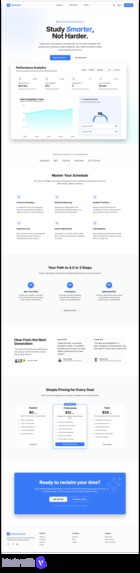
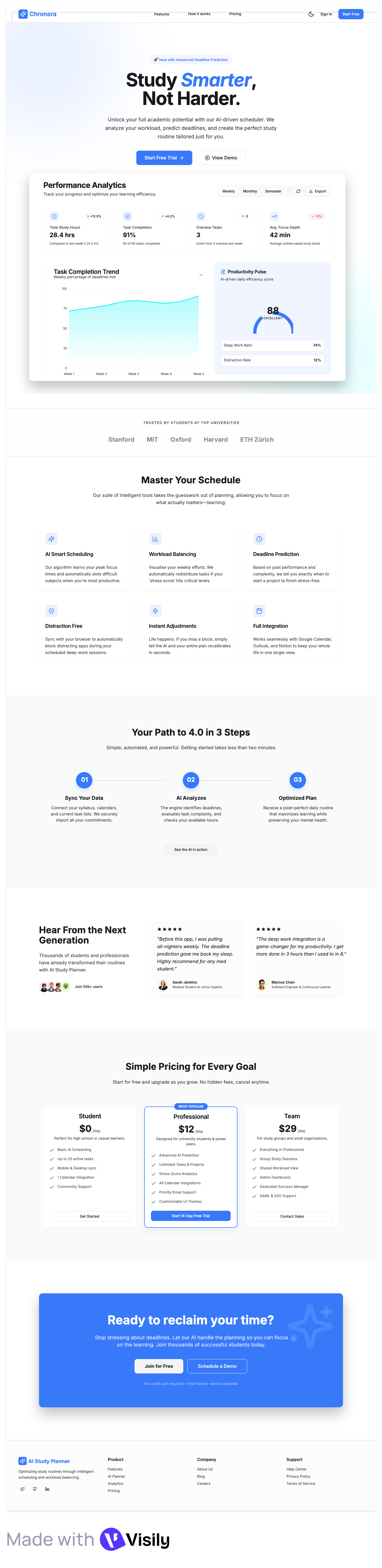
hero page
Inspiration
Chronora was inspired by the inefficiency of traditional task managers for students. Most tools list tasks but do not intelligently distribute workload or anticipate academic pressure. We wanted to build a system that treats time as a structured resource and applies algorithmic scheduling to reduce overload and improve consistency.
What it does
Chronora is an AI-powered study planner that helps students manage tasks, predict deadline pressure, and balance workload. It generates optimized study plans based on difficulty, estimated time, and remaining days. It also provides analytics to track productivity and completion trends.
How we built it
We built Chronora as a full-stack SaaS application using Next.js (App Router) with TypeScript. Prisma ORM connects to a PostgreSQL database for structured data modeling. Authentication is handled with NextAuth using JWT sessions and OAuth. TanStack Query manages client-side server state. The OpenAI API powers AI-generated scheduling, and Stripe manages subscriptions and billing.
Task prioritization is based on weighted scoring, such as:
[ PriorityScore = \frac{Difficulty \times EstimatedHours}{DaysRemaining + 1} ]
This helps distribute workload proportionally while minimizing deadline spikes.
Challenges we ran into
We faced challenges designing a realistic workload-balancing model that avoids overloading specific days. Handling AI responses required validation to ensure structured outputs. Implementing secure authentication and protecting routes correctly was critical. Stripe webhooks also introduced asynchronous complexity that required careful handling.
Accomplishments that we're proud of
We built a scalable full-stack architecture with clear separation between UI, API, and data layers. The AI-generated study plan system integrates smoothly into the workflow. Authentication, subscription handling, and analytics were implemented in a production-oriented structure rather than a prototype-level setup.
What we learned
We learned the importance of designing architecture before features. Separating server state from UI state improves maintainability. AI integrations require strict validation layers. Subscription systems introduce backend complexity that must be anticipated early.
What's next for Chronora
Next steps include improving the scheduling algorithm with adaptive learning, adding collaborative study planning, enhancing analytics with predictive modeling, and refining the user experience across mobile and desktop platforms.
Built With
- eslint
- figma
- git
- github
- jwt
- nextauth
- nextjs
- openai
- postgresql
- prisma
- query
- sql
- stripeapi
- tailwind
- tanstack
- typescript


Log in or sign up for Devpost to join the conversation.