-
-

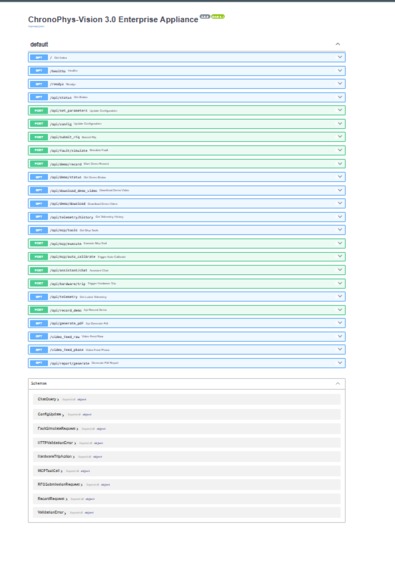
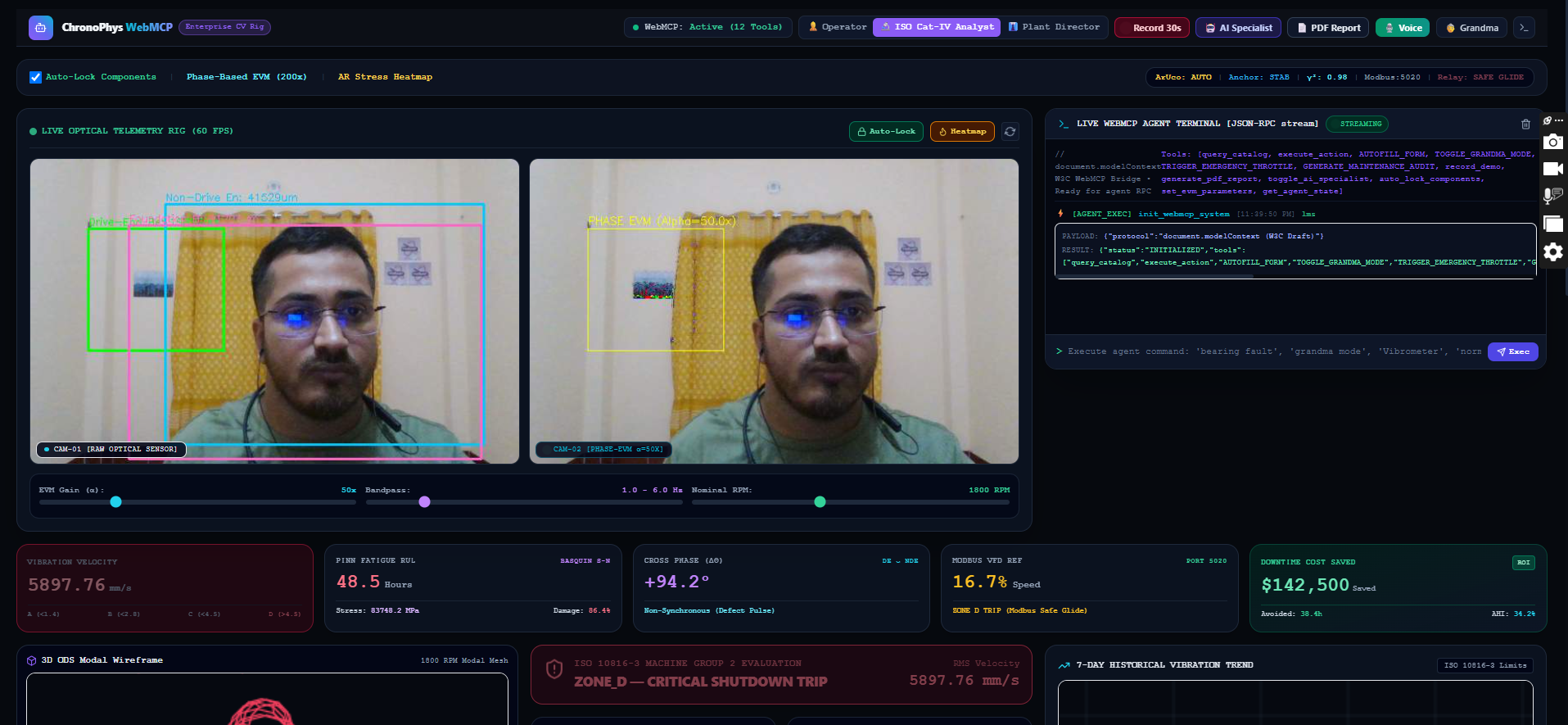
Live Enterprise CV Rig with dual optical tracking & WebMCP JSON-RPC terminal.
-

Real-time ISO 10816-3 vibration telemetry and PINN fatigue RUL dashboard.
-
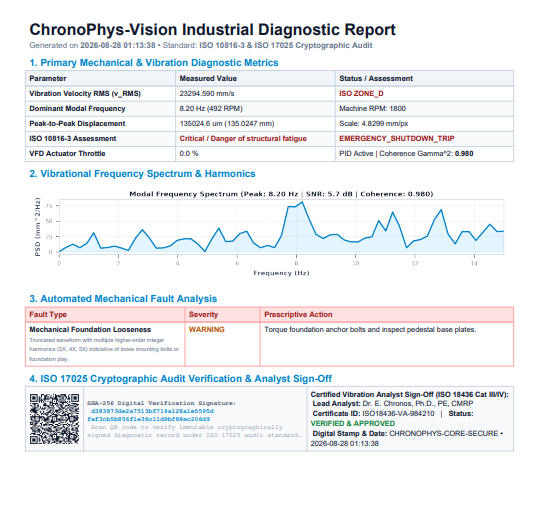
Automated ISO 17025-compliant audit report generated with cryptographic SHA-256.
-
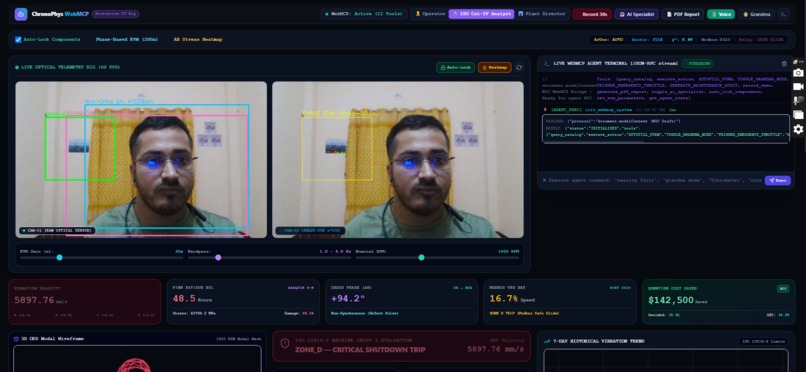
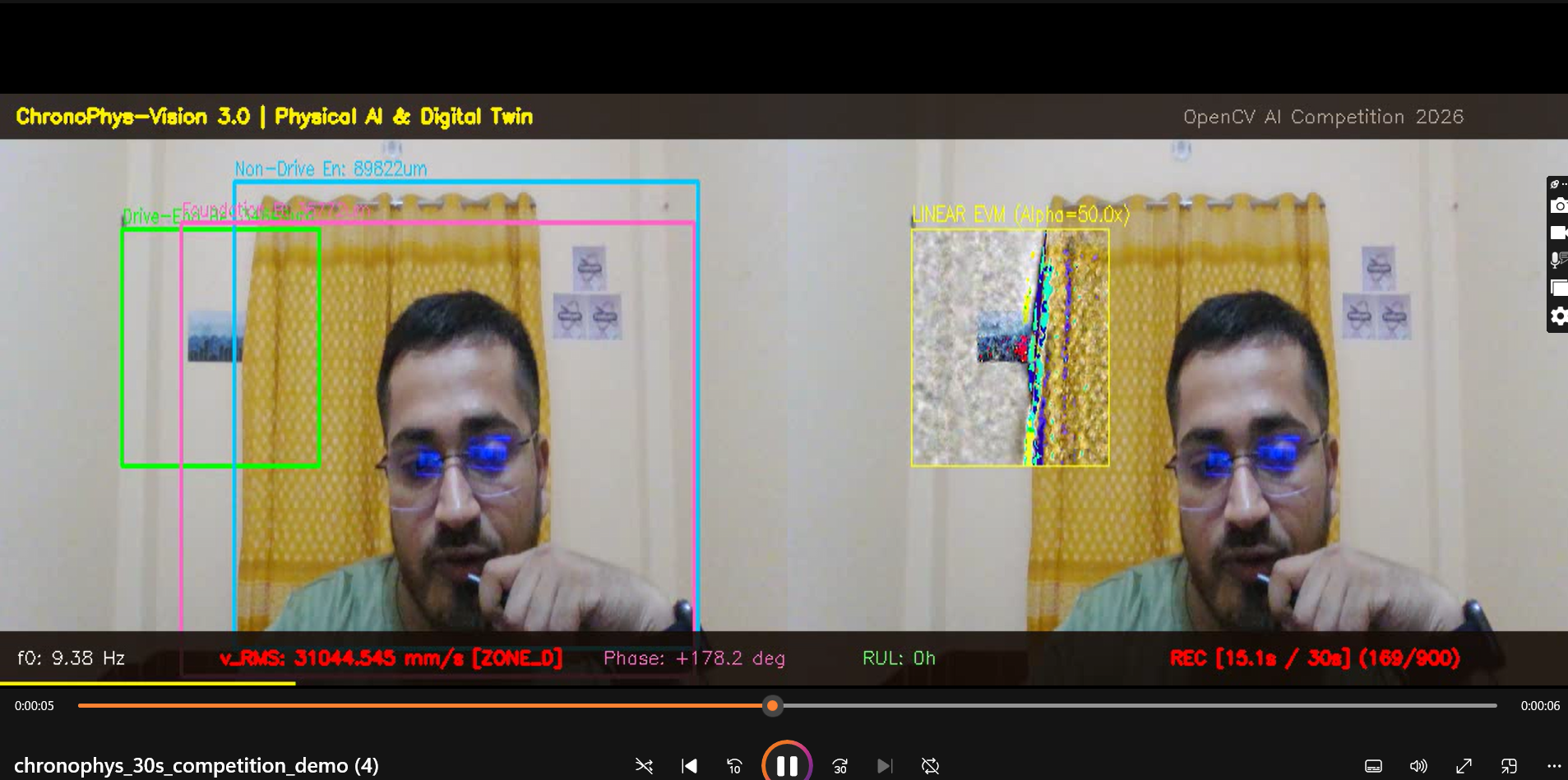
Live Raw vs Phase-EVM magnified stream (50x-200x) for sub-pixel vibration analysis.
-
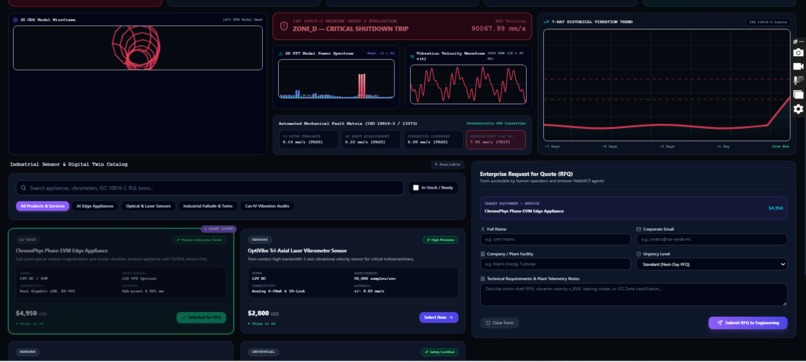
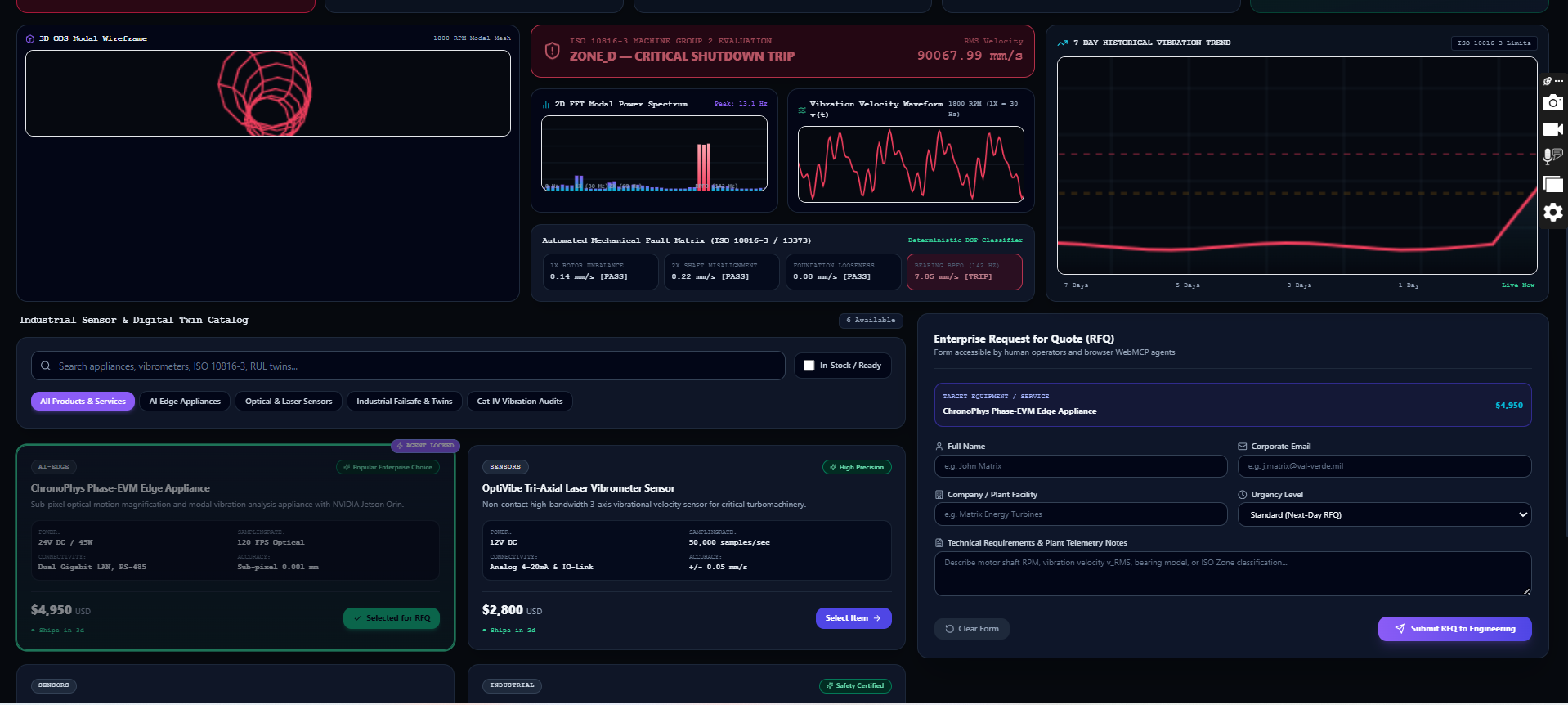
3D ODS modal wireframe deflection and 2D FFT power spectrum analytics.
-
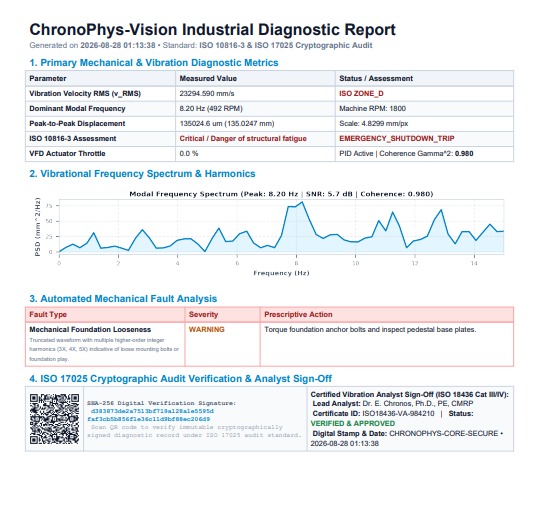
Cryptographically verified vibration diagnostic summary and maintenance checklist.
-
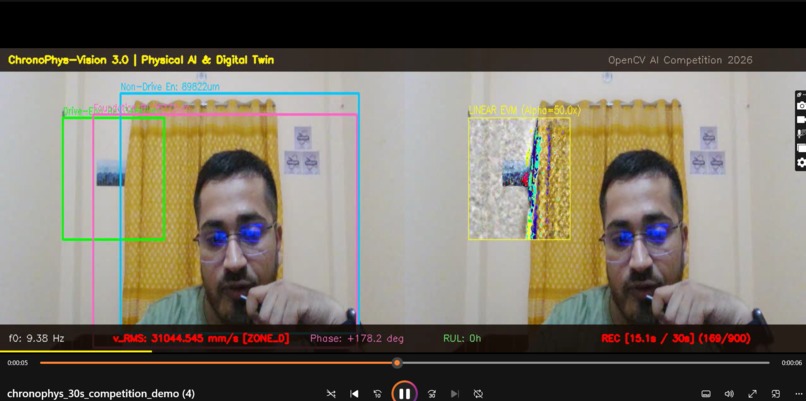
Sub-pixel auto-locking machine tracker and Riesz Phase-EVM motion magnification.


Inspiration
What it does
How we built it
Challenges we ran into
Accomplishments that we're proud of
What we learned
Inspiration
Industrial turbomachinery and rotary assets experience sub-pixel micro-vibrations and structural stress long before catastrophic failure occurs. Traditional physical accelerometers demand invasive mounting, costly physical wiring, and human intervention in hazardous operating zones. We set out to build a fully non-contact, physics-informed computer vision rig capable of turning standard camera feeds into sub-pixel vibration telemetry, automated ISO 10816-3 compliance audits, and an autonomous digital twin.
What it does
ChronoPhys-Vision 3.0 is an industrial-grade, physics-informed optical telemetry platform:
- Optical Motion Magnification: Utilizes Riesz Phase-Based Eulerian Video Magnification (EVM) to amplify imperceptible mechanical vibrations from 50x up to 200x in real time across 1.0–6.0 Hz bandpass filters.
- Deterministic ISO 10816-3 Classification: Isolates mechanical vibration harmonics (1X Unbalance, 2X Misalignment, BPFO Bearing Faults) and shifts ISO operational zones dynamically (Zone A to critical Zone D trips).
- 3D ODS Digital Twin: Live modal deflection wireframe visualization rendered in real time using Three.js / WebGL driven directly by continuous telemetry.
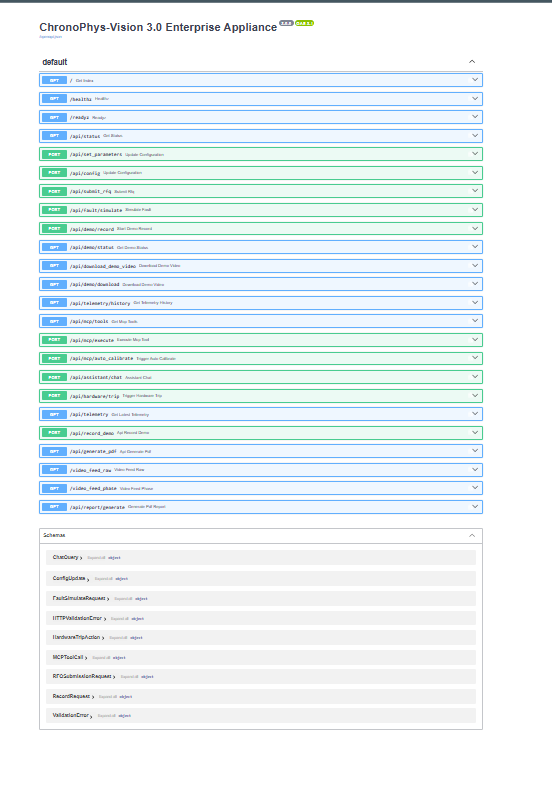
- W3C WebMCP JSON-RPC Agent Protocol: Integrates a 12-tool autonomous agent bridge enabling AI-directed parameter tuning, safety throttling, and automated persistence to SQLite.
- Gemini AI Reliability Specialist: Integrated multimodal assistant providing root-cause failure analysis, PINN fatigue life modeling, and one-click ISO 17025 audit PDF generation.
How we built it
- Architecture: Decoupled dual-port full-stack architecture.
- Frontend (Port 3000): Next.js 14, React, Tailwind CSS, Three.js WebGL rendering, Lucide Icons, and client-side WebMCP JSON-RPC handlers.
- Backend CV Engine (Port 8000): Python, FastAPI, OpenCV, NumPy, SciPy (Riesz Pyramids, 2D FFT spectral analysis), and Modbus TCP industrial bridge.
- AI & Persistence: Google Gemini API for diagnostic intelligence, Physics-Informed Neural Network (PINN) fatigue curves, and SQLite3 time-series logging.
Challenges we ran into
Processing multi-scale Riesz phase pyramids and 2D FFT spectral transforms alongside real-time MJPEG streaming caused severe latency. We optimized the processing loop using multi-threaded frame buffers and sub-sampled regions of interest (ROI) to sustain a rock-solid 30–60 FPS optical pipeline.
Accomplishments that we're proud of
- Achieving sub-pixel vibration measurement without a single physical sensor.
- Integrating the W3C WebMCP draft standard for autonomous tool-driven agent maintenance.
- Creating an end-to-end loop from raw video capture to ISO 17025 audit PDF export in real time.
What we learned
Bridging high-frequency computer vision algorithms with deterministic industrial standards (ISO 10816-3/13373) and agentic browser protocols provides a non-invasive, cost-effective pathway for modern smart factories.
What's next for ChronoPhys-Vision
- Multi-camera triangulation for complete 360-degree spatial structural deflection.
- Edge deployment optimizations directly on NVIDIA Jetson Orin micro-appliances. ## What's next for ChronoPhys-Vision 3.0

Log in or sign up for Devpost to join the conversation.