-
-
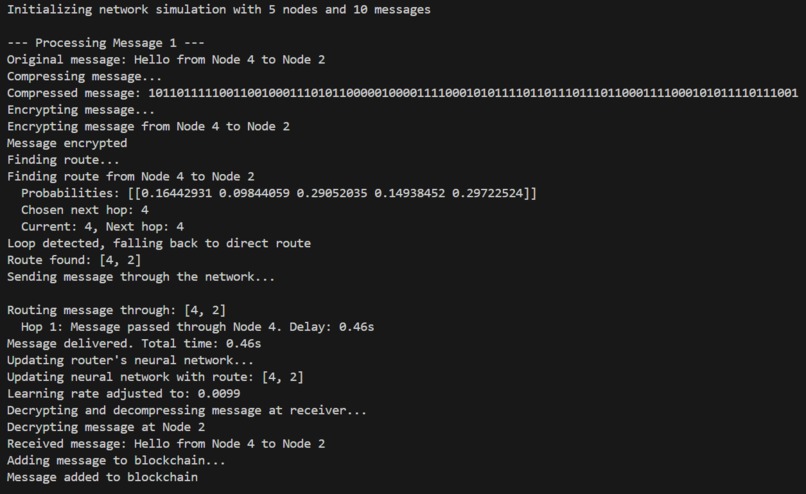
Information about a message sent from sender to reciever
-
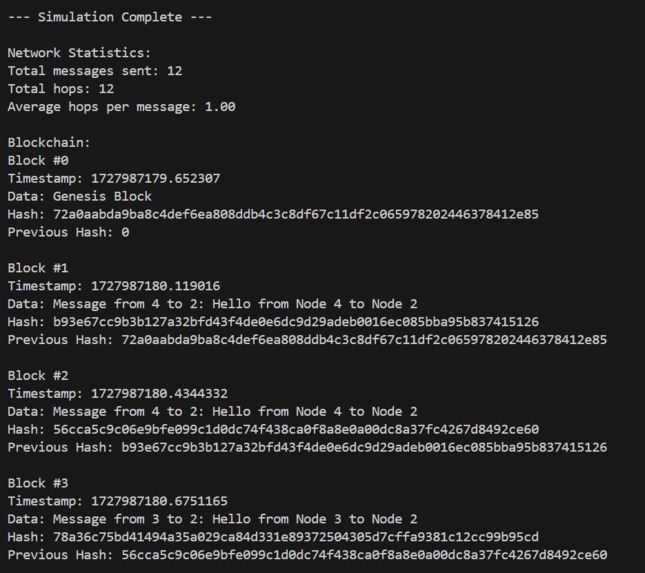
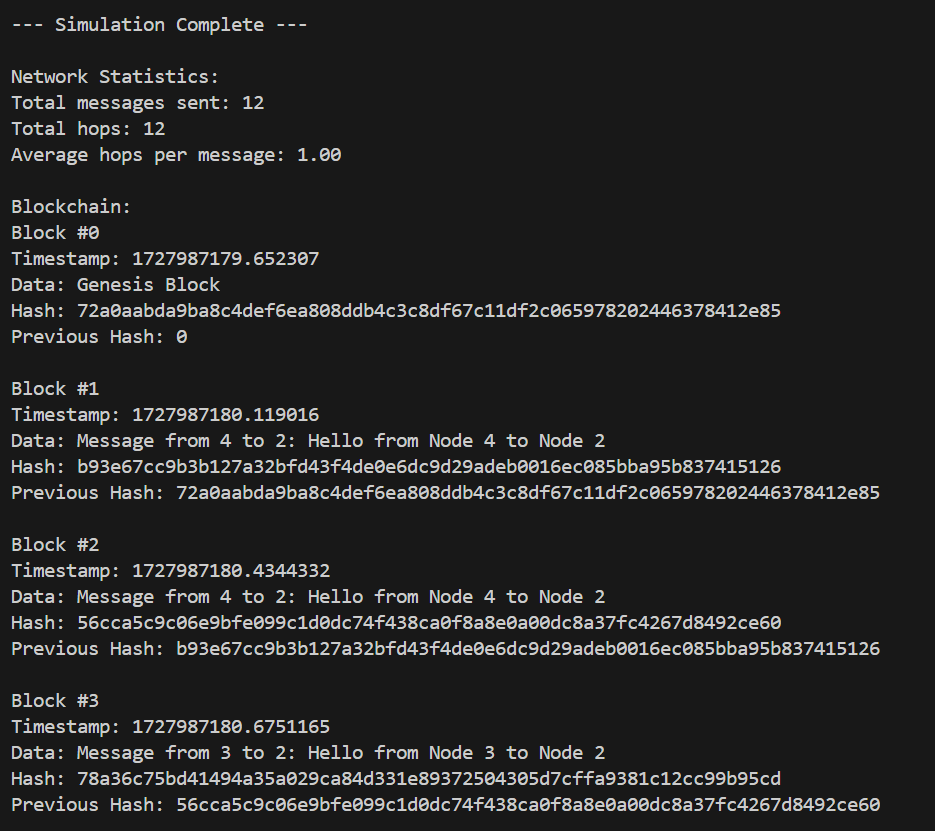
Information about blockchain blocks
-
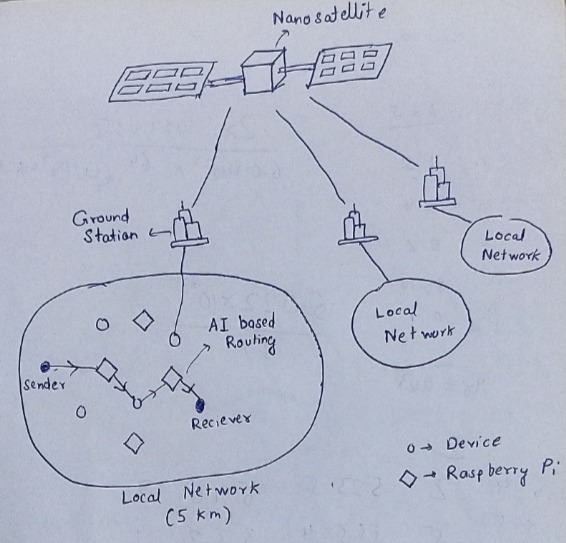
High level drawing of our network consisting of many local networks connected to a nanosatellite

Inspiration
The inspiration for the ChronoFusion Grid came from the need to address the connectivity gap in remote areas, where traditional communication infrastructure like towers or fiber-optic cables is either too expensive or impractical. We wanted to create a solution that not only connects these areas but does so sustainably, leveraging renewable energy and cutting-edge technologies like nanosatellites, blockchain, and laser-based FSO communication. The challenge of providing reliable communication to underserved regions, combined with the rising demand for sustainable solutions, fueled our determination to design a decentralized system that operates efficiently with minimal environmental impact.
What it does
ChronoFusion Grid is a decentralized communication network designed for remote areas. It connects local mesh networks of mobile phones and Raspberry Pi nodes with nanosatellites to enable long-distance communication. The system uses AI/ML to optimize data routing, ensuring the most efficient and low-latency paths. Blockchain technology secures data transfers by storing a distributed ledger at each node, verifying messages across the network. Additionally, laser-based FSO and LAWiFi provide high-speed wireless data transmission over long distances, even across rough terrains. It runs on renewable energy using solar panels and battery backups, ensuring sustainability and resilience in extreme conditions.
How we built it
We built ChronoFusion Grid using a combination of hardware, software, and innovative design. The local network was established using mobile phones as the primary nodes, supplemented by Raspberry Pi devices to offload communication burdens. We incorporated laser-based FSO and LAWiFi for high-speed, long-range wireless communication, providing flexibility in challenging environments.
AI/ML models were developed and integrated to optimize data routing across the mesh network, reducing latency and improving energy efficiency. Blockchain was implemented in each node to securely store and verify data, ensuring the integrity of message transfers. Finally, we powered the entire system using solar panels and battery banks, making the setup energy-efficient and scalable.
Challenges we ran into
Environmental Factors: Establishing reliable laser-based FSO communication was challenging due to weather conditions and terrain, requiring the integration of LAWiFi as a fallback for times when line-of-sight was obstructed. Load Management: Mobile phones faced significant load challenges when handling large amounts of data traffic. We resolved this by introducing Raspberry Pi nodes to share the communication burden. Energy Efficiency: Ensuring continuous power to all nodes using solar energy required careful energy management and storage solutions, especially in locations with limited sunlight. Routing Optimization: Developing an AI-based routing system that minimized latency and energy consumption in real-time across the decentralized network proved complex but was successfully managed through iterative testing.
Accomplishments that we're proud of
Successfully building a decentralized, scalable communication network capable of operating efficiently in remote areas. Integrating renewable energy sources like solar panels into the network, ensuring long-term sustainability and reducing environmental impact. Implementing laser-based FSO communication to achieve high-speed data transmission, even in difficult terrains, and seamlessly switching to LAWiFi when needed. Using AI/ML to optimize data routing, resulting in a more efficient system with reduced latency and energy consumption. Incorporating blockchain technology to ensure secure and verifiable communication across nodes in the network.
What we learned
We learned that combining cutting-edge technologies like blockchain, AI/ML, and FSO communication can provide a viable solution for sustainable connectivity in remote areas. We also gained valuable experience in designing and managing a decentralized network, including the complexities of load balancing, data routing, and energy management. Additionally, we saw the importance of having flexible backup systems (e.g., LAWiFi) to maintain connectivity when primary methods (like FSO) are compromised. Most importantly, we learned how crucial it is to design systems that can adapt to challenging environments while prioritizing sustainability and efficiency.
What's next for ChronoFusion Grid
The next steps for ChronoFusion Grid include scaling up the project by:
Expanding the network to cover larger and more remote areas, with more nanosatellites and ground stations. Integrating more advanced AI/ML algorithms to further optimize the network for faster routing and more efficient energy usage. Enhancing the blockchain infrastructure to manage higher volumes of data securely and efficiently. Conducting real-world tests in regions with disaster-prone environments to test the resilience of the system and improve its emergency communication capabilities. Continuing to refine the renewable energy solutions by incorporating more advanced solar technologies and exploring other energy sources like wind or kinetic energy for off-grid areas.


Log in or sign up for Devpost to join the conversation.