-
-
Live Tempo
-
Live Tempo
-
Home
-
Live Tempo
-
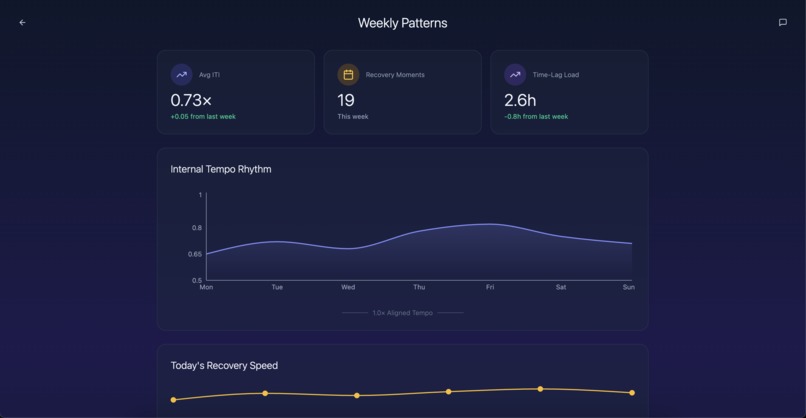
Weekly Patterns
-
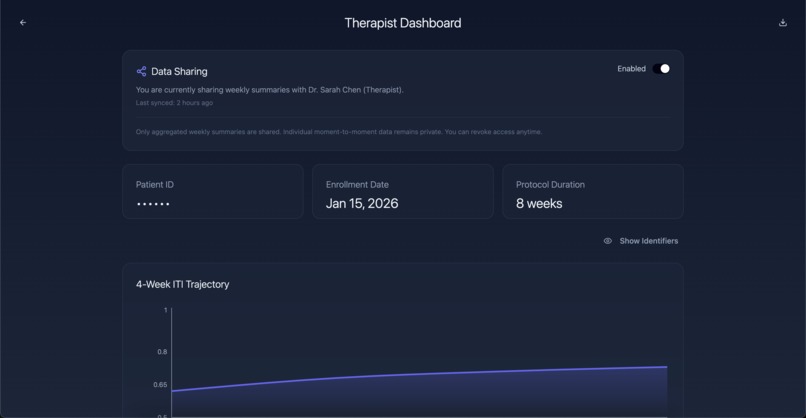
Therapist View
-
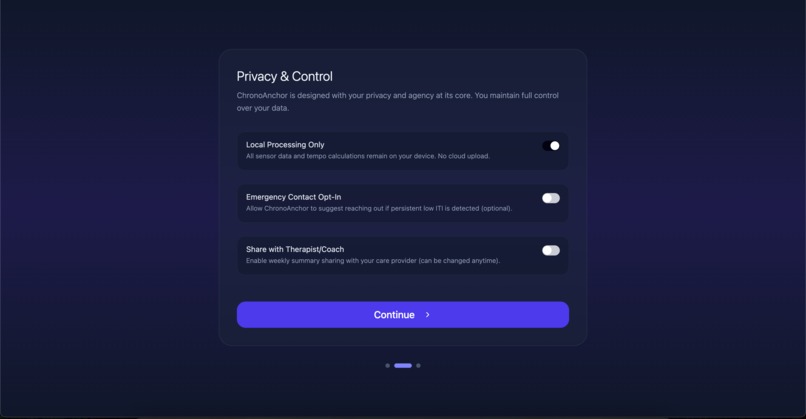
Set up
-
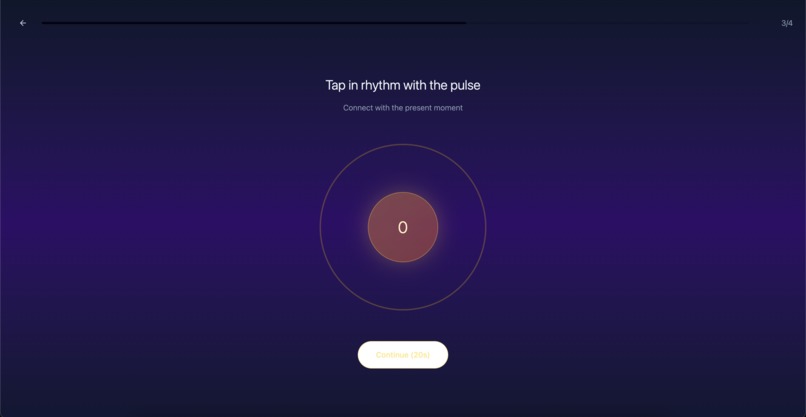
Live Tempo
-
Weekly Patterns
-
Live Tempo
-
Wearable Mockup
-
Therapist View
-
Wearable Mockup
-
Live Tempo
-
Set up
-
Smart Room
-
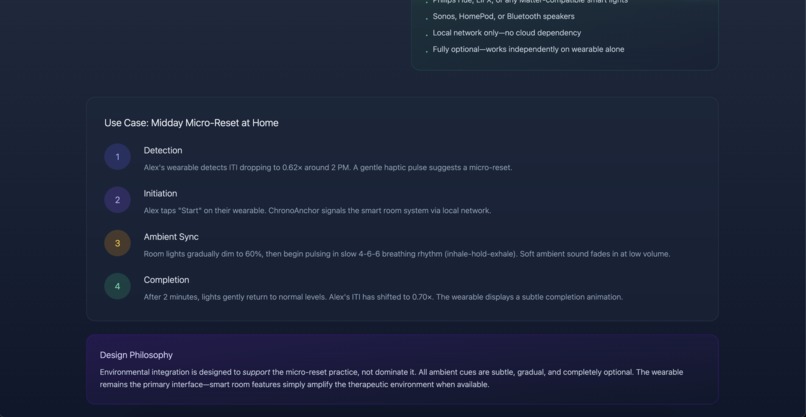
Smart Room
Inspiration
ChronoAnchor was inspired by a recurring phrase often heard from people experiencing depression: “Time feels like it has stopped.” While modern self tracking tools quantify physical activity, sleep, and productivity, they overlook one of the most fundamental aspects of human experience the subjective perception of time. We were struck by the disconnect between how precisely we measure external behaviors and how little we understand internal temporal experience. If depression distorts the felt speed of time, then perhaps making that distortion perceptible could open a new pathway for awareness and intervention. We saw an opportunity to move beyond tracking actions and instead quantify lived experience itself.
What it does
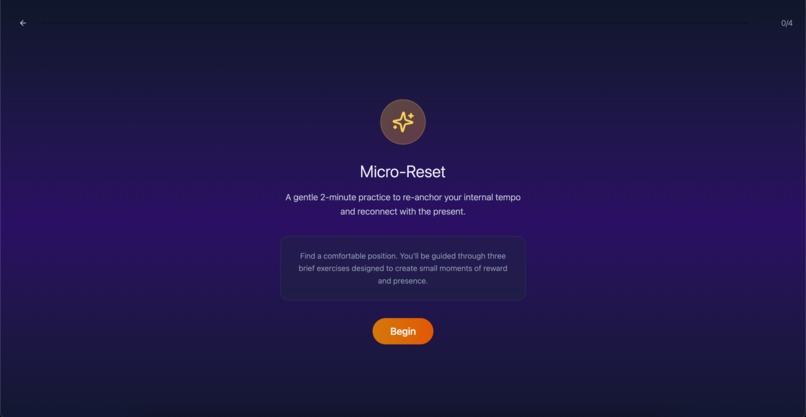
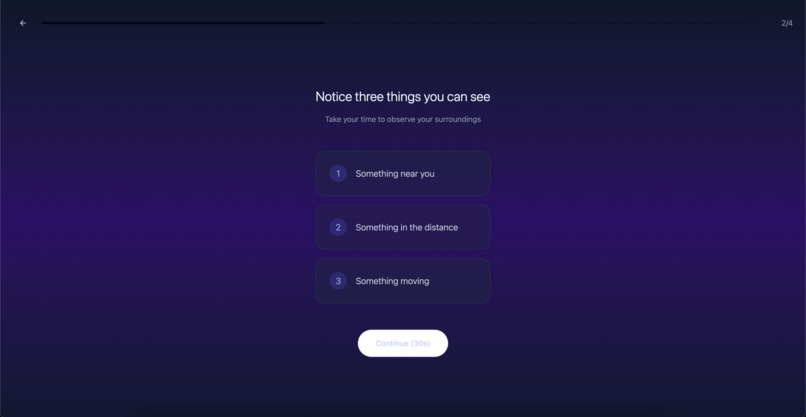
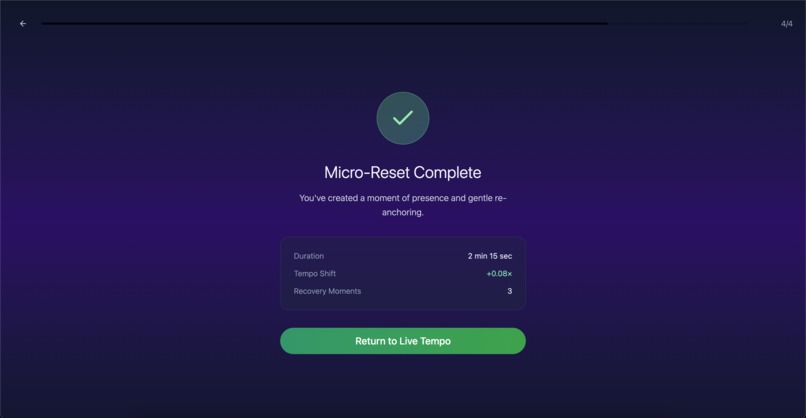
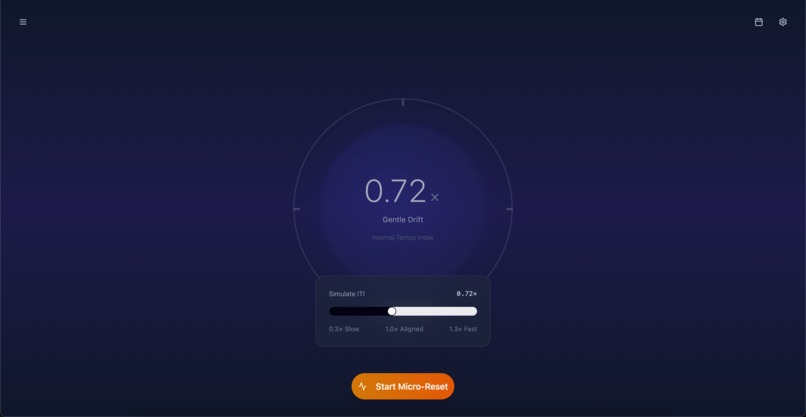
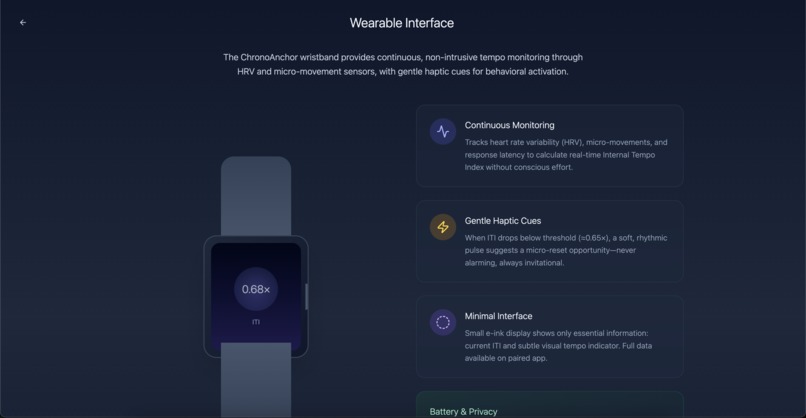
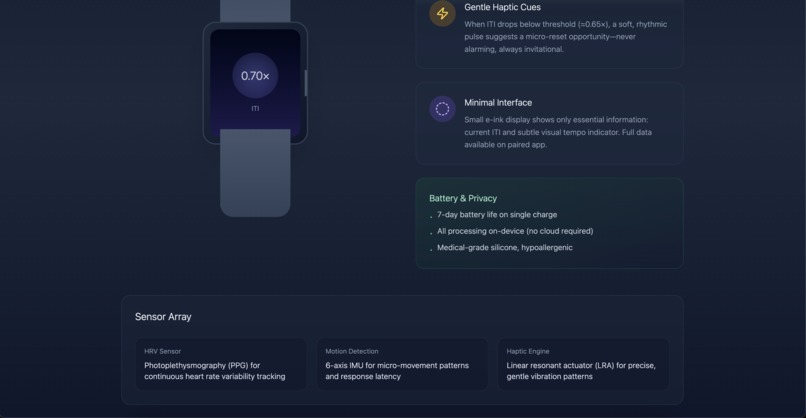
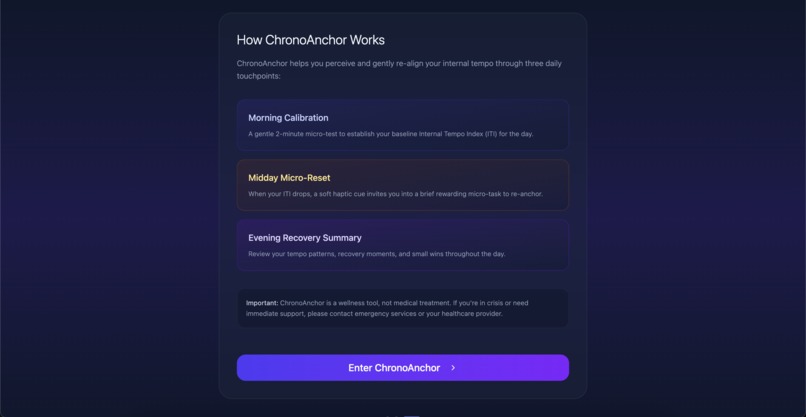
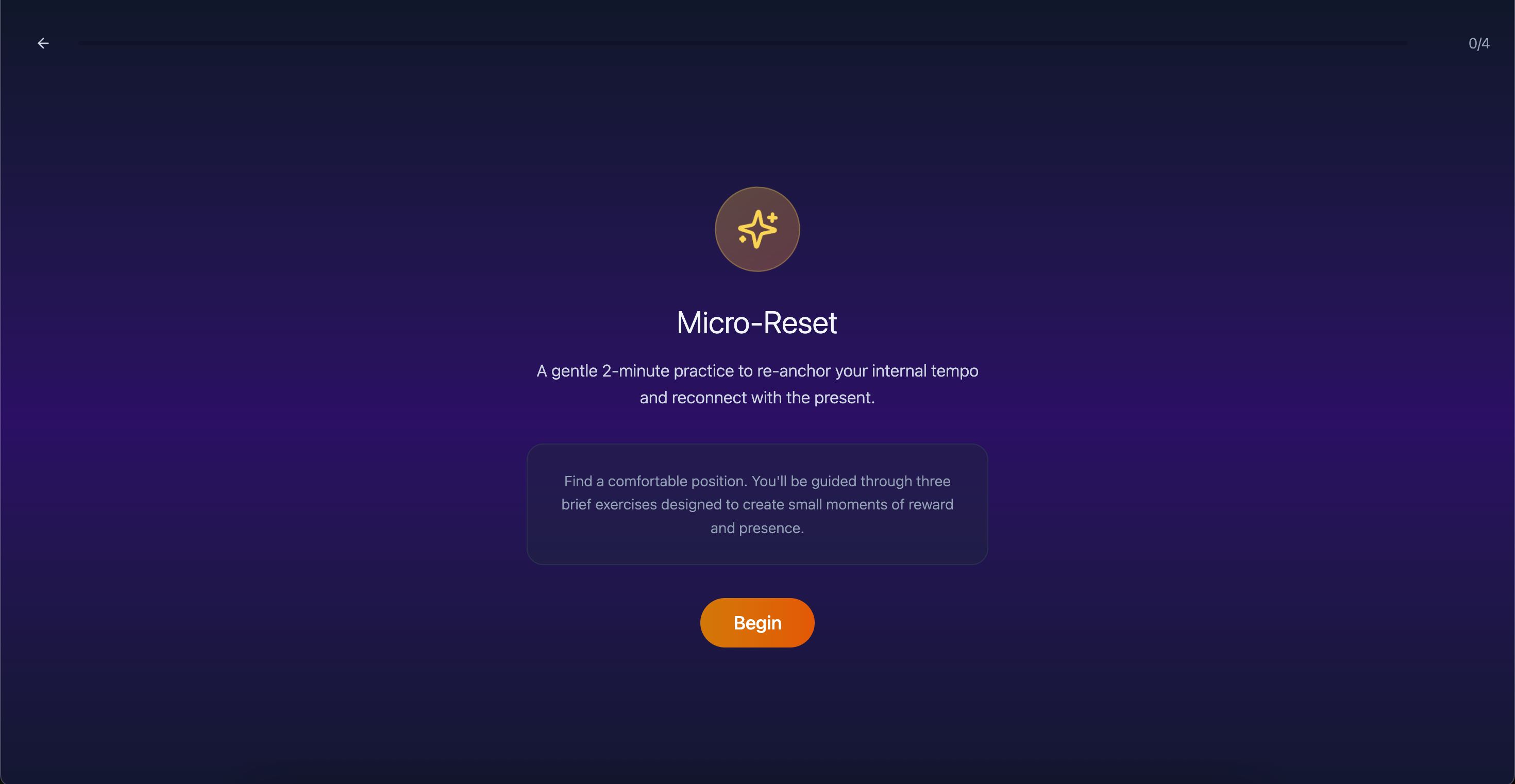
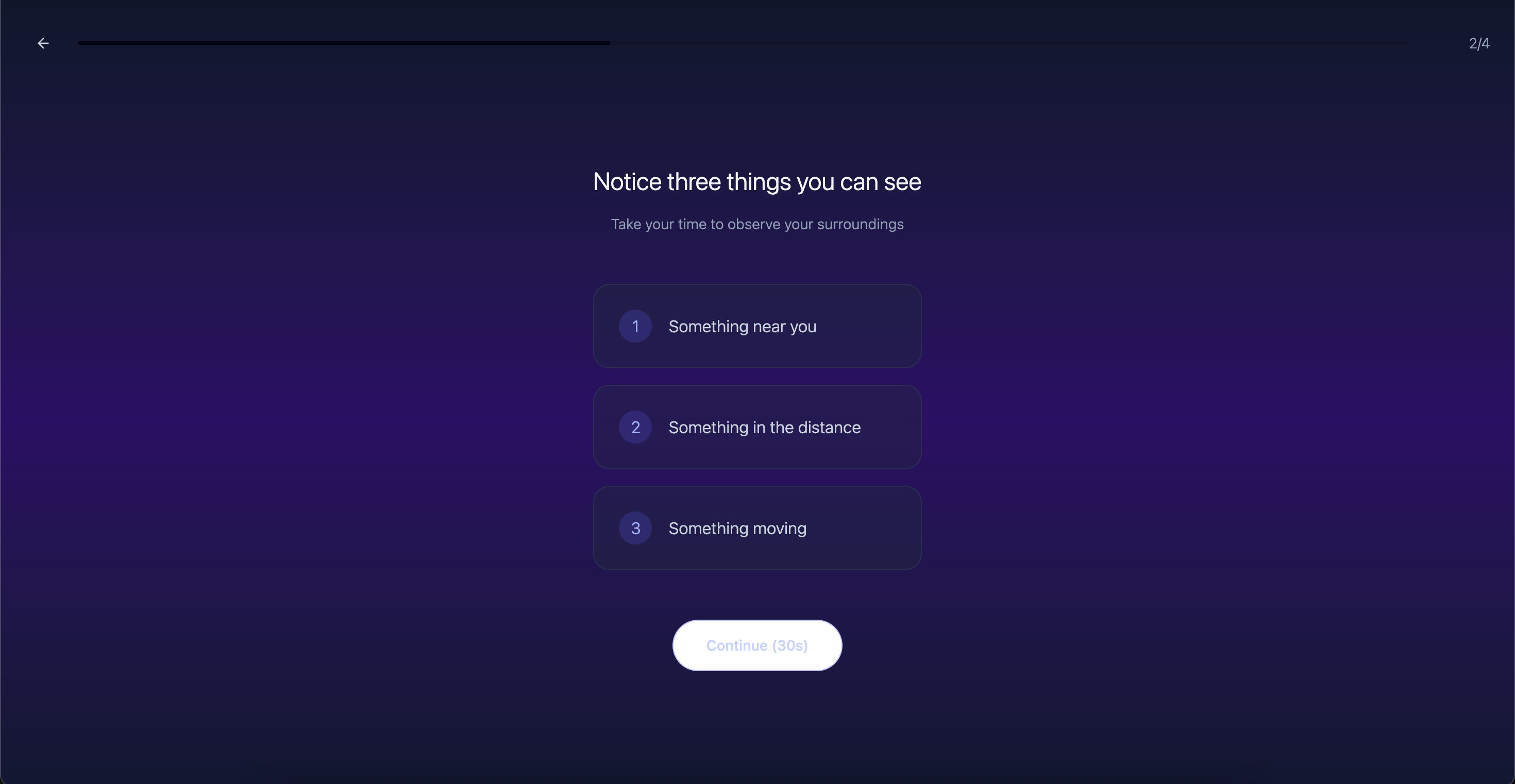
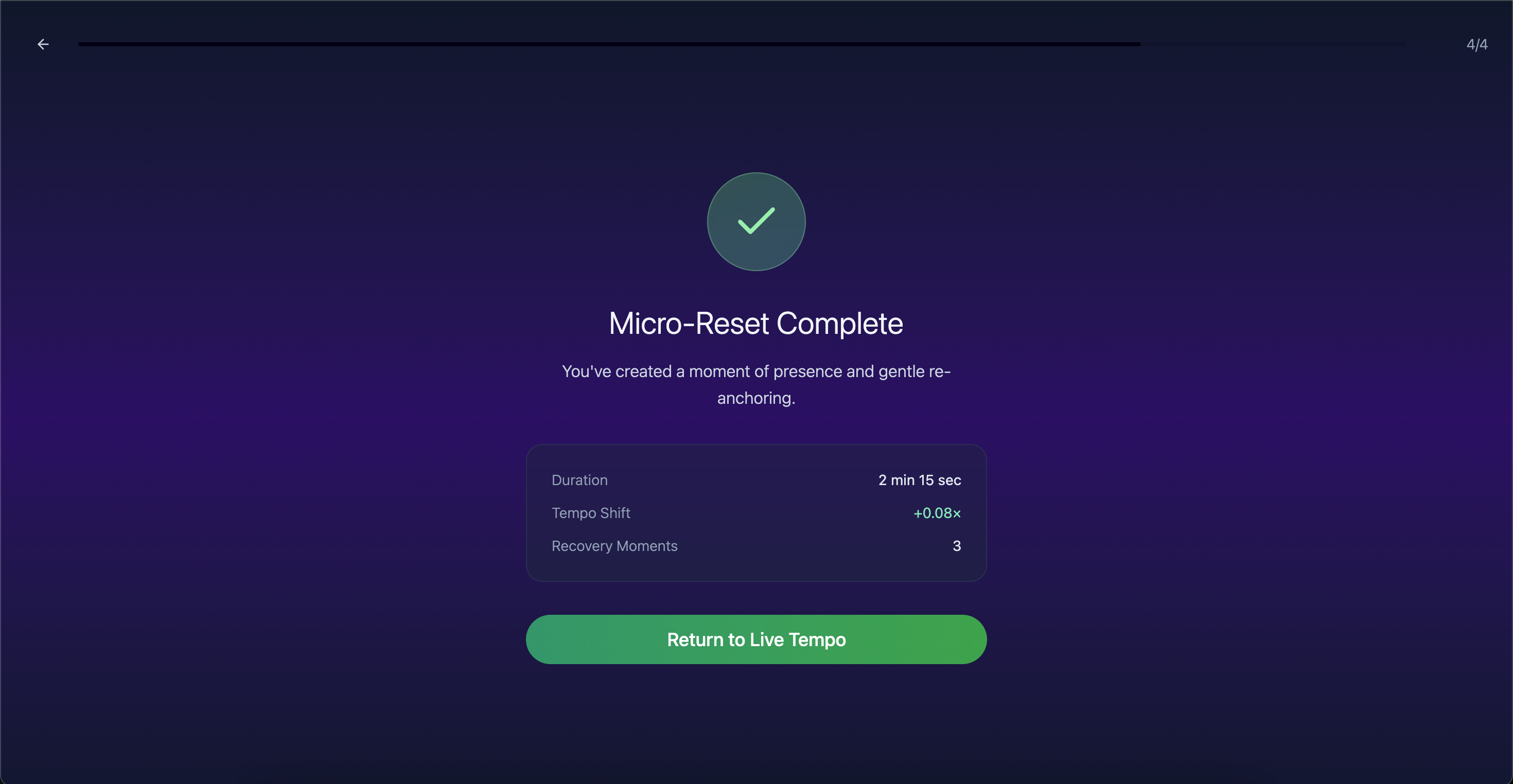
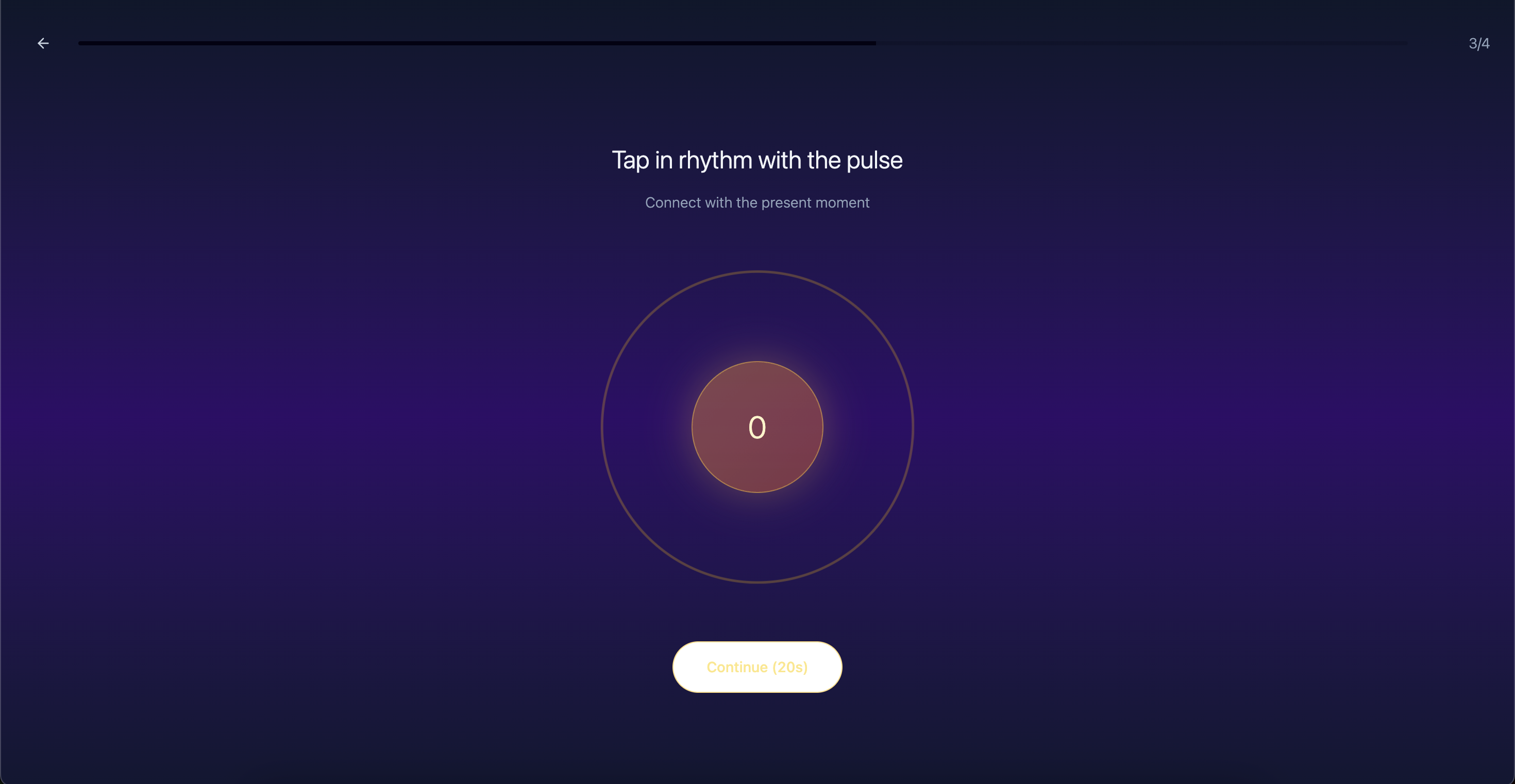
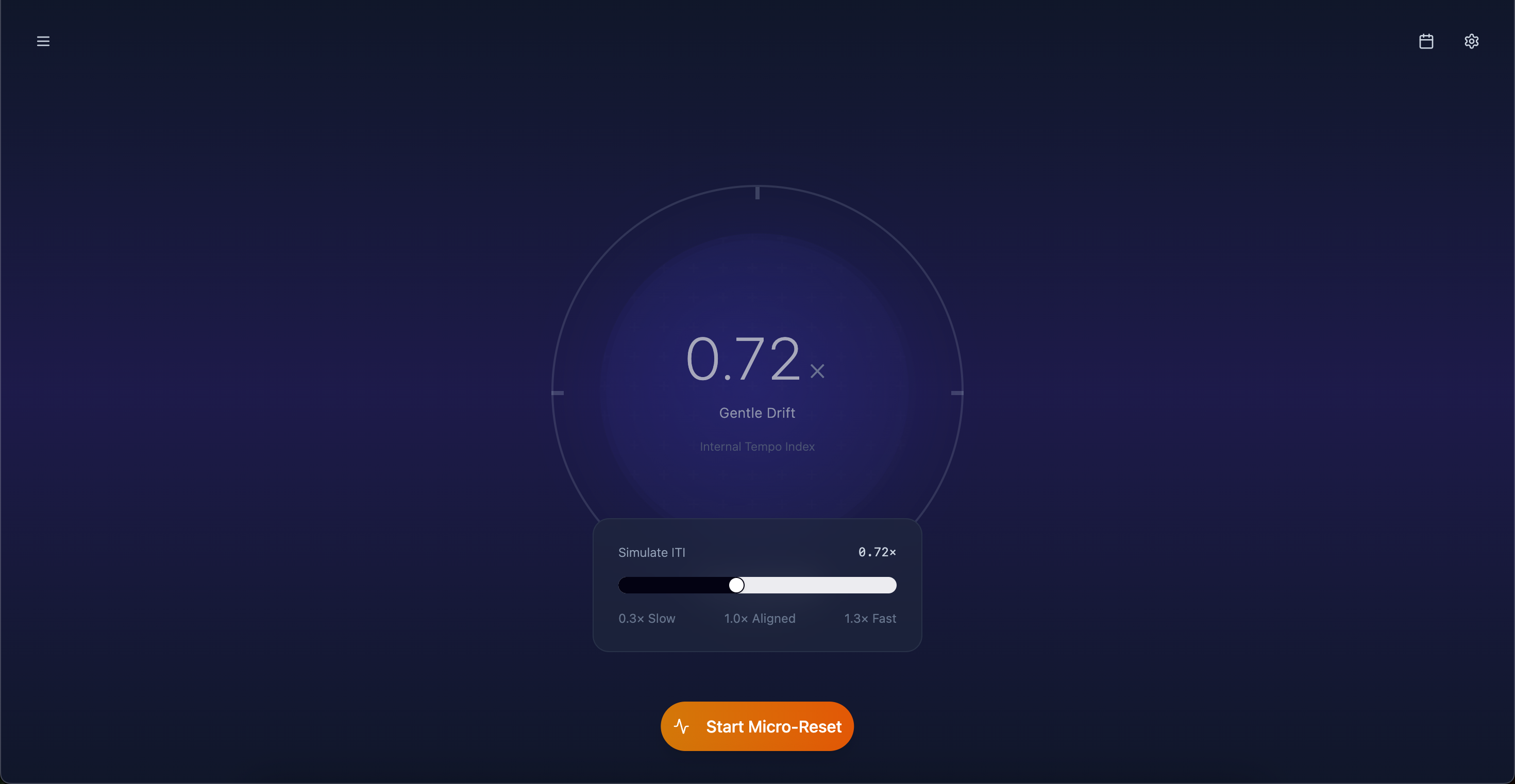
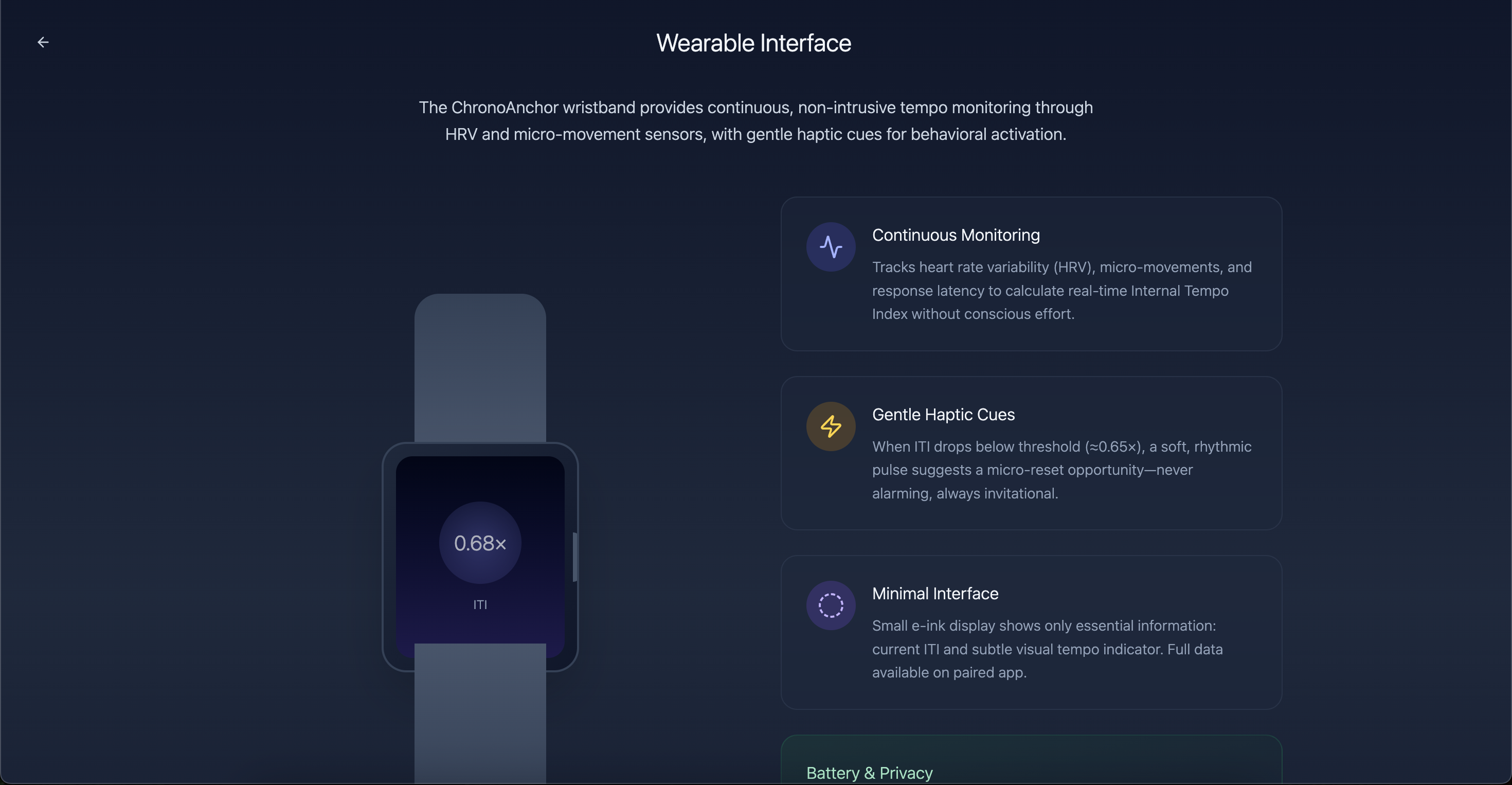
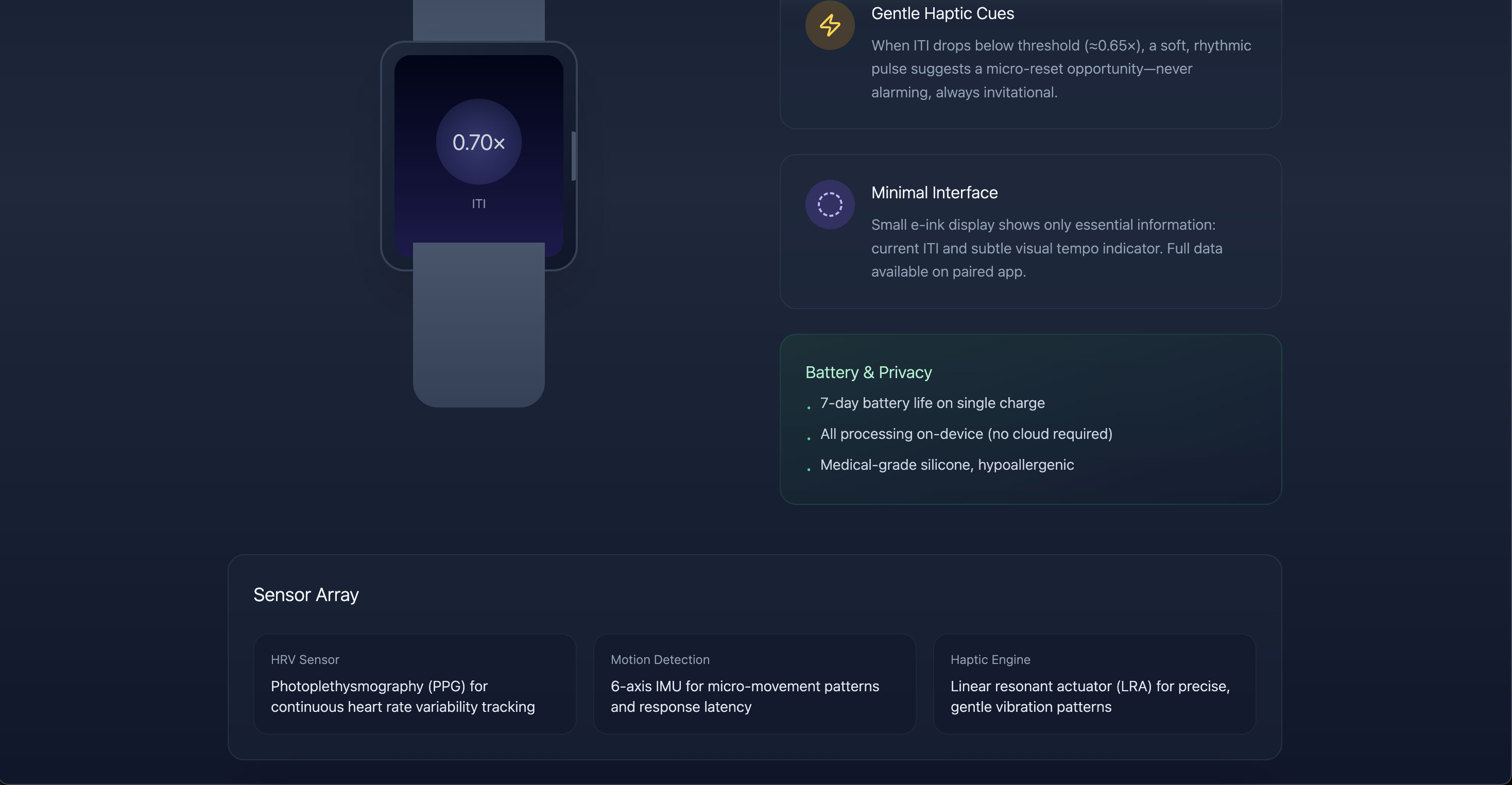
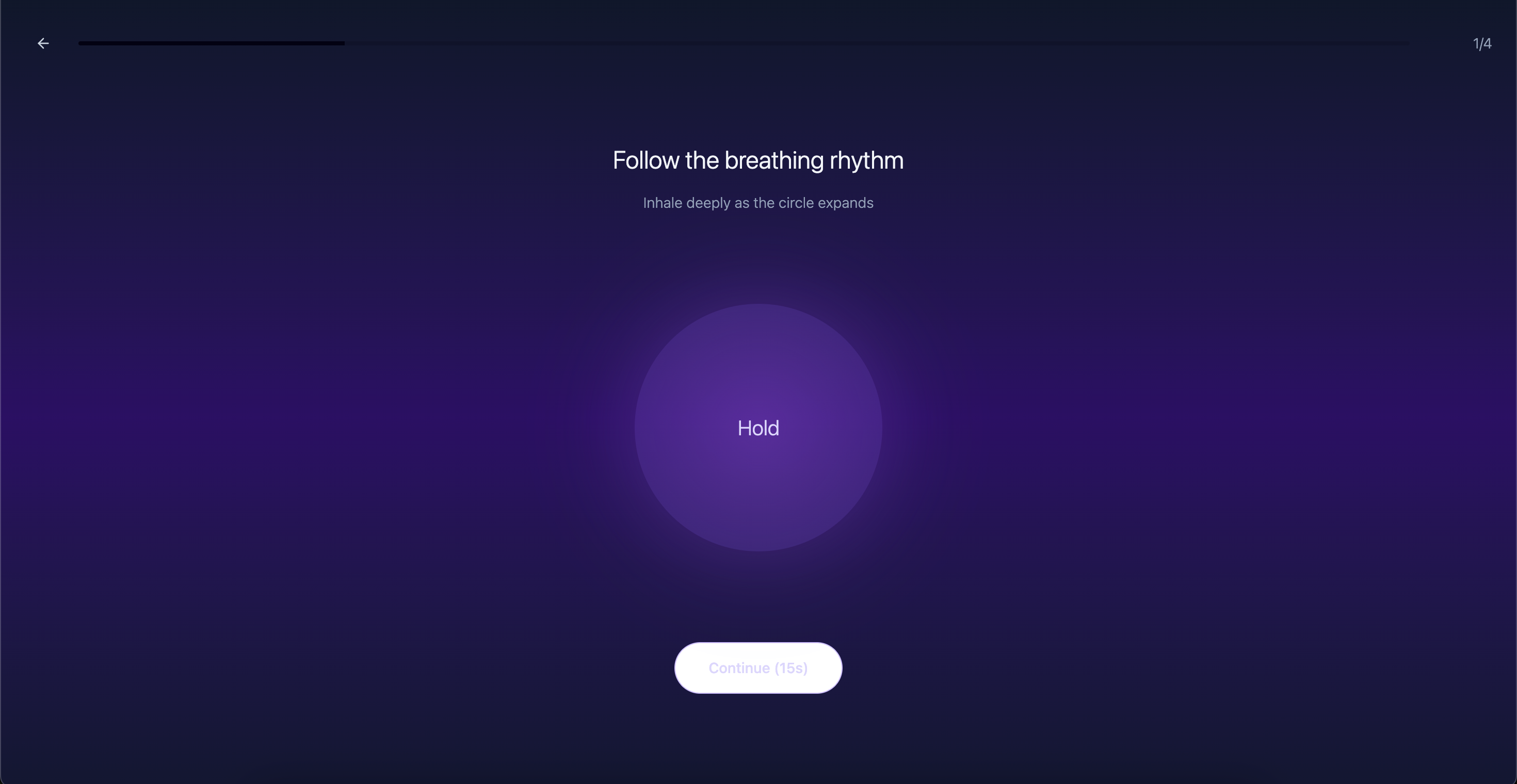
ChronoAnchor is a speculative wearable system that detects and visualizes distorted subjective time perception in depressive states. By synthesizing physiological signals such as heart rate variability, movement patterns, breathing rhythm, and micro response latency, the system estimates the user’s internal tempo. Instead of presenting raw numerical data, ChronoAnchor expresses this state through an evolving visual “time membrane” that becomes heavier and slower when time perception is distorted, and lighter and more fluid as regulation improves. The system also provides short, gentle micro-resets brief rhythmic haptic cues or small cognitive prompts designed to encourage minimal but meaningful action. These interventions aim to restore momentum and reinforce behavioral activation, supporting emotional and mental wellness.
How we built it
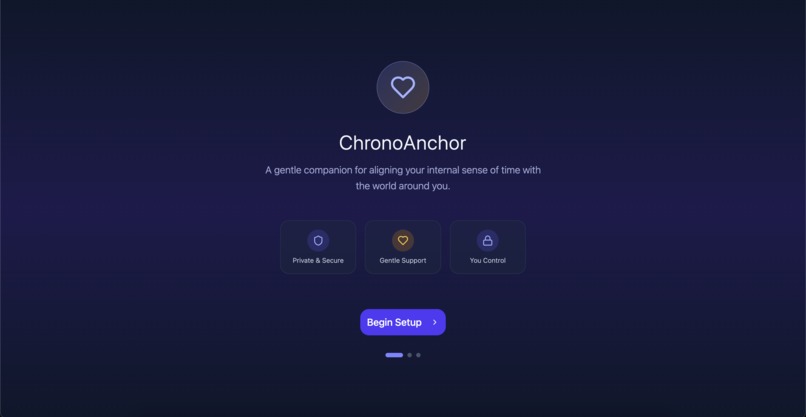
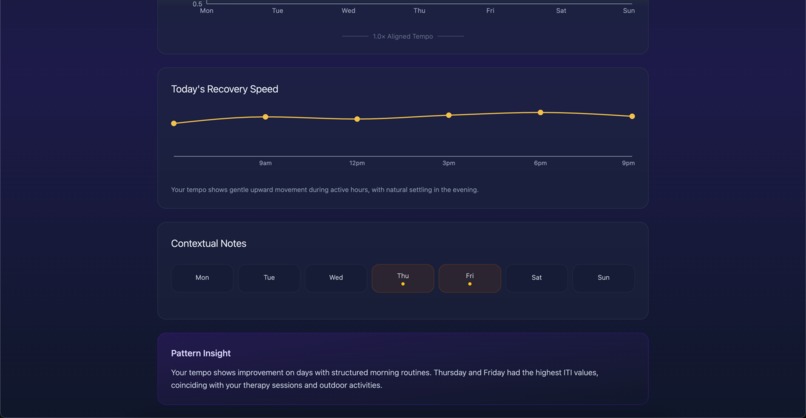
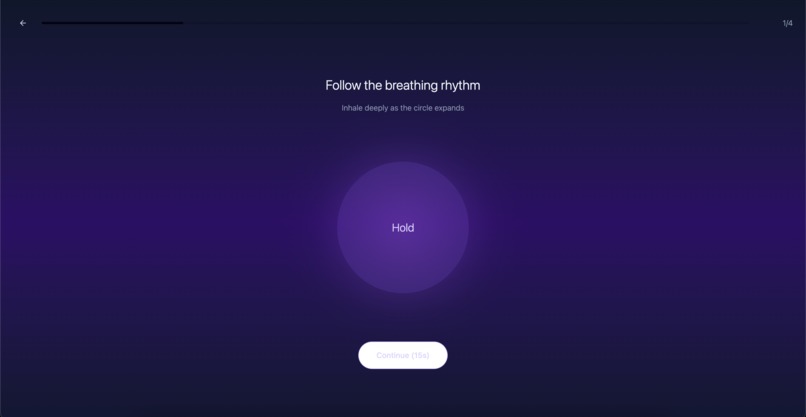
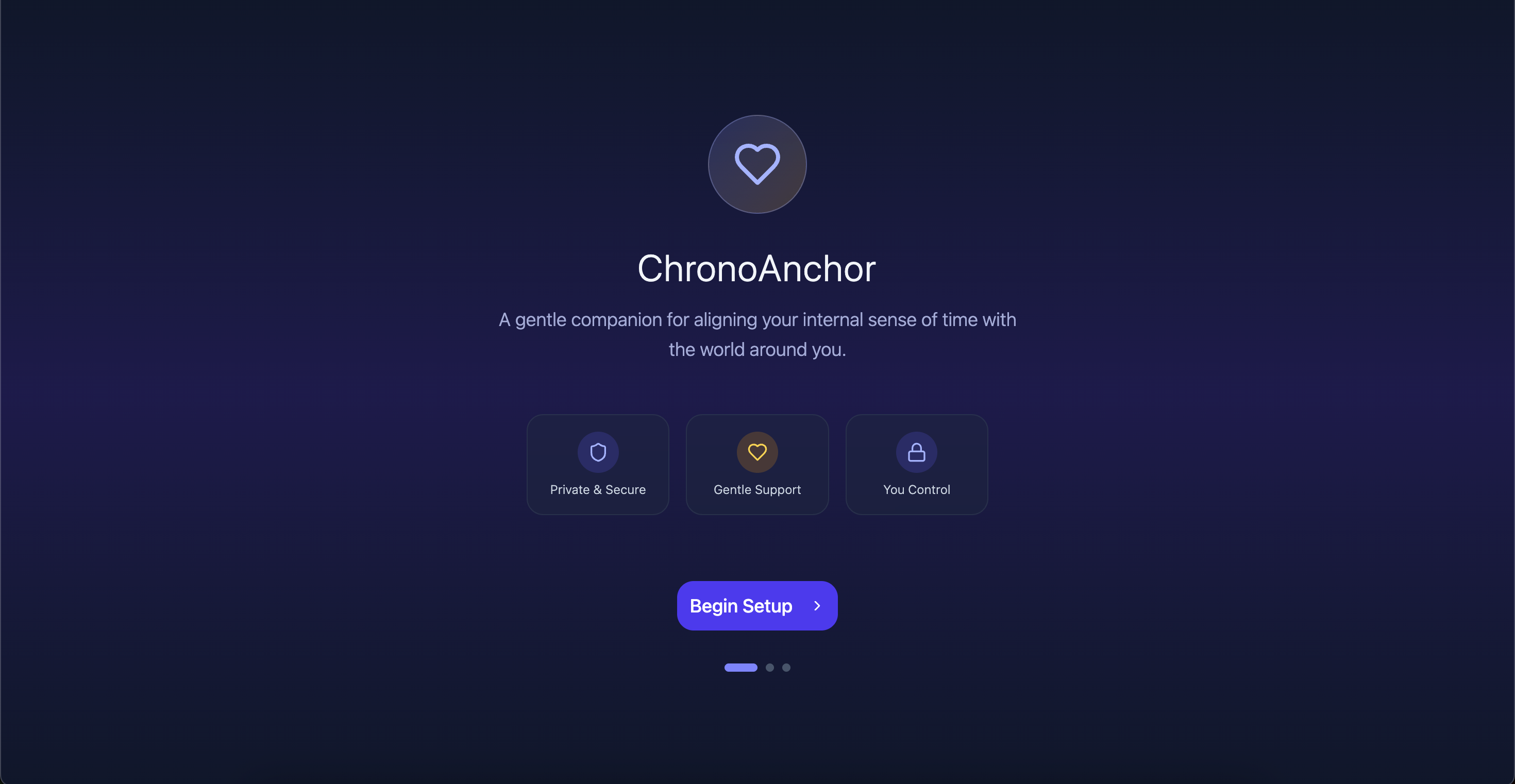
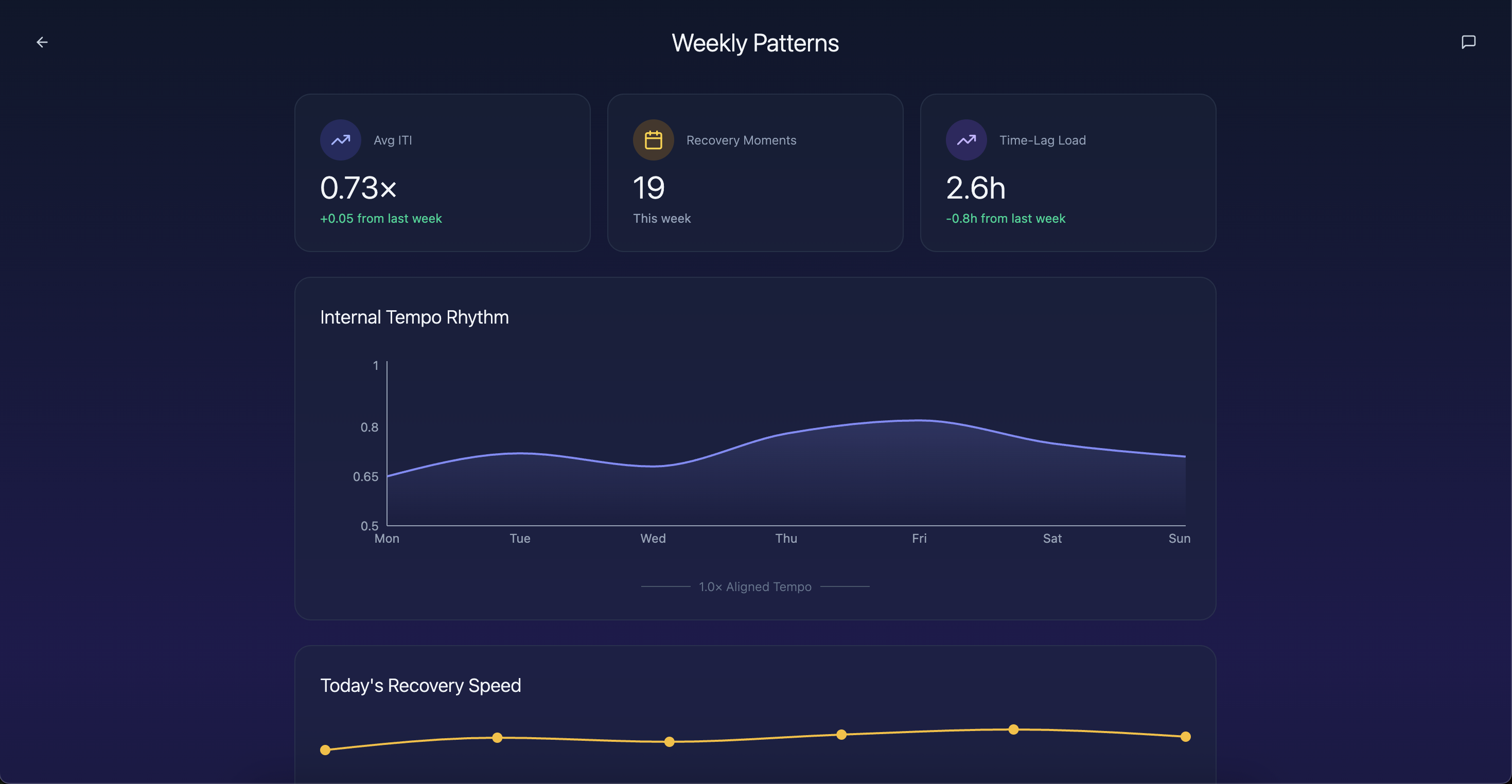
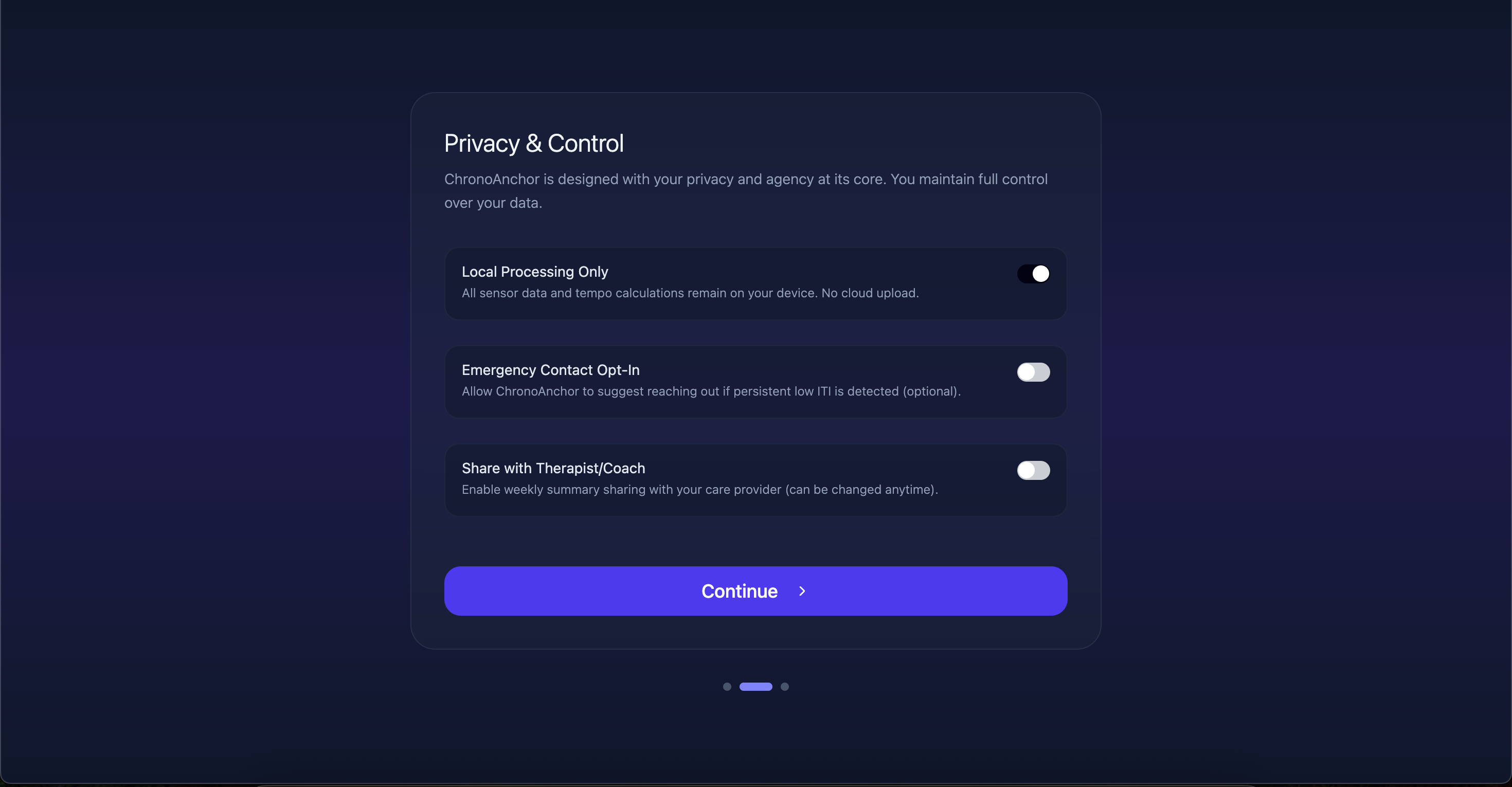
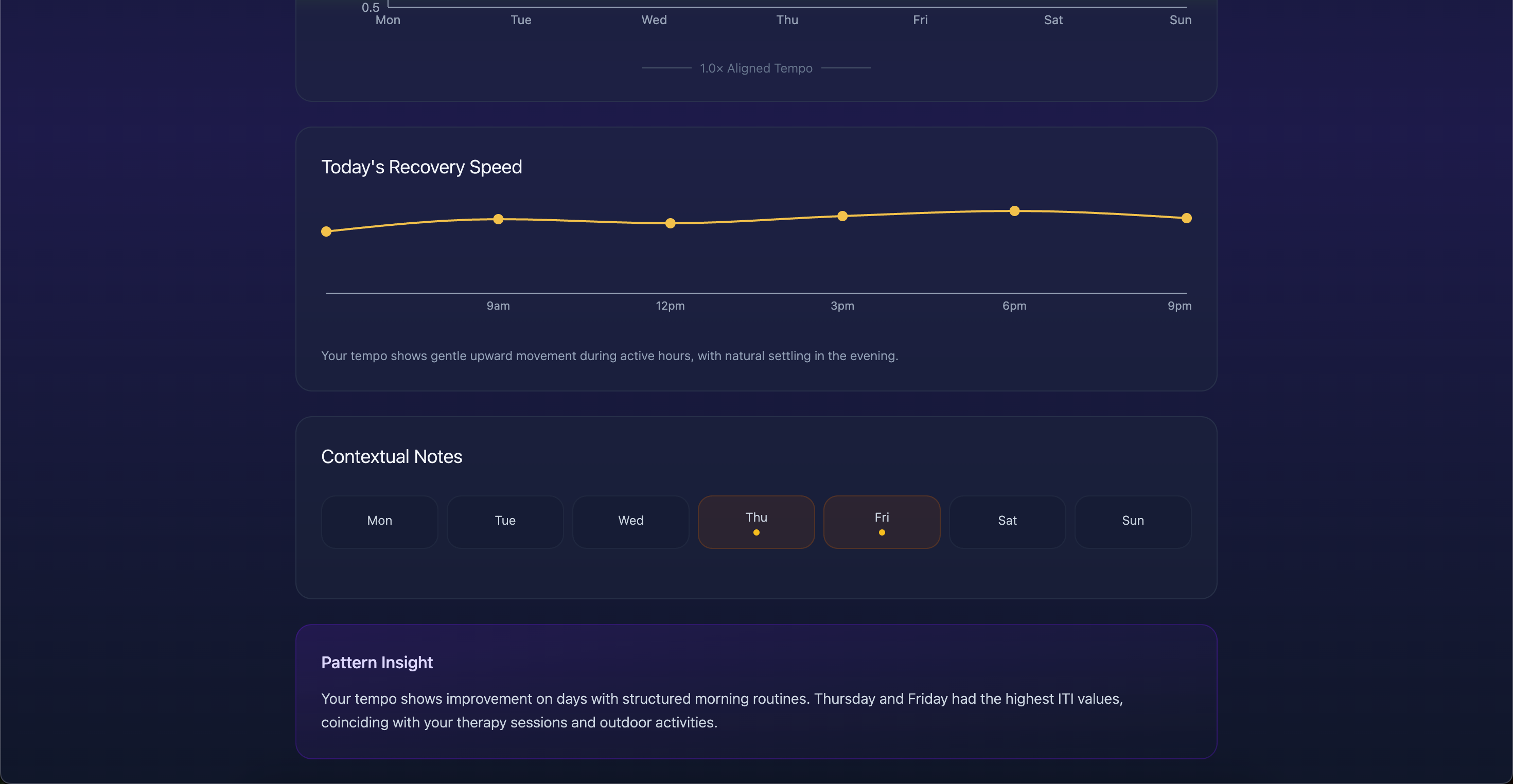
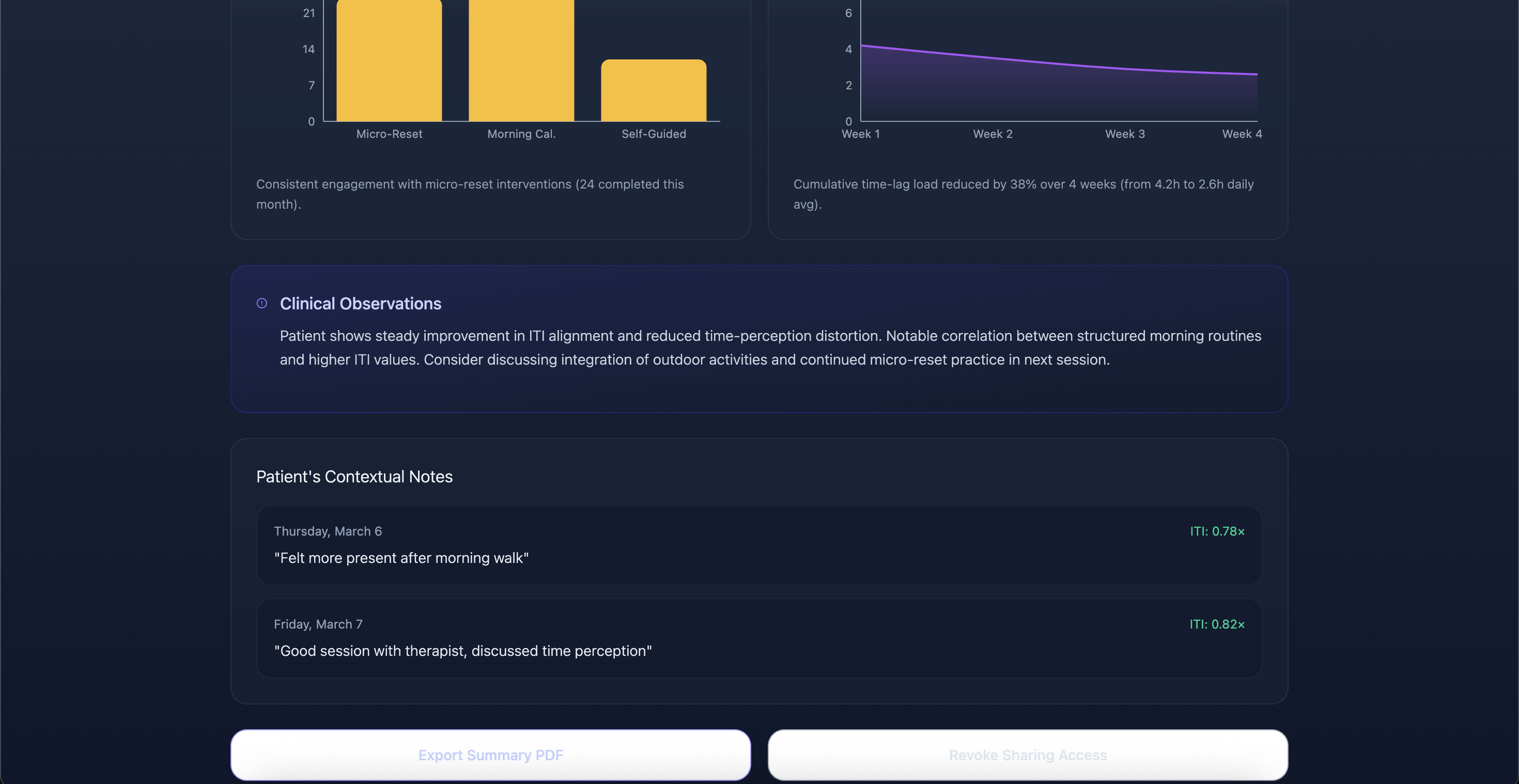
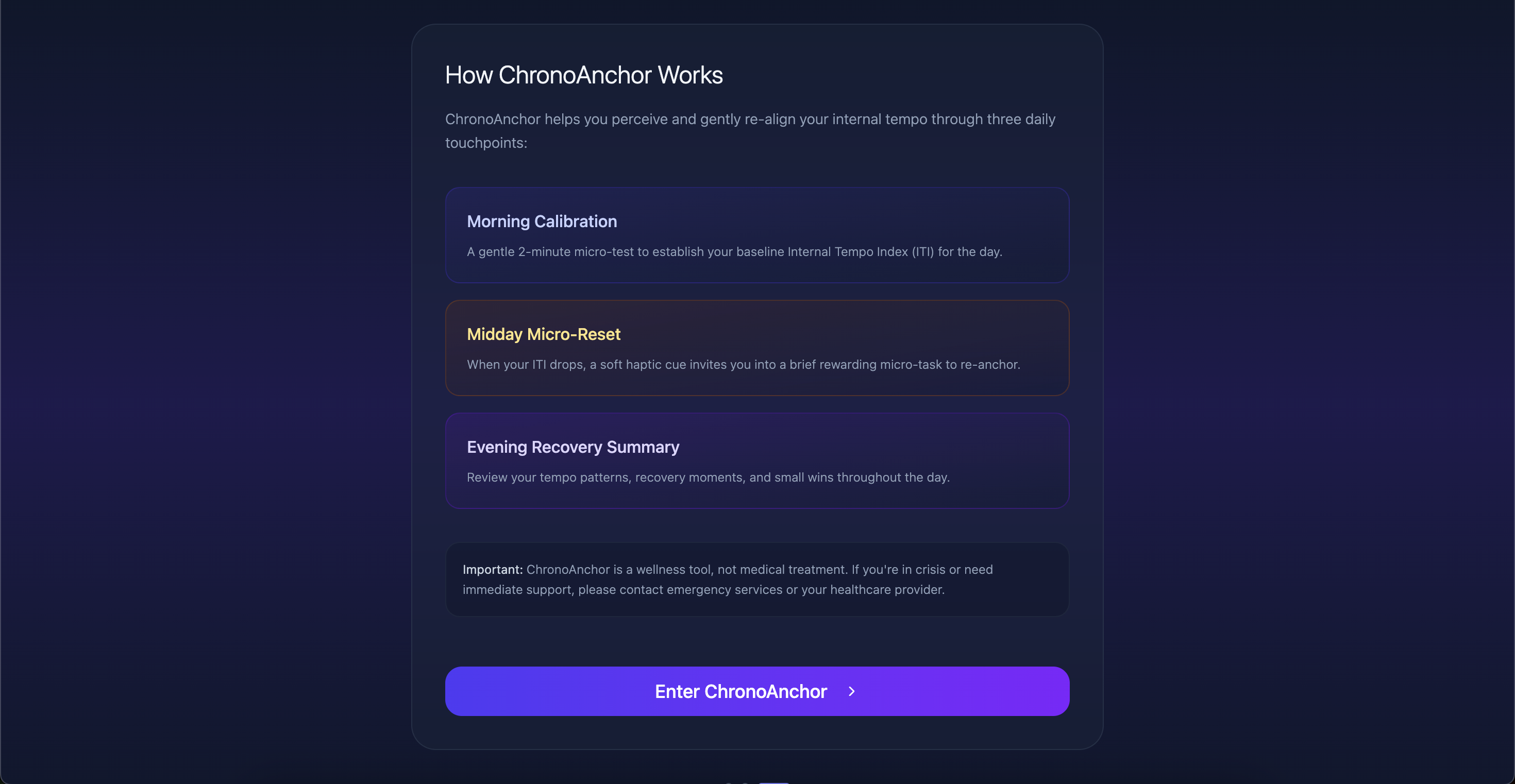
We approached ChronoAnchor as a speculative yet human-centered design project. We began by researching time perception in depression, behavioral activation frameworks, and sensory feedback systems. From there, we defined a conceptual model for estimating internal tempo using wearable-compatible signals such as HRV and motion data. In Figma, we prototyped the core interface including onboarding and consent flows, a live tempo visualization screen, a micro-reset interaction, and a weekly pattern overview. We focused on abstract, organic visualizations rather than clinical dashboards to avoid medicalization. Motion design played a central role, as the system’s primary feedback mechanism is the dynamic transformation of the time membrane. Throughout the process, we prioritized clarity, emotional sensitivity, and ethical safeguards within the interaction design.
Challenges we ran into
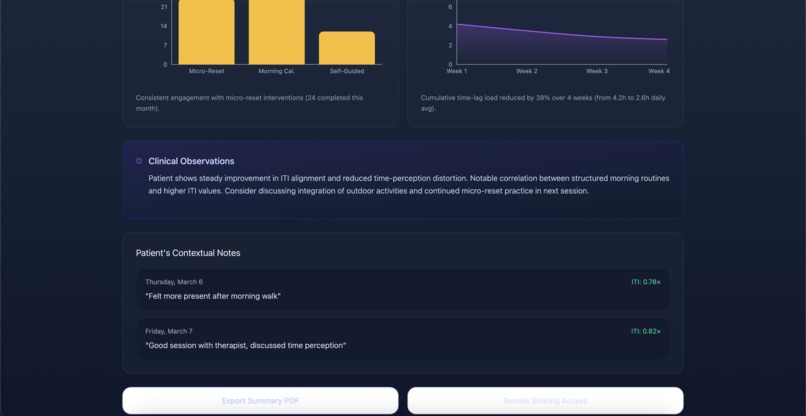
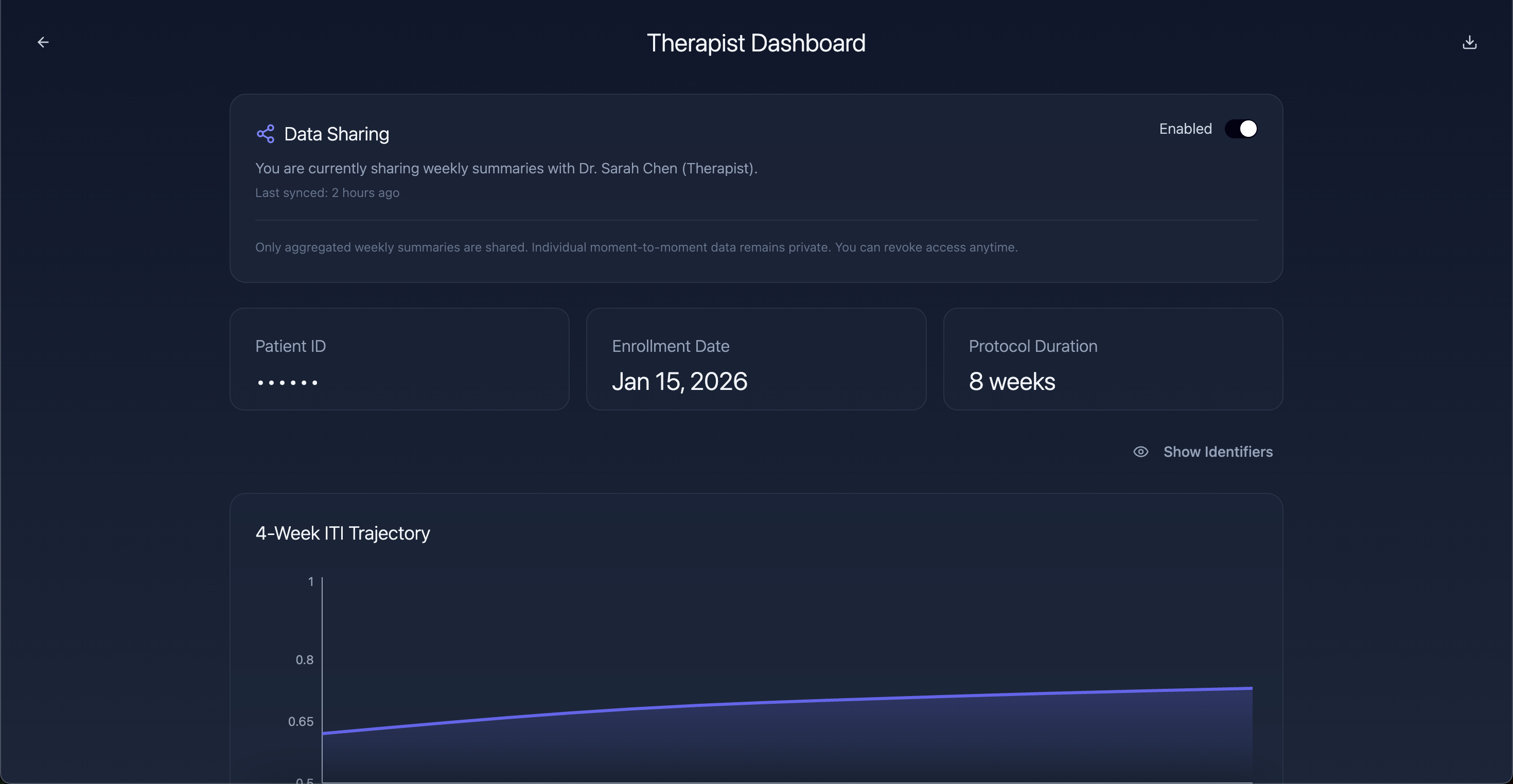
One major challenge was balancing quantification with emotional nuance. We wanted to measure something intangible without reducing it to a cold metric. Representing subjective time in a way that felt intuitive but not overwhelming required multiple iterations. Another challenge involved ethical considerations. Quantifying mental states can risk stigmatization, over-surveillance, or misuse by employers or institutions. We designed strong privacy protections, user-controlled data sharing, and non-diagnostic framing into the system from the beginning. We also faced the challenge of preventing information overload. Because this tool operates in a mental health context, we intentionally reduced visible metrics and removed gamification elements to avoid performance pressure.
Accomplishments that we're proud of
We are proud that ChronoAnchor moves beyond traditional behavioral tracking and instead proposes a new frontier of self-knowledge: temporal awareness. Rather than monitoring productivity or symptoms, the system makes a previously invisible sensory experience perceptible. We are also proud of the calm and non-judgmental interface language we developed. The micro-reset interaction demonstrates how data can translate directly into gentle behavioral activation without feeling prescriptive or invasive. Most importantly, we created a speculative system that feels imaginative while remaining grounded in real human need.
What we learned
We learned that measuring lived experience requires more than technical modeling; it demands empathy. Data alone does not change behavior. Perception does. When users can sense their internal state shifting, they are more likely to engage in small corrective actions. We also learned that designing in mental health spaces requires strong ethical framing. Transparency, consent, and user autonomy are not secondary features but foundational design principles. Finally, we discovered that speculative design can meaningfully expand conversations about wellness by exploring not just what we do, but how we experience being in time.
What's next for ChronoAnchor
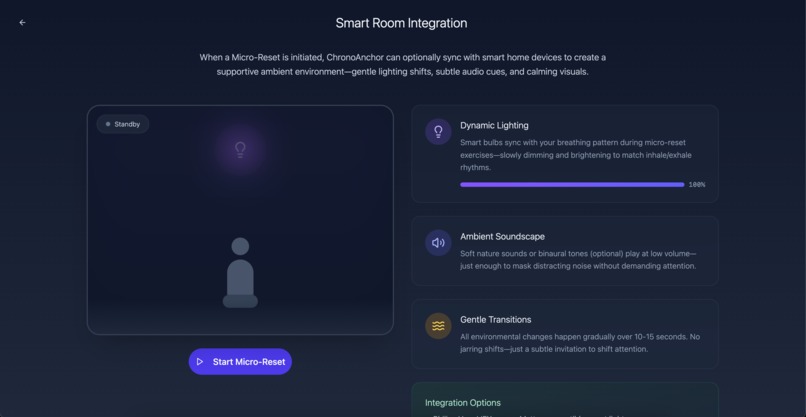
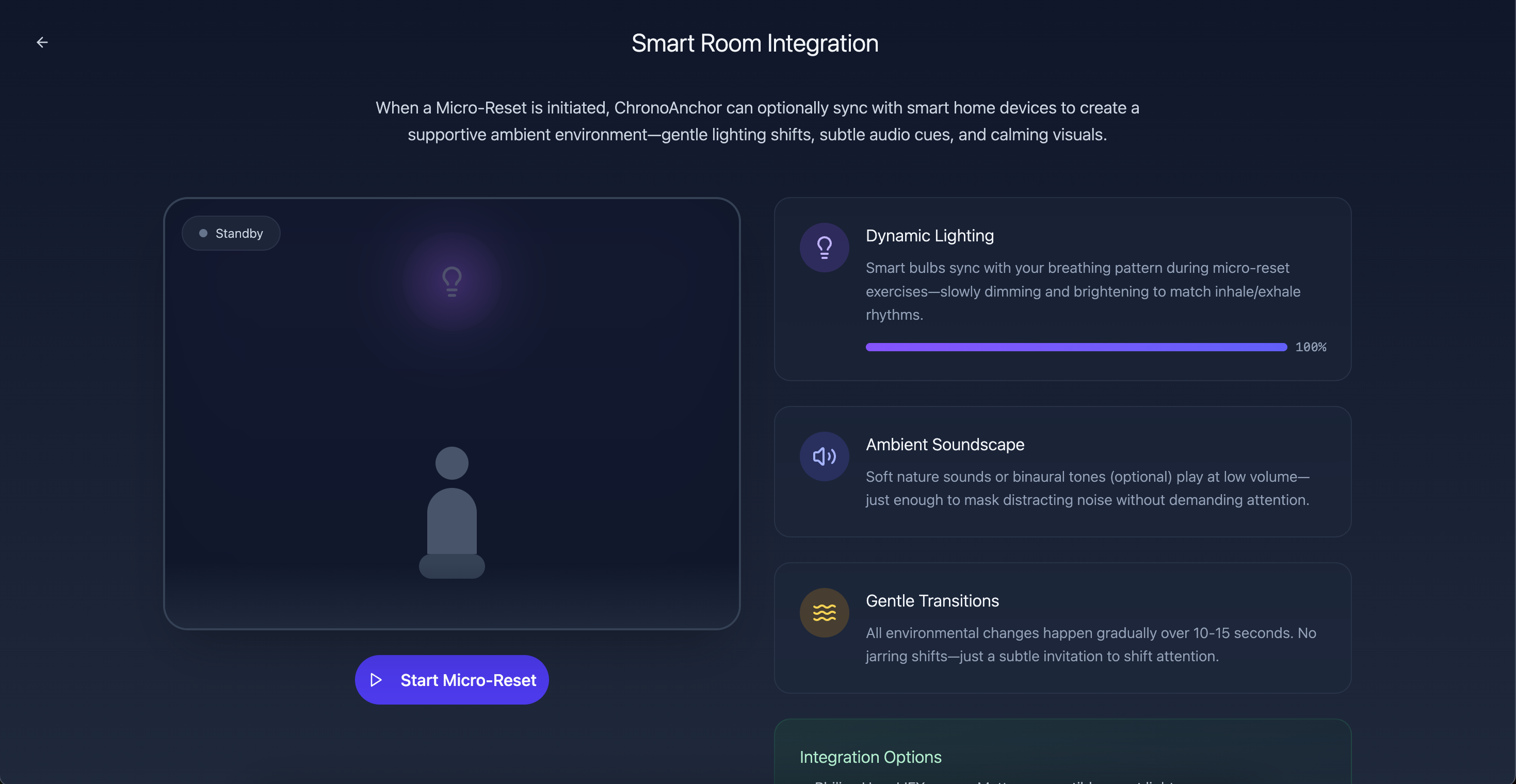
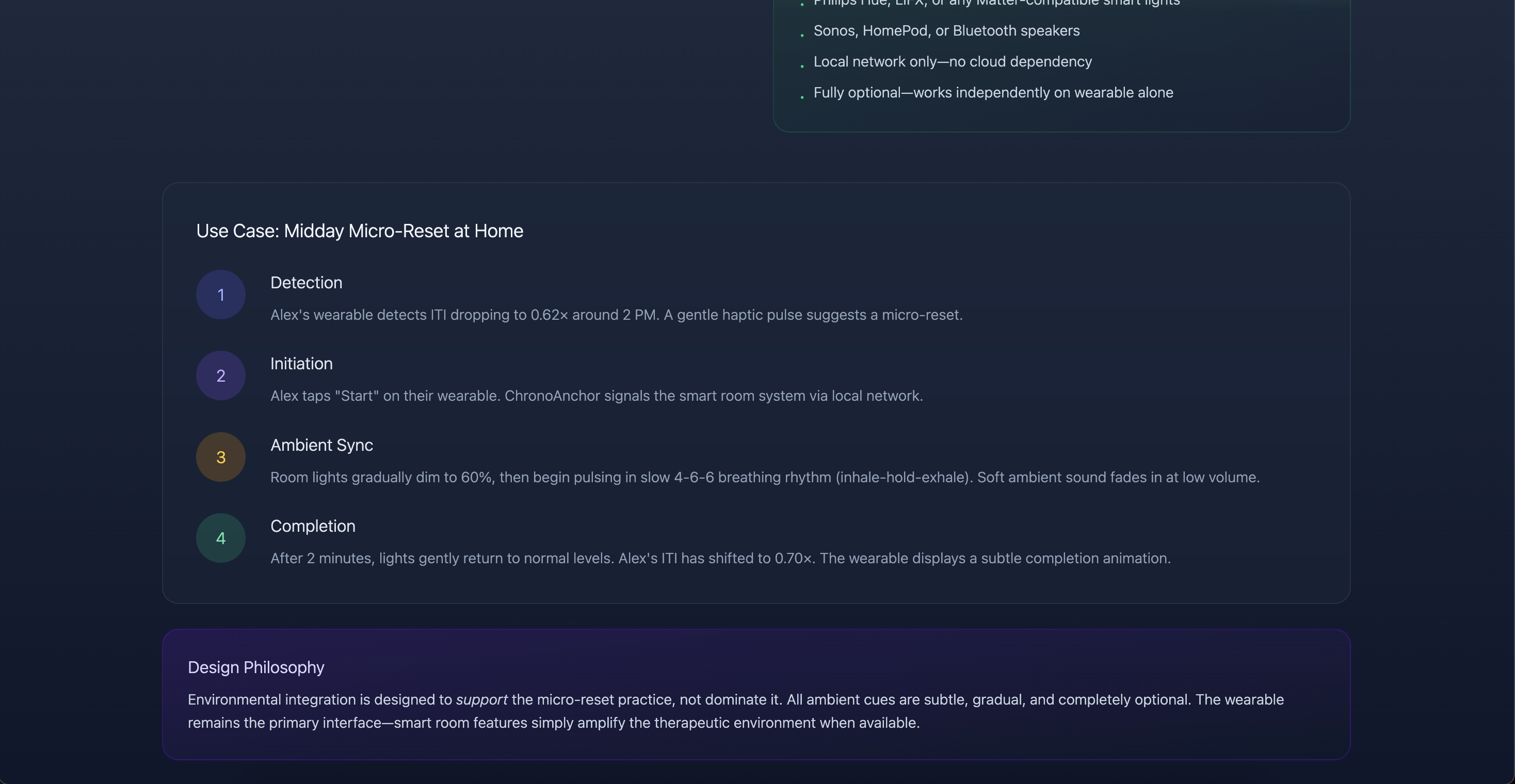
Next, we envision refining the internal tempo model through pilot testing and adaptive personalization. We would explore partnerships with clinicians to evaluate ChronoAnchor as a behavioral activation companion tool in outpatient care settings. We also plan to expand beyond individual use cases into spatial interfaces that subtly synchronize lighting or ambient cues to support temporal regulation. Ultimately, ChronoAnchor seeks to explore a broader question: if we can perceive our internal sense of time, can we design healthier rhythms for living?
Built With
- figmamake


Log in or sign up for Devpost to join the conversation.