-
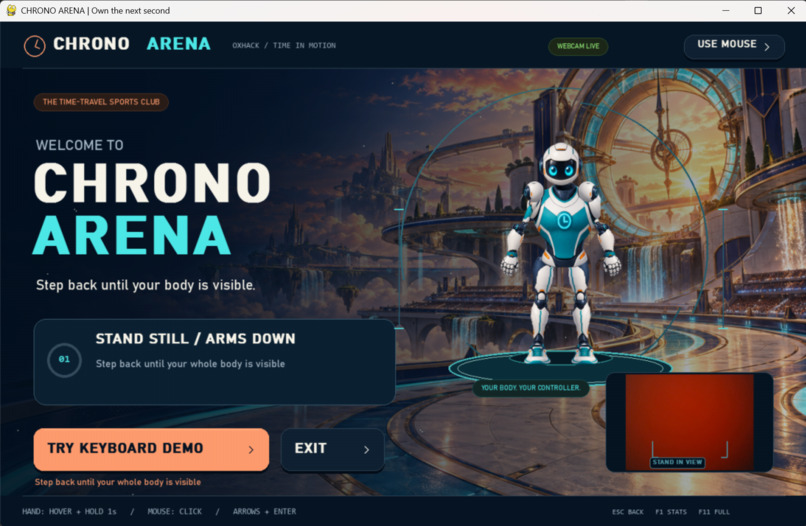
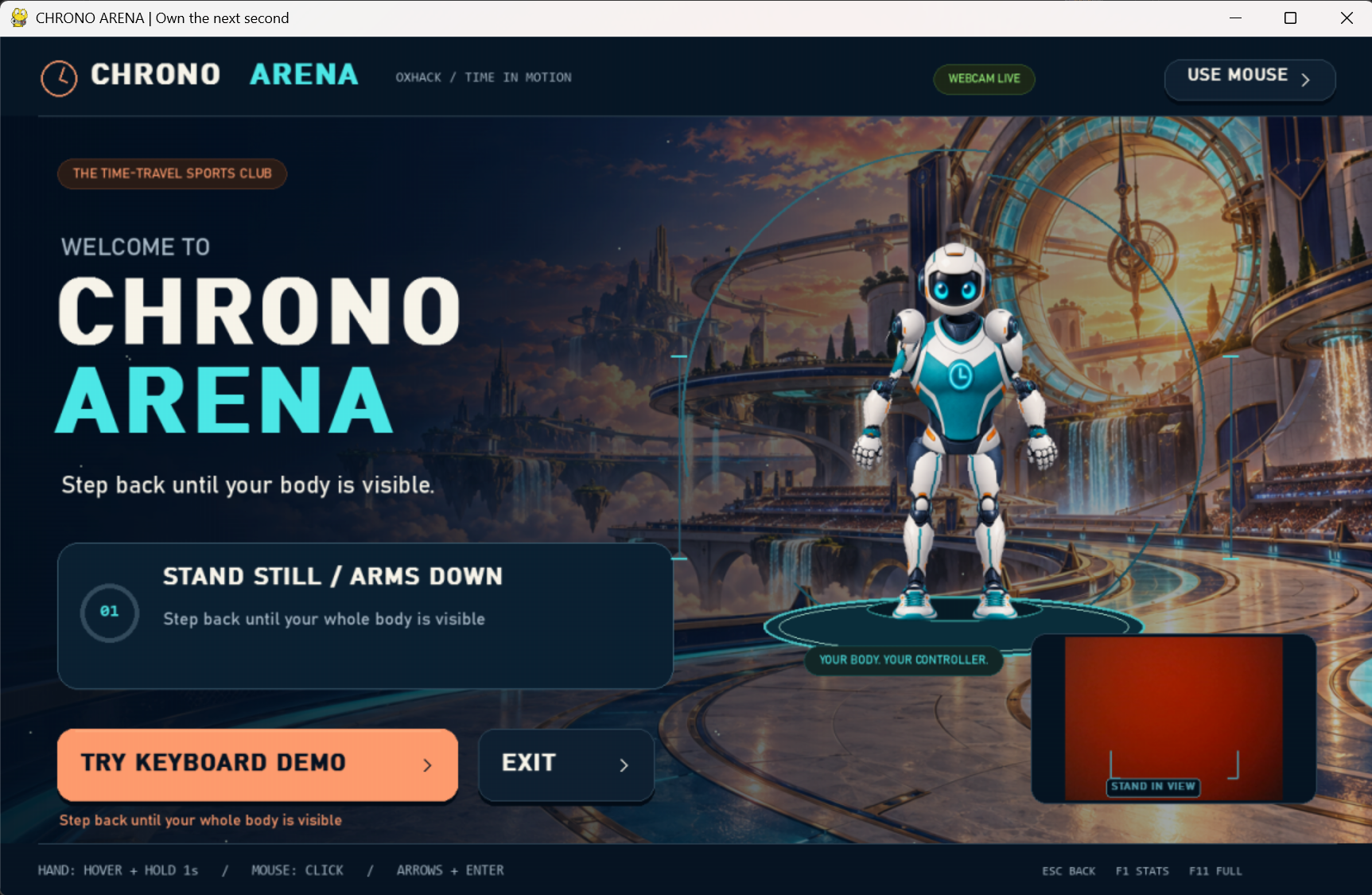
CHRONO ARENA Main Menu — A Kinect-inspired, webcam-powered gaming experience where your body becomes the controller.
-
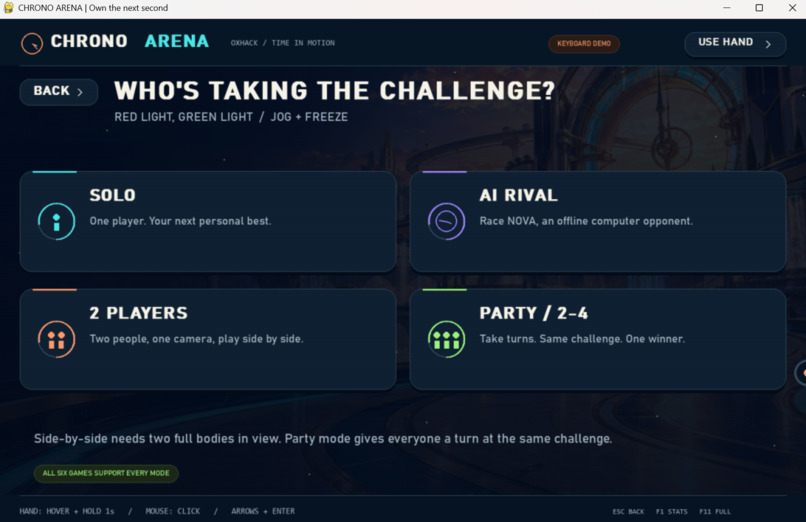
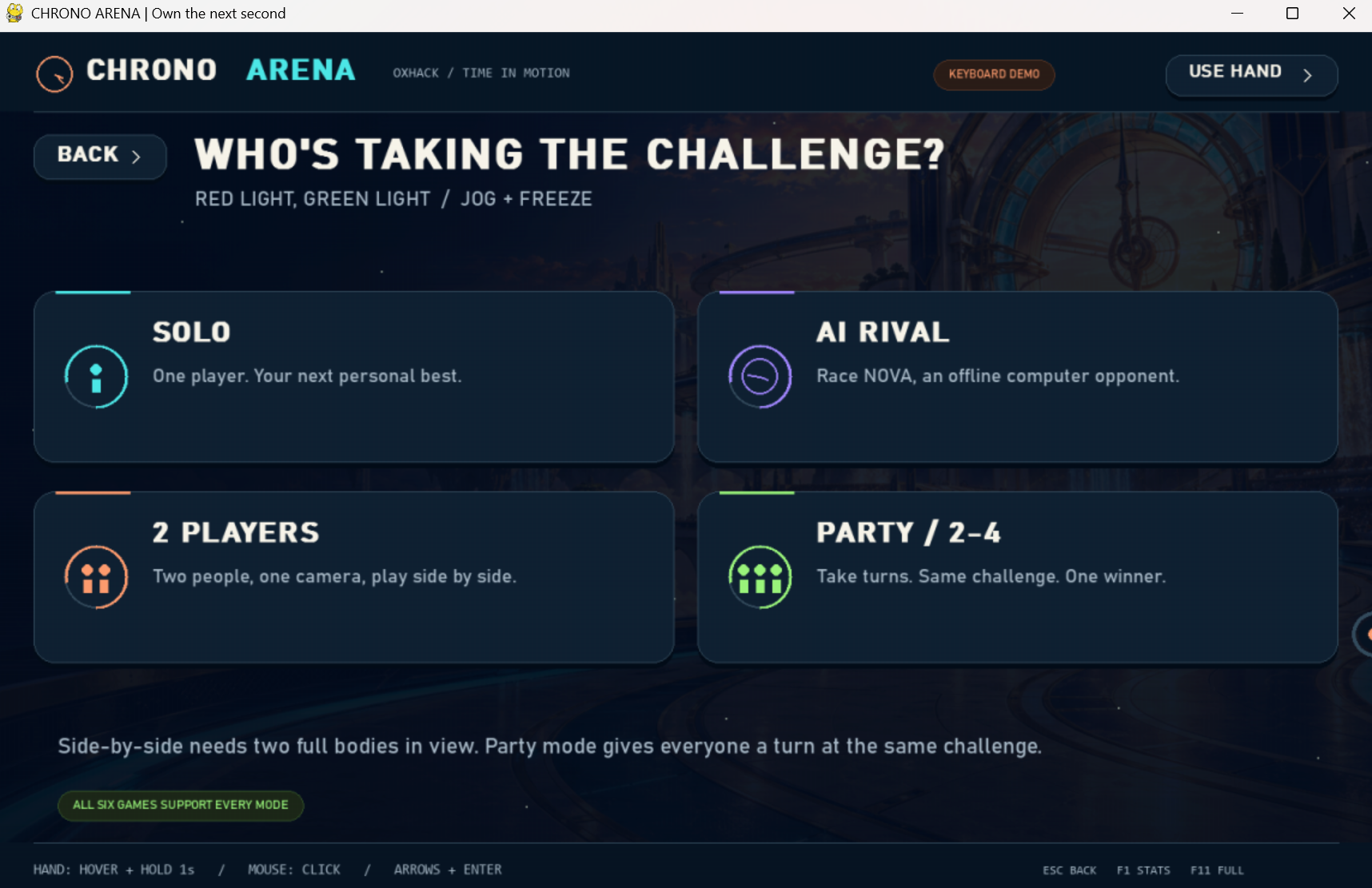
Choose between solo play, AI opponents, two-player competition, and multiplayer party modes.
-
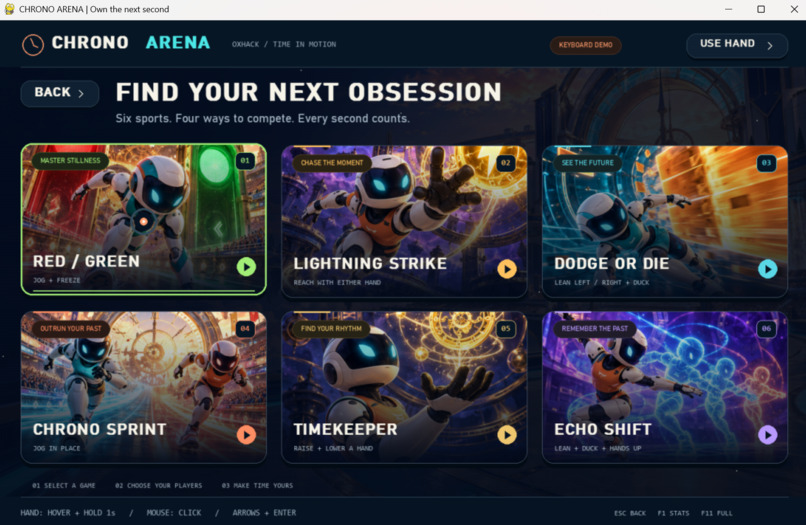
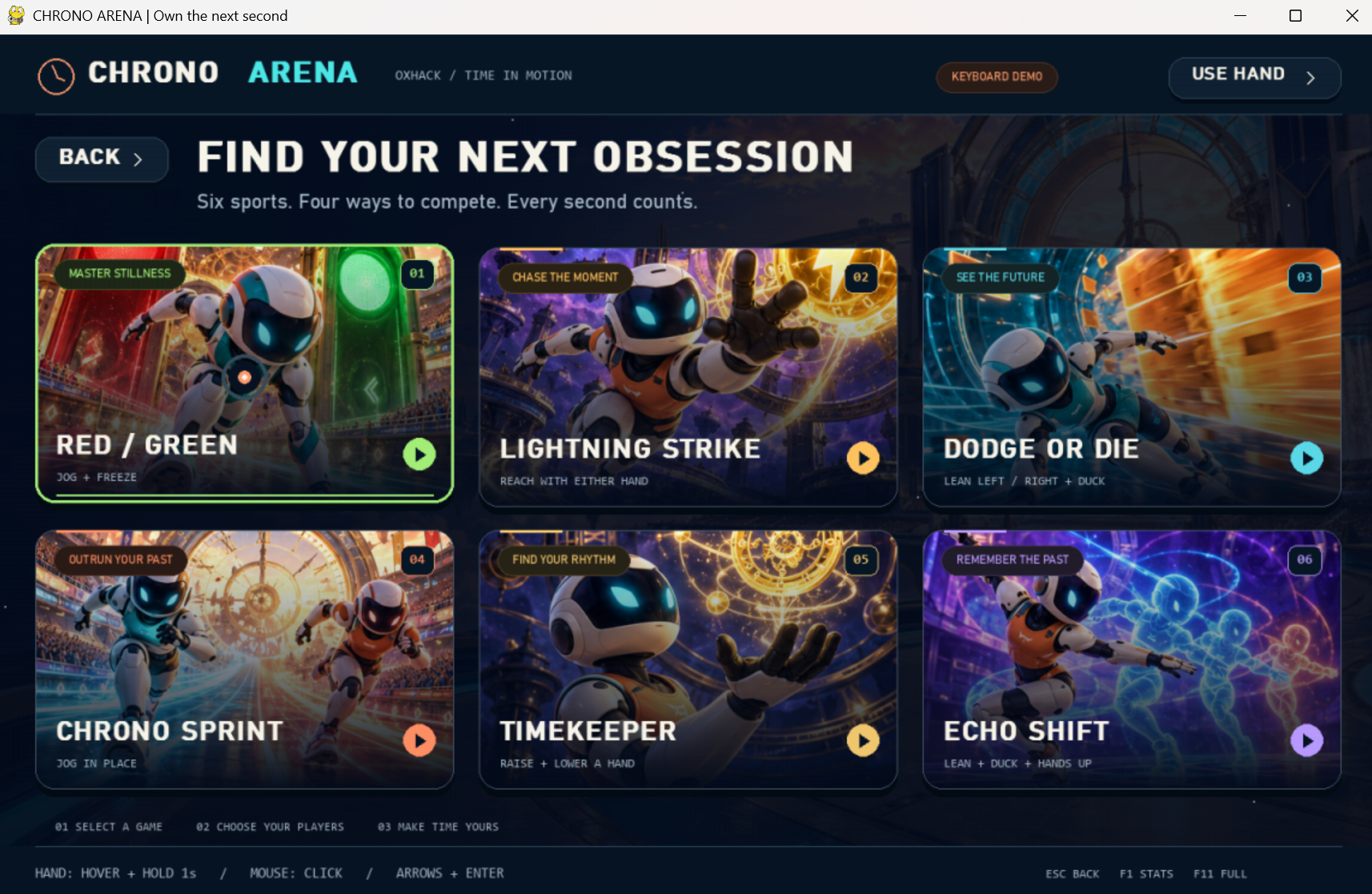
Explore six motion-controlled mini-games designed to challenge reaction time, reflexes, and coordination.
-
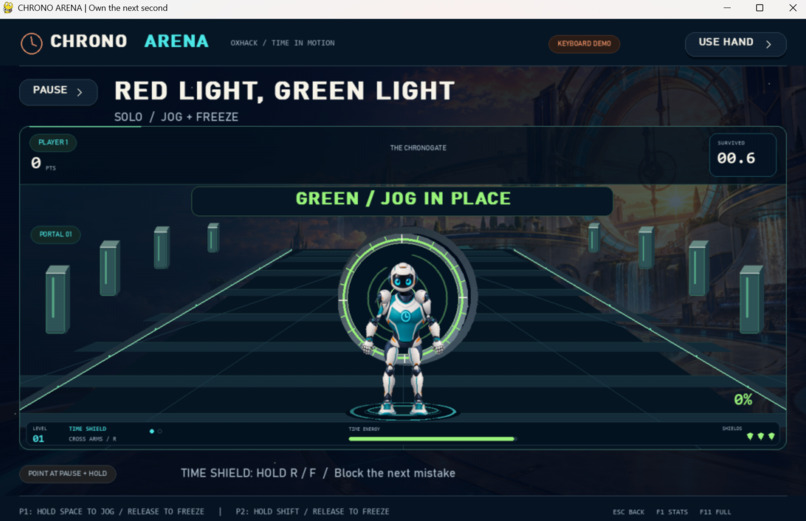
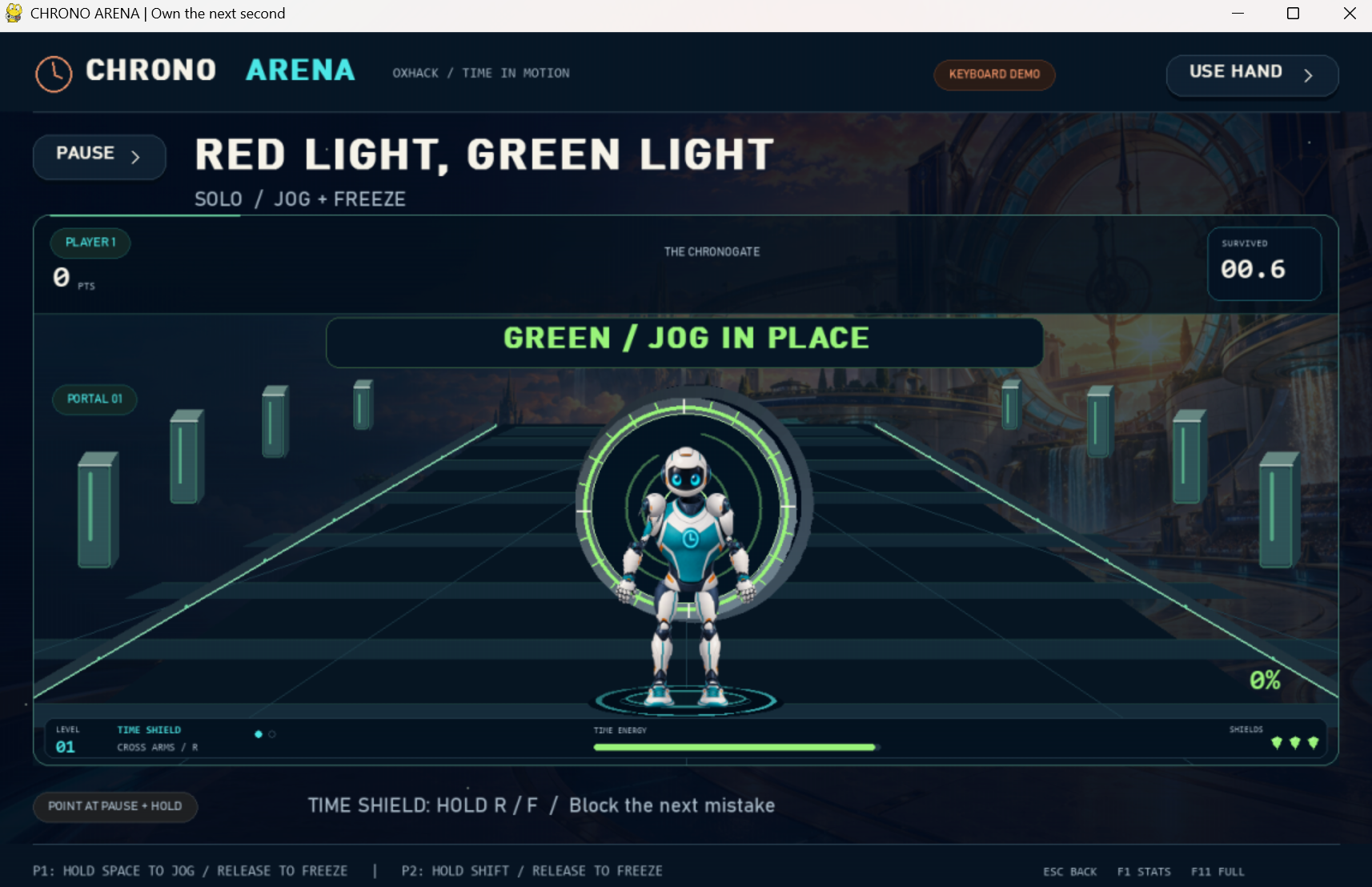
React to changing signals and control your character using real-time body tracking and movement detection.
Inspiration
What if your body was the controller, and every second mattered?
Inspired by the physical interaction of Xbox Kinect Sports, we wanted to recreate that experience using something almost everyone already owns: a webcam.
For OxHack 2026, we took the theme of Time and made it the foundation of the gameplay. Rather than simply displaying a countdown, we wanted players to physically experience time pressure through reaction speed, movement, coordination, and split-second decisions.
That idea became CHRONO ARENA.
What it does
CHRONO ARENA is a webcam-powered, motion-controlled gaming experience featuring six fast-paced mini-games designed to challenge players' reflexes, timing, and physical coordination.
Instead of using a keyboard or traditional controller, players interact with the game through their own body movements.
Our game uses computer vision to detect body poses and gestures in real time, translating physical actions into gameplay commands.
The experience includes:
- Six unique mini-games featuring different timing and movement challenges.
- Full-body motion controls using a standard webcam.
- Gesture-based interaction for a more immersive experience.
- Real-time pose tracking with visual feedback.
- Reaction-based gameplay where timing directly affects performance.
- Competitive gameplay, including computer-controlled opponents.
The goal is simple: make gaming more active, accessible, and exciting while exploring how human reaction time interacts with technology.
How we built it
We developed CHRONO ARENA primarily in Python, combining computer vision, real-time gesture recognition, game logic, and interactive visual interfaces.
Using OpenCV and MediaPipe, we process webcam input and identify body landmarks to interpret player movements.
Our motion-processing system translates these detected movements into game actions such as directional movement, crouching, and raising hands.
We built a modular architecture, separating camera processing, player controls, game management, individual mini-games, and user-interface components.
Each mini-game introduces different mechanics built around timing, reflexes, and coordination.
We also developed automated tests and setup scripts to improve reliability and make the project easier to run on another computer.
Challenges we ran into
One of our biggest challenges was making body tracking feel natural and responsive.
Unlike keyboard controls, webcam-based input is affected by lighting conditions, camera positioning, body visibility, and detection delays.
We had to balance responsiveness with accuracy so that movements could be recognised reliably without making the gameplay frustrating.
Another challenge was building multiple mini-games while maintaining a consistent control system and user experience.
We also had to manage performance, refine gameplay mechanics, and test the interaction between computer vision and game logic.
Accomplishments that we're proud of
We're particularly proud of turning an ambitious concept into a working interactive gaming system during OxHack 2026.
Our biggest achievements include:
- Developing six distinct mini-games within one application.
- Building a shared motion-control system that connects real-world movement to virtual gameplay.
- Creating a Kinect-inspired experience without requiring specialised gaming hardware.
- Integrating computer vision, pose tracking, interface design, and real-time game mechanics.
- Developing a project that combines entertainment, physical activity, and accessible technology.
Above all, we're proud of creating something that people can actually stand in front of and play.
What we learned
This project strengthened our understanding of real-time computer vision, pose estimation, event-driven programming, game development, and software integration.
We also learned the importance of designing around the user experience rather than focusing exclusively on technical functionality.
A motion-controlled game needs more than accurate detection: it must feel intuitive, responsive, and enjoyable.
Working under hackathon constraints also challenged us to prioritise features, solve problems quickly, and turn an ambitious idea into a demonstrable product.
What's next for CHRONO ARENA
We see CHRONO ARENA as the beginning of a larger motion-gaming platform.
Future improvements could include:
- More mini-games targeting different body movements and reflexes.
- Improved movement detection and calibration across different environments.
- Online multiplayer and competitive leaderboards.
- More advanced AI-powered opponents.
- Personalised difficulty based on player performance and reaction speed.
- Applications beyond gaming, including physical fitness and interactive training.
Our long-term vision is to make immersive, movement-based experiences accessible to anyone with a webcam.
CHRONO ARENA — Turn your body into the controller.


Log in or sign up for Devpost to join the conversation.