-
-
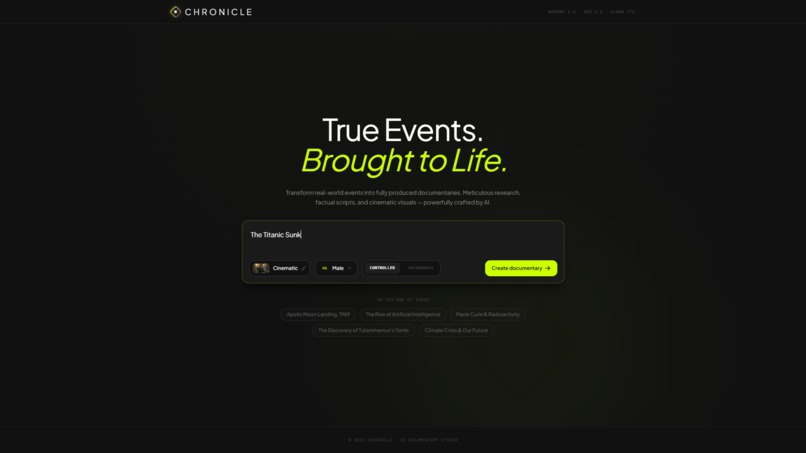
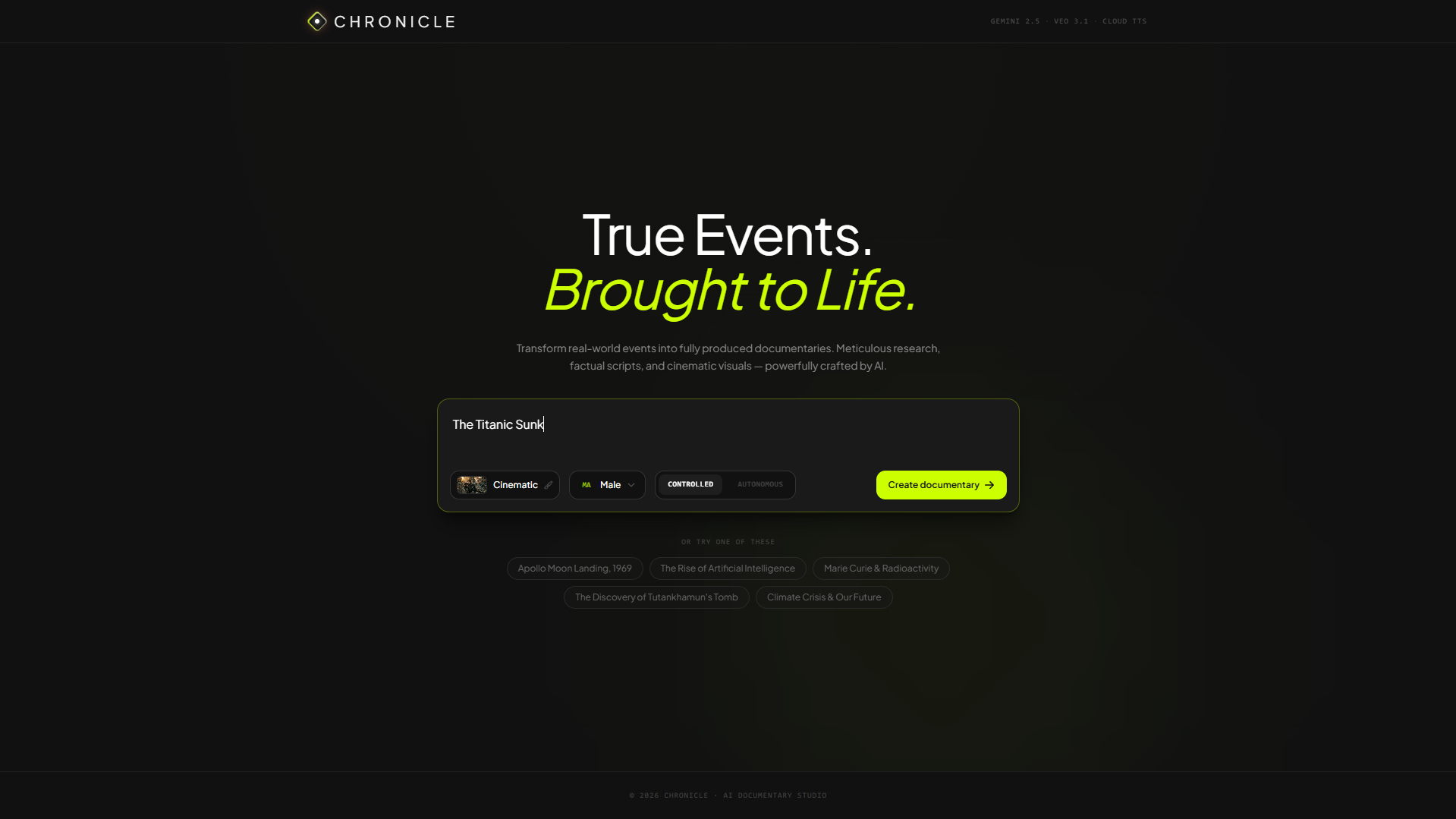
Chronicle Landing Page
-
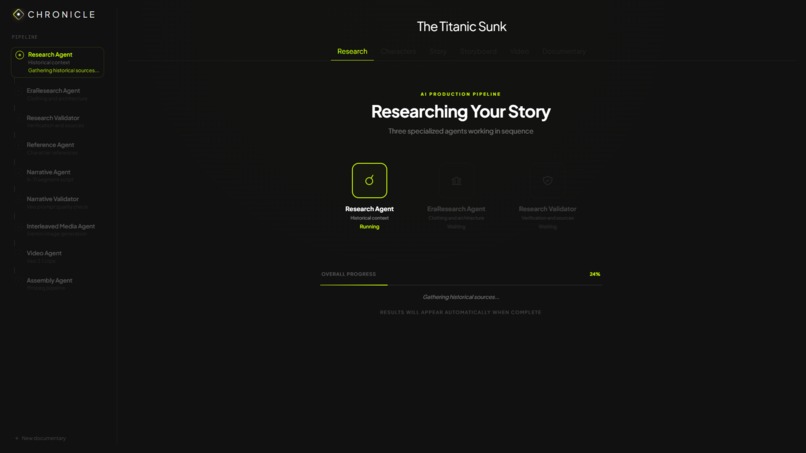
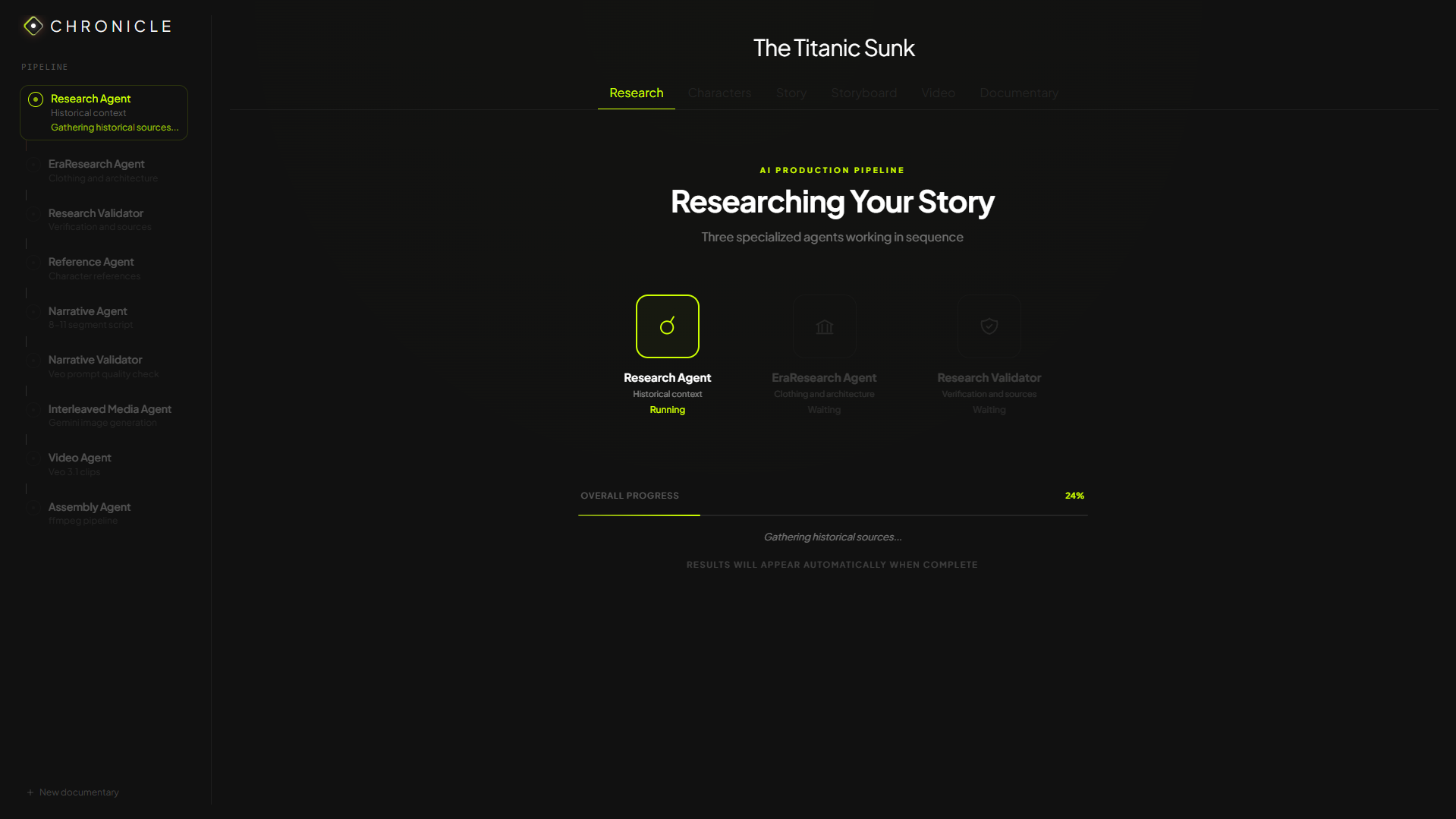
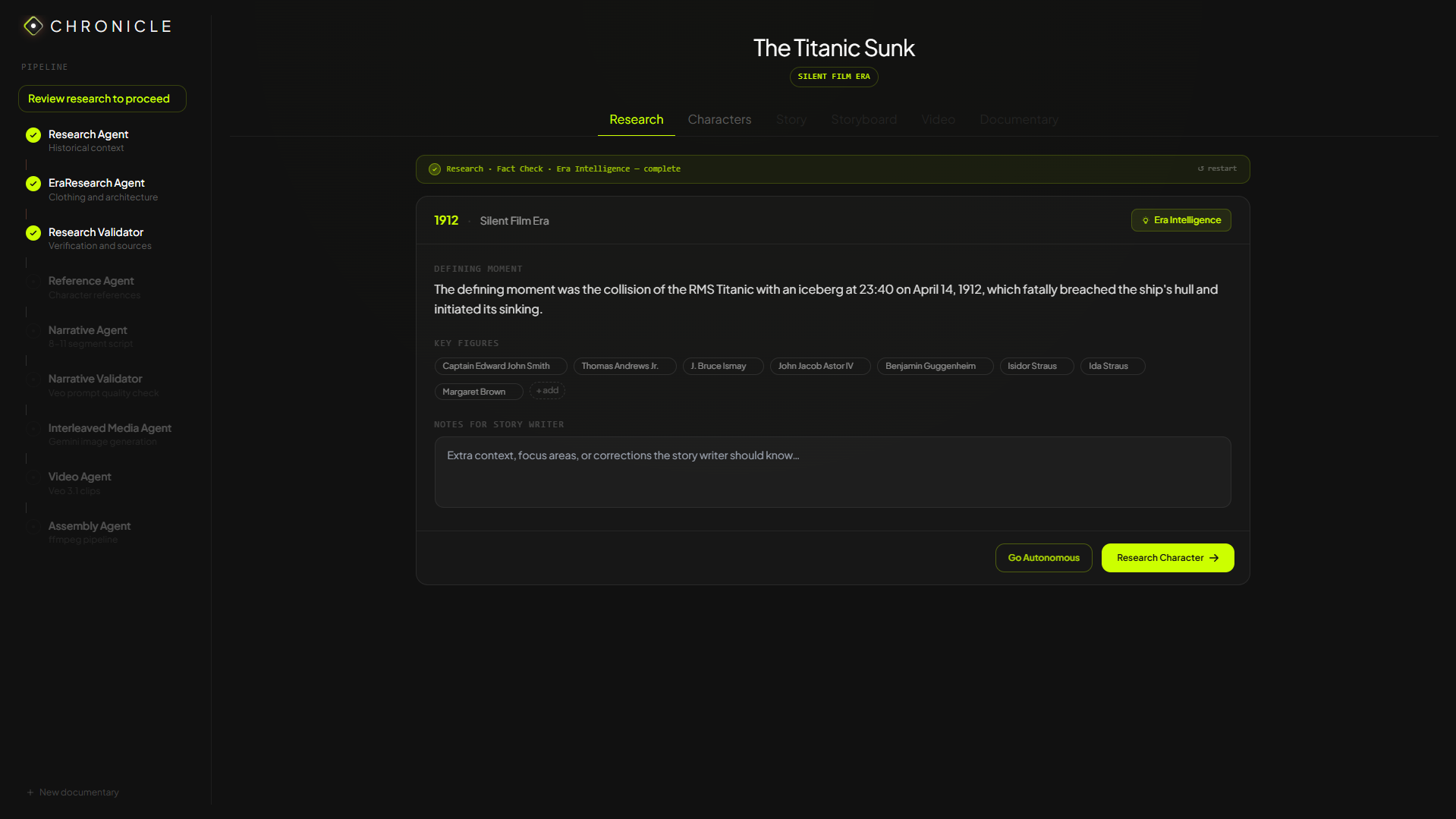
Research Loading
-
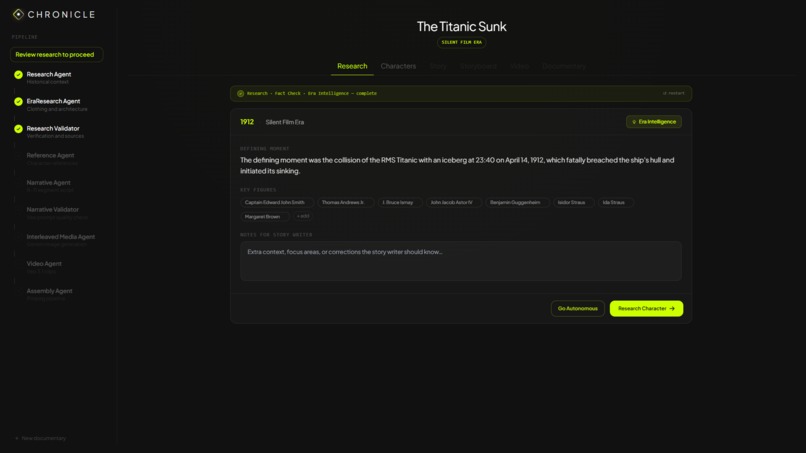
Research Results
-
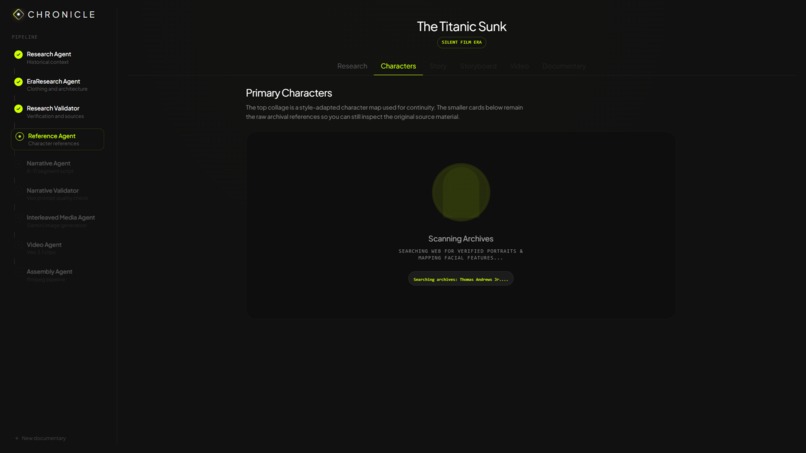
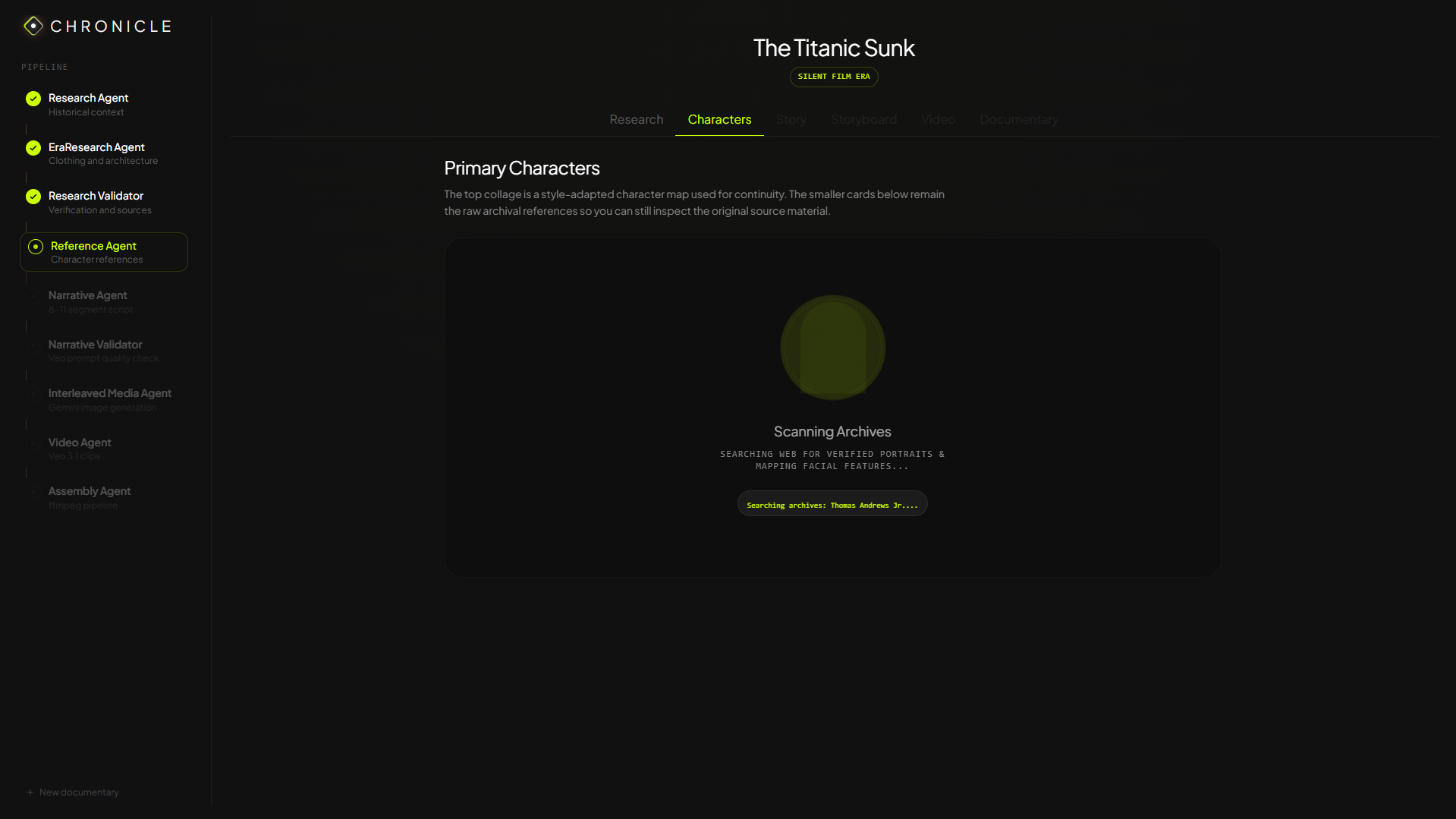
Character Loading
-
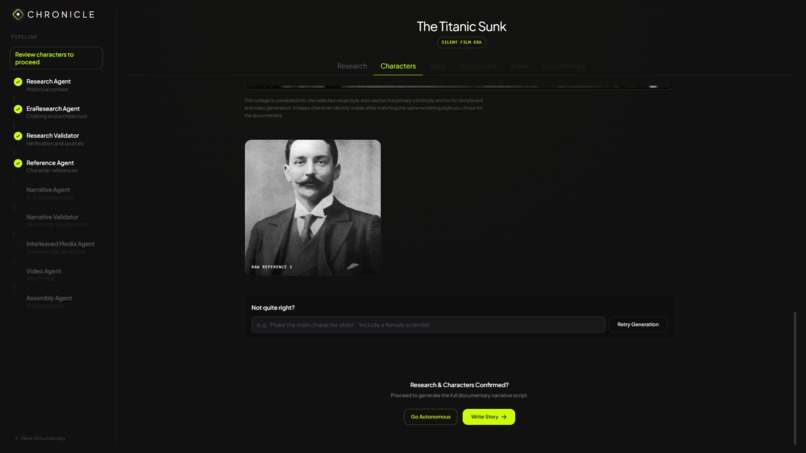
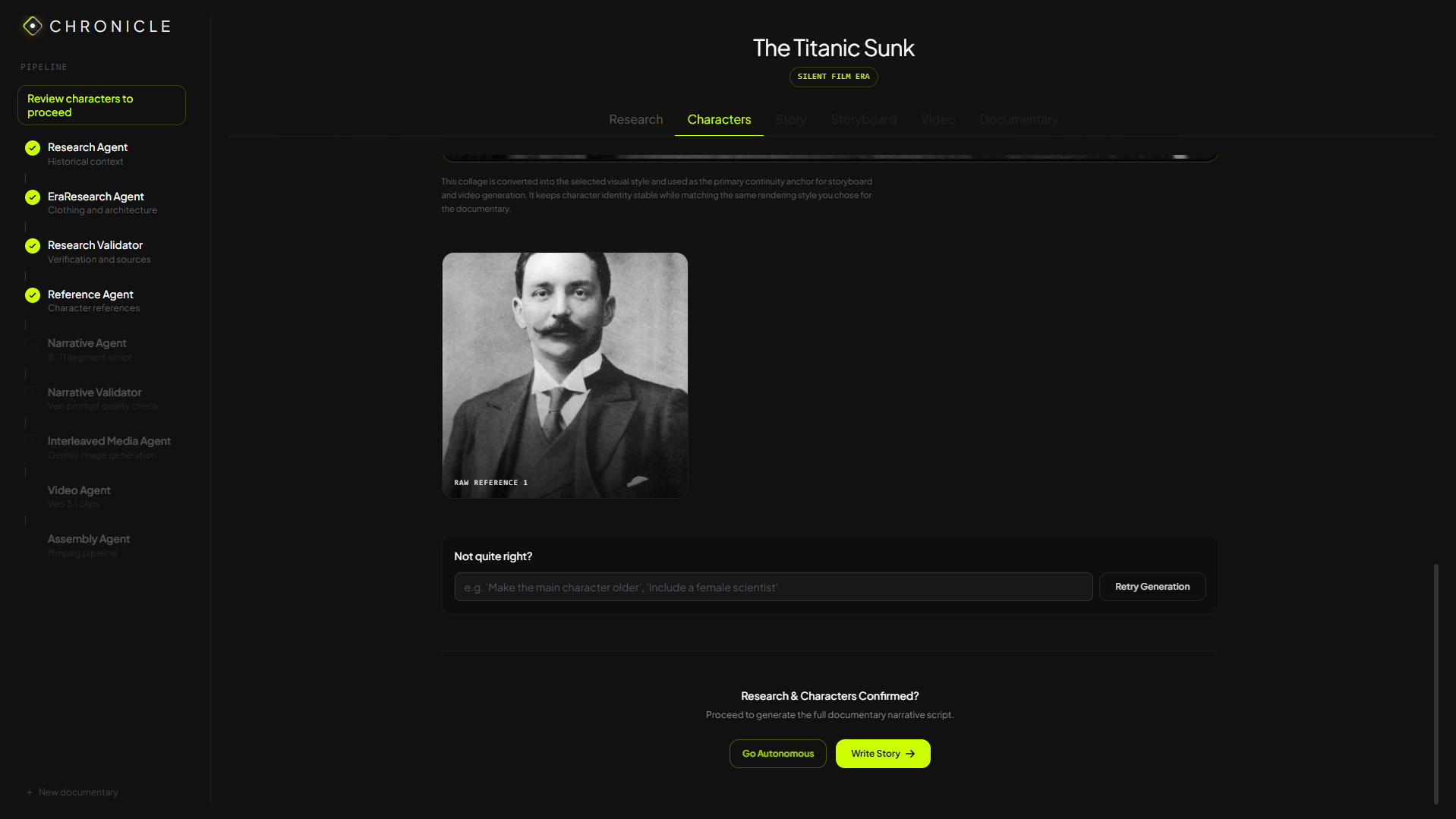
Character Result
-
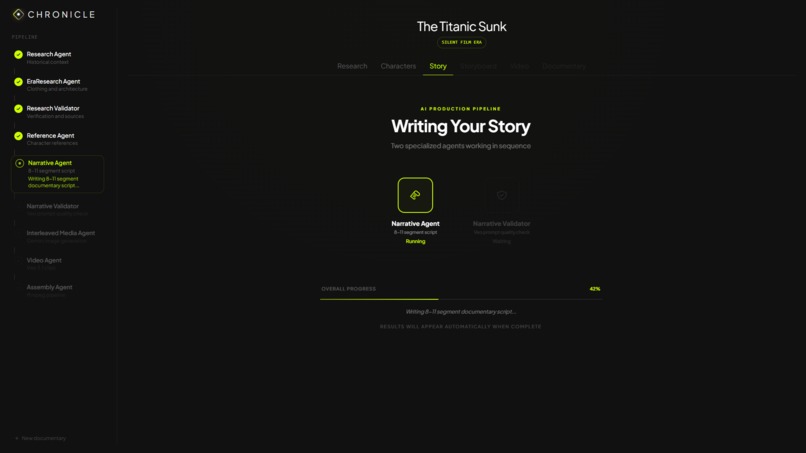
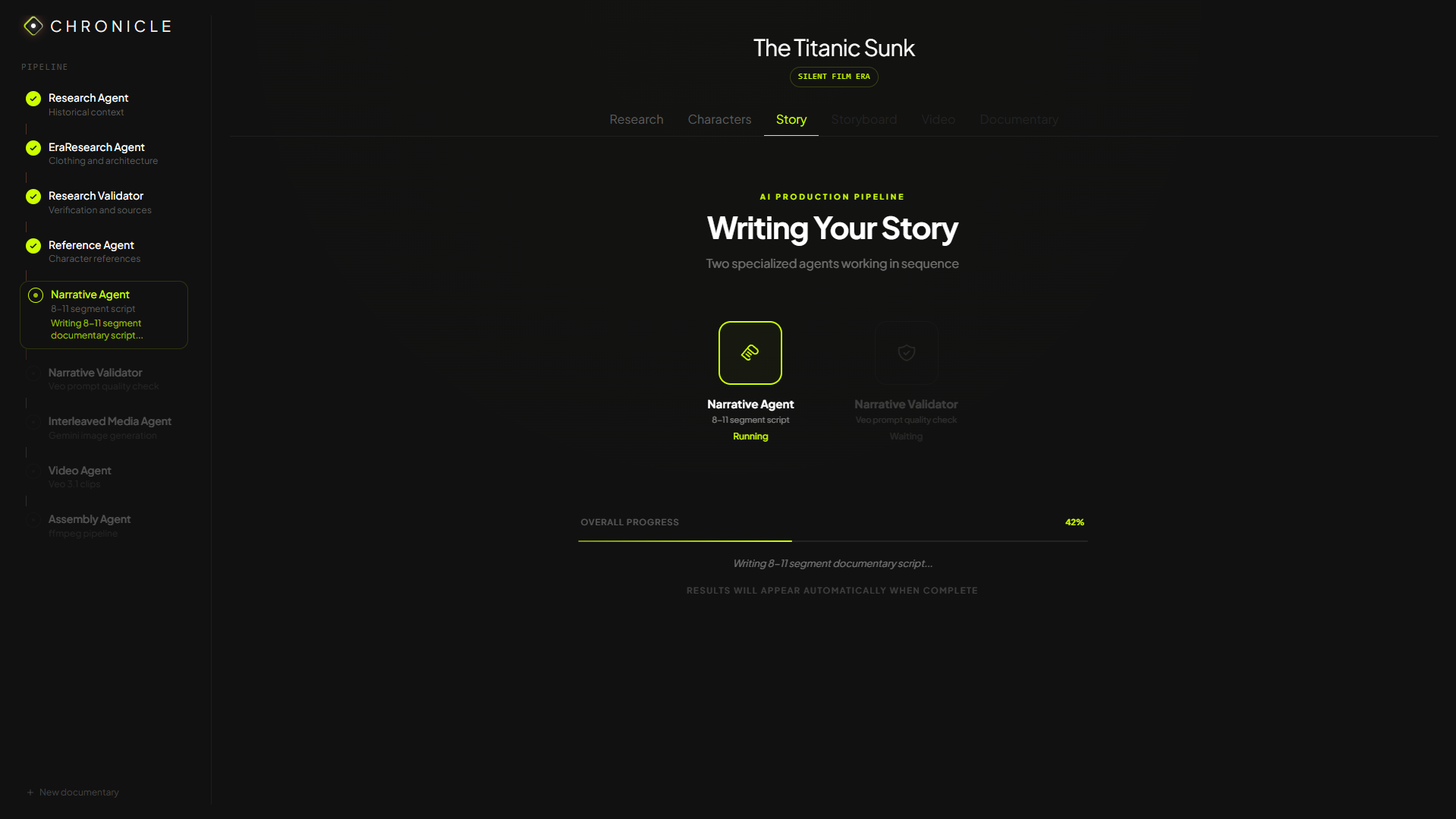
Narrative Loading
-
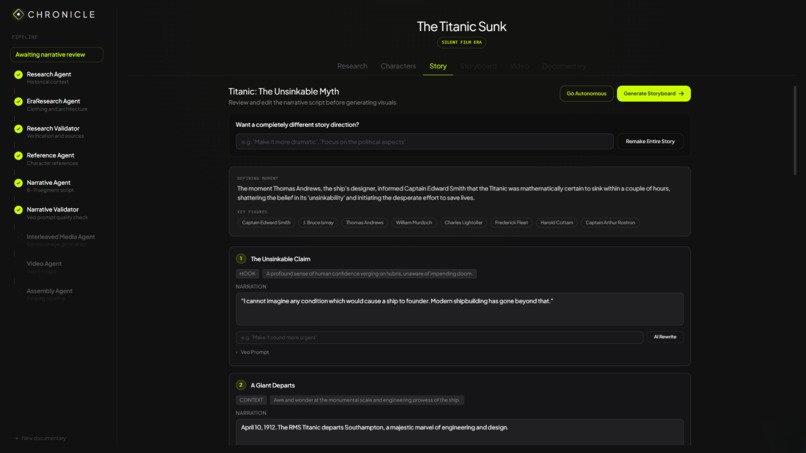
Narrative Result
-
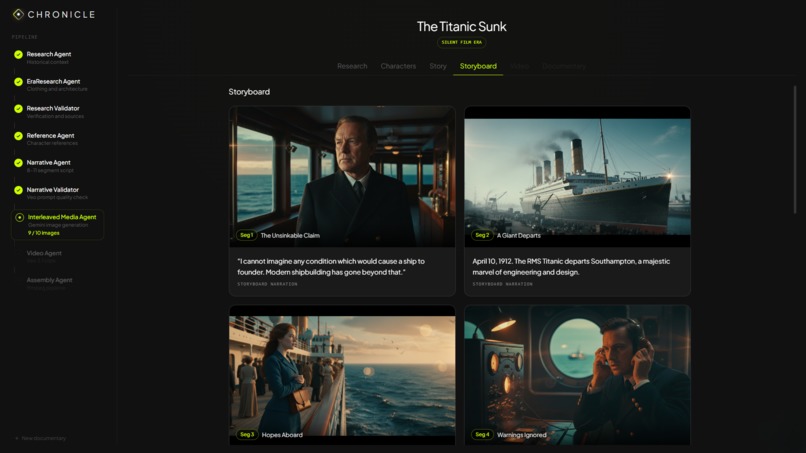
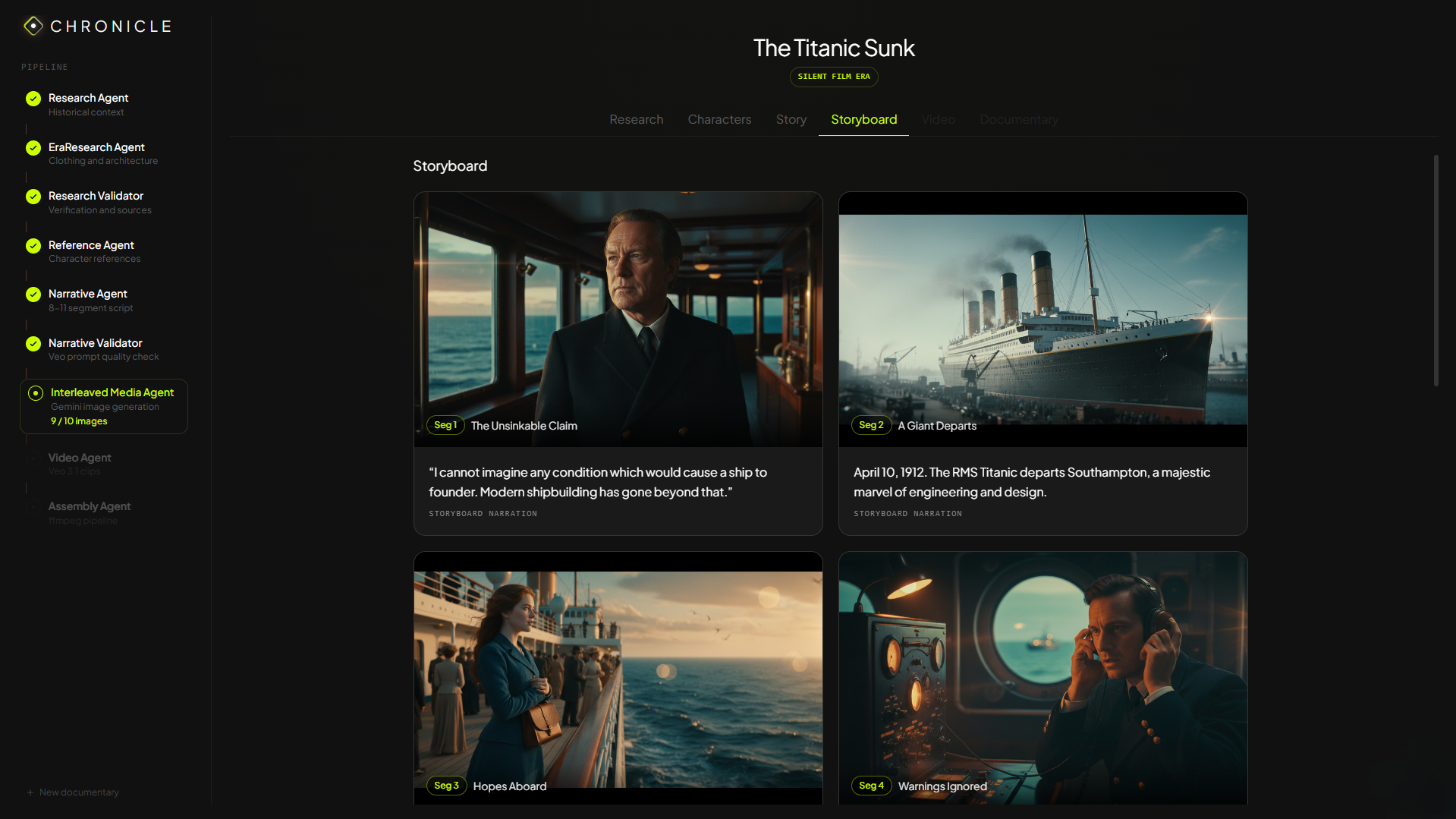
Storyboard Result
-
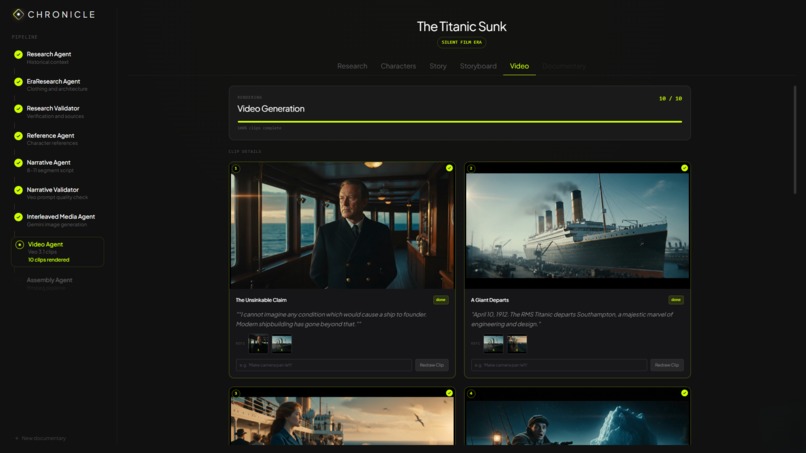
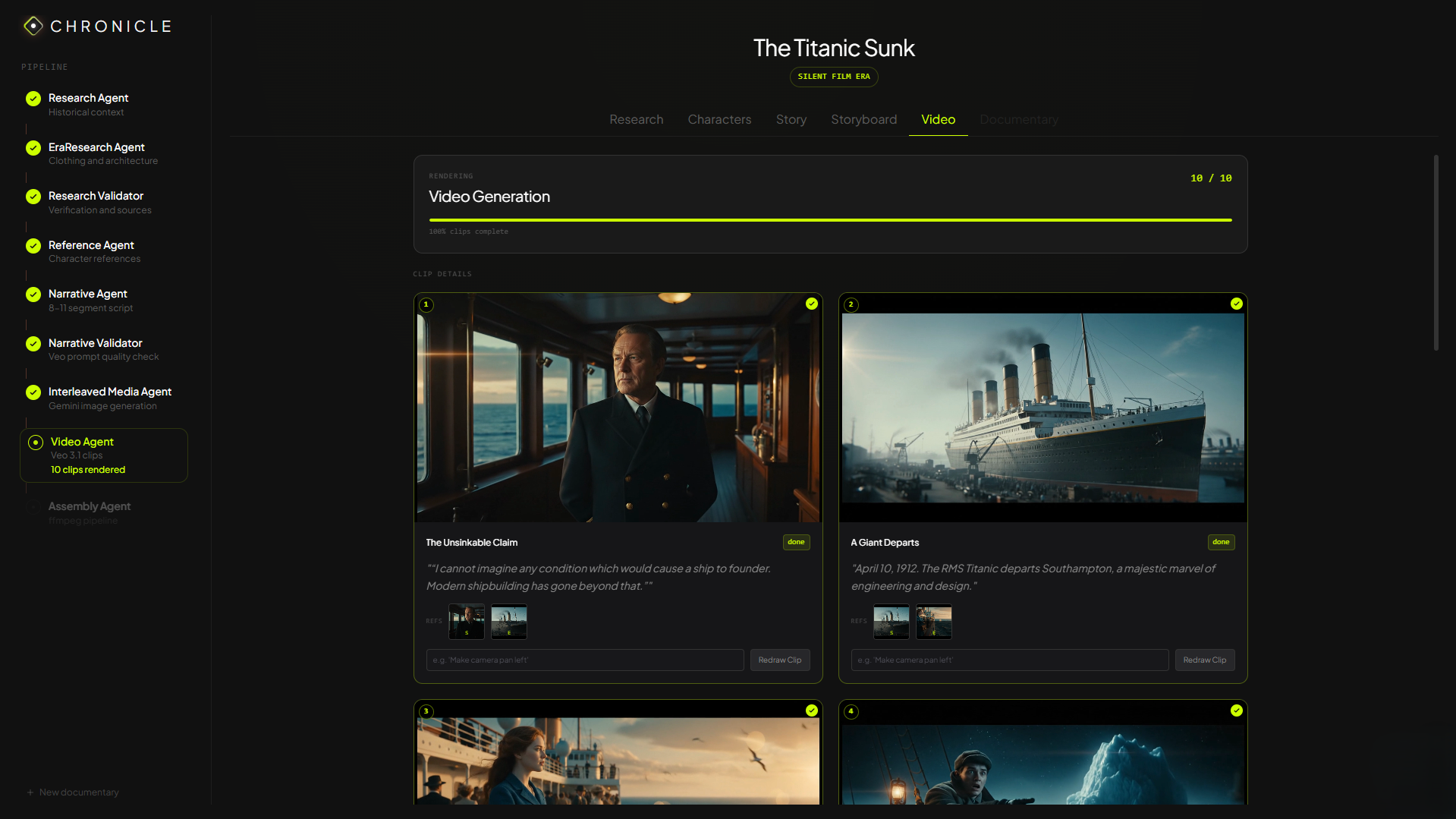
Video Result
-
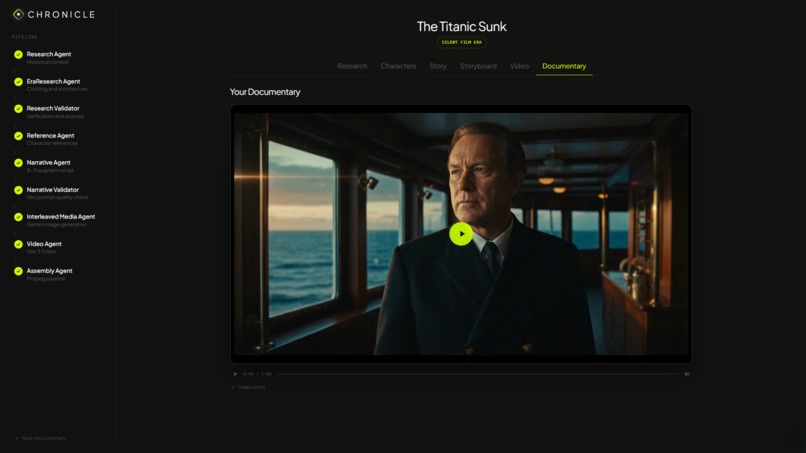
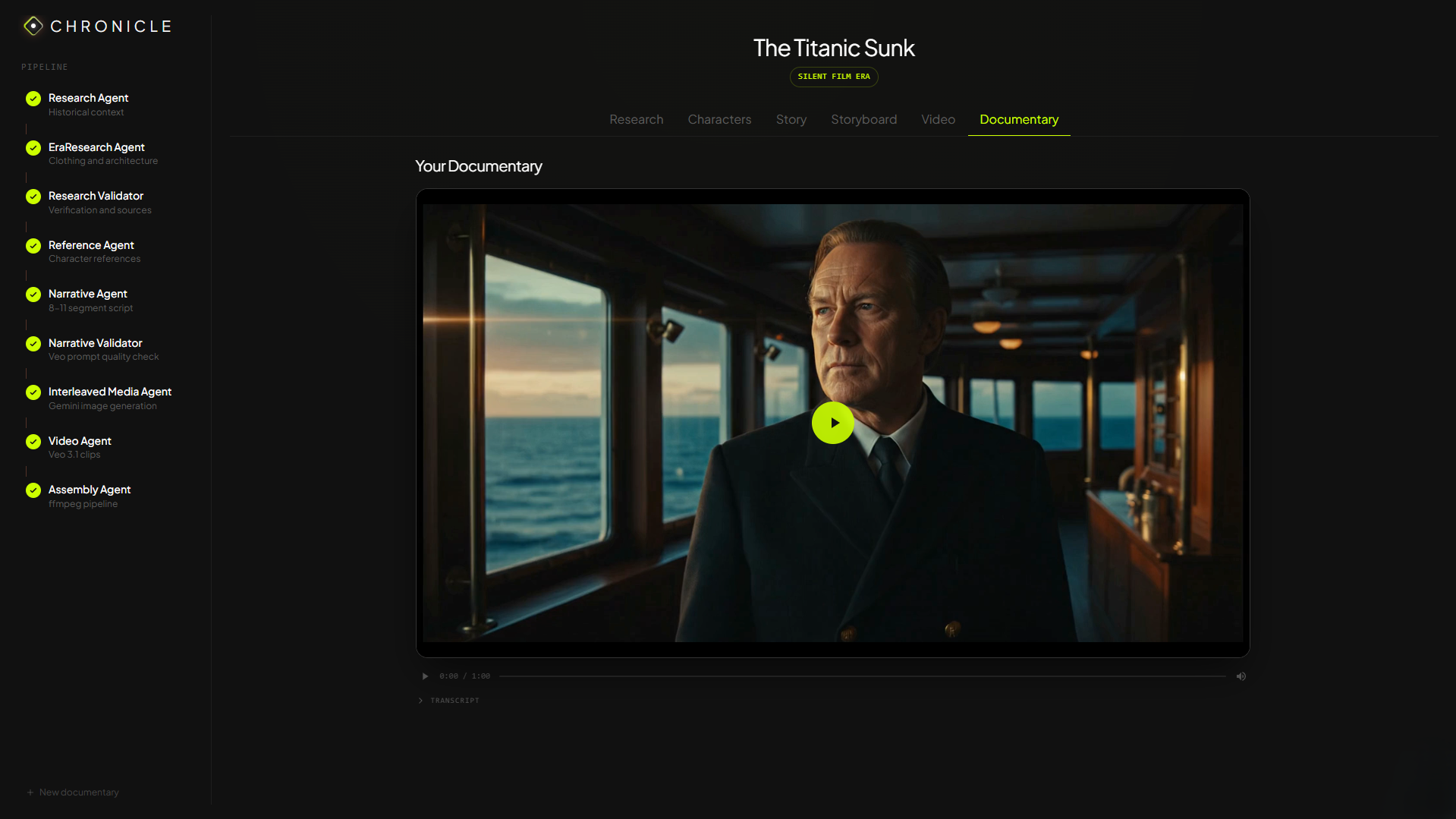
Final Documentary

Chronicle
Inspiration
We were inspired by a simple gap in the current AI ecosystem. Today, AI can already do research, generate images, create audio, and even produce video. But when someone tries to turn those pieces into an actual film, the process breaks down. Video models still generate only short clips, and once multiple clips are stitched together, character consistency, visual style, and story continuity start falling apart. We wanted to build the missing layer that connects all of these capabilities into one coherent creative workflow.
What it does
Chronicle turns a single topic into a complete AI documentary pipeline. It researches the topic, understands the historical era, identifies important characters, generates a structured story, creates storyboard images, produces video clips, and finally assembles everything into a finished documentary. The key value of Chronicle is continuity. Instead of giving users disconnected AI outputs, it helps generate a film that feels visually and narratively consistent from start to finish.
How we built it
We built Chronicle as a multi-stage AI pipeline where each agent is responsible for one part of the documentary workflow. One agent handles research, another understands the era, another creates character references, another writes the story, and later stages generate storyboard scenes, video clips, and the final assembled documentary. We also designed a live interface that lets the user watch the entire pipeline unfold in real time, making the process feel transparent instead of like a black box.
Challenges we ran into
The biggest challenge was continuity. Short video generation is easy to demo, but long-form storytelling is much harder because every clip can drift in style, character appearance, and mood. We also faced rate limiting during storyboard image generation, prompt drift where non-cinematic styles started looking cinematic, and the challenge of keeping the system stable while multiple agents were passing outputs into one another. Another challenge was making the entire flow understandable to the user while still keeping the underlying orchestration complex enough to actually solve the problem.
Accomplishments that we're proud of
We're proud that Chronicle is not just a wrapper around a single model. It is a real end-to-end system that takes a topic all the way from research to a finished documentary. We're especially proud of the continuity layer, because that is the hardest and most meaningful part of the problem. We also built a full working pipeline with live progress tracking, human-controlled and autonomous modes, style-aware generation, and final assembly into a single documentary output.
What we learned
We learned that the hard part of AI filmmaking is not generation itself, but coordination. Research, writing, image generation, video generation, and editing all work much better when they are connected through shared context. We also learned how important it is to control prompt drift, preserve consistent references, and design around model limitations like short video duration and style inconsistency. Most importantly, we learned that product clarity matters just as much as technical depth. Solving the right problem is more valuable than simply using more AI features.
What's next for Chronicle
The next step for Chronicle is to become even stronger at continuity and control. We want to improve style locking, character consistency, and scene-to-scene transitions so the final documentaries feel even more polished. We also want to support better direct video streaming, stronger edit controls, deeper collaboration between human and autonomous workflows, and eventually expand beyond documentaries into broader AI-native storytelling.
Built With
- fastapi
- firestore
- framer-motion
- gcp
- gemini
- google-cloud
- google-cloud-run
- google-text-to-speech
- knowledge-graph-api
- next.js
- python
- react
- typescript
- veo-3.1
- vertex-ai
- zustand

Log in or sign up for Devpost to join the conversation.