-
-
-
-
-
-
-
-
-
-
-
-
-
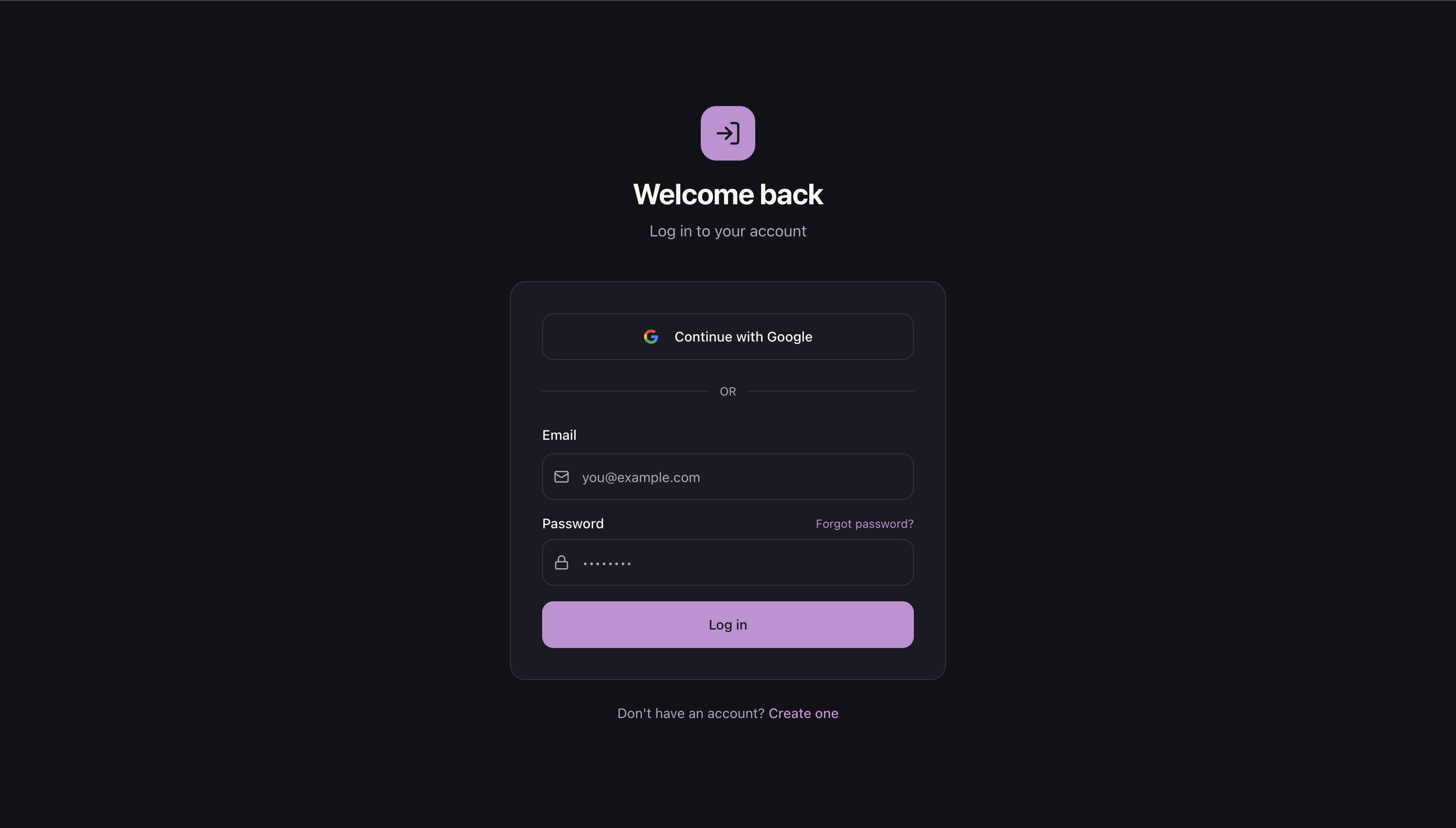
Login Page
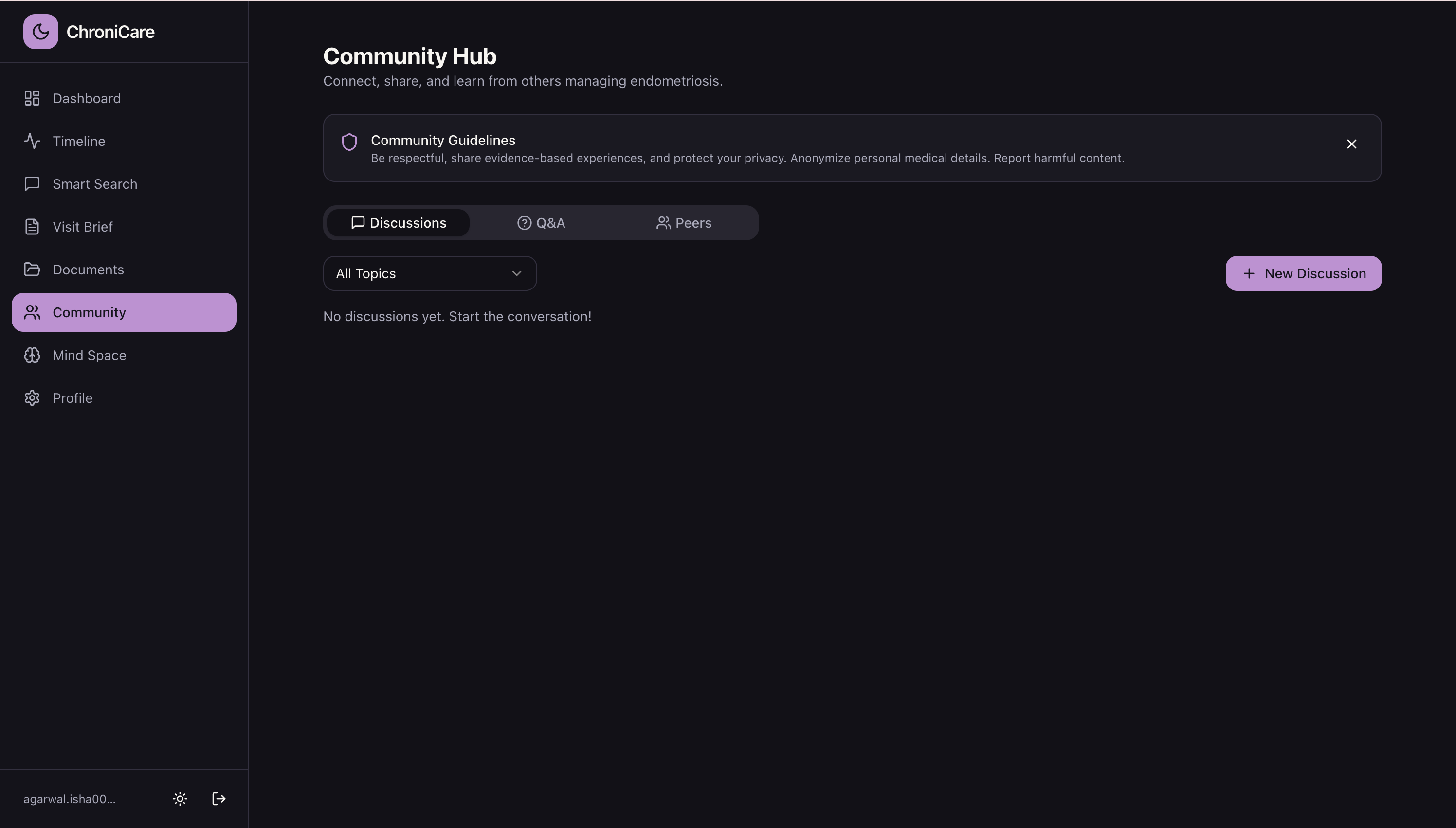
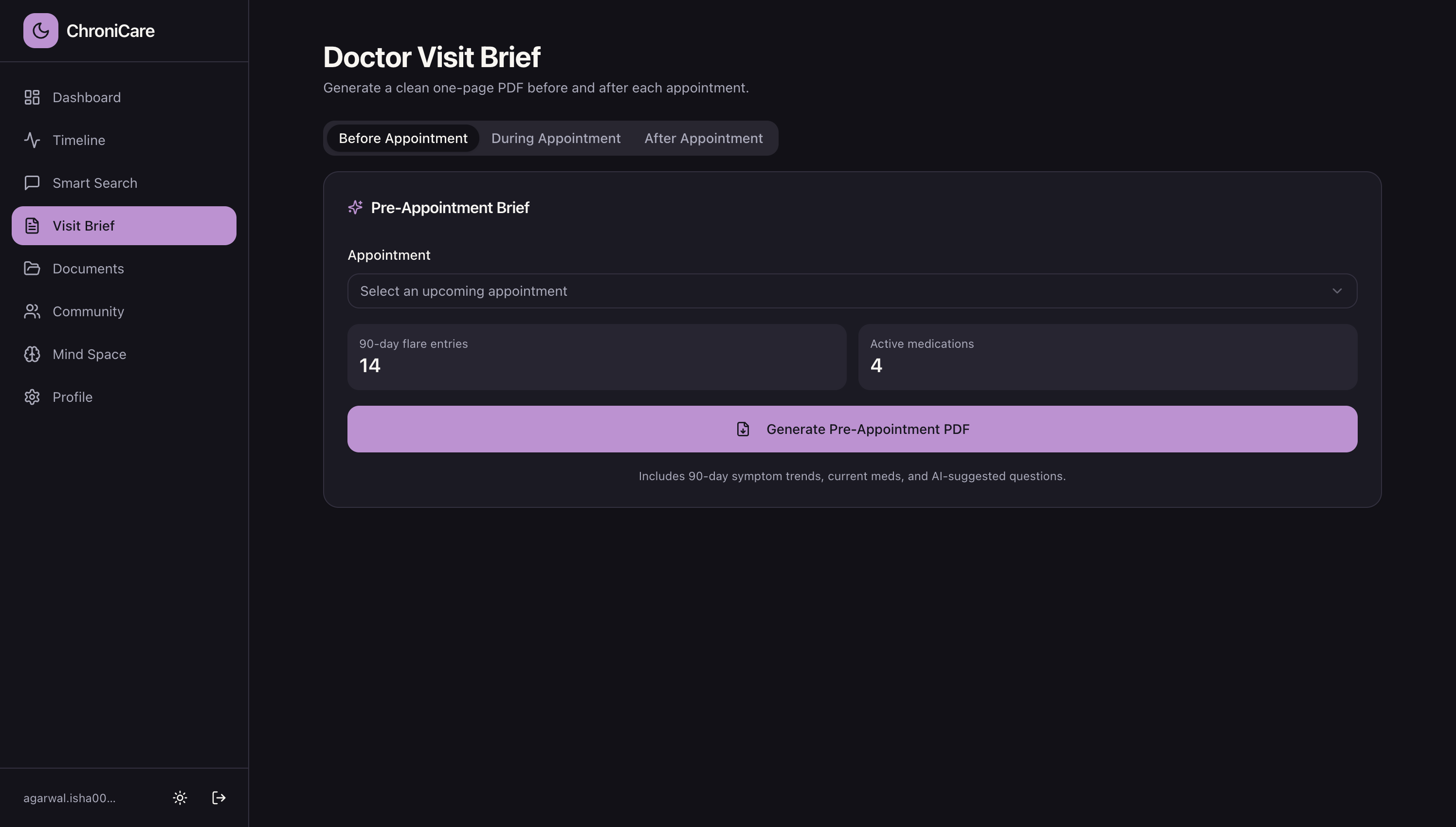
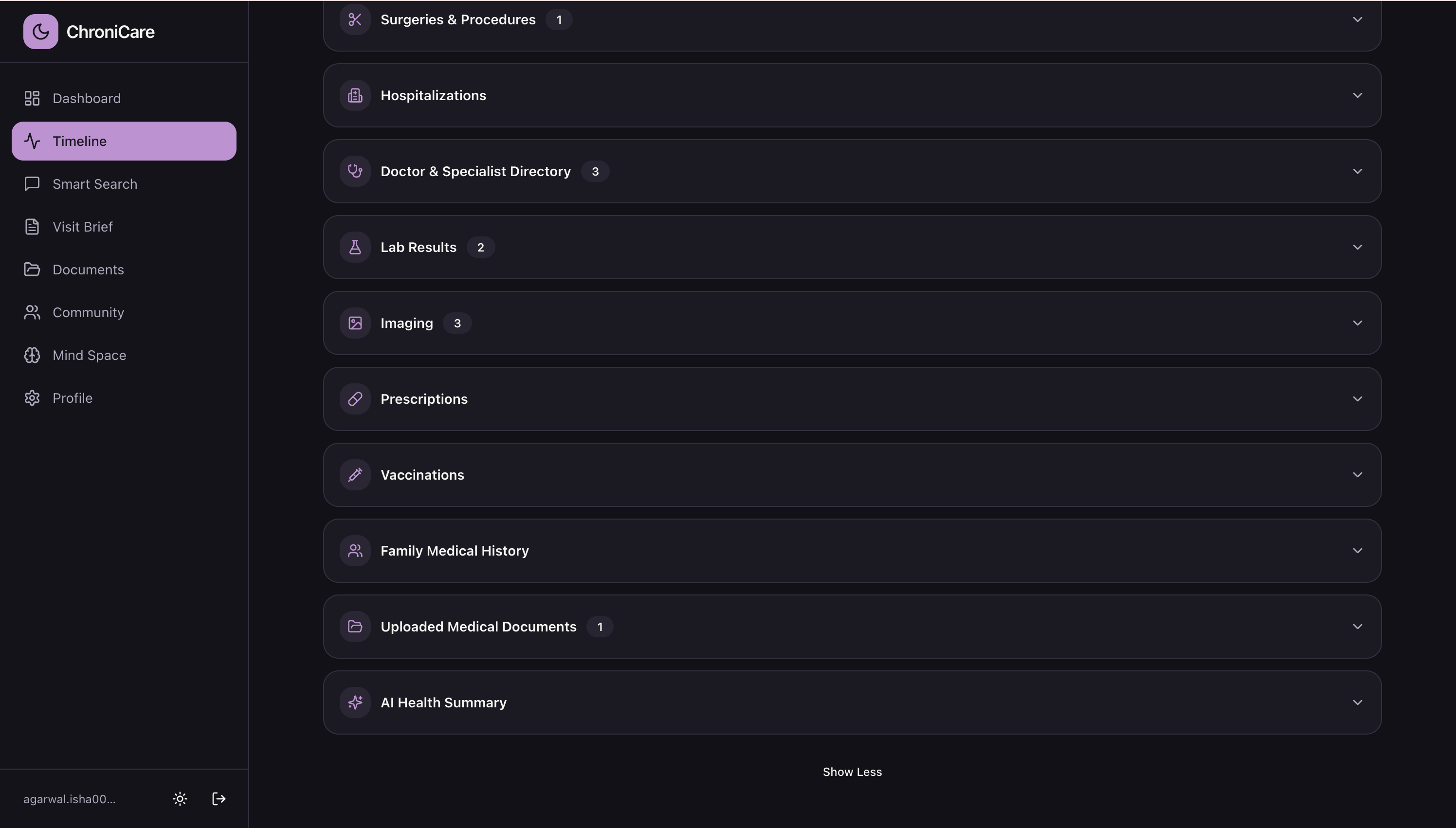
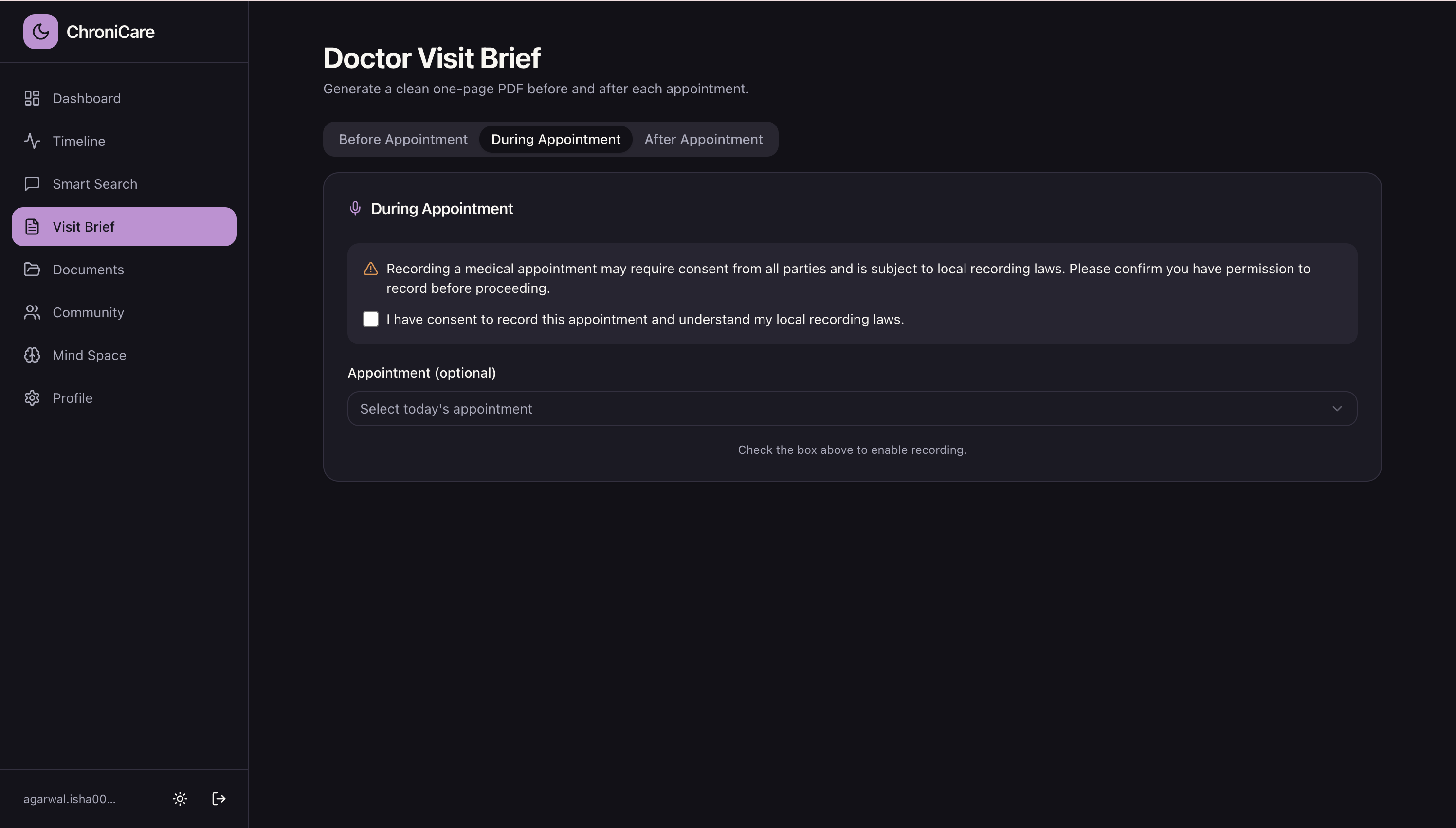
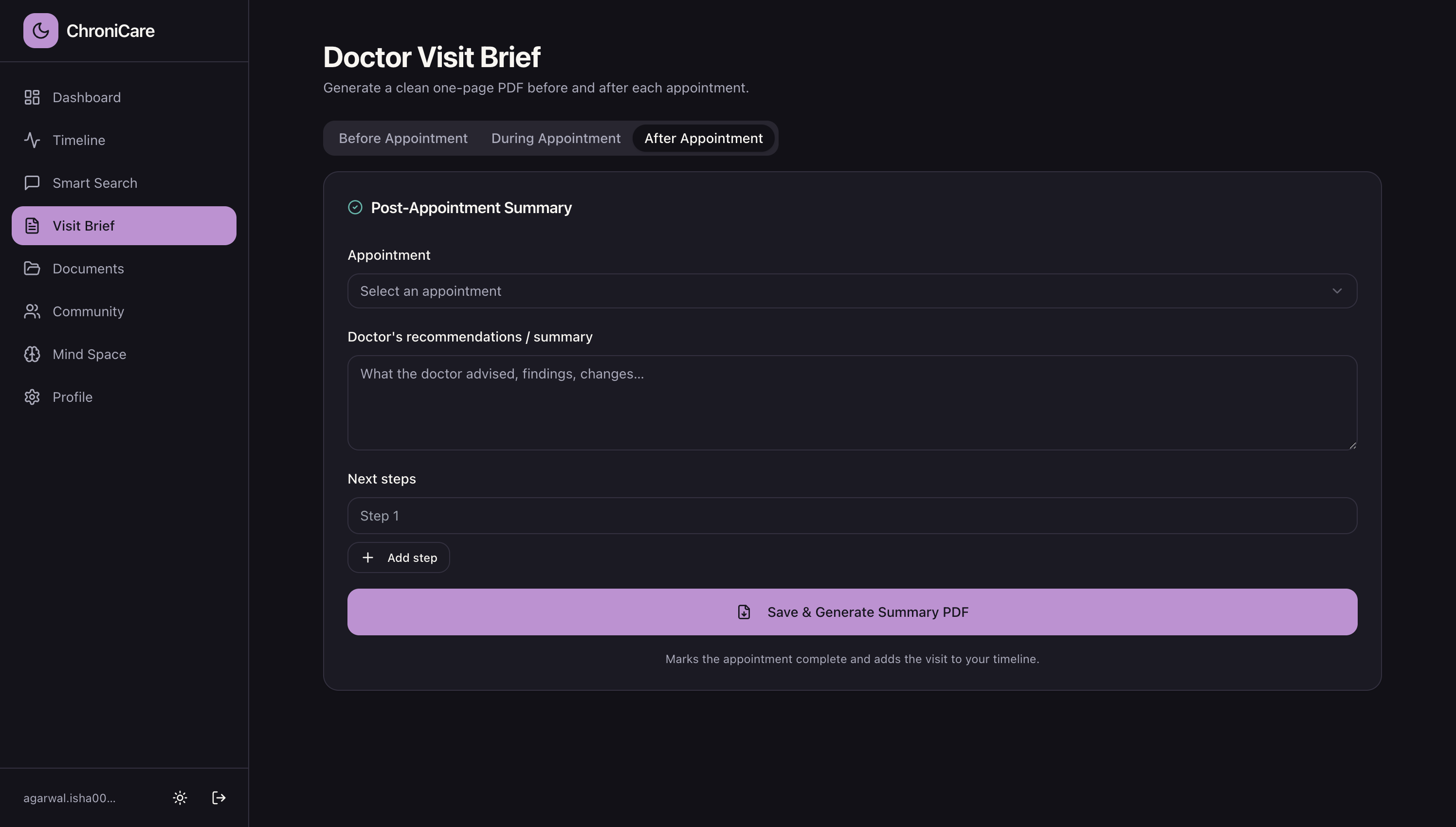
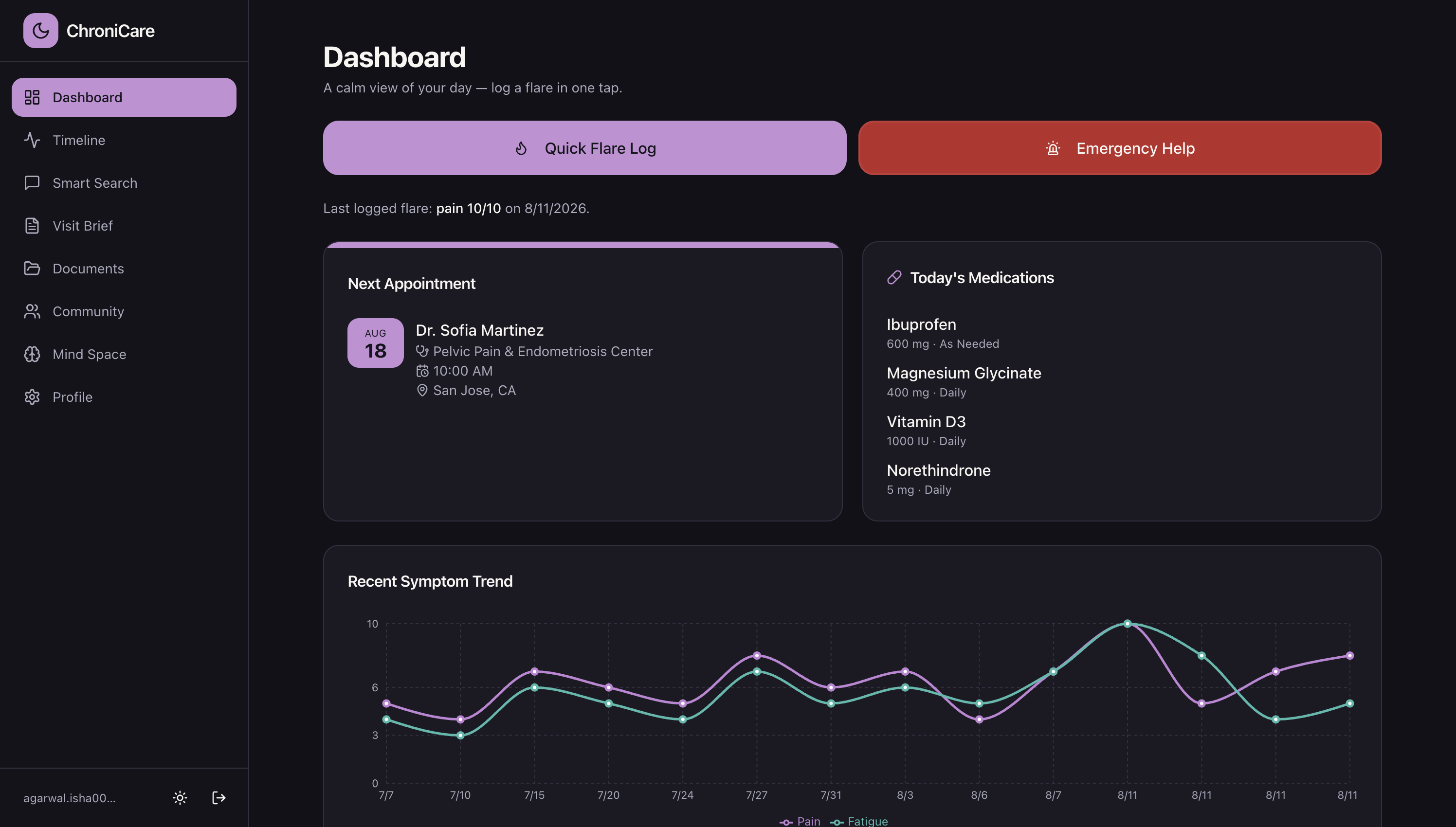
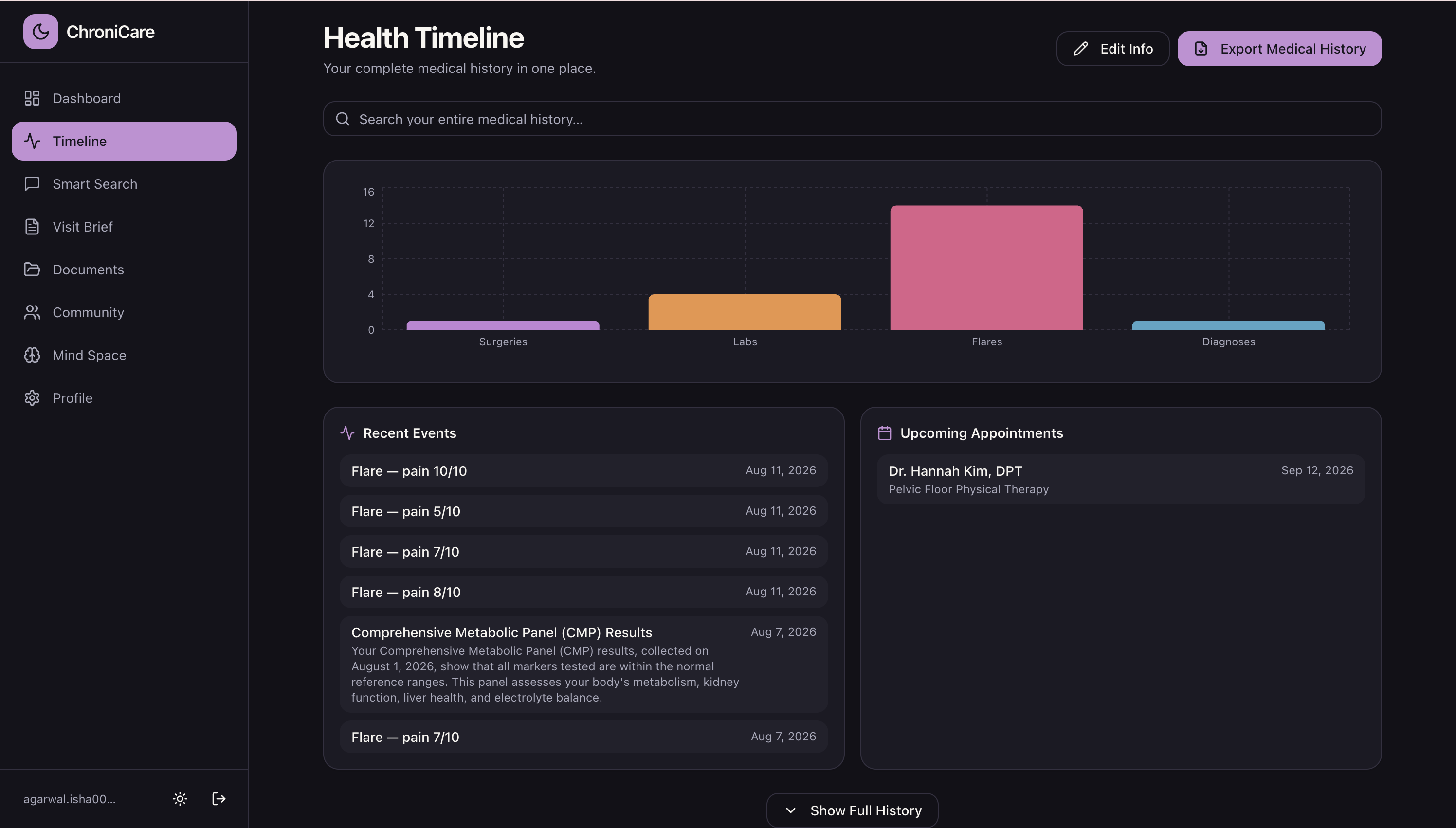
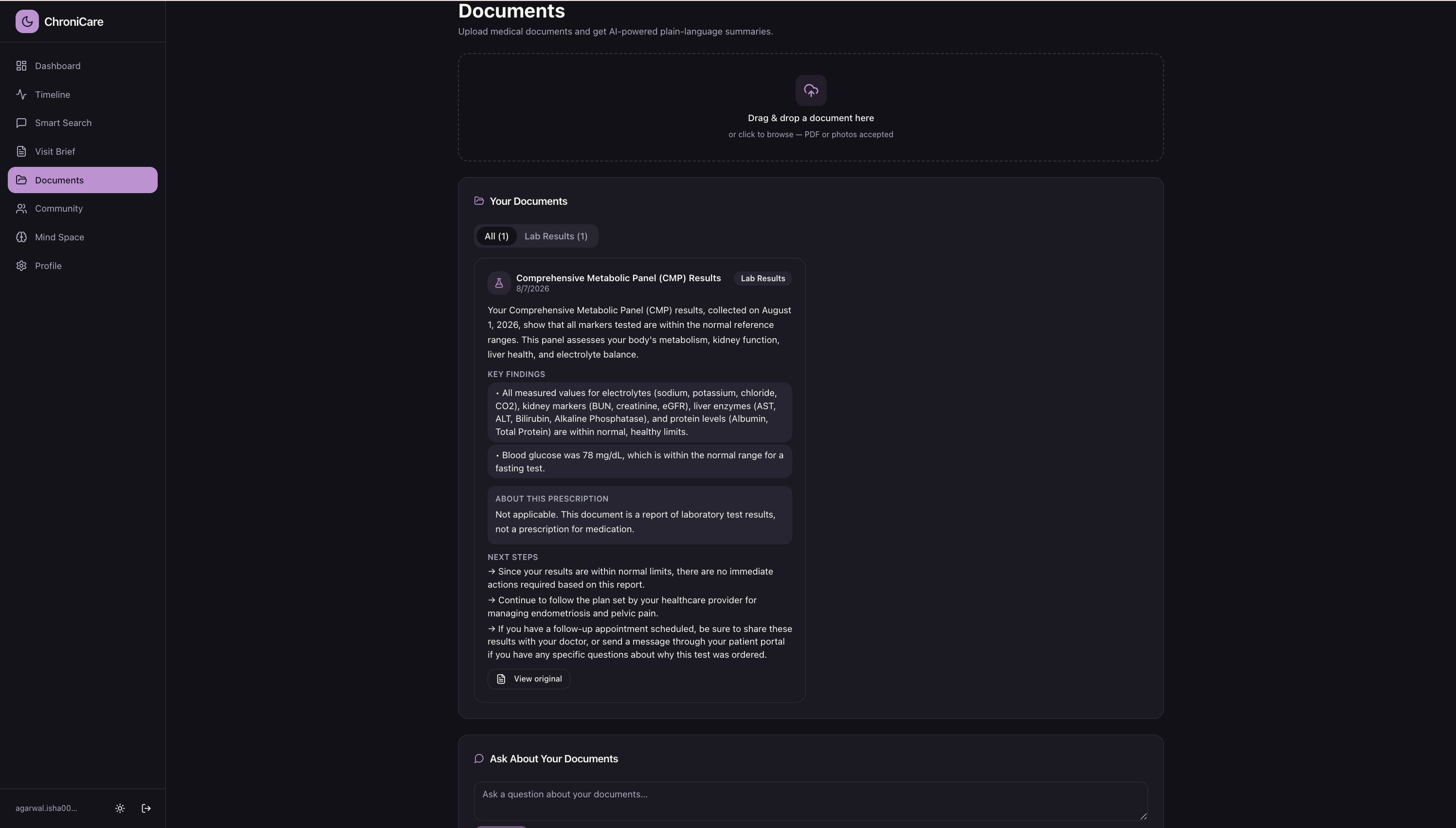
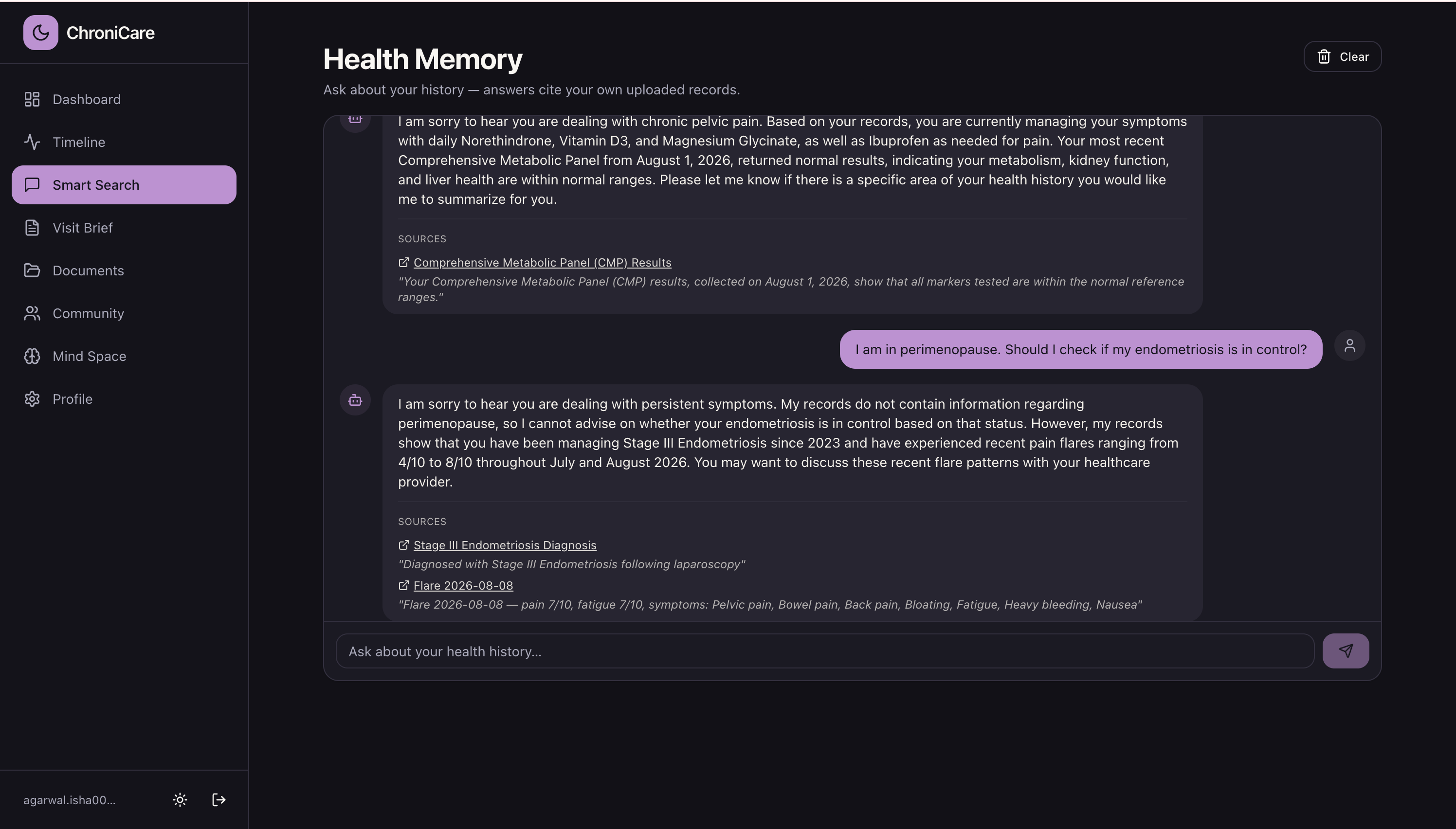
Inspiration Living with a chronic illness can mean constantly keeping track of symptoms, appointments, medications, test results, and medical records. For people with endometriosis, this can be especially overwhelming because diagnosis and treatment can take years, while symptoms are often difficult to communicate during short medical appointments. We wanted to build something that helps patients feel more organized, understood, and prepared. That idea became ChroniCare, a centralized support hub designed to turn a fragmented medical history into one connected story.
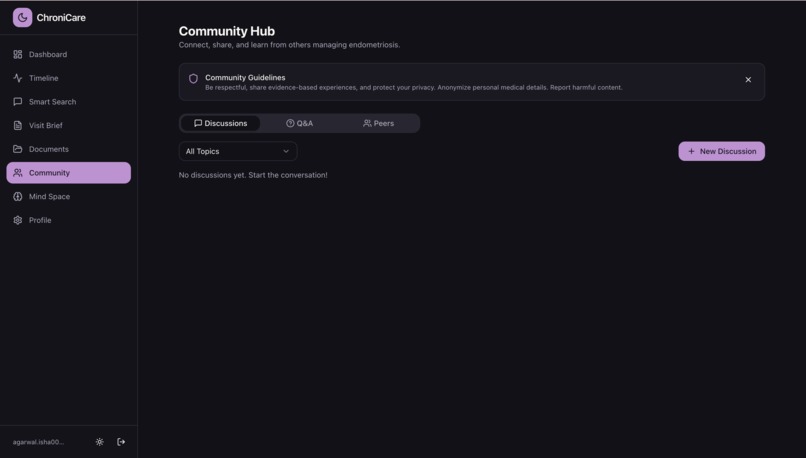
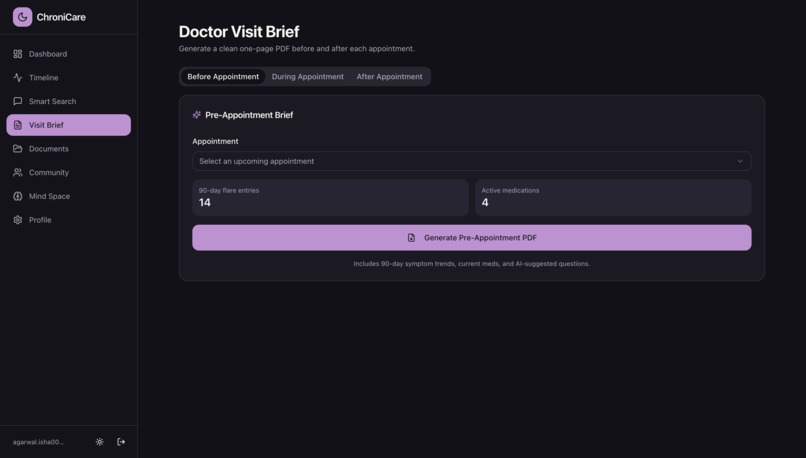
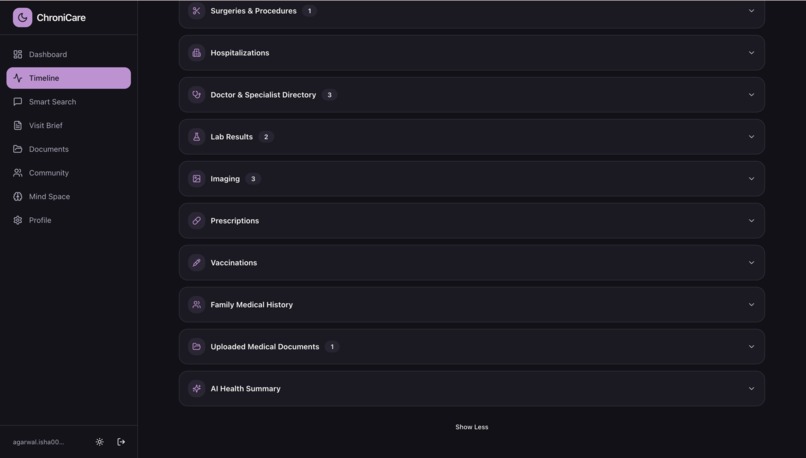
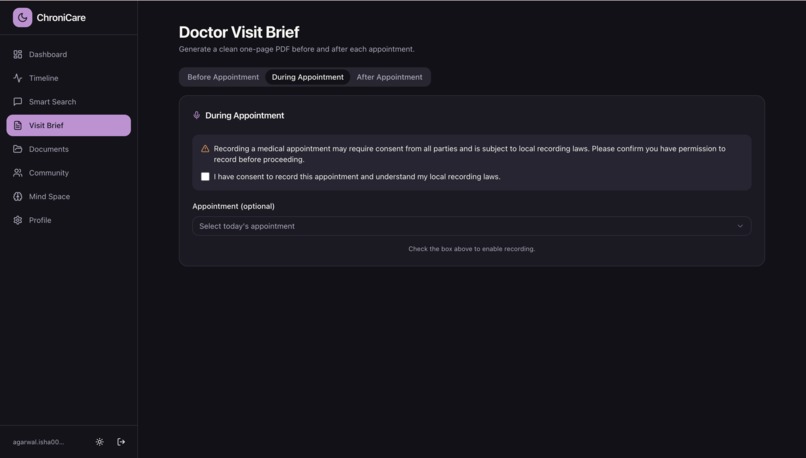
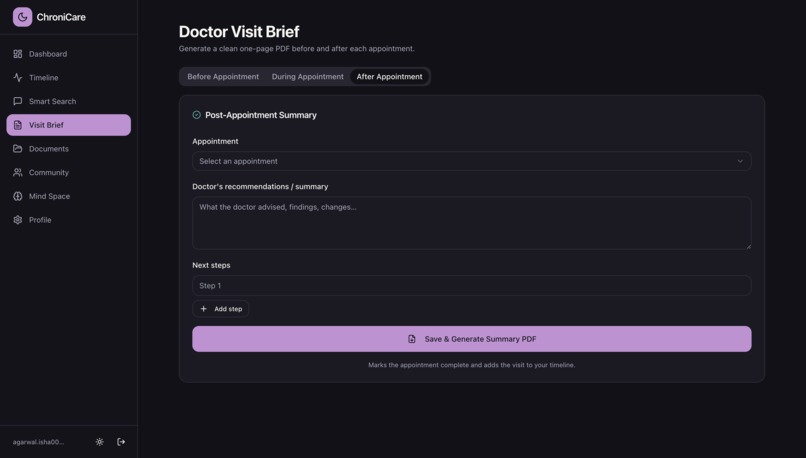
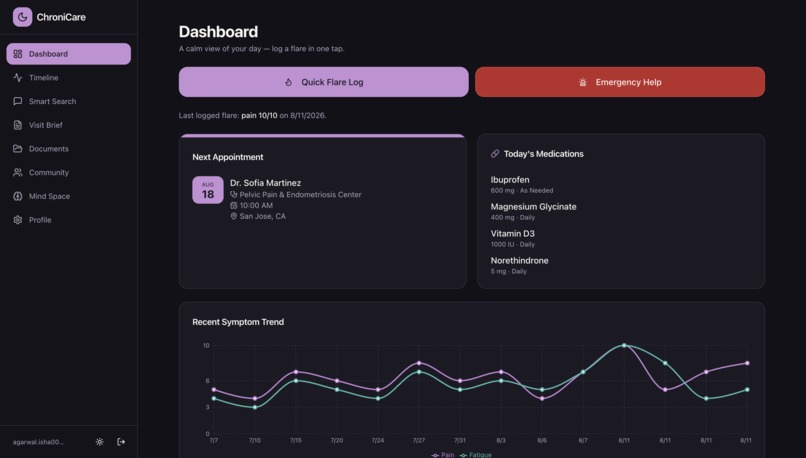
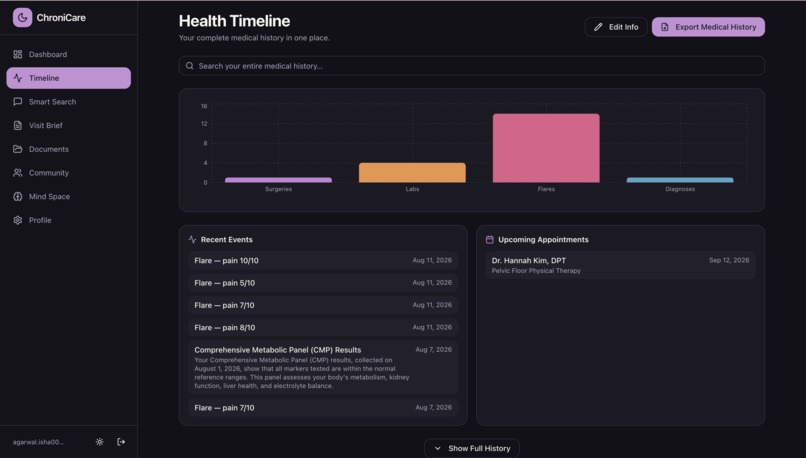
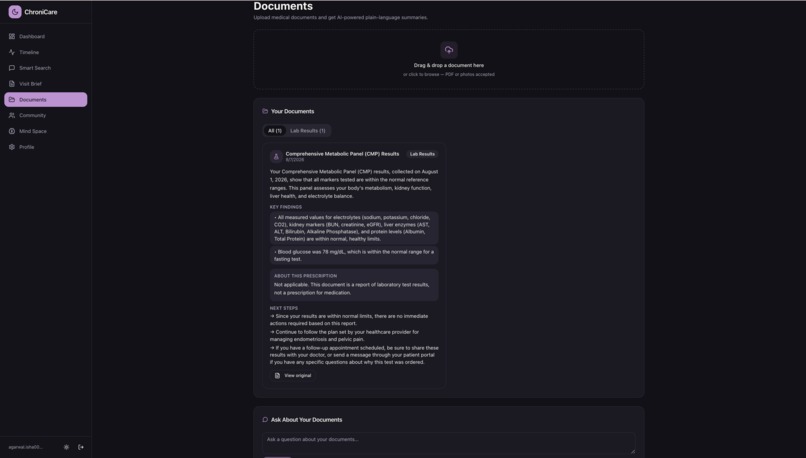
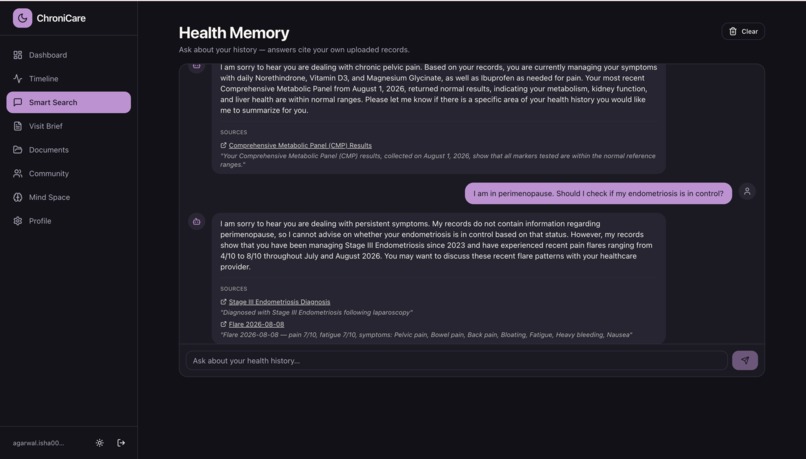
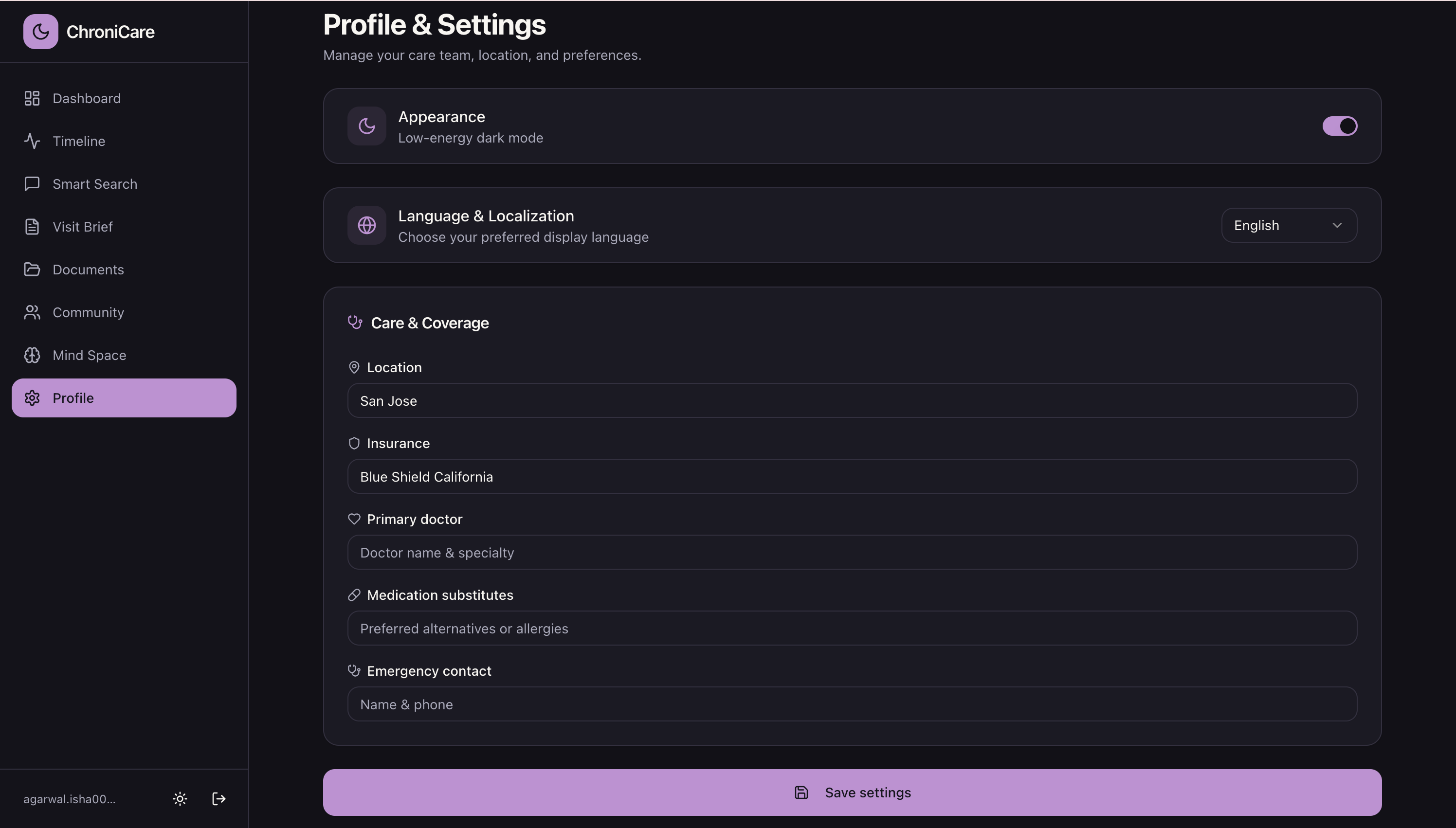
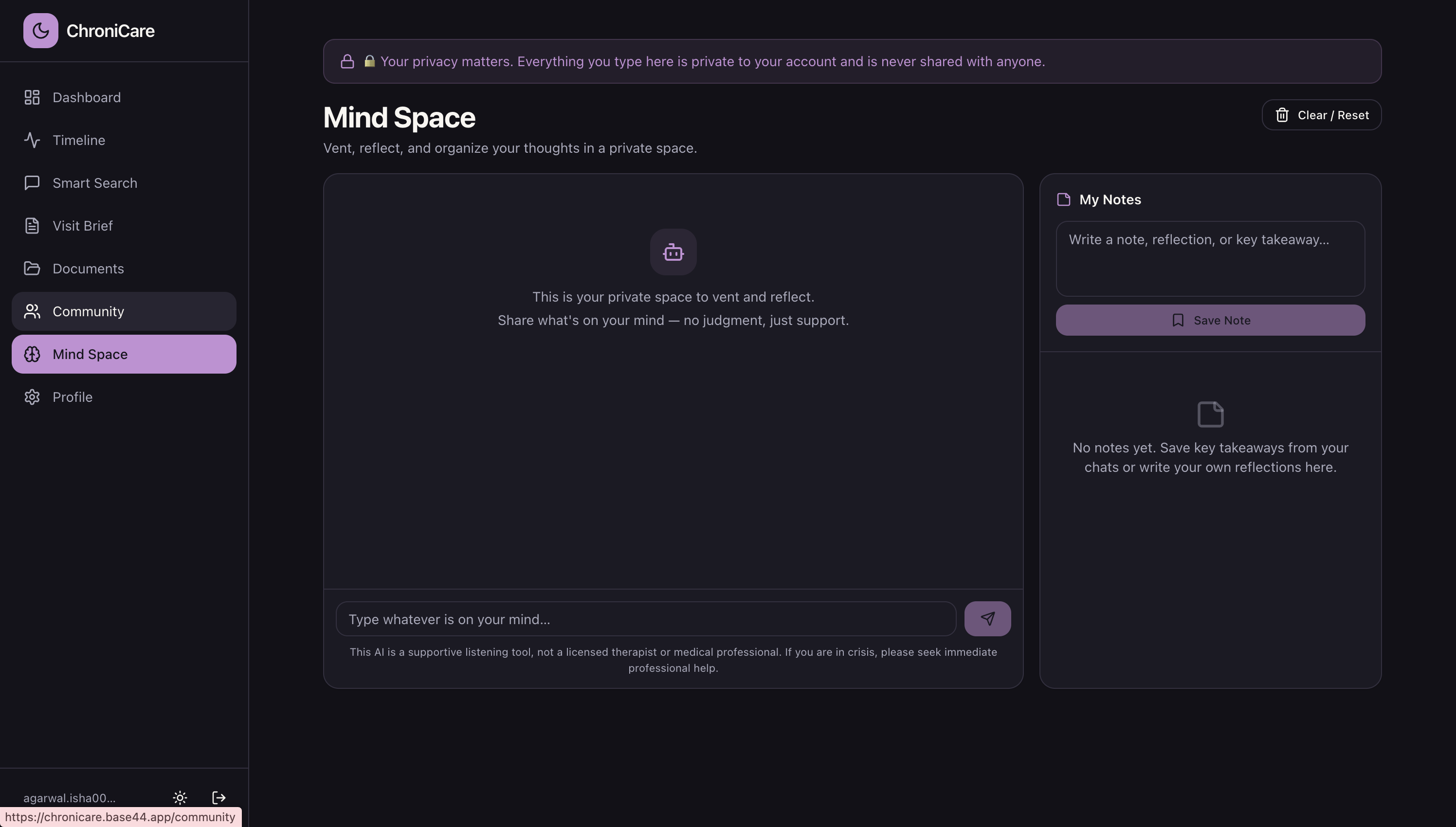
What it does ChroniCare is a chronic illness support platform focused on helping people manage and understand their health journey. Users can organize their medical history, track symptoms and flare-ups, summarize important health information, prepare for doctor appointments, and keep important resources in one place. Instead of having information scattered across documents, notes, and different apps, ChroniCare brings it together into a more accessible and patient-centered experience.
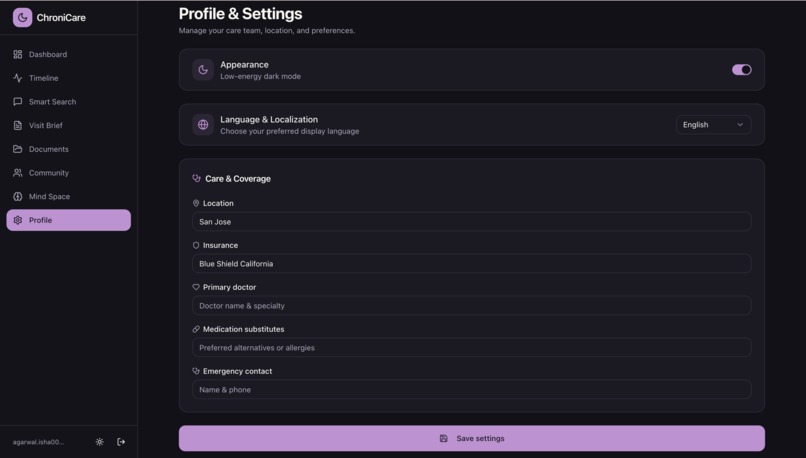
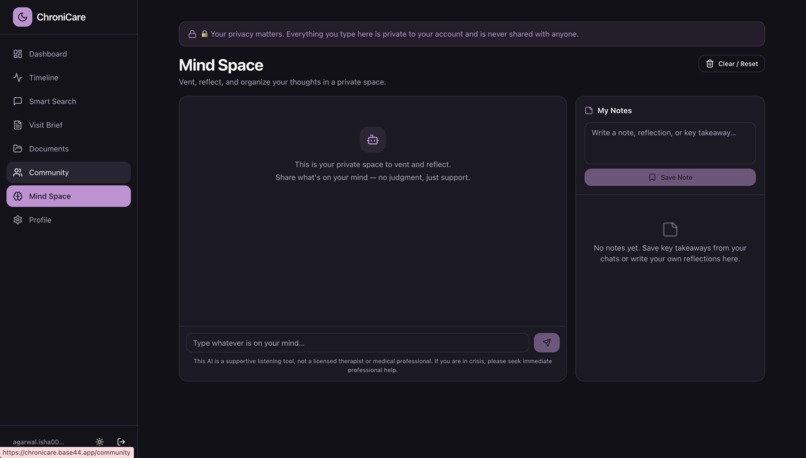
How we built it We designed and developed ChroniCare as a web application using Base44, focusing on a simple and accessible interface that makes health information easier to navigate. We used Base44 to bring our ideas into a functional platform with sections for organizing medical information, tracking symptoms, preparing for appointments, and supporting users throughout their chronic illness journey. We also incorporated AI-assisted features to help transform complicated medical information into clearer, more understandable summaries while keeping the patient at the center of the experience.
Challenges we ran into One of our biggest challenges was deciding how to take a very broad problem like chronic illness management and turn it into a focused, useful product within a limited hackathon timeframe. We also had to think carefully about how to present medical information without overwhelming users or making the experience feel like another complicated medical system. Balancing functionality, accessibility, and a clean user experience required us to continuously rethink and prioritize our features.
Accomplishments that we're proud of We are proud that we turned an issue that can feel overwhelming and fragmented into a working platform with a clear purpose. We especially wanted ChroniCare to feel like more than just a symptom tracker, it should help users understand their health journey, prepare for conversations with doctors, and feel more confident managing their information. We are also proud of creating a platform that could potentially be adapted to support people with many different chronic illnesses in the future.
What we learned We learned that building a healthcare product requires thinking beyond just whether a feature works. Accessibility, clarity, privacy, trust, and the user's emotional experience are all incredibly important. We also learned how important it is to prioritize features when working under a deadline and how much a product improves when we continuously test our ideas from the user's perspective.
What's next for ChroniCare Our next step is to continue improving ChroniCare's personalization, accessibility, and AI-assisted features. We want to make it easier for users to identify patterns in their symptoms, prepare more meaningful information for healthcare appointments, and manage their health journey over time. In the future, we hope to expand ChroniCare beyond endometriosis and make it a flexible support platform for people living with a wide range of chronic illnesses.
Built With
- base44
- javascript
- react


Log in or sign up for Devpost to join the conversation.