-
-
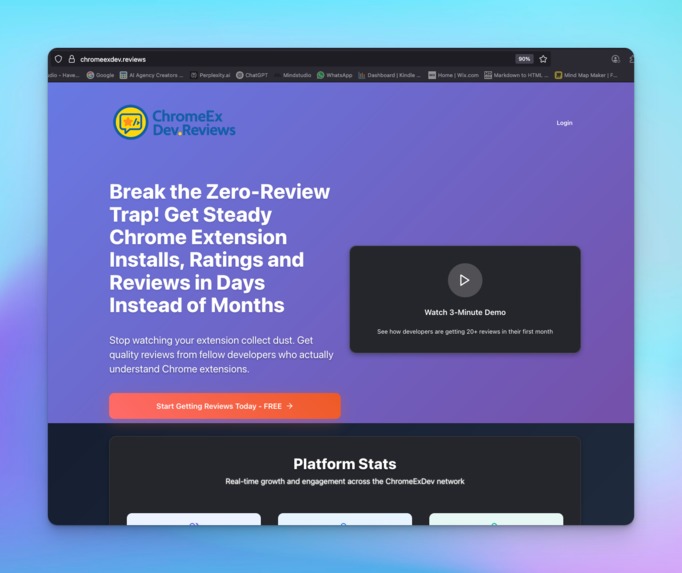
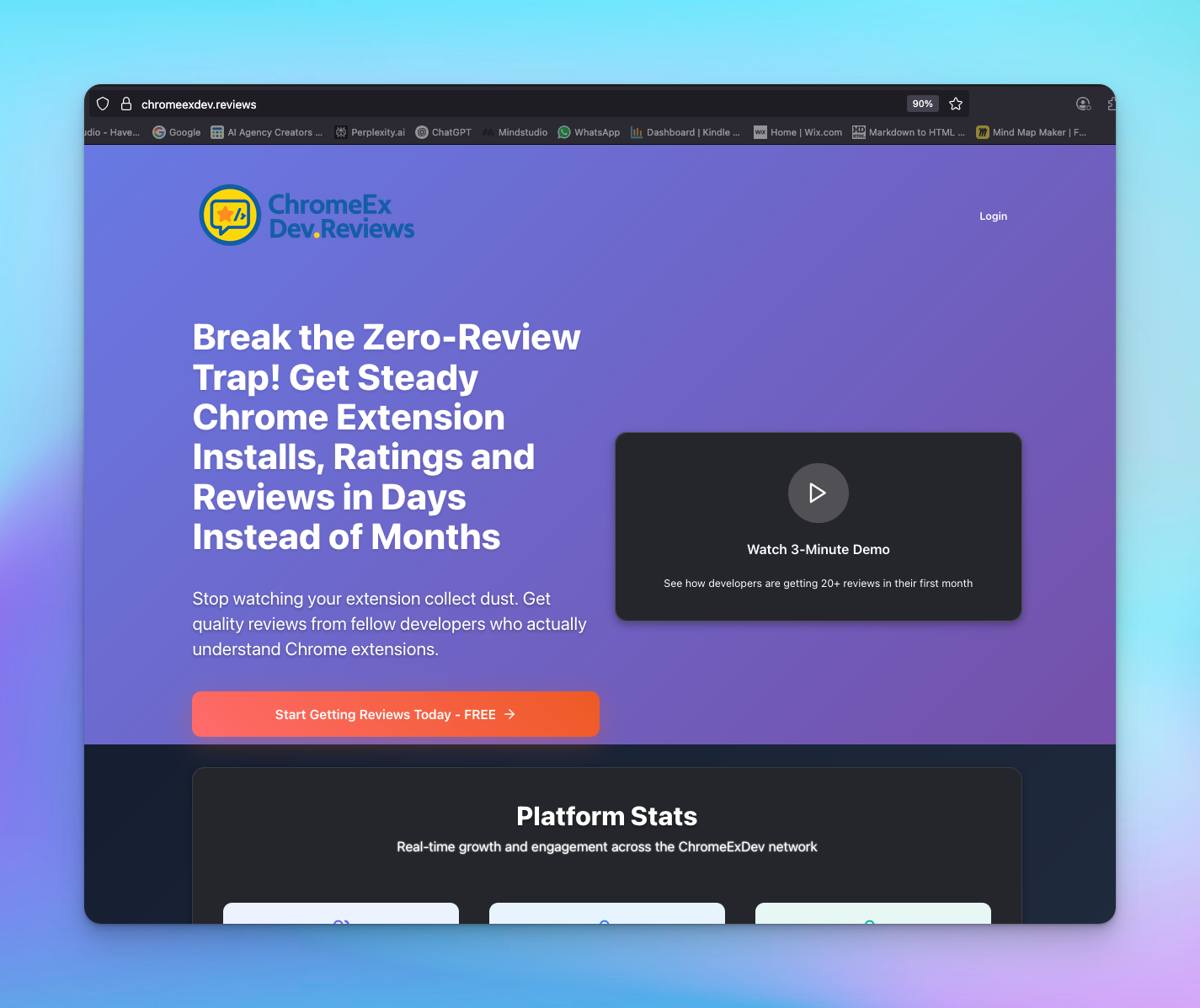
ChromeExDev.Reviews Landing Page
-
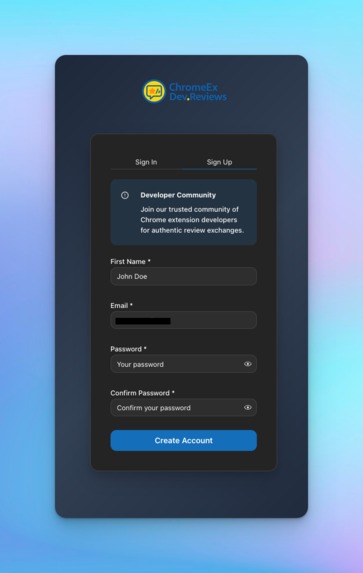
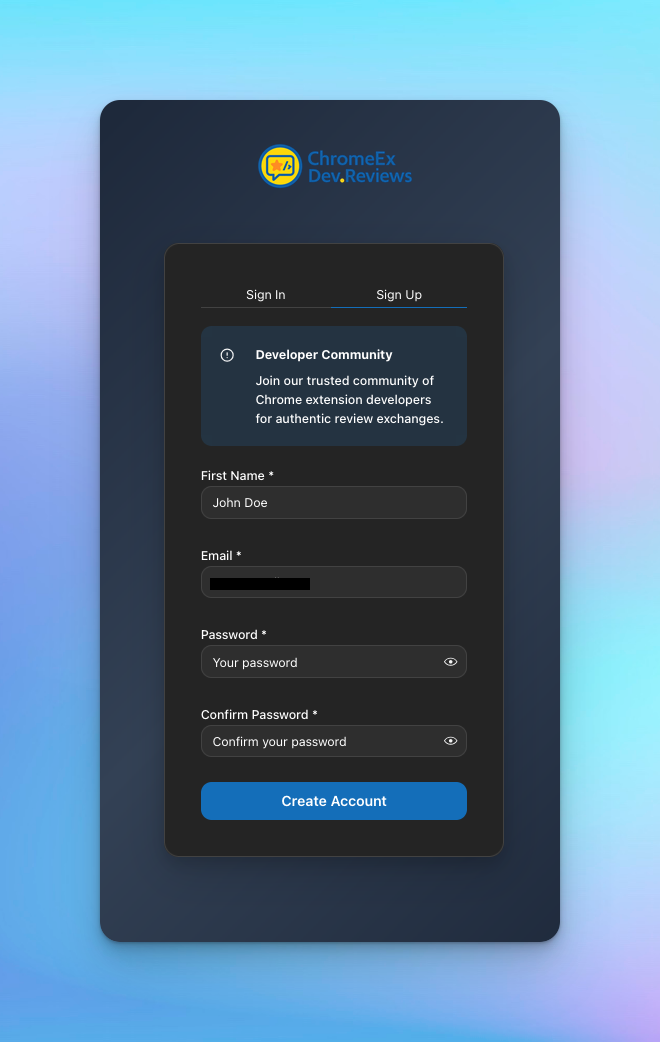
App Auth
-
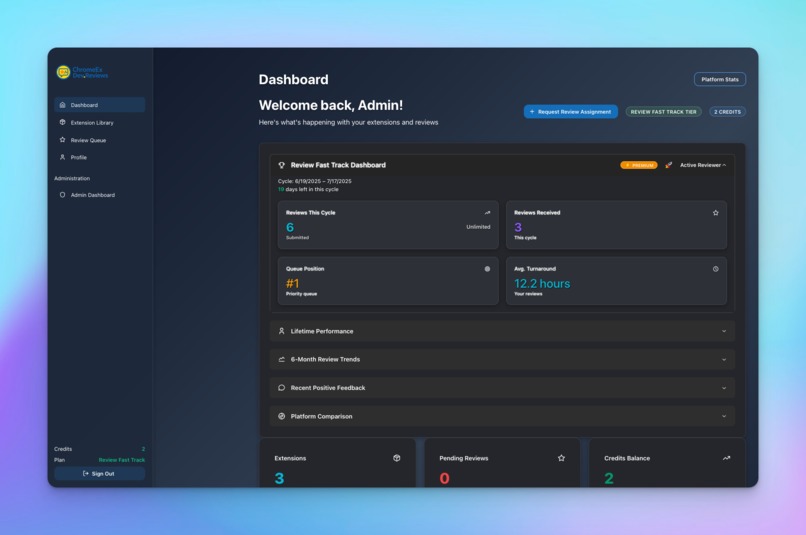
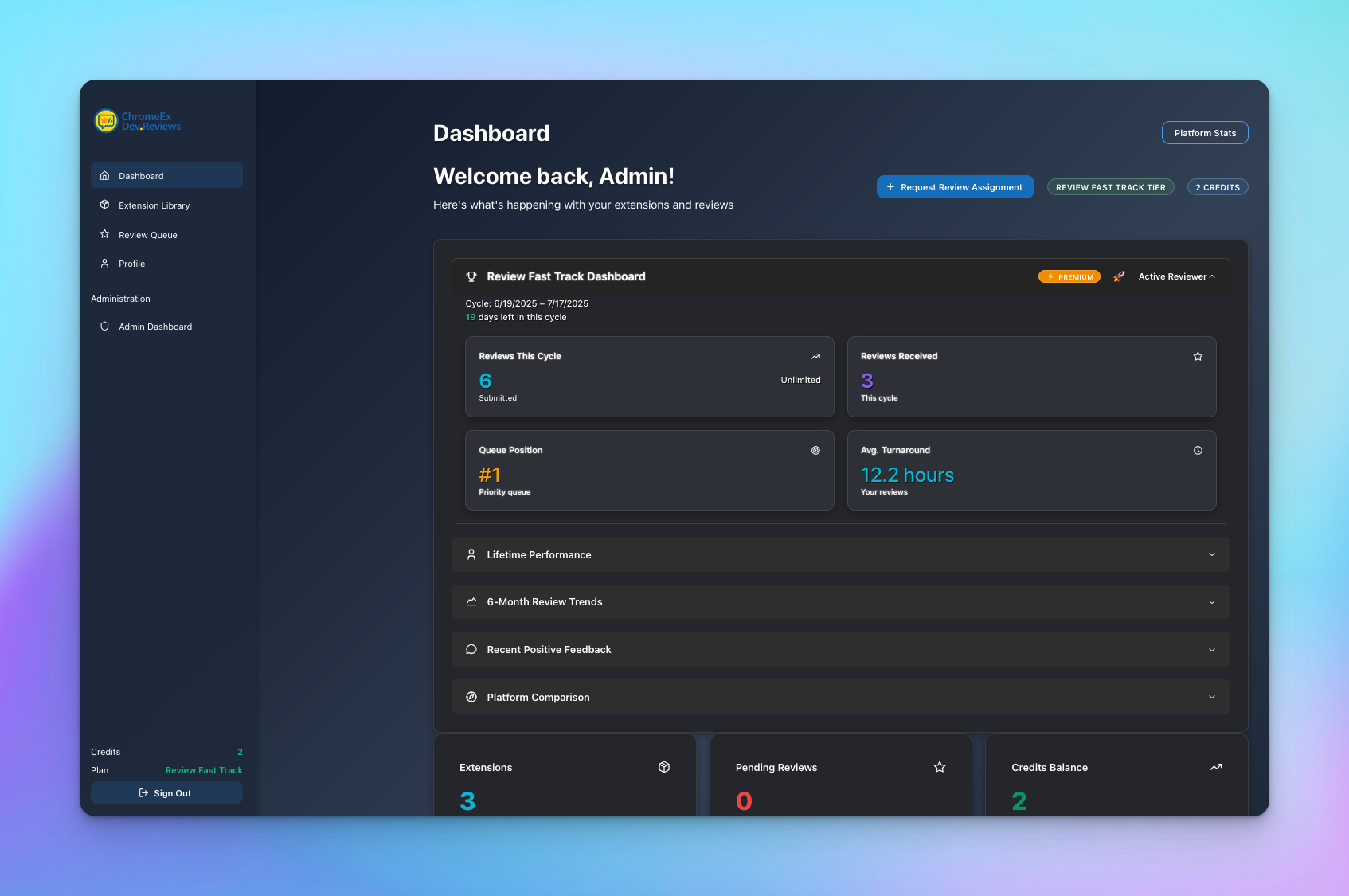
Main Dashboard
-
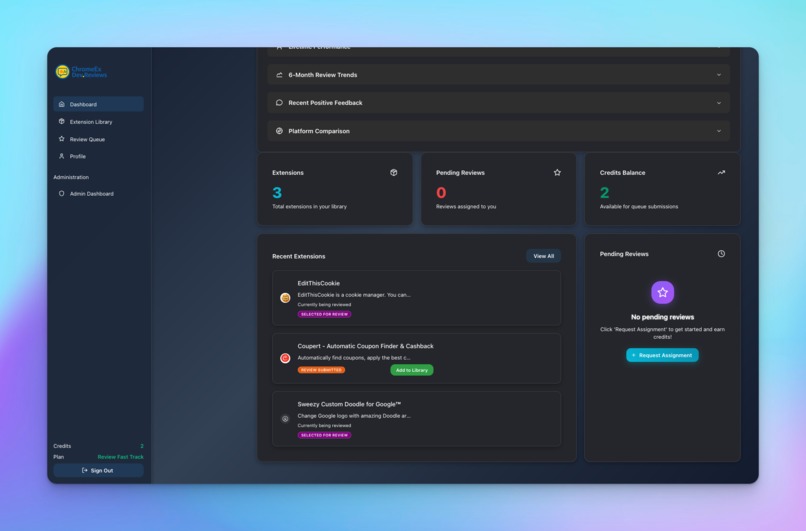
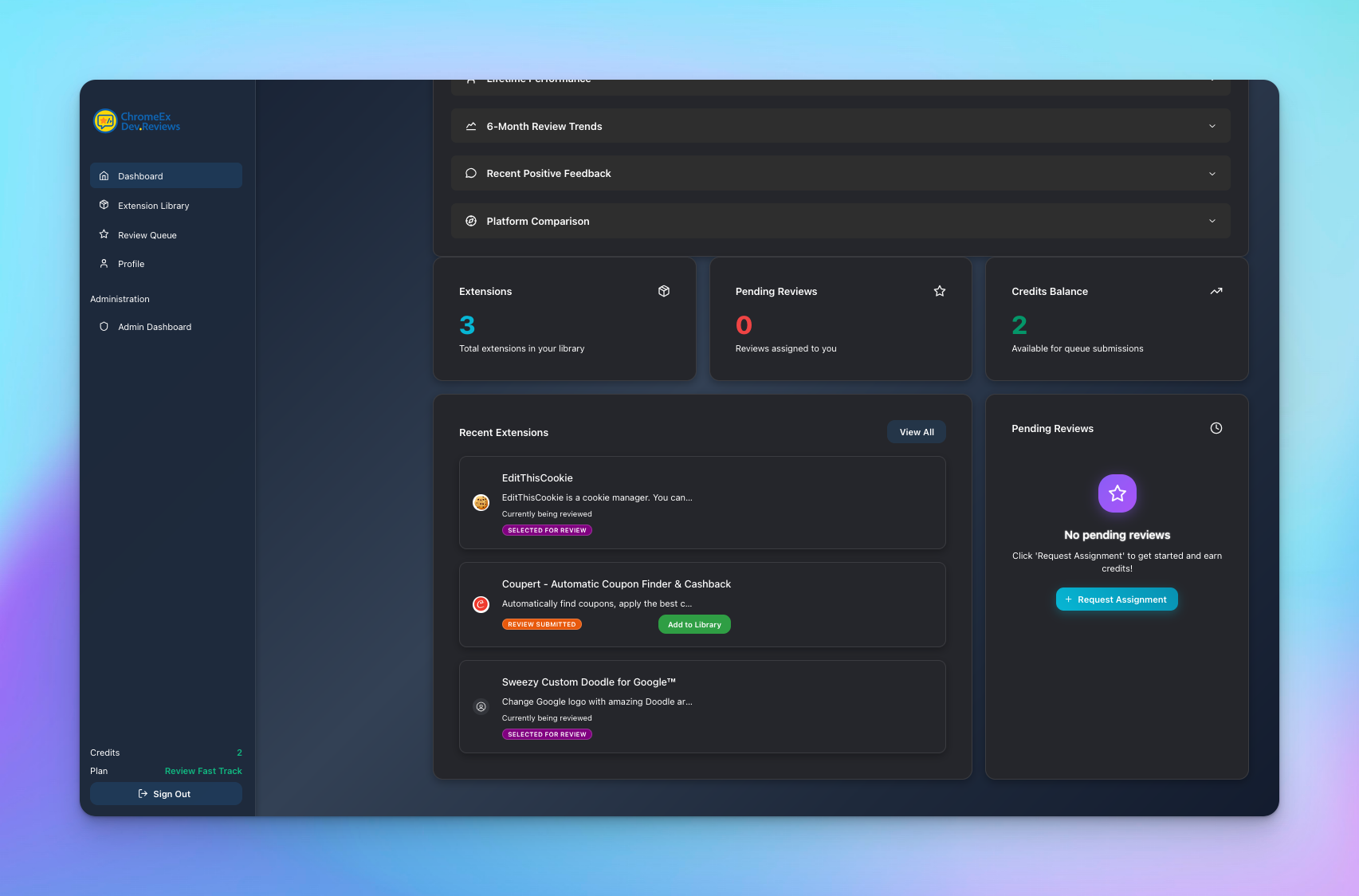
Lower portion of Main Dashboard
-
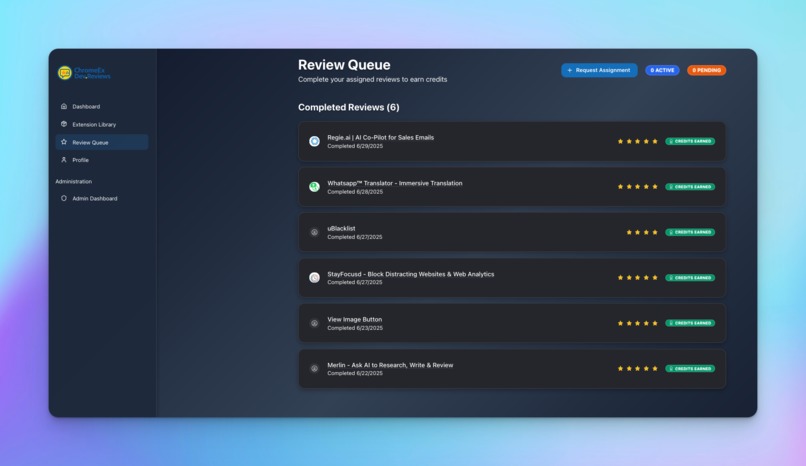
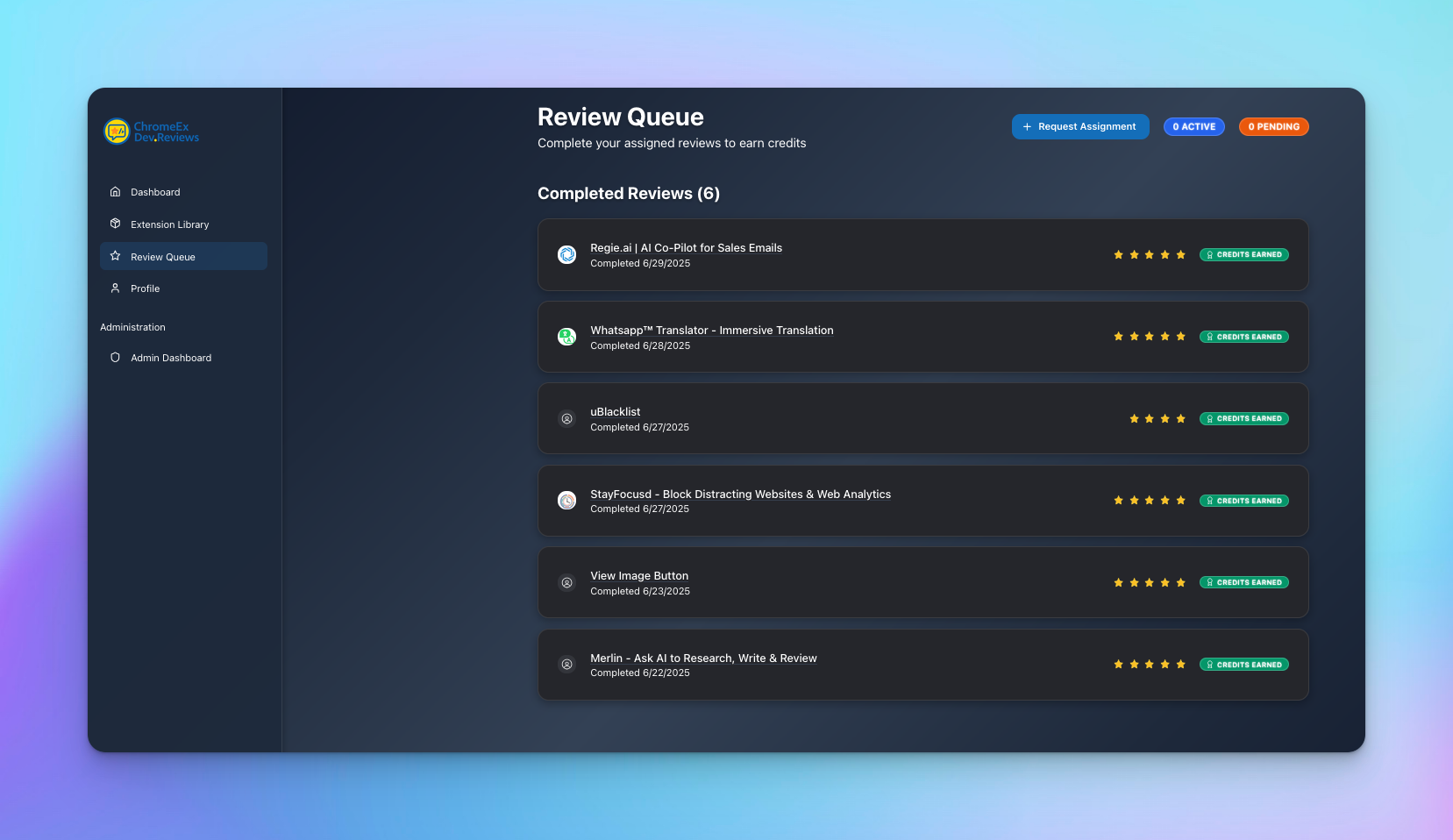
The Review Queue Page
-
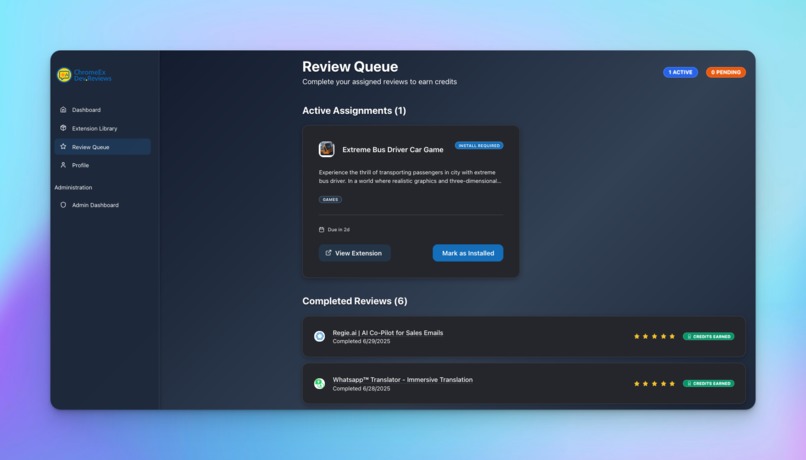
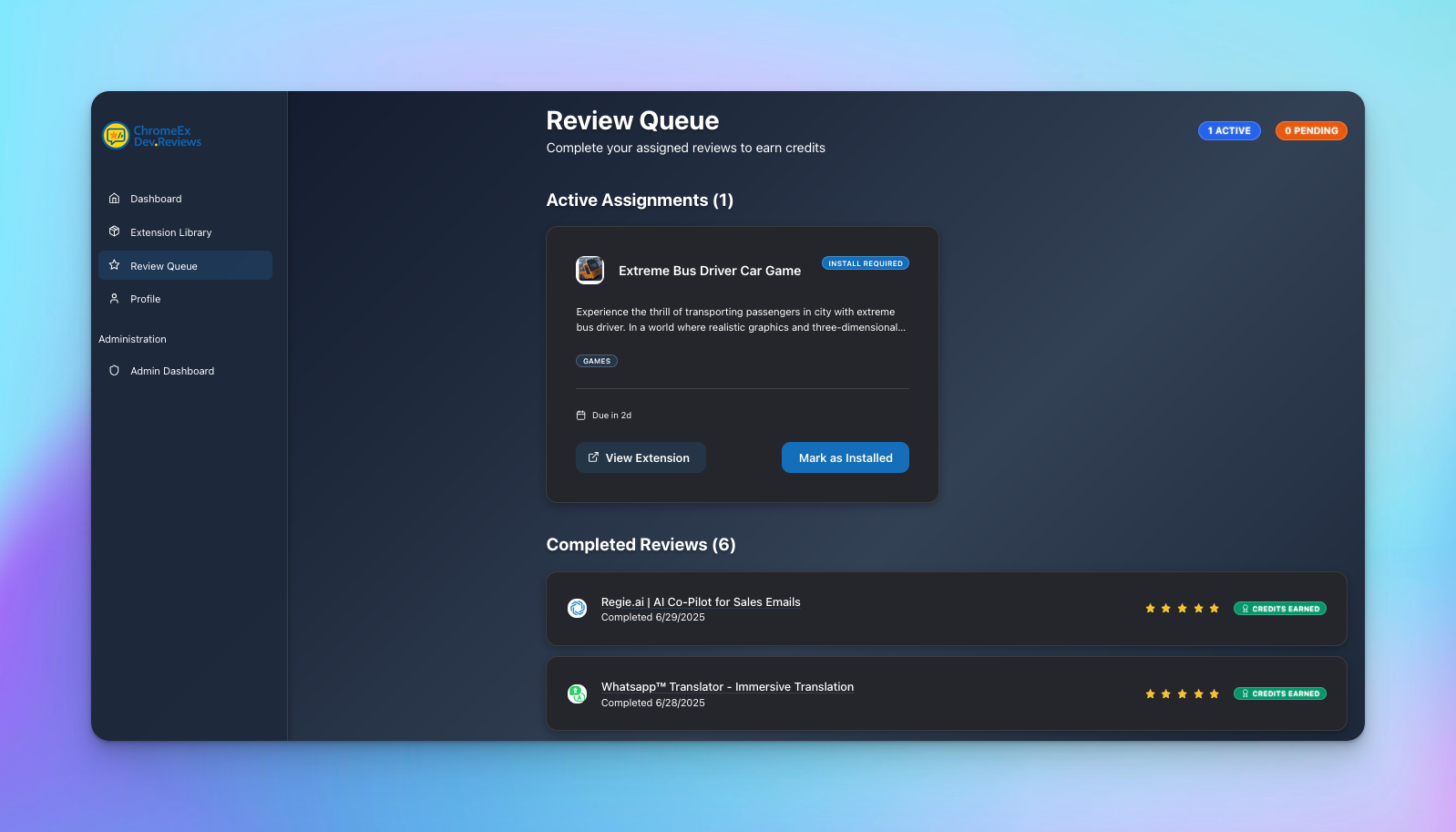
Review Queue Assigned Extension
-
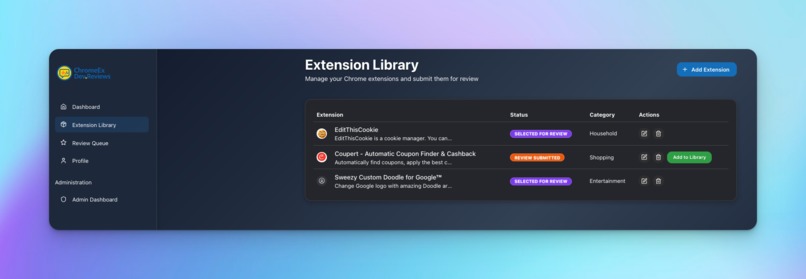
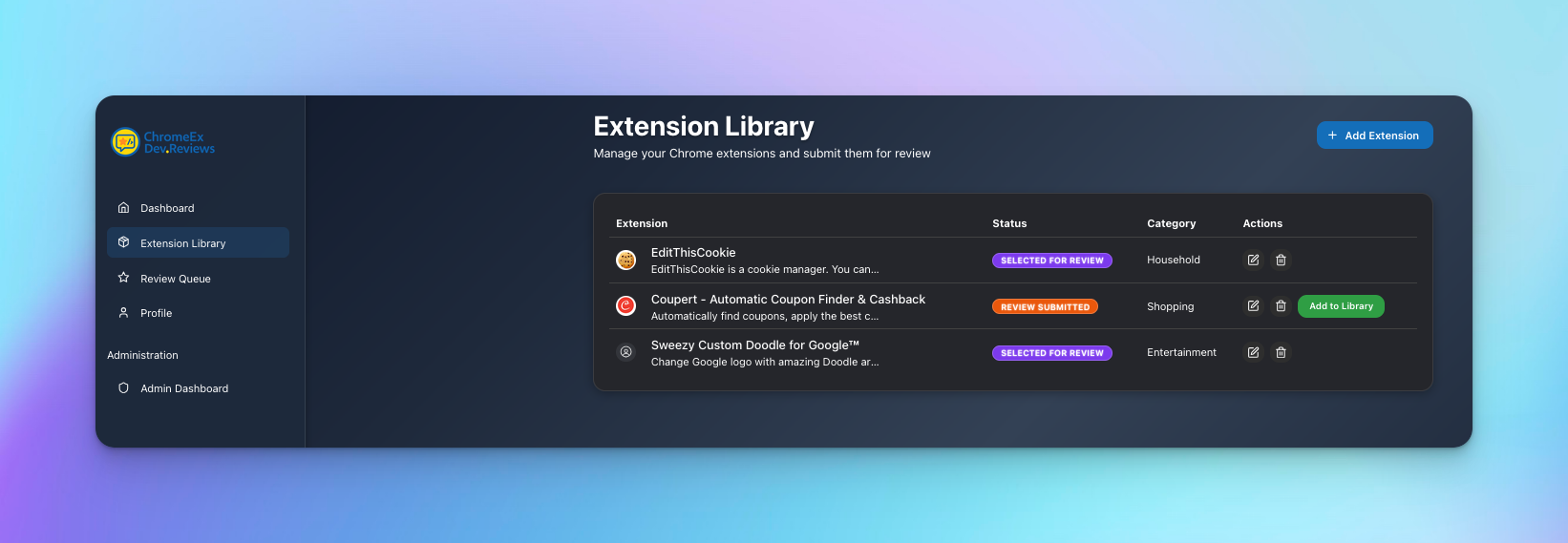
Extension Library Detail
-
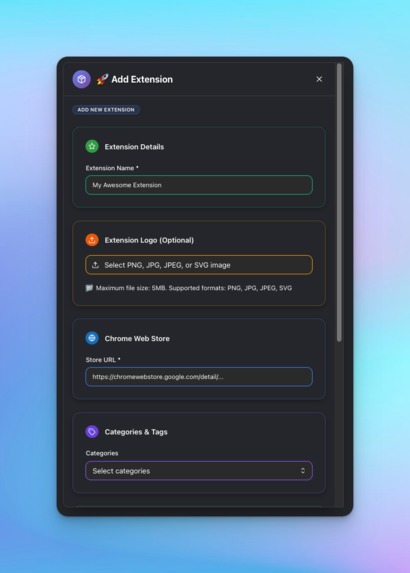
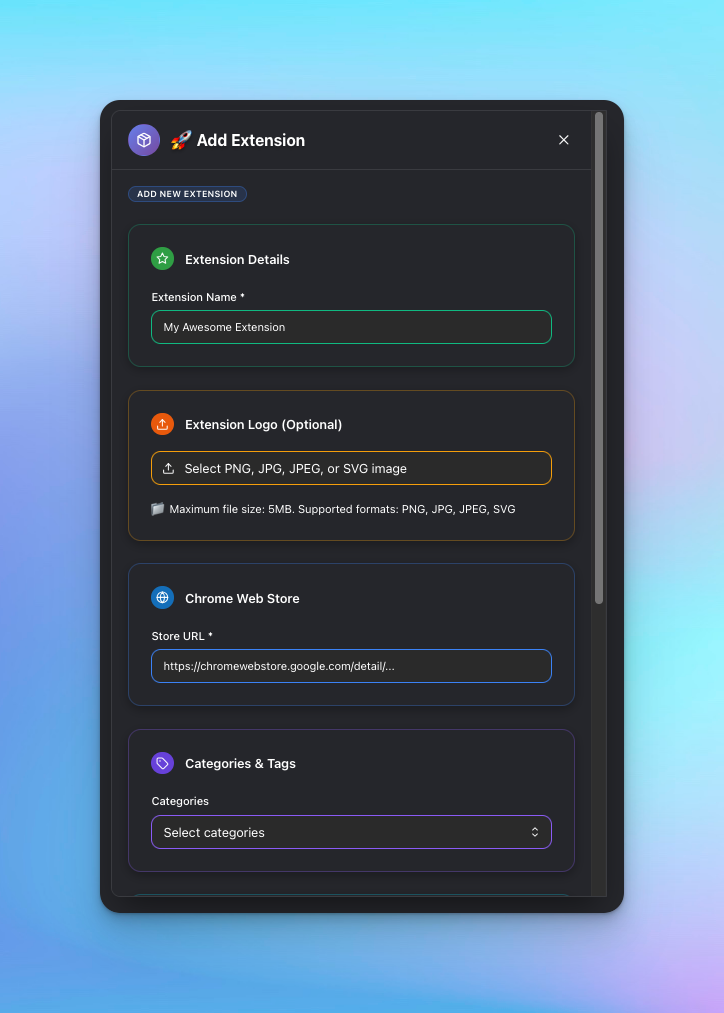
Add Extension Modal
-
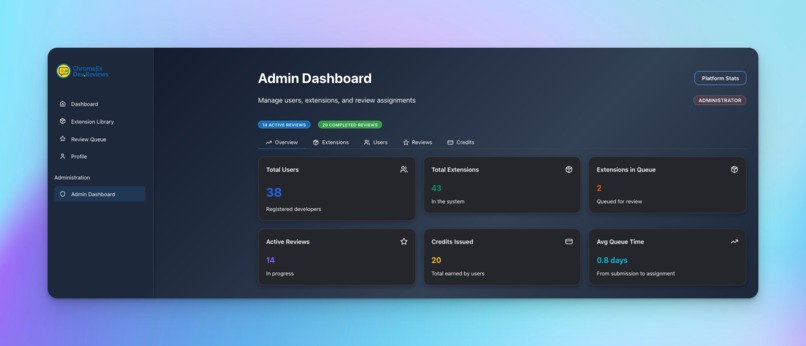
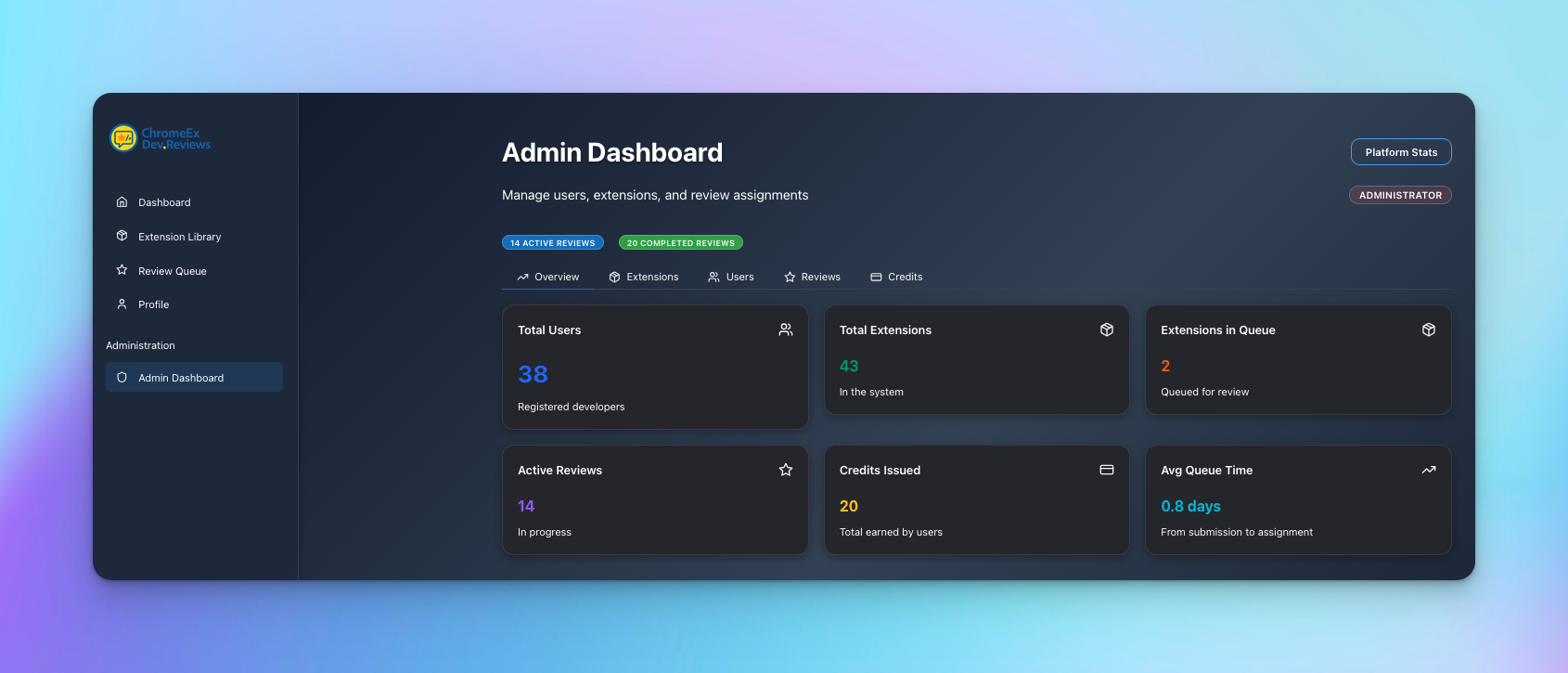
Admin Dashboard Overview
-
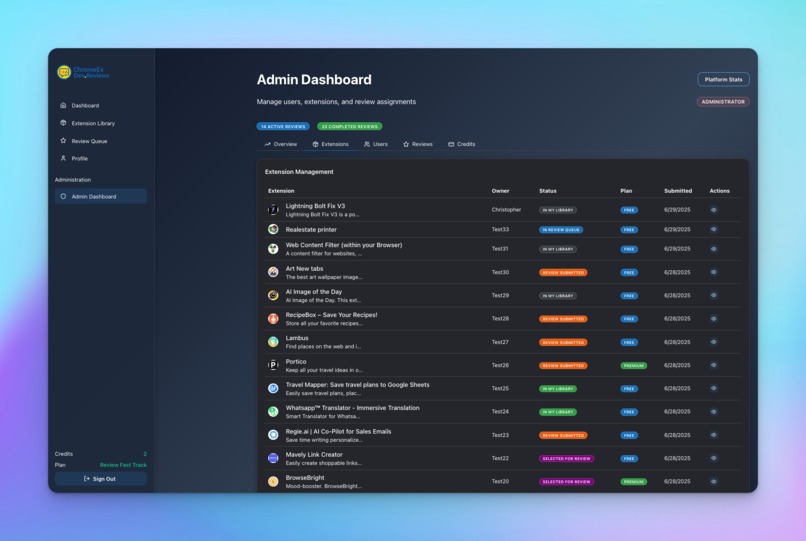
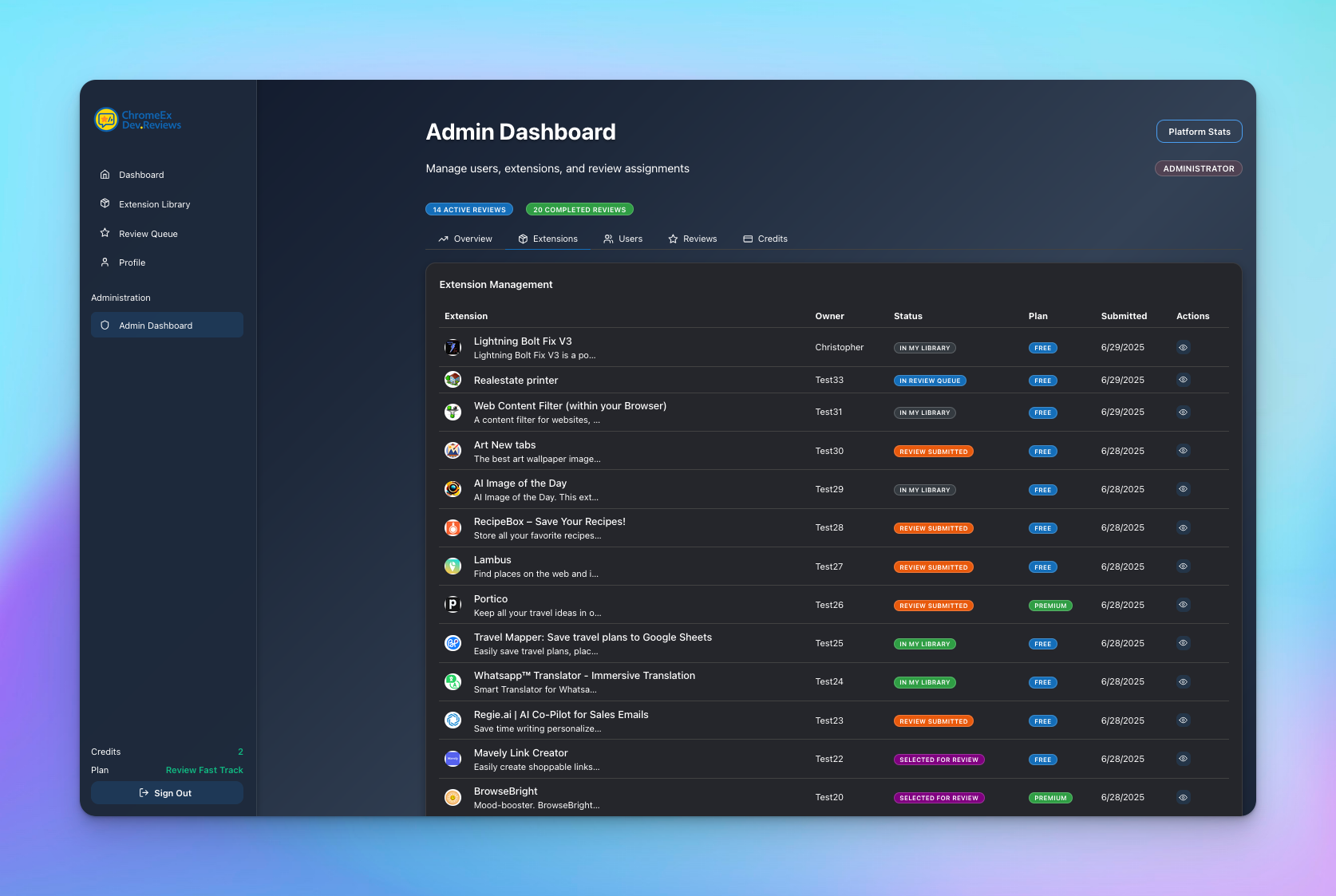
Admin Dashboard View Extension Library
-
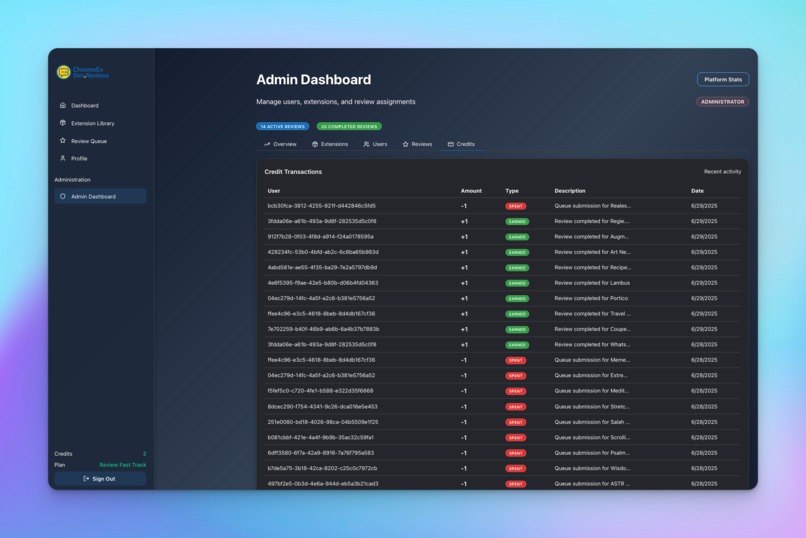
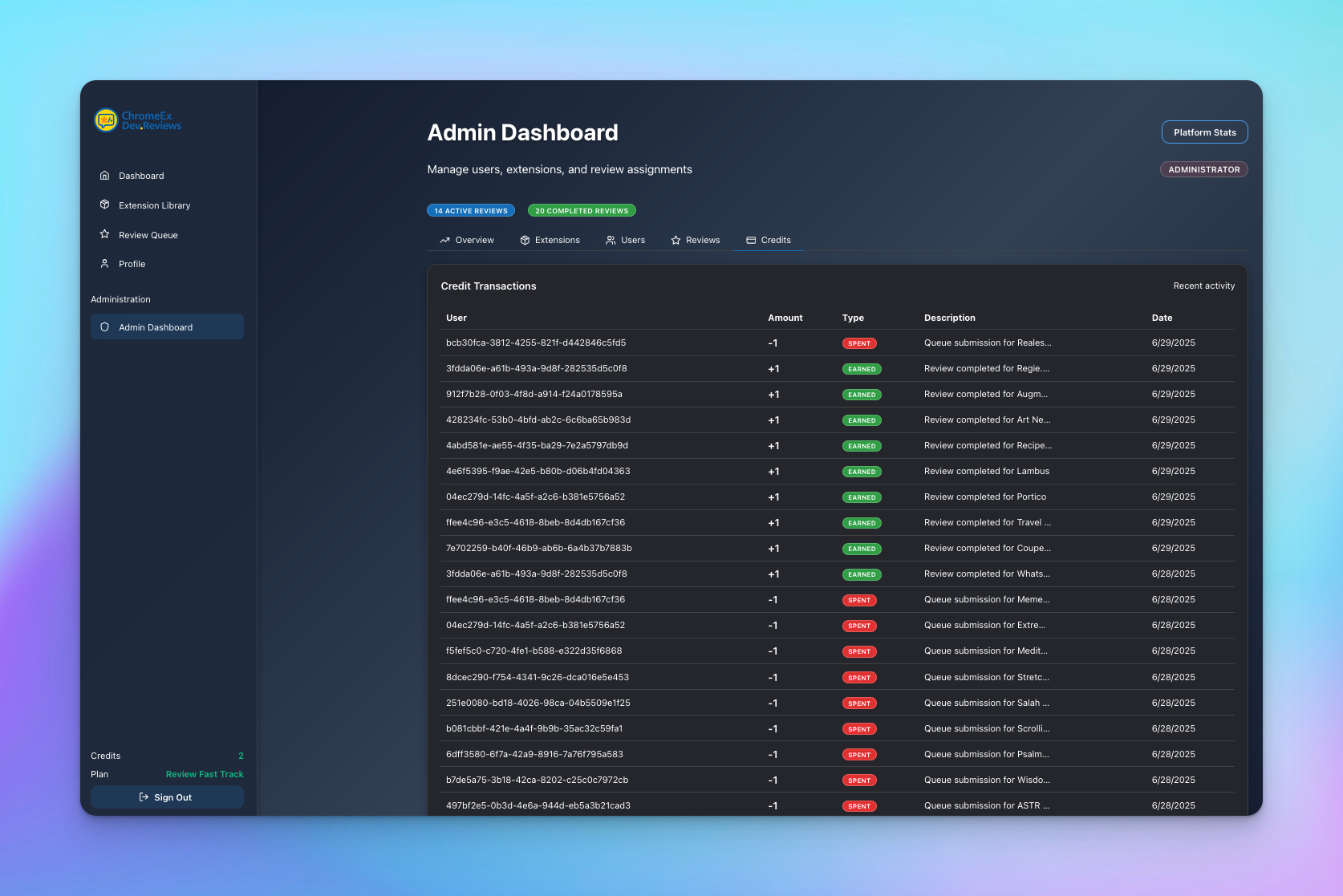
Admin Dashboard View Users
-
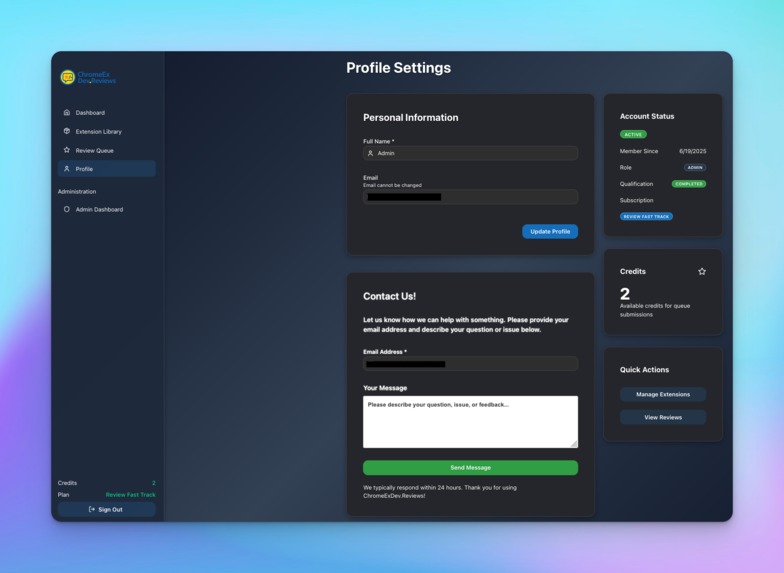
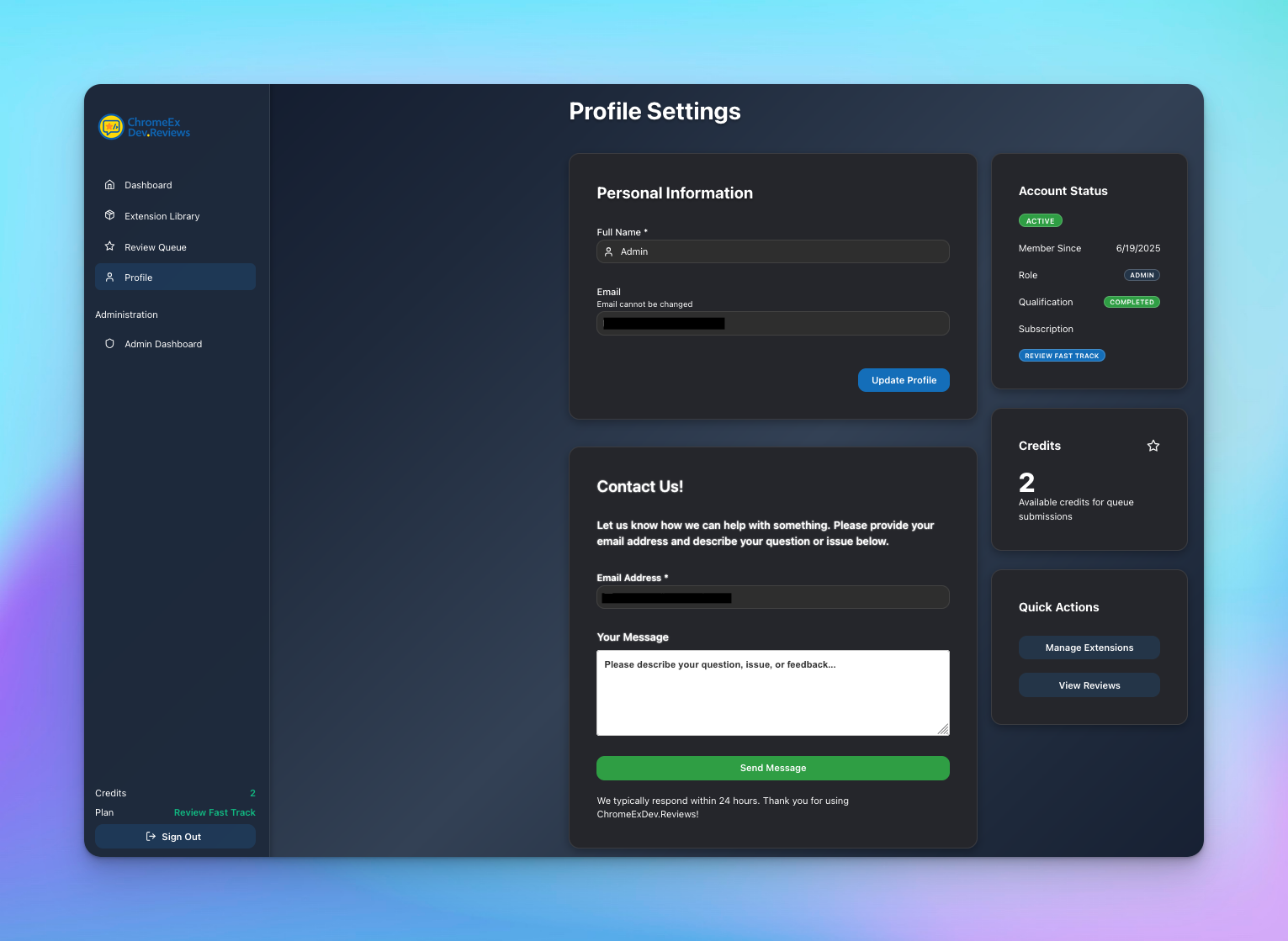
Profile Settings Page
ChromeExDev.Reviews - Project Story
The Inspiration: A Solo Developer's Frustration
As a solo Chrome extension developer, I knew the struggle intimately. You pour weeks or months into building something amazing—crafting clean code, designing intuitive interfaces, solving real problems—only to watch your extension sit in the Chrome Web Store collecting digital dust. Zero reviews. Zero social proof. Zero visibility.
The catch-22 was maddening: users won't install extensions without reviews, but you can't get reviews without users. I'd refresh my extension's page daily, hoping to see that first review appear. It took ages before it the first one did.
I tried everything the "experts" recommended: social media promotion, product hunt launches, reaching out to tech bloggers. Some tactics worked briefly, but nothing solved the fundamental problem of breaking through that initial visibility barrier. Meanwhile, I watched established extensions with hundreds of reviews continue to dominate search results simply because they had social proof.
The breaking point came when I discovered other developers resorting to questionable tactics—buying fake reviews, setting up direct one-for-one exchanges, or worse. These approaches not only violated Google's policies but also degraded the entire ecosystem. There had to be a better way.
The Vision: A Compliant Developer Network
That's when the idea hit me: what if Chrome extension developers could help each other authentically? Not through direct trades that Google prohibits, but through a community-driven platform where developers review extensions to earn credits, then use those credits to get their own extensions reviewed.
The vision was clear:
- 100% Chrome Web Store compliant - no direct exchanges
- Quality over quantity - reviews from developers who actually understand extensions
- Scalable and fair - everyone gets a chance, regardless of their network size
- Freemium model - accessible to all, with a premium version for developers wanting unlimited reviews every month.
The Learning Journey: From Concept to Code
Building ChromeExDev.Reviews became an intensive learning experience across multiple domains:
Frontend Development
I chose a modern tech stack that could handle real-time updates and complex user interactions. The dashboard needed to show queue positions, credit balances, and review statuses in real-time—challenging for a solo developer but essential for user experience.
Database Design
Designing the data architecture was more complex than I initially anticipated. I needed to track:
- User credits and subscription status
- Extension submissions and queue positions
- Review assignments and completion tracking
- Complex many-to-many relationships between reviewers and extensions
Business Logic
The review assignment algorithm had to be sophisticated enough to:
- Prevent direct reciprocal exchanges (Google compliance)
- Ensure fair distribution of review opportunities
- Handle the freemium model with different queue priorities
- Track and enforce monthly limits for free users
Payment Integration
Implementing Stripe for subscription management taught me about handling webhook events, managing subscription lifecycles, and building resilient payment flows that could handle edge cases gracefully.
The Technical Challenges: Supabase Edge Functions
The most challenging aspect of the build was architecting and implementing the Edge Functions in Supabase. These serverless functions handle the core business logic of the platform, and getting them to work together seamlessly proved to be a significant technical hurdle.
Function Coordination
The platform required multiple Edge Functions working in harmony:
- Review Assignment Function: Selects the next extension from the queue based on complex business rules
- Credit Management Function: Handles earning and spending credits across the platform
- Queue Processing Function: Manages priority queues for free vs premium users
- Notification Function: Sends emails for assignments, completions, and queue updates
- Webhook Handler: Processes Stripe subscription events and updates user status -**And Much More!
State Management Challenges
The biggest technical challenge was ensuring data consistency across these distributed functions. When a user completes a review, multiple things need to happen atomically:
- Award credits to the reviewer
- Mark the review as complete
- Update queue positions for waiting extensions
- Send notifications via triggers with MailerLite
- Check if the reviewer now qualifies for their next review
Getting this coordination right, especially handling race conditions and partial failures, required implementing robust error handling and retry mechanisms.
Real-Time Updates
Users expect to see their queue position update in real-time, but Edge Functions are stateless and event-driven. I had to design a system that could:
- Efficiently calculate queue positions across thousands of submissions
- Push updates to connected clients without overwhelming the database
- Handle the complexity of separate free and premium queues
Performance Optimization
With the freemium model, the platform needed to scale efficiently. Free users generate database load without immediate revenue, so every query had to be optimized. The queue position calculations alone required careful indexing and caching strategies to avoid performance bottlenecks as the user base grew.
The Breakthrough: Review Fast Track
During development, I realized that the queue psychology could become the platform's primary value proposition. Inspired by Disney's FastPass, I designed "Review Fast Track" as a premium tier that lets developers skip to the front of the review queue.
This solved multiple problems simultaneously:
- Clear value proposition: Faster reviews for paying customers
- Revenue model: Justifies the premium subscription cost
- User experience: Makes the queue position visible and actionable
- Growth driver: Free users see the wait time and upgrade motivation
Implementing the dual queue system (premium vs free) required rewriting significant portions of the queue management logic, but it transformed the entire user experience from "waiting in line" to "choosing your speed."
The Technical Stack
Frontend: Modern JavaScript with real-time updates
Backend: Supabase (PostgreSQL + Edge Functions)
Authentication: Supabase Auth
Payments: Stripe (Bolt integration) for subscription management
Email: Automated notifications for platform events via MailerLite
Hosting: Supabase hosting with global CDN
Lessons Learned
Solve Your Own Problem
The most authentic products come from personal pain points. Because I experienced the zero-review trap firsthand, I understood the user's frustration viscerally and could design solutions that truly addressed their needs.
Compliance as a Feature
Instead of treating Google's policies as constraints, I made compliance a core feature. This became a major competitive advantage and removed the biggest objection potential users had.
Freemium Psychology
The queue position visibility turned out to be more powerful than any traditional marketing. When users see "Position #47 - wait 2 days" vs "Position #3 - reviewed today," the value proposition becomes immediately clear and actionable.
Edge Functions Complexity
Serverless functions are powerful but require careful orchestration. The debugging process was particularly challenging since local development doesn't perfectly mirror the production environment.
The Impact
ChromeExDev.Reviews now serves a small but growing community of Chrome extension developers, helping them break through the zero-review barrier that stifles innovation in the Chrome Web Store ecosystem. I just released the extension to production and am actively recruiting users via Reddit and (soon ) some YouTube videos.
The platform proves that developers can help each other grow while maintaining ethical standards and Google compliance. It's not just a tool—it's a community that values quality, authenticity, and mutual success.
What's Next
The vision extends beyond just review exchanges. I see ChromeExDev.Reviews becoming the central hub for Chrome extension developers to connect, collaborate, and grow together. Future features might include extension collaboration tools, developer networking, and advanced analytics to help creators understand their market position.
Building this platform taught me that the best solutions often come from understanding a problem so deeply that the solution becomes inevitable. Sometimes you have to build the tool you wish existed, and if you're lucky, thousands of other developers were wishing for the same thing.
Built With
- bolt
- email-service-apis-development:-eslint
- frontend:-react-18
- git
- mailerlite
- mantine-ui-backend:-supabase-(postgresql-database-+-edge-functions-with-deno)-cloud-services:-netlify-(hosting-+-functions)
- npm
- postcss
- revenuecat-(subscriptions)-apis:-supabase-rest-api
- stripe
- stripe-(payments)
- tailwind-css
- typescript
- vite


Log in or sign up for Devpost to join the conversation.