-
-
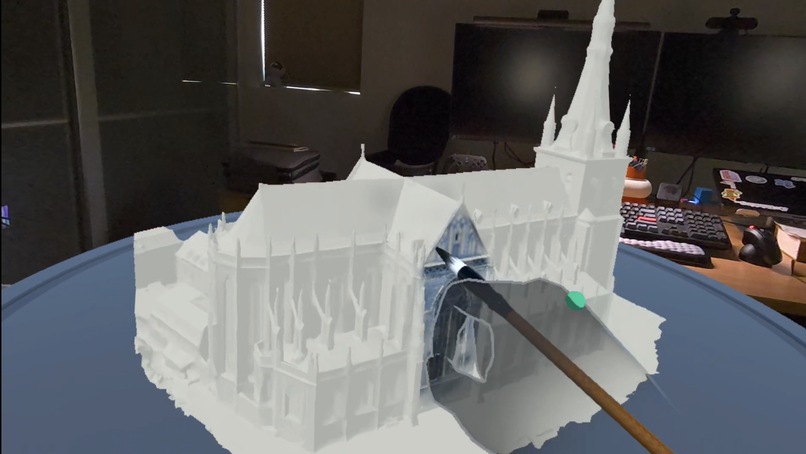
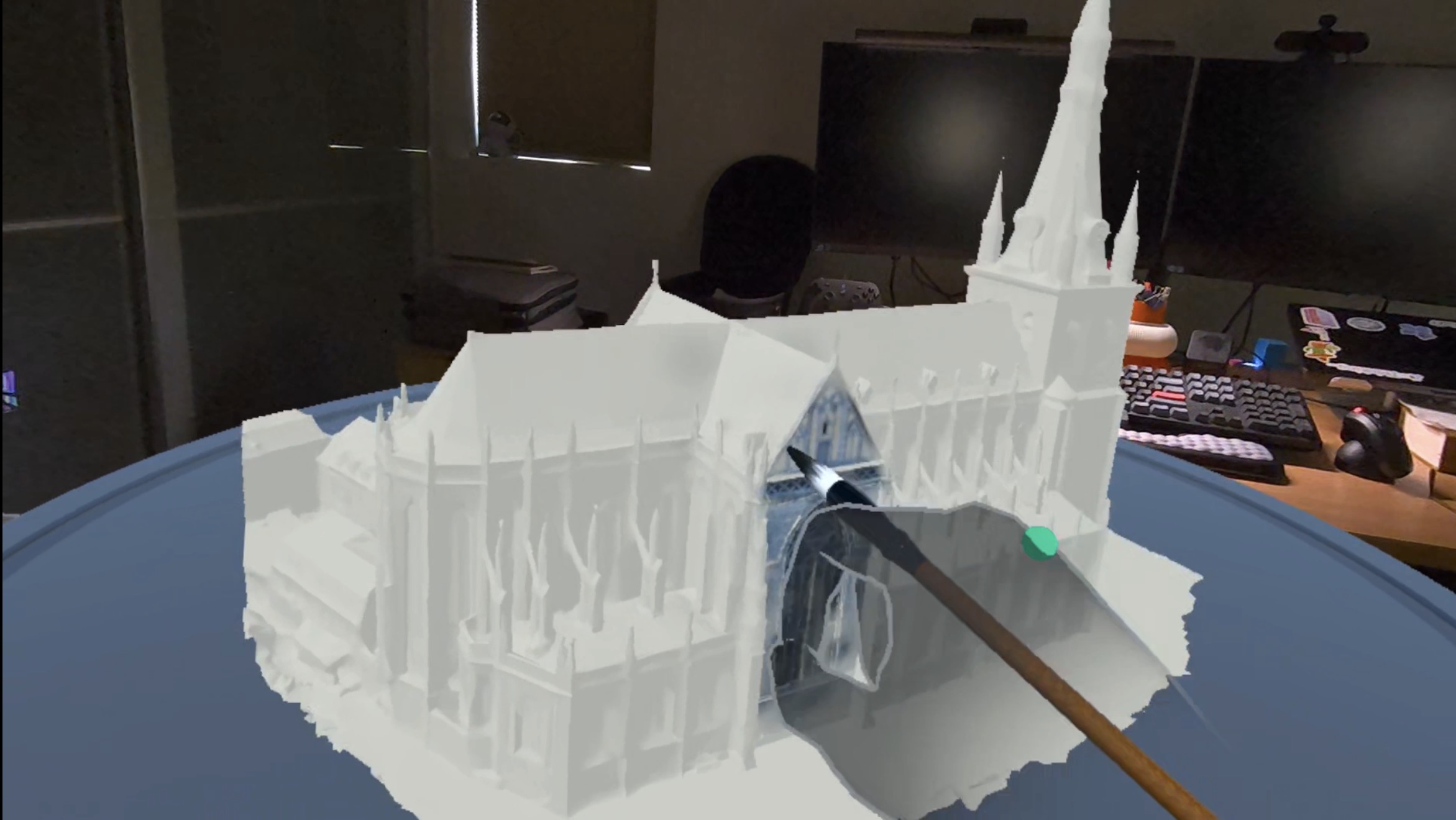
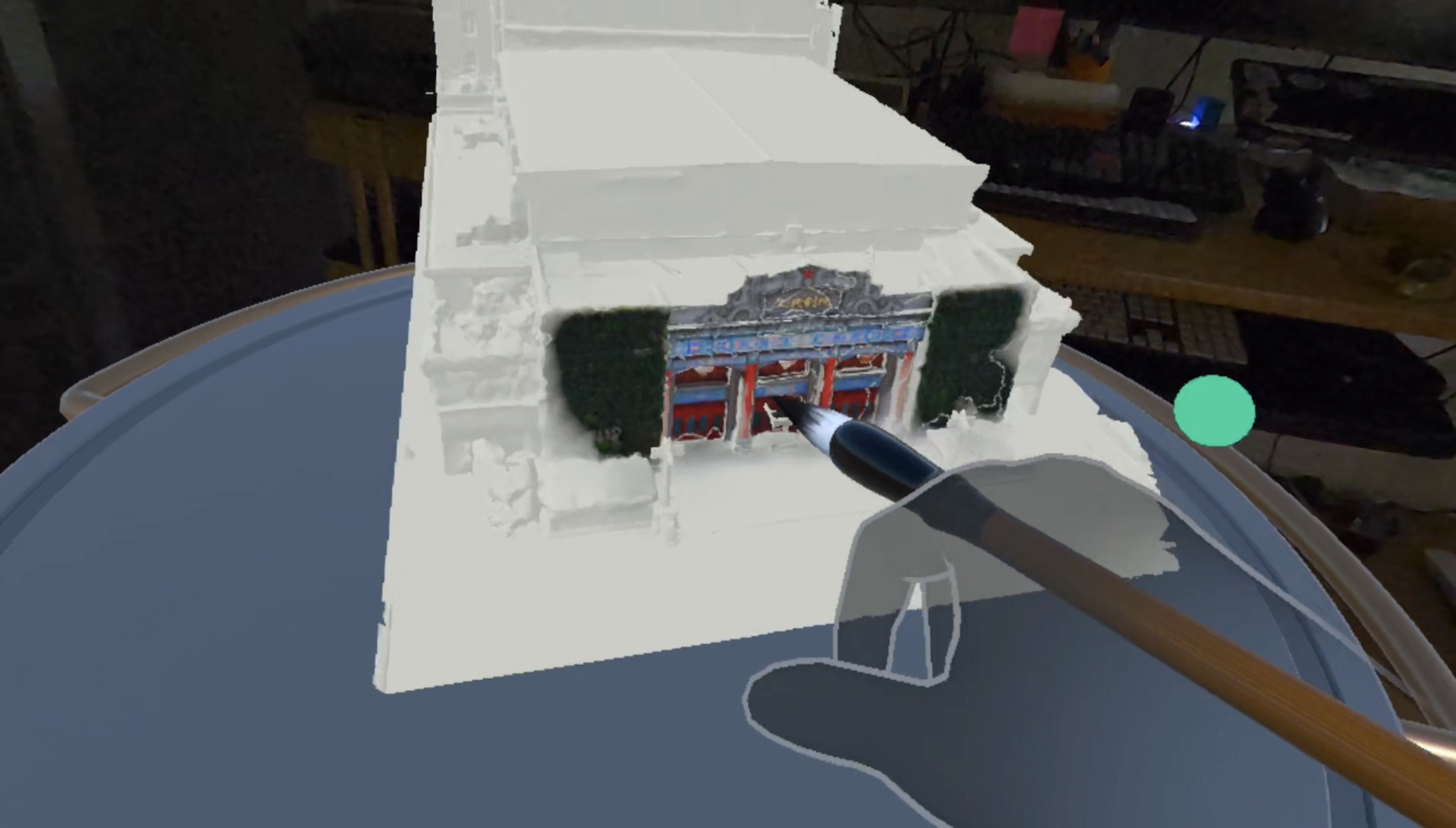
Big Brush
-
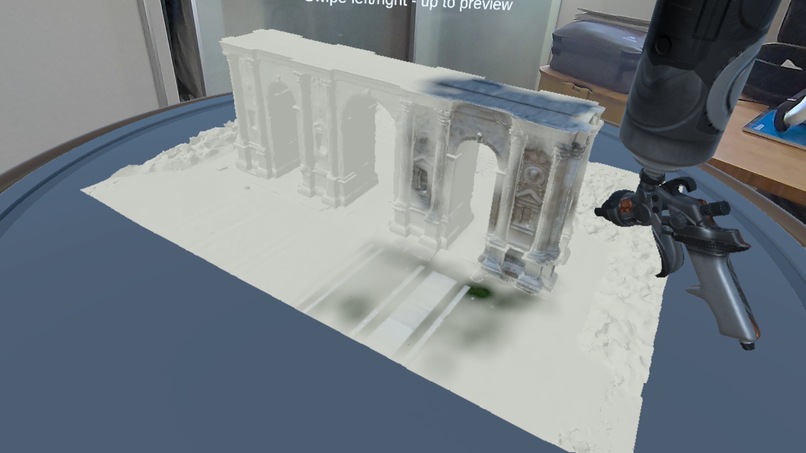
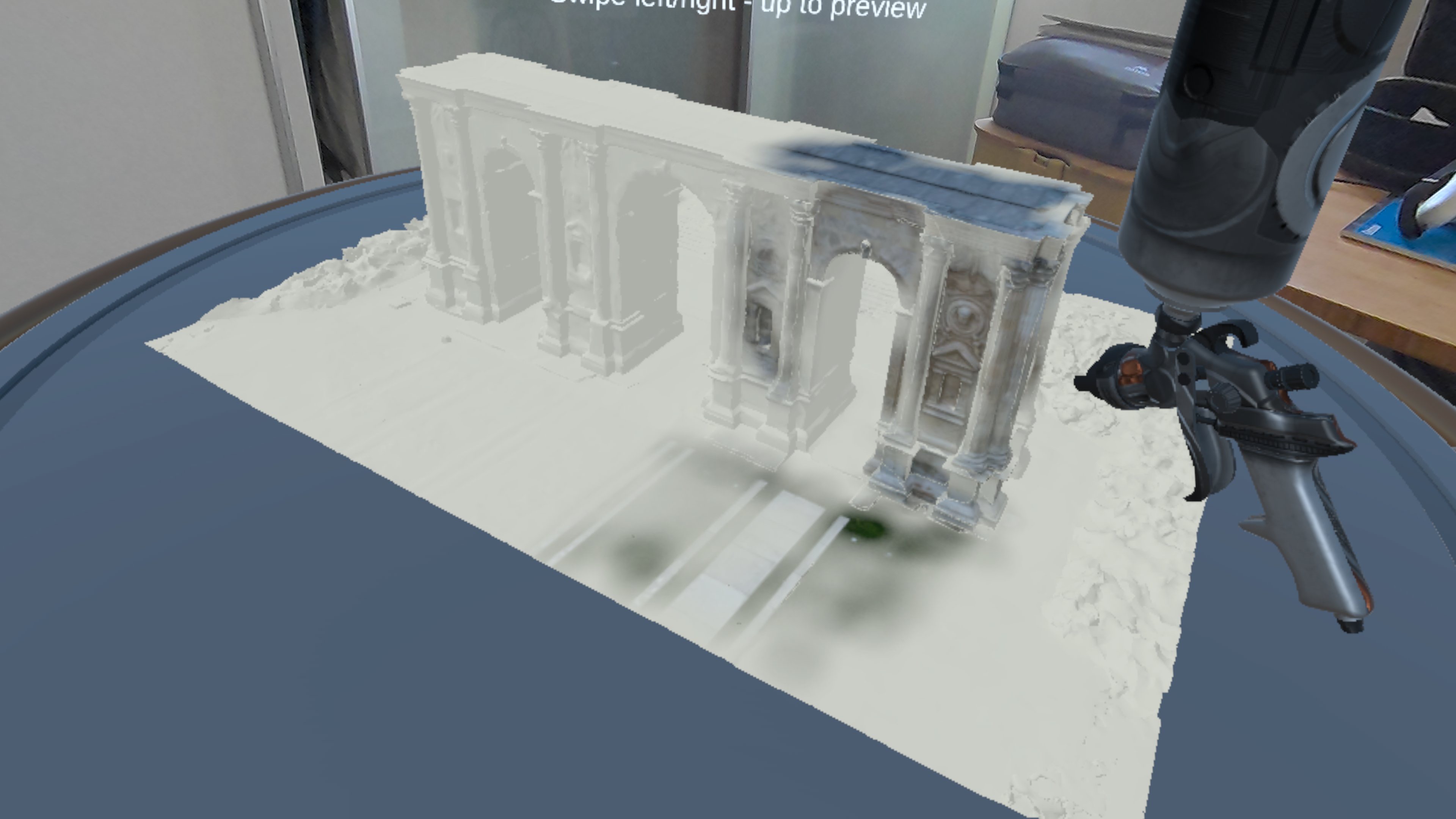
Spray Can
-
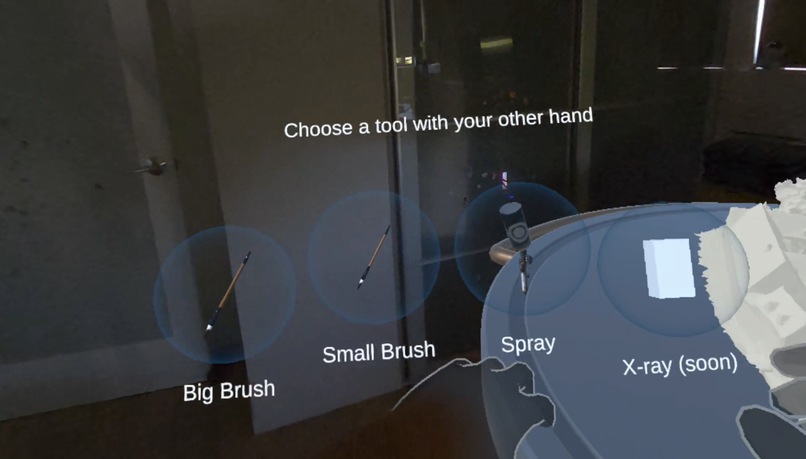
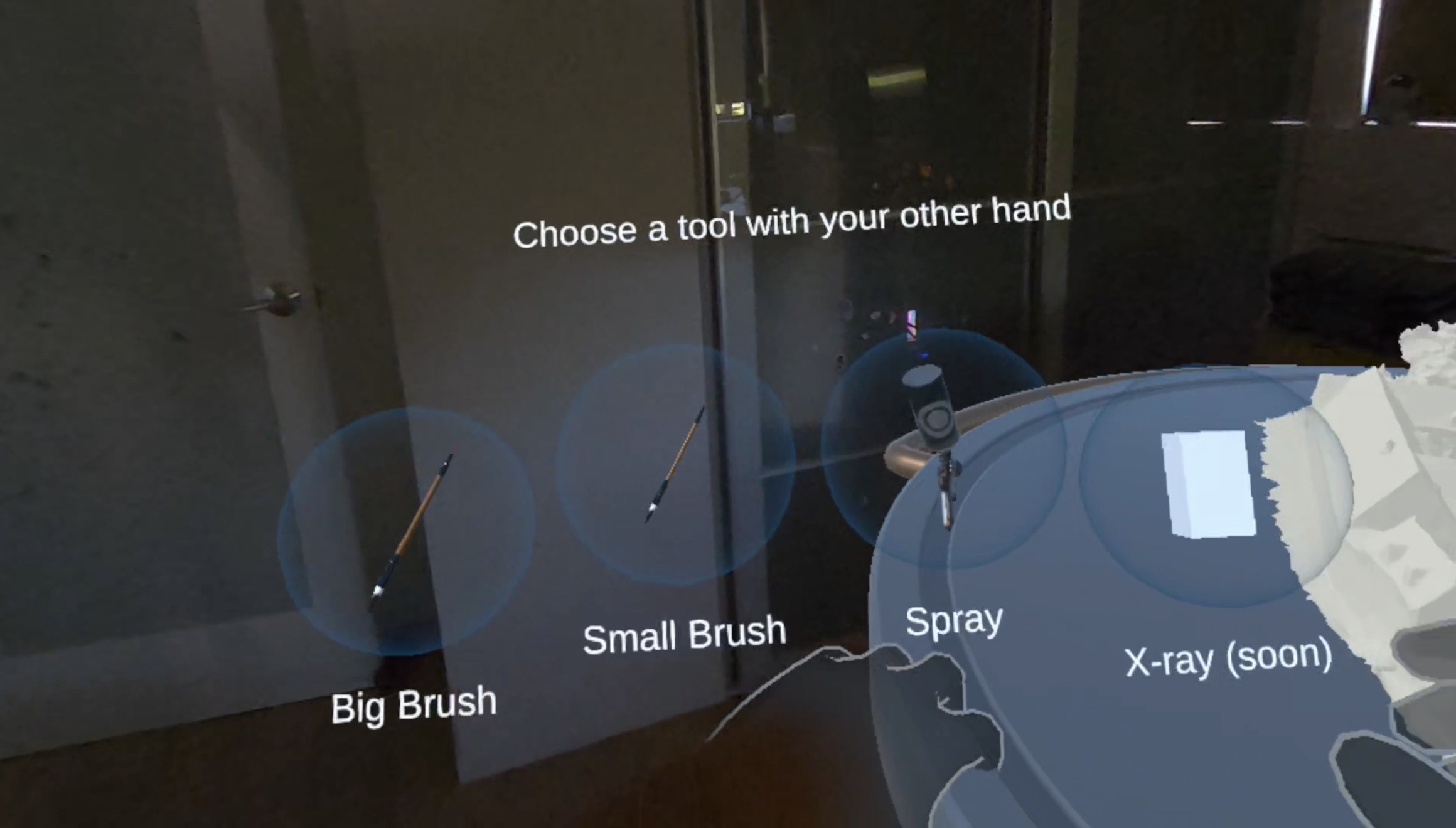
Tool Palette
-
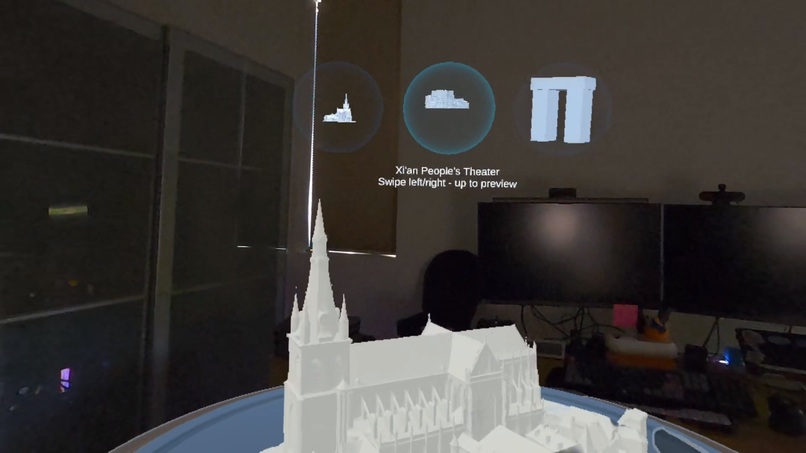
Model Selection Wheel
-
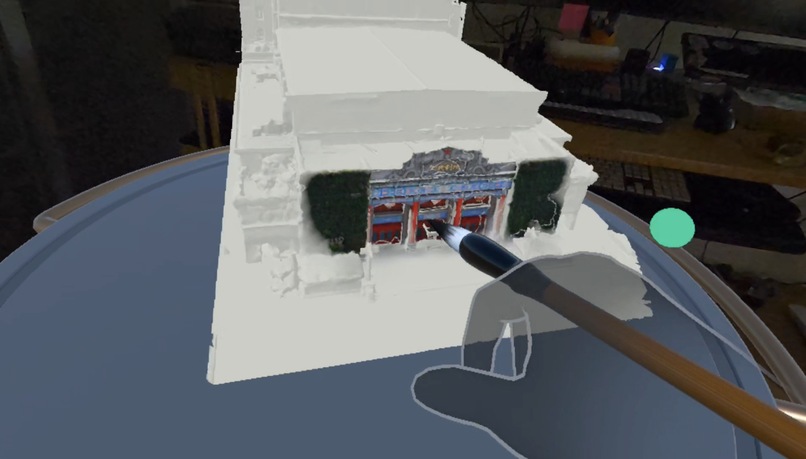
Small brush
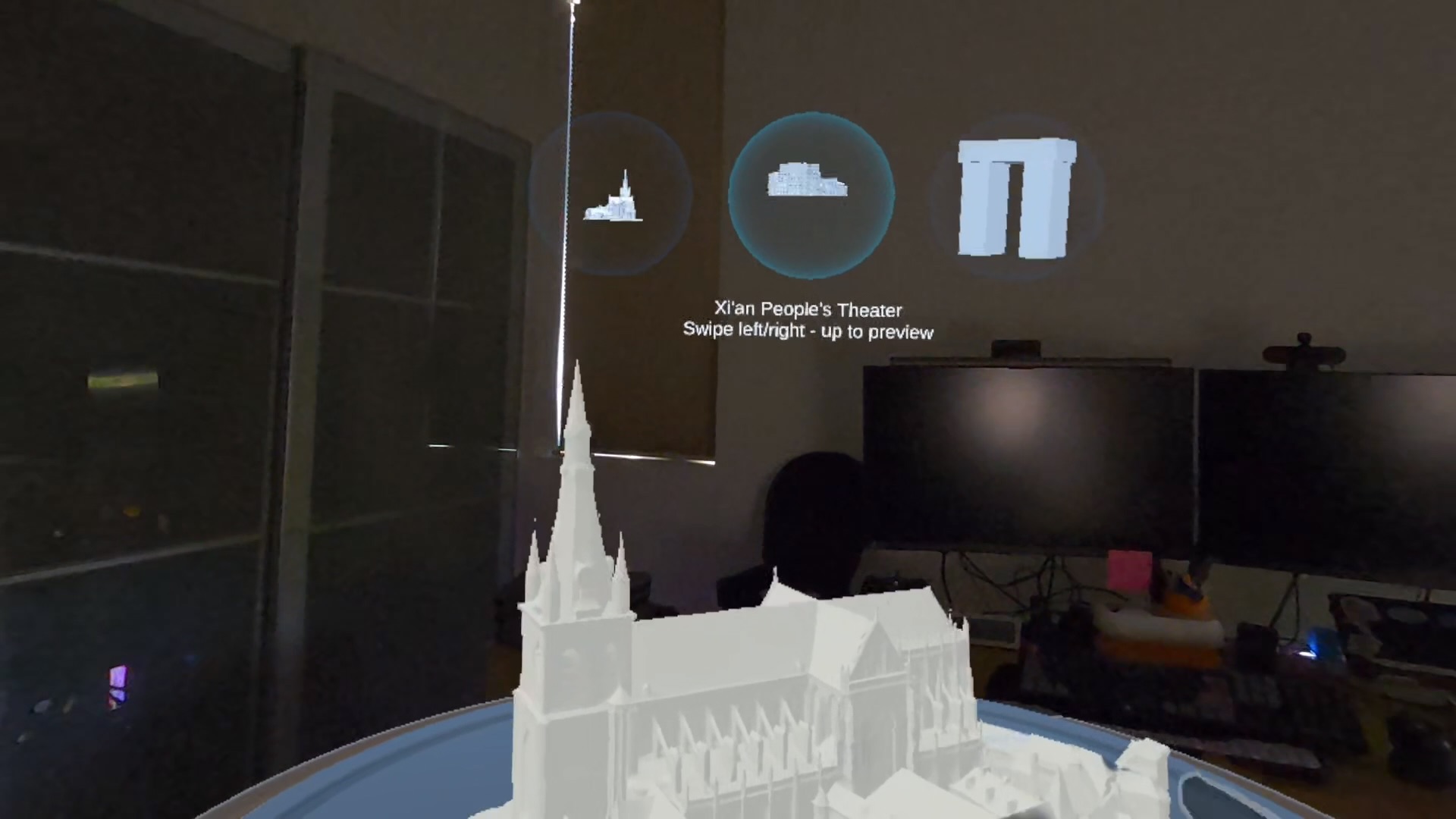
Inspiration
As an architect, I’m used to studying buildings through drawings, models, and walkthroughs. But some of the most memorable qualities of a place are its smallest details: weathered roof tiles, a patterned doorway, or the texture of an old wall. I wanted to create an experience that gives people a reason to slow down and notice them.
Chromatic World Wonders brings together the quiet focus of a coloring book, the satisfaction of revealing a surface, and the intimacy of holding a miniature world in your hands. Games like Puzzling Places and PowerWash Simulator helped inspire the direction: a gentle, hands-on activity where curiosity and visible progress encourage you to keep exploring.
What it does
Chromatic World Wonders is a cozy VR experience where players reveal the original colors and textures of white architectural miniatures.
Pick up a model, rotate it, and use a virtual spray tool to gradually uncover its appearance. Each stroke reveals more of the building’s materials and character, inviting you to inspect another detail or turn the model to explore another side.
The core loop is simple: inspect, reveal, rotate, and discover. The experience is designed around self-paced exploration, with the finished miniature serving as a visible record of your attention and progress.
How we built it
The prototype is built in Unity 6, using C#, the Universal Render Pipeline, and Meta’s XR Interaction SDK. Development and VR testing have used a Meta Quest 3 through Quest Link, with architectural content drawn from photoscanned models from Funes.World.
A custom painting system records where the player sprays, while a shader blends those areas from white into the model’s original appearance. The same painting logic supports desktop and VR input, making it possible to test the reveal behavior quickly before evaluating it inside the headset.
The VR interaction connects model grabbing and rotation with a grabbable spray tool, trigger input, and haptic feedback. I also used Codex to support implementation and debugging as I translated the design concept into a working Unity prototype.
Challenges we ran into
Making the reveal behave consistently across complex architectural surfaces was a significant challenge. Early problems included paint appearing on unrelated parts of a model, visible white gaps along texture seams, and a rendering issue that prevented the model from appearing correctly in both eyes. Resolving these was essential to making the interaction visually coherent.
The larger design challenge is that a functioning mechanic can still feel repetitive. Spray coverage, response speed, comfortable object handling, and the details being uncovered all affect whether the player wants to continue. Finding the right balance between satisfying progress and unhurried exploration remains central to the project.
Accomplishments that we're proud of
The biggest milestone was connecting the original idea into a working VR interaction: pick up a miniature, turn it, spray its surface, and see the revealed color remain attached as it moves.
Solving the painting and stereo-rendering problems established a usable foundation for developing the experience further. For me, the project also represents a meaningful step from designing spaces people look at to designing spatial experiences people actively shape through interaction.
What we learned
The most important lesson is that the feel of a simple interaction deserves as much attention as its functionality. How quickly color appears, how clearly the spray makes contact, and how comfortably the model can be handled all influence the experience.
The choice of model matters just as much. A rewarding miniature needs readable features, interesting textures, and surfaces that invite inspection from different angles.
I also learned to distinguish visual atmosphere from interaction quality. Warm lighting can establish a mood, but the action itself has to feel responsive and rewarding enough to sustain it.
What's next for Chromatic World Wonders
The immediate goal is to finish one polished, complete miniature-restoration experience:
- Develop comfortable hand-tracked interactions for handling the model and using the tool.
- Refine the spray’s coverage, reveal speed, and visual feedback.
- Add restrained sound and environmental details that support the activity.
- Create a forgiving completion system and a satisfying moment to admire the finished model.
- Optimize and test the complete experience on a standalone Quest headset.
- Playtest with new users to understand where curiosity becomes repetition and where interaction needs clarification.
Beyond the demo, I’d like to introduce a carefully chosen collection of real-world places, each with distinctive details to uncover. Optional observational puzzles could give players small discoveries to pursue while preserving the freedom to explore at their own pace.
