-
-
Christmas in Hearthpine Valley
-
Hearthpine Valley
-
Olde Towne Square
-
Community Christmas Tree
-
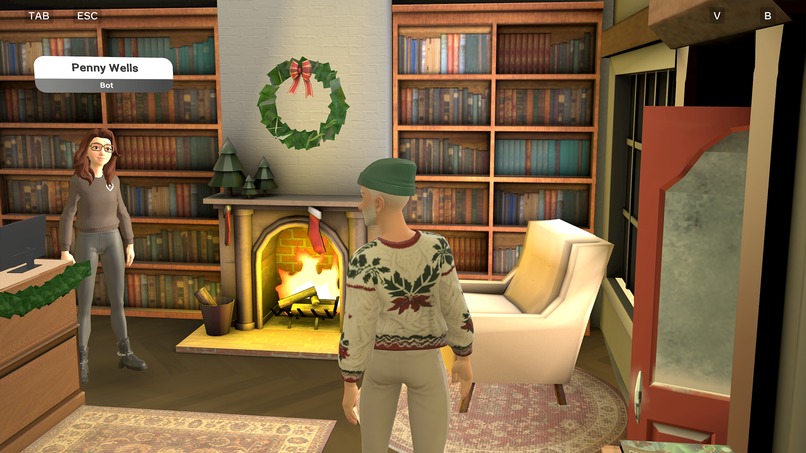
Penny Wells Bookstore Owner
-
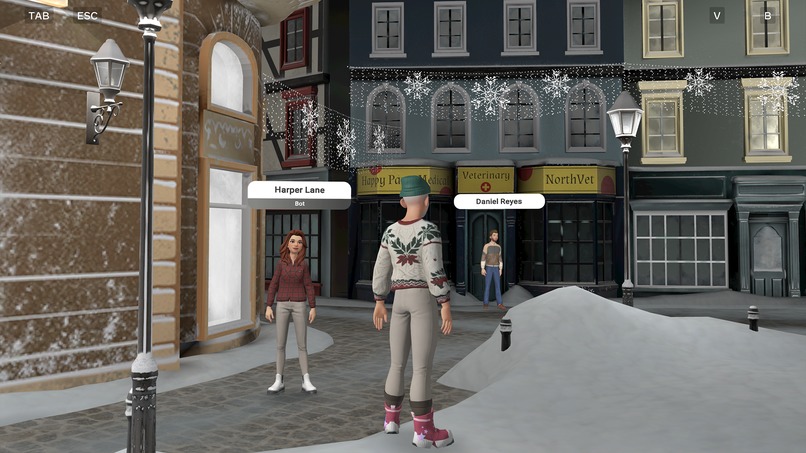
Harper Lane and Daniel Reyes
-
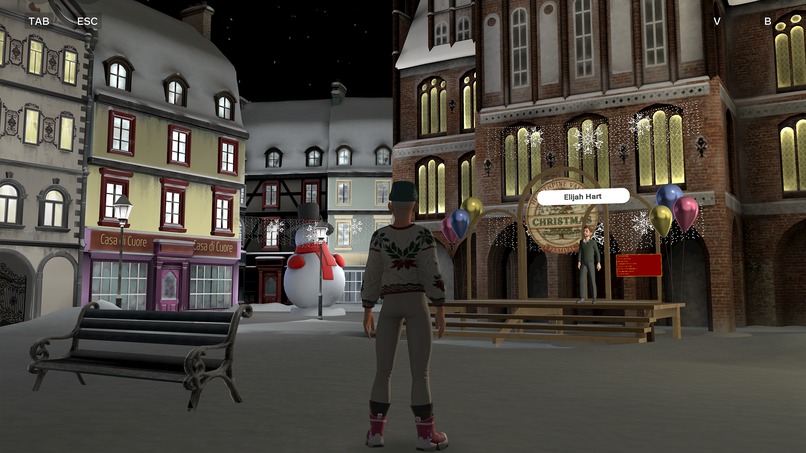
Elijah Hart - Festival Stage
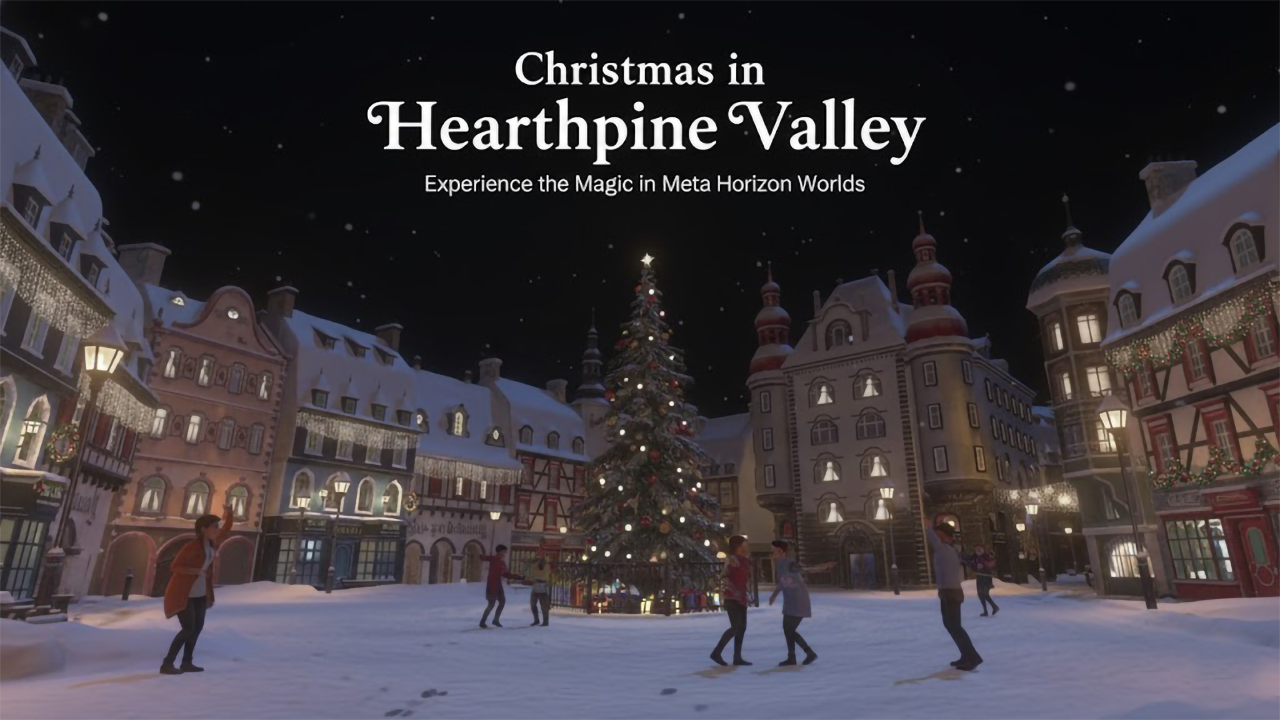
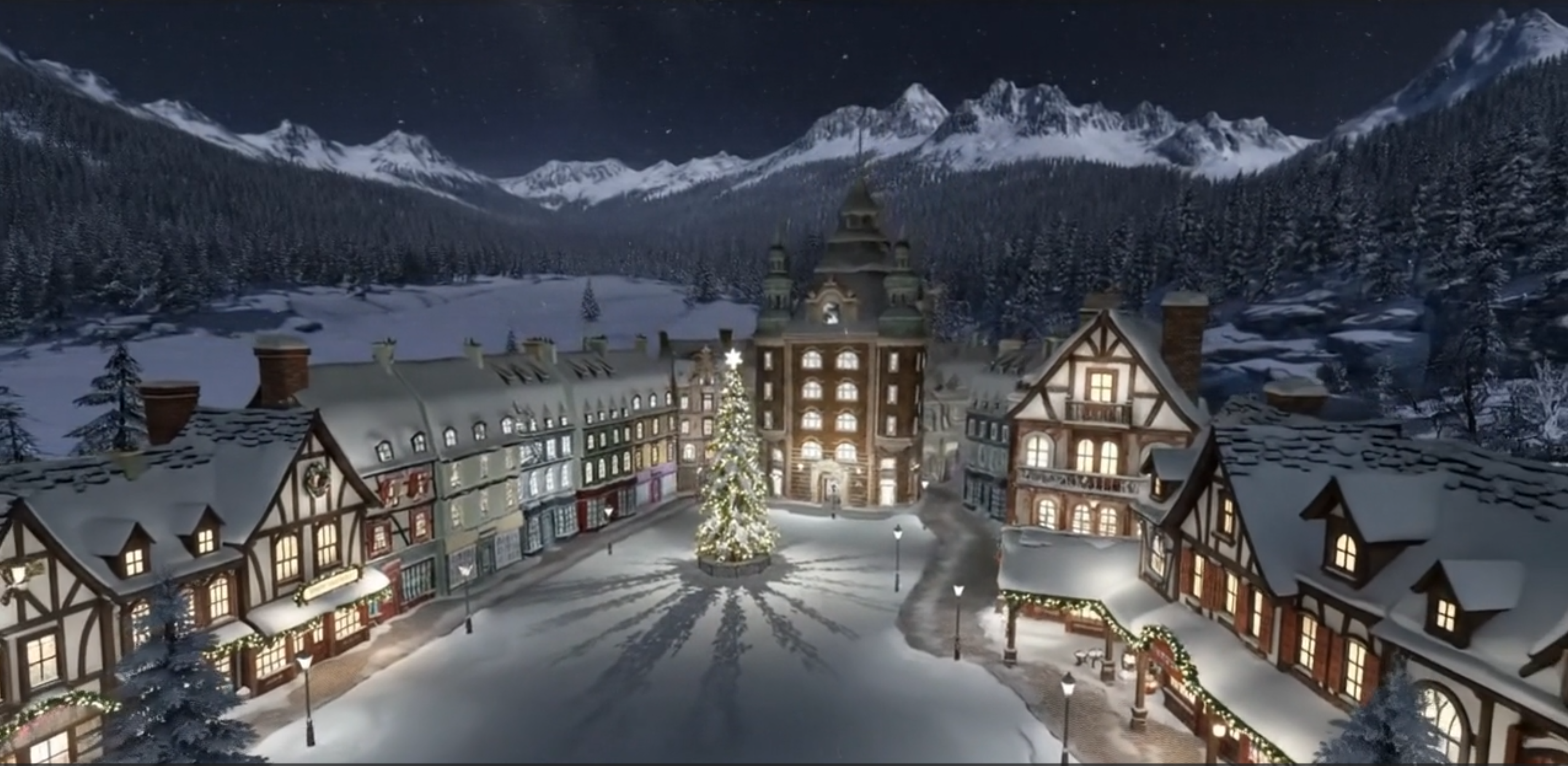
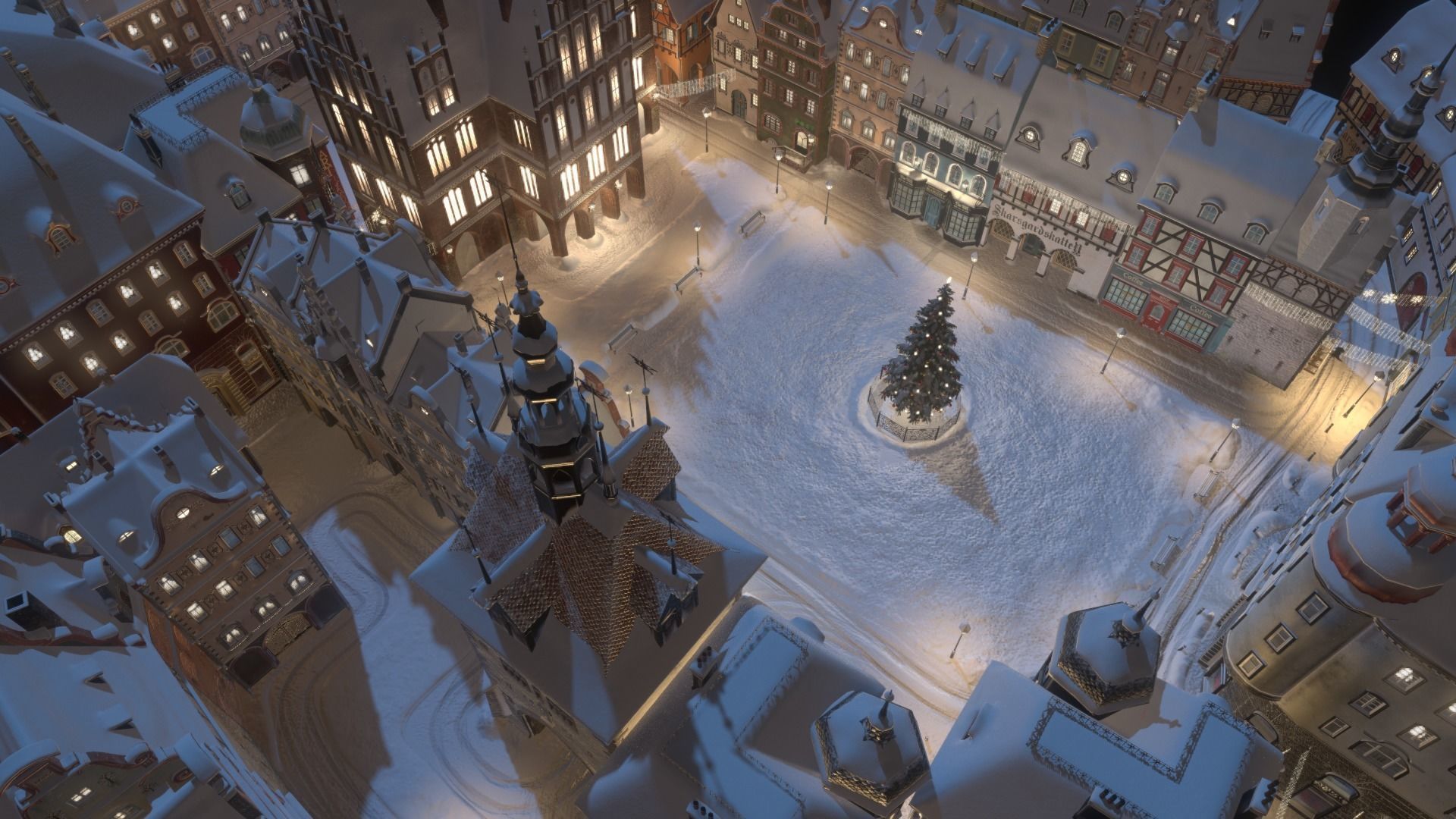
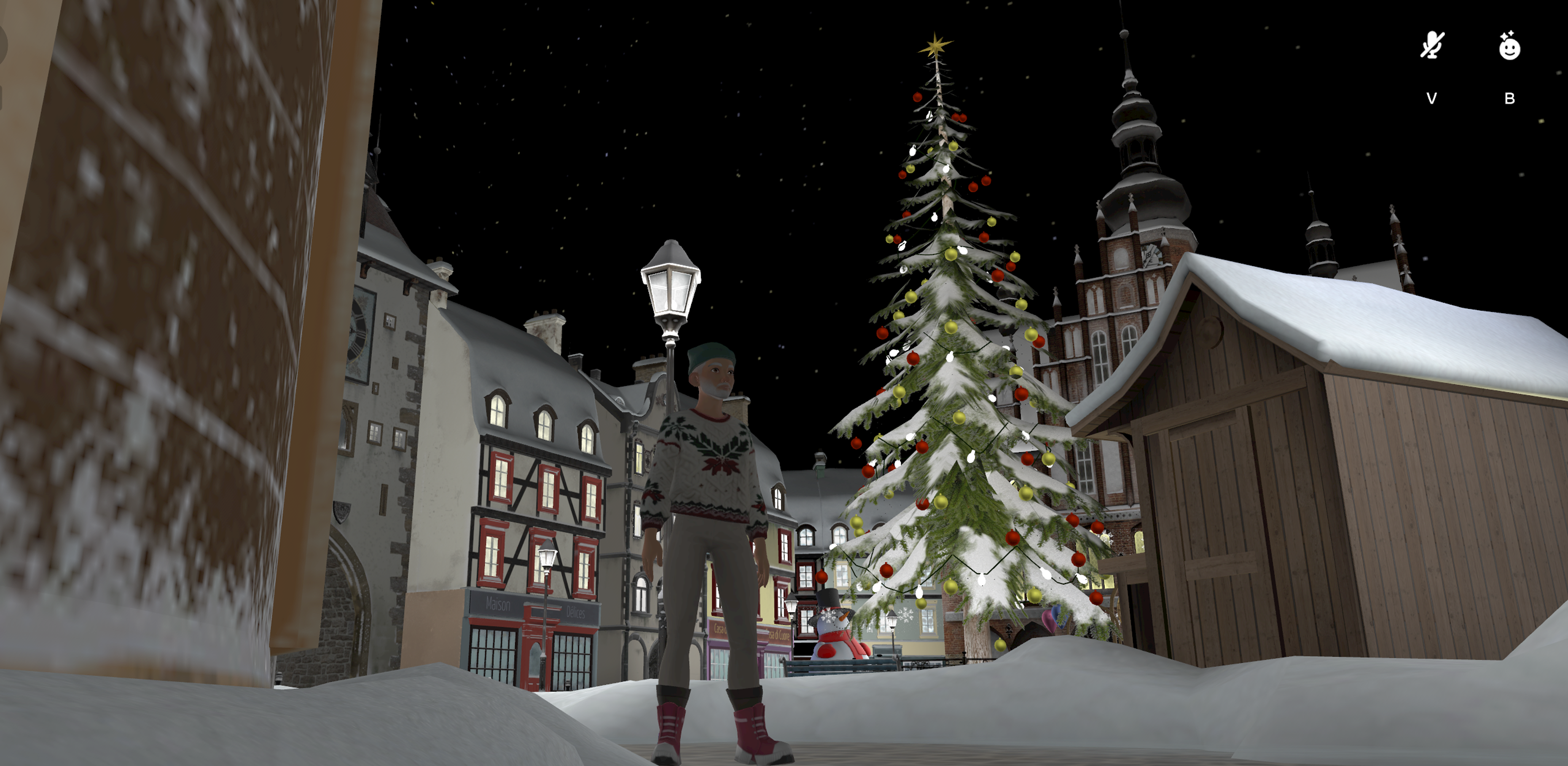
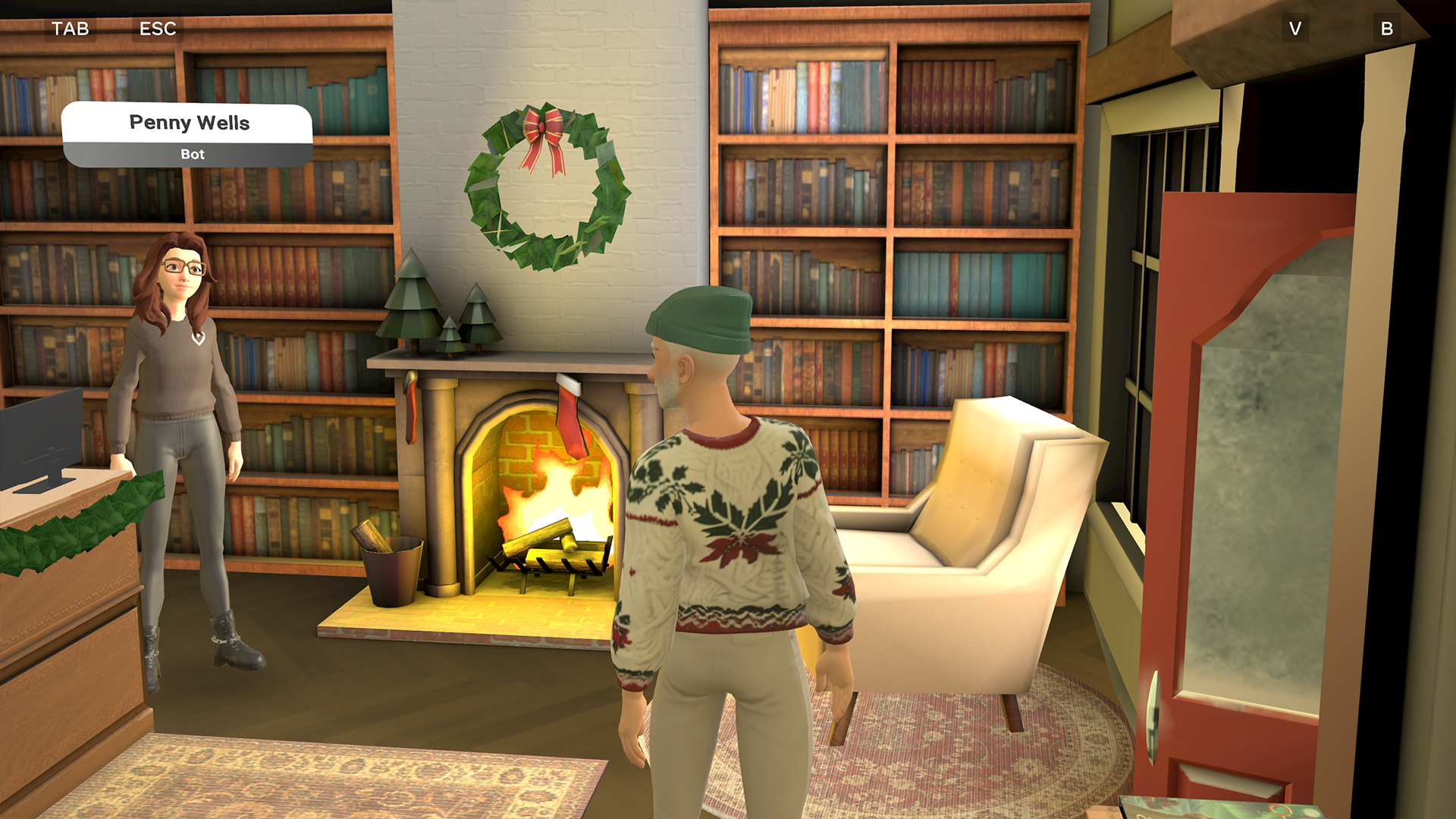
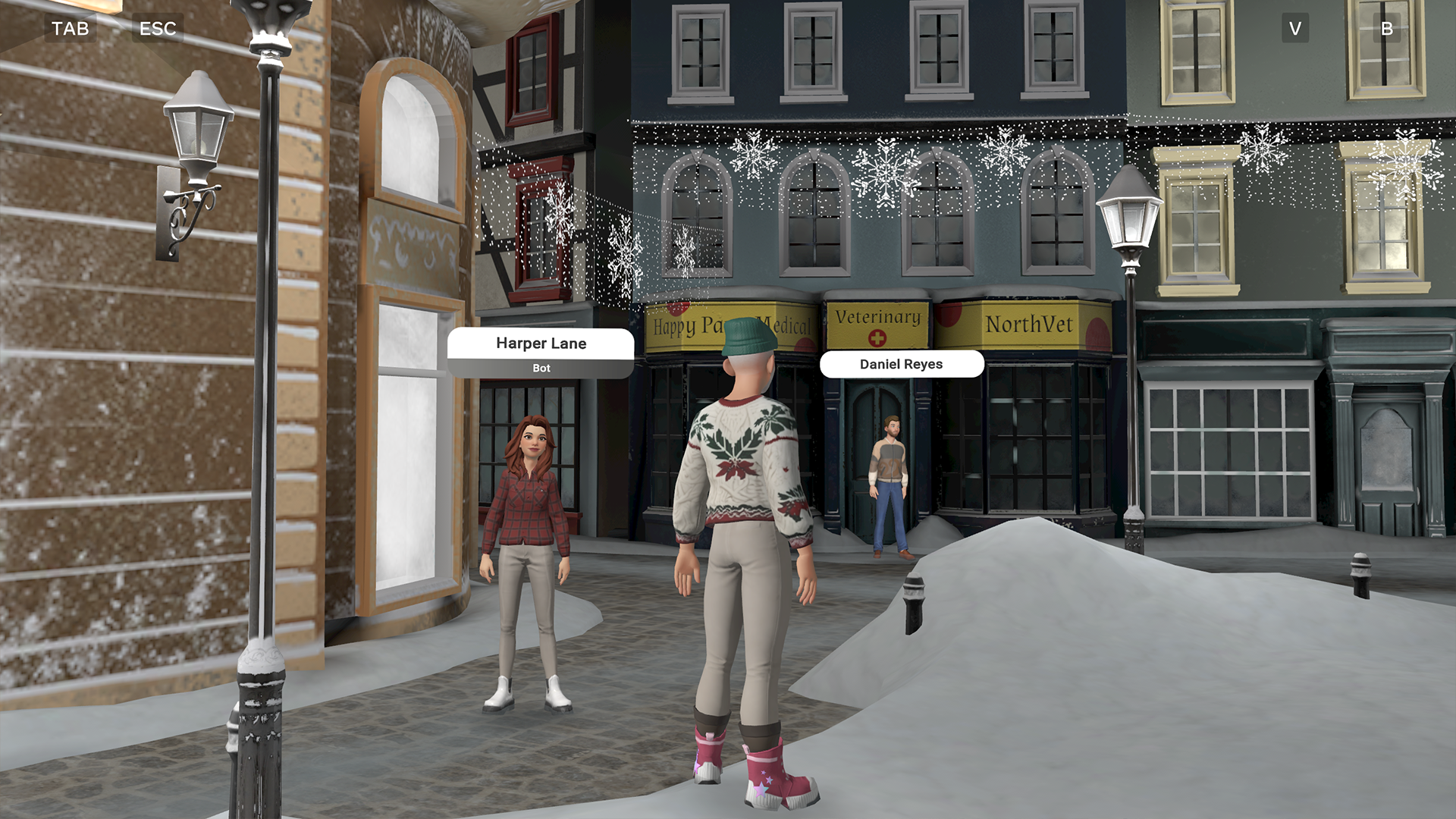
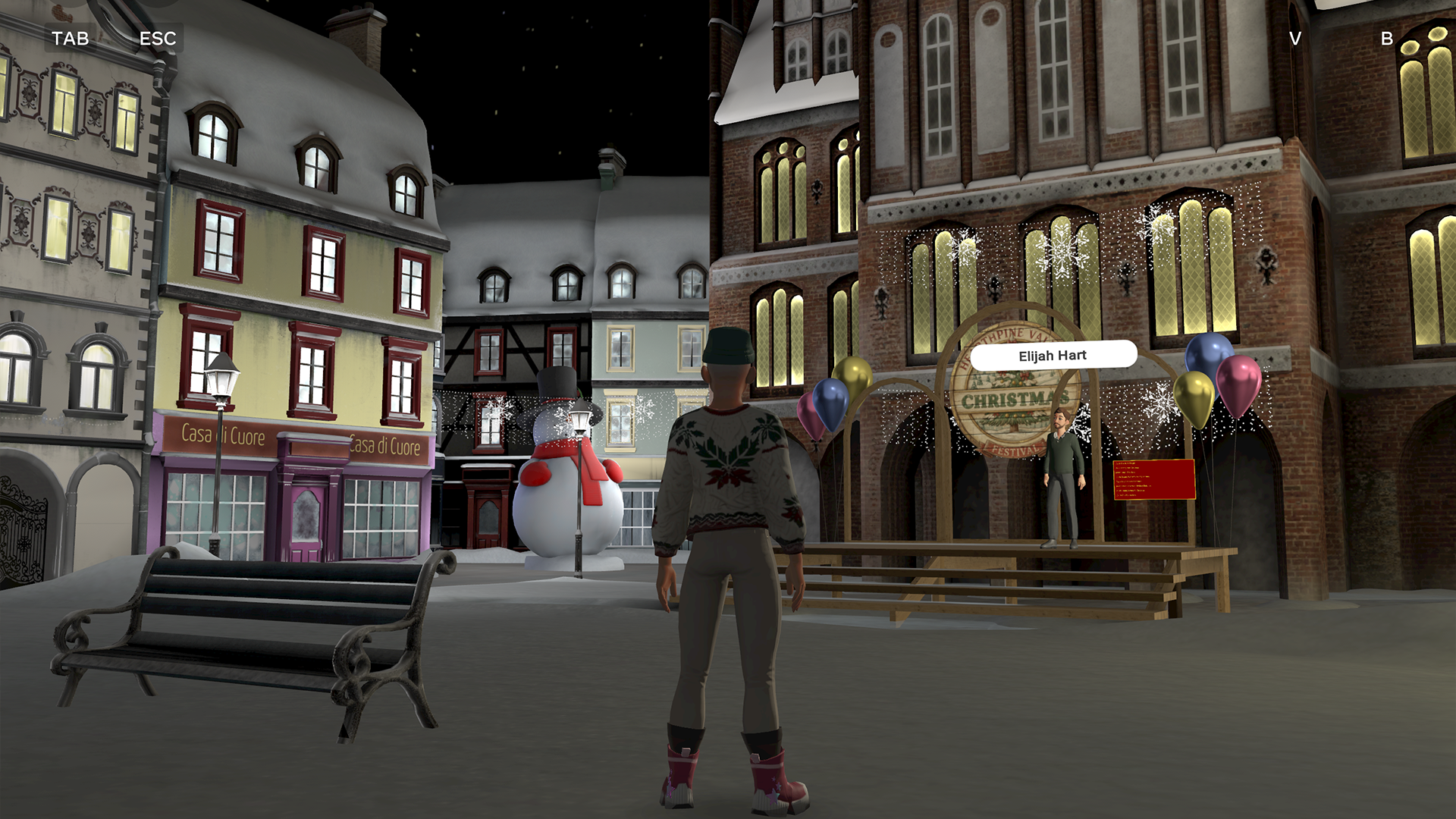
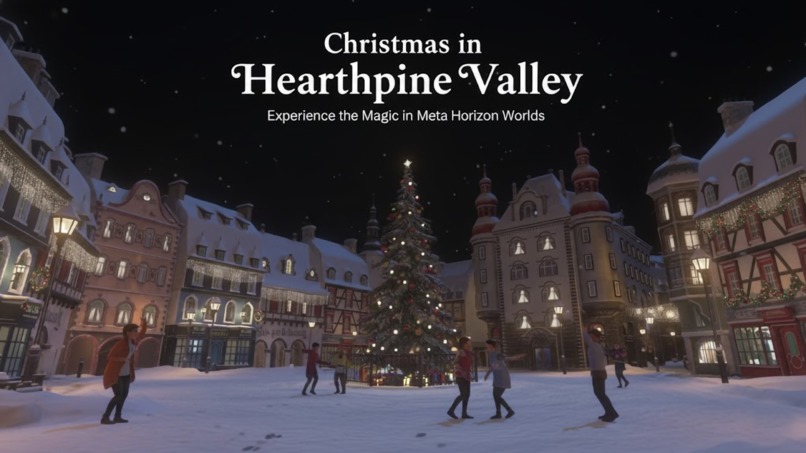
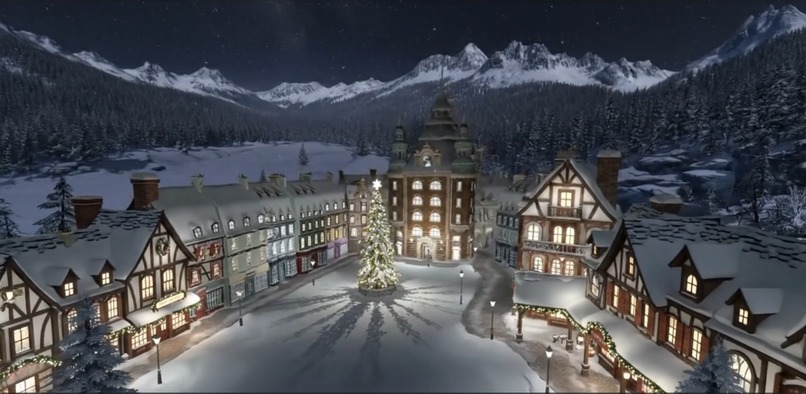
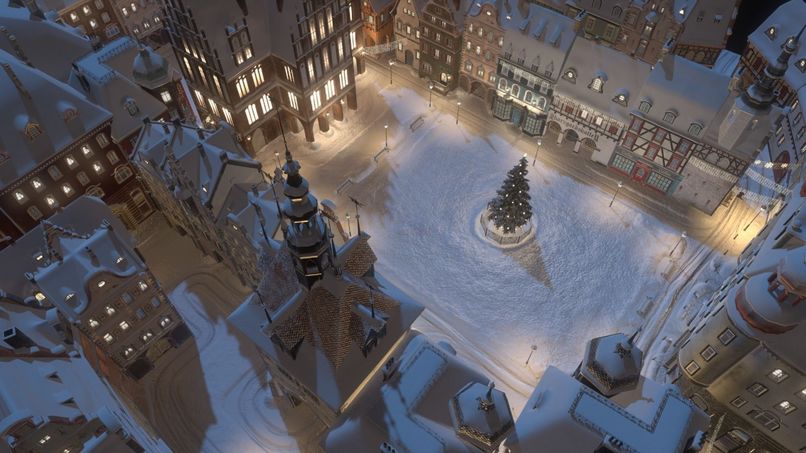
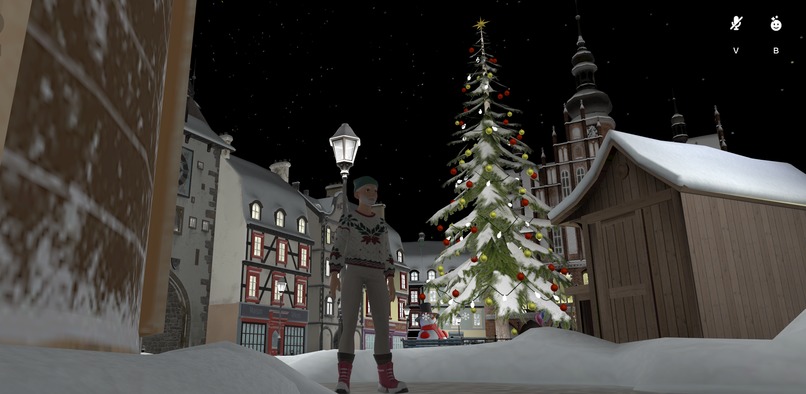
Christmas in Hearthpine Valley is a cozy, social storytelling experience where players step inside a living Hallmark Christmas movie. Set in a snow-covered Olde Towne Square in Hearthpine Valley glowing with holiday lights, the experience invites players to decorate the town tree, sing along with the carolers, share christmas cookies and cards, receive a custom sweater at the bookshop, and take part in gentle story moments that lead to friendship and romance. Designed primarily for women ages 30–55, it transforms the comfort and nostalgia of holiday films into an interactive shared story where warmth and belonging replace competition and conflict.
Inspiration
The project was inspired by the timeless emotional formula of Hallmark Christmas movies—where love, kindness, and community always win. The goal was to give players the chance to live inside that world, not just watch it. By blending the emotional beats of romantic storytelling with the social presence of VR, Hearthpine Valley offers a place to slow down, connect, and feel at home.
What it does
It exemplifies the competition’s core value: mobile-native social innovation. It transforms Horizon Worlds into a platform for emotional well-being. It’s highly accessible, visually polished, and mechanically simple. It creates meaningful human connection with minimal friction. It is designed as a “safe soft space,” something rare and socially restorative in digital environments.
Social Impact - Christmas in Hearthpine Valley is designed as an emotional refuge — a place where players can exhale, soften, and feel seen. It prioritizes:
Emotional Well-Being - The experience replaces stress with gentleness; conflict with comfort; isolation with presence. It uses holiday rituals (gift-giving, decorating, singing) to create soothing, predictable, grounding interactions.
Human Connection - The core mechanic is kindness. Players progress by giving — cookies, cards, time, attention — not by consuming or competing.
Belonging & Safety - The world’s tone and NPCs model welcoming behavior: “You’re here. You’re wanted. You belong.” New players immediately receive affirmation and gifts, ensuring the world feels soft and safe — especially on mobile, where fatigue and friction are high.
Cozy Representation of Community Life - Hearthpine Valley highlights joy, shared celebration, helpful neighbors, and the quiet magic of being part of something bigger. This fosters emotional closeness even among strangers.
Designed for All Ages & Comfort Levels - Its simplicity, softness, and emotional design make it accessible to players who may never enter competitive or high-intensity VR worlds.
In short: It’s not just a game. It’s a cozy digital neighborhood where warmth, generosity, and togetherness are the primary mechanics.
How we built it
Our team brought years of experience developing immersive applications for Meta Quest and large-scale consumer mobile products, and we adapted that expertise into a streamlined production workflow purpose-built for Meta Horizon Worlds.
Engineering Workflow
Our engineers, already proficient in Unity/C#/VR workflows, expanded into TypeScript for Horizon Worlds scripting. Using familiar professional-grade tools—Visual Studio, JetBrains Rider, Git-based version control, and structured CI practices—they rapidly built fluency in Horizon’s scripting APIs. We designed modular systems for gameplay interactions, mobile optimization, UI logic, event sequencing, and social mechanics such as gift exchange, caroling participation, and Holiday Cheer progression. This approach mirrors our existing engineering standards but adapts them to the unique architecture, constraints, and strengths of Horizon Worlds.
Art & Asset Pipeline
Our art team leveraged its established production pipeline—Maya, Blender, Substance Painter, Adobe Suite, and internal optimization tooling—to create stylized assets aligned with Horizon’s performance envelope. Artists developed a lightweight workflow for authoring, decimating, baking, and preparing models specifically for Horizon Worlds’ mobile-first performance requirements. This included deliberate poly discipline, material consolidation, texture channel optimization, and consistent scale and style matching across the entire world.
Design & Worldbuilding
Our designers adapted classical VR and mobile UX pipelines into a Horizon-native design workflow, emphasizing:
Short-session loops
Accessible one-tap interactions
Readability on small screens
Social-first mechanics
Emotional design centered on belonging and warmth
They built blockouts, interaction maps, pacing documents, and narrative structures that take full advantage of Horizon's strengths: synchronous social presence, low-friction tools, and mobile accessibility.
Cross-Disciplinary Collaboration
We maintained our standard agile development rhythm—daily standups, iterative playtests, and multidisciplinary reviews—while integrating Horizon-exclusive constraints (asset budgets, scripting limits, occlusion strategies, and mobile performance). Our team’s experience shipping large-scale immersive and mobile products allowed us to quickly converge on a stable, efficient, and repeatable workflow for Horizon Worlds development.
We successfully leveraged our extensive Quest and mobile development background to build a polished, emotionally rich world in Horizon Worlds. By adapting our engineering, art, and design pipelines to Horizon’s creator ecosystem, we were able to deliver an experience that feels handcrafted, technically sound, and deeply optimized for mobile—without compromising on narrative depth, visual warmth, or social connection.
Challenges we ran into
While adapting our established production pipelines to Meta Horizon Worlds, our greatest challenges centered around team development and engineering collaboration. Our studio is deeply experienced in building multiplayer ecosystems at scale, and we approached Horizon with expectations informed by years of working with traditional game engines, source-control workflows, and distributed engineering practices.
1. Collaboration Constraints in the Current Architecture
We quickly discovered that Horizon’s architecture is currently optimized for single-developer iteration, which makes simultaneous engineering contributions difficult to manage. Unlike our typical workflows—where multiple engineers can work in parallel on gameplay systems, UI logic, networking, and tools—Horizon requires more serialized development patterns.
2. Limited Support for Multiplayer Engineering Complexity
Given our experience shipping large-scale multiplayer products, we naturally conceptualized features that assume deeper systems access, flexible networking patterns, or multiplayer-specific abstractions. In Horizon, some of these expectations had to be recalibrated due to:
Simplified replication models
Limited cross-object communication patterns
Lack of deep debugging or performance profiling tools
Constraints around custom data structures and modular code organization
These weren’t blockers—but they required our engineers to rethink solutions and design systems with a more lightweight, Horizon-native approach.
3. Pipeline Adjustment & Learning Curve
Even though our engineers quickly picked up Horizon’s TypeScript scripting environment, adapting to the nontraditional development workflow—without the granular file access, advanced IDE integrations, inspector views, or typical engine-side tooling—presented an initial learning curve. The largest shift was not technical ability, but mindset: rethinking engineering contributions in smaller, more atomic units compatible with Horizon’s single-source editing and world deployment model.
While we successfully navigated these challenges, the primary difficulty was not the platform’s capability—it was aligning our high-velocity, multi-engineer development culture with a system currently optimized for individual creators.
Accomplishments that we're proud of
Our team is most pleased with the quality of our environment and the emotional tone of the experience.
1. Crafting a High-Quality, Warm, and Cohesive Environment
We are especially proud of the environmental and prop production value achieved within the constraints of Horizon Worlds. Our artists created a town square that feels handcrafted, lived-in, and emotionally resonant—combining stylized architecture, festive lighting, and detailed winter set dressing that performs well on mobile without sacrificing richness. The result is a space that looks and feels like a real holiday olde towne square, achieving the visual warmth needed to support the emotional goals of the experience.
2. Achieving the Emotional Tone We Envisioned
From the outset, our goal was to create a world where players could exhale, feel welcomed, and experience genuine emotional comfort. We set out to build belonging, warmth, and connection—and we’re pleased to see that vision come to life.
We are pleased to have built a world that feels good to be in—a space of warmth, beauty, and emotional refuge.
What we learned
We approached this project as a proof of concept for future large-scale production within the Horizon Worlds ecosystem. Our goal was to answer three critical questions about feasibility, scalability, and sustainability in developing multi-SKU immersive products for VR, mobile, and web.
1. Can we reach an acceptable production value?
Yes — and faster than expected. Through disciplined asset workflows, thoughtful worldbuilding, and leveraging our experience in Quest and mobile production, we confirmed that Horizon Worlds can support high-quality, emotionally rich environments that perform well across devices. The visual fidelity, lighting tone, and prop craftsmanship we achieved validated that we can hit the level of polish our studio considers essential.
2. Can we leverage Facebook and Instagram for player acquisition across all SKUs with minimal friction?
Yes — the ecosystem is primed for it. Hearthpine Valley was designed from the start as a shareable, lightweight, low-friction experience, and we tested acquisition concepts across VR, mobile, and web audiences. We learned that Meta’s social platforms create a natural funnel for discovery. This multi-platform synergy proved that Meta’s ecosystem is exceptionally well-positioned for frictionless cross-SKU onboarding.
3. Can we develop an acceptable production velocity?
Yes — once we adapted our pipelines. The biggest unknown was whether our established Quest/mobile workflows could be adapted to Horizon’s more constrained, collaborative environment. Once our team aligned on Horizon-native engineering patterns, asset budgets, and mobile constraints, our production velocity increased rapidly. We learned how to structure work in smaller atomic units, iterate faster inside Horizon, and maintain quality without slowing down.
What's next for Christmas in Hearthpine Valley
Future updates will expand Hearthpine Valley beyond Christmas into a year-round seasonal town, adding new story chapters—Valentine's Day Festival, Spring Lantern Walks, Summer Picnics, and Autumn Harvest Dances. Live events, multiplayer story nights, and player-customizable homes will deepen community connection and make Hearthpine Valley an evolving world where the spirit of the holidays lasts all year.
Built With
- adobe-creative-suite
- blender
- jetbrains
- jira
- maya
- meta-genai
- substance
- visual-studio


Log in or sign up for Devpost to join the conversation.