-
-
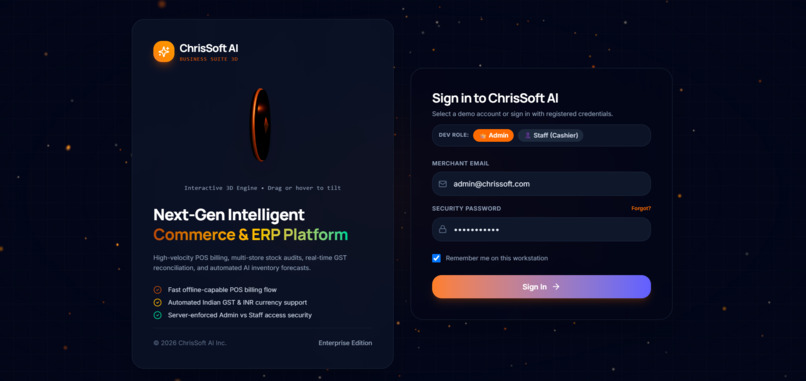
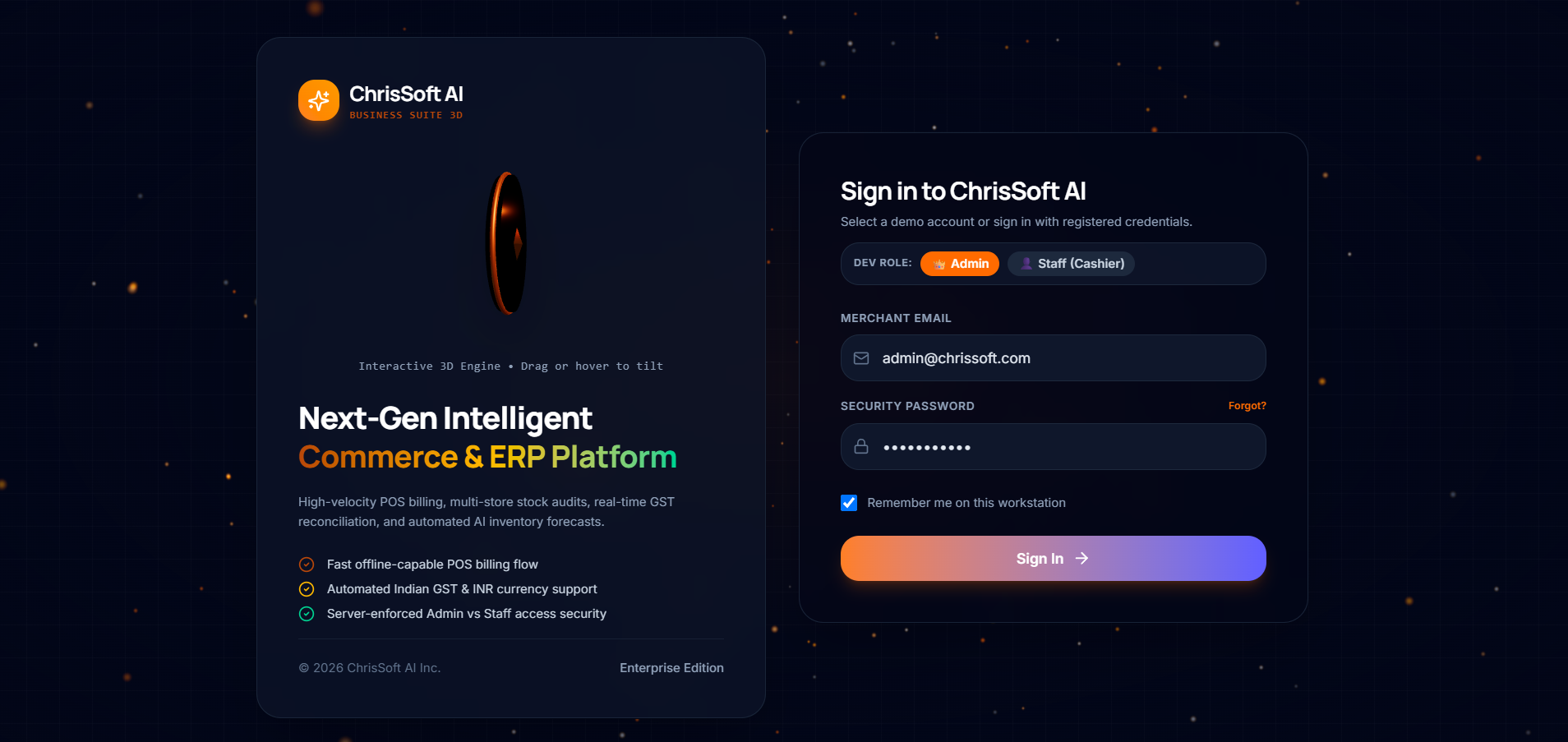
Login page
-
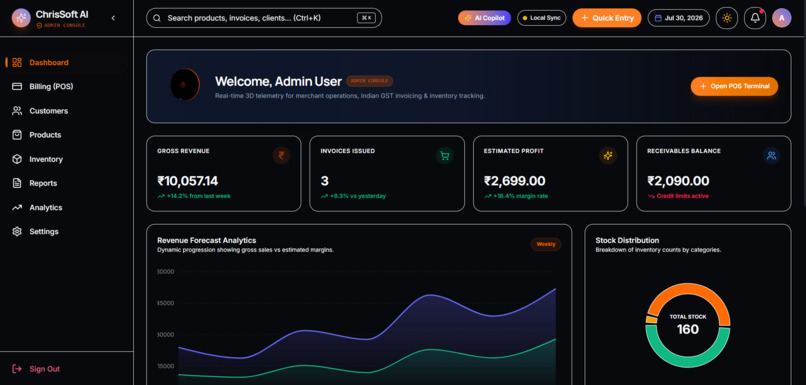
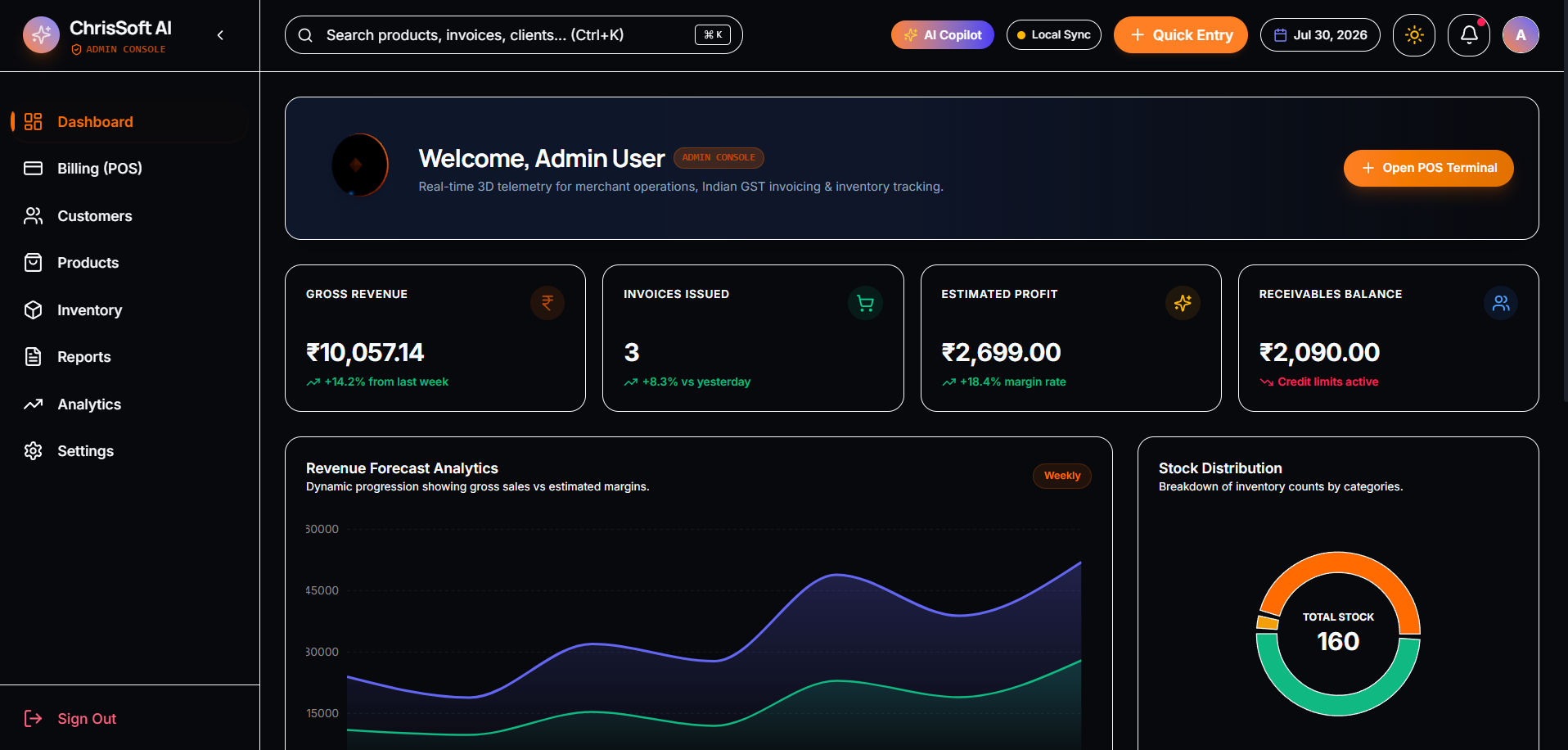
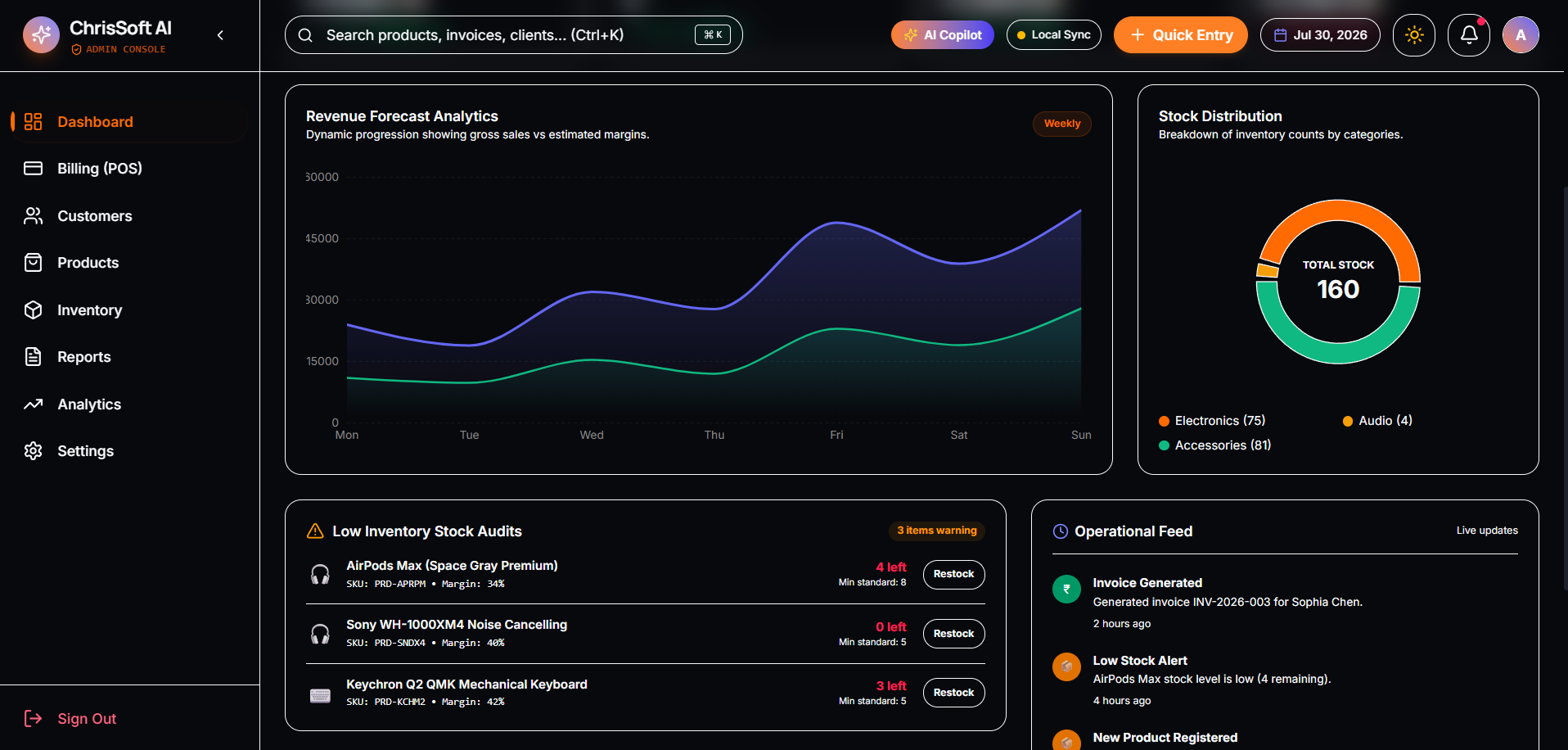
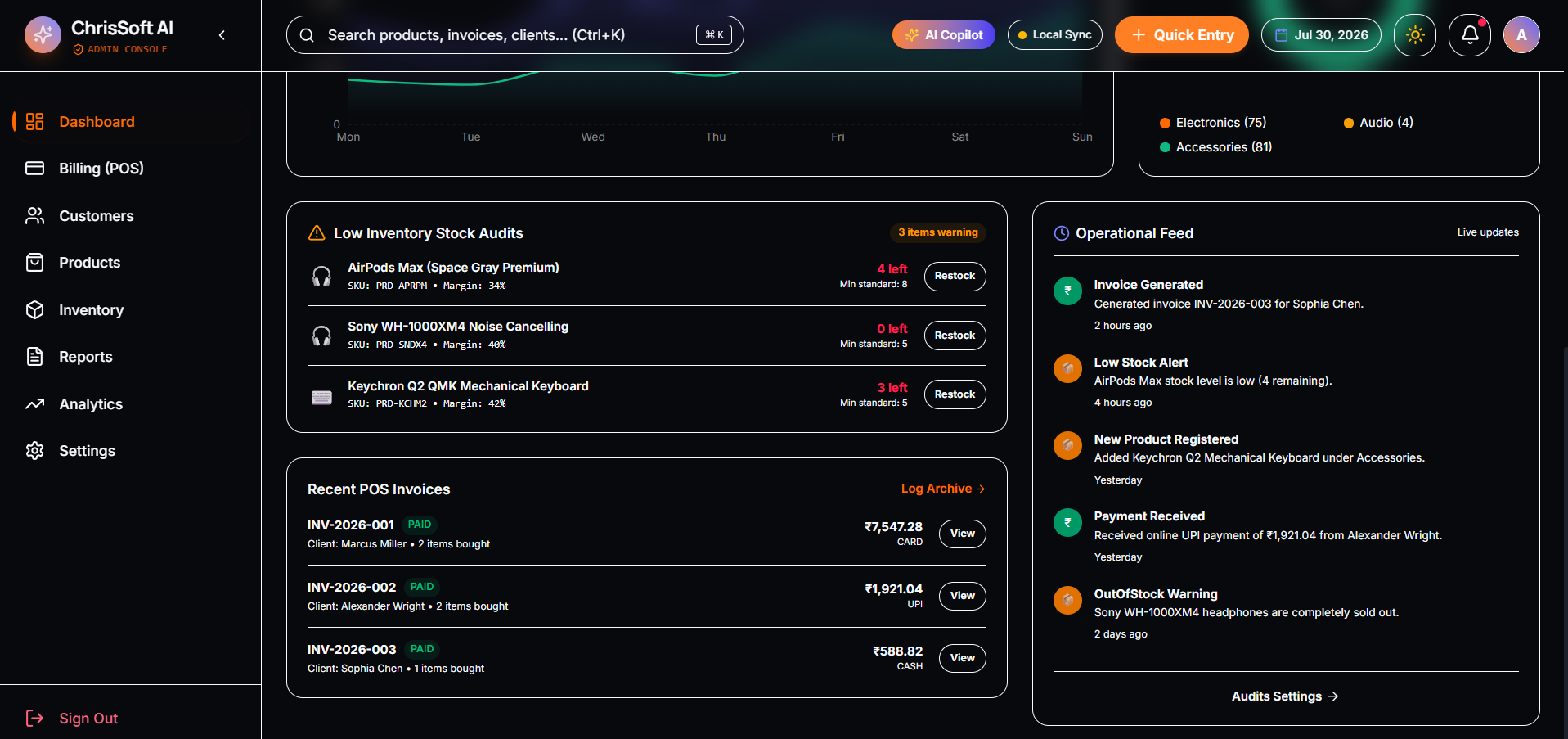
Dashboard
-
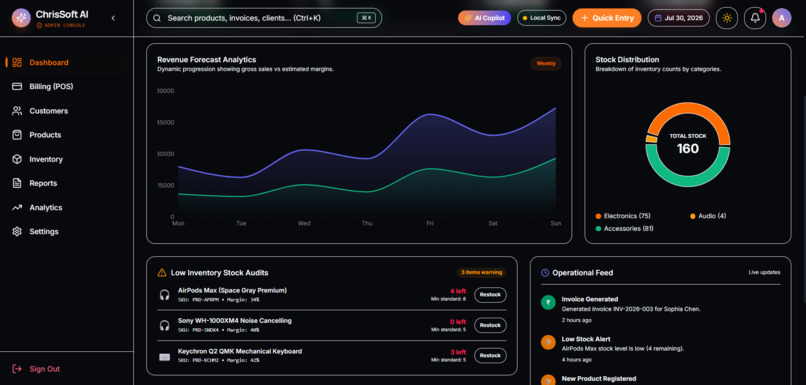
Analysis
-
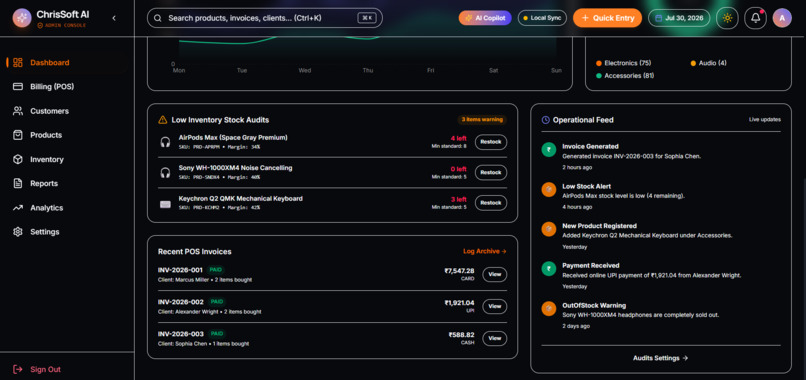
Expiring stocks
-
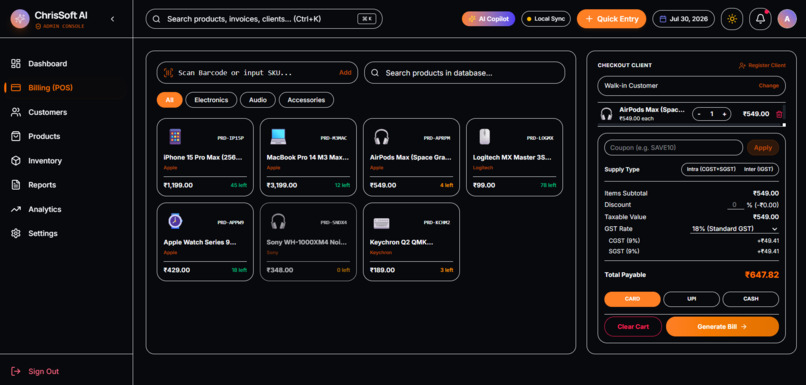
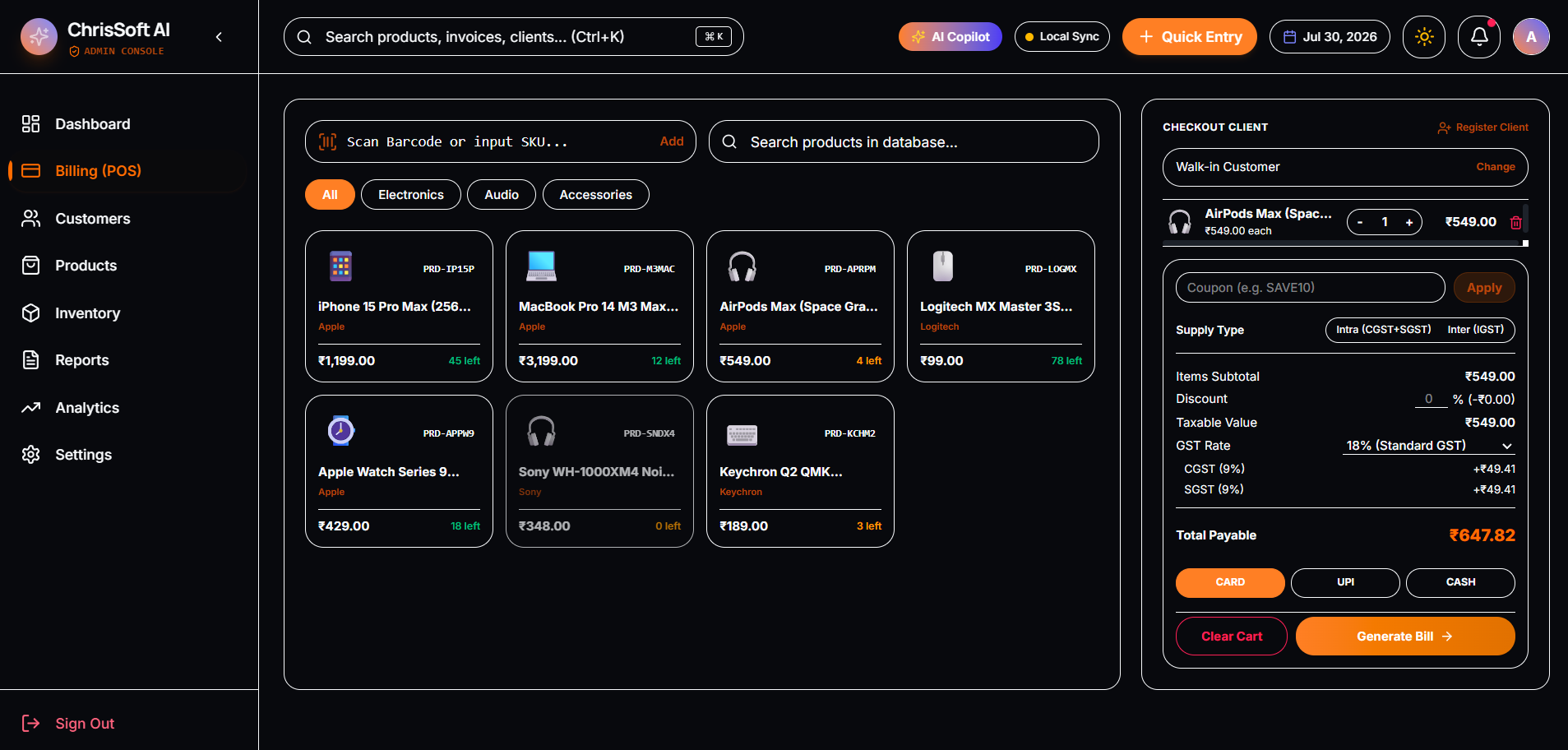
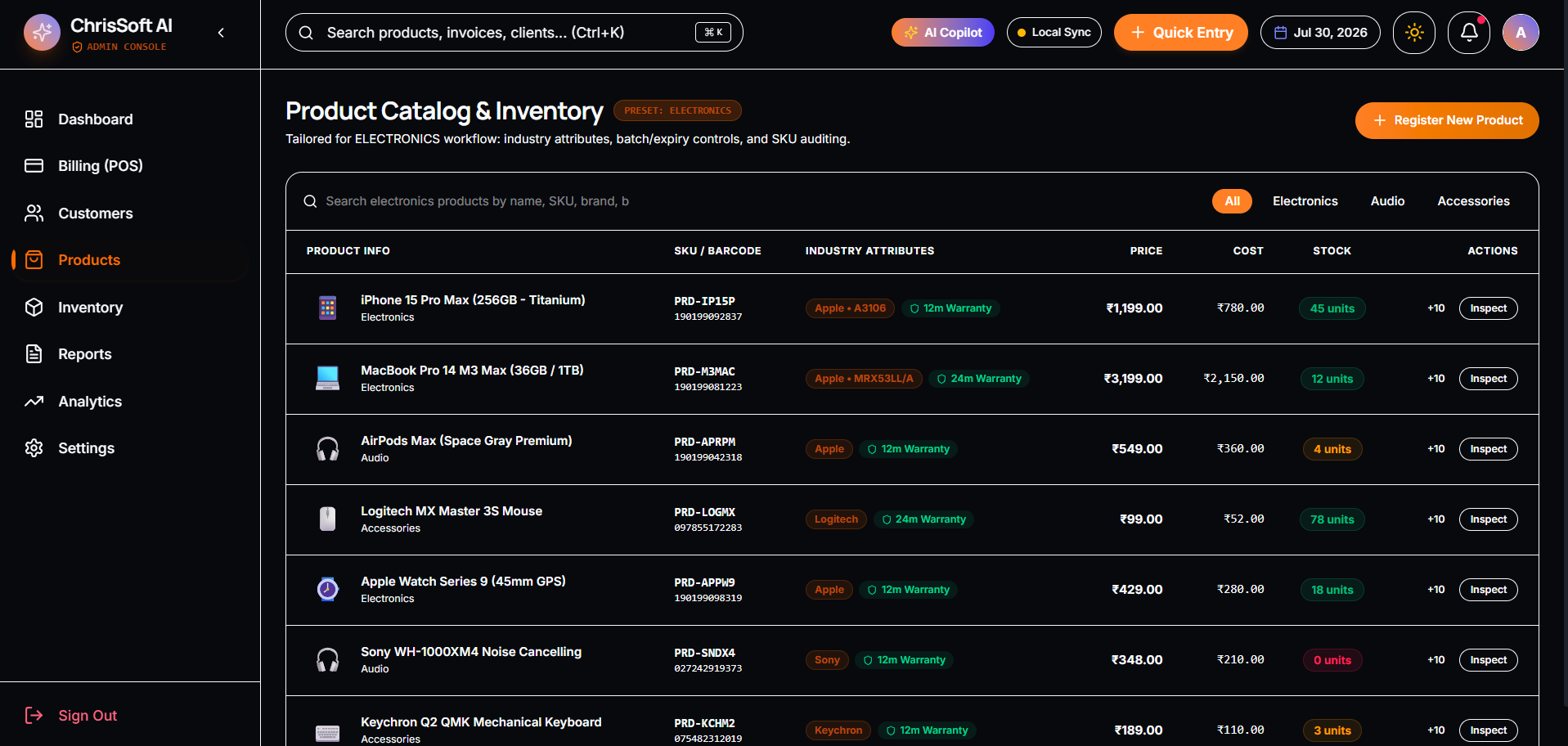
Products
-
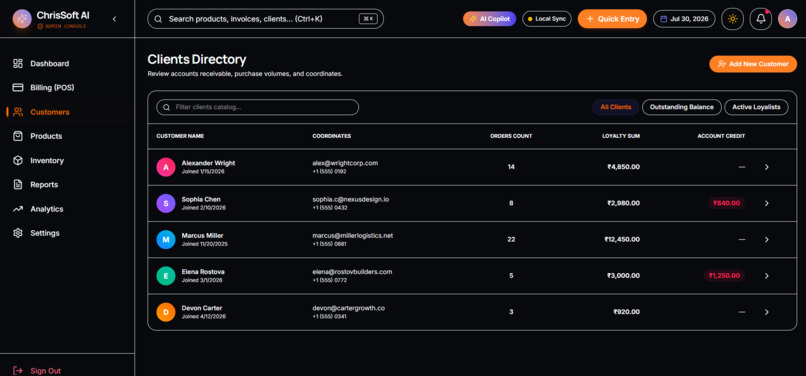
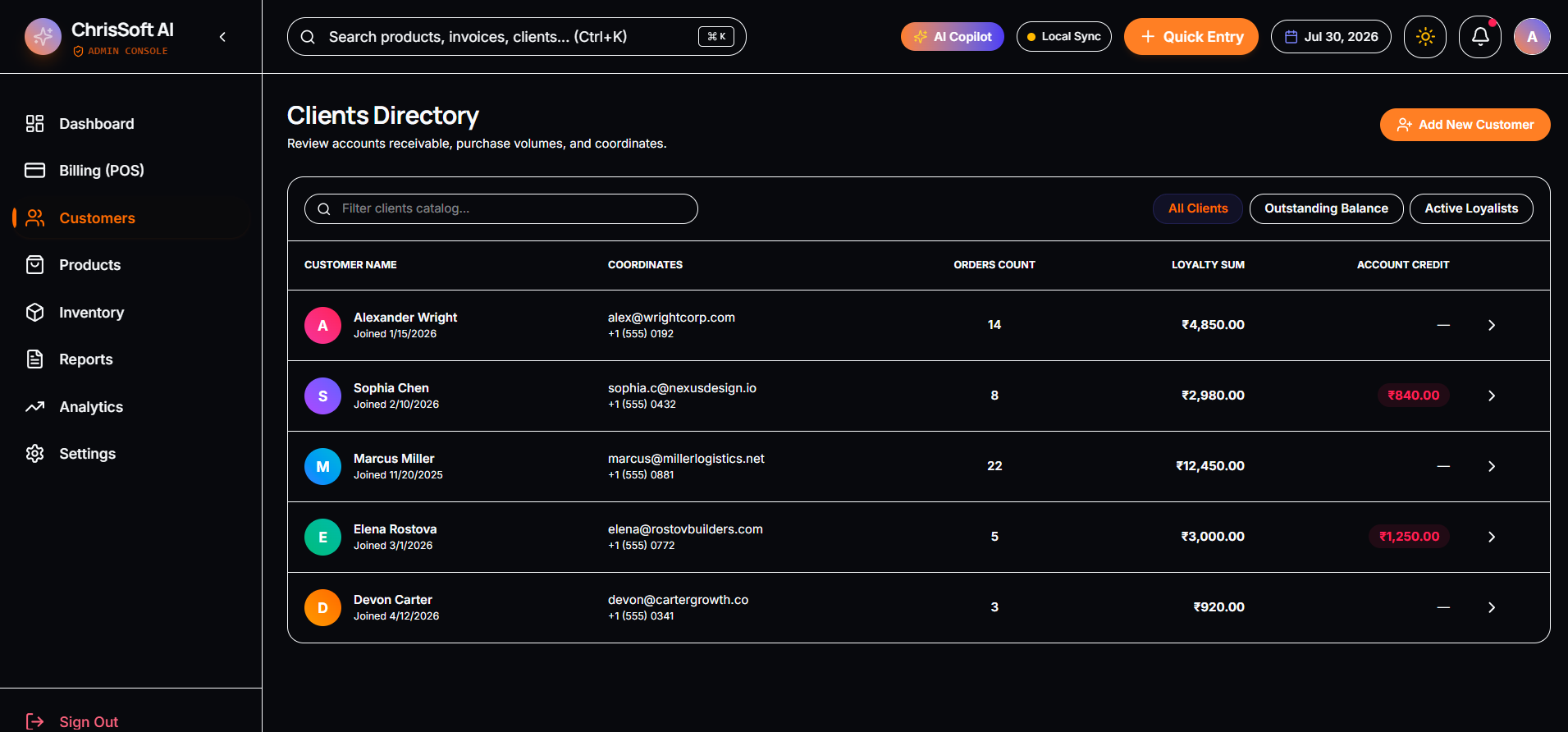
Customers
-
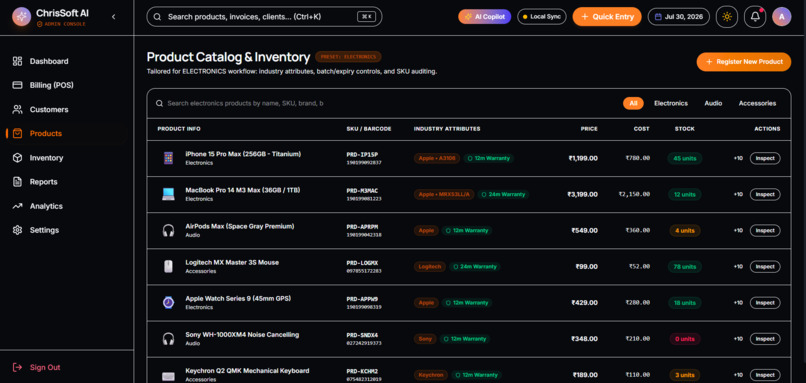
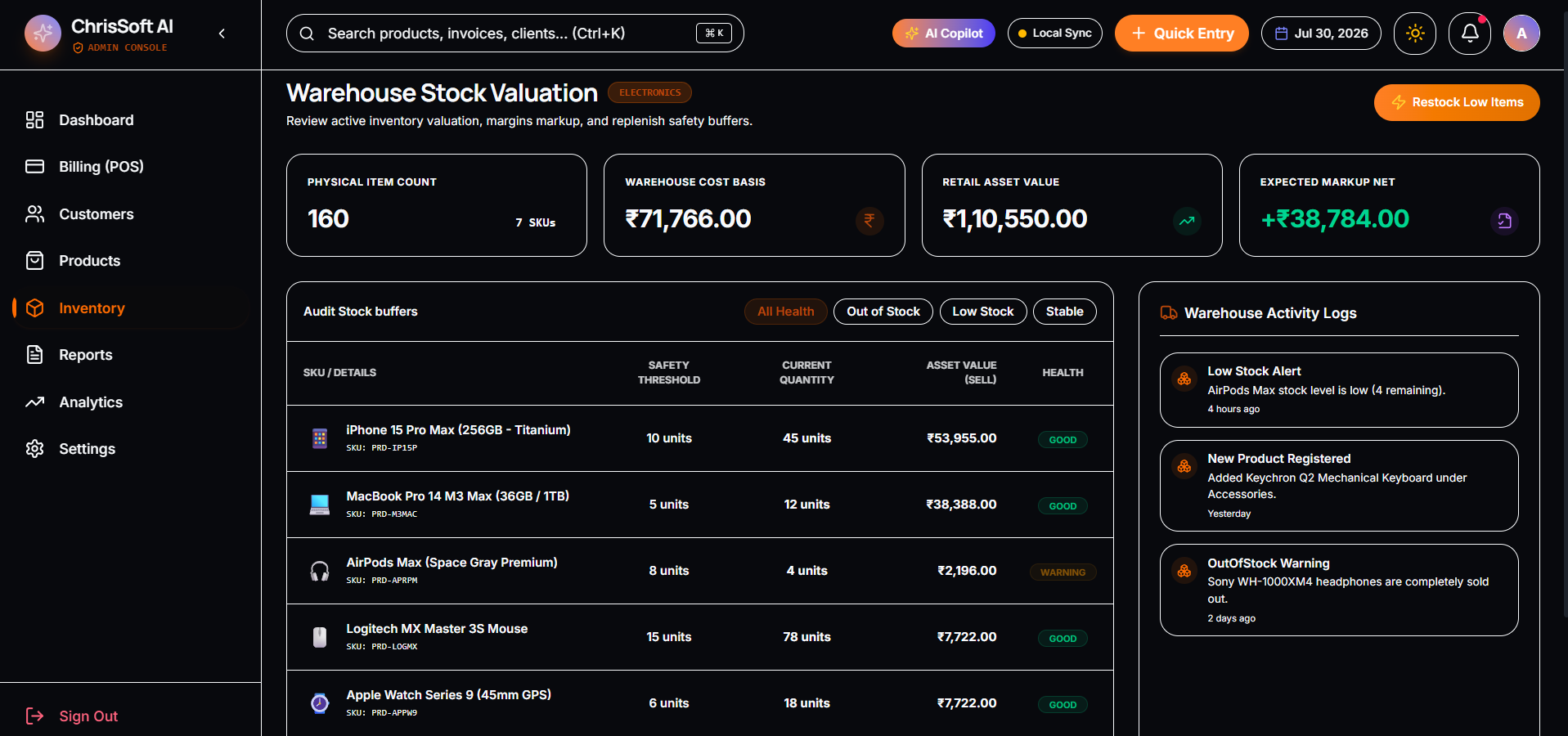
Inventory
-
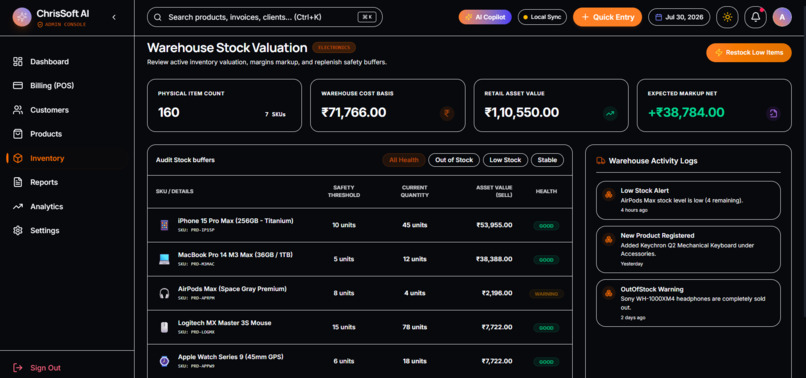
Warehouse Stock Valuation
-
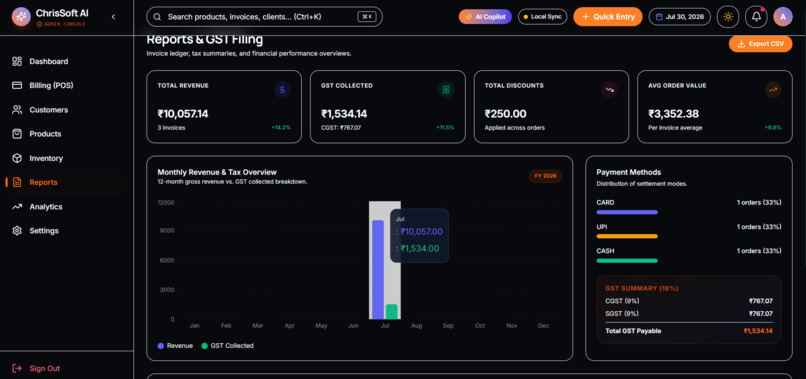
Visualization
-
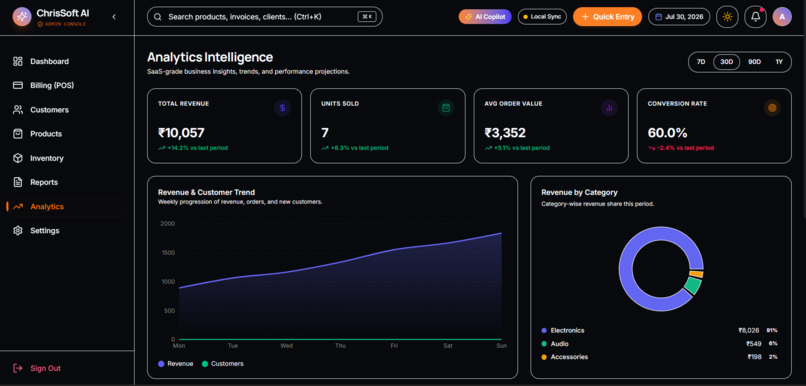
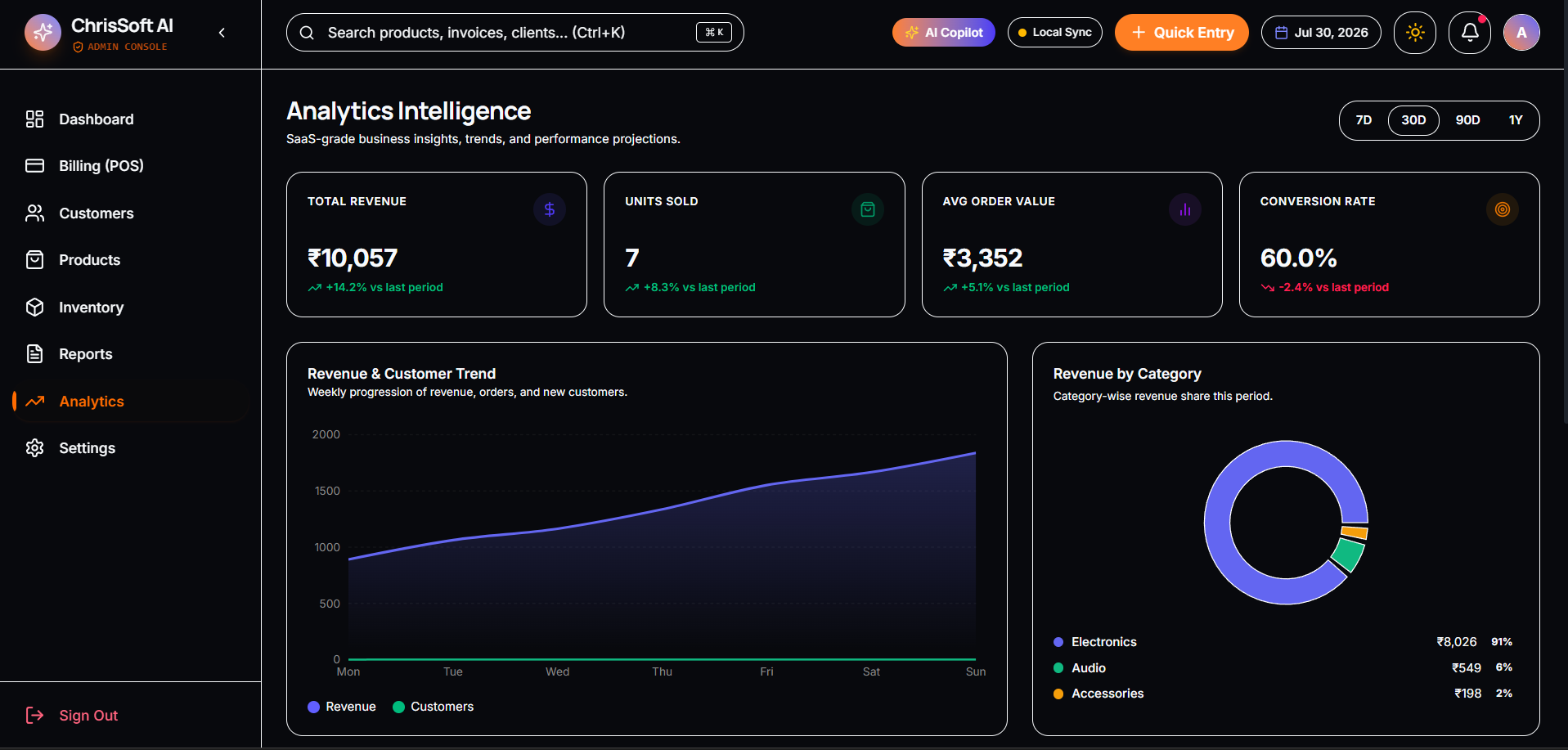
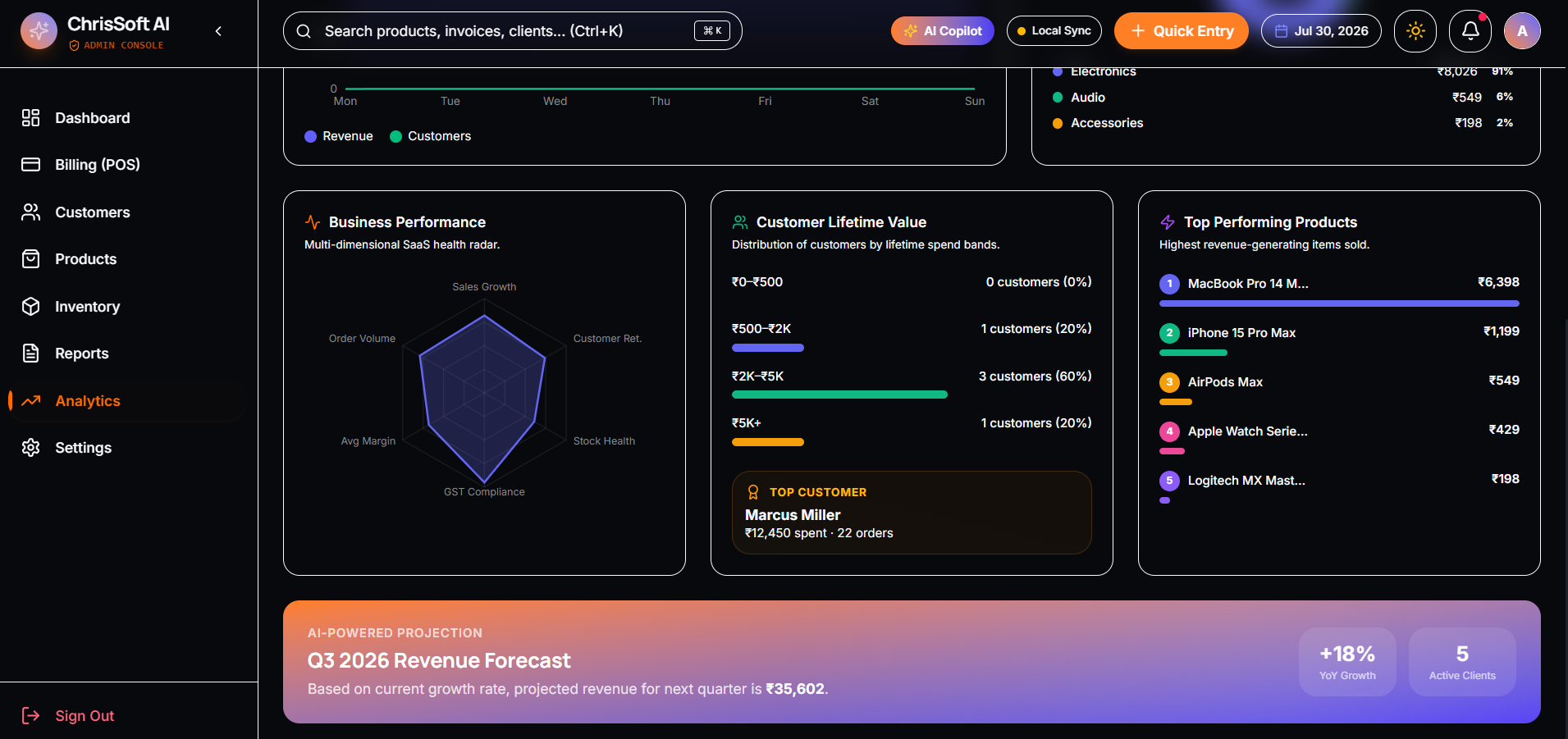
Analytics intelligence
-
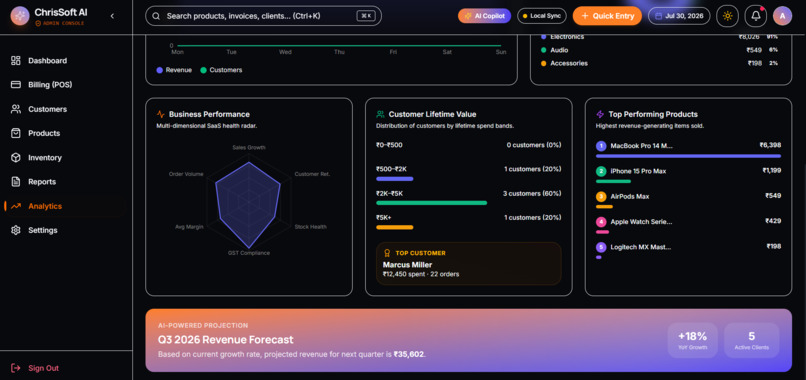
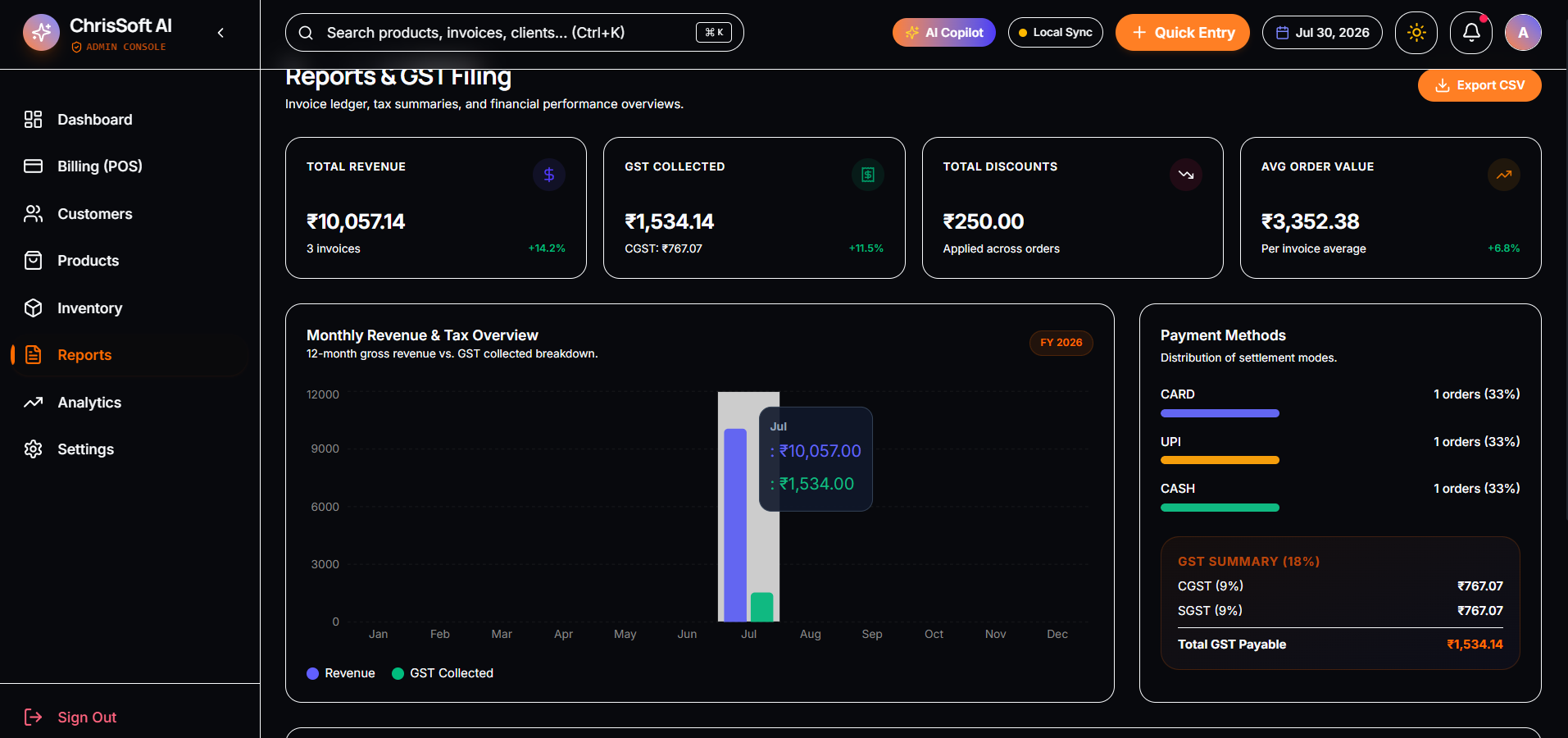
Reports
-
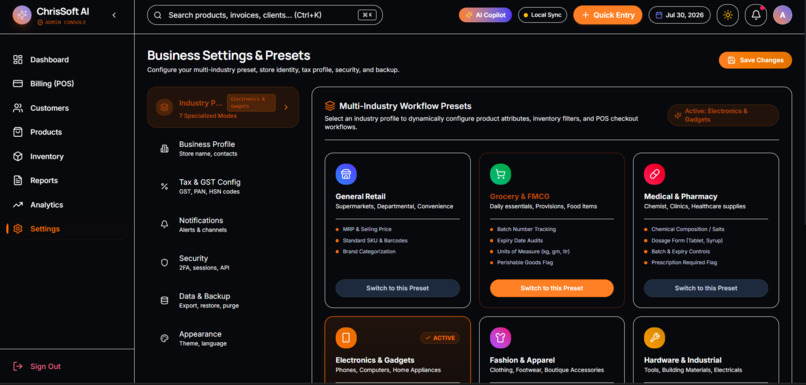
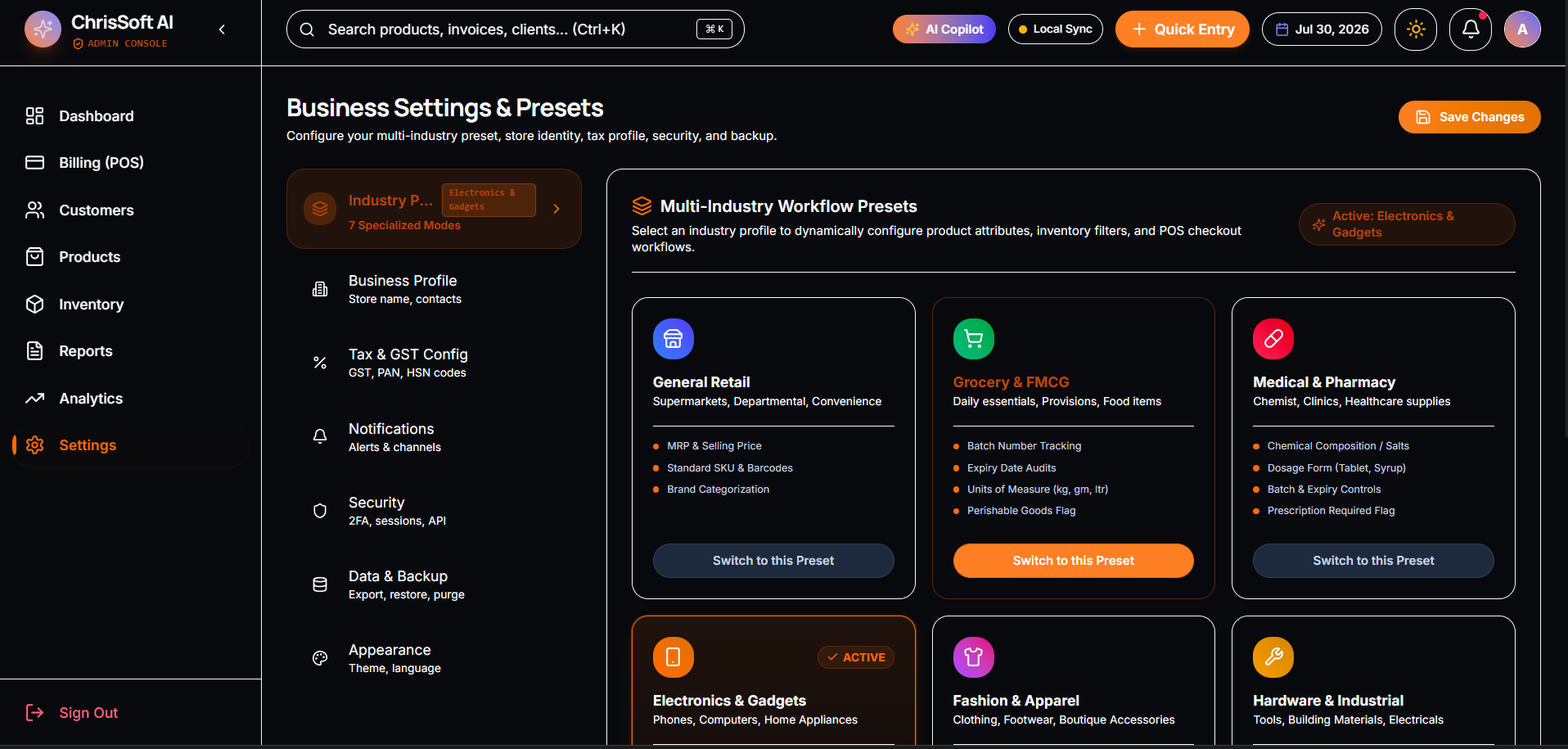
Business settings
-
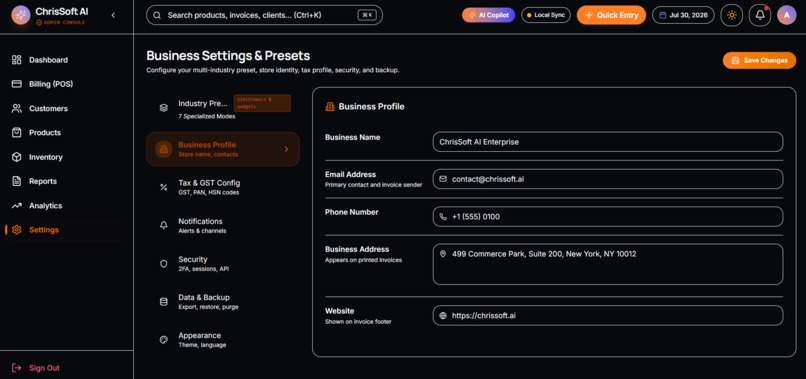
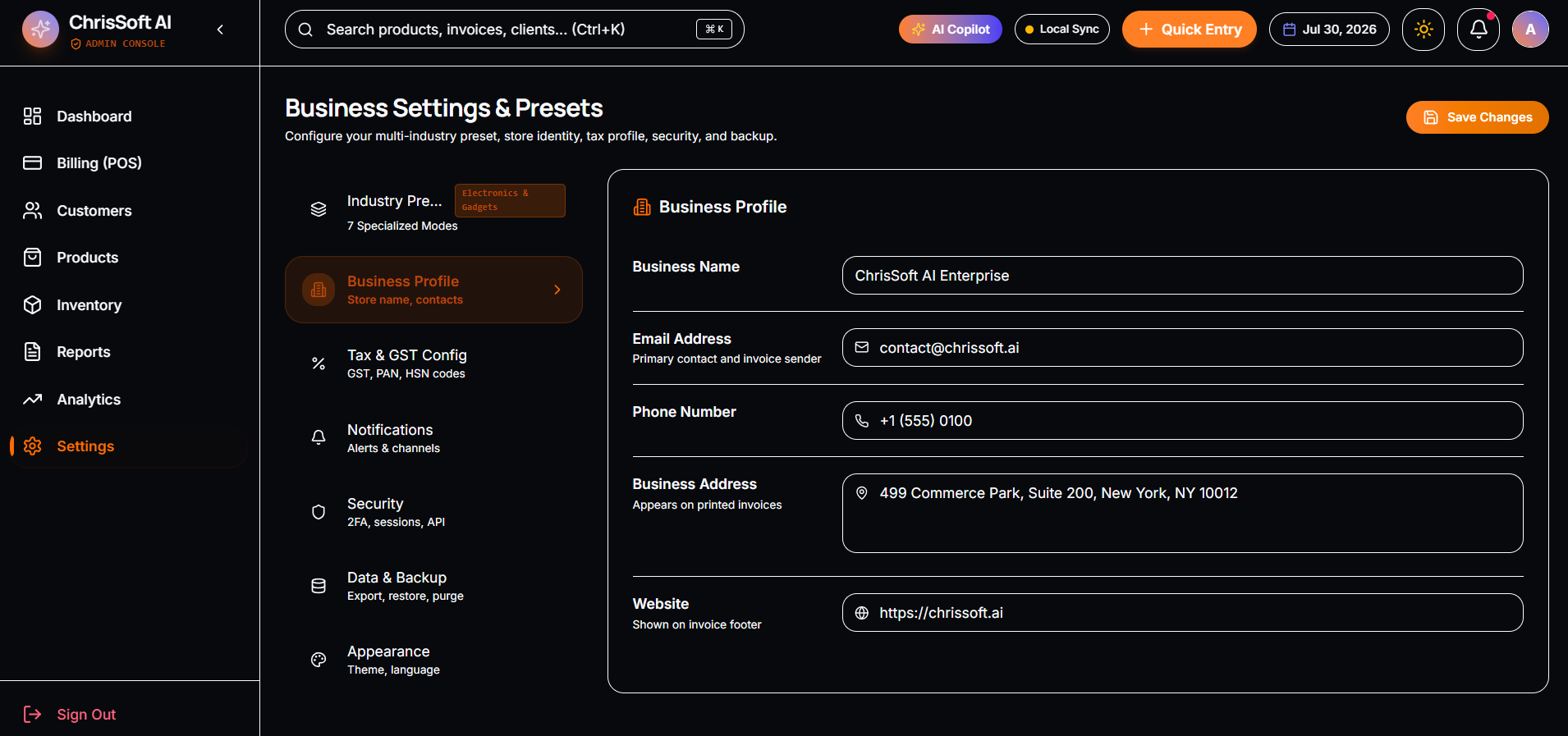
Business profile
-
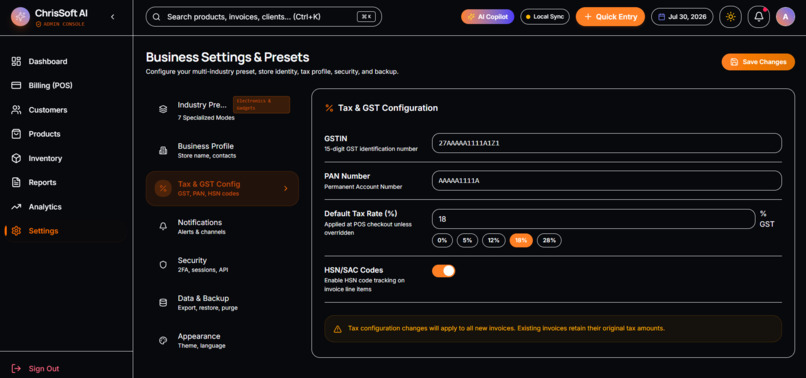
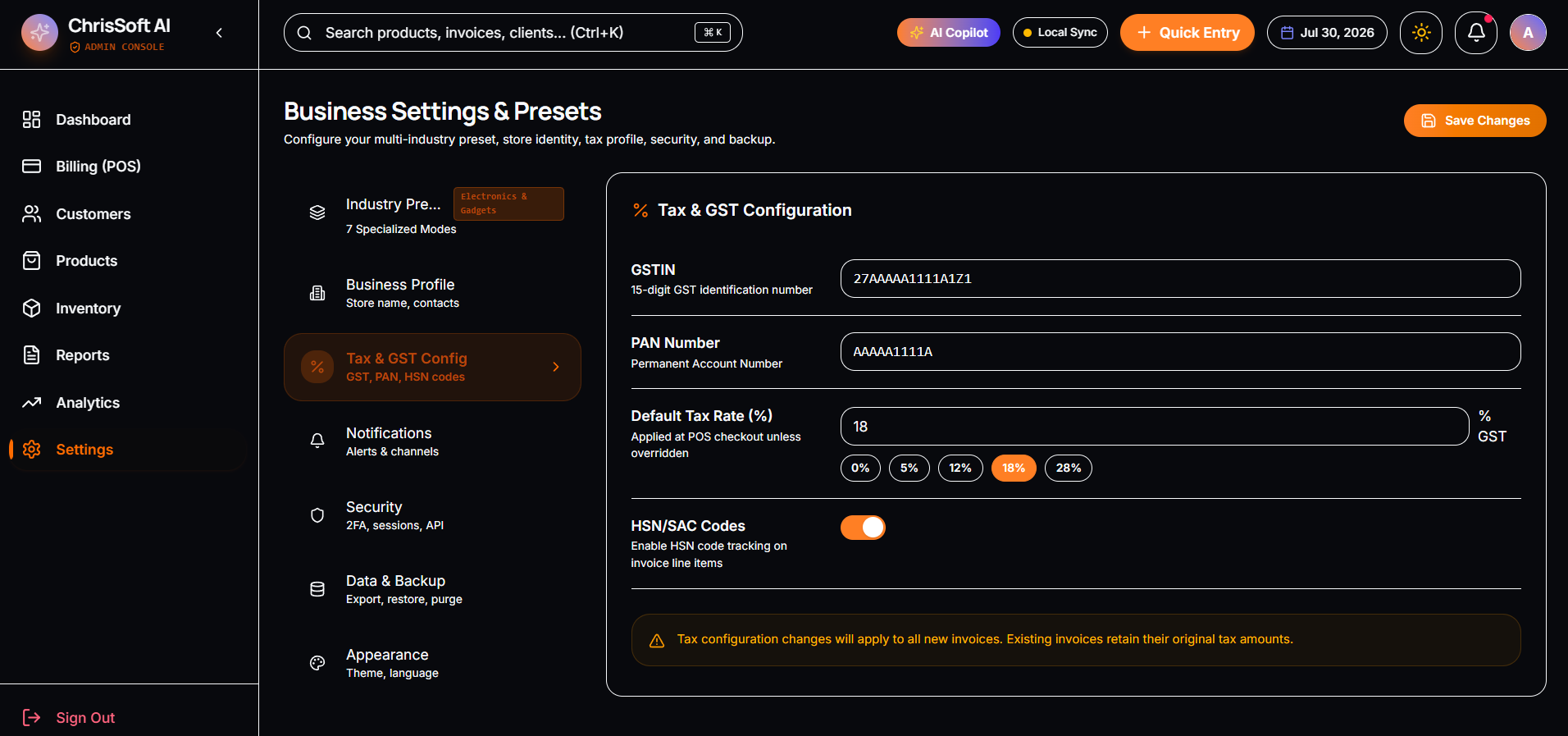
Tax & GST
ChrisSoft AI — Reimagining ERP with Artificial Intelligence
Inspiration — It Started With My Father's ERP Software
The idea behind ChrisSoft AI didn't begin with a hackathon or a random startup idea. It started at home.
My father uses ERP software to manage his business operations. Growing up around that environment, I became curious about how businesses use technology to handle billing, inventory, purchases, and everyday decisions.
ERP systems are powerful. They help businesses organize information, track transactions, generate invoices, and manage operations.
But I started thinking about something beyond those features.
What happens after the software collects all that information?
A business owner can see how many products were sold, how much inventory remains, or how much money was spent. But they still need to interpret those numbers and decide what to do next.
Which products should be restocked?
Which supplier offers the best option?
What if demand suddenly increases?
Can the system identify potential problems before they affect the business?
These questions made me realize that there is a difference between software that manages a business and software that understands a business.
That realization became the foundation of ChrisSoft AI.
I wanted to take the familiar concept of ERP software and build something more intelligent, where artificial intelligence isn't just an additional chatbot but an integrated part of everyday business operations.
My vision was to create an ERP platform that doesn't just record business decisions but helps people make better ones.
What We Built
ChrisSoft AI is an AI-powered B2B procurement, billing, inventory, and merchant management platform designed to connect everyday operations with intelligent decision-making.
Instead of switching between disconnected applications, merchants can access their business operations through a unified dashboard.
We organized the platform around several core capabilities:
AI Business Copilot: An assistant that helps merchants understand inventory, sales, revenue, and supplier information through natural-language questions.
Smart Procurement: Vendor recommendation and scoring capabilities that help businesses evaluate suppliers based on purchasing requirements.
Predictive Inventory: Demand forecasting features that estimate future inventory requirements and suggest replenishment quantities.
POS Billing: An integrated checkout system supporting invoices, inventory updates, discounts, taxes, and customer records.
Business Intelligence: Analytics dashboards that visualize revenue, sales trends, inventory health, and business performance.
Procurement Risk Analysis: AI-assisted assessment of potential purchasing risks and pricing trends.
Our goal was not to replace the fundamental purpose of ERP software, but to build on it with intelligent recommendations and more connected workflows.
How We Built It
We designed ChrisSoft AI using a modular, full-stack TypeScript architecture.
The frontend uses React 19, Vite, TypeScript, and Tailwind CSS to create an interactive merchant dashboard.
The backend uses Node.js and Express, exposing REST APIs for billing, authentication, inventory, customers, procurement, analytics, and AI services.
We structured the data layer around PostgreSQL and Prisma, with JWT authentication and role-based access-control components.
For the AI capabilities, we integrated Gemini API with internal intelligence modules for conversational assistance, demand forecasting, vendor recommendations, price predictions, and procurement risk analysis.
We also used pnpm workspaces and Turborepo to organize the platform into reusable applications and packages, allowing different business components to evolve independently.
Challenges We Faced
One of our biggest challenges was combining multiple business functionalities into a single connected platform.
An ERP system isn't simply a collection of separate pages. Inventory, billing, customer management, procurement, and analytics all depend on consistent business information.
We encountered technical challenges involving monorepo dependencies, backend integration, database connectivity, and coordinating different services.
Another important challenge was deciding how AI should fit into the platform.
We didn't want to build another chatbot that produces generic answers. We wanted intelligence features that could use meaningful operational context and support actual business decisions.
That required thinking carefully about the relationship between business data, backend logic, and AI-generated insights.
What We Learned
Building ChrisSoft AI changed how I think about software engineering.
I learned that developing a useful product is not only about choosing the latest technologies. It is about understanding the people who will use it and the problems they face.
Technically, we gained experience in full-stack development, modular architecture, REST APIs, relational databases, authentication, AI integration, and the complexity of business workflows.
But my biggest learning came from the original inspiration:
The most meaningful software ideas often come from observing everyday problems closely enough to recognize what could be better.
What's Next?
Our vision is to evolve ChrisSoft AI into a more comprehensive AI-powered business operating system.
We plan to strengthen our procurement workflows, improve forecasting accuracy, expand vendor intelligence, introduce explainable business recommendations, and prepare the platform for real-world merchant testing.
Eventually, I want ChrisSoft AI to become a system that small and medium-sized businesses can rely on not only for managing operations but also for making better-informed decisions.
Final Thoughts
This project is personally meaningful to me because its inspiration came from something familiar: watching how business software is used in real life.
What began as a question about my father's ERP software grew into a vision for a more intelligent business management platform.
I believe the next generation of ERP systems should do more than organize information.
They should help businesses understand their present, anticipate their future, and make smarter decisions.
ChrisSoft AI — Beyond Managing Business. Towards Understanding Business.
Built With
- ai-chatbot
- artificial-intelligence
- css3
- express.js
- gemini-api
- generative-ai
- google-gemini
- html5
- inventory-management
- javascript
- jwt
- machine-learning
- node.js
- pnpm
- postgresql
- prisma
- procurement
- react
- rest-api
- tailwindcss
- turborepo
- typescript
- typesense
- vite

Log in or sign up for Devpost to join the conversation.