Inspiration
AI agents are increasingly deployed in autonomous workflows, but they fail quietly—hallucinations, breaking traces, and runtime API errors often go undetected until systems break completely. We wanted to build a safety net that doesn't just log these errors, but acts as a dynamic supervisor. ChitinAI was born out of the need for an enterprise-grade meta-agent that monitors, auto-heals, and optimizes live LLM agents in real time without requiring constant human intervention.
What it does
ChitinAI operates as an autonomous, self-healing meta-agent designed to ensure high reliability and cost efficiency for deployed AI workloads:
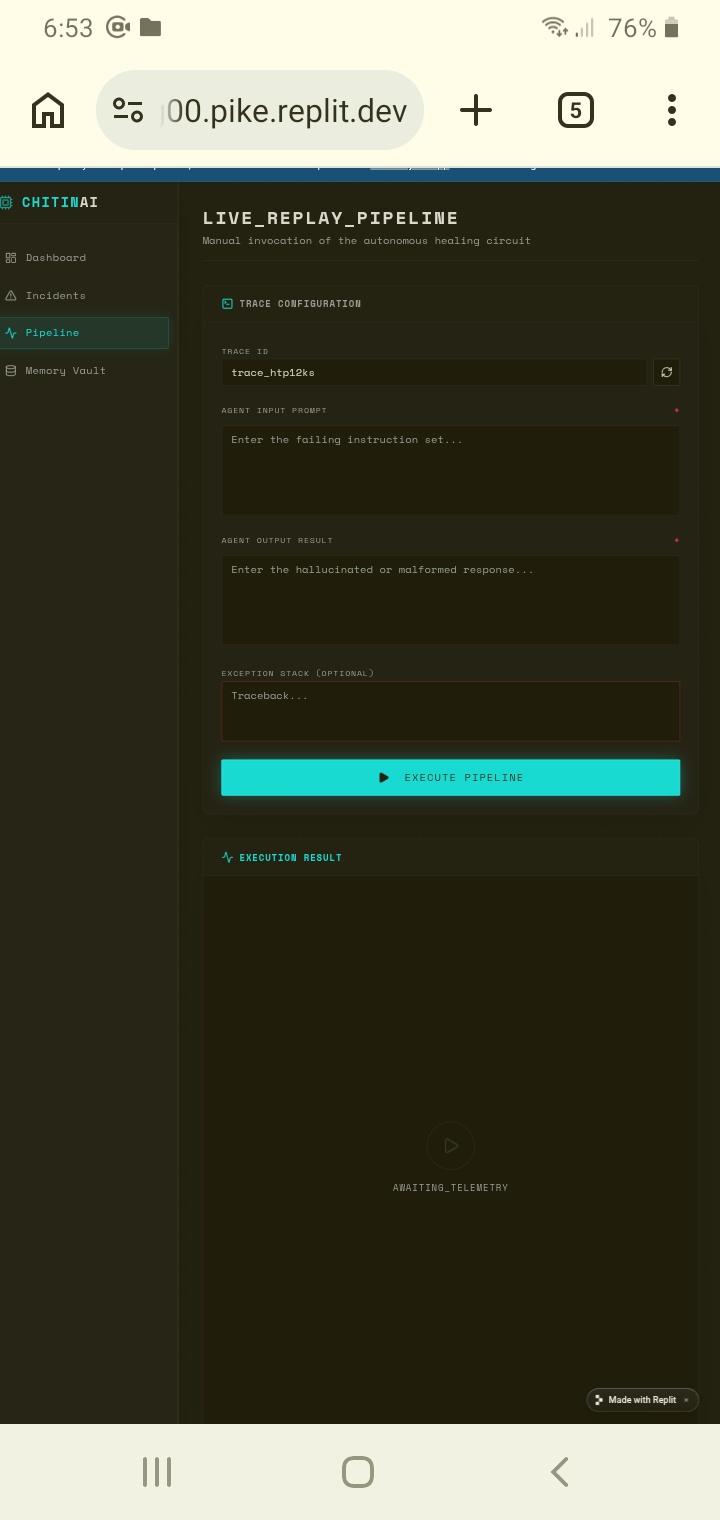
- Real-time Trace Scanner (Watcher): Monitors execution flows of live LLM agents, capturing step-level traces and detecting hallucinations or logic breaches.
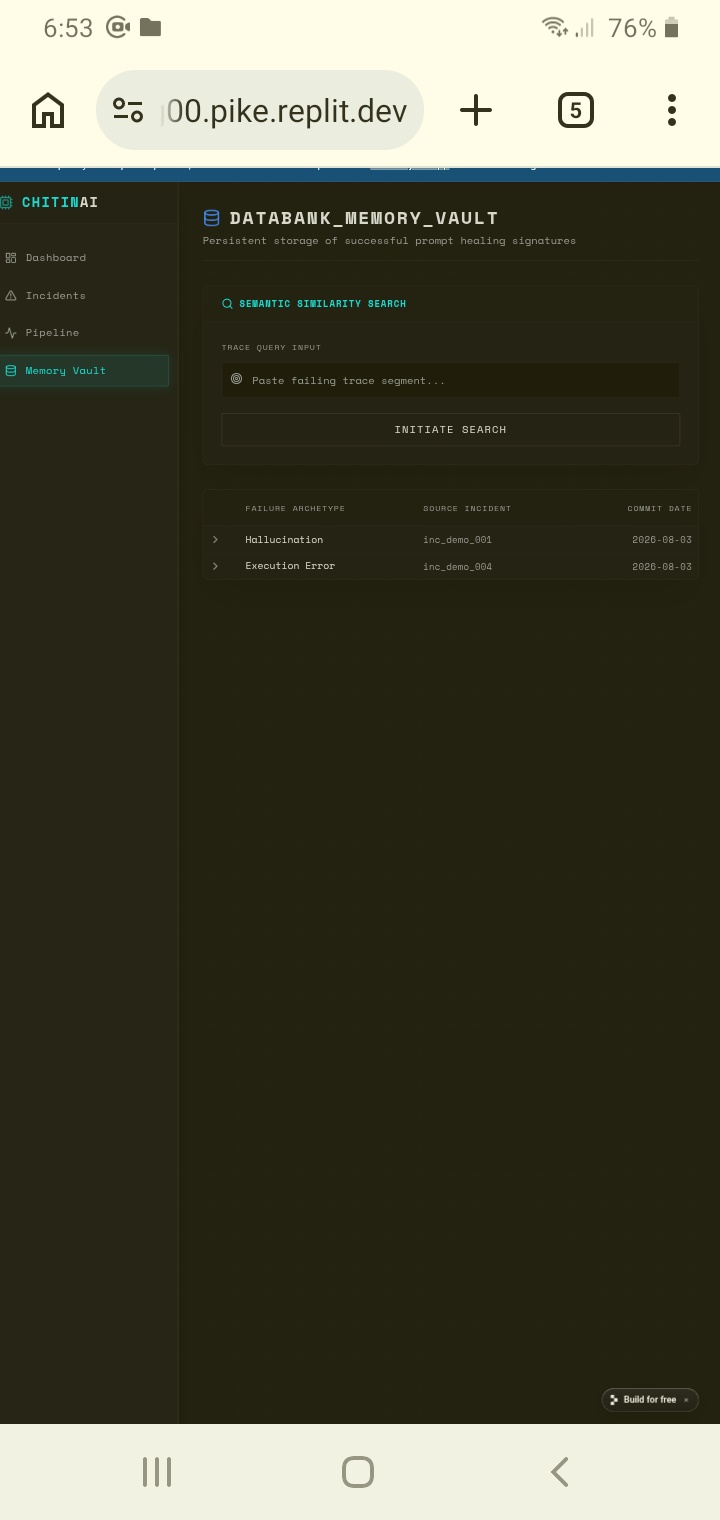
- Vector Memory & Auto-Healing: Leverages CockroachDB Distributed Vector Search to fetch historical incident data and triggers
ccloud CLIscripts to heal broken application states automatically. - Smart Cost Routing: Dynamically routes model requests between high-capability models (Claude 3.5 Sonnet) and lightweight alternatives (Amazon Nova) via AWS Bedrock to drastically reduce API operational costs.
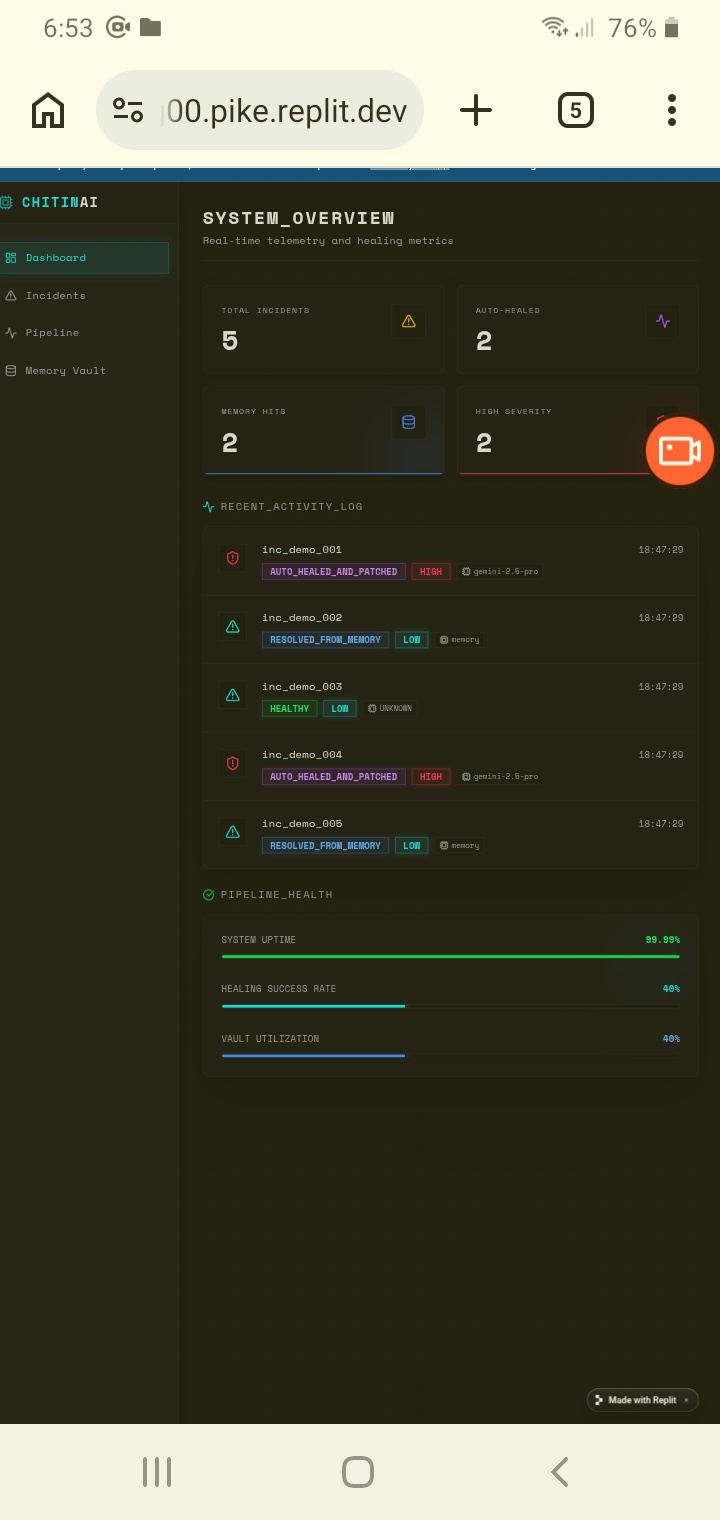
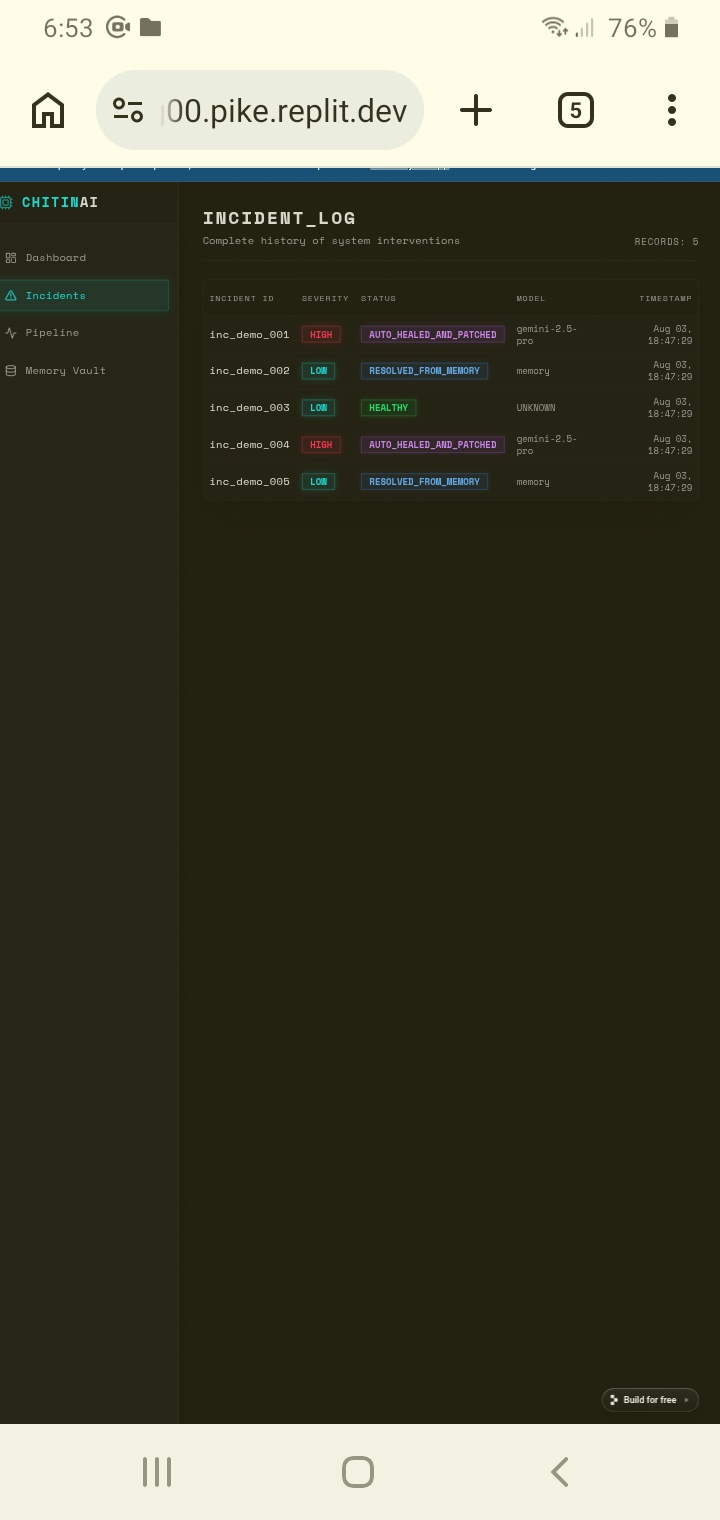
- Visual Cockpit: Features a custom React/Vite dashboard providing real-time prompt diffs, execution trajectory replays, and postmortem alerts to Slack/Discord.
How we built it
We architected ChitinAI using a robust modular stack tailored for scale and execution speed:
- Backend & Agent Logic: Core pipeline written in Python, featuring custom watcher threads and orchestration logic.
- Vector RAG & Memory: CockroachDB with Bedrock Titan embeddings for fast similarity searches across failure postmortems.
- Infrastructure & Routing: AWS Bedrock SDK for model switching and automated database CLI commands (
ccloud) for execution context repairs. - Frontend Cockpit: React with Vite for low-latency visual log monitoring and prompt diff displays.
- Devin Integration: Utilized Devin to audit our core codebase, refactor edge-case error handlers in
chitin/watcher.py, and auto-generate comprehensive unit test suites usingpytest.
Challenges we ran into
- Sub-second Fault Detection: Ingesting live agent traces and determining failures without adding latency to the main execution loop required optimizing our background thread orchestration.
- State Reconstruction during Auto-Healing: Mapping vector search results to actionable CLI recovery steps demanded careful error-type categorization and fail-safe fallbacks.
- Dynamic Model Switching: Balancing token usage and latency thresholds while seamlessly hot-swapping between Claude 3.5 Sonnet and Amazon Nova inside AWS Bedrock without dropping prompt context.
Accomplishments that we're proud of
- Zero-Downtime Recovery Loop: Successfully demonstrated end-to-end self-healing where a failing agent context was detected, matched against vector memory, and auto-patched in real time.
- Significant Cost Reduction: Reduced token spend during benchmark evaluation runs by using dynamic model routing via AWS Bedrock.
- End-to-End Production Readiness: Built a complete full-stack product featuring backend pipelines, live vector database integration, deployment on Replit, and an intuitive UI dashboard.
What we learned
- Multi-agent architectures require strict isolation between the "worker" and the "supervisor" to avoid recursive failure loops.
- Combining vector memory RAG with command-line orchestration unlocks a powerful framework for infrastructure-level self-healing.
- Agentic workflows built alongside autonomous AI developers like Devin can dramatically accelerate testing, bug discovery, and code refactoring cycles.
What's next for ChitinAI
- Multi-Cloud Healing Drivers: Expand auto-healing connectors to support Kubernetes, Vercel, and AWS Lambda deployments.
- Open-Telemetry (OTel) Native Integration: Support standardized tracing protocols so developers can connect ChitinAI to existing monitoring stacks (Datadog, LangSmith, Honeycomb) out of the box.
- Proactive Anomaly Prediction: Train predictive models on failure traces to patch prompt drifts before a failure even occurs.
Built With
- agent
- amazon-web-services
- bedrock
- claude
- devinai
- meta
- python
- rag
- react


Log in or sign up for Devpost to join the conversation.