-
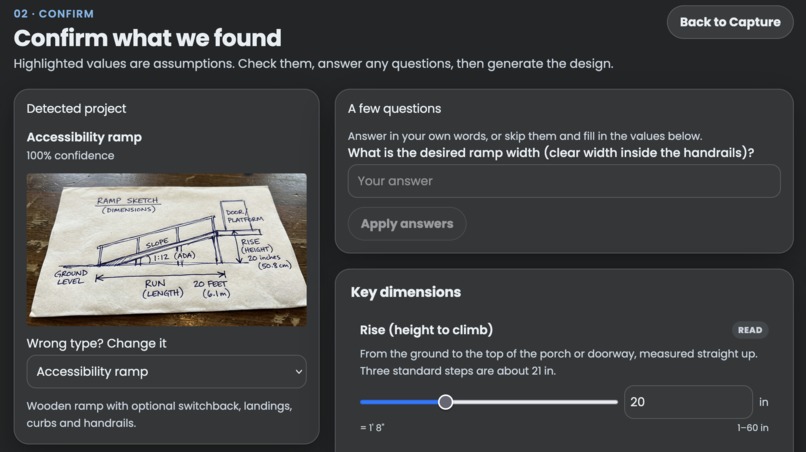
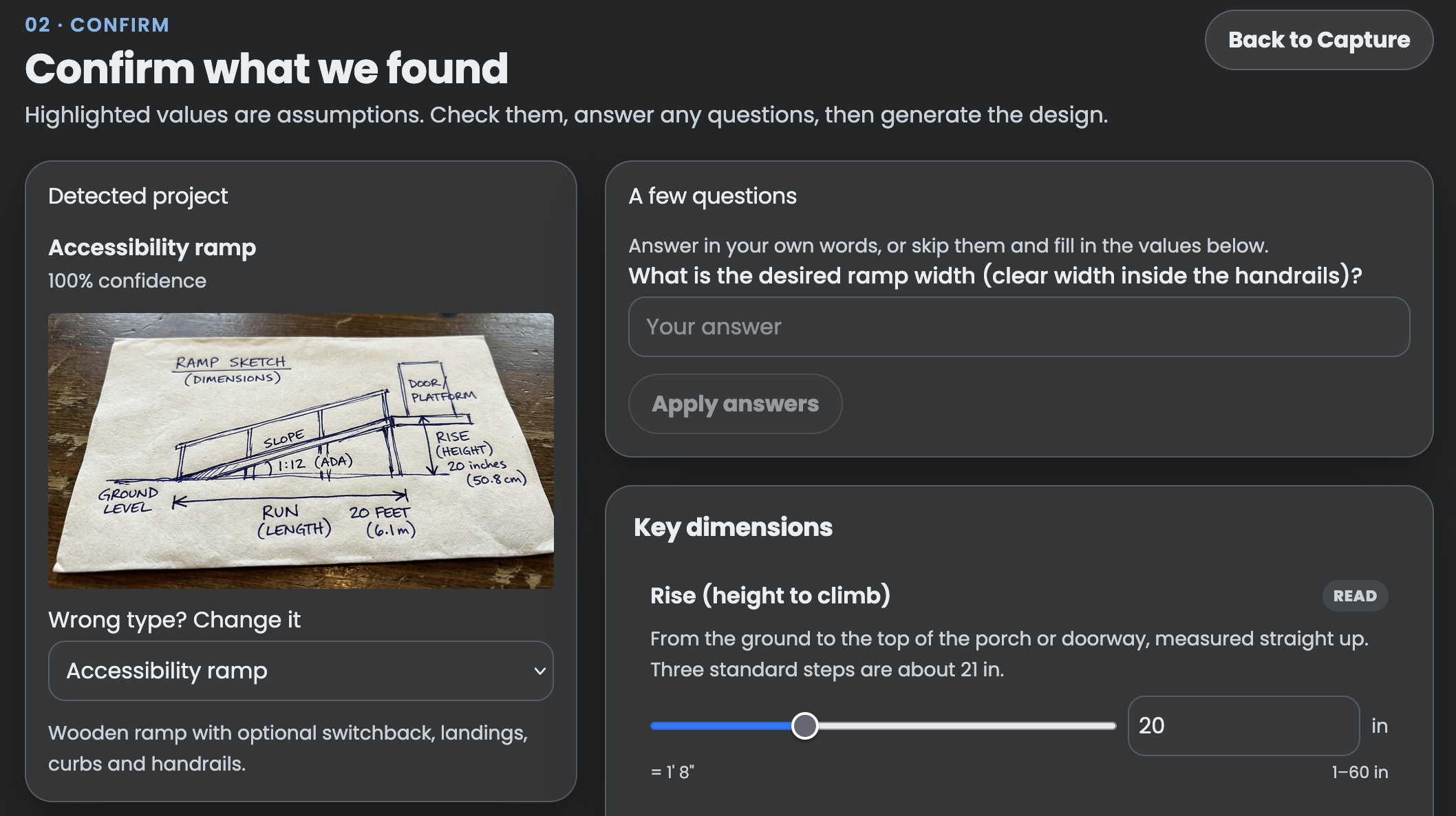
Start with a sketch.
-
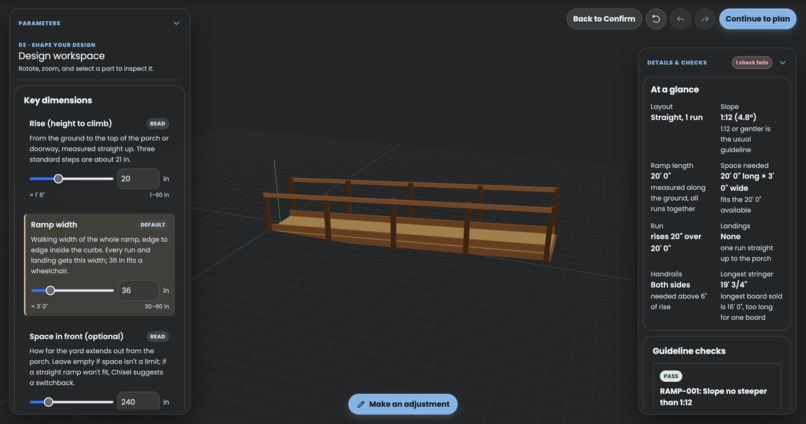
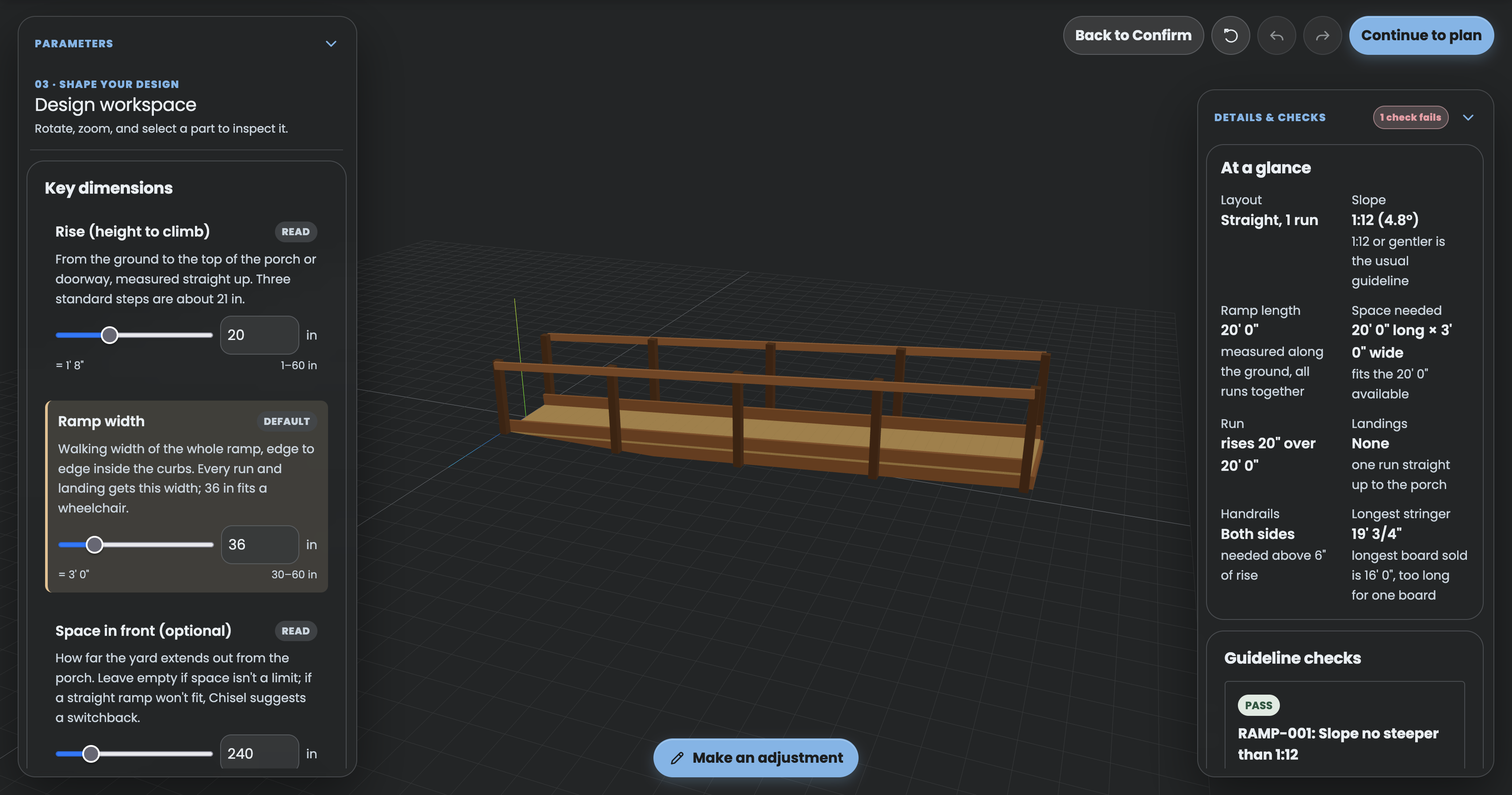
Shape it in 3D.
-
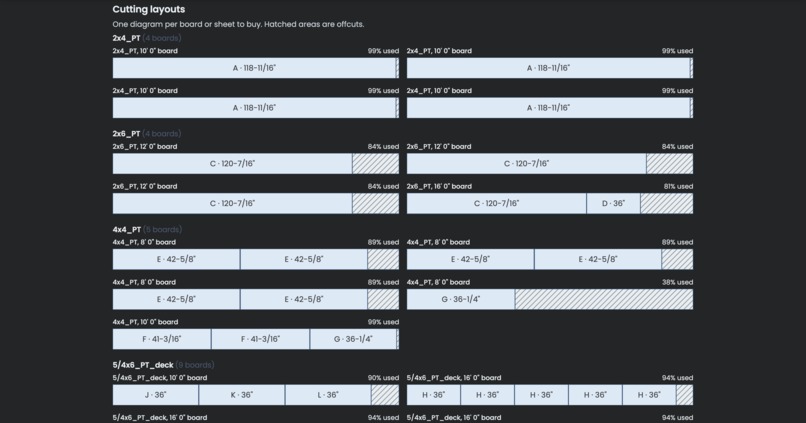
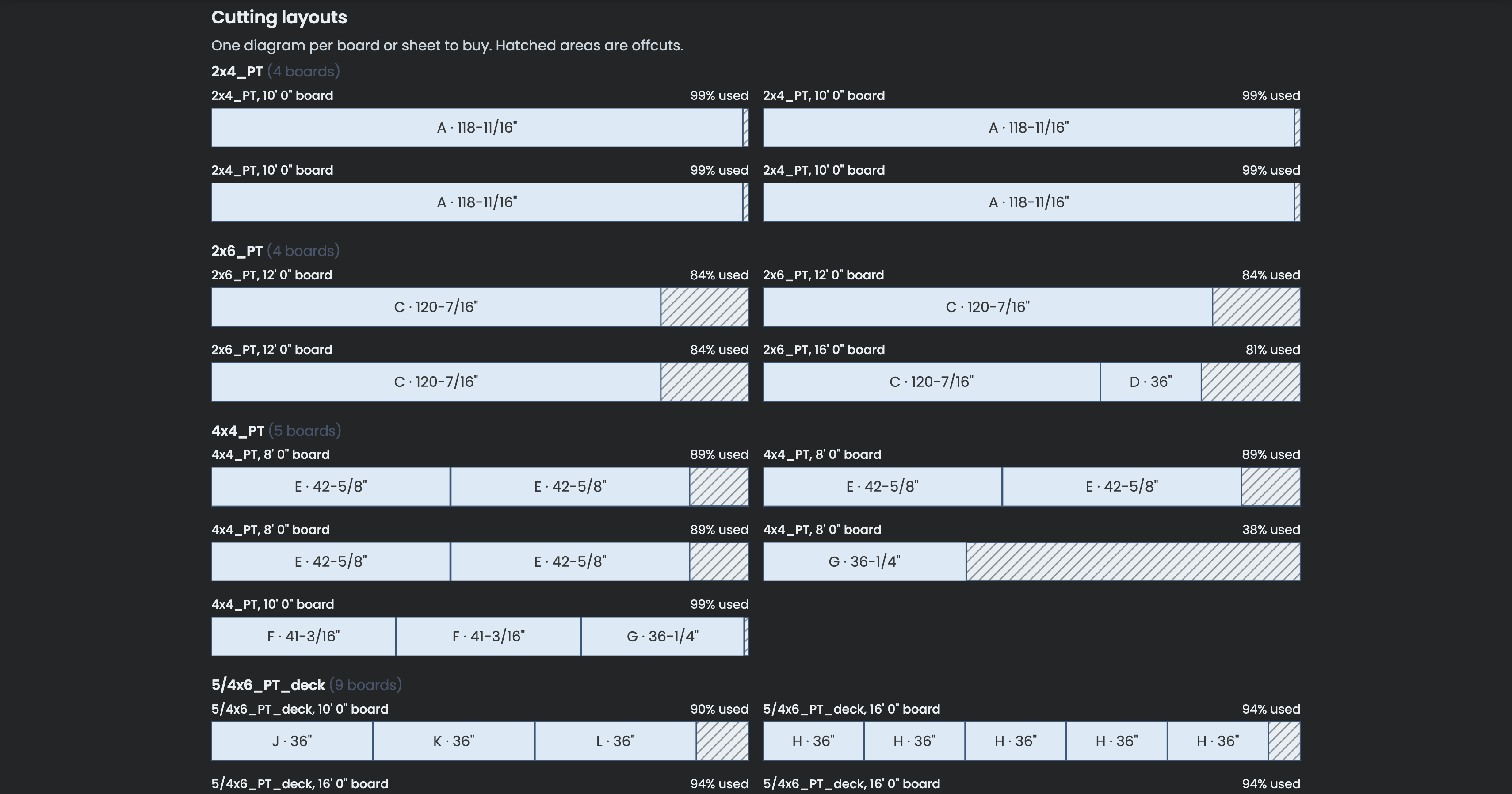
Plan every cut.
-
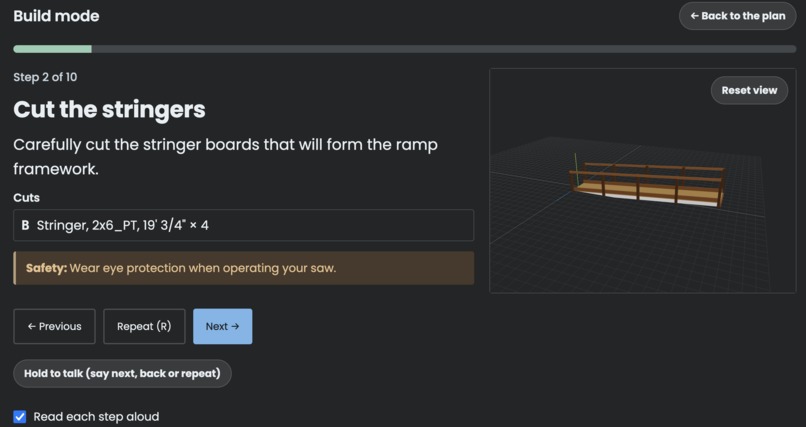
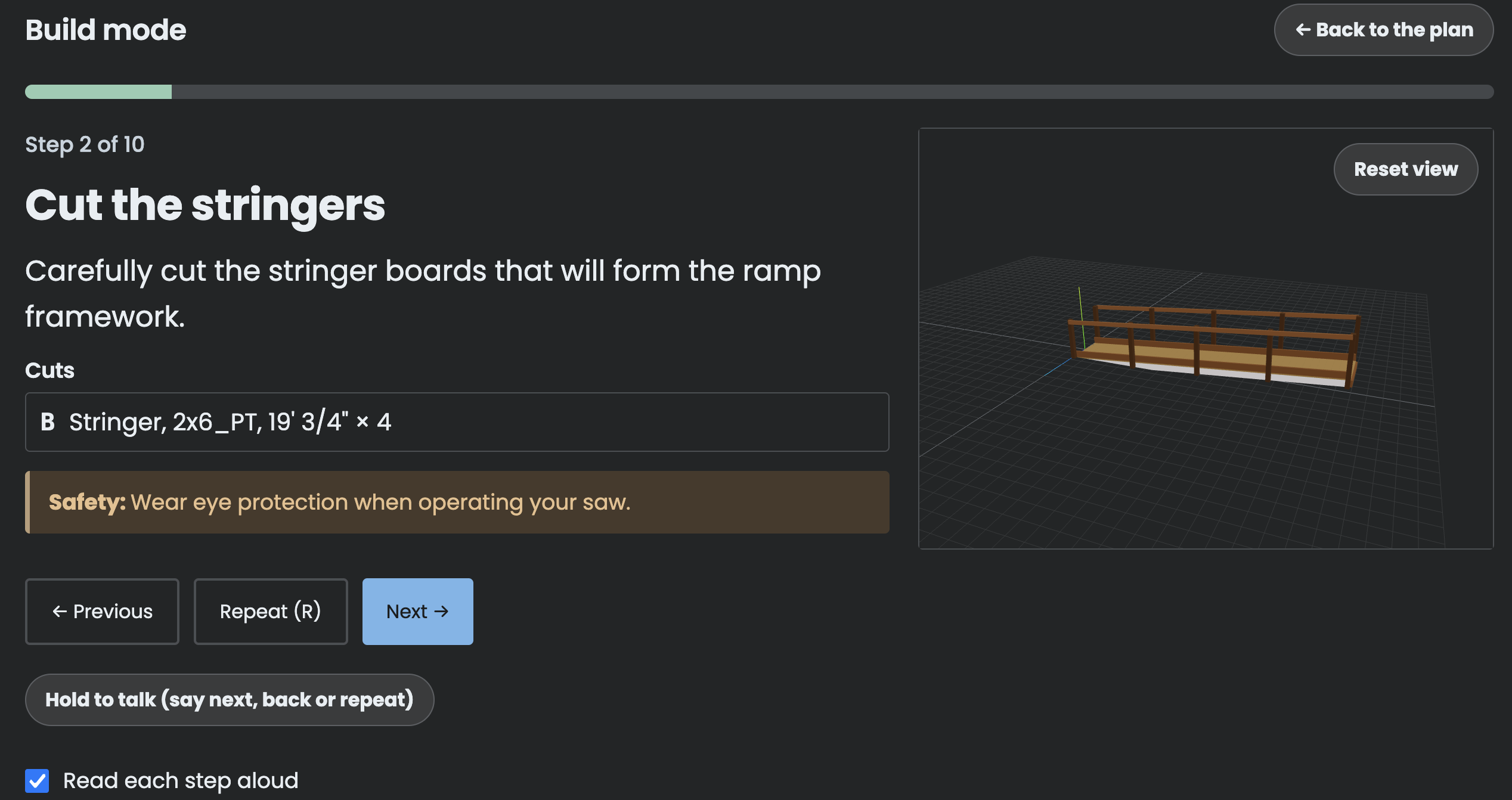
Build with a clear next step.
Inspiration
We wanted to make building something physical as easy as having the idea for it. A rough sketch or photo shouldn't require CAD knowledge, construction experience, and hours of research to become something you can actually build. Chisel turns that first sketch into a real, safe, costed build plan.
What it does
Chisel turns a sketch or photo into a complete, safe, costed build plan, then walks you through building it hands-free. Four builds — ramp, steps, raised garden bed, workbench — each with real measurements and safety checks. Upload a photo, confirm what Chisel read (every value tagged read/guessed/default), and get a live 3D model with pass/warn/fail guideline checks and one-click fixes. Edit by voice or typing. Get a real cut list, cutting diagrams that show the waste, a priced shopping list, and CAD/spreadsheet/printable downloads. Then Build mode reads you one step at a time, hands-free, with the matching parts lit up in 3D.
How we built it
Our rule: the AI never invents a number. Gemini reads the sketch and words the instructions; every dimension, safety check, cut, and price comes from rules and geometry we wrote and tested. Every ramp constant is checked against the actual text of the 2010 ADA Standards, cited in the code. Prices are real numbers read from Home Depot Canada, each with its source link, not a guess. Stack: FastAPI + CadQuery for geometry, React/Three.js for the 3D model, Gemini for parsing and voice edits, ElevenLabs for spoken steps with a browser-voice fallback. Four of us split geometry, frontend, AI/voice, and infrastructure off one shared data contract.
Challenges we ran into
A 2x4 curb is 3.5 inches tall; ADA 405.9 requires at least 4 — we caught this checking our own numbers against the standard's real text and fixed it with a build-time guard so it can't regress. Home Depot blocks scraping, and a general web-search tool can read prices but not tell us which store, so we ended up hand-verifying real prices ourselves. Gemini's free tier turned out to be 5 requests a minute and 20 a day — we learned that from the actual error responses, not the docs, which is exactly why every AI step has a non-AI fallback.
Accomplishments that we're proud of
Every accessibility number in the app traces to a specific ADA section, verified against the published standard rather than a summary. A synthetic eval set of 17 realistic sketches (dark photos, sideways, no photo at all) keeps the AI parsing honest. And the headline demo moment, which is a ramp that fails to fit the yard, fixed to a compliant switchback in one click works because the geometry underneath is real, not staged.
What we learned
That "accessible" is a testable claim, not a vibe: every number needs a citation, and checking against the literal standard caught a real bug before anyone else would have. The AI's job here is to be a better interface to rules people already trust, not to replace them.
What's next for Chisel
Real prices for the remaining hardware, more templates (fences, sheds, decks, shelving), and planning a build around wood you already have instead of a fresh trip to the store.


Log in or sign up for Devpost to join the conversation.