-
-
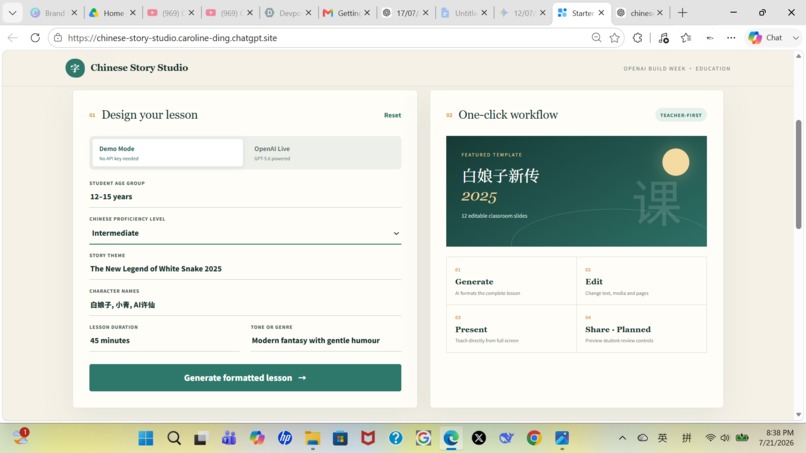
Generate
-
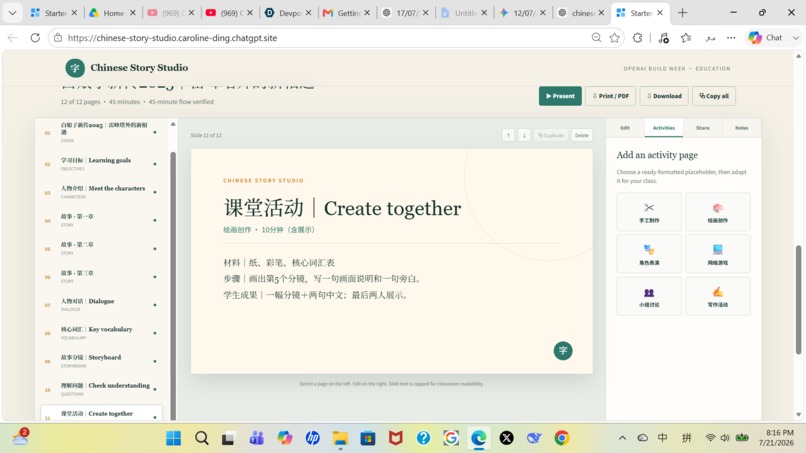
Edit
-
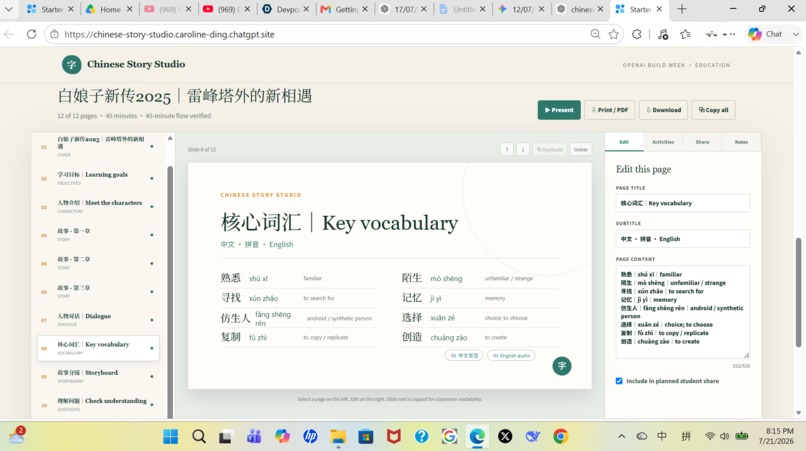
Vocabulary
-
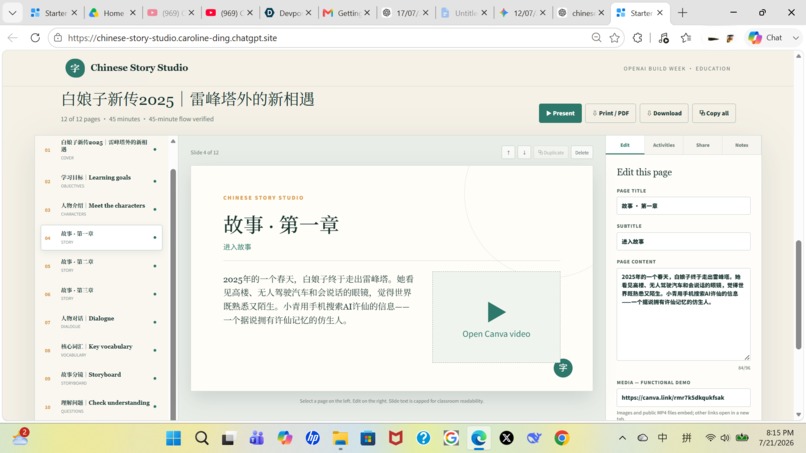
Media
-
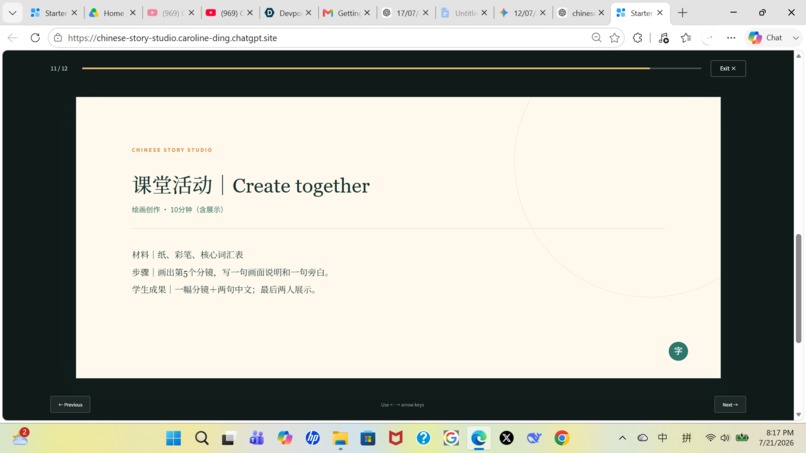
Present
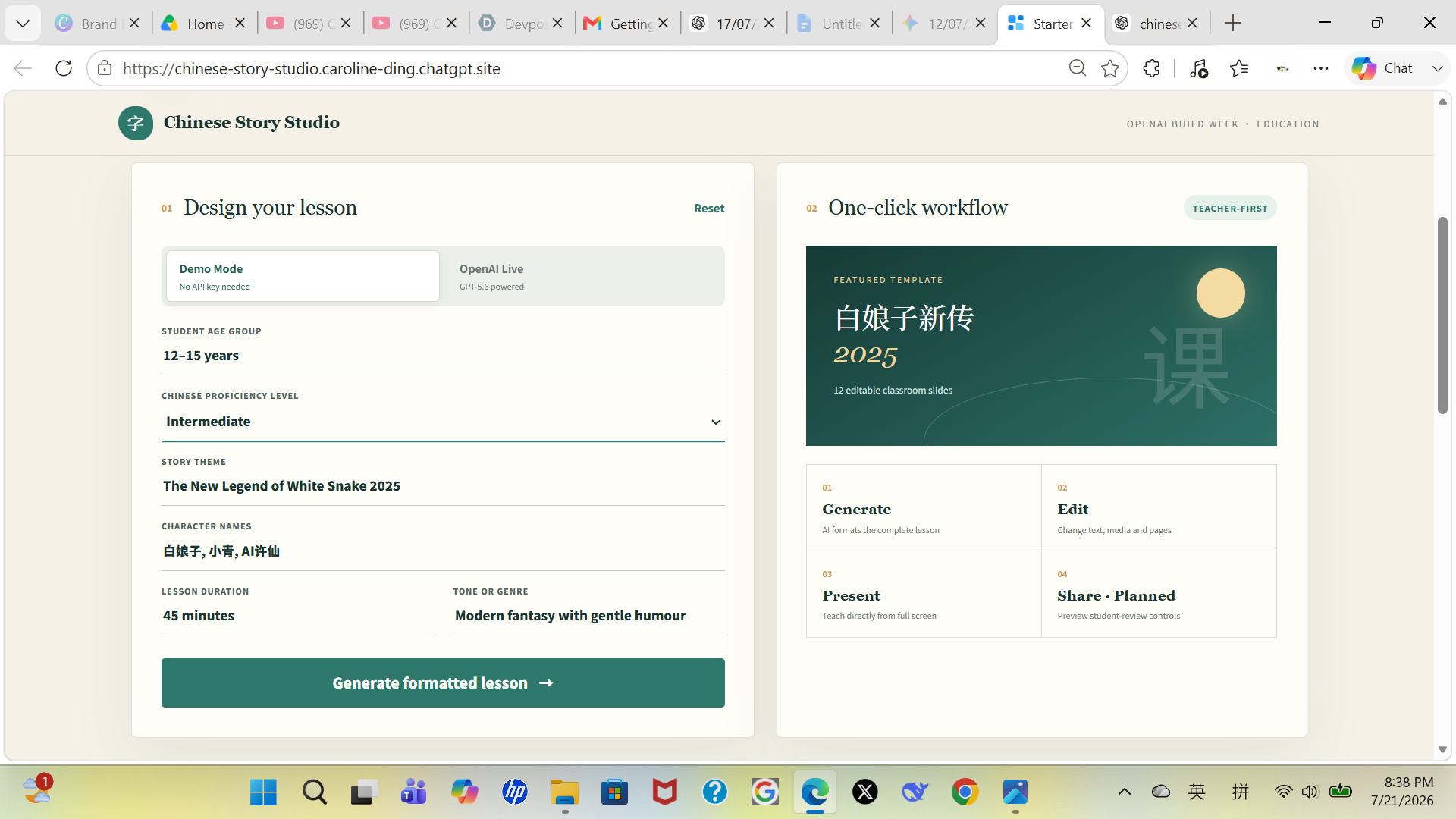
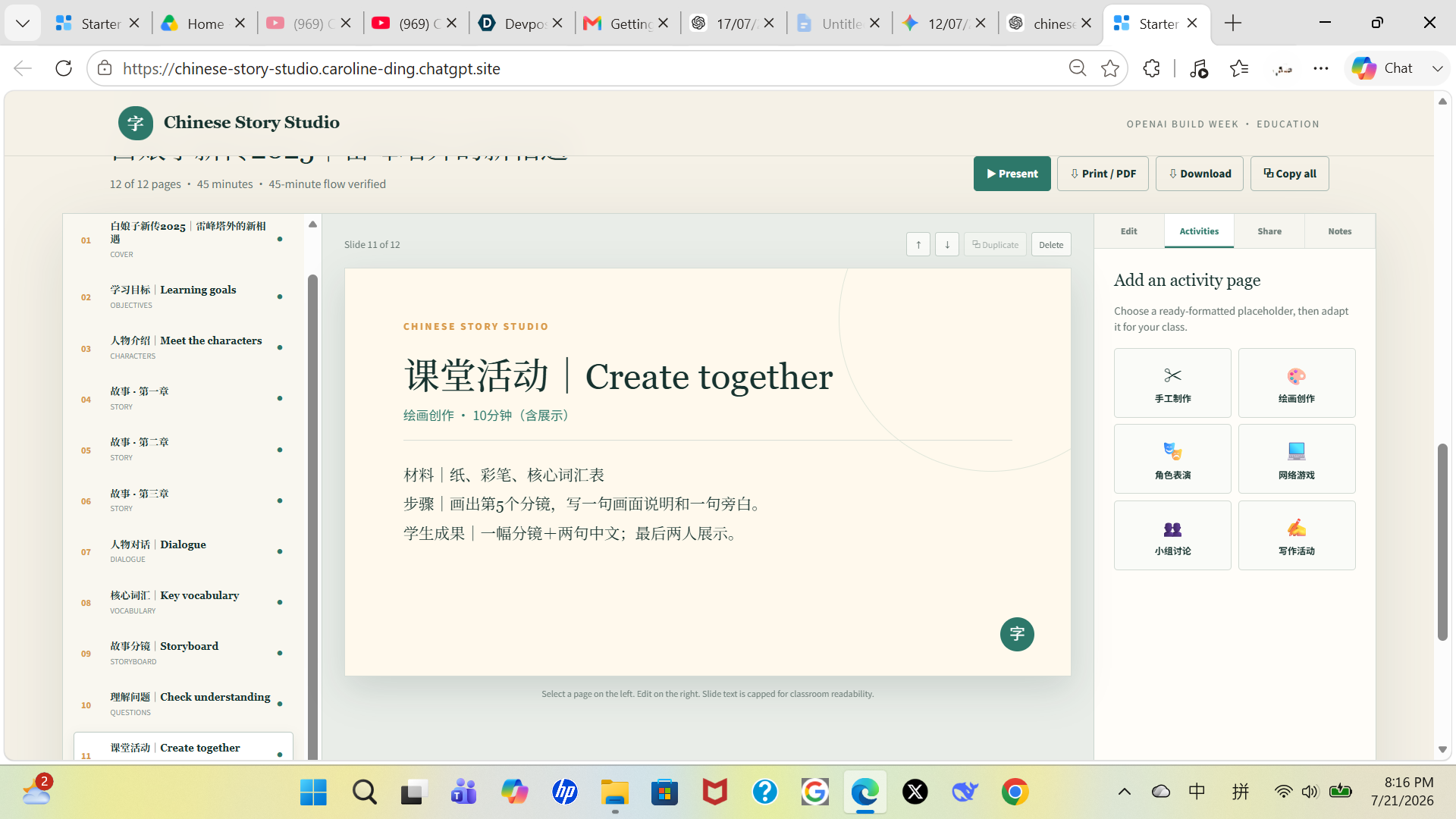
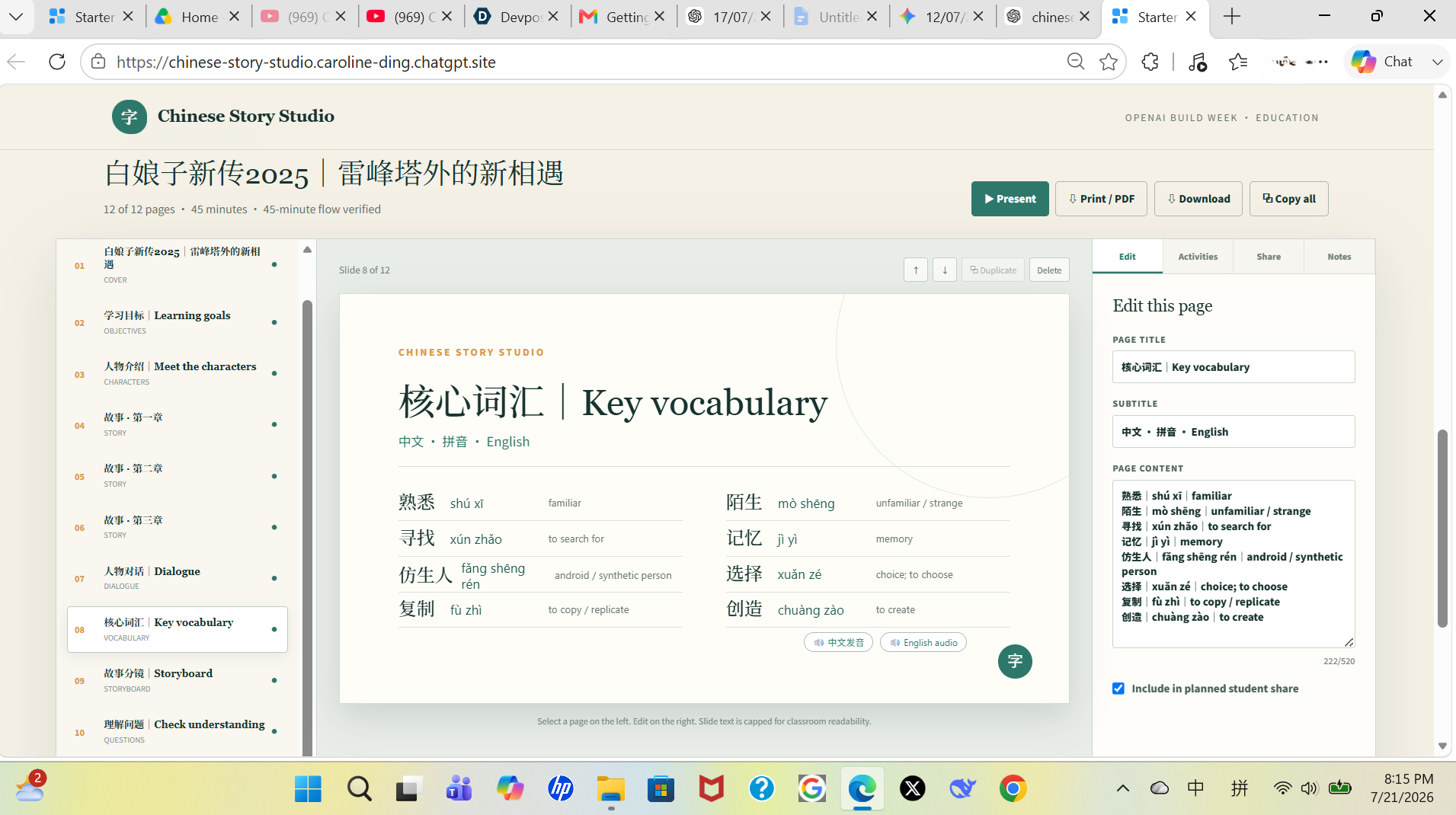
Inspiration
Chinese language teachers often spend many hours turning a teaching idea into a complete classroom presentation. The challenge is not only writing content, but also organising learning goals, characters, story sections, vocabulary, dialogue, activities, teacher notes, and presentation flow into a format that is clear enough to use in class.
I built Chinese Story Studio from my own experience as a Chinese language teacher and multimedia lesson creator. I wanted a tool that could reduce repetitive slide preparation while still leaving teachers in control of the final lesson.
The goal was simple: From teaching idea to classroom-ready Chinese slides in one click.
What it does
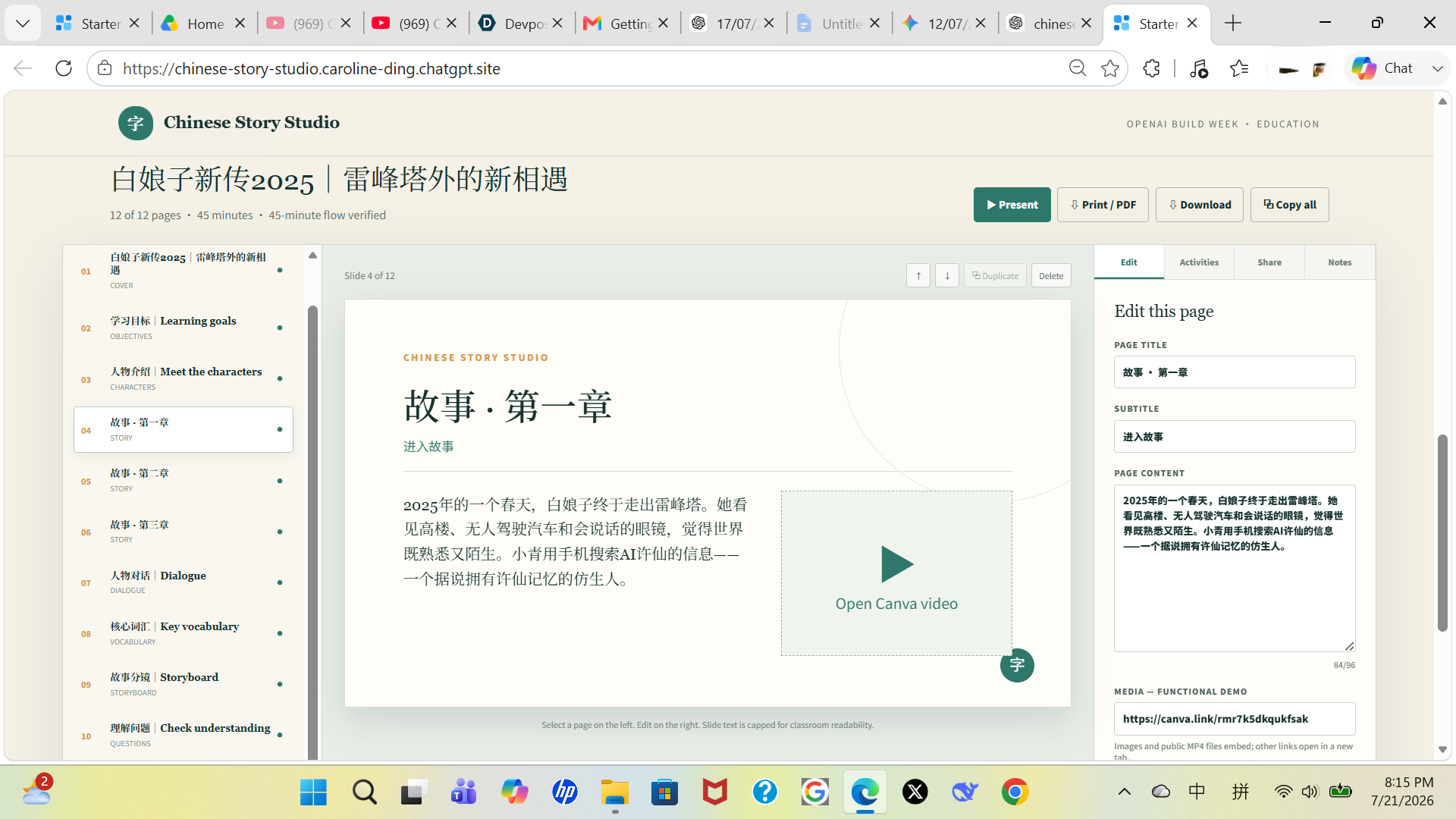
Chinese Story Studio turns a teacher’s lesson idea into a structured, editable 12-page classroom slide deck designed for a 45-minute Chinese lesson.
Teachers enter:
- student age group
- Chinese proficiency level
- lesson theme
- character names
- lesson duration
- tone or genre
The system then creates a classroom-ready lesson structure containing:
- cover page
- measurable learning goals
- character introductions
- three story sections
- dialogue
- key vocabulary with pinyin and English
- storyboard
- comprehension questions
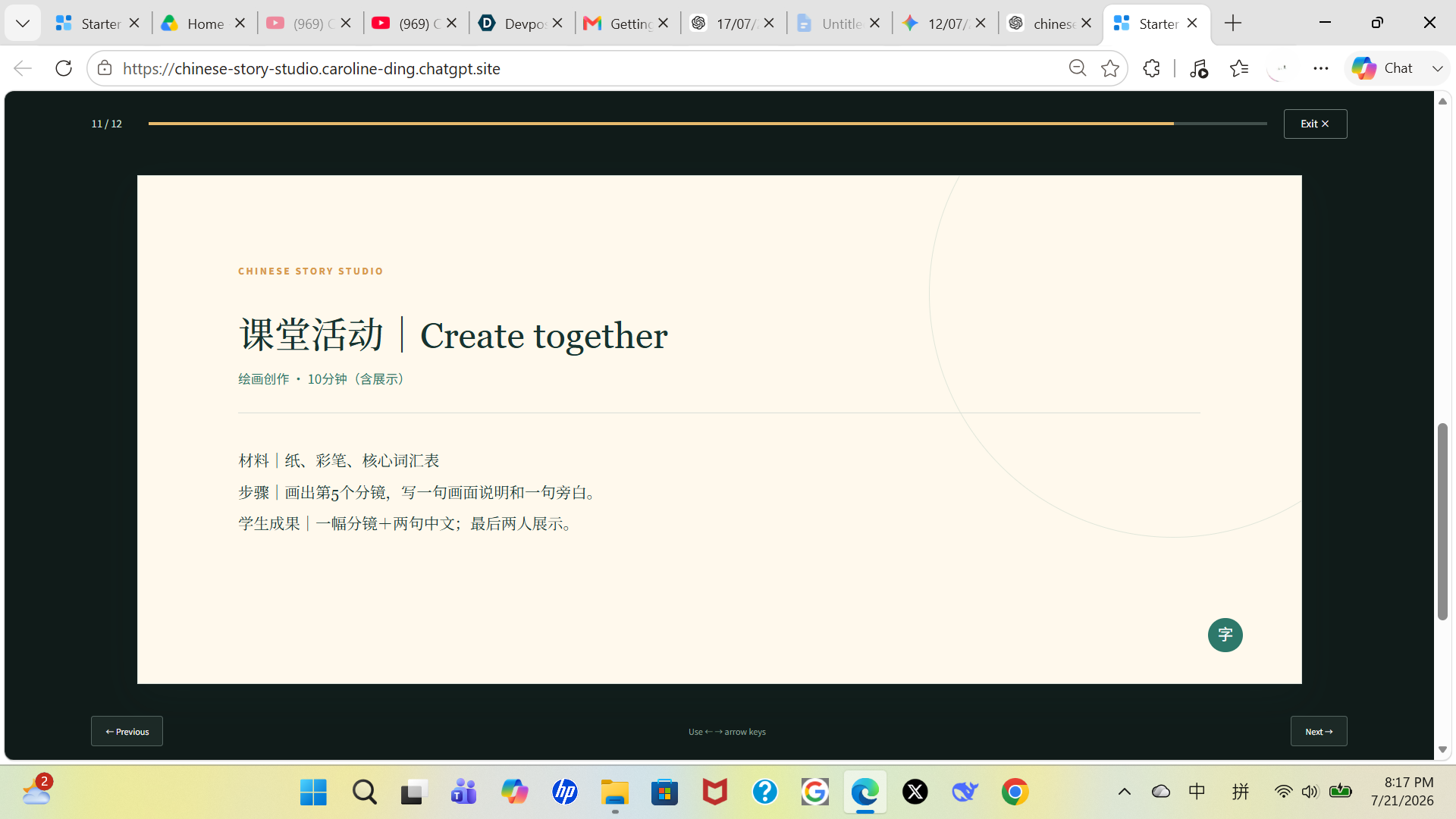
- classroom activity
- lesson wrap-up
After generation, teachers can edit text, reorder or duplicate pages, add media links, use presentation mode, review teacher-only notes, and download the lesson.
The product is not designed to replace teachers or generate an unlimited lesson plan. It provides a strong 12-page teaching framework, while teachers keep professional control over additional content and classroom adaptation.
How we built it
I used Codex and GPT-5.6 to help turn the product idea into a working web application.
The development process included:
- defining the product scope and classroom workflow
- designing the 12-page lesson structure
- building the lesson input form
- implementing demo and live generation modes
- creating the editable slide workspace
- adding page controls, presentation mode, teacher notes, media fields, reset, download, and export functions
- testing the application in the browser
- refining the generated content for classroom readability
GPT-5.6 was used to help generate structured lesson content based on the teacher’s inputs. Codex supported implementation, debugging, testing, interface refinement, and documentation.
The application was built as a teacher-first product rather than a general chatbot. The model output is constrained to a predictable classroom format so that the result is easier to review, edit, present, and reuse.
Challenges we ran into
One of the main challenges was balancing flexibility with consistency.
Teachers may enter any lesson theme, but the generated result still needs to fit into a readable 12-page structure. Long text, dialogue, pinyin, and storyboard content can easily overflow a classroom slide, so the application required limits and formatting rules to keep content readable when projected.
Another challenge was distinguishing between working features and future features. For example, the current media workflow supports publicly accessible media URLs, while broader media-library and student-sharing functions are clearly identified as planned features.
I also encountered technical issues during development, including:
- API responses returning HTML instead of valid JSON
- reset and download controls not behaving correctly
- preserving Chinese characters, pinyin, and English in downloaded content
- preventing generated text from overflowing slide containers
- improving pinyin spacing and consistency
- keeping teacher-only information separate from presentation mode
- ensuring unfinished features were not presented as complete
Each issue was reproduced, fixed, rebuilt, and tested in the browser.
Accomplishments that we're proud of
I am proud that Chinese Story Studio became a working, classroom-focused product rather than remaining only an idea or prototype.
The current version can turn a teacher’s lesson concept into a complete, editable 12-page Chinese classroom slide deck with a clear 45-minute teaching structure.
I am especially proud that the project:
- was built from a real teaching need
- supports any lesson theme rather than only one sample story
- keeps the teacher in control of editing and classroom decisions
- separates teacher-only notes from presentation content
- supports presentation, media links, page editing, reset, and download workflows
- handles Chinese characters, pinyin, and English together
- clearly labels planned features instead of presenting them as complete
- was repeatedly tested and refined in the browser
As a non-technical educator and creator, completing a functional web application with Codex and GPT-5.6 was also a major personal achievement.
The project demonstrates that subject-matter expertise and AI-assisted development can work together to create practical tools for real classrooms.
What we learned
This project taught me that AI-generated educational content becomes much more useful when it is placed inside a clear professional workflow.
A teacher does not only need text. A teacher needs:
- structure
- readable formatting
- timing
- editability
- presentation controls
- honest feature boundaries
- the ability to apply professional judgement
I also learned that building with AI is an iterative process. Suggestions are useful inputs, but they should not be accepted automatically. Each idea must be evaluated against the product purpose, technical feasibility, available time, and user experience.
The most important design principle became:
Let AI complete the repetitive preparation work while the teacher keeps control of the lesson.
What's next for Chinese Story Studio
Future development may include:
- improved media embedding
- reusable teacher templates
- additional presentation themes
- optional student review links
- expanded export formats
- saved lesson libraries
- stronger multilingual support
The current version focuses on proving the central workflow: A teacher can enter a lesson idea and quickly receive a complete, editable, classroom-ready Chinese slide deck.
Built With
- chatgpt-sites
- css3
- gpt-5.6
- html5
- openai-codex
- openai-responses-api
- react
- typescript
- vite
- web-speech-api

Log in or sign up for Devpost to join the conversation.