Inspiration
Cross-border healthcare is inherently complex, and the language barrier makes it even harder. Many international patients seek access to China's top-tier medical facilities (like Grade 3A hospitals) and specialized treatments (such as TCM or advanced oncology), but they struggle to find reliable, neutral, and bilingual information. I was inspired to build a bridge—a transparent information directory that eliminates this asymmetry and empowers patients to explore their options objectively.
What it does
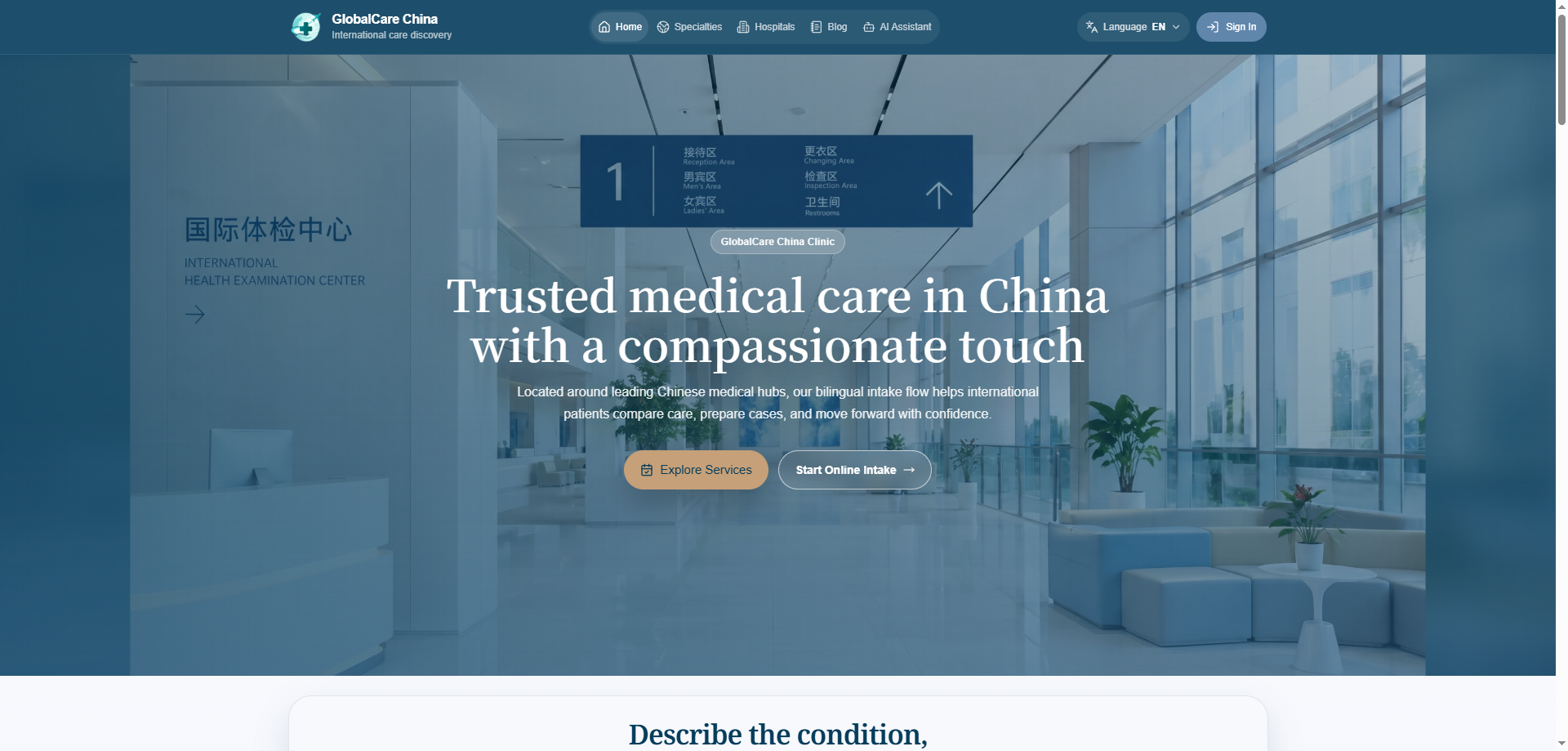
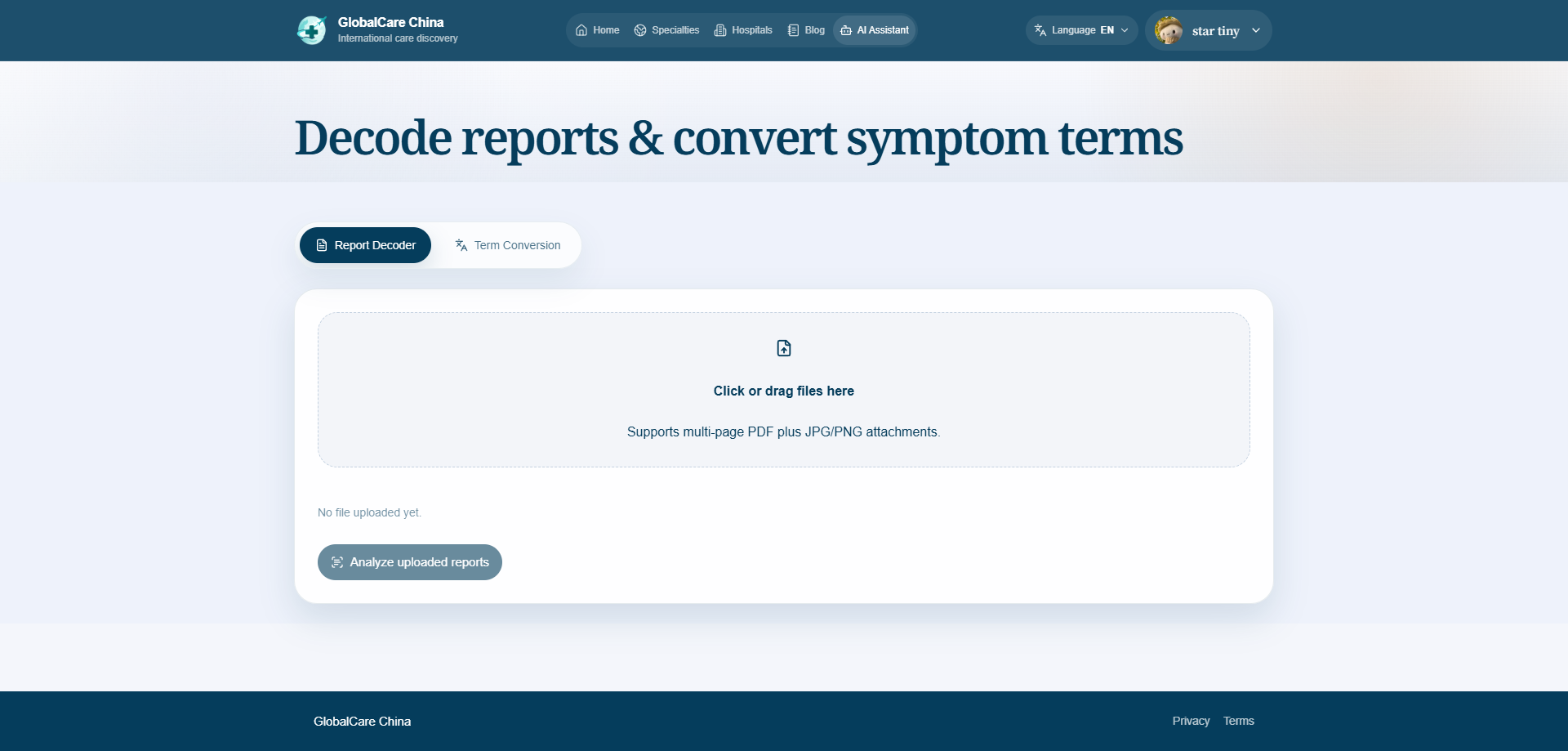
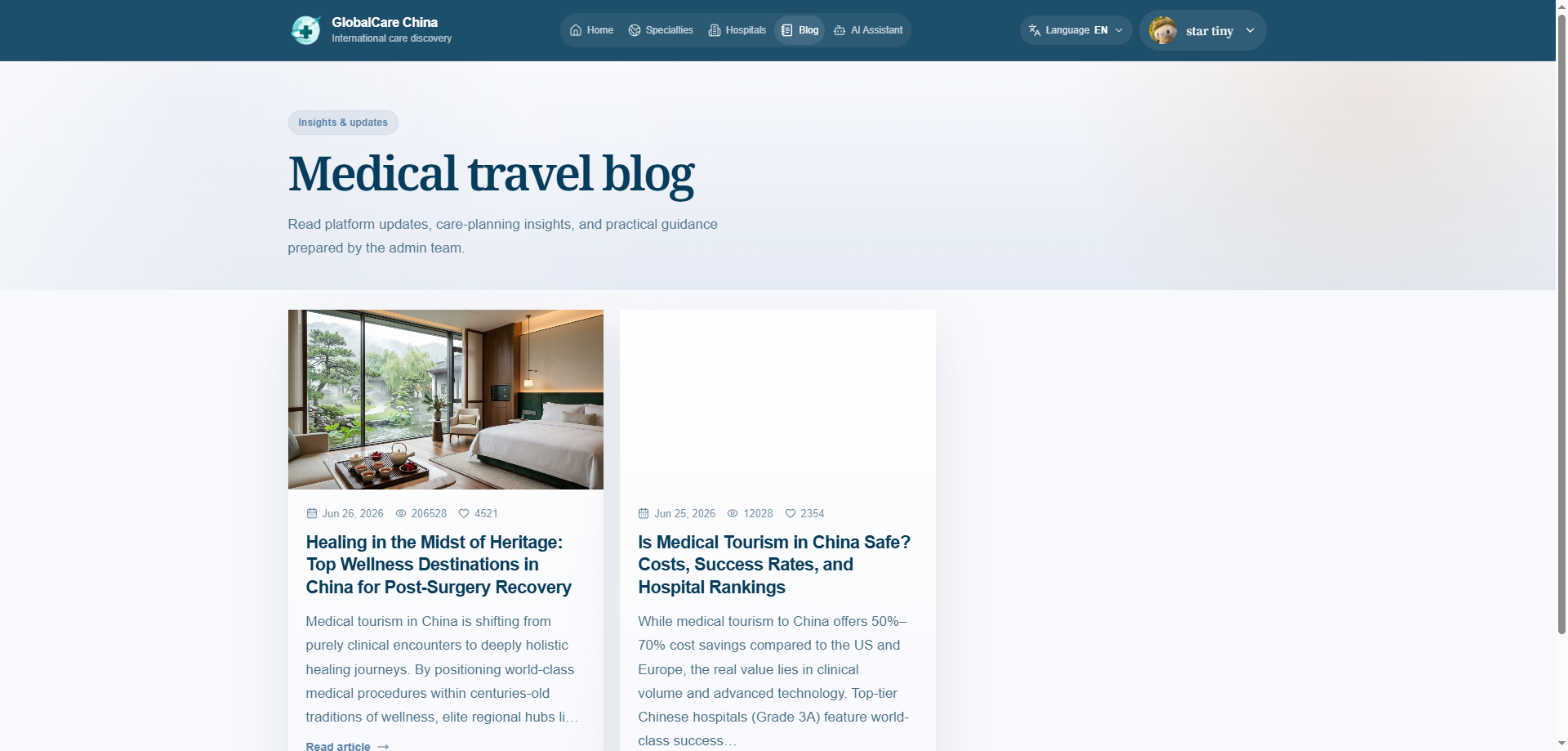
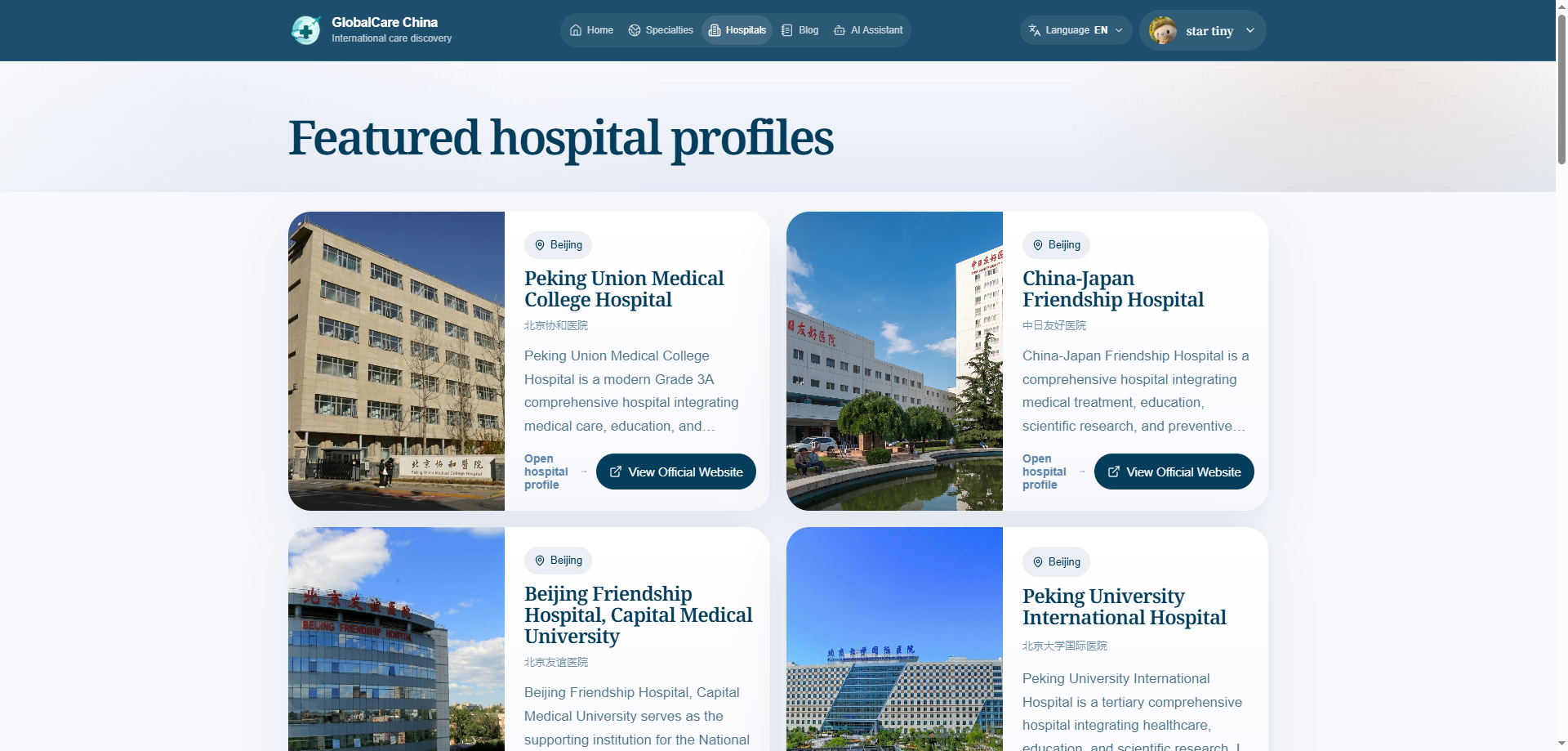
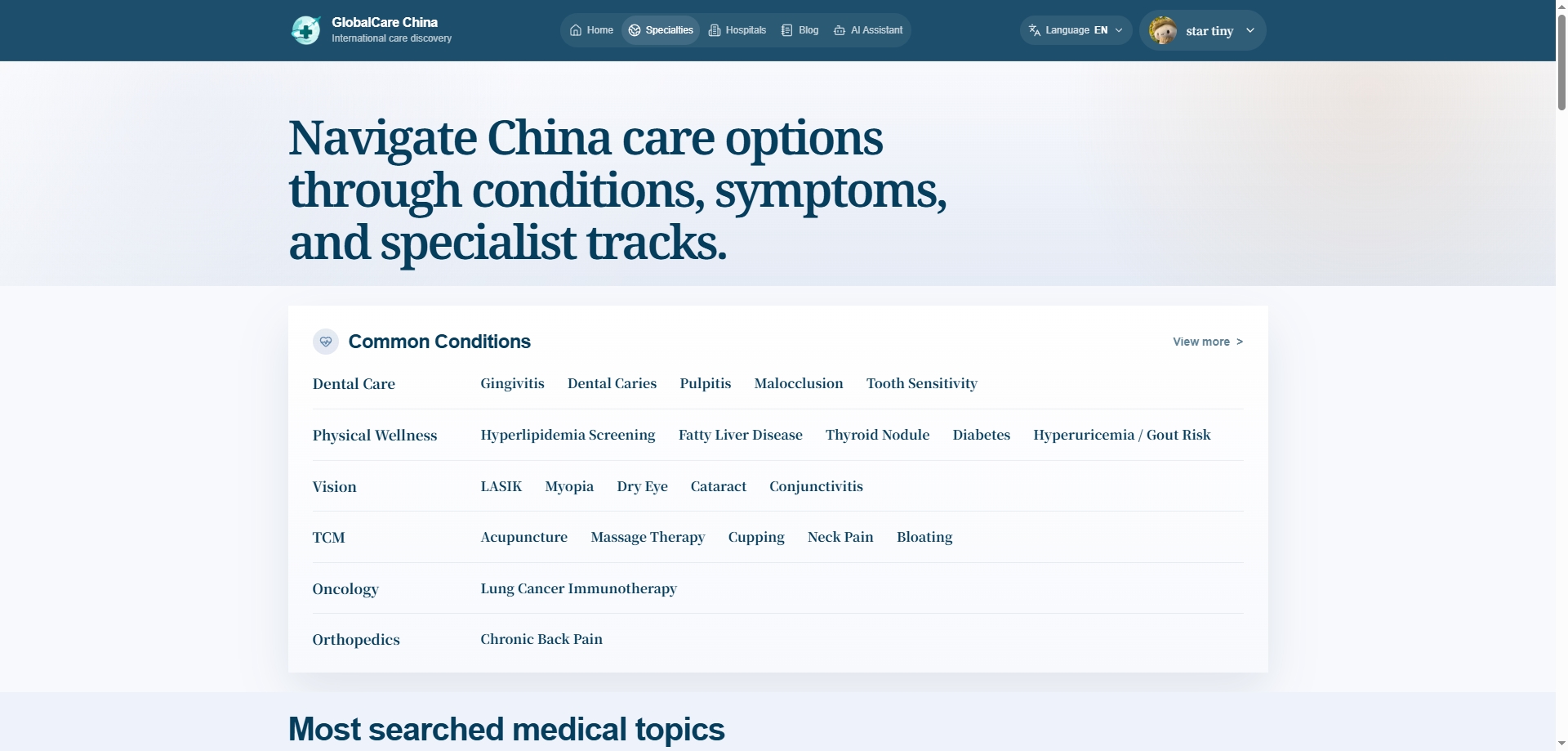
China Med Guide is a bilingual, international care discovery platform. It acts as a comprehensive database where users can explore profiles of leading Chinese hospitals and specific specialty tracks. The core feature is our "Smart Matching System"—users input their symptoms and budget, and the platform decodes this information to recommend the most relevant hospital departments and facilities. We also feature a curated blog covering medical travel insights, wellness destinations, and practical guidance.
How I built it
The platform is built with a modern full-stack architecture prioritizing speed and technical SEO:
- Frontend: Next.js and Tailwind CSS for a fast, responsive, and SEO-optimized user interface.
- Backend & Database: Supabase handles the structured relational data for hospital profiles and categories.
- Smart Matching Engine: Integrated with OpenAI API, heavily prompt-engineered to perform natural language parsing and mapping (mapping colloquial symptom descriptions to standardized medical departments).
- Deployment: Vercel for seamless global edge delivery.
Challenges I ran into
The biggest challenge was enforcing strict boundaries on the AI. Large Language Models tend to offer direct "medical advice," which is a huge liability. I spent significant time refining the system architecture and prompts so the engine strictly acts as a "neutral directory matcher" (translating symptoms into department categories) rather than a diagnostic tool. Additionally, structuring a massive bilingual database of complex medical terminology for optimal search indexing was highly challenging.
Accomplishments that I'm proud of
I am extremely proud of building a platform that makes a highly complex, opaque system completely accessible to foreigners. The Smart Matching System effectively bridges the gap between everyday patient language and professional medical categorization, significantly lowering the barrier to entry for cross-border care planning.
What I learned
This project pushed my boundaries in advanced prompt engineering—specifically using LLMs for rigid data categorization and mapping rather than generative text. I also deepened my expertise in programmatic SEO, managing multilingual sitemaps, and architecting scalable directory sites using Next.js.
What's next for China Med Guide
The immediate next step is scaling the database to cover more regional medical hubs beyond Tier-1 cities. I also plan to introduce granular filtering tags (such as specific international insurance acceptance) and develop a dedicated visa guidance module to make the platform a true one-stop hub for inbound medical travel to China.
Built With
- next.js
- react
- supabase
- tailwind-css
- typescript
- vercel

Log in or sign up for Devpost to join the conversation.