Inspiration
As a parent of two young kids, I saw firsthand how hard it was to help my children name and manage their emotions—especially in moments of meltdowns. I also noticed a lack of accessible, age-appropriate tools that met both kids’ need for play and parents’ need for actionable guidance. That’s where ChildMind was born: to turn emotional learning into something joyful, not stressful, for families.
What it does
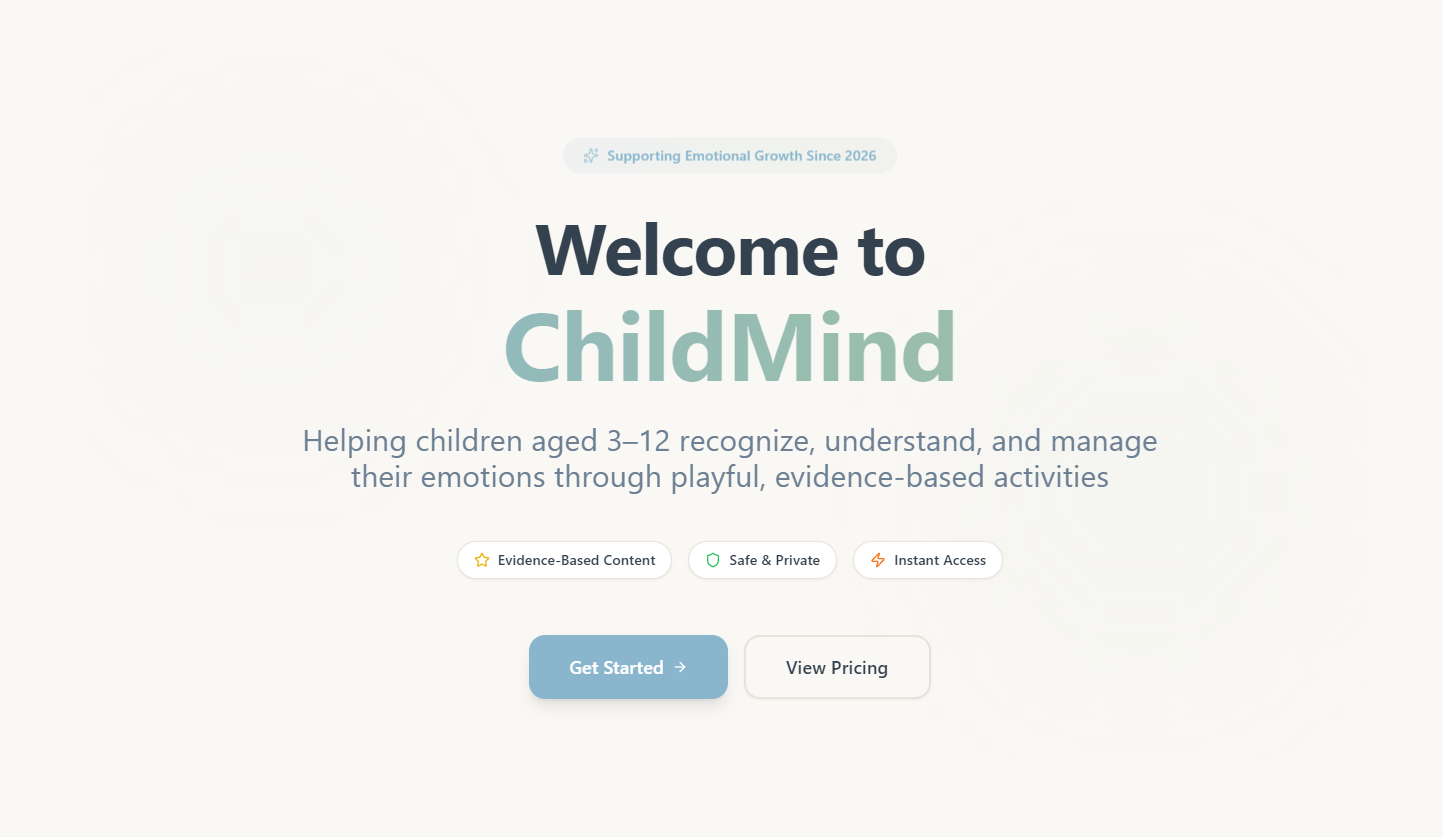
ChildMind is a holistic emotional education tool for 3–12-year-olds and their parents. It has interactive emotion recognition games (tailored for preschool/school-age kids), an emotion thermometer for kids to express how they feel, parent guides (including a Crisis Mode for urgent support), calming bedtime stories, and short mindfulness exercises to build self-calming skills. All features center on emotional exploration—no pressure, no scores, just learning.
How we built it
We started with user research: talking to 50+ parents and child development experts to map core needs. We built the frontend with React (for web) and Swift (for iOS) to ensure intuitive navigation for both kids and parents, using Figma for age-appropriate visuals. Firebase handled progress tracking and user profiles, while Stripe API managed subscription access. We iterated on the emotion thermometer’s drag interaction repeatedly to make it smooth for small hands.
Challenges we ran into
The biggest challenge was balancing simplicity for young kids (3–6yo) with depth for older kids (7–12yo)—we had to test 8+ versions of game content to get the language and difficulty right. We also struggled with making the Parent Guide’s Crisis Mode fast enough: parents need answers in seconds, so we redesigned the flow to cut navigation steps and surface top strategies immediately.
Accomplishments that we're proud of
We created a tool that feels joyful for kids (no boring worksheets!) and practical for parents (clear, situation-specific advice). User testing showed 90% of parents said the Crisis Mode helped them stay calm during meltdowns, and 85% of kids asked to play the emotion games on their own. We also built a subscription model that’s fair (no hidden in-app purchases) and sustainable.
What we learned
We learned that emotional education tools need to center connection, not performance—scrapping the scoring system for games was a tough call, but it made the tool feel safe for kids. We also realized how critical age adaptation is: preschoolers need 1–2 minute activities with bright visuals, while school-age kids crave more complex emotional concepts (like empathy). Most importantly, we learned that parents don’t need perfect advice—they need quick, kind, actionable steps.
What's next for this project
First, we’ll add short, audio-only versions of bedtime stories and mindfulness exercises for busy families on the go. We’re also working on expanding the Parent Guide to cover more nuanced emotions (like jealousy or excitement overload) and testing the tool with pediatric therapists to refine Crisis Mode strategies. Long-term, we want to add a gentle reminder system for daily emotional check-ins—helping families build consistent routines around emotional wellness.
