-
-
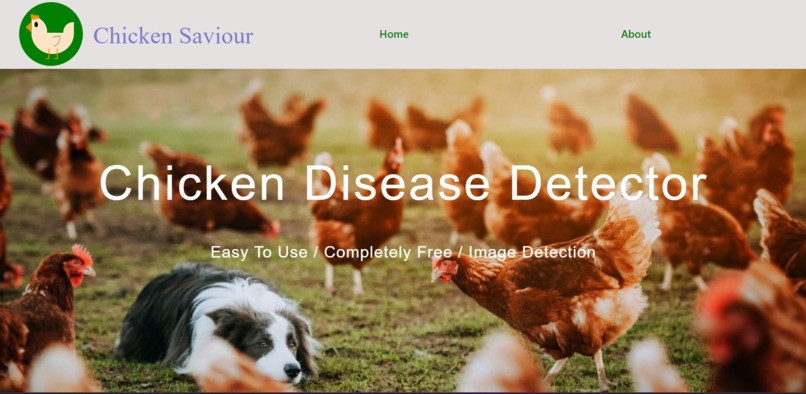
Home Page
-
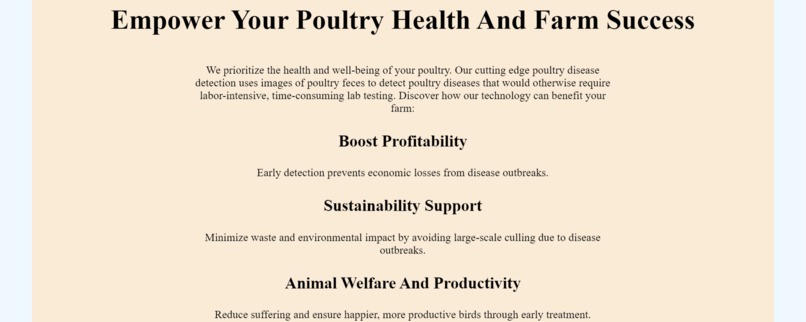
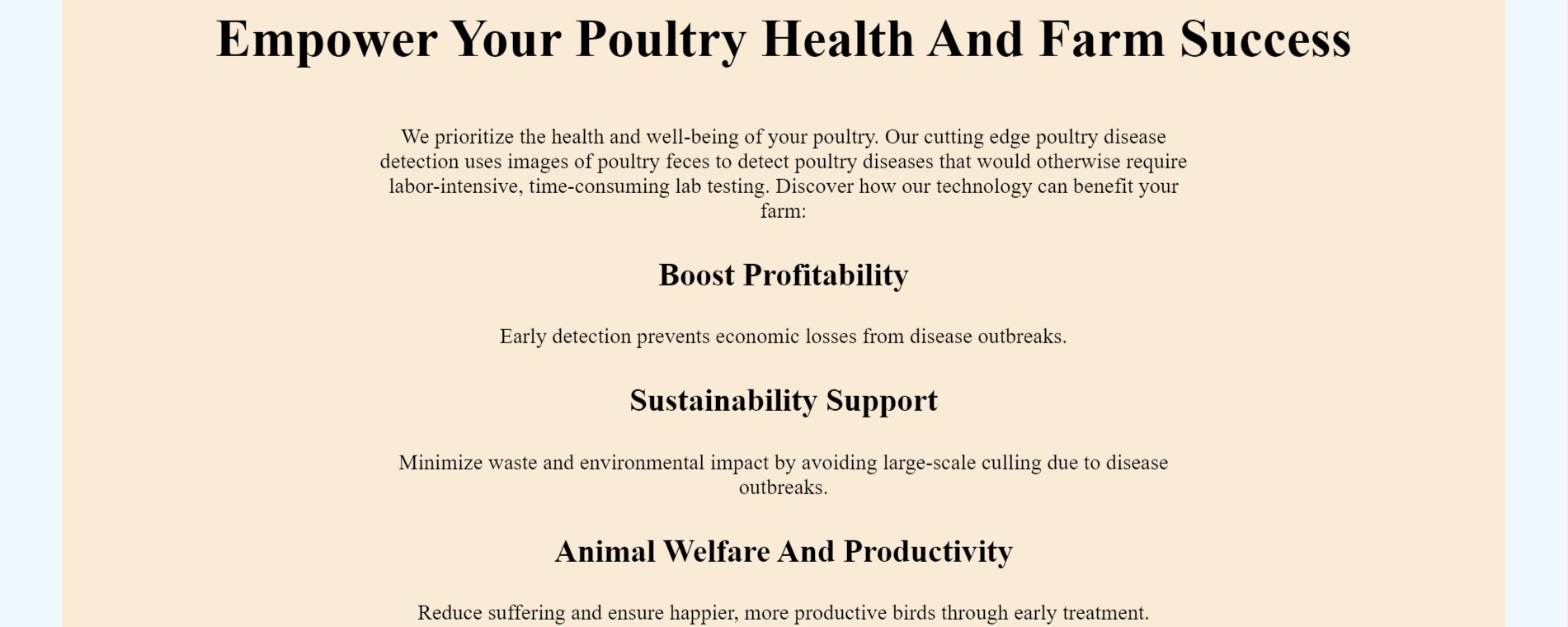
The benefits of this website
-
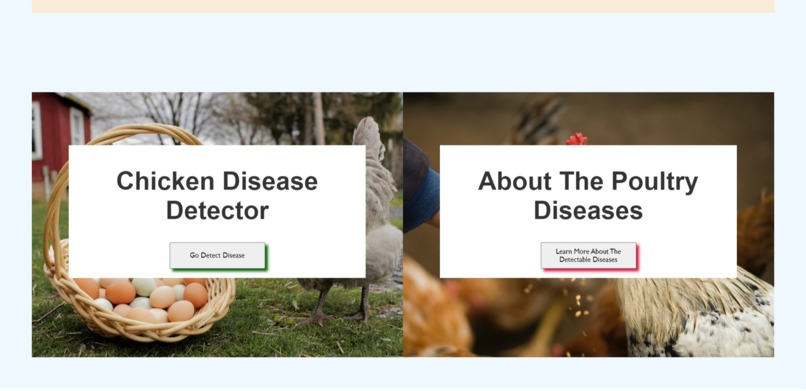
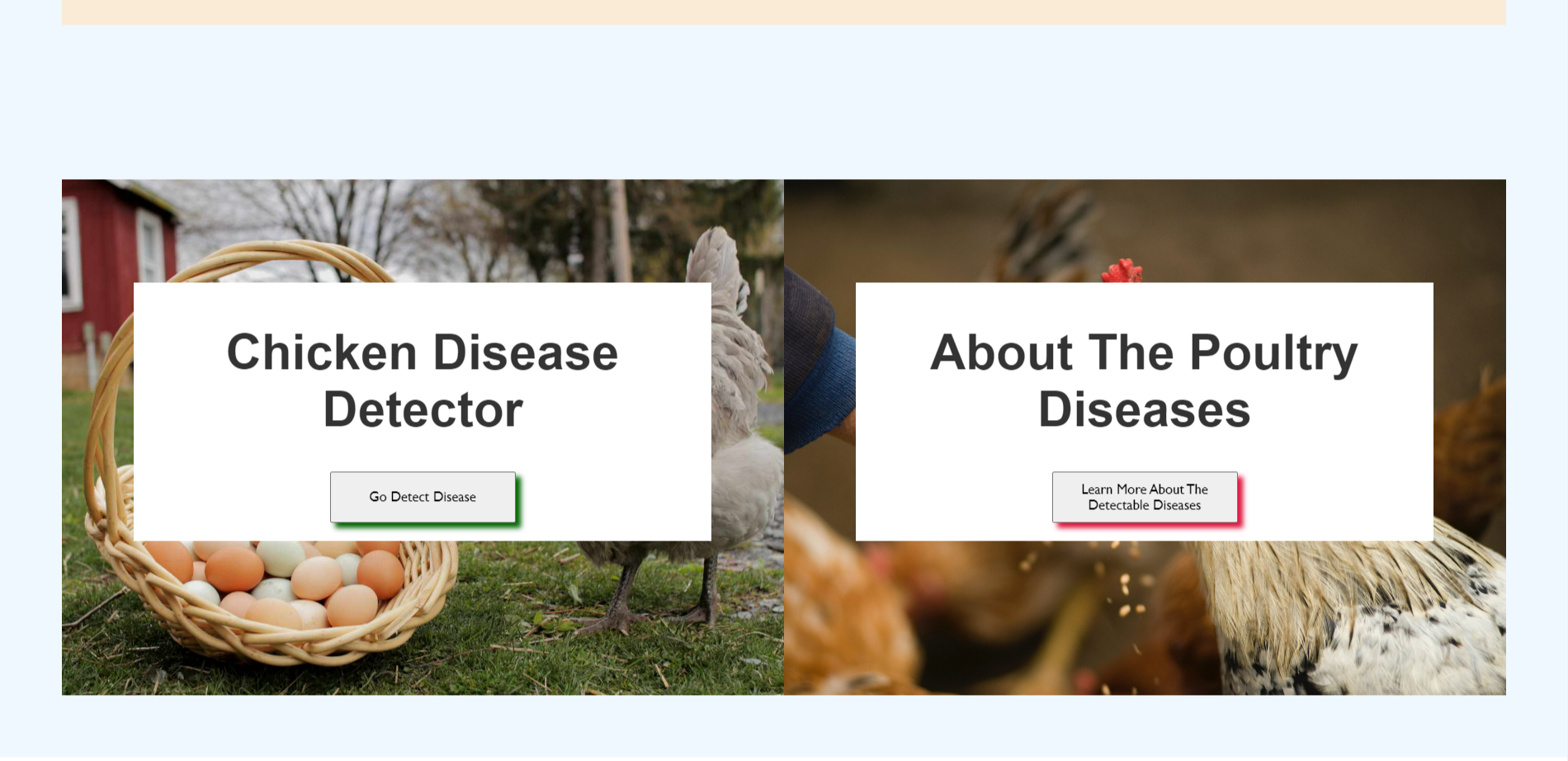
The chicken disease detector and disease dictionary
-
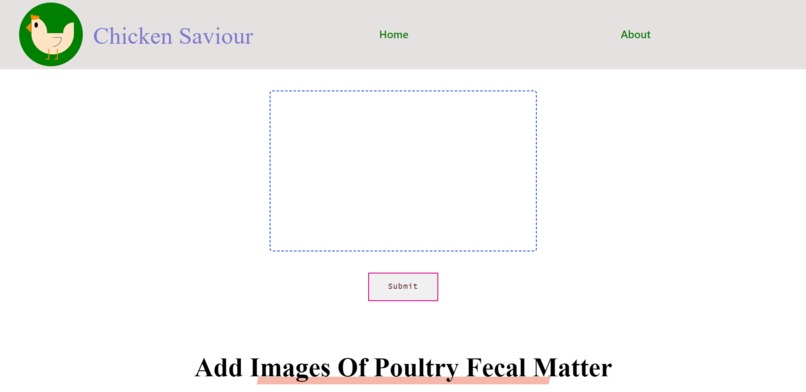
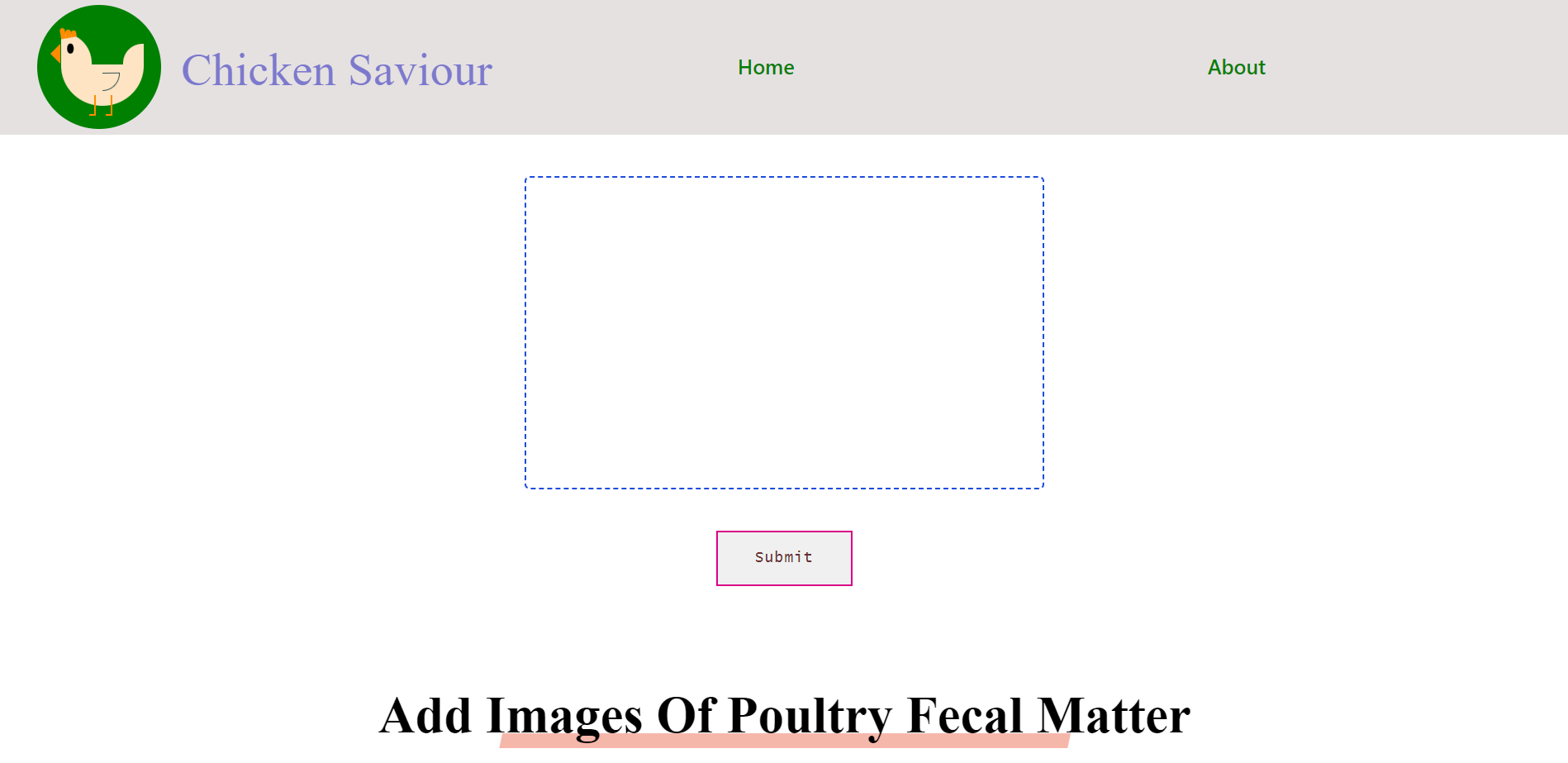
Add image files of chicken fecal matter
-
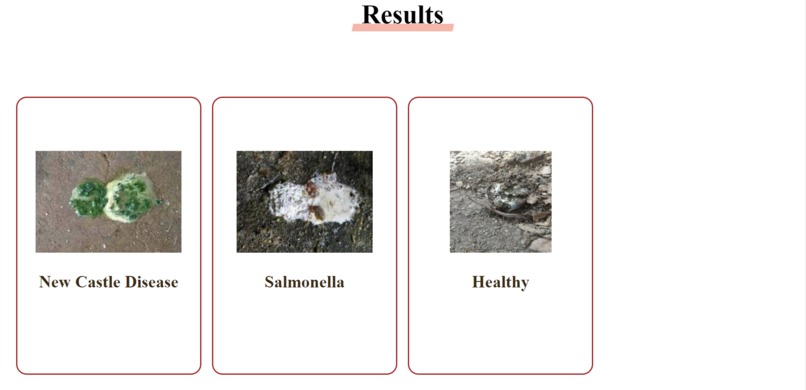
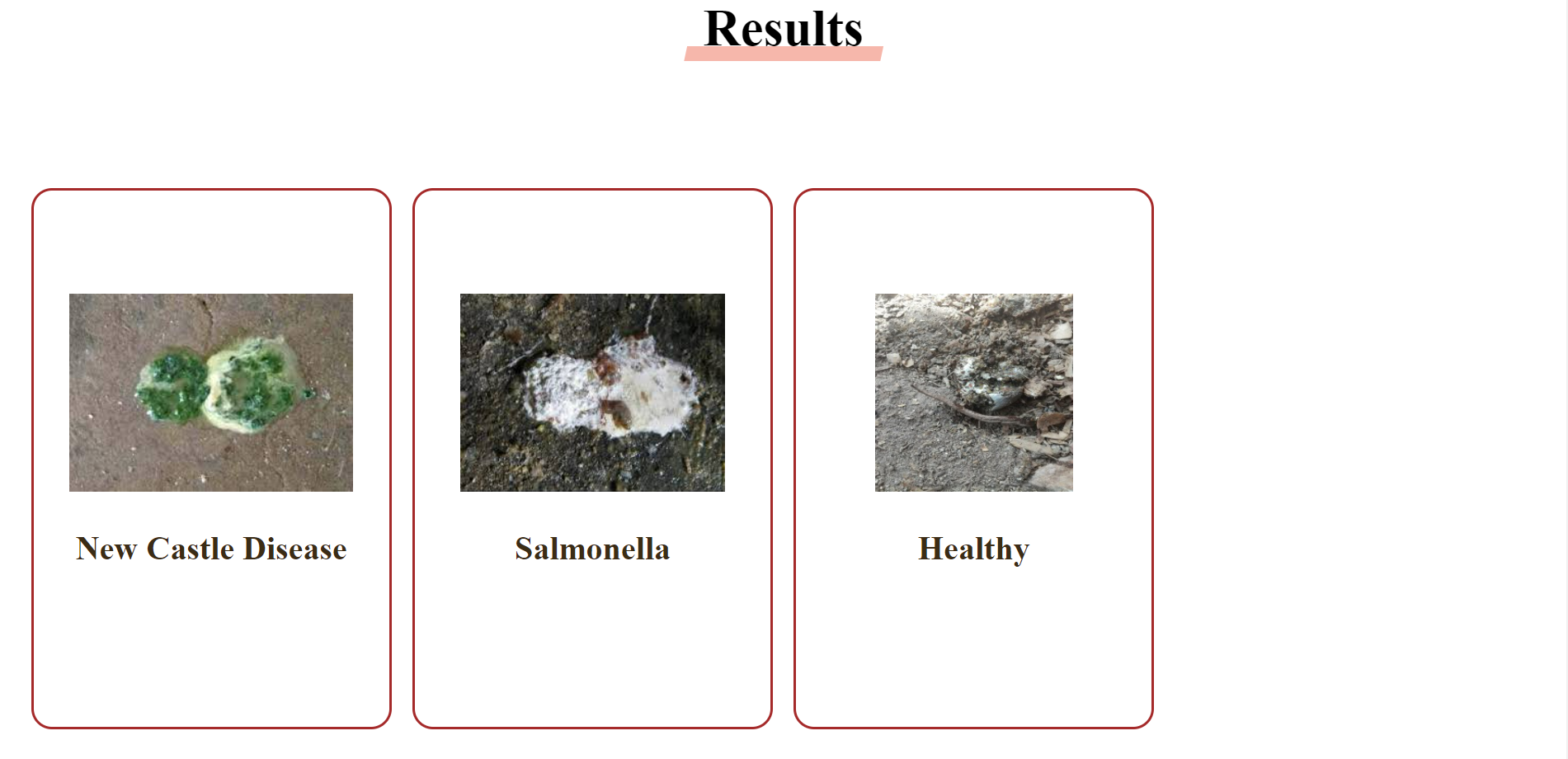
A diagnostic will return for each image file you put in to help you know which chickens have a disease
-
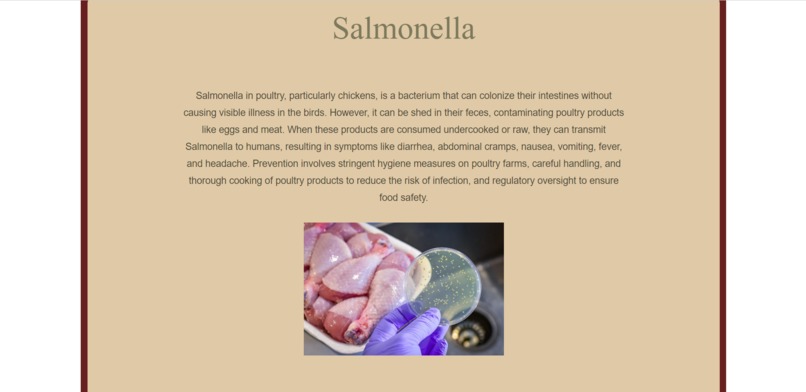
The disease dictionary just helps you learn more about the diseases the website can diagnose and why they were chosen
-
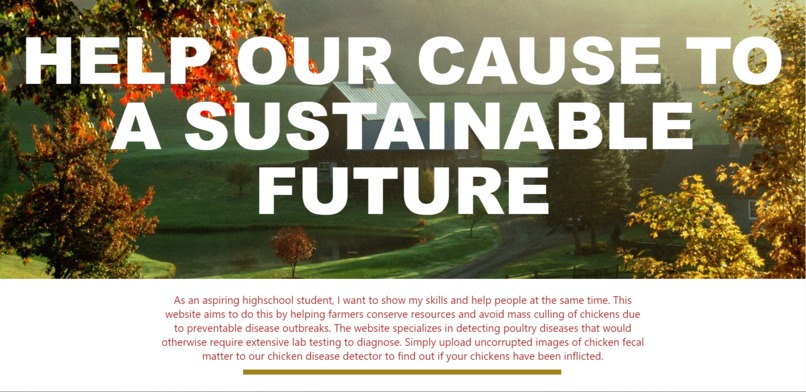
About page
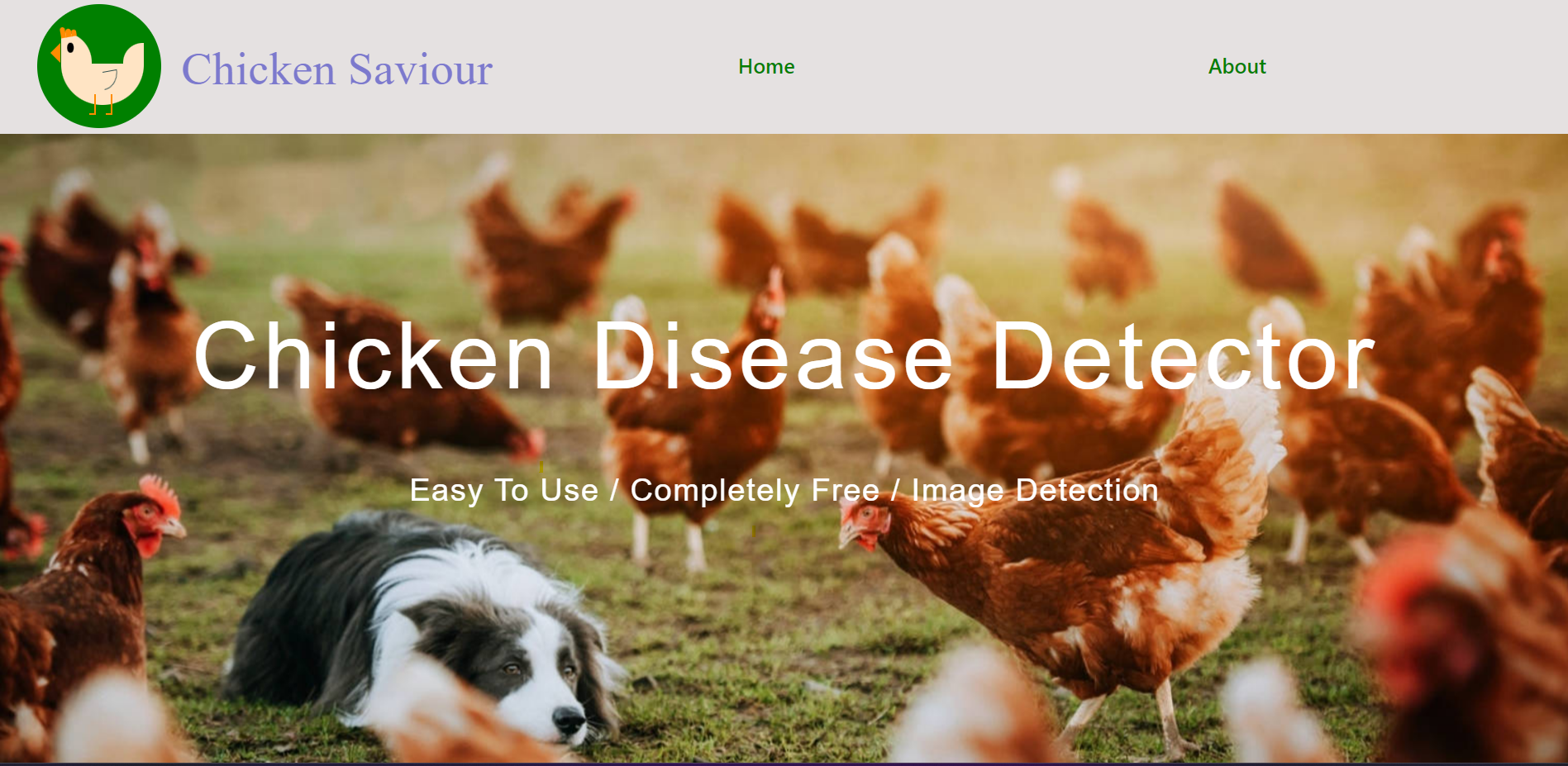
Inspiration
In a world that increasingly needs to conserve resources, I decided to help fix this problem by focusing on chickens. In 2012, Newcastle Disease Virus killed 45 million poultry birds in Punjab, resulting in a loss of 6 billion PKR. This stat alone is shocking, not even including the mass amount of resources the farmers must have used to try to stop the outbreaks. Coccidiosis was estimated to cause up to 3 billion dollars in global economic loss per year. In small scale farms, it contributes to an average 12% and 8.4% in large scale farms extra loss to control the disease. These shocking stats convinced me to create a website that helps farmers detect outbreaks early, so this kind of waste does not happen.
What it does
The website uses convolution neural networks to detect whether a chicken has a disease through images of their fecal matter. The website also has a disease dictionary to help identify the diseases the website can detect. These diseases were specifically chosen because they require extensive lab testing to diagnose, which is a huge part of the reason for these outbreaks, since many farmers don't have direct access to laboratory tests. You can supply multiple images and the website will give disease classifications for each one. If the chicken is healthy, the website will label as such.
How we built it
I built the website using React js, css, html. React was used for the frontend and some of the backend. The backend was mostly built using python, or more specifically Flask. I used the python TensorFlow library to train the convolution neural network, and the trained model is what the website uses to detect chicken diseases.
Challenges we ran into
The first challenge was finding a good dataset to use, but thankfully, I was able to get a good dataset. The other challenge was figuring out a decent convolution model structure, since the training process can take hours. I also had to figure out how to send the file images from the React frontend to the flask backend to be fed to the trained CNN model.
Accomplishments that we're proud of
I am proud if having figured out how to send file images from React to a python backend in Flask and still be able to feed the image pixels into the CNN model. This will allow me to make more complex Deep Learning projects in the future.
What we learned
I learned how to implement a CNN model into React and be able to use it. I learned how to send image data from React js to Flask. I also learned the power of parallax backgrounds to make your website more professional
What's next for Chicken Saviour
I can try using Google places after this to help people using this website locate the nearest hospitals/labs to test for outbreaks, since it is always best to have medical professionals to help you, as the website is just to help notify you of potential outbreaks.


Log in or sign up for Devpost to join the conversation.