-
-
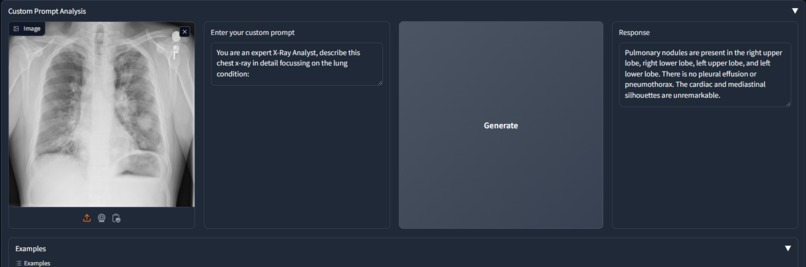
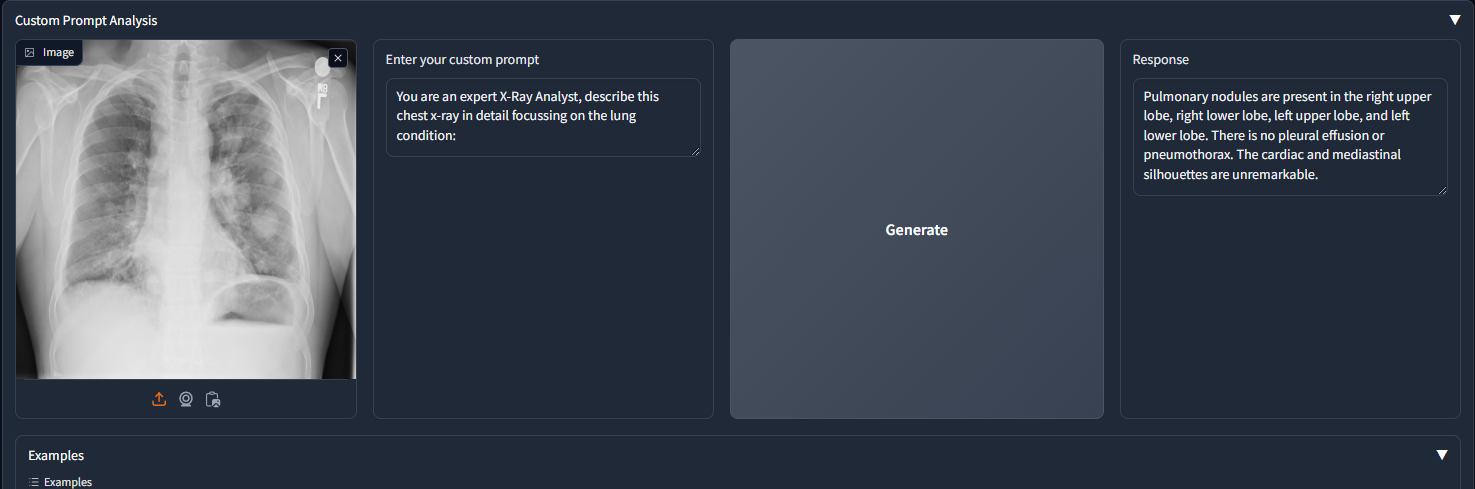
custom prompts , multiple nodules found, x ray analysis
-
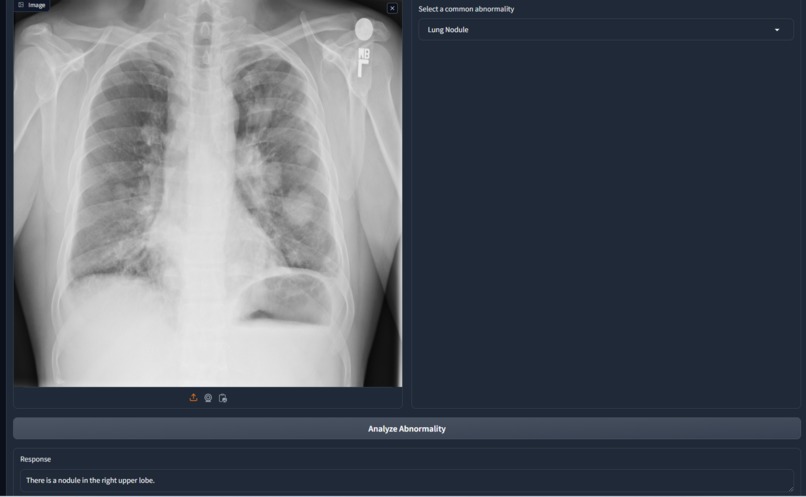
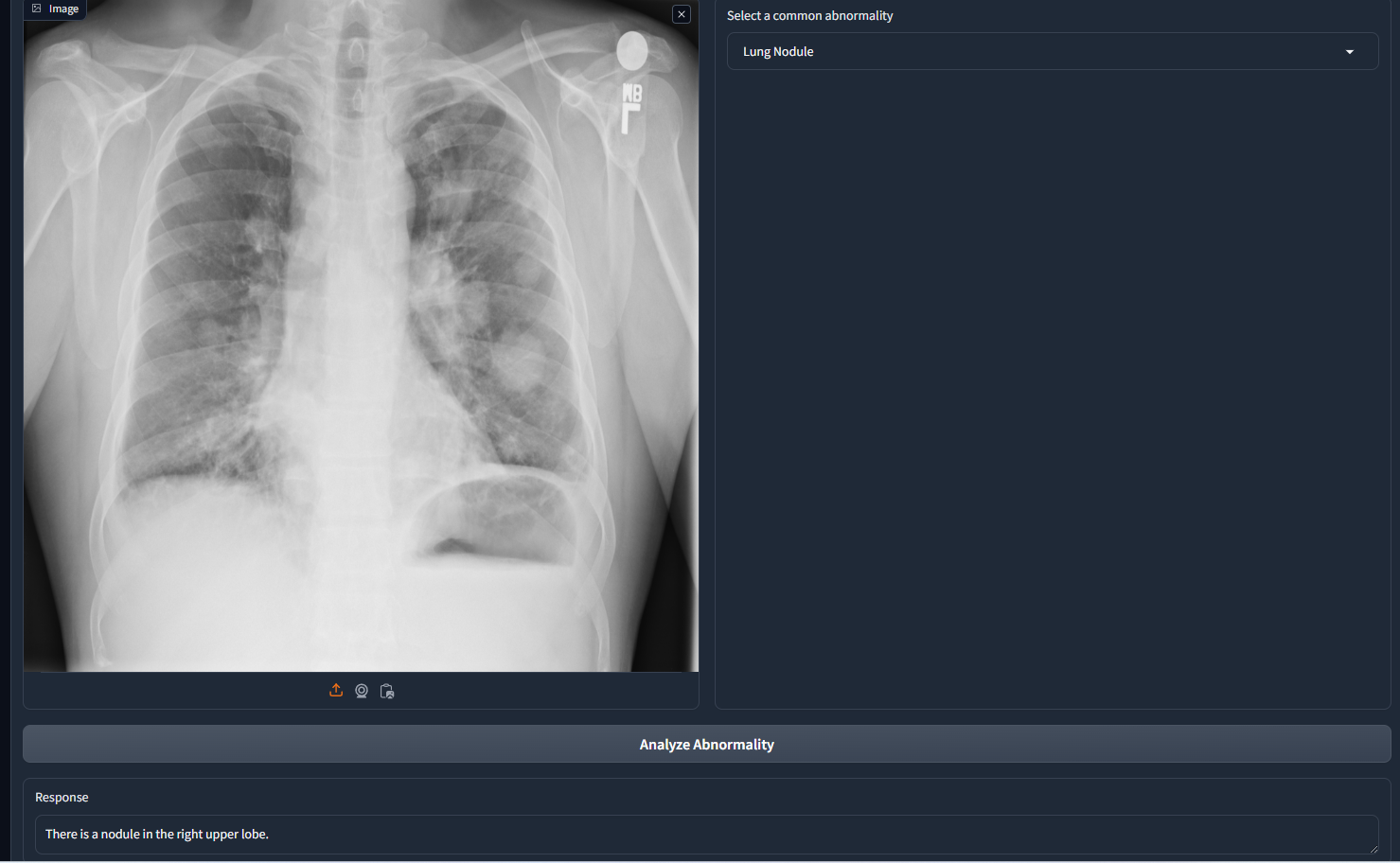
nodule found in xray
Inspiration
The inspiration behind ChexRay Demo stemmed from the growing need for accurate and efficient diagnostic tools in the medical field, particularly for analyzing chest x-rays. With the advancements in AI and machine learning, we saw an opportunity to leverage these technologies to assist radiologists in identifying and diagnosing conditions more quickly and accurately. Our goal was to create a tool that not only improves diagnostic accuracy but also reduces the workload on healthcare professionals.
What it does
ChexRay Demo is an AI-powered tool that analyzes chest x-ray images and provides detailed diagnostic reports. By simply uploading a chest x-ray image and entering a prompt, users can receive an AI-generated analysis that highlights potential issues and conditions. This tool is designed to assist radiologists and medical practitioners by providing a second opinion, ensuring no critical details are missed.
How we built it
We built ChexRay Demo using the StanfordAIMI/CheXagent-8b model, which is fine-tuned specifically for analyzing chest x-rays. The development process involved:
- Cloning the ZeroGPU Space and setting up the necessary environment.
- Integrating the CheXagent-8b model into the platform.
- Developing a user-friendly interface for image upload and prompt entry.
- Training the model with a large dataset of chest x-rays to enhance its diagnostic capabilities.
- Testing the tool extensively to ensure accuracy and reliability.
Challenges we ran into
Throughout the development of ChexRay Demo, we faced several challenges:
- Ensuring the model was accurately interpreting the x-ray images and providing reliable diagnostics.
- Managing the computational resources required for processing and analyzing high-resolution medical images.
- Creating a seamless user experience that allows for easy image uploads and prompt entries.
- Addressing the diverse range of conditions that the model needs to recognize and diagnose accurately.
Accomplishments that we're proud of
We are proud of several key accomplishments with ChexRay Demo:
- Successfully integrating and fine-tuning the CheXagent-8b model to provide high-accuracy diagnostics.
- Building a robust platform that is user-friendly and accessible to medical professionals.
- Receiving positive feedback from initial users and healthcare practitioners who tested the tool.
- Contributing to the field of medical AI by providing an open-source solution that can be further improved and adapted.
What we learned
Throughout this project, we learned:
- The importance of high-quality training data in improving model accuracy.
- The complexities involved in medical image analysis and the critical nature of precision in diagnostics.
- Effective ways to optimize AI models for better performance and resource management.
- The value of collaboration and feedback from the medical community in refining our tool.
What's next for ChexRay Demo
Looking ahead, we plan to:
- Continue refining the model to enhance its diagnostic accuracy and expand its capabilities.
- Integrate additional features such as anomaly detection and detailed condition-specific reports.
- Collaborate with healthcare institutions to gather more data and improve the tool based on real-world usage.
- Explore partnerships and funding opportunities to scale the deployment of ChexRay Demo in hospitals and clinics worldwide.
- Develop educational resources and training modules to help radiologists and medical students utilize the tool effectively.
By advancing ChexRay Demo, we aim to make a significant impact on medical diagnostics and improve patient outcomes through the power of AI.
Built With
- chexray
- gradio
- huggingface
- pytorch


Log in or sign up for Devpost to join the conversation.